Our readers keep the lights on and my smoothie glass nicely filled. As an Amazon Associate, I earn from qualifying purchases.
Small dogs have fast metabolisms, tiny jaws, and specific digestive needs that large-breed formulas simply cannot meet. Choosing the wrong kibble size or nutrient ratio can lead to picky eating, loose stools, or long-term health issues like pancreatitis or obesity.
I’m Mohammad Maruf — the founder and writer behind WellFizz. I’ve spent hundreds of hours cross-referencing bag labels, analyzing guaranteed analysis panels, and reading verified buyer experiences to find the precise formulas that match the unique physiology of toy and small breeds.
After comparing ingredient sourcing, kibble dimensions, DHA levels, and calorie density across dozens of recipes, I’ve built a clear list of the best dog foods for small dogs that actually deliver on their promises for delicate stomachs and tiny mouths.
How To Choose The Right Dog Foods For Small Dogs
Small breeds burn energy faster than large dogs, meaning they need a more concentrated source of calories, protein, and fat in every bite. But dense nutrition has to be balanced carefully — too much can trigger pancreatitis, while too little leaves them without fuel between meals. Here’s what to check before you buy.
Kibble Size and Shape
Standard-sized kibble forces tiny dogs to either struggle to break pieces or swallow whole without chewing, both of which reduce nutrient absorption and increase choking risk. Look for specific small-breed formulas where the kibble is less than 10 millimeters in diameter — often labeled “small bites” or “lil’ plates.” The smaller shape also encourages faster chewing, which can mechanically scrape plaque from teeth.
Calorie Density and Fat Percentage
Small dogs have tiny stomachs but high energy needs. A food with around 360–400 kilocalories per cup provides enough fuel without requiring enormous portions. Fat content should land between 12% and 18% on a dry matter basis — any less will leave the dog lethargic, any more can overload the pancreas, especially in breeds like Miniature Schnauzers that are predisposed to pancreatitis.
Protein Source and Digestibility
Toy breeds often have sensitive digestive tracts. Single or dual animal protein recipes (chicken and turkey, salmon and duck) reduce the chance of food intolerance. Foods that list the named protein as the first ingredient and avoid vague “meat meal” give a clearer picture of what your dog is actually digesting. For dogs with known allergies, limited-ingredient diets with novel proteins like duck or venison are a safer bet.
Quick Comparison
On smaller screens, swipe sideways to see the full table.
| Model | Category | Best For | Key Spec | Amazon |
|---|---|---|---|---|
| Wellness CORE Small Breed Puppy | Grain-Free | High-protein puppy growth | 53% high-quality protein ingredients | Amazon |
| Merrick Lil’ Plates Puppy | Grain-Free | Joint and brain development | Glucosamine & chondroitin added | Amazon |
| Hill’s Science Diet Puppy Sensitive Stomach | Limited Ingredient | Sensitive skin and digestion | Prebiotic fiber & Omega-3 fatty acids | Amazon |
| Natural Balance LID Small Breed Duck & Potato | Limited Ingredient | Allergy-prone adults | Single animal protein, no peas | Amazon |
| Royal Canin Small Puppy | Breed-Specific | Precise growth and immune support | Crunchy kibble for 9-22 lb adult weight | Amazon |
In‑Depth Reviews
1. Wellness CORE Small Breed Puppy Dry Dog Food
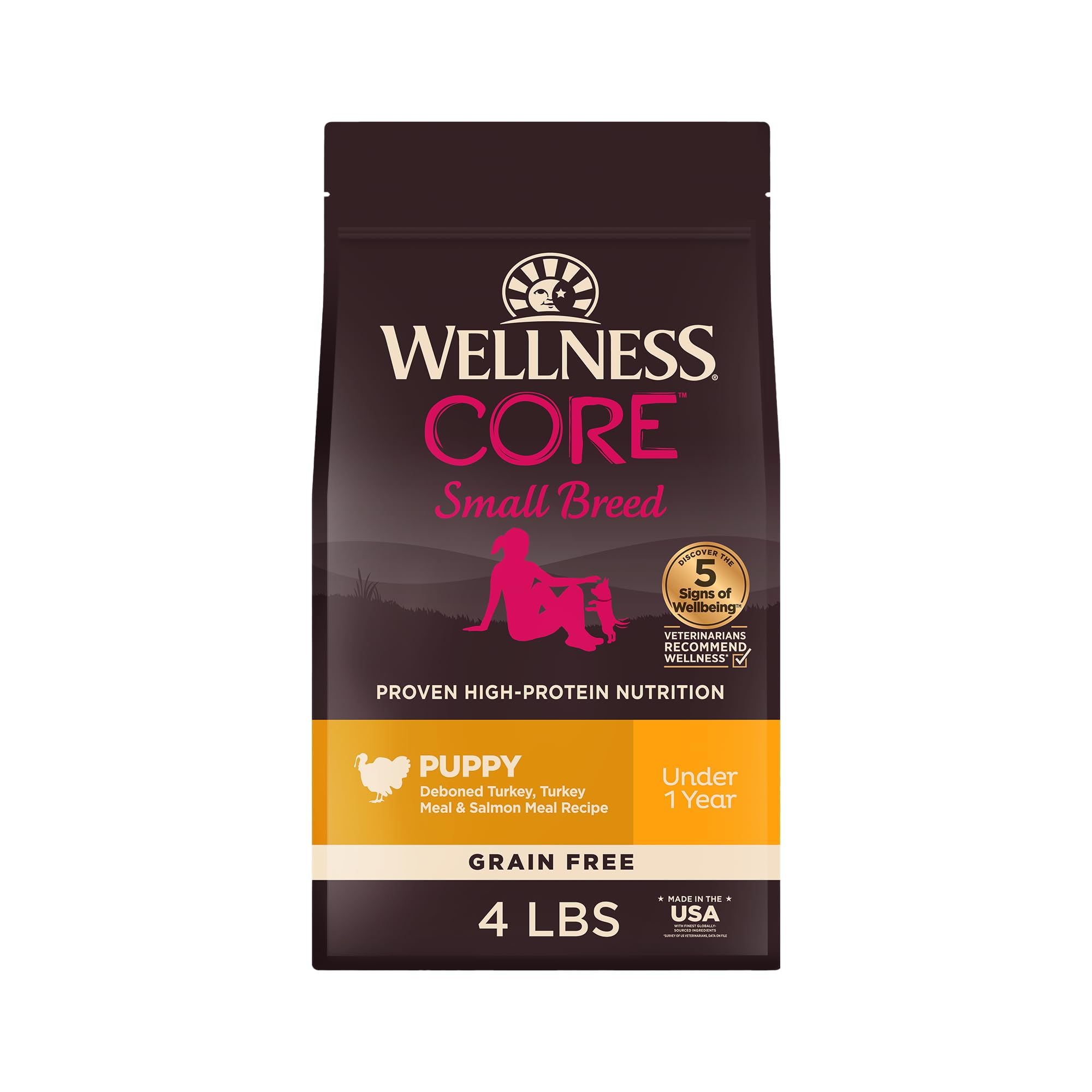
Wellness CORE Small Breed Puppy is built around a 53% protein ratio from responsibly sourced turkey, making it one of the most nutrient-dense options for growing toy breeds. The kibble size is noticeably smaller than standard puppy food, which reduces the risk of gulping and helps tiny teeth break pieces down more efficiently. Guaranteed DHA supports retina and brain development during the critical first months.
Probiotics listed on the guaranteed analysis panel help maintain gut flora, which directly addresses the loose-stool issues many small puppies experience when transitioning from mother’s milk. Owners report that stools become well-formed within a few days of switching, and coat quality improves noticeably within two weeks. The 4-pound bag is practical for small breeds that eat around half a cup daily, so the food stays fresh before the bag is empty.
One notable caveat: despite the turkey label, the formula contains chicken meal, which triggered allergy symptoms in one reported Chihuahua. If your dog has confirmed poultry sensitivity, this ingredient inclusion makes it a less reliable choice. Otherwise, the balance of antioxidants, calcium, and phosphorus makes it a standout pick for the first year of life.
Why it’s great
- High meat-protein content supports lean muscle development
- Guaranteed DHA for cognitive and vision development
- No corn, wheat, soy, or artificial preservatives
Good to know
- Contains chicken meal despite turkey flavor name
- Grain-free formula not ideal for all digestive types
- Only available in 4 lb bag; no larger size for multi-dog homes
2. Hill’s Science Diet Puppy Sensitive Stomach & Skin
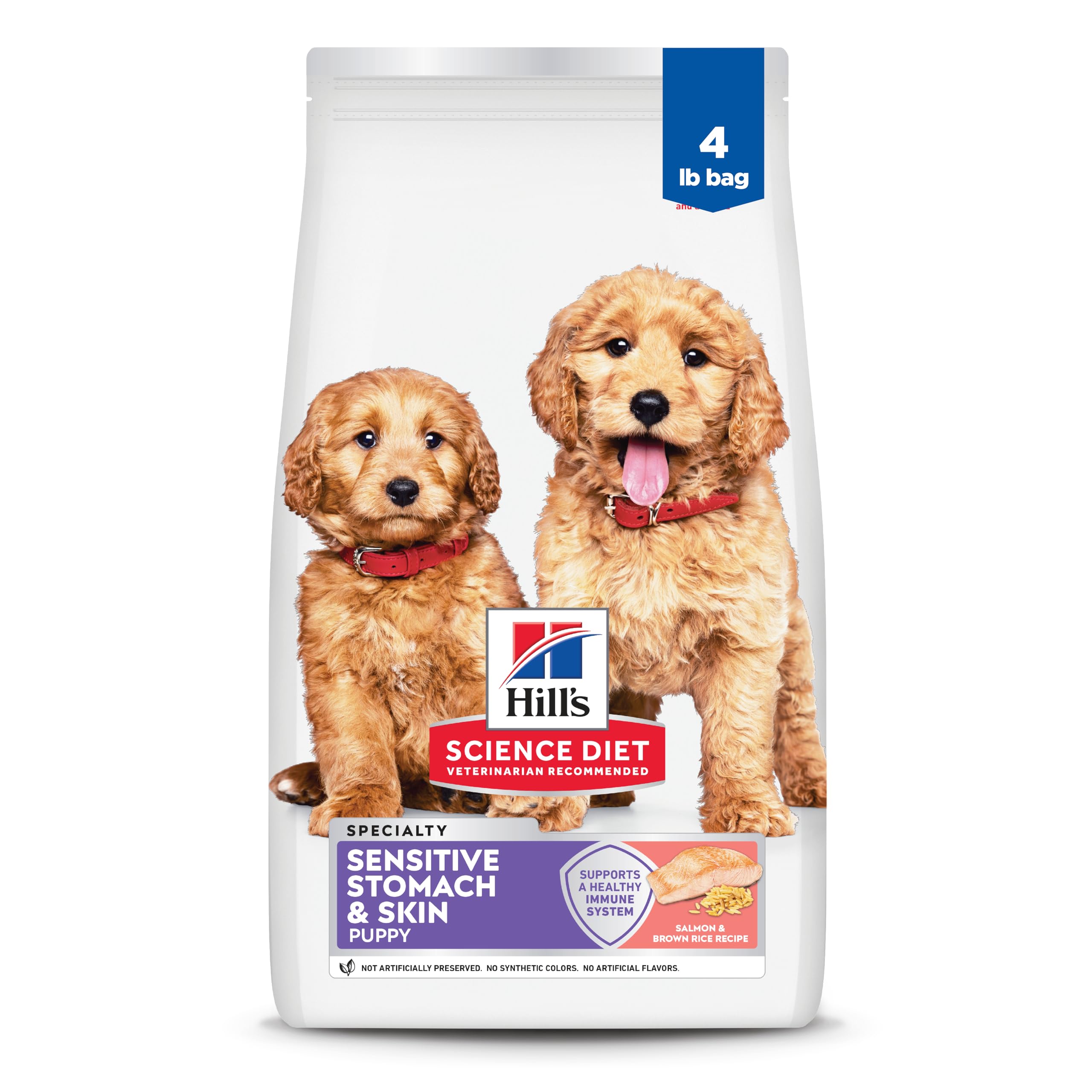
Hill’s Science Diet Puppy Sensitive Stomach & Skin uses salmon as the sole animal protein source, with brown rice as the carbohydrate backbone — a combination that is specifically formulated to reduce digestive upset and skin irritation. The prebiotic fiber content encourages regular, well-formed stools even in breeds prone to loose bowels, such as Chihuahuas and Yorkshire Terriers.
Omega-3 and Omega-6 fatty acids are added at guaranteed levels to support a lustrous coat and reduce scratching. Verified buyer feedback confirms that itching stopped within 48 hours for one puppy that had been on a competing premium brand. The kibble size is slightly larger than the smallest small-breed formulas, but puppies from 4 to 12 months typically manage it without difficulty.
This food is backed by Hill’s reputation as the most veterinarian-recommended brand in the U.S., which adds a layer of clinical confidence. The resealable bag closure preserves freshness better than open-flap bags. The only trade-off is that the recipe is not grain-free, which matters for owners who prefer a grain-elimination approach for their small breed.
Why it’s great
- Clinically proven antioxidants for immune health
- Salmon is a novel protein that avoids common chicken allergens
- Rapidly resolves skin itching and coat dullness
Good to know
- Contains brown rice; not grain-free
- Kibble size is medium, not tiny
- More expensive per pound than some mid-range options
3. Merrick Lil’ Plates Premium Grain Free Puppy

Merrick Lil’ Plates is formulated specifically for small breed puppies with real deboned chicken listed first. The 4-pound bag provides a dense 370 kilocalories per cup, so even the most energetic toy breeds get sustained energy without needing massive portions. The crunchy texture also helps clean teeth and freshen breath as the dog chews — a practical dental benefit for breeds prone to tartar buildup.
What sets this formula apart in the mid-range is the addition of glucosamine and chondroitin, two compounds critical for hip and joint health in breeds like Pomeranians and Shih Tzus that commonly experience patellar luxation. Probiotics are included to support digestive health, and multiple verified buyers report that picky eaters who refused other foods ate this immediately without a transition period.
The main drawback is value at scale: some owners noted that the 4-pound bag for a price that competes with larger bags from other brands makes long-term use expensive. Additionally, the grain-free formula may not suit every dog, as grain-free diets have been linked to dilated cardiomyopathy in some breeds, though causation is not fully established.
Why it’s great
- Deboned chicken is the first ingredient
- High glucosamine and chondroitin for joint support
- Crunchy kibble texture aids dental cleaning
Good to know
- Grain-free; may not suit all dietary preferences
- Small bag size makes multi-pet use expensive
- Some picky eaters may reject after initial enthusiasm
4. Natural Balance Limited Ingredient Small Breed Duck & Potato
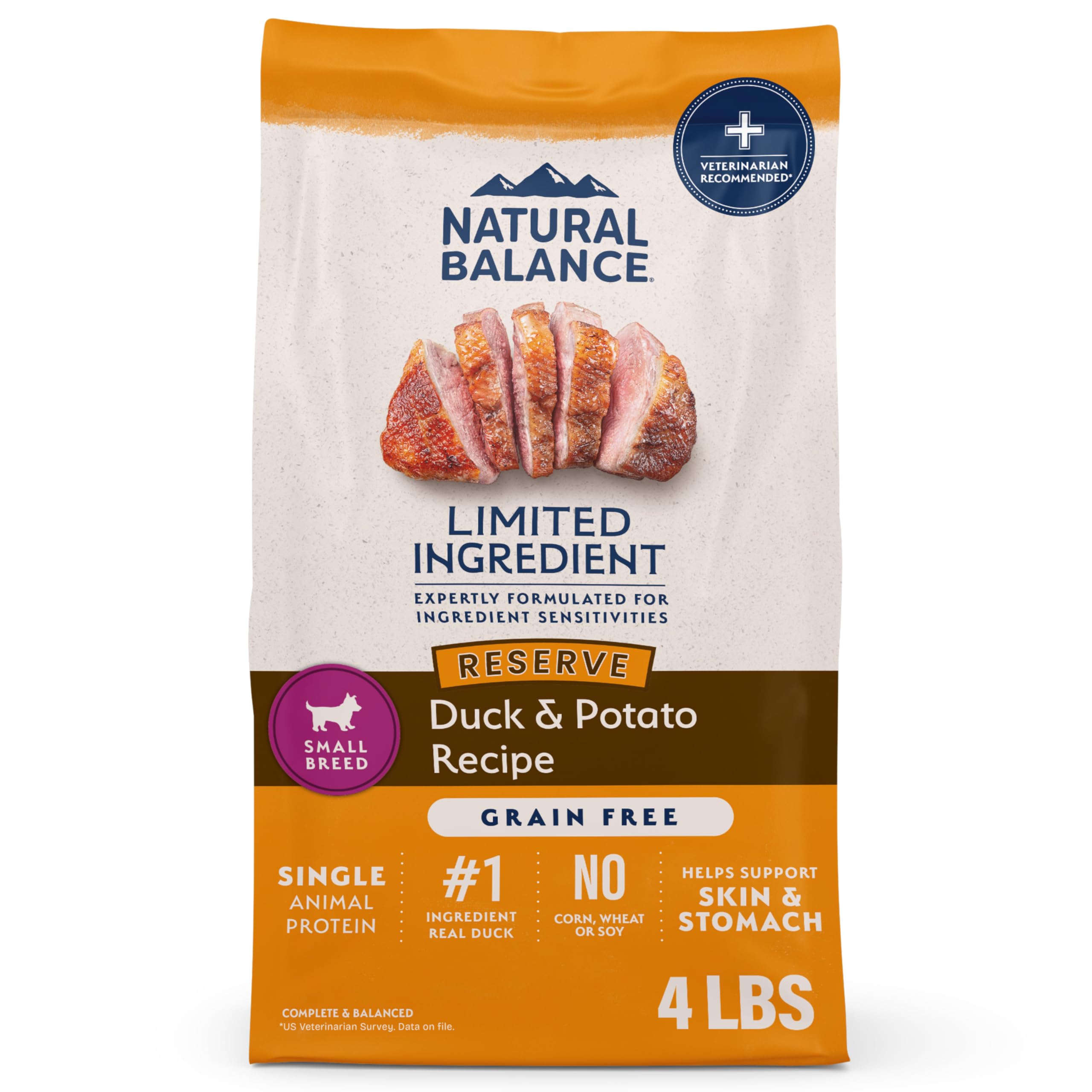
Natural Balance LID Small Breed Duck & Potato is a premium choice for adult small dogs battling environmental or food allergies. Duck serves as a novel protein source that reduces the likelihood of an immune reaction, and the limited ingredient philosophy — a single animal protein, no grain, soy, or gluten — simplifies elimination diets for owners trying to pinpoint triggers.
The “Feed with Confidence” program tests every batch from start to finish, and the bag includes a code that owners can verify directly. This is a meaningful safety net for small breeds with compromised immune systems or chronic gastrointestinal issues like inflammatory bowel disease. Verified buyers have successfully used this formula as a lower-cost alternative to prescription hydrolyzed protein diets for dogs with confirmed IBD.
A standout feature is the absence of peas, pea protein, and pea flour — common fillers in grain-free foods that have been scrutinized in relation to heart health. The kibble size is pellet-shaped and small enough for toy breeds. However, the bag size is capped at 4 pounds, which means owners of households with multiple small dogs will need to reorder frequently.
Why it’s great
- Single animal protein from duck limits allergen exposure
- No peas, pea protein, or pea flour
- Batch-level testing provides safety transparency
Good to know
- Only available in 4 lb bag size
- Duck flavor may not appeal to all picky dogs
- No larger multi-dog economy option
5. Royal Canin Size Health Nutrition Small Puppy

Royal Canin Small Puppy is engineered for dogs 2 to 10 months old with an expected adult weight between 9 and 22 pounds. The kibble shape is uniquely designed — narrow and crunchy — to encourage chewing rather than gulping, which reduces the risk of choking and bloat in brachycephalic breeds like French Bulldogs and Pugs. The formula includes DHA for brain development and prebiotics for digestive health.
Veterinarians frequently recommend Royal Canin for its precise nutrient profiles, and the small puppy formula is no exception. The inclusion of chicken, fish, gluten, and wheat in the allergen information means it is not suitable for dogs with multiple protein or grain sensitivities, but for the average healthy small breed puppy, this formula delivers consistent energy, firm stools, and a shiny coat without ingredient guesswork.
The crunchy texture pairs well with the Royal Canin Small Puppy Thin Slices in Gravy wet food for mixed feeding. Verified buyers note that even extremely picky eaters — including Bichon Frises and Chihuahuas — readily accept the dry kibble. The primary limitation is the specific age window: this formula is not appropriate for adult dogs, which means owners must eventually transition to an adult maintenance food.
Why it’s great
- Kibble shape specifically designed for small mouths and chewing
- DHA and antioxidants support brain and immune development
- High palatability for picky breed puppies
Good to know
- Contains chicken, fish, gluten, and wheat — not for multiple allergies
- Only for puppies 2-10 months; not a lifelong food
- Higher per-bag cost than some grain-free competitors
FAQ
Is grain-free food better for small dogs?
How often should I feed a small breed puppy?
Can I mix wet and dry food for my small dog?
Final Thoughts: The Verdict
For most owners of toy and small breed puppies, the dog foods for small dogs winner is the Wellness CORE Small Breed Puppy because it delivers the highest protein density per cup with guaranteed DHA and probiotics, all in a grain-free format that tiny stomachs handle well. If you need something gentle on a sensitive stomach and skin, grab the Hill’s Science Diet Puppy Sensitive Stomach. And for allergic adult small dogs with dietary restrictions, nothing beats the Natural Balance LID Small Breed Duck & Potato for its clean ingredient list and batch-level safety testing.

Mo Maruf
I created WellFizz to bridge the gap between vague wellness advice and actionable solutions. My mission is simple: to decode the research and give you practical tools you can actually use.
Beyond the data, I am a passionate traveler. I believe that stepping away from the screen to explore new environments is essential for mental clarity and physical vitality.