Our readers keep the lights on and my smoothie glass nicely filled. As an Amazon Associate, I earn from qualifying purchases.
Photo editing demands pinpoint accuracy—adjusting a curve, masking a sky, or dodging and burning a portrait requires the kind of nuanced control a mouse simply cannot deliver without causing frustration and wrist fatigue. A drawing tablet translates your hand’s natural motion into precise cursor movement and pressure-sensitive strokes, turning tedious edits into fluid, intuitive work that feels more like traditional retouching.
I’m Mohammad Maruf — the founder and writer behind WellFizz. My deep market research focuses on dissecting the core hardware specifications—active area dimensions, pressure levels, color gamut coverage, and screen lamination quality—that separate a smooth editing experience from a frustrating laggy one. I have analyzed hundreds of hours of user feedback and cross-referenced spec sheets to find the right tablets for this specific use case.
You need a device that complements your software, whether it’s Lightroom or Capture One, without introducing parallax or color drift. That is why this guide focuses exclusively on the best drawing tablets for photo editing where driver stability, color accuracy, and pressure responsiveness matter most.
How To Choose The Best Drawing Tablet For Photo Editing
Photo editing is a visually demanding workflow that relies on consistent color and precise input. Unlike general illustration, where a slightly off-color line can be tolerated, editing a photo requires that what you see on the screen matches the final export exactly. Choosing the wrong tablet often leads to sacrifices in editing speed, calibration accuracy, or comfortable ergonomics during long retouching sessions.
Active Area and Screen Size
A larger active area—typically 10×6 inches or more for a pen tablet, or a 13-inch to 16-inch display for a pen display—reduces the need for constant zooming and scrolling while editing. A cramped drawing area forces your arm into small, repetitive motions that cause fatigue. For photo editing, a medium-to-large active area lets you move your entire forearm naturally instead of just your wrist, which is critical for smooth gradient masks and healing brush strokes.
Pressure Sensitivity and Initial Activation Force
Photo editing involves subtle brush adjustments for dodging, burning, and frequency separation. A tablet with 8192 or more levels of pressure sensitivity provides the fine gradation between a whisper-light touch and a firm press needed for these tasks. More important than the peak number is the initial activation force (IAF)—how much pressure is required before the pen registers a stroke. An IAF of 2 to 3 grams ensures that even the lightest feathering motion is captured without skipping.
Color Gamut and Factory Calibration
When you select a pen display for editing, the screen must cover at least 99% sRGB and ideally a high percentage of Adobe RGB or DCI-P3 if you work with high-end cameras or print. A factory calibration report with a Delta E rating below 2 ensures that the display is color-accurate straight out of the box, saving you from having to invest in a separate calibration tool right away. Without this, your edits may look different when viewed on another calibrated monitor.
Pen Technology and Battery-Free Operation
A battery-free pen—often called an EMR (electromagnetic resonance) stylus—eliminates the hassle of charging and keeps the pen weight consistent. Photo editing sessions can run for hours, and a pen that requires charging mid-session disrupts workflow. Additionally, look for side buttons on the pen that you can map to undo or brush size, as this speeds up repetitive actions in Lightroom or Photoshop without moving your hand to the keyboard.
Quick Comparison
On smaller screens, swipe sideways to see the full table.
| Model | Category | Best For | Key Spec | Amazon |
|---|---|---|---|---|
| Wacom Cintiq 16 | Pen Display | Pro color work | 2560×1600 res, 100% sRGB | Amazon |
| XPPen Magic Drawing Pad | Standalone | Mobile editing | 12.2″ 2160×1440, 13h battery | Amazon |
| Wacom Intuos Pro Large | Pen Tablet | Dual monitor users | 16:9 active area 377x253mm | Amazon |
| HUION Kamvas 13 Gen 3 | Pen Display | Entry-level pen display | 99% sRGB, 16K pressure | Amazon |
| XP-PEN Artist 13.3 Pro V2 | Pen Display | Color accuracy value | 95% P3 gamut, 16K pressure | Amazon |
| RubensTab T11 Pro | Standalone | No-computer sketching | 1920×1200 FHD, 5800mAh | Amazon |
| HUION Inspiroy Dial 2 | Pen Tablet | Wireless value | 18h Bluetooth, dual dials | Amazon |
| XPPen Deco Pro LW Gen 2 | Pen Tablet | Large active area | A3-sized 9×6 inch surface | Amazon |
| HUION Inspiroy 2 Large | Pen Tablet | Budget retouching | 10.5×6.56 inch active area | Amazon |
In‑Depth Reviews
1. Wacom Cintiq 16
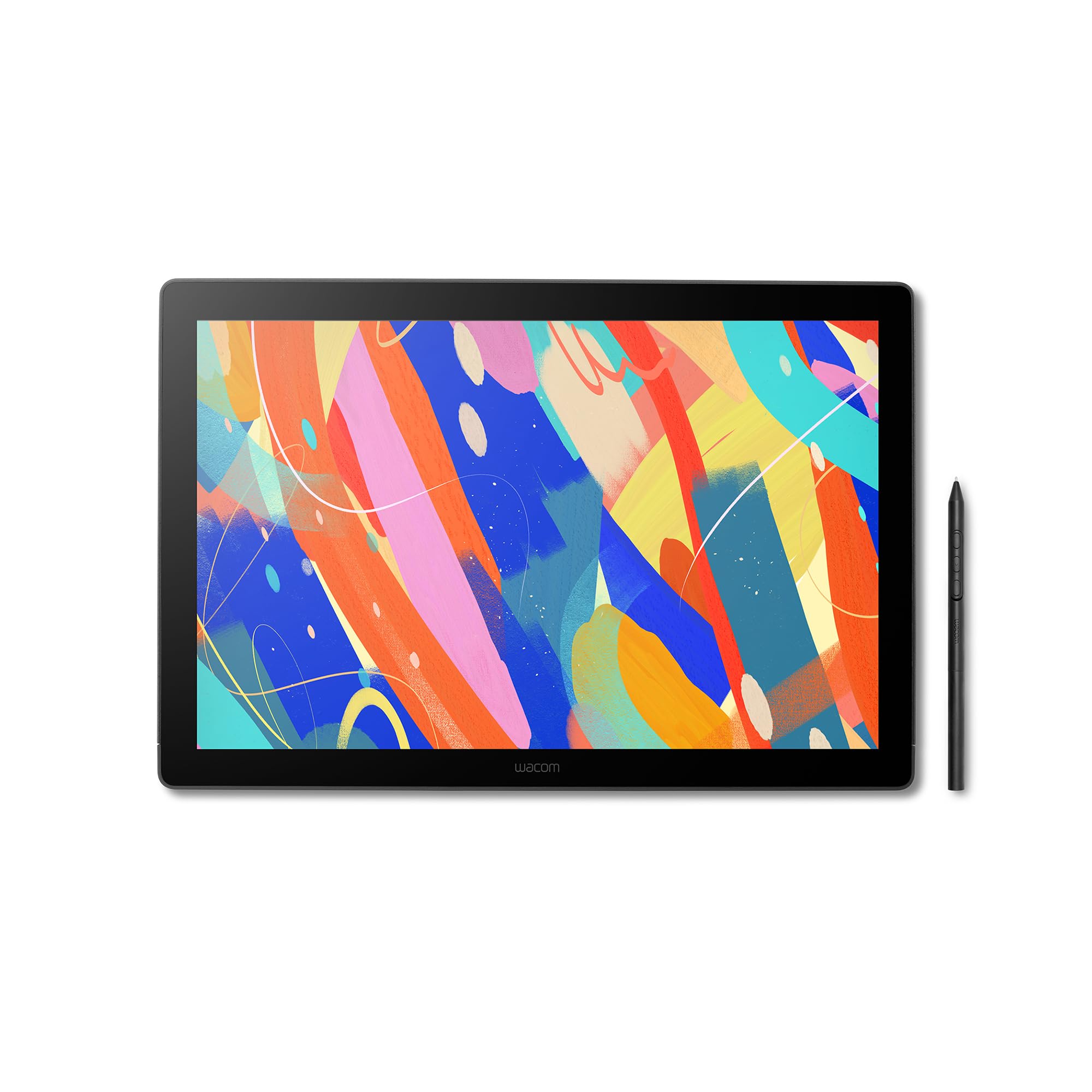
Wacom’s Cintiq 16 delivers a 16‑inch IPS display with 2560×1600 WQXGA resolution that makes fine detail—like skin texture in a portrait or grain in a landscape—crystal clear during retouching. The 100% sRGB and 99% DCI-P3 coverage ensures your color grading decisions translate accurately to modern displays and print outputs. The Pro Pen 3, with 8192 pressure levels and tilt support, captures even the lightest brush stroke for precise frequency separation.
The built-in fold-out legs provide a stable 20‑degree working angle out of the box, though you can add a separate adjustable stand for more ergonomic flexibility during long editing marathons. Connection is straightforward via USB-C with DisplayPort Alt Mode or Thunderbolt 3/4, requiring minimal cable clutter on your desk. The anti-glare glass reduces reflections, which is a real benefit when editing in rooms with overhead lighting.
Be aware that the Cintiq 16 does not include shortcut buttons on the display itself, so you will rely entirely on keyboard shortcuts or a separate shortcut remote. The Pro Pen 3 also lacks an eraser tail, which some editors miss for quick corrections in Photoshop. Despite these omissions, the combination of industrial-grade build, flawless driver stability, and screen quality makes this the top choice for photo professionals who need reliable color fidelity day after day.
Why it’s great
- 2560×1600 resolution offers extra vertical space for toolbars
- 99% DCI-P3 gamut suits modern photo software workflows
- Unmatched Wacom driver stability across Mac and PC
Good to know
- No built-in shortcut keys on the display
- Pro Pen 3 does not include an eraser
- Separate stand needed beyond the basic fold-out legs
2. XPPen Magic Drawing Pad

The Magic Drawing Pad is a standalone tablet that requires no computer—ideal for editing on location or in front of a client without being tethered to a laptop. Its 12.2‑inch screen runs at 2160×1440 resolution with a 3:2 aspect ratio that mimics the proportions of many camera sensors, making image composition feel natural. The X3 Pro Slim stylus offers an industry-first 16K pressure sensitivity, providing nearly double the sensitivity of standard 8K pens for hyper-fine brush adjustments.
Under the hood, the tablet runs Android 14 with 8GB of RAM and 256GB of internal storage (expandable via microSD up to 1TB). You can install Google Play apps directly—so Lightroom Mobile, Photoshop Express, and Clip Studio Paint run natively. The 8000mAh battery delivers up to 13 hours of continuous drawing, which easily covers a full day of editing without hunting for an outlet. TÜV Rheinland eye-care certification plus a ten-step soft light setting reduces eye strain during long grading sessions.
The AG-etched glass provides a paper-like feel that reduces glare while keeping the screen oil-resistant, so your hand glides without smudging. The anti-glare finish is particularly friendly for editing outdoors or under strong studio lights. The main trade-off is the Android software ecosystem, which lacks some full-featured desktop editing programs like Capture One or DaVinci Resolve. If you prefer a full desktop editing environment, this works best as a secondary sketching and touch-up device.
Why it’s great
- Completely standalone no computer needed at all
- 16K pressure sensitivity captures feather-light strokes
- 13-hour battery supports all-day field editing
Good to know
- Android 14 may not receive major OS updates
- Professional desktop editing software is not available
- Keyboard case accessory is mediocre for extended typing
3. Wacom Intuos Pro Large (2025)

For editors working across two monitors who prefer a pen tablet (drawing without looking at your hand), the Intuos Pro Large is purpose-built for that scenario. Its 16:9 active area—measuring 377x253mm—matches the aspect ratio of modern widescreen monitors perfectly, so cursor mapping feels one-to-one across multiple displays. The 2025 edition shaves the chassis down to just 4mm at its thinnest point while using a magnesium frame that feels both premium and lightweight.
The pen technology uses 8192 pressure levels with tilt recognition, and the Pro Pen 3 lets you customize the grip, balance, and button layout to suit your hand. Two mechanical dials at the top of the tablet can be mapped to brush size, zoom, or scrolling, which significantly speeds up photo editing tasks that would otherwise require keyboard combos. Bluetooth 5.3 enables wireless operation with near-zero latency, and tablet selector button lets you switch between two paired computers instantly—handy if you edit on both a Mac and PC.
This is a pure pen tablet without a screen, which means you need to develop or already have hand-eye coordination for looking at your monitor while drawing on the tablet. The learning curve is short for most editors, and the trade-off is a smaller desk footprint and a much lower price compared to a pen display of equal active area. Potential buyers on Windows 11 have reported occasional Bluetooth hiccups, though wired USB mode remains flawless.
Why it’s great
- Large 16:9 active area perfectly matches dual monitors
- Two programmable dials speed up zoom and brush size
- Magnesium build is durable yet very thin and portable
Good to know
- Requires hand-eye coordination with no screen
- Bluetooth on Windows 11 can be less reliable
- No touch sensitivity on the tablet surface
4. HUION Kamvas 13 (Gen 3)

The Kamvas 13 (Gen 3) brings premium features to a more accessible price point, making it a solid entry into pen displays for photo editing. Its 13.3-inch fully laminated screen eliminates the air gap between the glass and LCD, reducing parallax to nearly zero so your pen tip aligns exactly with the cursor. The anti-sparkle Canvas Glass 2.0 cuts down glare without introducing the distracting graininess that plagues some etched screens.
HUION’s latest PenTech 4.0 pushes pressure sensitivity to 16384 levels with a 2-gram initial activation force, making the pen responsive to the lightest touch for delicate dodging and burning work. Color accuracy is factory-calibrated to an average Delta E of less than 1.5, with 99% sRGB coverage across 16.7 million colors. This ensures that skin tones and gradients appear consistent straight from the box. The dual dial buttons and five programmable express keys give you quick control over brush size, zoom, and undo without lifting your hand from the tablet.
The 3-in-1 cable connection (HDMI, USB, and power) works reliably but adds cable clutter, and the full-featured USB-C cable is sold separately. The screen brightness tops out at 200 nits, which is fine for indoor studios but may feel dim in brighter environments. Despite these minor drawbacks, the combination of premium lamination, high pressure resolution, and accurate factory calibration makes this an excellent value for editors moving from a pen tablet to a display for the first time.
Why it’s great
- Full lamination eliminates parallax for precise cursor alignment
- 16K pressure with 2g IAF captures every feathering stroke
- Factory calibration with dE<1.5 ensures accurate color out of the box
Good to know
- Included 3-in-1 cable creates noticeable desk clutter
- Full-featured USB-C cable is an additional purchase
- Screen brightness of 200 nits is average for bright rooms
5. XP-PEN Artist 13.3 Pro V2
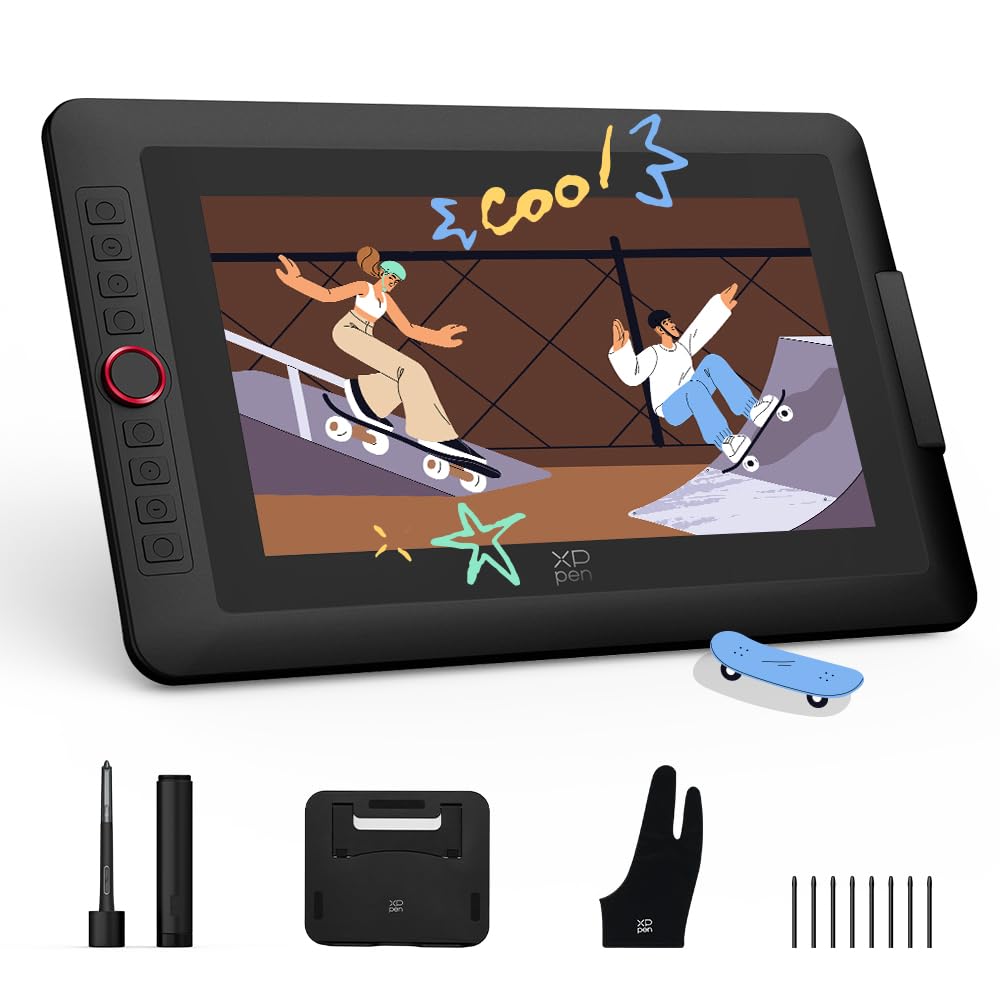
XP-PEN’s Artist 13.3 Pro V2 stands out for its wide cinema-grade color gamut, covering 99% sRGB, 89% Adobe RGB, and an impressive 95% DCI-P3. This makes it one of the best budget-friendly pen displays for editors who need to grade video frames or edit photos destined for print. The fully laminated 13.3-inch FHD screen uses an AG anti-glare film that mimics the tooth of paper while keeping reflections to a minimum.
The X3 Pro Smart Chip Stylus delivers a market-leading 16,384 levels of pressure sensitivity—double the resolution of standard 8K pens—with a center accuracy of plus or minus 0.4mm. A built-in digital eraser on the tail lets you quickly correct mistakes in Photoshop without switching tools. The iconic red dial roller and eight customizable express keys streamline repetitive photo tasks, such as cycling through brush sizes or adjusting layer opacity, directly from the tablet surface.
This model also supports dual-mode operation: you can use it as a standard pen display or turn off the screen to use it like a traditional pen tablet, which saves laptop battery and reduces neck fatigue during long sessions. The metal back panel promotes better heat dissipation than plastic alternatives, keeping the screen cool during extended use. The main consideration is that full-featured USB-C cable connection requires a computer with USB3.1 DP1.2 support—otherwise, you must use the included 3-in-1 adapter.
Why it’s great
- 95% DCI-P3 gamut is rare at this price tier for photo editing
- 16K pressure sensitivity with sub-half-mm accuracy
- Pen display and pen tablet dual-mode for flexible workflows
Good to know
- Full USB-C single-cable connection requires specific hardware
- Firmware update needed before use on some Chromebooks
- Android and Linux compatibility limited with Bluetooth
6. RubensTab T11 Pro
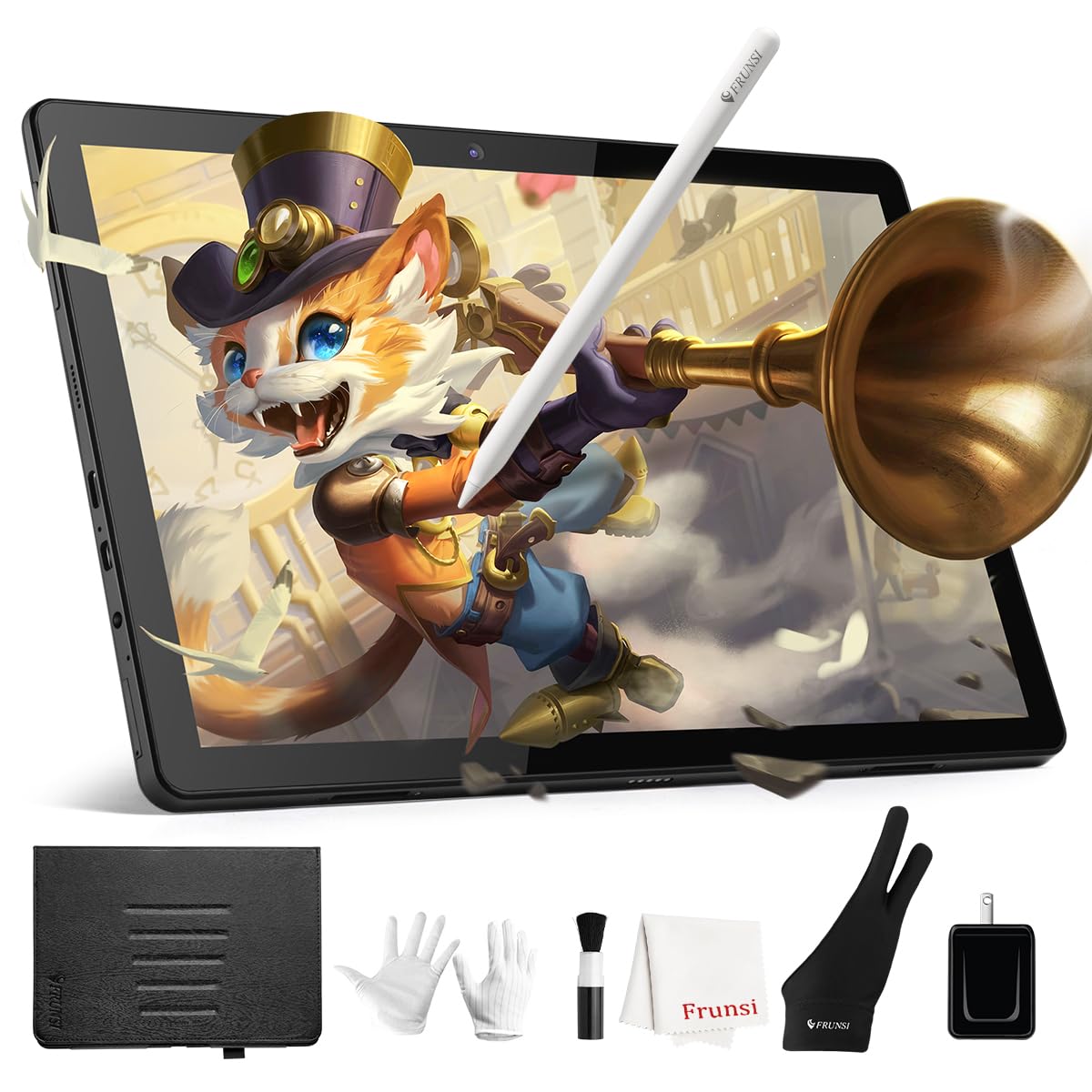
The RubensTab T11 Pro is a standalone drawing tablet with a 10.1-inch Full HD IPS screen that runs Android and comes with pre-installed drawing apps, making it a grab-and-go solution for editors who want to do quick touch-ups or color adjustments away from their main workstation. The 1920×1200 resolution display provides sharp enough detail for reviewing image composition, and the 5800mAh battery offers roughly five hours of continuous use per charge.
The included battery-free pressure-sensitive pen offers 1024 levels of sensitivity, which is modest compared to the 8K and 16K pens on this list but still adequate for basic photo retouching like spot healing or curve adjustments in mobile apps like Sketchbook or Krita. The screen’s multi-touch support allows intuitive pinch-to-zoom and panning gestures that speed up image inspection. A protective case with adjustable stand is included in the box, making it easy to prop up during use.
The operating system is Android, which means you are limited to mobile versions of photo software, and the pen’s 1024 pressure levels may feel coarse for advanced dodging and burning work. The built-in Wi-Fi gives you access to cloud storage for importing and exporting edited images. This tablet works best as a portable sketchbook and quick-edit companion rather than a primary editing device for professionals who rely on full desktop software like Capture One or the desktop version of Photoshop.
Why it’s great
- Fully standalone works without a computer or smartphone
- Pre-installed apps let beginners start editing immediately
- Battery-free pen with case and stand included
Good to know
- 1024 pressure levels limit precision in fine photo work
- Android ecosystem lacks professional desktop editing software
- Shorter battery life than other standalone options
7. HUION Inspiroy Dial 2

The Inspiroy Dial 2 brings wireless photo editing to the mid-range price bracket with reliable Bluetooth 5.0 connectivity that keeps your desk free of cables for up to 18 hours per charge. The 10.5 x 6.56-inch active area is generous enough for comfortably navigating a 27-inch monitor without excessive travel. The high-friction textured surface adds a pleasant paper-like resistance that helps maintain pen control during precise edits.
The standout feature here is the dual-dial system—two physical wheels let you assign one to zoom and one to brush size, or any other paired shortcuts, allowing changes on the fly without taking your eyes off the image. PenTech 3.0 delivers responsive 8K pressure sensitivity with minimal lag, and the battery-free stylus with soft silicone grip is comfortable for long retouching sessions. The symmetrical design works equally well for left-handed editors who often find tablet shortcuts reversed.
Wireless performance depends on your computer’s Bluetooth adapter; some users report occasional dropouts on older Windows laptops, though a wired USB-C connection eliminates this entirely. The pen lacks a textured grip area for your thumb, so the barrel can rotate in your hand if you tend to hold it loosely. Despite these minor issues, the dual-dial workflow advantages and long wireless runtime make this a strong contender for editors wanting to declutter their workspace.
Why it’s great
- 18-hour battery life supports multi-day wireless editing
- Dual dials enable quick brush and zoom adjustments
- Symmetrical design is comfortable for left-handed users
Good to know
- Wireless stability varies depending on computer hardware
- Pen barrel lacks shape to prevent rotation in hand
- Included box can turn on tablet during storage, draining battery
8. XPPen Deco Pro LW Gen 2

For editors who prefer a large surface area without buying a pen display, the Deco Pro LW Gen 2 offers an A3-sized working field (9×6 inches of active area) that matches the physical footprint of a standard paper sheet. This generous surface lets you make broad arm movements during large-scale editing tasks like retouching full-body portraits or working on high-resolution panoramas. The X3 Pro Stylus provides 16K pressure sensitivity with a 60-degree tilt function, giving you fine control over soft brush gradients.
The separate Mini Keydial remote adds 10 physical keys with four customizable sets, so you can keep your most-used shortcuts—undo, brush size, zoom, and save—at your fingertips without mapping them across the driver. Bluetooth 5.0 and a USB wireless receiver offer flexible connectivity options, and the tablet pairs with two devices simultaneously for quick switching between a laptop and desktop. The metal back plate improves heat dissipation, keeping the tablet cool during marathon editing sessions.
Some users have noted that nibs can wear down relatively quickly on the textured surface, which may require more frequent replacement compared to smoother tablets. The bundled wireless remote is an extra piece to keep track of, though it clips into a slot on the tablet for storage. The pressure curve out of the box may need slight customization in the driver to feel perfectly linear for photo work, but once dialed in, the large canvas and responsive pen make this a fantastic pen tablet for desktop editing.
Why it’s great
- A3-sized active area allows full-arm movements for detailed retouching
- Separate Mini Keydial remote provides 40 custom shortcut slots
- 16K pressure and tilt support for nuanced brush control
Good to know
- Nib wear is faster on the textured surface
- Wireless remote is an extra item to manage
- Pressure curve may need initial driver customisation
9. HUION Inspiroy 2 Large

The Inspiroy 2 Large is a no-frills pen tablet that delivers a 10.5 x 6.56-inch active area at a very accessible price, making it an ideal first tablet for editors who want to try pen-based retouching without a large investment. PenTech 3.0 provides smooth, responsive tracking with no noticeable lag or wobble for tasks like masking, healing brush work, and curve adjustments in Lightroom or Photoshop. The battery-free PW110 stylus has a slim body and soft silicone grip that stays comfortable during extended editing sessions.
A unique scroll wheel and eight customizable press keys let you assign essential shortcuts such as undo, brush size, and zoom across up to three different software profiles. This means you can have one shortcut set for Photoshop, another for Lightroom, and a third for Capture One, switching between them seamlessly via the tablet’s settings. The tablet is ultra-portable at just 1.2 pounds, slipping easily into a laptop bag for on-the-go editing, and setup takes only a USB-C cable connection plus a driver download.
The tablet requires a computer to function—it has no internal power or screen—so it relies entirely on your existing monitor for visual feedback. The HUION driver software can occasionally map the tablet buttons incorrectly on Linux systems, and the pressure sensitivity curve has a small dead zone at the lightest touch that can be corrected through driver calibration. For pure value, however, this tablet provides the same core functionality as more expensive models, making it a reliable gateway into pen-based photo editing.
Why it’s great
- Generous active area for its accessible price tier
- Scroll wheel and three-set shortcut keys speed up editing
- Battery-free stylus with comfortable silicone grip
Good to know
- Driver on Linux may map buttons to wrong screen area
- Pen lacks a distinct shape to prevent rotation in hand
- Pressure curve has a small dead zone at the lightest touch
FAQ
Do I need a pen display or a pen tablet for photo editing?
How much pressure sensitivity is enough for photo retouching?
Can I use a drawing tablet with Lightroom or Capture One?
What screen resolution should my pen display have for photo work?
Does tilt sensitivity matter for photo editing?
Final Thoughts: The Verdict
For most people, the best drawing tablets for photo editing winner is the Wacom Cintiq 16 because it combines a 2.5K resolution display with 100% sRGB factory accuracy and the most stable driver ecosystem, removing variables from your color-critical workflow. If you want a standalone device to edit on the go without a laptop, grab the XPPen Magic Drawing Pad. And for editors who prefer a pen tablet for its desk-friendly footprint and dual-monitor mapping, nothing beats the Wacom Intuos Pro Large.

Mo Maruf
I created WellFizz to bridge the gap between vague wellness advice and actionable solutions. My mission is simple: to decode the research and give you practical tools you can actually use.
Beyond the data, I am a passionate traveler. I believe that stepping away from the screen to explore new environments is essential for mental clarity and physical vitality.