Our readers keep the lights on and my smoothie glass nicely filled. As an Amazon Associate, I earn from qualifying purchases.
After a long day on the trail, the last thing you want is a soggy, flavorless pouch of mush. The right dehydrated meal should be easy to prepare, pack light, and actually taste like real food when you need that calorie-dense reward the most. Sorting the satisfying options from the bland disappointments is the real challenge.
I’m Mohammad Maruf — the founder and writer behind WellFizz. My approach to dehydrated hiking food is rooted in hours of cross-referencing nutritional profiles, rehydration ratios, and calorie-per-ounce density across dozens of pouches.
Whether you need a quick lunch or a hearty dinner, finding the best dehydrated hiking food means focusing on prep time, sodium levels, and portion accuracy for your specific energy needs.
How To Choose The Best Dehydrated Hiking Food
Selecting the right fuel for the trail goes beyond just grabbing any pouch off the shelf. You need to balance weight, preparation method, nutritional value, and taste to keep your energy up without weighing down your pack.
Calorie Density per Ounce
The most critical metric for backpacking is calories per ounce. A meal that delivers 120 or more calories per ounce is considered efficient. Anything below 100 means you’re carrying mostly water weight in the form of packaging or filler ingredients. Prioritize meals with higher fat and protein content to maximize energy without adding bulk.
Rehydration Time and Water Usage
Cold-soaking versus hot-water preparation changes your entire camp routine. Some meals rehydrate in 8 minutes with water right off the boil, while others need 20 minutes of simmering. For long days, a pouch that rehydrates in 10 minutes or less saves fuel and time. Also check the required water volume — some pouches need up to 2 cups, which means carrying extra water weight if you’re dry camping.
Sodium and Additive Profile
After a sweaty day, some sodium is beneficial for electrolyte balance, but too much can cause bloating and excessive thirst. Look for meals with under 800 mg of sodium per serving. Also avoid artificial flavors, colors, and MSG if you have a sensitive stomach — the last thing you want is a food reaction miles from the trailhead.
Quick Comparison
On smaller screens, swipe sideways to see the full table.
| Model | Category | Best For | Key Spec | Amazon |
|---|---|---|---|---|
| Meat Shredz Premium Dried Pulled Pork | Protein Snack | Cold-soaked trail lunches & protein topping | 13.2 oz total; 1-year shelf life | Amazon |
| Mountain House Chicken & Mashed Potato | Freeze-Dried Entrée | Quick hot dinner with proven shelf life | 2 servings; 10 min prep | Amazon |
| Backpacker’s Pantry Three Sisters Quinoa | Vegan Entrée | Plant-based hikers & spice lovers | 2 servings; 14g protein | Amazon |
| ReadyWise 18-Serving Favorites Box | Emergency Kit | Extended trips & emergency storage | 18 servings; 25-year shelf life | Amazon |
| SOPACKO MRE 3-Pack | Military Ration | No-cook emergency meals & car camping | 3 entrees; self-heating flameless | Amazon |
In‑Depth Reviews
1. Meat Shredz Premium Dried Pulled Pork
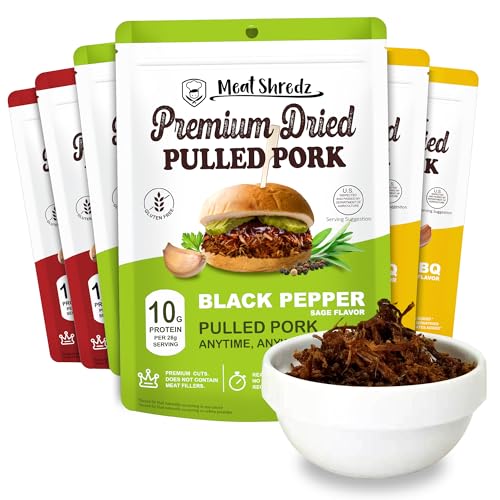
This isn’t your typical freeze-dried entrée — it’s a dehydrated meat product that rehydrates into tender pulled pork with just a splash of cold water. The 6-pack includes Black Pepper Sage, Carolina BBQ, and Sriracha flavors, each pouch weighing only 2.2 ounces but packing serious protein density. Backpacker Magazine awarded this their “Essential Backpacking Food” designation, and for good reason: it adds real meat texture to any trail meal without requiring a stove.
The texture is remarkably tender compared to standard jerky, so you won’t spend 20 minutes chewing a single bite. It works as a standalone high-protein snack straight from the pouch, but shines when mixed into ramen, soup, scrambled eggs, or even cold-soaked tortillas. With no MSG, artificial preservatives, or gluten, it’s a clean protein source that keeps your energy steady without the heavy sodium load common in other dehydrated meals.
Each pouch is resealable, making it easy to portion out across multiple days. The Carolina BBQ flavor has a sweet-tangy mustard profile that pairs well with grains, while Sriracha brings the heat for those who need spice. It costs more per ounce than standard dehydrated meals, but the protein-to-weight ratio is unmatched for active hikers who value real food taste.
Why it’s great
- Rehydrates with cold water in seconds — no stove required
- Tender texture that outperforms typical jerky or canned meat
- Versatile as a snack, topping, or main protein source
Good to know
- Premium pricing compared to bulk freeze-dried entrees
- Only 2.2 oz per pouch — plan multiple pouches for a full dinner
2. Mountain House Chicken & Mashed Potato Dinner
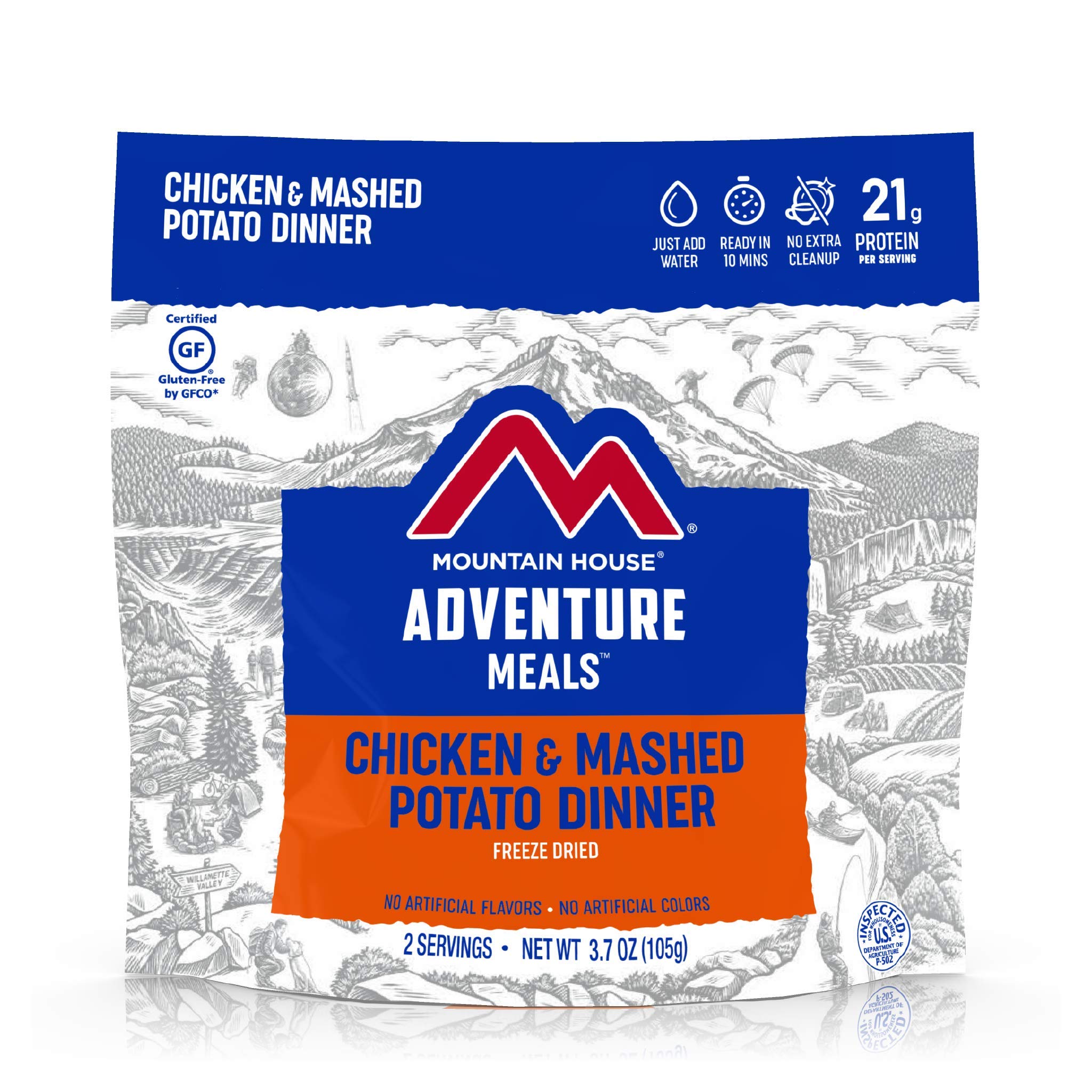
Mountain House has earned its reputation with a 30-Year Taste Guarantee, and this Chicken & Mashed Potato pouch is a benchmark for the category. The meal features real chicken pieces and creamy mashed potatoes seasoned with herbs and chives. Prep is straightforward — just add hot water directly to the pouch and eat in under 10 minutes with zero cleanup. The portion is officially listed as two servings, but most backpackers find it fits a single hungry adult after a long day.
The texture is a clear standout — the potatoes rehydrate fluffy without clumping, and the chicken pieces retain a satisfying bite that doesn’t turn to mush. Some users find the seasoning subtle and add extra garlic, rosemary, or pepper, but the base flavor is clean and avoids the artificial taste that plagues many competitors. The pouch holds heat for a long time, so either stir thoroughly or transfer to a bowl to cool faster if you’re in a hurry.
This meal is certified gluten-free by GFCO and contains no artificial flavors or colors. The pouch is also recyclable through TerraCycle, which matters if you’re trying to minimize trail waste. For a hot, filling dinner that requires minimal fuel and time, this is a proven staple that has satisfied hikers for decades.
Why it’s great
- Prepares in under 10 minutes with just boiling water
- Texture stays fluffy and non-clumpy after rehydration
- 30-year shelf life backed by a taste guarantee
Good to know
- Flavor profile may be too mild for those who prefer bold seasoning
- Retains heat long after cooking — best transferred to a bowl
3. Backpacker’s Pantry Three Sisters Quinoa and Beans
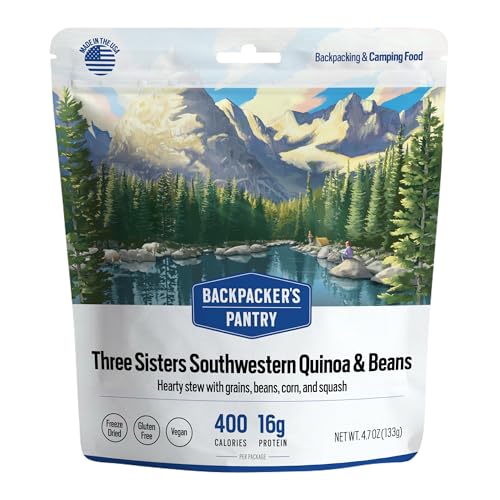
This plant-based entrée from Backpacker’s Pantry delivers 14 grams of protein per pouch through a combination of quinoa, beans, and spices. The flavor leans mildly spicy with cumin and chili notes, making it a genuinely satisfying option for vegan, vegetarian, and gluten-free hikers alike. The 7.6-ounce pouch is marketed as two servings, but most hikers report it as a single filling portion — one reviewer noted it was hard to finish after a full day on the trail.
Rehydration takes about 15 to 20 minutes, which is on the longer end for this category. Users strongly recommend using a reflectix cozy to retain heat during the soak, as temperature drops can leave the grains under-rehydrated and the seasoning clumped at the bottom. Thorough stirring halfway through the rest time makes a noticeable difference in texture. Once properly hydrated, the quinoa stays fluffy rather than mushy, and the black beans maintain their structure.
This meal is part of the 1% for the Planet program, with Backpacker’s Pantry donating a portion of sales to environmental nonprofits. The spice level is noticeable but not overwhelming — it hits the right spot after a long day without causing digestive distress. For plant-based hikers who want a warm, nourishing meal that doesn’t rely on processed soy proteins, this is a strong choice.
Why it’s great
- Clean plant-based protein from quinoa and beans, no soy fillers
- Genuinely spicy flavor that satisfies after a long hike
- Supports environmental nonprofits through 1% for the Planet
Good to know
- Rehydration requires 15-20 minutes and a cozy for best results
- Seasoning tends to clump at the bottom without thorough stirring
4. ReadyWise 18-Serving Favorites Box

The ReadyWise Favorites Box bundles 18 servings across three pouches of different entrées, including Creamy Pasta & Vegetables, Cheesy Lasagna, and Tomato Basil Soup with Pasta. This is an entry-level approach to dehydrated hiking food — a bulk option designed for extended trips, emergency preparedness, or car camping where cooking gear is available. The 25-year shelf life makes it a viable long-term storage solution as well.
These are dehydrated meals (not freeze-dried), which means they require boiling water and actual cooking time to fully rehydrate the pasta and noodles. Some users report that the serving size feels overstated — one pouch supposedly serving six people may realistically feed three to four hungry adults. The flavor profile is generally described as decent but not exciting, with some pouches tasting bland and requiring added seasoning for palatability. The Creamy Pasta & Vegetables is the most consistent performer in terms of texture.
Sodium levels are high due to the preservation method, which is understandable for an emergency food product but worth noting if you’re watching your intake on the trail. The pouches lack single-serving instructions, so you’ll need to measure portions yourself. For the price point, however, you get a substantial volume of calories that can cover a multi-day trip or restock a pantry without breaking your budget.
Why it’s great
- High volume of servings for an affordable per-meal cost
- 25-year shelf life suits long-term emergency storage
- Stackable packaging fits easily into a pantry or bug-out bag
Good to know
- Requires actual cooking with boiling water — not instant rehydration
- Serving sizes are smaller than advertised for hungry hikers
5. SOPACKO MRE 3-Pack

This 3-pack of military-style MREs (Meals Ready to Eat) from SOPACKO provides a no-cook solution for situations where you can’t boil water. Each pack includes three assorted entrées — common options include Chicken Burrito Bowl, Pepperoni Pizza, and Cheese Tortellini in Tomato Sauce. The flameless ration heater (FRH) uses a water-activated chemical reaction to heat the entrée pouch in about 10 minutes, delivering a hot meal without any stove or fuel.
The assorted flavors vary significantly in quality. Users consistently praise the Chicken Burrito Bowl and Mexican Chicken Stew as the best options, while the Elbow Macaroni in Tomato Sauce and Creamy Spinach Fettuccine are widely considered the weakest. Each MRE also includes side items like trail mix, crackers with chocolate sauce, coffee, electrolyte drink mix, and Tabasco, which adds variety beyond just the entrée. Inspection dates typically fall within a 3-year window from packaging, so check the date upon arrival to gauge remaining shelf life.
At over a pound per MRE, these are heavier than dehydrated pouches, making them better suited for car camping, emergency kits, or short backpacking trips where weight isn’t critical. The self-heating mechanism is fun and appealing, especially for kids or new campers. The heaviness and packaging bulk mean this isn’t an ultralight option, but the convenience of a hot meal without any cooking gear is unmatched for certain scenarios.
Why it’s great
- Self-heating with flameless ration heater — no stove needed
- Includes sides and accessories for a complete meal experience
- Authentic US military-style rations with reliable quality control
Good to know
- Heavy — each MRE weighs over a pound, not for ultralight hiking
- Flavor consistency varies widely between entrée options
FAQ
Can I rehydrate dehydrated hiking food with cold water?
How do I store opened pouches on a multi-day trip?
What sodium level is acceptable for dehydrated hiking food?
Final Thoughts: The Verdict
For most hikers, the best dehydrated hiking food winner is the Meat Shredz Premium Dried Pulled Pork because it delivers unmatched protein density and versatility with or without a stove. If you want a classic hot dinner with proven shelf stability, grab the Mountain House Chicken & Mashed Potato Dinner. And for plant-based hikers seeking a spicy, nourishing entrée, nothing beats the Backpacker’s Pantry Three Sisters Quinoa and Beans.

Mo Maruf
I created WellFizz to bridge the gap between vague wellness advice and actionable solutions. My mission is simple: to decode the research and give you practical tools you can actually use.
Beyond the data, I am a passionate traveler. I believe that stepping away from the screen to explore new environments is essential for mental clarity and physical vitality.