Our readers keep the lights on and my smoothie glass nicely filled. As an Amazon Associate, I earn from qualifying purchases.
Deer are opportunists, not nutritionists. A belly full of plain corn might keep them alive through a cold snap, but it won’t build the bone mass, muscle fiber, or antler density you’re actually after. The difference between a passing buck and a returning resident is often measured in the protein percentage of the feed you put out.
I’m Mohammad Maruf — the founder and writer behind WellFizz. I’ve spent countless hours analyzing the nutritional breakdowns, palatability triggers, and rumen-support technologies across the most popular deer feed brands on the market today.
The goal is straightforward: find the formulation that delivers the highest bioavailable protein alongside the scents and minerals deer crave. This guide breaks down seven top contenders to help you identify the best deer protein feed for your land, budget, and long-term herd management.
How To Choose The Best Deer Protein Feed
Not all deer feed is created equal. A high protein percentage printed on the bag means little if the feed is unpalatable, lacks the correct amino acid profile, or sits in a pile rotting after the first rain. You need to look past the marketing and focus on the mechanics of deer digestion and the specific nutritional goals you have for your herd.
Crude Protein vs. Bypass Protein
Crude protein is the total nitrogen content measured in the lab, but not all of it is available to the deer. Bypass protein technology (like Purina’s AntlerMax system) delivers amino acids directly to the small intestine, bypassing the rumen where microbes can break them down first. For serious antler growth, look for feeds that specify bypass protein rather than just quoting the crude number.
Form Factor and Climate Considerations
Blocks last longer in wet environments and resist spoilage, but they limit how much a deer can consume in a single visit. Pellets offer faster intake and more precise nutrition, but they can dissolve or mold if exposed to moisture without a covered feeder. Whole corn is cheap and high in energy, but it is low in protein and can cause rumen acidosis if deer eat too much too quickly without a buffer system.
Flavor and Aroma Engineering
A feed that stays fresh but smells like plain grain will be ignored if there is better forage nearby. The best feeds use added apple, molasses, or proprietary fruit blends to create a scent plume that travels across property boundaries. This long-range pull is what turns deer passing through into deer that bed down and return daily.
Quick Comparison
On smaller screens, swipe sideways to see the full table.
| Model | Category | Best For | Key Spec | Amazon |
|---|---|---|---|---|
| Purina AntlerMax WaterShield 20 | Pellet | Max antler growth & mass | 50 lb bag, 20% protein, bypass tech | Amazon |
| Purina Antler Advantage 20 ARS | Pellet | Rumen health & digestion | 50 lb bag, 20% protein, ARS tech | Amazon |
| Herron Outdoors 4-4-2 Sweet Apple | Pellet Mix | Attraction & winter survival | 10 lb bag, 17% protein, apple aroma | Amazon |
| Herron Outdoors 4-4-2 Blaze Orange | Pellet Mix | Visual attractant & high-calorie | 10 lb bag, 17% protein, blaze pellets | Amazon |
| Ernst Grain Whole Corn (46 lb) | Whole Corn | Bulk energy, multi-species | 46 lb bag, natural clean corn | Amazon |
| Ridley 41251 Monster Deer Block | Block | Low-maintenance supplement | 25 lb block, self-fed minerals | Amazon |
| Antler King Apple Grainiac Block | Block | Fast attraction & convenience | 20 lb block, 16% protein | Amazon |
In‑Depth Reviews
1. Purina AntlerMax WaterShield Climate Guard 20
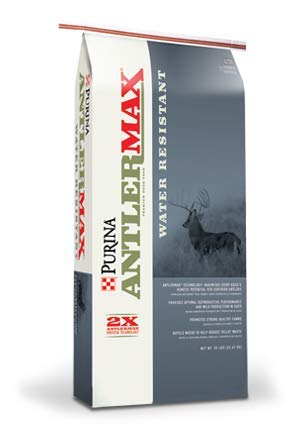
Purina’s AntlerMax line is the benchmark in the deer feed category, and the WaterShield Climate Guard 20 is the summit of that range. The 20% crude protein formulation is delivered via AntlerMax By-Pass Protein technology, which shunts essential amino acids past the rumen directly to the bloodstream where they can be used for antler mineralization and muscle maintenance. The WaterShield coating helps pellets resist moisture breakdown, keeping feed viable longer in damp conditions or open troughs.
The mineral package is equally impressive. Organic trace minerals — including zinc, copper, and manganese — support immune function and bone density, while the calcium-to-phosphorus ratio is dialed specifically for rack development. Users consistently report that deer wait at the garage door for this feed, a testament to its high palatability and consistent apple-enhanced flavor profile. The 50-pound bag provides a substantial volume for established feeding programs without requiring frequent re-orders.
This feed is designed for managers who prioritize biological results over short-term convenience. It performs best in free-choice feeders where deer can self-regulate intake. The Climate Guard feature is a genuine advantage for properties with wet winters, as it keeps the feed from caking into a moldy mass after a few days of rain. It is also ideal for areas with sparse natural forage, as the dense nutrient profile compensates for low-quality browse.
Why it’s great
- Bypass protein technology directly supports antler mass
- WaterShield coating reduces spoilage in wet conditions
- Optimal vitamin D and mineral ratios for bone strength
Good to know
- Premium price point reflects the advanced formulation
- Bulk buyers may find lower per-pound cost at local feed stores
2. Purina Antler Advantage Deer 20 ARS

The Antler Advantage 20 ARS takes a different but equally effective approach. Instead of bypass protein alone, this feed focuses on rumen health through its Advanced Rumen Support system, which uses seaweed-derived calcium to stabilize rumen pH and a prebiotic to support microbial populations. A healthy rumen means better overall nutrient extraction from every bite of feed and forage, making this a fantastic choice for deer transitioning between natural browse and supplemental feed.
At 20% crude protein, it matches the AntlerMax in raw percentage but shines in digestive tolerance. The strong molasses and apple flavors create a powerful attractant that brings deer running when they hear the garage door — a detail repeated across multiple verified reviews. The 50-pound bag size offers excellent value when compared to boutique 10-pound blends, and the palatability ensures minimal waste from picky individuals.
This is the best all-around option for property owners who want to support antler development without worrying about digestive upset. It is suitable for all life stages, from fawns to mature bucks, and the prebiotic content gives it an edge during seasonal transitions when deer are shifting from winter browse to spring growth. For most users, this represents the best balance of cost, nutrition, and attraction power in a single bag.
Why it’s great
- ARS technology prevents rumen acidosis from sudden feed changes
- High palatability with consistent intake across the herd
- 50-pound bag offers strong value for daily feeding
Good to know
- Some deer may still need a transition period from corn-heavy diets
- One isolated report of local deer ignoring the pellets
3. Herron Outdoors 4-4-2 Sweet Apple Protein Deer Feed

Herron Outdoors redesigned the feed ratio with their 4-4-2 formula: 40% protein pellets, 40% whole-kernel corn, and 20% sweet apple-flavored attractant pellets. That adds up to a max of 17% total crude protein, which is lower than Purina’s 20% options, but the blend is engineered for something different — maximum long-range pulling power. The sweet apple pellets create a vapor trail that travels far enough to drag deer from neighboring properties onto your land.
User reports confirm that deer flock to this feed within hours of deployment, and many reviewers noted that it outperformed even their winter lettuce in attractiveness. The 10-pound bag size is perfect for scouting, camera surveys, and small-property feeding, but it also means heavier feeders will need to reorder frequently. The resealable, odor-controlled bag is a thoughtful touch for keeping the scent locked in until deployment.
This is not a protein-maximizing feed — it is an attraction-first feed with a respectable protein floor. If your goal is to photograph, hunt, or simply observe more deer activity around a specific stand or camera, the Herron 4-4-2 Sweet Apple will outperform many higher-protein options because it gets eaten first. It also works exceptionally well as a transition feed to bring deer into a new area before switching to a higher-protein maintenance option.
Why it’s great
- Extremely fast attraction — deer appear within hours
- Resealable bag preserves freshness between feedings
- Works for hogs and other wildlife, not just deer
Good to know
- 10-pound bag is consumed quickly by a hungry herd
- 17% protein is lower than Purina’s dedicated protein feeds
4. Herron Outdoors 4-4-2 Blaze Orange Protein Deer Feed
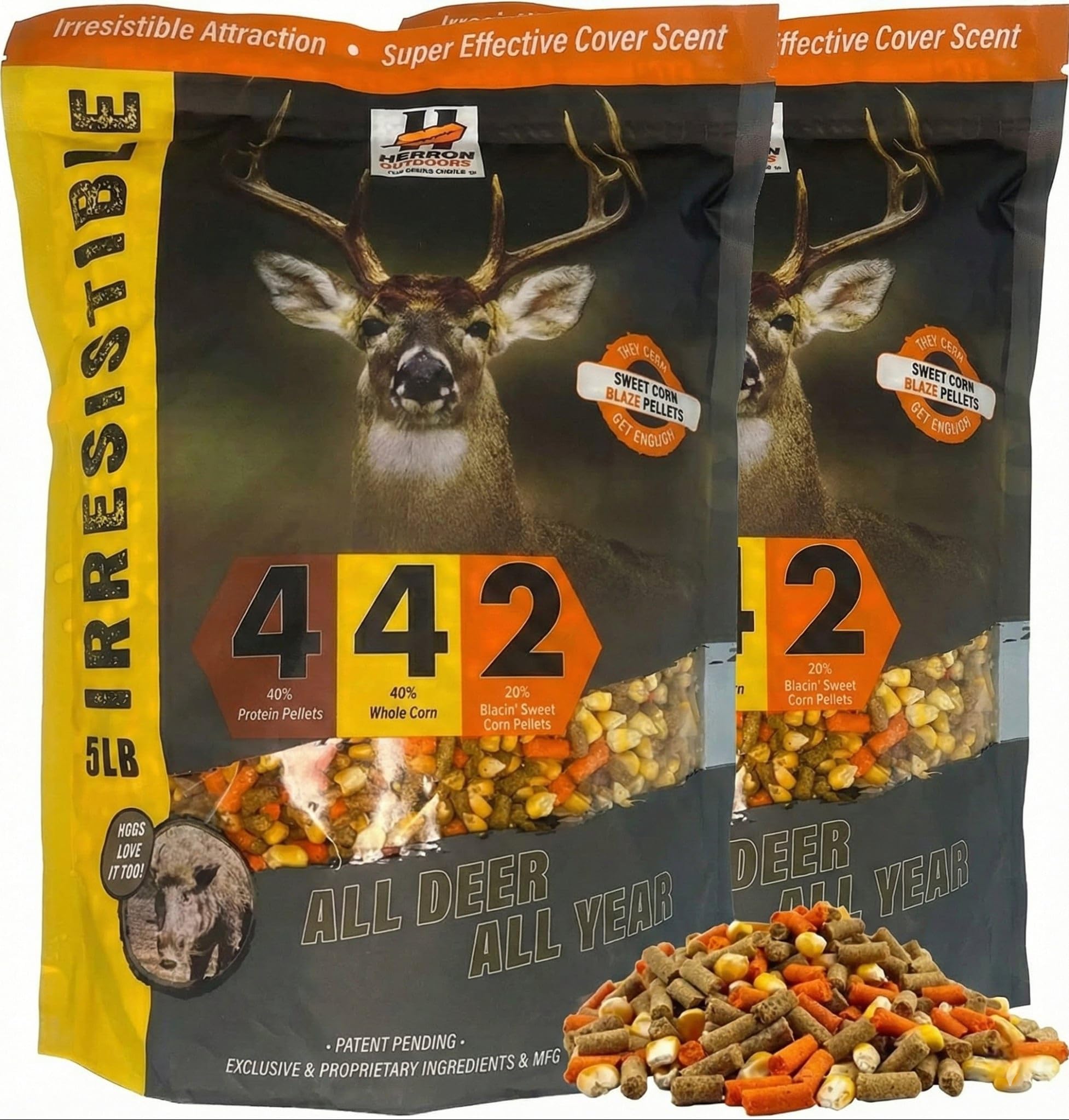
The Blaze Orange variant of the Herron 4-4-2 formula swaps the sweet apple pellets for visible orange attractant pellets. This is a deliberate design choice for hunters who want to monitor which block or pile is being used from trail camera footage without relying on scent alone. The bright orange pellets are impossible to miss on camera, giving you immediate visual confirmation of feeding activity at a specific location.
Nutritionally, it mirrors the Sweet Apple version with a 17% crude protein ceiling, but the flavor profile is slightly different — the Blaze Orange pellets carry a proprietary sweet blend that users describe as highly effective. Notably, one reviewer bought it for squirrels and ended up with a yard full of deer ignoring their winter lettuce in favor of this feed. The 10-pound bag is resealable and packed in the same heavy-duty, odor-controlled material.
This feed is a tactical tool for hunters and land managers who need to know exactly when and where deer are hitting a feed site. The high visibility reduces guesswork and lets you adjust your setup based on hard data from your cameras. It also keeps hogs and other wildlife engaged, making it a versatile choice for properties with mixed species pressure.
Why it’s great
- High-visibility pellets confirm feeding activity on camera
- Aggressive sweet aroma for long-range attraction
- Suitable for both hunting setups and backyard observation
Good to know
- 10-pound bag is best for scout deployment, not mass feeding
- Price per pound is higher than bulk corn or 50-pound pellets
5. Ernst Grain & Livestock Whole Corn (46 lb)

Let’s be clear: whole corn is not a protein feed. Ernst Grain’s 46-pound bag of clean shelled corn delivers around 8-9% crude protein, far below the 16-20% range needed for serious antler development. However, it earns a place on this list because it is the most versatile and cost-effective base ingredient you can use in a feeding program. The corn comes from a seventh-generation family farm and is consistently described by users as clean, dry, and free of the dusty fillers found in cheaper feeds.
Deer and squirrels strongly prefer Ernst corn over other brands — one reviewer reported that deer sniffed and rejected a competitor’s corn as “not smelling right” while eagerly consuming Ernst. The 46-pound bag offers a cheap per-pound price that makes it ideal for winter emergency feeding, attracting large numbers of deer before the rut, or mixing with higher-protein pellets to stretch your budget. It is also safe for chickens, ducks, rabbits, and geese.
Use this as a companion product rather than a standalone protein source. Mix it 50/50 with Purina or Herron pellets to reduce overall cost while maintaining a respectable protein floor. The clean, non-GMO sourcing appeals to land managers who want transparency in their feed supply. If you are feeding a large herd through a harsh winter, this is the most economical way to keep calories flowing.
Why it’s great
- Excellent value at 46 pounds for multi-species feeding
- Clean corn with minimal dust or plant debris
- Ideal as a base for mixing with protein pellets
Good to know
- Protein content is too low for antler growth as a sole feed
- Whole corn can cause rumen acidosis without a transition
6. Ridley 41251 Monster Deer Block

The Monster Deer Block is a 25-pound mineral and vitamin supplement designed for self-feeding. It is not a high-protein feed — the block format limits consumption speed and total protein intake — but it serves a critical role as a year-round mineral source. The block is intended to be left in the field for deer to lick and nibble as needed, providing a steady trickle of calcium, phosphorus, and trace minerals without the need for a feeder or daily refills.
User reports are mixed but informative. Many Wisconsin deer rely on it as a backup food source when natural forage is scarce, and it holds up well in tough weather. However, some reviewers noted that does and fawns consumed it readily while mature bucks showed less interest. Bears have been known to carry off entire blocks, which speaks to both the appeal and the risk of using a block in bear-heavy areas. The 25-pound size is manageable for one person to carry and place.
This product is best used as a supplemental mineral station alongside a dedicated protein feed. Place it near water sources or staging areas to encourage regular visitation. It will not drive antler growth on its own, but it fills the mineral gap that many natural forages lack, supporting overall herd health and bone density through the off-season.
Why it’s great
- Zero-maintenance — just drop it and let deer self-feed
- Resists weather better than loose minerals or pellets
- Supports mineral intake during antler hardening phase
Good to know
- Protein content is low — not a primary feed source
- Bucks may show less interest than does and fawns
- Can be carried off by bears in active bear regions
7. Antler King Apple Flavored Grainiac Block

The Antler King Grainiac Block is a 20-pound pressed block packed with corn, soybeans, black oil sunflower seeds, and peanuts, all coated in apple-flavored molasses. It delivers 16% protein and 5% fat in a format that resists spoilage and requires no special equipment to deploy. Users consistently report deer appearing within 24 hours of placement, often digging at the ground where the block had been long after it was fully consumed.
The apple aroma is unmistakable and carries well in open air, making it a strong attractant for properties where you want quick results without committing to a full feeding program. The block is small enough to place in multiple locations across a property, creating several feeding nodes that reduce competition among subordinate deer. Reviewers frequently mention ordering multiple blocks per season because deer devour them faster than expected.
This is the most accessible entry point in the list. If you are new to supplemental deer feeding and want to see results without investing in a feeder or a 50-pound bag, the Grainiac Block gives you a low-commitment test. Use it to scout locations, condition deer to a feeding area, or attract deer during the pre-rut scouting phase. It is not a replacement for a balanced protein feed, but it is a powerful tool in the right context.
Why it’s great
- Easy to deploy — no feeder or mixing required
- Strong apple-molasses scent for fast attraction
- 16% protein in a weather-resistant block format
Good to know
- Block consumption can be slower than loose feed
- Heavy deer traffic will consume a 20-pound block quickly
- Best used as a supplement, not a primary protein source
FAQ
What is the minimum protein percentage needed for antler growth?
Can I feed whole corn as a protein source for deer?
Why would I choose a block over loose pellets?
Final Thoughts: The Verdict
For most users, the best deer protein feed winner is the Purina Antler Advantage 20 ARS because it delivers 20% protein with rumen-protective technology that ensures every feeding session translates into usable nutrition. If you want a feed that prioritizes maximum antler mass and includes advanced bypass protein technology, grab the Purina AntlerMax WaterShield 20. And for fast attraction and scouting versatility, nothing beats the Herron Outdoors 4-4-2 Sweet Apple.

Mo Maruf
I created WellFizz to bridge the gap between vague wellness advice and actionable solutions. My mission is simple: to decode the research and give you practical tools you can actually use.
Beyond the data, I am a passionate traveler. I believe that stepping away from the screen to explore new environments is essential for mental clarity and physical vitality.