Our readers keep the lights on and my smoothie glass nicely filled. As an Amazon Associate, I earn from qualifying purchases.
A camping mat is the single piece of gear that determines whether you wake up refreshed for a sunrise hike or cursing every root and rock beneath your tent. The difference between a restless night and deep sleep comes down to three things: foam density, insulation against ground chill, and how the mat manages your body weight without bottoming out. Thin foam pads and leak-prone air mats have sent countless campers home early, but the current generation of designs — from thick memory foam rolls to self-inflating hybrids with built-in pumps — has changed what you can expect from a portable sleep system.
I’m Mohammad Maruf — the founder and writer behind WellFizz. I’ve spent years analyzing outdoor gear specifications, digging through ASTM test reports, and cross-referencing real-user feedback against manufacturer claims to understand exactly which materials and construction methods actually deliver consistent comfort in the backcountry.
Whether you are a weekend car camper looking for hotel-level luxury or a four-season backpacker fighting ground temperatures in the thirties, this guide evaluates seven distinct designs so you can confidently choose the best camping mat for your specific terrain and sleep style.
How To Choose The Best Camping Mat
The ideal camping mat balances three competing factors: thermal insulation, cushioning thickness, and packability. Your decision should start with how you sleep, where you camp, and how you transport your gear.
R-Value and Ground Temperature
R-value measures a mat’s resistance to conductive heat loss through the ground. For summer camping, a rating of 2 to 4 is sufficient. Three-season campers who encounter overnight lows in the 30s should aim for 5 to 7. Winter campers or anyone sleeping directly on snow needs at least 8. Mats with an R-value of 9.5, like several models in this list, are designed for true four-season use and will keep you warm even when the ground is frozen solid.
Foam Density Versus Air Construction
Memory foam mats (often rated at 28D, 40D, or 50D density) provide inherent structure and do not deflate if punctured. The trade-off is bulk: a 3-inch foam mat rolls to roughly the size of a small sleeping bag. Inflatable and self-inflating hybrids use air chambers to reduce packed volume significantly — the TREKOLOGY model, for example, compresses to water-bottle size. If you backpack, low packed volume is non-negotiable. If you car camp, foam density delivers more consistent comfort night after night.
Width and Length for Your Body Frame
A standard single camping mat measures about 72 inches long and 24 inches wide. Side sleepers and broader-shouldered individuals often find 26 inches or more necessary to keep arms and hips on the pad. Some mats in this guide offer widths up to 27 inches, which reduces the chance of rolling off during the night. Always measure your sleeping position before choosing a size — a mat that is too narrow will leave you waking up on cold tent fabric.
Quick Comparison
On smaller screens, swipe sideways to see the full table.
| Model | Category | Best For | Key Spec | Amazon |
|---|---|---|---|---|
| Wevelel Memory Sleeping Pad | Self-Inflating Hybrid | Side sleepers who want 50D foam density and fast inflation | 3.1″ thick, 50D foam, 9.5 R-value | Amazon |
| TREKOLOGY UL R7 | Inflatable | Backpackers prioritizing ultra-light weight and compact pack size | 4″ thick, 7.2 R-value, 2 lbs | Amazon |
| OGERY Self Inflating Pad | Self-Inflating Hybrid | Car campers who want electric-pump convenience with memory foam | 3.15″ thick, R-value 9.5, built-in pump | Amazon |
| NYECHTO Self Inflating Pad | Self-Inflating Hybrid | Campers wanting one-touch electric inflate and deflate with 665 lb capacity | 3.14″ thick, R-value 9.5, 665 lb capacity | Amazon |
| HomeMate Memory Foam Pad | Memory Foam Roll | Cot sleepers who want 3-inch foam with a washable cover | 3″ thick, waterproof bottom, removable cover | Amazon |
| CYMULA Memory Foam Pad | Memory Foam Roll | Families needing a durable, washable pad for tents and guest rooms | 3″ thick, carbon-fiber memory foam, machine-washable cover | Amazon |
| MLILY Memory Foam Mattress | Memory Foam Roll | Budget-conscious campers who want CertiPUR-US certified foam | 2.5″ thick, waterproof, 3-year warranty | Amazon |
In‑Depth Reviews
1. Wevelel Memory Sleeping Pad

The Wevelel pad uses a 50D high-density memory foam core — significantly denser than the 19D foam found in many competitors — which translates to superior weight distribution and minimal pressure points for side sleepers. At 3.1 inches thick with a 9.5 R-value, this mat provides enough insulation for winter camping while maintaining a plush, almost hotel-like feel. The self-inflating design fills in roughly 30 seconds after opening the valves, and the dual-layer valve system simplifies deflation: opening only the first layer lets air escape without letting it back in, so you can squeeze the pad down without fighting re-inflation.
The 50D stretch knit cover fabric is breathable, sweat-wicking, and silent — no crinkling when you shift positions. Weighing 6.59 pounds with dimensions of 77 by 27 inches, it offers generous width for broad-shouldered sleepers but is best suited for car camping rather than backpacking. The integrated pillow is lower-profile than a dedicated camp pillow, so side sleepers may want to bring their own neck support.
Real-world testing in field conditions with temperatures in the high 30s confirmed the pad retains warmth effectively, and the 800-pound static load capacity ensures durability even with heavier users. The included shoulder-strap carry bag makes transport manageable, though the packed size is comparable to a medium duffel.
Why it’s great
- 50D memory foam density provides exceptional pressure relief and resilience
- 9.5 R-value delivers true four-season insulation against frozen ground
- Fast self-inflation in under a minute with no manual pumping required
Good to know
- At 6.59 pounds, it is too heavy for backpacking trips
- Built-in pillow is low-profile and may not suit all sleepers
- Actual inflated width is 26 inches — slightly narrower than advertised 30 inches for some users
2. TREKOLOGY Sleeping Pad UL R7
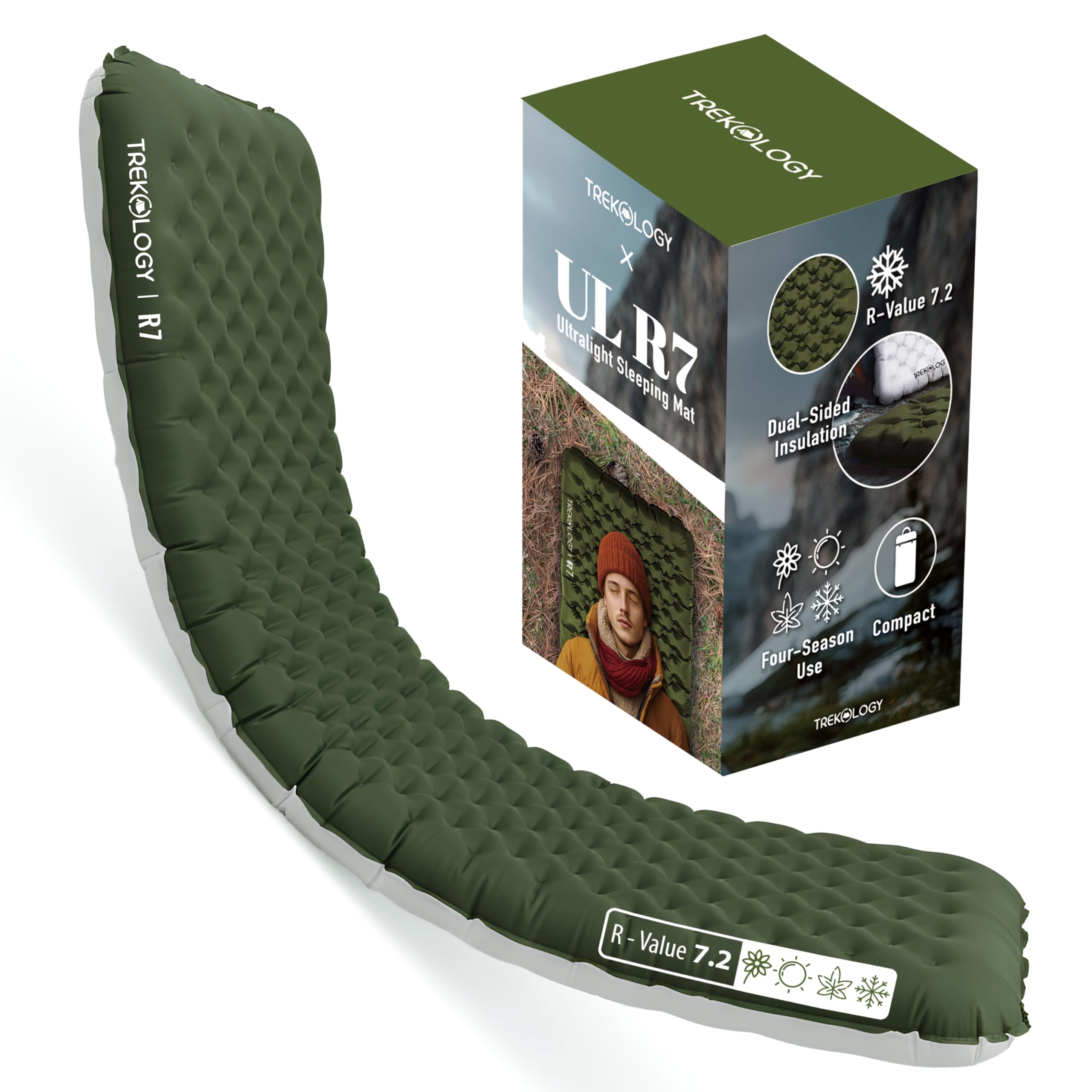
The TREKOLOGY UL R7 is the lightest mat in this lineup at just 2 pounds, packing down to the size of a standard water bottle. Its 40D ripstop nylon construction with TPU coating resists punctures and moisture, and the patented anti-leak valve maintains pressure all night without the need for re-inflation. At 4 inches thick when inflated, it offers enough loft to keep hips and shoulders off the ground even for side sleepers, and the 7.2 R-value is SGS-certified for reliable three-season insulation.
Field reports from users who slept through a snowstorm with a 15-degree bag confirm the pad holds warmth effectively — one reviewer noted it was almost too warm in 41-degree conditions, causing them to sweat. The generous 70.8 by 24-inch surface fits most adults, though broad-shouldered individuals may find 24 inches slightly narrow for free movement. The surface has a smooth texture that some users found slippery on a tent floor; a thin shelf liner or sleeping bag grip patch solves the issue.
Inflation requires a separate pump sack or an electric pump — the pad does not include a built-in pump. Deflation is straightforward thanks to the wide valve, but the internal foil insulation can slow the last bit of air escape. Overall, this is the strongest choice for backpackers and hikers who count every ounce but refuse to sacrifice warmth.
Why it’s great
- Weighs only 2 pounds and packs to water-bottle size — ideal for backpacking
- 4-inch thickness prevents bottoming out for side sleepers
- 7.2 R-value provides genuine cold-weather insulation certified by SGS
Good to know
- No built-in pump; requires separate pump sack or electric pump for inflation
- Smooth surface can cause sleeping bag slippage on tent floors
- 24-inch width feels narrow for tall or broad-shouldered campers
3. OGERY Self Inflating Sleeping Pad with Electric Pump
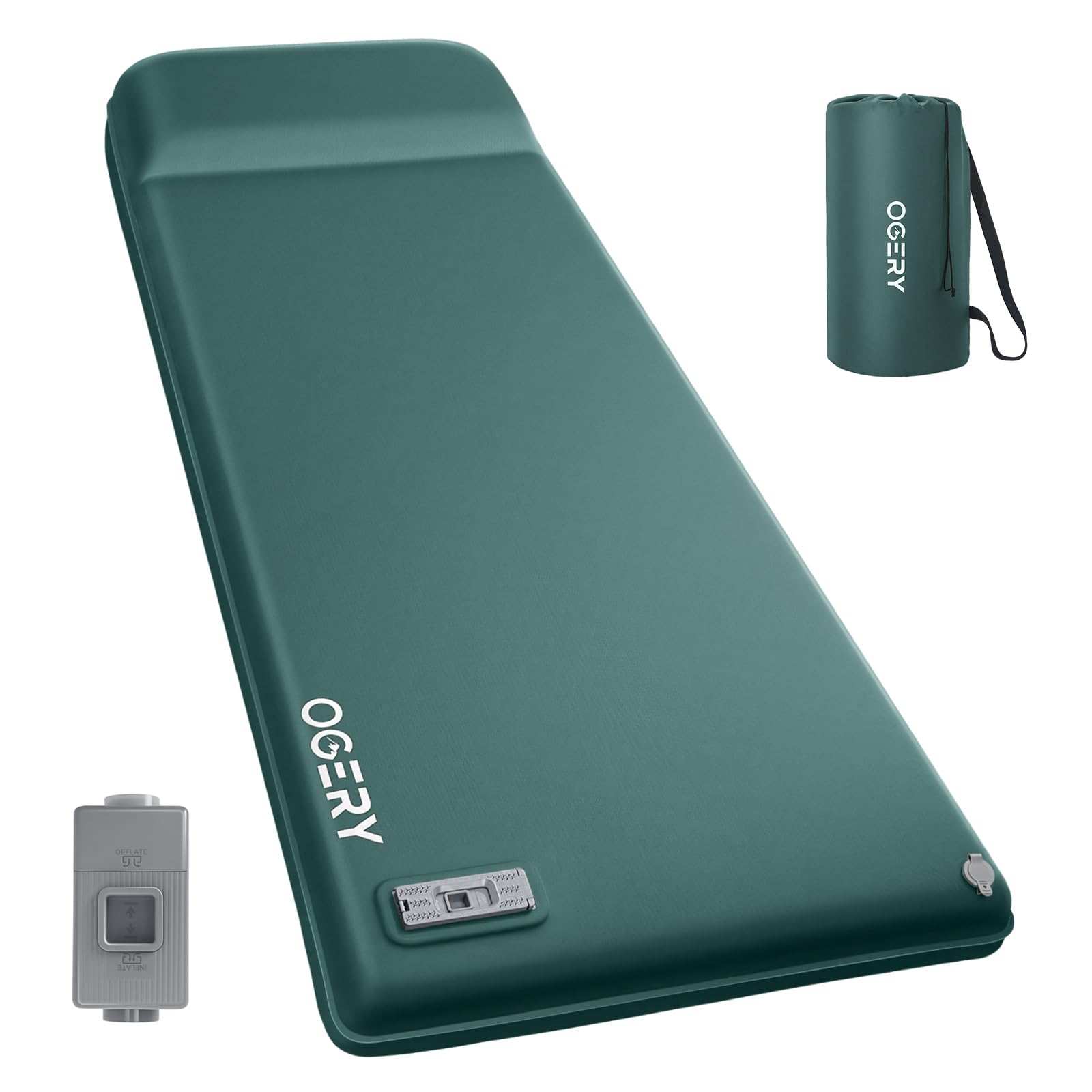
The OGERY pad distinguishes itself with a detachable electric pump that inflates the mattress in roughly 40 seconds and deflates it in about 90 seconds — a major time saver when you are setting up camp after dark or packing up in the rain. The 7.4V 1200mAh battery charges via USB-C and supports up to seven inflations per charge, making it viable for a full weekend trip without recharging. The 3.15-inch memory foam core combined with a 9.5 R-value provides sufficient insulation for winter car camping, and the 50D stretch knit cover is quiet and comfortable against bare skin.
Measuring 76.77 by 26.38 inches, the pad is wide enough for most side sleepers to keep arms and hips on the foam. The built-in pillow offers low-profile head support, though many users found it too flat for their preference and supplemented it with a camp pillow. At 5.95 pounds, the pad is best suited for car camping, RV travel, and guest-room use rather than backpacking. The included storage bag fits the rolled pad with room to spare.
Battery longevity is adequate for a long weekend, and the pump can also be used to inflate other inflatable gear like pillows or pool floats. Some reviewers noted that the pump switch requires a firm press to reach the neutral position, and the pump housing can be felt through the foam when lying directly on it. The 1-year warranty provides a safety net for the electronic components.
Why it’s great
- Built-in electric pump inflates and deflates in under two minutes
- 9.5 R-value and 3.15-inch foam handle winter conditions effectively
- USB-C rechargeable pump works for multiple inflation cycles per charge
Good to know
- At 5.95 pounds, it is too heavy for backpacking
- Built-in pillow is flat and may not provide enough elevation for side sleepers
- Pump housing creates a slight pressure point when lying directly on it
4. NYECHTO Self Inflating Sleeping Pad

The NYECHTO pad offers one-touch control for both inflation and deflation via its built-in intelligent air pump, a feature that significantly reduces the effort of camp setup and tear-down. The 28D high-density memory foam core is 3.14 inches thick with an R-value of 9.5, making it suitable for winter camping in sub-freezing conditions. The foam supports up to 665 pounds static load, and the pad measures 76 by 26.37 inches — wide enough for most sleepers to maintain position without rolling off.
The 50D elastic knit cover fabric is breathable, moisture-wicking, and silent, with no crinkling or rustling when shifting weight. The dual 1200mAh battery pack charges via USB-C and inflates the pad about seven times per charge. One-touch deflation compresses the pad to a thickness of roughly 0.7 inches, making storage and packing notably easier than with manual-roll foam mats. The deflated pad packs to 26.37 by 9 inches at 5.95 pounds, which is manageable for car camping and SUV travel.
User feedback highlights the pad’s performance in winter conditions — one reviewer used it with a zero-degree bag and reported no sagging or cold spots through the night. The built-in pillow, like on many integrated designs, is functional but low. A manual inflation valve is included as a backup in case the battery dies. The pad takes longer on the first inflation as the vacuum-packed foam fully expands, but subsequent uses are quick.
Why it’s great
- One-touch electric inflation and deflation saves significant time at camp
- 665-pound static load capacity ensures durability for heavier campers
- 9.5 R-value and 3.14-inch foam deliver reliable winter insulation
Good to know
- First inflation takes longer while foam expands from vacuum-packed state
- Integrated pillow is too flat for sleepers who need elevated neck support
- 5.95-pound weight limits it to car camping and vehicle-based trips
5. HomeMate CertiPUR-US Memory Foam Camping Mattress Pad
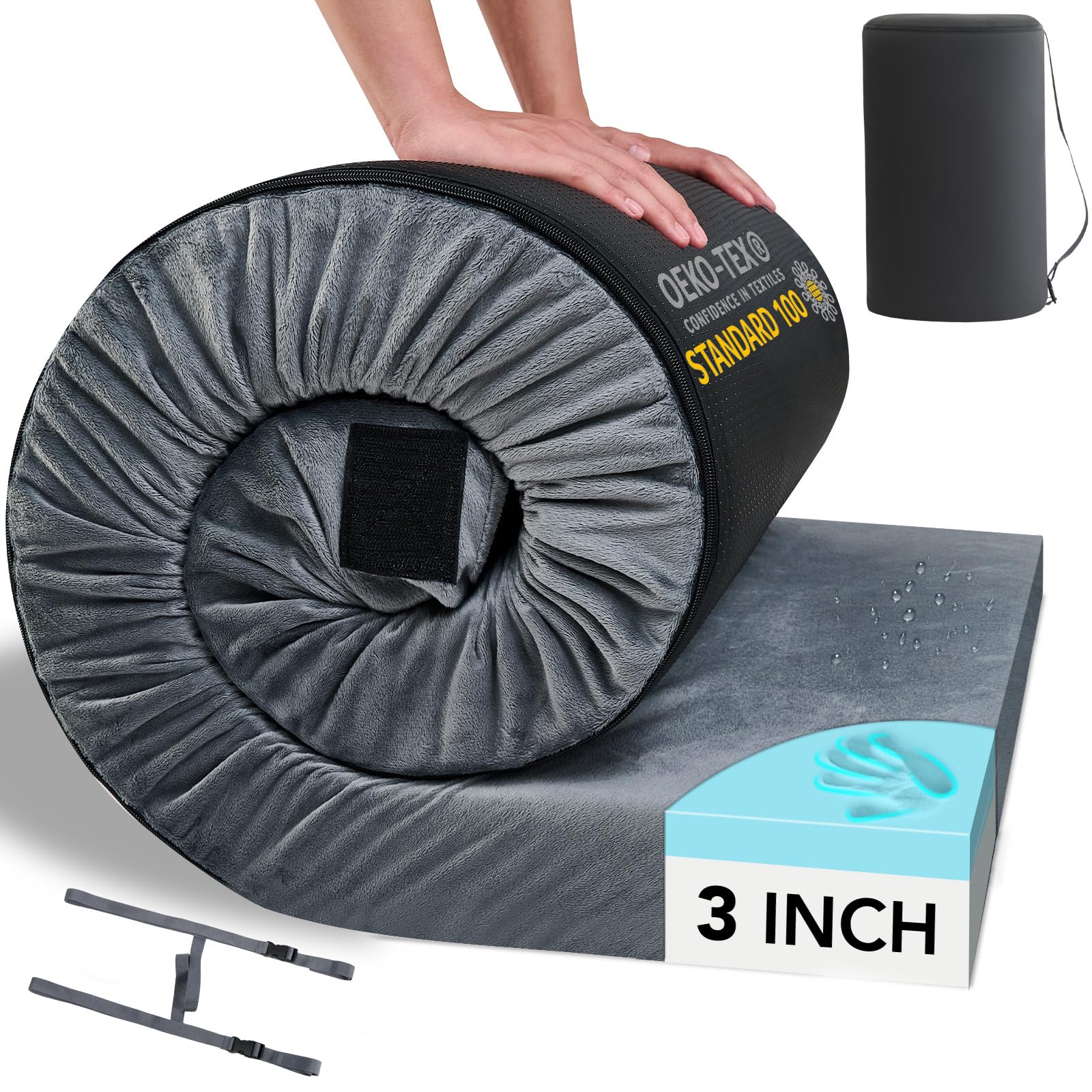
HomeMate combines a 3-inch memory foam top layer with a high-density support foam base to create a pad that feels distinctly like a residential mattress. The waterproof, anti-slip bottom includes rubberized dots that grip cot fabric and tent floors effectively, preventing the pad from sliding during the night. The cover is removable via a full-length zipper and machine-washable, which is a practical advantage for campers who deal with mud, sweat, or pet hair regularly.
The pad is available in multiple sizes including cot (72 by 24 inches), single (75 by 30 inches), and twin (75 by 38 inches), allowing buyers to match the pad to their specific cot or tent footprint. Velcro connectors on the sides allow two pads to be joined for couples. At 7.8 pounds for the cot size, this is a dedicated car-camping or RV pad — not something you would carry in a backpack. The included compression straps and storage bag make rolling and transporting the pad manageable, though the packed size is sizable.
Users consistently note that the pad eliminates the hard-bar feeling of standard camping cots and provides enough cushion for side sleepers. The foam requires up to 72 hours to fully expand after first unboxing, so plan ahead before your trip. A few reviewers mentioned that the pad is bulkier than expected when rolled, confirming that this is a comfort-first choice rather than a space-saving one.
Why it’s great
- 3-inch dual-layer foam mimics a residential mattress feel on cots or tent floors
- Removable, machine-washable cover simplifies cleaning after outdoor use
- Velcro connectors allow two pads to be joined for couples camping
Good to know
- At 7.8 pounds, it is among the heaviest options and not backpackable
- Full foam expansion requires up to 72 hours after unboxing
- Rolled size is bulky and takes up significant trunk or storage space
6. CYMULA 3 Inch Memory Foam Camping Pad
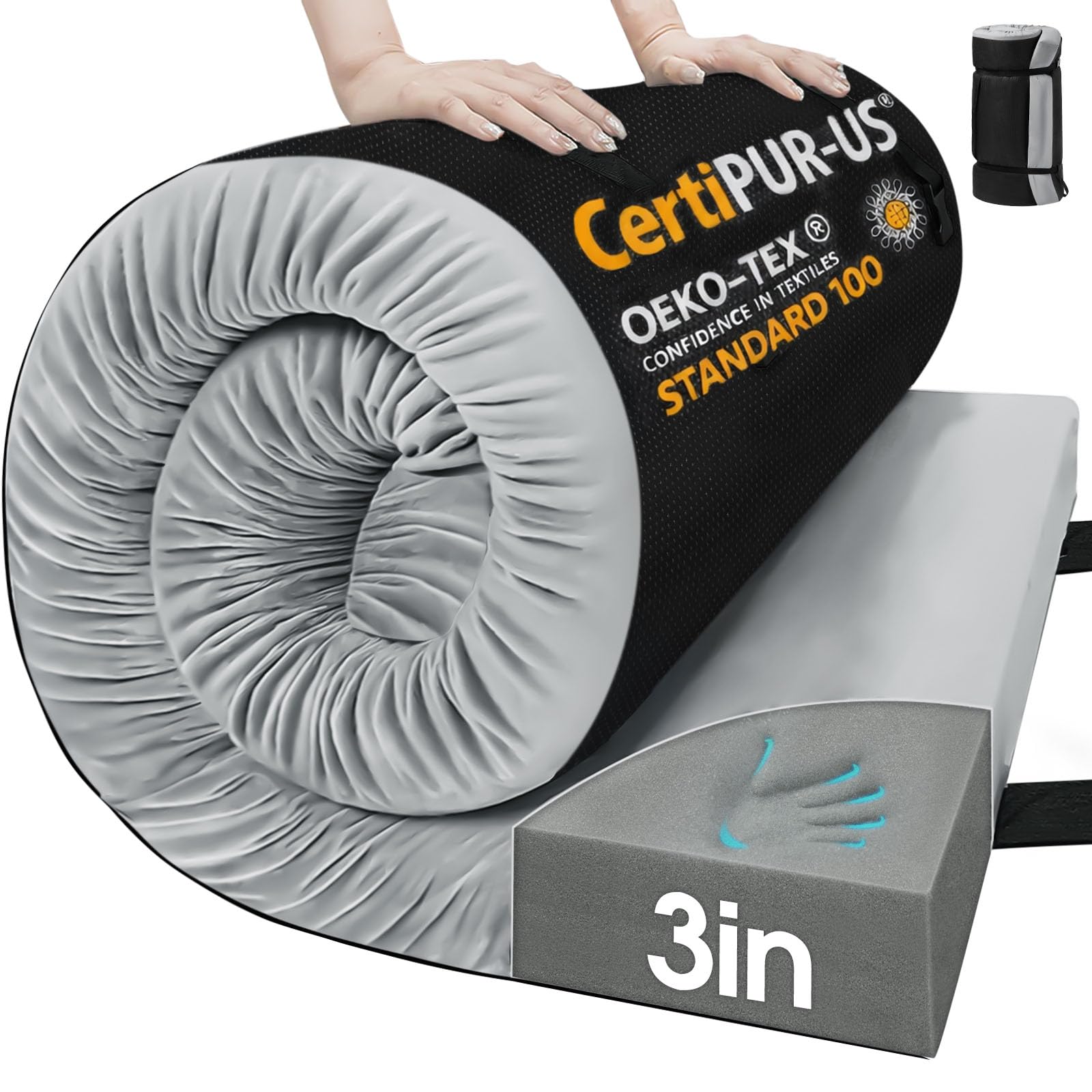
The CYMULA pad uses carbon-fiber-infused high-elasticity memory foam layered over a high-density base foam, which provides a soft top feel with a stable foundation that does not sink completely when weight is applied. The 3-inch thickness offers enough cushion to mask uneven tent floors and cot slats, and the waterproof bottom with anti-slip rubber dots keeps the pad firmly in place on slick surfaces. The breathable fabric cover removes completely via a full-length zipper and is machine-washable — a genuine advantage for family campers who deal with spills, dirt, and general kid-related mess.
Measuring 72 by 24 inches, the pad fits standard cots and single-person tent footprints. The included nylon straps secure the rolled pad for transport, though some users reported the straps felt flimsy and replaced them with aftermarket compression straps. At 6.4 pounds, it is lighter than the HomeMate but still firmly in car-camp territory. The pad arrives vacuum-sealed and expands to full thickness within a few hours — faster than the 72-hour expansion period quoted for some competitors.
User feedback highlights the pad’s warmth even on wooden platforms in 30-degree conditions, with several reviewers noting it was the best camping sleep they had experienced. The odor from the vacuum-sealed foam dissipates within a day of airing out. The rolled size is roughly equivalent to a large beach towel, which fits in the included carry bag without excessive struggle.
Why it’s great
- Carbon-fiber memory foam provides a soft feel with stable, non-sinking support
- Removable, machine-washable cover keeps the pad clean for frequent family use
- Anti-slip rubber dots prevent shifting on cots and tent floors
Good to know
- Included compression straps are less durable than the pad itself
- 6.4-pound weight makes it suitable only for car camping or home guest use
- Some initial odor from vacuum packaging requires airing out
7. MLILY Memory Foam Camping Mattress 2.5 inch
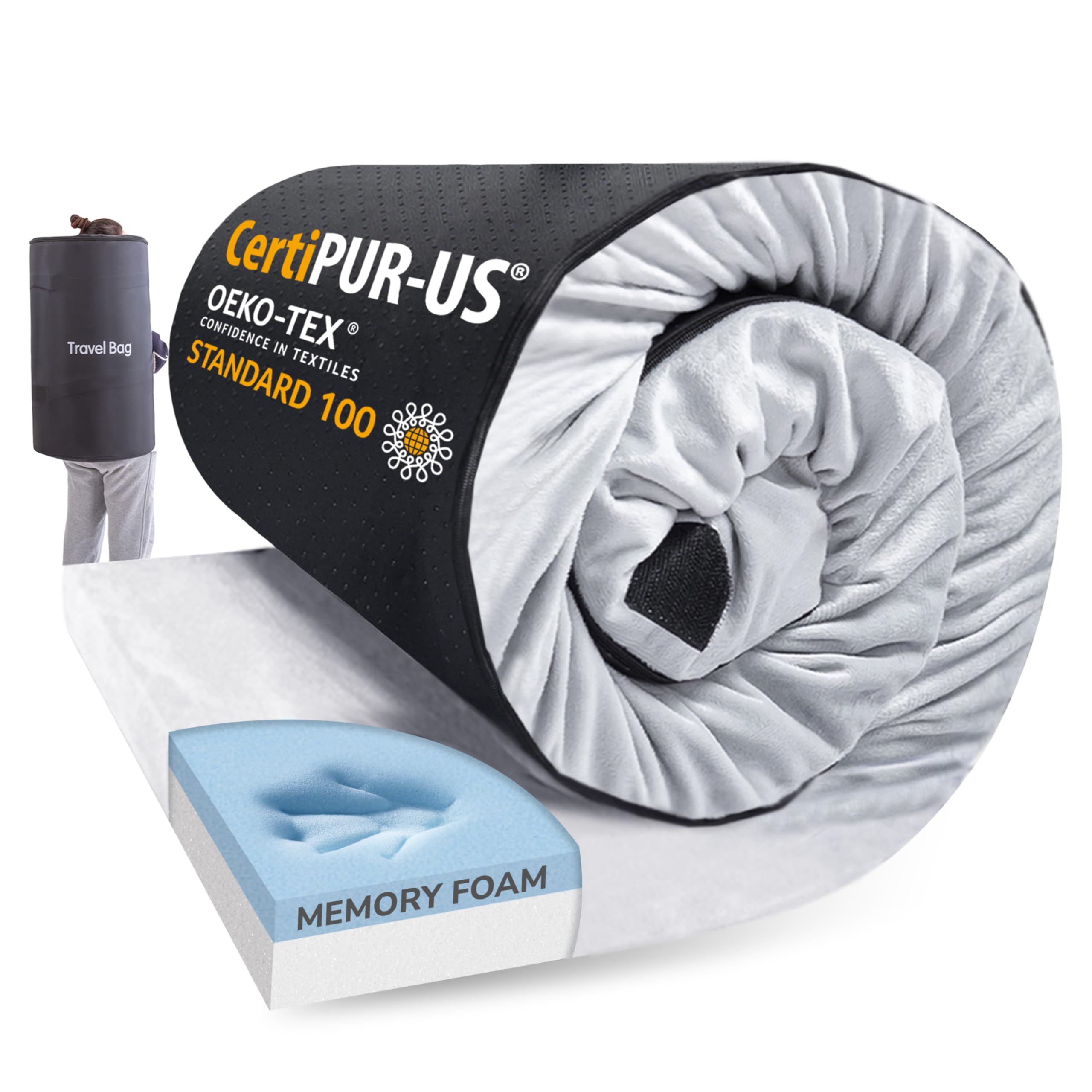
MLILY’s 2.5-inch camping mattress uses AeroFusion memory foam over a Flex Support foam base, both certified by CertiPUR-US for safety and durability. At 3.52 kilograms (roughly 7.8 pounds), this is one of the heavier options in the lineup, but the foam density provides a stable sleep surface that does not sag over multiple nights. The waterproof, non-slip bottom prevents sliding on grass, tent floors, or bunk-bed frames, making it a versatile choice for both outdoor and indoor guest use.
The pad measures 72 by 24 inches, which fits standard cots and most single-person tents. The included travel bag and compression straps allow for reasonably easy rolling, though the packed cylinder is bulky and best suited for car trunks or SUV cargo areas. The polyester top cover has a smooth, non-sticky texture that feels comfortable against sheets or sleeping bag liners without the clamminess that can affect some foam pads in humid conditions.
Customer feedback emphasizes comfort for kids and adults alike — one family reported their 6-year-old slept perfectly on it during travel. The three-year warranty is notably longer than the industry average for foam camping mats, reflecting confidence in the foam’s compression recovery. The main drawback is the 2.5-inch thickness: stomach and back sleepers generally find it adequate, but heavier side sleepers may feel pressure points on rough ground.
Why it’s great
- CertiPUR-US certified memory foam ensures safe, off-gassing-free materials
- 3-year warranty is well above the typical 1-year coverage in this category
- Waterproof and non-slip bottom works on grass, cots, and indoor floors
Good to know
- 2.5-inch thickness may not be enough cushioning for heavier side sleepers on uneven ground
- At roughly 7.8 pounds, it is heavy and bulky for backpacking
- Rolled packed size is substantial and requires significant trunk space
FAQ
What R-value do I need for winter camping below 20 degrees Fahrenheit?
How long does a memory foam camping mat take to fully expand after unboxing?
Can I use a self-inflating camping mat for backpacking?
Final Thoughts: The Verdict
For most users, the best camping mat winner is the Wevelel Memory Sleeping Pad because its 50D foam density and 9.5 R-value deliver true all-season comfort without the complexity of an electric pump. If you want ultra-light packability for backpacking, grab the TREKOLOGY UL R7. And for car campers who value one-touch electric inflation above all else, nothing beats the OGERY Self Inflating Pad.

Mo Maruf
I created WellFizz to bridge the gap between vague wellness advice and actionable solutions. My mission is simple: to decode the research and give you practical tools you can actually use.
Beyond the data, I am a passionate traveler. I believe that stepping away from the screen to explore new environments is essential for mental clarity and physical vitality.