Our readers keep the lights on and my smoothie glass nicely filled. As an Amazon Associate, I earn from qualifying purchases.
Choosing a 2TB hard drive means balancing capacity, speed, and the quiet hum of a spinning platter against the silent shock of a solid-state drive. The difference between dragging files for ten minutes or ten seconds comes down to one fundamental choice: mechanical or flash memory.
I’m Mohammad Maruf — the founder and writer behind WellFizz. I spend my time tearing through hardware datasheets, warranty terms, and real-world transfer benchmarks to separate the reliable daily drivers from the drives that just fill a slot.
After analyzing seven different 2TB models across price tiers and technologies, I’ve built a clear, practical guide to finding the best 2 terabyte hard drive for your specific workload, whether that’s archiving photos, editing video, or expanding a console.
How To Choose The Best 2 Terabyte Hard Drive
Most buyers assume any 2TB drive will work the same way. The reality is that the interface, platter speed, and intended form factor have a massive impact on daily usability. Here are the three specs that separate a smart buy from a regret.
Interface and Transfer Protocol
The physical connector dictates how fast data moves. A USB 3.2 Gen 2 drive offers up to 10 Gbps, while older USB 3.0 tops out at 5 Gbps. If you regularly move video files or large project folders, the Gen 2 interface saves hours over the life of the drive. SATA III internal drives run at 6 Gbps, which is fine for OS or game storage, but not as fast as an NVMe SSD.
Rotational Speed vs. Flash Memory
Every mechanical 2TB drive spins a platter at 5400 or 7200 RPM. The higher speed reduces seek time and improves transfer rates, but it also generates more vibration and heat. SSDs eliminate the platter entirely, offering near-instant access and silent operation. Your choice here depends on whether you prioritize cost-per-gigabyte or raw speed.
Enclosure and Physical Durability
A portable drive needs to survive bumps in a bag. Look for rubber bumpers, drop ratings (3 feet or higher), and IP-rated dust or water resistance if the drive leaves your desk. For internal drives, the enclosure material and spindle design affect how much noise the drive bleeds into your system — a metal frame dampens vibration better than a thin plastic shell.
Quick Comparison
On smaller screens, swipe sideways to see the full table.
| Model | Category | Best For | Key Spec | Amazon |
|---|---|---|---|---|
| Samsung T7 | Portable SSD | Video & high-speed transfer | 1050 MB/s read / 1000 MB/s write | Amazon |
| SanDisk Extreme | Portable SSD | Rugged outdoor use | 1050 MB/s read, IP65 rating | Amazon |
| WD Blue Internal | Internal HDD | Laptop or console upgrade | 5400 RPM, 128 MB cache, SATA III | Amazon |
| LaCie Rugged Mini | Portable HDD | Field work & travel | Shock/drop/water/dust resistant | Amazon |
| Seagate Portable | Portable HDD | Everyday backup | 130 MB/s transfer, 1-year Rescue | Amazon |
| WD Elements | Portable HDD | Plug-and-play simplicity | 5 Gbps USB 3.2 Gen 1, 2TB | Amazon |
| Toshiba Canvio Basics | Portable HDD | Budget-friendly large storage | USB 3.0, pre-formatted NTFS | Amazon |
In‑Depth Reviews
1. Samsung T7 Portable SSD

The Samsung T7 delivers NVMe PCIe speeds up to 1050 MB/s read and 1000 MB/s write, making it the fastest drive in this roundup. The titanium gray aluminum unibody dissipates heat efficiently — real-world testing shows peak temps around 42°C, well below the 70°C throttle threshold. It ships in MBR format, so you will want to reformat to GPT or APFS for modern operating systems, but that is a one-time step for vastly better performance.
Compatibility spans PC, Mac, smartphone, tablet, and gaming console via the included USB-C cable and USB-A adapter. I observed sustained transfers of 850-950 MB/s on a Thunderbolt 4 port, dropping to roughly 500 MB/s through a hub. The AES 256-bit hardware encryption is a welcome addition for anyone carrying sensitive project files.
The only real downside is the cable length — the USB-C cord measures just 1.5 feet, which forces the drive to sit awkwardly close to the port. A longer 3.3-foot Gen 2 cable solves this for under ten dollars. The drive runs silently, stays cool under load, and fits in a pocket. For speed-focused users, this is the benchmark.
Why it’s great
- Consistent 850+ MB/s real-world throughput
- Premium aluminum body acts as heat sink
- On-device AES 256-bit encryption
Good to know
- Included USB-C cable is very short
- No IP water resistance rating
- Must reformat from MBR to GPT for full speed
2. SanDisk Extreme Portable SSD

The SanDisk Extreme Portable SSD matches the Samsung T7 on peak sequential speeds — up to 1050 MB/s read and 1000 MB/s write — but distinguishes itself with a ruggedized enclosure. It carries an IP65 rating for dust and water resistance and survives drops from up to 3 meters. The integrated carabiner loop lets you clip it to a backpack strap, making it the go-to choice for location photographers and videographers.
The drive uses NVMe flash memory inside a compact shell that is noticeably smaller than the older T5. It ships with a USB-C cable and a USB-A adapter, so you can connect to almost any device without hunting for an adapter. The 256-bit AES hardware encryption adds a layer of protection for sensitive edits or client deliveries.
It does run warm during sustained writes of 50 GB or more, but that is typical for high-speed SSDs in compact enclosures. The SanDisk Memory Zone app helps manage file transfers and free up space on mobile devices. If you work in environments where a drop or splash is a real risk, this drive gives you peace of mind without sacrificing speed.
Why it’s great
- IP65 water and dust resistance
- Survives drops from 3 meters
- Included carabiner loop for carry
Good to know
- Enclosure gets warm under heavy load
- Old model lacks newer firmware improvements
- No rubber bumper, shell is all metal
3. Western Digital 2TB WD Blue Internal HDD

The WD Blue 2TB mobile hard drive is a 2.5-inch, 5400 RPM SATA III drive with a 128 MB cache. It is built for thin laptops and standard 9.5 mm bays, making it a drop-in upgrade for aging notebooks or original Xbox consoles. Real-world read speeds hover around 150 MB/s, and the drive runs cool and quiet even during extended use.
It ships with a metal enclosure that dampens vibration better than plastic-shelled rivals. The included Acronis True Image WD Edition cloning software simplifies migrating an existing OS to the new drive. Users report linear read speeds of 153-178 MB/s with random access averaging 15.7 ms — respectable numbers for a mechanical 5400 RPM drive.
The main caveat is that Amazon does not accept returns on this drive once opened, so careful handling during installation is critical. The packaging can also be minimal, so inspect the box for damage on arrival. For anyone replacing a slow 500 GB laptop drive or expanding a retro console, this is a cost-effective, reliable internal option.
Why it’s great
- Includes Acronis True Image cloning software
- 7 mm profile fits thin ultrabooks
- Metal enclosure reduces vibration noise
Good to know
- No returns allowed once opened
- 5400 RPM, not 7200 RPM
- Packaging can be insufficient for shipping
4. LaCie Rugged Mini 2TB

The bright orange rubber bumper protects against drops up to 4 feet, and the enclosure offers dust and water resistance for all-terrain use. It uses a 2.5-inch mechanical hard drive spinning at 5400 RPM with a 130 MB/s transfer rate over USB 3.0, which is slow by SSD standards but perfectly acceptable for archival and backup workflows.
It ships pre-formatted in exFAT, so it works out of the box with both Windows and Mac — no reformatting needed for most users. The drive includes a one-month Adobe Creative Cloud membership and a Data Rescue Service subscription, which adds real value for creative professionals. Users report the drive runs cool, stays quiet, and mounts reliably across multiple operating systems.
The main drawback is the use of a micro USB cable rather than the more modern USB-C connector. That means one more legacy cable to carry. Some users also report exFAT compatibility quirks with certain macOS versions after extended use, so reformatting to APFS may improve stability. For photographers and videographers who work in the field, the rugged build is hard to beat at this price point.
Why it’s great
- 4-foot drop protection with rubber bumper
- Pre-formatted exFAT for PC and Mac
- Includes Data Rescue Service
Good to know
- Micro USB cable, not USB-C
- Mechanical HDD, not SSD speed
- exFAT can cause mounting issues on older Macs
5. Seagate Portable 2TB External HDD
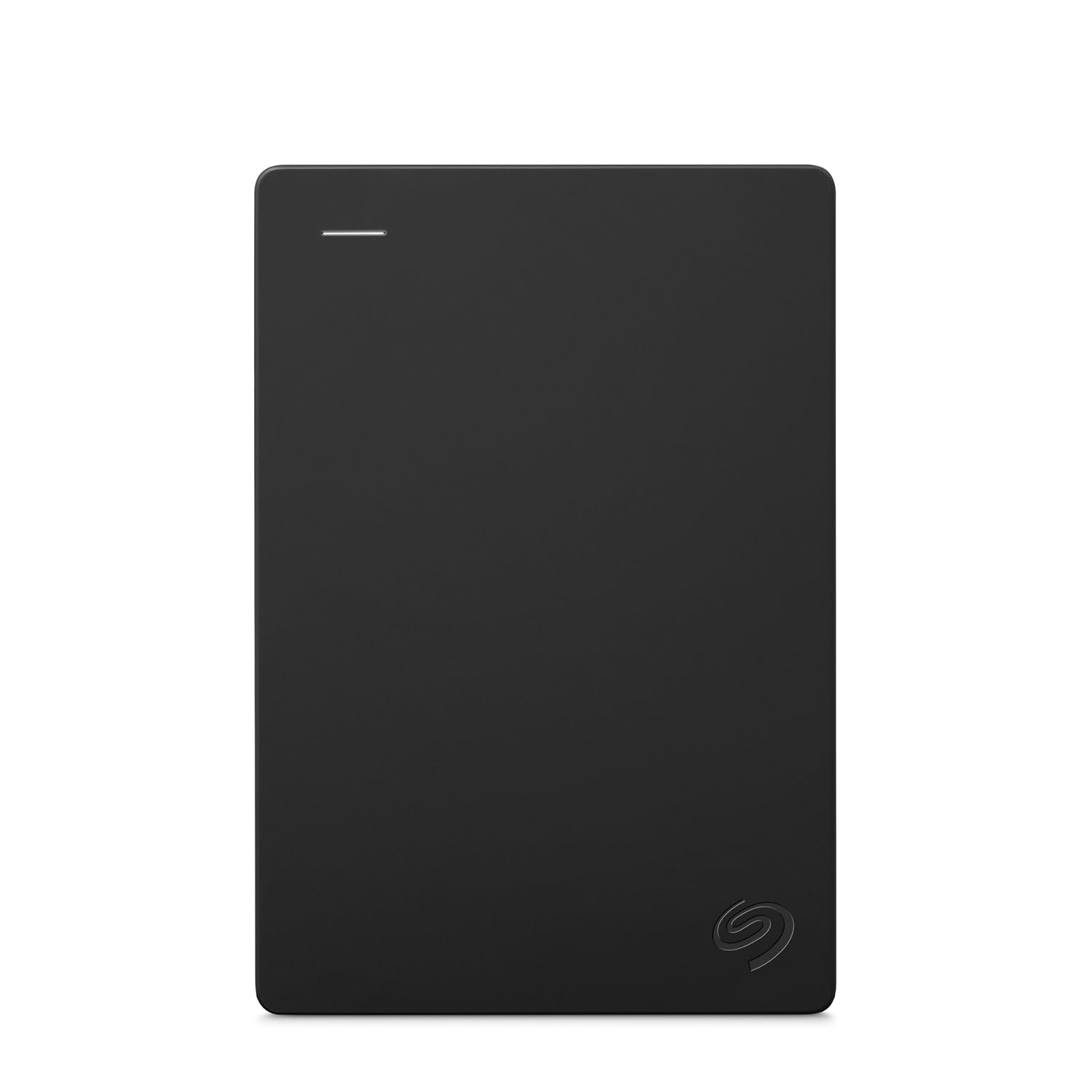
The Seagate Portable 2TB external drive is a straightforward, no-frills mechanical HDD that targets everyday backup users. It delivers sustained transfer speeds around 130 MB/s over USB 3.0, which is typical for a 5400 RPM portable drive. The drive is plug-and-play on Windows and requires reformatting for Mac — Disk Utility makes quick work of APFS or ExFAT formatting.
The standout feature here is the included 1-year Rescue Data Recovery Service. If the drive fails, Seagate attempts to recover your data at no extra cost. That is rare at this price tier and makes the Seagate a safer bet for students or home users who do not maintain separate backups. The drive is quiet, runs cool, and is light enough for daily carry in a backpack.
The primary limitation is the USB 3.0 interface, which caps out at 5 Gbps — fine for document backups and photo archives, but slow for video editing. Users also report that the included cable is prone to wear over time, so investing in a spare is wise. For a reliable, data-protected backup drive, this is a solid mid-range pick.
Why it’s great
- 1-year Rescue Data Recovery included
- Plug-and-play simplicity on Windows
- Quiet operation with low vibration
Good to know
- USB 3.0, not USB-C or Gen 2
- Included cable is prone to failure
- Requires reformatting for Mac
6. WD 2TB Elements Portable External Hard Drive

The WD Elements 2TB portable drive is the veteran pick in this category. It uses a mechanical 2.5-inch hard disk with SuperSpeed USB 3.2 Gen 1 interface reaching 5 Gbps theoretical bandwidth. Real-world transfers match other 5400 RPM drives in its class, landing around 120-140 MB/s under normal conditions. It is whisper quiet during operation and runs slightly warm to the touch after extended writes.
The small, lightweight enclosure fits easily in a jacket pocket or laptop bag, making it a genuine portable companion. It works plug-and-play with Windows out of the box, and Mac users simply need to reformat via Disk Utility — the drive automatically reformats to APFS for Time Machine backups. Many reviewers report years of trouble-free use with no degradation in performance.
The biggest weakness is the included USB cable, which several users report as failure-prone over time. Replacing it with a higher-quality third-party cable costs very little but dramatically improves long-term reliability. If you want a proven, no-surprises backup drive that just works, the WD Elements remains a trusted choice.
Why it’s great
- Proven long-term reliability over years
- Small and lightweight for true portability
- Plug-and-play on Windows
Good to know
- Stock cable prone to early failure
- Mechanical HDD, not SSD speed
- Requires reformatting for Mac
7. Toshiba Canvio Basics 2TB

The Toshiba Canvio Basics 2TB portable drive offers a clean, matte black finish that resists fingerprints and smudges far better than glossy enclosures. It connects via USB 3.0 and is pre-formatted in NTFS for Windows, delivering plug-and-play simplicity for PC users. The drive is USB 2.0 compatible and does not require an external power cable, relying entirely on bus power from the host port.
Transfer speeds are on par with competing 5400 RPM portable HDDs, and users report fast reads for common tasks like backing up photo libraries or storing music collections. The drive runs cool even after several hours of continuous downloads, and the compact form factor makes it easy to toss in a bag for travel. It supports both Windows and Mac (with reformatting).
The main trade-off is the lack of any rugged features — no drop protection, no water resistance, and no bundled data recovery service. This is a basic, dependable drive best suited for desktop backup or occasional portable use, not daily fieldwork. For the price, it delivers honest capacity and solid reliability without any extras.
Why it’s great
- Matte finish resists smudges and scratches
- Pre-formatted NTFS, ready for Windows
- Runs cool during extended use
Good to know
- No drop or water resistance
- USB 3.0 only, not Gen 2
- No bundled software or data recovery
FAQ
Do I need to reformat a 2TB hard drive for Mac?
What is the real speed difference between a 2TB HDD and a 2TB SSD?
Is a 5400 RPM drive fast enough for storing games?
What does the Rescue Data Recovery service on Seagate drives cover?
Final Thoughts: The Verdict
For most users, the best 2 terabyte hard drive winner is the Samsung T7 because it combines blazing NVMe speeds with a durable aluminum body and AES encryption, making it suitable for everything from daily backups to video editing. If you need a rugged field drive that survives drops and dust, grab the SanDisk Extreme. And for a budget-friendly, reliable backup HDD that does the job without fuss, nothing beats the Toshiba Canvio Basics.

Mo Maruf
I created WellFizz to bridge the gap between vague wellness advice and actionable solutions. My mission is simple: to decode the research and give you practical tools you can actually use.
Beyond the data, I am a passionate traveler. I believe that stepping away from the screen to explore new environments is essential for mental clarity and physical vitality.