Our readers keep the lights on and my smoothie glass nicely filled. As an Amazon Associate, I earn from qualifying purchases.
A backpacking pack that costs under shouldn’t mean sore shoulders after the first mile or a torn seam on day three. The reality for most new thru-hikers and weekend warriors is that mid-range and premium brands have pushed prices sky-high, leaving budget-conscious buyers wondering if a lower price tag forces them to sacrifice proper weight distribution, a functional frame, or basic weather resistance. That trade-off is a myth if you know which five critical specs to check before clicking buy.
I’m Mohammad Maruf — the founder and writer behind WellFizz. For years, I’ve analyzed load-bearing gear across dozens of price brackets, cross-referencing real trail feedback against fabric denier, aluminum frame gauge, and torso adjustability ranges to separate genuine value from marketing fluff.
This guide narrows the field to nine packs that prove a genuine budget backpacking pack can carry your full kit without breaking your back or your wallet.
How To Choose The Best Budget Backpacking Pack
The sub- backpacking pack segment is crowded with gear that looks good on a product page but fails on the trail. Focus on the four elements that separate a pack that will last a season from one that will last a decade of weekends.
Internal Frame Material and Load Transfer
The frame is your pack’s skeleton. Aluminum alloy stays (either a single U-shape or two vertical rods) transfer the pack’s weight from your shoulders down to your hips. A lightweight alloy frame that flexes slightly under load is preferable to a stiff steel rod that stays rigid but adds unnecessary ounces. For loads under 45 pounds, a 6061 aluminum stay with a cross-stay is the sweet spot for durability versus pack weight.
Torso Length and Hip Belt Adjustability
An ill-fitting pack will cause shoulder pain and hip chafing no matter how much you spend. Look for a model with a multi-position torso adjustment (typically a ladder system on the back panel) that ranges from 16 to 21 inches. The hip belt should wrap fully around your iliac crest with at least 2 inches of overlap on both sides of the buckle. Packs with a fixed, one-size-fits-all belt almost always fail on long miles for anyone under 30 inches or over 40 inches around the waist.
Fabric Denier and Seam Construction
Denier (D) measures the thickness of the nylon threads. A 210D face fabric is light but tears easily against granite or tree branches. For a budget pack that must survive bushwhacking and scrambling, look for 420D to 600D nylon on the main body and 1000D on the bottom panel. Double-stitched, reinforced seams (not single-stitched) at the stress points—shoulder strap attachments, load-lifter webbing, and hip belt connections—are non-negotiable for longevity.
Access, Compression, and Weather Protection
Top-loading packs are lighter and simpler, but a side zipper (often called a J-zip or panel access) lets you grab gear without unpacking everything. Compression straps on the sides and bottom cinch down a half-empty load and provide lash points for a tent or sleeping pad. An included rain cover is a huge bonus at this price—aftermarket covers cost extra and rarely fit the volume well.
Quick Comparison
On smaller screens, swipe sideways to see the full table.
| Model | Category | Best For | Key Spec | Amazon |
|---|---|---|---|---|
| Osprey Atmos AG 65 | Premium | Max comfort for heavy loads | AG suspension, 4.8 lbs | Amazon |
| Osprey Rook 65 | Premium | Light, ventilated all-rounder | AirSpeed backpanel, 3.9 lbs | Amazon |
| Granite Gear Blaze 60 | Premium | Adjustable, load-hauling design | Removable belt, 3.3 lbs | Amazon |
| Naturehike 65L | Mid-Range | Ultralight, ergonomic carry | 420D nylon, 2.56 lbs | Amazon |
| Teton 65L Explorer | Mid-Range | Full-featured multi-day hauler | 600D PU liner, 5 lbs | Amazon |
| Mardingtop 65+10L | Mid-Range | Military-style modular carry | MOLLE webbing, 5.4 lbs | Amazon |
| Teton 55L Scout | Mid-Range | Slender torso fit | Adjustable stays, 4.4 lbs | Amazon |
| MOUNTAINTOP 70L | Budget | Entry-level max volume | Aluminum frame, 4.4 lbs | Amazon |
| Mardingtop 60L Military | Budget | Versatile modular starter | YKK zippers, 4.49 lbs | Amazon |
In‑Depth Reviews
1. Osprey Atmos AG 65L
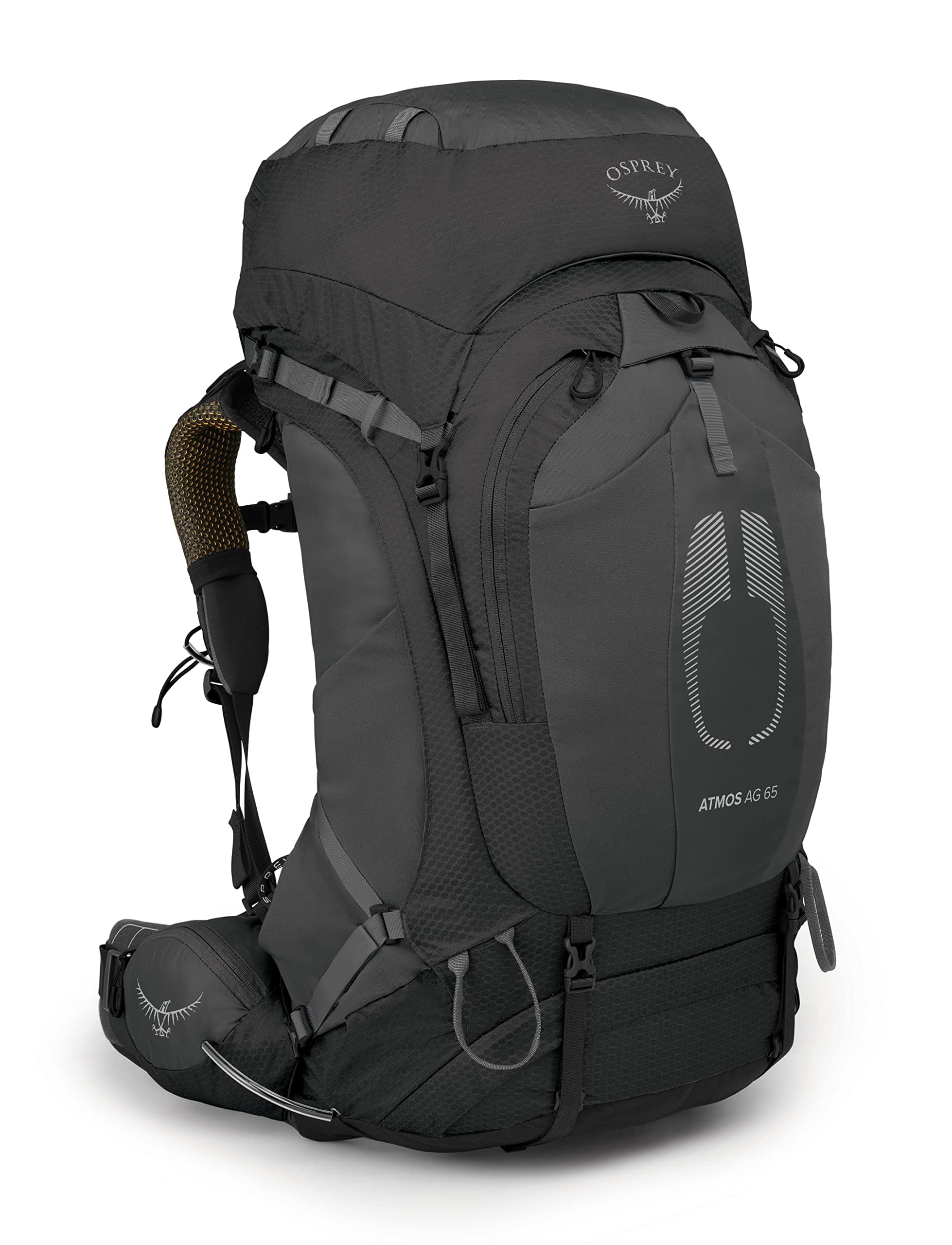
The Osprey Atmos AG 65 is the gold standard for load-bearing comfort under 50 pounds, and the only reason it sits in a “budget” guide is that its feature set often pushes it below the premium pack ceiling during sales. The Anti-Gravity (AG) suspension uses a tensioned mesh backpanel that follows the contour of your spine, creating a trampoline effect that keeps the frame off your back while distributing weight evenly across the hip belt. Testers carrying 40-pound loads reported that the pack felt noticeably lighter, with zero shoulder strain on 10-mile days. The 65-liter capacity is ideal for 3- to 5-day trips, and the floating top lid with lash points gives you external storage for a sleeping pad or wet gear.
The AG system also includes a curved side zipper that provides panel access to the main compartment, so you aren’t forced to top-load every time you need a rain jacket buried at the bottom. The included rain cover is PFAS-free and bluesign approved, and the zippered sleeping bag compartment with a removable divider keeps your sleep system separate from the rest of your kit. The hip belt pockets are generous enough for a modern smartphone, though the waistband zippers require two hands to close securely. The pack weighs 4.8 pounds, which is on the heavier side for the ultralight crowd, but the comfort payoff is massive for anyone carrying a traditional camping load.
The fit is finicky for short torsos—the L/XL size works best for users 5’10” and taller, while the S/M fits 5’5” to 5’9” comfortably. The Hydraulics hydration sleeve is compatible with 3-liter reservoirs, but the hose routing clip is shorter than ideal for taller users. If you value a pack that feels like an extension of your body rather than a burden, and you can find it at a discount, this is the only pack you need for the next five years.
Why it’s great
- AG suspension makes heavy loads feel 10+ pounds lighter
- Dual side access via curved zipper for quick gear retrieval
- Included PFAS-free rain cover is a durable, integrated solution
Good to know
- Heavier than many comparable 65L packs at 4.8 lbs
- L/XL fit can be too large for shorter torsos
- Waistband zippers are stiff to operate one-handed
2. Osprey Rook 65L

The Osprey Rook 65 is the brand’s most accessible internal-frame pack, designed to deliver Osprey’s hallmark load transfer and ventilation at a lower entry point than the Atmos series. The AirSpeed backpanel uses a tensioned mesh suspended over a LightWire alloy frame, creating a 4-inch gap between your back and the pack. This airflow channel is a lifesaver on hot, humid climbs where a traditional foam backpanel would soak through your shirt within the first mile. The Extended Fit (EF) version adds sizing for hip belts up to 70 inches, making this one of the few budget-adjacent packs that accommodates a wider range of body types without requiring a custom order.
At 3.9 pounds, the Rook shaves nearly a full pound off the Atmos while retaining a solid aluminum frame that handles 35-pound loads with ease. The integrated, stowable rain cover is a thoughtful touch—you never have to dig for it when the sky opens up. Angled water bottle pockets on both sides let you grab a bottle without removing the pack, a feature that thru-hikers swear by. The main compartment is top-loading with a drawstring closure, and there is a separate zippered sleeping bag compartment at the bottom. The trade-off is the absence of a large front mesh pocket—the kind that ultralight hikers use for drying gear or stashing a wet tarp. The Rook relies on compression straps and a floating lid for external storage instead.
Customer feedback consistently praises the build quality: 600D nylon fabric, YKK zippers, and bar-tacked stress points mean this pack will survive several seasons of weekend trips. The chest strap can be tight for broader chests, and the hip belt cuts into narrow hips on some reviewers. If you want proven Osprey load technology, a ventilated backpanel, and a rain cover included without spending into the Atmos/Gregory Zulu bracket, the Rook is your pack.
Why it’s great
- AirSpeed mesh backpanel delivers exceptional ventilation on hot hikes
- Extended Fit version accommodates up to a 70-inch hip belt
- Integrated, stowable rain cover adds weather-ready convenience
Good to know
- No large front mesh pocket for wet or quick-access gear
- Hip belt may feel loose on very slender waist sizes
- Lacks the AG suspension’s weight-dissipating trampoline feel
3. Granite Gear Blaze 60L

The Granite Gear Blaze 60 has long been a favorite among section hikers who want a sub-4-pound pack that still uses a real internal frame rather than a foam pad. The frame is a single perimeter aluminum stay that flexes with your body’s natural movement while transferring load to a removable hip belt. The belt itself is a standout feature—thick, sculpted foam that wraps around the iliac crest without digging in, and it can be removed and worn as a standalone fanny pack for day hikes or town runs. The torso adjustment is tool-less, using a straightforward Velcro ladder system that lets you dial in the fit over a range of about 16 to 21 inches in seconds.
The pack’s organization is where the Blaze shows its thoughtful design. The floating top lid converts into a separate daypack, and the large front mesh pocket swallows a wet tent fly or an extra layer. Side pockets are deep enough for 1-liter Nalgene bottles, though reaching them mid-hike requires twisting your arm back. The main compartment is a classic top-loader with a drawstring closure and a separate sleeping bag compartment. The ice axe loops double as trekking pole holders, and the daisy chains along the front let you lash extra gear. Users report that the pack carries 35 to 45 pounds comfortably, with the hip belt doing the heavy lifting and the load-lifter straps keeping the top of the pack close to the shoulders.
The downsides are minor but worth noting: there are no bottom straps for a sleeping pad, so you’ll need to use the compression straps or bungee cordage. The hydration sleeve is tight, making it difficult to slide a full 3-liter reservoir in and out. The Blaze has a reputation for “fussiness” due to the multiple straps and adjustment points, but once set up, it’s a solid, lightweight option for anyone entering the backcountry looking for a pack that won’t break the bank or their back.
Why it’s great
- Tool-less torso adjustment ranges 16–21 inches, fitting varied heights
- Removable hip belt doubles as a comfortable fanny pack
- Low base weight of 3.3 lbs appeals to weight-conscious hikers
Good to know
- No dedicated bottom lashing points for sleeping pads
- Hydration sleeve is tight for 3L reservoirs
- Multiple adjustment straps can feel complex during initial setup
4. Naturehike 65L
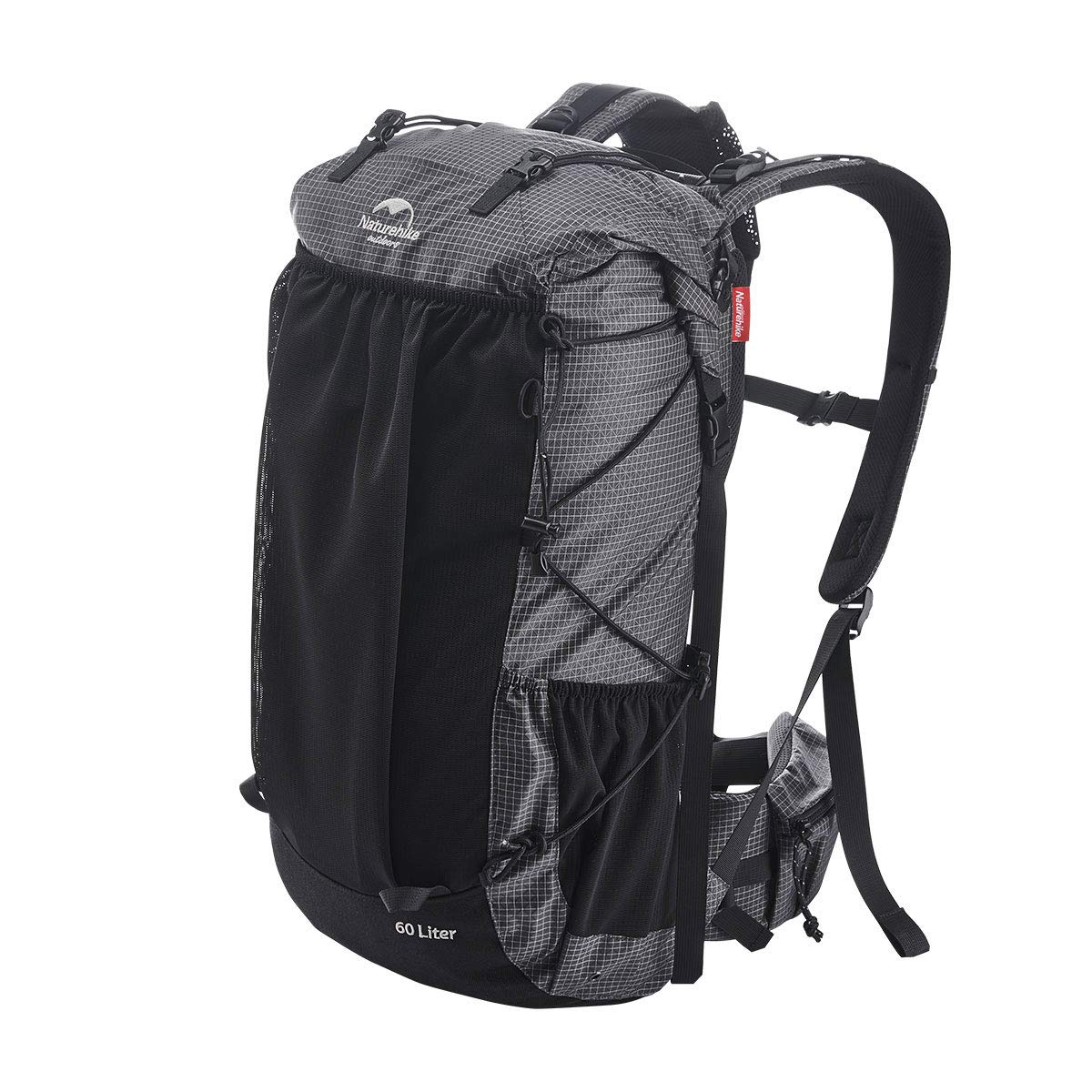
The Naturehike 65L is an ultralight contender that punches well above its weight thanks to a bold weight of only 2.56 pounds. That is pound-shaving territory normally reserved for packs costing three to four times as much, and it makes a real difference on a 20-mile day. The frame uses a lightweight aluminum alloy stay that keeps the pack stable for loads up to 33 pounds (15 kilograms), as specified by the manufacturer. The ergonomic back pad is a mesh cushion structure that breathes well, and the shoulder straps are contoured to reduce pressure on the collarbone. The pack’s roll-top closure keeps the weather out and allows for volume compression without external straps digging into your gear.
The 420D nylon face fabric is lighter than the 600D panels used by Teton or Osprey Rook, but testers report that it holds up well against typical trail abrasion for weekend trips. It is not fully waterproof—the fabric has a DWR coating that sheds light rain, but you will want the included rain cover for sustained downpours. The side pockets are large enough for a 1-liter bottle, and the mesh back pocket is useful for stashing a rain shell. The Naturehike lacks a separate sleeping bag compartment, which helps keep the weight down, but the single main compartment can swallow a 3-season kit with room to spare. The chest water bottle holder is an odd but clever addition that lets you sip without reaching back.
The main compromise is load capacity. Testers who push past 33 pounds report that the frame starts to squeak and the hip belt loses its supportive feel. The shoulder strap adjustments can be finicky, and the overall comfort is best at 25 to 30 pounds. For solo overnighters and multi-day trips where you keep your base weight lean, this pack is an incredible value. It is not designed to haul a full family camp, but for the lightweight backpacker on a tight budget, it is hard to beat the Naturehike’s combination of low weight and reasonable cost.
Why it’s great
- Ultralight construction at 2.56 lbs shaves significant base weight
- Roll-top closure provides excellent weather resistance and volume control
- Ergonomic mesh back panel offers good ventilation on warm days
Good to know
- Optimal load limit is around 30 lbs, less than framed competitors
- 420D nylon is less abrasion-resistant than 600D fabrics
- No separate sleeping bag compartment limits organizational options
5. Teton 65L Explorer
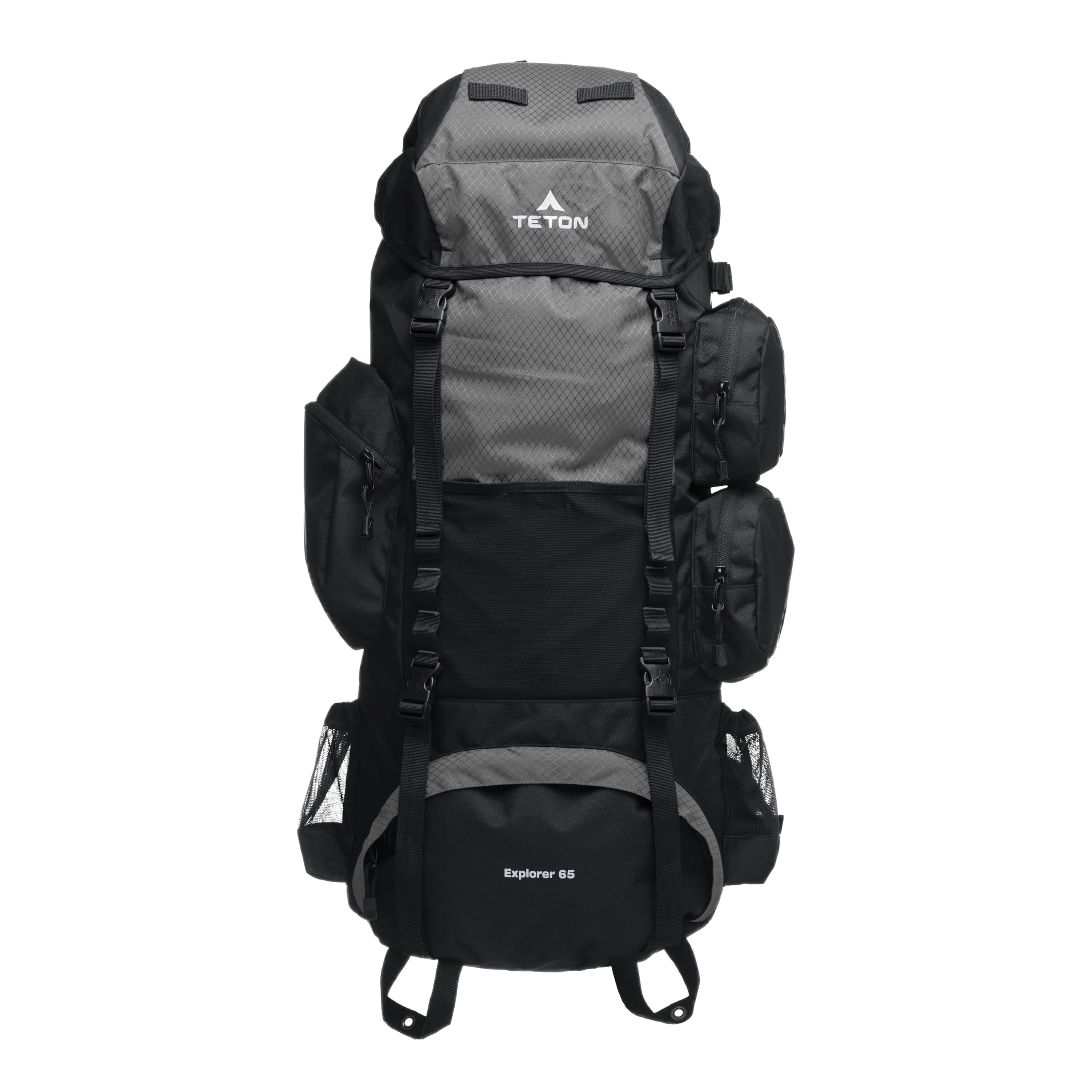
The Teton 65L Explorer is the workhorse of the sub- category, built with a 600D polyurethane-lined nylon body that has proven its durability over hundreds of trail miles. The internal frame uses two aluminum stays that are adjustable for torso length, accommodating hikers from 5’5” to over 6’2”. The open-cell foam lumbar pad and molded channels on the back panel provide decent airflow and solid support for loads up to 50 pounds. The suspension system includes load-lifter straps and a sternum strap with a whistle buckle, and the waist belt has zippered pockets that fit a phone and keys.
Organization is where the Explorer shines for the price. The main compartment is top-loading with a drawstring closure and a floating lid pocket. The separate sleeping bag compartment is accessed via a side zipper, and the divider can be removed to create one large 65-liter cavity. There are multi-directional compression straps on both sides and the bottom, giving you lash points for a tent or sleeping pad. The side mesh pockets are generous, though some 32-ounce Nalgene bottles fit snugly. The included rain cover is a practical addition, and testers report it kept gear dry during heavy thunderstorms. The 5-pound weight is heavy by modern standards, but the durability and load capacity justify the ounces for anyone who expects the pack to survive bush camp abuse.
Common feedback mentions that the zippers feel a bit stiff when new, but they loosen up after a few trips. The waist belt pockets are not as easy to reach while wearing the pack compared to the Granite Gear or Osprey models. A handful of reviewers with larger frames noted that the chest strap can feel restrictive with heavy layers. For the backpacker who wants a “do it all” pack for weekend trips, week-long treks, and even travel use, the Teton Explorer delivers features found on packs costing double, and it does so without cutting corners on fabric or frame hardware.
Why it’s great
- 600D PU nylon body provides excellent abrasion and tear resistance
- Adjustable torso system fits a wide range of heights
- Separate sleeping bag compartment with removable divider increases versatility
Good to know
- 5 lb weight is heavy for ultralight or fast-and-light trips
- Zippers can be stiff initially, requiring a break-in period
- Hip belt pockets are awkward to access while wearing the pack
6. Mardingtop 65+10L
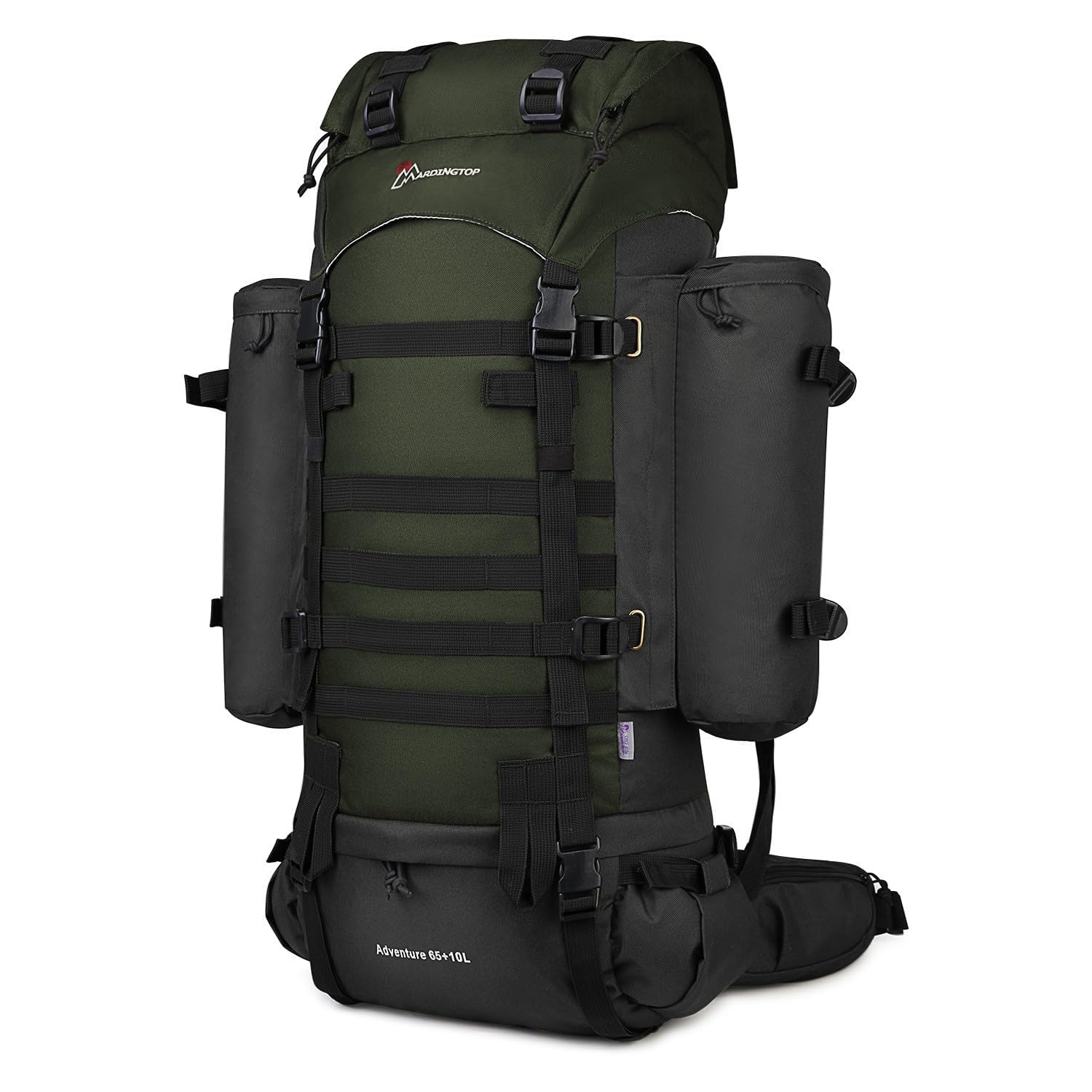
The Mardingtop 65+10L is a modular military-style pack that offers a level of customization rare at this price. The main body is 65 liters, and the removable daypack (the “+10L”) attaches via zippers and buckles, giving you a summit pack or a standalone day bag. The entire exterior is covered in MOLLE webbing, allowing you to attach pouches, a water bottle carrier, or a first aid kit anywhere on the pack. The internal frame is a lightweight alloy stay that provides structure, and the waist belt is padded and adjustable. The pack includes a rain cover, and the fabric is a thick, heavy-duty nylon that has held up for years in the field—one reviewer reported 5 years of regular use with no structural failures.
The load-carrying capability is impressive for a sub- pack. Testers have loaded the Mardingtop with up to 90 pounds for short ruck runs, though the intended sweet spot is under 50 pounds for longer hikes. The hip belt lacks the plush padding of the Osprey or Granite Gear packs, and users with a waist below 30 inches report that it does not cinch tight enough to transfer weight effectively. The detachable side pouches are a nice touch, though the Velcro attachment can weaken over time. The internal drawstring compartment separates a dirty tent from clean clothes, and the main compartment is large enough to fit a military sleep system without compression.
The compromises show in the finish: single-stitched seams instead of double-stitched at some junctions, a rubber hydration port that feels less robust than dedicated hose ports, and a side zipper that can unzip slightly under heavy load. For the backpacker who wants a rugged, customizable pack for short woodland trips, civilian preparedness, or as a durable travel bag, the Mardingtop 65+10L offers a unique set of modular features. It is not the most comfortable option for full 20-mile days, but for versatility and sheer value, it is a strong contender.
Why it’s great
- Removable 10L daypack adds summit-pack versatility
- Full MOLLE webbing allows unlimited accessory attachment
- Heavy-duty nylon fabric has proven durable over years of use
Good to know
- Hip belt lacks padding and may not cinch tightly for small waists
- Single-stitched seams are less durable than double-stitched at stress points
- Side zipper can unzip spontaneously under heavy loads
7. Teton 55L Scout
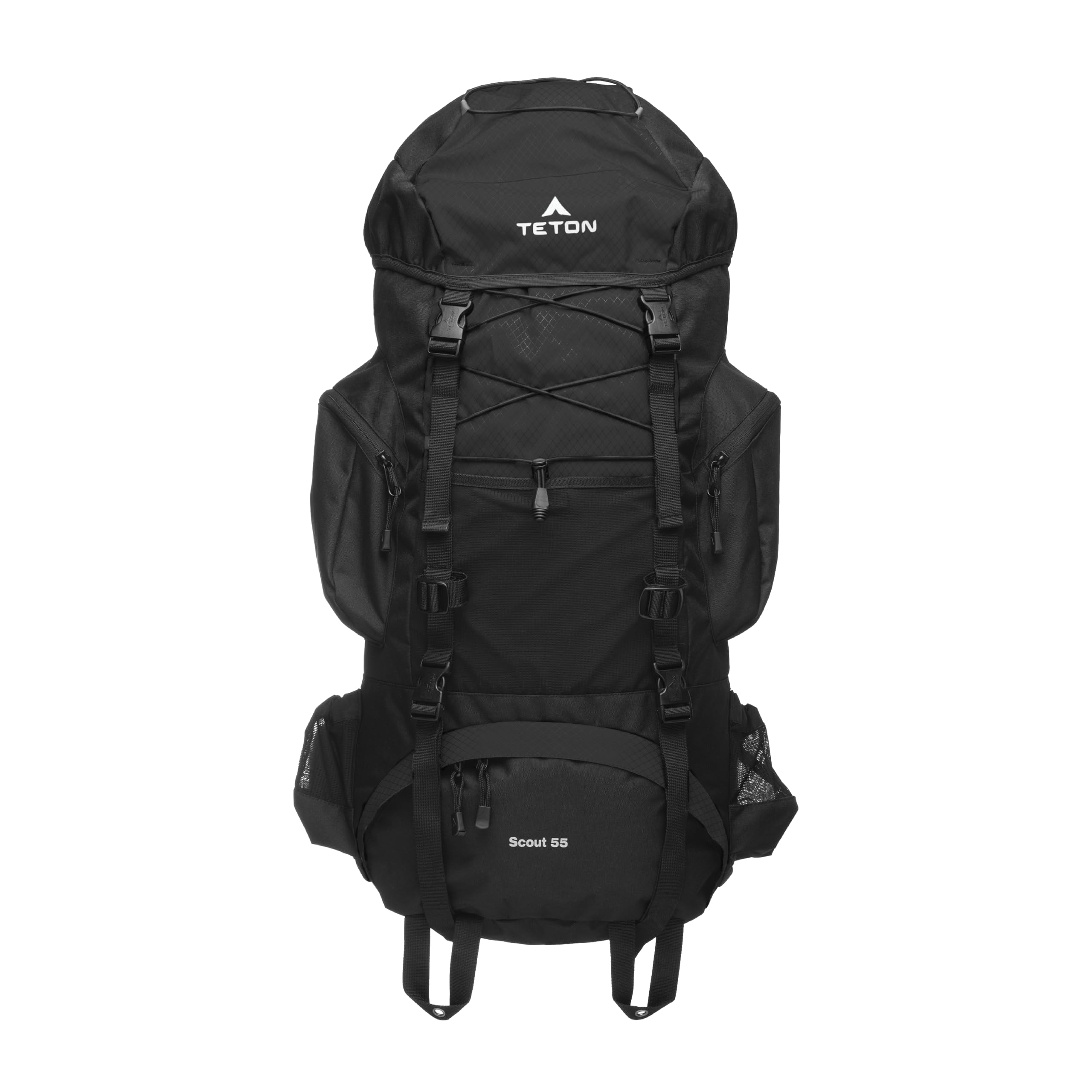
The Teton 55L Scout is purpose-built for hikers with a slighter build or a shorter torso, offering a more compact frame and harness than the larger Explorer model. The pack uses a multi-position torso adjustment system that works well for users between 5’5” and 5’10”, and the hip belt is designed for waist sizes 23 to 26.5 inches. This is a noticeable departure from most budget packs that assume a 30-inch minimum waist. The Scout still uses a full internal frame with two aluminum stays, providing solid load transfer for packs up to 45 pounds, and the open-cell foam lumbar pad with molded channels delivers adequate airflow.
At 4.4 pounds, the Scout is not an ultralight pack, but its 55-liter capacity is well-suited for 2- to 3-day trips. The organization includes a large sleeping bag compartment with a divider, a hydration bladder sleeve (3-liter compatible), and a top-lid pocket. The rain cover is included and fits the pack dimensions well. Testers have successfully loaded the Scout with 45 pounds for a 28-mile, 3-day hike, carrying 5 liters of water along with food, clothes, a tent, and a stool. The side pockets hold 1-liter bottles, though larger Nalgene bottles may be a tight fit.
The main criticisms center on the shoulder straps, which some reviewers describe as stiff and lacking padding compared to the Explorer model. The chest strap can slide off broader shoulders, and the overall harness feels less padded than the 65-liter competitors. The aluminum stays can also be tricky to adjust without instructions. For a slender teen or a smaller-framed adult looking for a proper internal-frame pack that fits without a custom order, the Teton Scout is a rare and practical find. If you are larger-framed or carry heavy gear, you will want the Explorer or Osprey Rook instead.
Why it’s great
- Hip belt and torso sizing are tailored for slender or shorter hikers
- 55-liter capacity is ideal for compact 2-3 day kits
- Includes a well-fitting rain cover and hydration bladder sleeve
Good to know
- Shoulder straps are stiffer and less padded than larger Teton models
- Chest strap may slide on users with broader chests
- Aluminum stay adjustment is not clearly explained
8. MOUNTAINTOP 70L

The MOUNTAINTOP 70L is a no-nonsense entry-level pack that prioritizes volume and bare essentials over frills. The 70-liter capacity is among the largest in this price range, giving you room for a full 4-season kit, a bear canister, or extra gear for a partner. The internal frame uses a single lightweight aluminum alloy frame plate that provides a stable backbone and reasonable load transfer for packs up to 35 pounds. The nylon fabric is paired with genuine YKK zippers, which is a hallmark of durability often missing from packs at this entry-level tier. The pack includes a rain cover, a hydration port, and a separate sleeping bag compartment at the bottom.
Access is handled through a top-loading drawstring main compartment and a side zipper that provides entry to the middle of the pack. The side zipper is a convenient feature for retrieving items buried under your sleeping bag without unpacking the whole load. The torso adjustment uses a multi-position system that fits a wide range of sizes, though the adjustment mechanism feels less refined than the Osprey or Granite Gear systems. The shoulder straps and back pad use a soft, breathable mesh that provides decent comfort for moderate loads, but several testers noted that the pack feels top-heavy when the main compartment is packed loosely.
Where the MOUNTAINTOP 70L saves cost is in the features you get for the price—there is no floating top lid, no waist belt pockets, and no daisy chain webbing. The large exterior pocket is oversized and can swallow a rain jacket, but it lacks compression to secure smaller items. For the beginner who needs maximum volume and a basic, functional frame for weekend camping trips, this pack delivers. If you plan to push heavy loads or go on 20-mile days, you will notice the lack of padding in the hip belt. It is a solid, affordable foundation that works best for car camping and short, moderate hikes.
Why it’s great
- 70-liter capacity offers ample room for bulky or cold-weather gear
- Genuine YKK zippers improve long-term reliability
- Side zipper access to the main compartment adds convenience
Good to know
- Lacks waist belt pockets and floating top lid for organization
- Hip belt padding is minimal for loads over 35 lbs
- Pack can feel top-heavy without careful packing technique
9. Mardingtop 60L Military
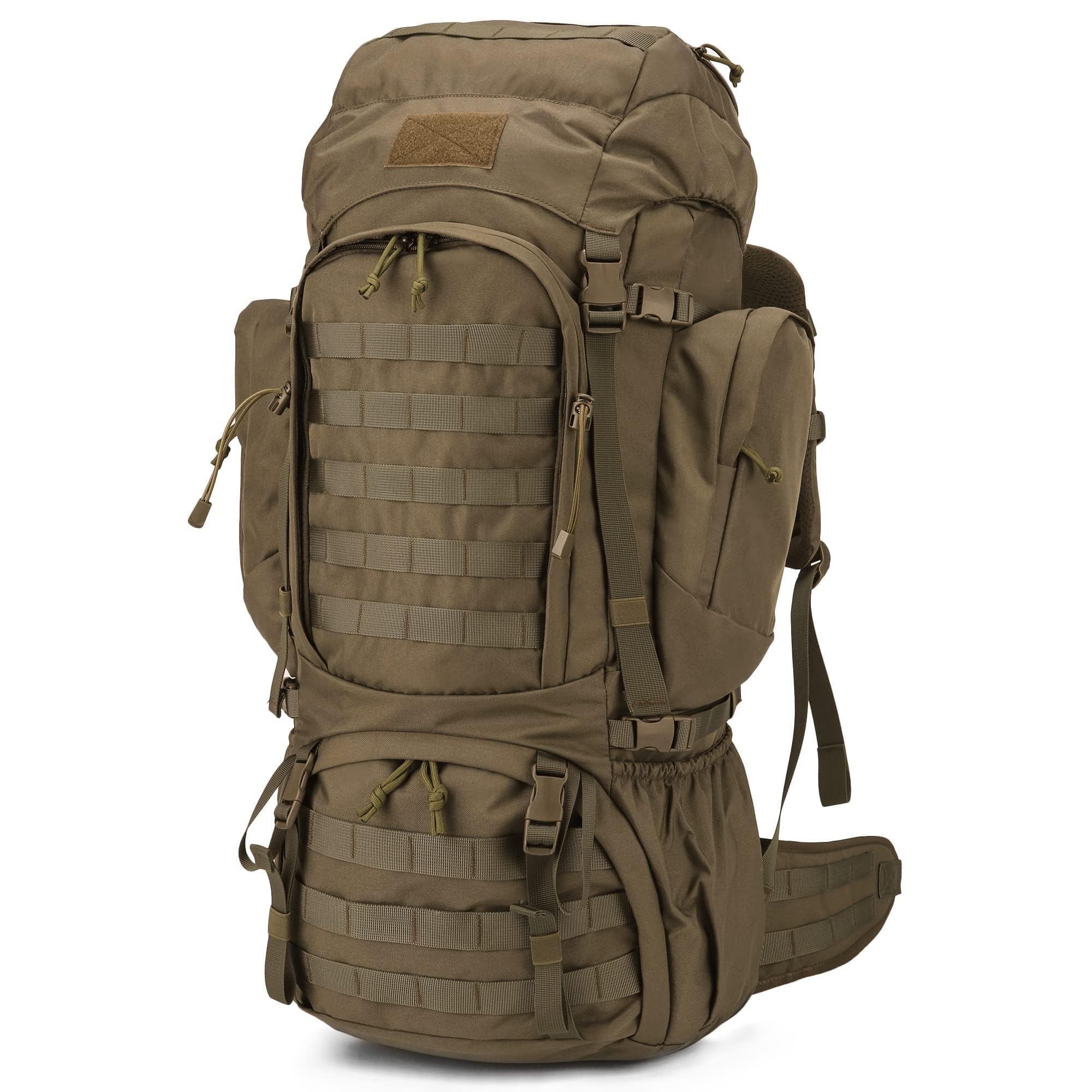
The Mardingtop 60L Military pack is an entry-level modular design that packs more organizational and expandable features than any other pack in its tier. The main body is a 60-liter internal frame pack, but the MOLLE webbing on the front and sides allows you to attach pouches that effectively expand the carrying capacity to around 75 liters. The detachable side pouches are a nice touch for a budget pack, giving you extra volume or a place to store a water bottle and snacks. The pack uses YKK zippers throughout, a feature that experienced hikers will recognize as a sign of better-than-average hardware for this price.
The frame is a lightweight internal stay that provides decent structure for loads up to 50 pounds, though the hip belt padding is thin and can cause chafing on longer treks. Testers report that the pack holds up well for distances of 10 to 20 miles as long as the load is kept under 50 pounds. The compression straps on the sides and bottom are effective at stabilizing the load, and the included rain cover has held up in light to moderate rain. The pack’s military aesthetic means it has a tactical look that may appeal to preppers or hunters, and the modular nature gives you the freedom to customize the pouch layout to your specific mission.
The downsides mirror the MOUNTAINTOP pack: the hip belt does not cinch tight enough for slender waists, and the shoulder straps are narrow, which can cause pressure on the collarbone for some users. The cinch straps have a tendency to loosen under heavy load, requiring periodic re-tightening. A handful of users have reported that the side zipper can unzip under heavy load, though this is not a universal issue. For the backpacker who values a durable, customizable pack for moderate distances and wants the ability to add MOLLE pouches without buying a new pack, the Mardingtop 60L is a solid, budget-conscious choice.
Why it’s great
- MOLLE webbing and detachable pouches provide expandable customization
- YKK zippers offer reliable hardware at an entry-level price
- Compression straps stabilize loads and provide lashing points
Good to know
- Narrow shoulder straps may dig in under heavy loads
- Hip belt padding is thin and can cause chafing on longer hikes
- Cinching straps can loosen during extended wear
FAQ
Is a 55L pack enough for a 3-day backpacking trip?
How important is an included rain cover for a budget pack?
What load weight should a budget backpacking pack carry comfortably?
Can I use a budget backpacking pack for travel or as a carry-on?
Final Thoughts: The Verdict
For most users, the budget backpacking pack winner is the Osprey Rook 65 because it delivers proven Osprey load-transfer technology, a ventilated AirSpeed backpanel, and a built-in rain cover at a price that undercuts comparable packs by a solid margin. If you want the lightest possible carry and are willing to keep your base weight under 33 pounds, grab the Naturehike 65L. And for the hiker who needs a max-volume, feature-rich workhorse that will survive years of abuse, the Teton 65L Explorer offers unbeatable value and durability.

Mo Maruf
I created WellFizz to bridge the gap between vague wellness advice and actionable solutions. My mission is simple: to decode the research and give you practical tools you can actually use.
Beyond the data, I am a passionate traveler. I believe that stepping away from the screen to explore new environments is essential for mental clarity and physical vitality.