Our readers keep the lights on and my smoothie glass nicely filled. As an Amazon Associate, I earn from qualifying purchases.
Your handlebars are already a Tetris puzzle of frame bags, a sleeping bag, and a spare tube. Adding a full-size tent to that load usually means strapping a bulky cylinder on top that catches wind like a sail and wobbles your steering on every descent. The bikepacking tent solves this by ditching the long, fragile pole set for a segmented, stubby pole architecture that fits horizontally inside a handlebar roll or vertically in a frame bag.
I’m Mohammad Maruf — the founder and writer behind WellFizz. I’ve spent years analyzing the metric that actually separates a good bikepacking tent from a backcountry compromise: the packed pole length. Tents built for backpackers often fold poles to 15–18 inches; a true bikepacking tent must collapse that same structure to 12 inches or less to clear the triangle of your bike frame.
Whether you’re grinding pavement for a credit-card tour or pushing a fully loaded rig up a singletrack pass, choosing the wrong shelter adds drag, steals cargo space, and undermines your whole trip. That’s why I built this guide around the best bikepacking tent options that actually respect the geometry of a loaded bike.
How To Choose The Best Bikepacking Tent
The best bikepacking tent balances three parameters that normal campers rarely obsess over: packed pole segment length, total trail weight, and the shape of the stuff sack. A tent that checks every box on paper but needs a 20-inch pole won’t fit in your handlebar roll. Here is what to look at first.
Packed Pole Length
This is the single most important spec for a bikepacking tent. A standard backpacking tent uses poles in three or four segments, each about 15 to 18 inches long. Bikepacking tents use “Shortstik” or multi-segment poles that collapse to 12 inches or less, allowing them to sit horizontally on flat bars or tuck vertically behind a frame bag. If the manufacturer does not list the packed pole length, ask — anything over 14 inches means you will be strapping it awkwardly across your top tube.
Floor Material and Denier
Bikepacking tents get packed and unpacked more frequently than standard backpacking tents, and the floor sees direct contact with gravel, pine needles, and sharp rock. Look for a floor rated at least 20D ripstop nylon with a polyurethane coating of 2000mm or higher. Silicone-coated floors (typically 20D) are lighter and more water-resistant, but they lack the UV stability of PU coatings. A footprint is strongly advised regardless of the material.
Vestibule Volume
You are not just storing your shoes at night — you need space for a handlebar bag, panniers, and possibly a wet rain jacket. A single vestibule on a 1-person tent should accommodate one pannier and a helmet. A 2-person bikepacking tent should have two vestibules or one oversized vestibule that swallows the bulk of your bike bags. Measure the vestibule floor area if possible; some manufacturers list it explicitly.
Quick Comparison
On smaller screens, swipe sideways to see the full table.
| Model | Category | Best For | Key Spec | Amazon |
|---|---|---|---|---|
| Wander Hawk 1-2P | Mid-Range | Budget-conscious first-time bikepackers | 3 lb 14 oz trail weight, 7001 aluminum poles | Amazon |
| Outdoor Research Helium Bivy | Bivy | Ultra-minimalist solo riders | Seam-taped, clamshell opening, 19.5 in floor | Amazon |
| Big Agnes Fly Creek HV UL Bikepack | Premium Lightweight | Weight-obsessed solo bike tourers | 1 lb 14 oz, 12 in Shortstik poles | Amazon |
| Gale Lite 2 Tunnel Tent | Ultralight Two-Person | Alpine and windy ridge camps | 2.89 lb, 10D double-silicone nylon fly | Amazon |
| Big Agnes Copper Spur HV UL Bikepack | Premium Two-Person | Serious bike campers needing space | 2 lb 5 oz, 12 in Shortstik poles | Amazon |
| NEMO Dragonfly OSMO Bikepack | High-End Solo | Stealth camping on long-distance routes | OSMO poly-nylon, DIAPOLE aluminum | Amazon |
| MSR Hubba Hubba Bikepack | Premium Two-Person | All-around bikepacking, two riders | 3 lb 1 oz, 20D ripstop, DAC poles | Amazon |
| Snow Peak Minute Dome Pro. Air 1 | Premium Solo | Solo ultra-lightweight camp | 2.9 kg, Duralumin V-pegs | Amazon |
| NEMO Dagger OSMO | Premium Two-Person | Spacious two-person touring | OSMO fabric, 30.6 sq ft floor | Amazon |
In‑Depth Reviews
1. Wander Hawk 1-2 Person Backpacking Tent
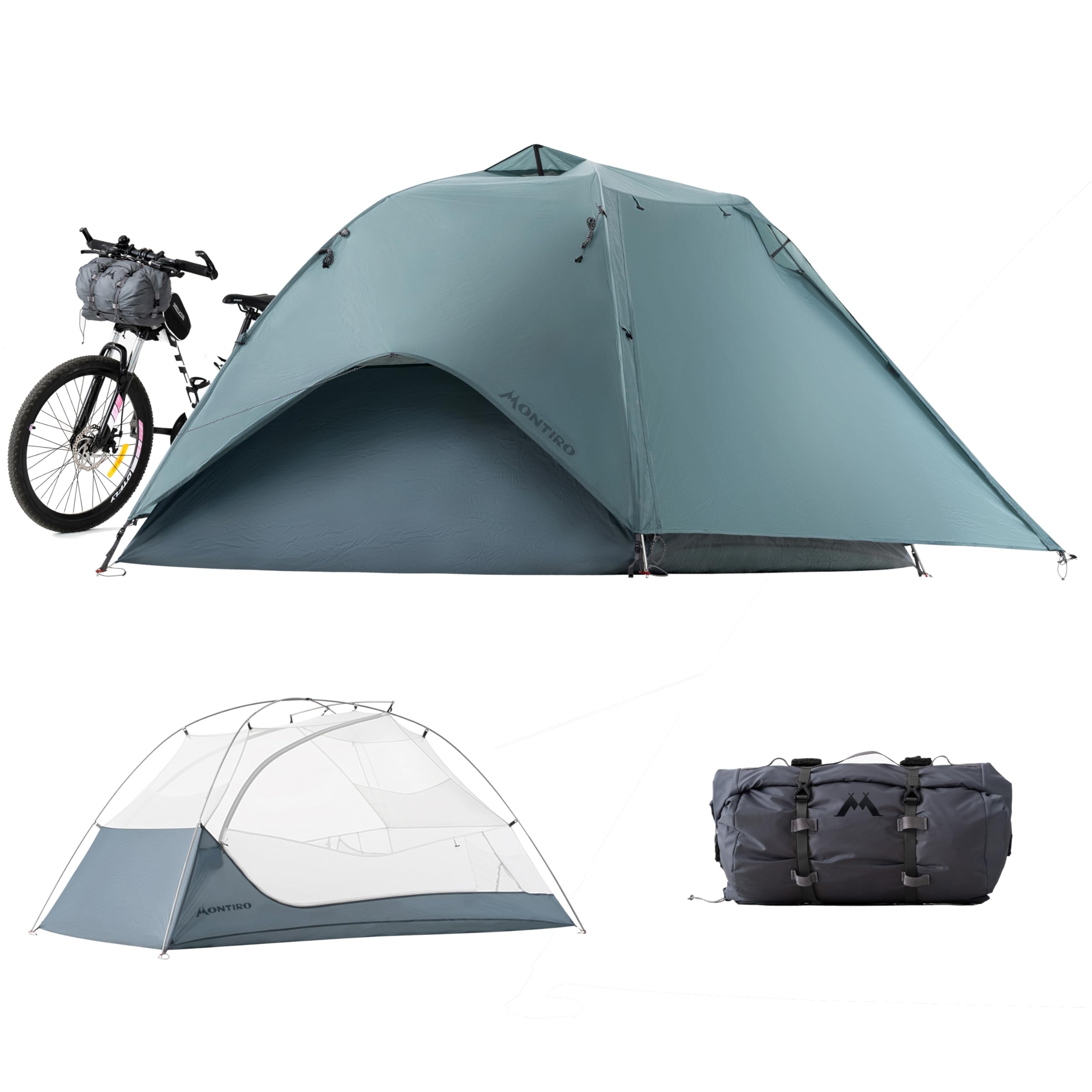
The Wander Hawk uses 20D ripstop nylon with a silicone coating on both the fly (PU2000mm) and floor (PU3000mm), giving it a waterproof rating that rivals tents costing twice as much. The 7001 aluminum alloy poles are a step above standard 6061 aluminum; they bend under extreme pressure but are less likely to snap, which matters when you are forcing a tent into a tight frame bag on a rainy evening.
The included handlebar bag is a genuine differentiator. It is not a generic stuff sack with straps — it is shaped to sit on flat bars and includes a daisy-chain webbing system that allows multiple attachment configurations. The tent body packs to a trail weight of 3 lb 14 oz, which is acceptable for the 1+ person category, especially when you consider the 43-inch interior height that lets a 5-foot-9 rider sit upright without hunching.
Customer feedback notes that the rainfly can be tricky to tension properly and that the 20D floor is thin enough to warrant the included footprint. A handful of users reported leakage under heavy, sustained rain, likely due to improper seam sealing. For weekend trips in moderate weather, this tent delivers well above its price tier.
Why it’s great
- Includes a dedicated handlebar mounting bag, rare at this price point
- 7001 aluminum alloy poles provide better durability than standard 6061
- 43-inch interior height is generous for a sub-4-pound shelter
Good to know
- Rainfly can be difficult to tension; some users report leakage in prolonged rain
- 20D floor is thin and benefits from the included footprint
- Stuff sack wore a hole in one reviewer’s bag after moderate use
2. Outdoor Research Helium Bivy
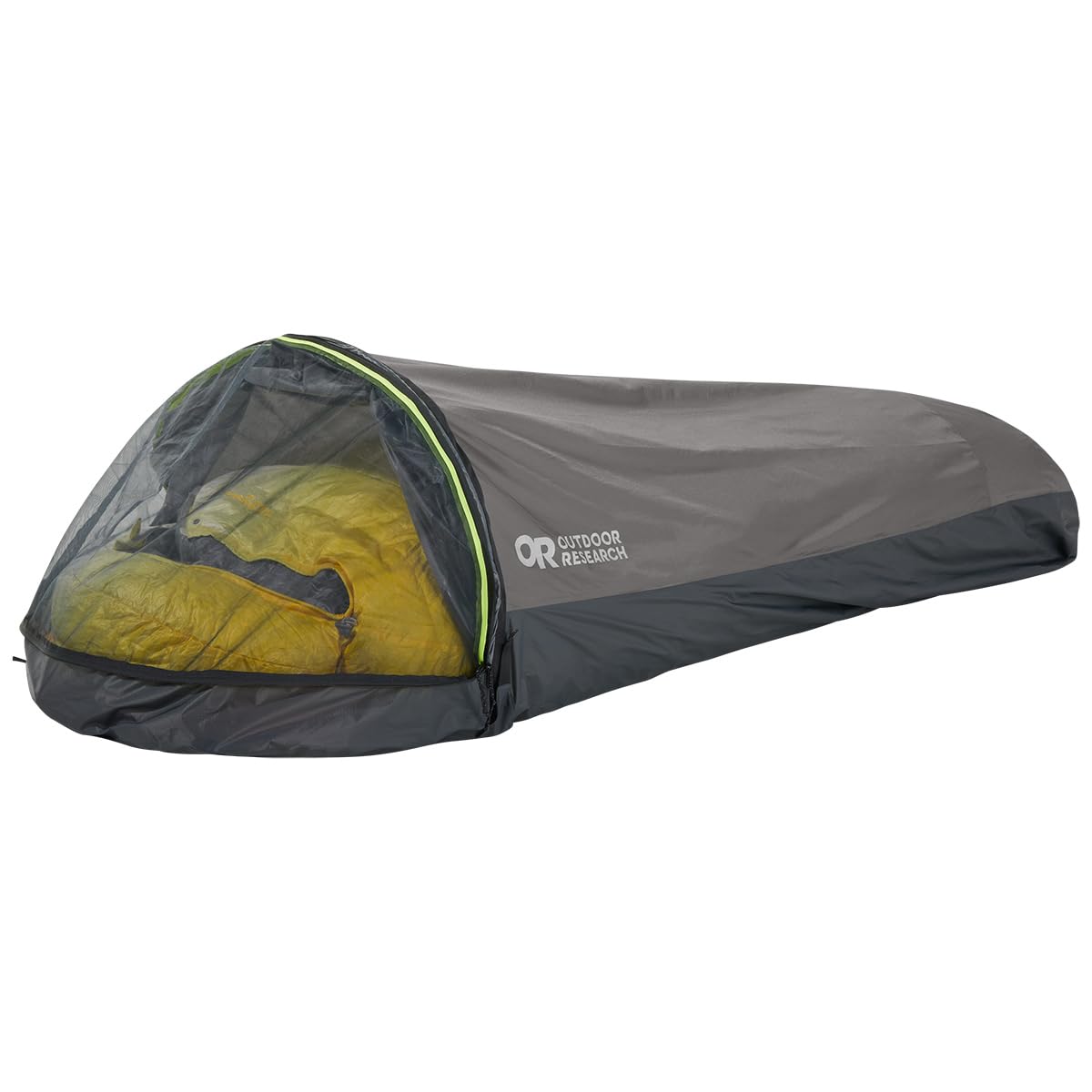
The Helium Bivy is not a tent — it is a waterproof, seam-taped bivy sack that fits over your sleeping bag and packs to roughly the size of a Nalgene bottle. The clamshell opening with internal fly fasteners gives you better access and ventilation than traditional mummy-style bivvies, and the mesh panel across the face area reduces the suffocating feeling that most bivy users complain about.
At just 19.5 inches of floor length, this bivy is designed for riders who prioritize packability over sprawl. The stake-out installation means you need four stakes and optional guy lines to keep the fabric off your face, but on a clear night you can sleep under the stars and only deploy the bivy if rain rolls in. The Helium fabric is wear-resistant and has held up in alpine and desert conditions according to multiple long-term reviews.
One experienced bikepacker noted that the zipper and door design can flap in strong wind, creating noise that may disturb light sleepers. Another reviewer waterproofed the fabric further with an additional treatment for peace of mind. This is the lightest, most compressible option here, but you trade all livable space for that minimal footprint.
Why it’s great
- Extremely compact and lightweight — fits in a frame bag easily
- Seam-taped construction provides reliable weather protection
- Clamshell opening reduces claustrophobia compared to traditional bivvies
Good to know
- Requires stakes for setup; not freestanding
- Zipper can flap in wind; some users add extra waterproofing
- Very tight interior — no room for storing gear inside
3. Big Agnes Fly Creek HV UL Bikepack

The Fly Creek HV UL Bikepack represents the convergence of ultralight backpacking engineering and bikepacking-specific design. Its 12-inch Shortstik poles are the defining feature: they pack horizontally on flat handlebars or vertically in a frame bag without protruding. The tent uses Solution Dye fabric that resists UV fading and reduces water consumption during production, a meaningful consideration for exposed multi-day tours.
The proprietary TipLok Tent Buckle combines pole-tip capture, rainfly attachment, and stake-out loop into one mechanism, reducing the fumbling that normally happens during a tired, late-day setup. The high volume (HV) architecture uses a DAC angle hub to create steep, nearly vertical walls, maximizing the 43-inch peak height without adding structural weight. The result is a 1-person tent that feels significantly more spacious than its 1 lb 14 oz trail weight suggests.
The single door and vestibule work fine for solo use, but the vestibule is tight for storing a full handlebar bag and pannier. Some users report water splashing under the rainfly during heavy downpours, a known characteristic of the low-profile fly design. Pre-treating the seams with seam sealer and ensuring a taut pitch mitigates this issue. For bikepackers who prioritize every gram, this tent is the benchmark.
Why it’s great
- 12-inch Shortstik poles pack easily on handlebars or in a frame bag
- TipLok Tent Buckle simplifies setup — no loose parts to lose
- HV architecture provides steep walls and generous headroom for a UL shelter
Good to know
- Single vestibule is cramped for storing bike gear
- Rainfly can allow splash under in sustained heavy rain
- Footprint sold separately, but recommended for floor protection
4. Gale Lite 2 Ultralight Tunnel Tent
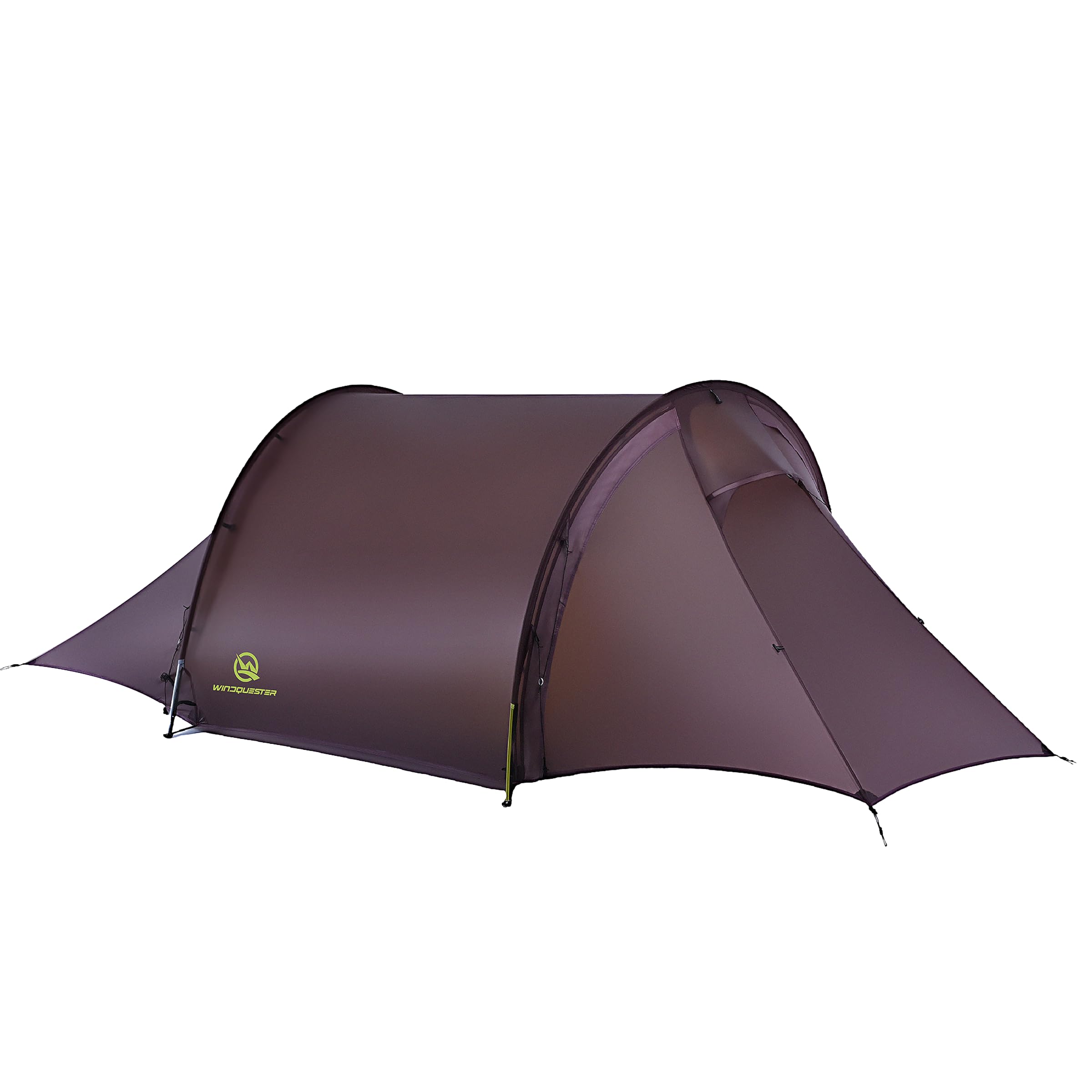
The Gale Lite 2 uses a tunnel design with a double-silicone-coated 10D nylon fly and 15D floor, both rated at 2000mm waterproofing. Tunnel tents are inherently more aerodynamic than dome tents — they cut through wind rather than catching it — making this a strong choice for exposed alpine ridges where wind loading is a real concern. The two-door layout with Dyneema core guylines and DAC J-stakes adds structural confidence in gusty conditions.
At 2.89 pounds for a 2-person shelter, the Gale Lite 2 competes directly with ultralight 2-person tents while offering the distinct advantage of a tunnel frame that sheds wind efficiently. The packed size of 16.14 x 4.92 x 4.92 inches is longer than the Big Agnes Shortstik options, but the narrow diameter means it slips into a frame bag or pannier without the bulbous shape of a standard dome tent stuff sack.
The mesh rear vent and dual doors provide excellent cross-ventilation, and several reviewers noted condensation was minimal even in humid conditions. The front vestibule is generously sized, easily swallowing two sets of panniers. On the downside, the tunnel design requires more guylines for a stable pitch than a freestanding dome, and the outer zippers can be stiff to operate with cold or gloved hands.
Why it’s great
- Aerodynamic tunnel design handles wind better than most dome tents
- Double-silicone coating provides excellent waterproofing without added weight
- Large front vestibule fits two panniers and extra gear
Good to know
- Requires more guylines for a stable pitch compared to freestanding domes
- Outer zippers can be stiff in cold weather or with gloves
- Packed length of 16 inches may be too long for some frame bags
5. Big Agnes Copper Spur HV UL Bikepack

The Copper Spur HV UL Bikepack is the twin-door, double-vestibule sibling of the Fly Creek. Each vestibule is large enough to hold a full pannier set and a helmet, allowing you to keep all bike bags outside the sleeping area while maintaining access from both sides.
The 12-inch Shortstik poles are identical in design to the Fly Creek, so the Copper Spur packs equally well on handlebars or in a frame bag. The 4-way high-volume hub increases interior volume by 20% compared to earlier versions, creating steep walls that make the 2-person floor feel genuinely spacious for two adults. The elastic webbing on the top of the tent body cleverly stores a helmet, a small detail that saves you from fumbling for a dry spot inside.
The burly compression stuff sack with daisy-chain webbing is built specifically for the abuse of trail travel — multiple attachment points let you lash it to a frame bag, seat pack, or fork cage. Some reviewers noted that the 20D floor is stretchy under tension and that the pole assembly can feel awkward at first. This is the tent for the bikepacker who wants hotel-style organization in a 2.3-pound package.
Why it’s great
- Two vestibules provide dedicated gear storage on both sides
- 4-way hub increases usable volume without adding weight
- Helmet storage elastic and bike-optimized daisy-chain bag
Good to know
- 20D floor material can stretch; may feel fragile for rough campsites
- Pole assembly can be awkward; practice setup before leaving
- Not the best choice for moto camping or heavy-duty abuse
6. NEMO Dragonfly OSMO Ultralight Bikepacking Tent

The Dragonfly OSMO is engineered around NEMO’s proprietary OSMO fabric, a poly-nylon ripstop made from 100% recycled yarns that is PFAS-free and delivers 4x longer-lasting water repellency compared to standard PU coatings. The fabric also stretches 3x less when wet, which means your rainfly stays taut through a night of rain without requiring you to re-tension guylines at 2 AM.
The hubbed, pre-bent DIAPOLE recycled aluminum poles include a Precurve cross pole that increases volume at the head by 34%, giving you a 43-inch peak height that feels remarkably generous for a 1-person tent. The subdued color palette and non-reflective materials allow stealth camping — you can set up close to a trailhead without the tent glowing like a beacon. The bike-optimized dry bag includes a latching system that secures to your frame or seat pack.
The Landing Zone storage tub and Nightlight Pocket are thoughtful interior details, but the plastic clips that attach the tent body to the crossbar have been a failure point for some users. NEMO’s customer service replaced the parts for affected customers, but the system feels less robust than the all-metal hubs used by Big Agnes and MSR. This tent excels for the solo bikepacker who values a dry interior, stealth aesthetics, and sustainable materials.
Why it’s great
- OSMO fabric repels water longer and stretches less when wet than PU alternatives
- Precurve cross pole adds significant headroom without weight penalty
- Non-reflective materials enable stealth camping near public trails
Good to know
- Plastic crossbar clips have been reported as a failure point
- Floor is thin (20D) and may require a footprint for rocky terrain
- Rainfly cannot be pitched without the inner body, limiting fly-only setups
7. MSR Hubba Hubba Bikepack 2 Person Tent

The Hubba Hubba Bikepack builds on the legendary Hubba Hubba platform — a tent that has been a backcountry standard for years — and adds bike-specific features without compromising the spacious rectangular floor plan that made the original famous. The DAC poles fold down to a short enough length to fit on handlebars or inside a frame bag, and the handlebar storage bag includes removable spacers that clear brake and shift cables.
The true rectangular floor plan (84 x 50 inches) provides 29 square feet of living space, and the two large vestibules offer abundant room for panniers, a helmet, and wet clothing. The DuraShield polyurethane coating on both the fly and floor is rated for frequent use and shoulder-season storms — multiple reviewers reported surviving thunderstorms and sustained rain without a single leak. The 42-inch peak height means both occupants can sit up comfortably.
At 3 lb 1 oz minimum weight, the Hubba Hubba is heavier than the Fly Creek or Copper Spur, but it offers superior weather protection and a more durable floor (20D ripstop with a higher denier feel). The carry bag, while well-designed, does not secure as tightly to handlebars as some users would like; a few bikepackers substituted their own Velcro straps. This is the tent for pairs who want proven stormworthiness and enough space to play cards inside on a rest day.
Why it’s great
- Rectangular floor plan offers exceptional usable space for two people
- DuraShield coating handles shoulder-season storms without leaks
- Handlebar bag includes spacers to clear bike cables and shifters
Good to know
- 3 lb 1 oz is heavier than some solo-focused bikepacking tents
- Carry bag may need additional straps for secure handlebar mounting
- Lacks the ultra-short packed pole length of 12-inch systems
8. Snow Peak Minute Dome Pro. Air 1

The Snow Peak Minute Dome Pro. Air 1 is a single-wall style tent that uses an outer frame setup: the poles go up first, then the fly and inner tent attach together as one unit. This design lets you pitch the outer fly alone in light rain while keeping the inner dry, and it speeds up takedown because the inner stays attached. The Duralumin V-shaped pegs are lightweight yet strong, and the included cross frames create a stable dome structure.
The tent weighs 2.94 kg (about 6.5 pounds), which is heavy by bikepacking standards, but the build quality is unmistakably premium. The fly sheet uses a waterproof coating that dries quickly, and the gap between the fly and ground provides good airflow but also lets wind and drafts into the vestibule area. One reviewer noted that the tent lacks a snow skirt, so winter camping requires careful site selection.
For solo use, the interior is comfortable for someone up to 6 feet tall. The side mesh doors provide excellent ventilation, and condensation has not been an issue even in cool autumn conditions according to several long-term users. The price positions this as a luxury item for bikepackers who value the Snow Peak brand and are willing to carry extra weight for refined design and fit-and-finish.
Why it’s great
- Outer frame setup allows quick pitching with inner attached
- Premium Snow Peak materials and Duralumin pegs
- Excellent ventilation; condensation is rare in 3-season use
Good to know
- Heavy for bikepacking at 2.94 kg
- No snow skirt limits winter use; side gaps let wind into vestibule
- Price is high, reflecting brand prestige more than weight savings
9. NEMO Equipment Dagger OSMO Lightweight Backpacking Tent
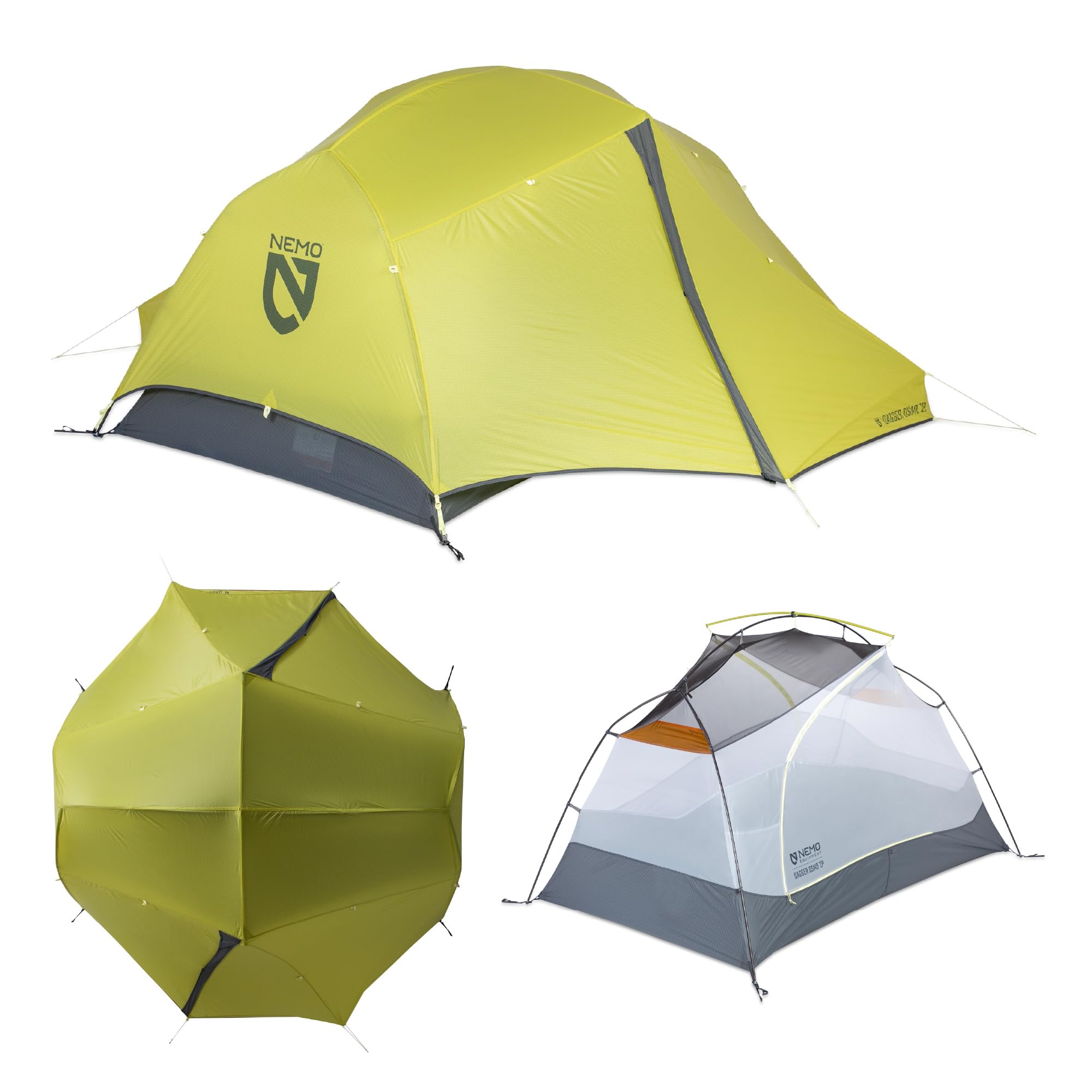
The Dagger OSMO is NEMO’s answer to the Big Agnes Copper Spur — a two-door, two-vestibule tent that prioritizes interior volume without ballooning to an unreasonable weight. The OSMO fabric is the same 100% recycled, PFAS-free poly-nylon used in the Dragonfly, but the Dagger uses a heavier denier that feels more substantial underfoot. The floor area measures 30.6 square feet with a width of 50 inches, comfortably fitting two 25-inch sleeping pads.
The Volumizing Stash strut increases vestibule space by 22%, creating a true mudroom area where you can stash panniers, a frame bag, and muddy shoes without encroaching on the sleeping zone. The vertical walls achieved through the hybrid freestanding design maximize the 43-inch peak height across the entire floor, not just at the center. The Axial corner anchor allows one-handed setup and tensioning, a small ergonomic win when you are setting up after a long day of pedaling.
The included stakes are heavier than ultralight alternatives, and the plastic hook hardware has been criticized for feeling less premium than the rest of the tent. One reviewer reported that the stakes failed in 30–50 MPH winds, requiring them to tie the tent to their packs for stability. For bikepackers who prioritize livable space and don’t mind an extra half-pound over the ultralight offerings, the Dagger OSMO is a spacious, comfortable base camp.
Why it’s great
- Volumizing Stash strut creates best-in-class vestibule space for gear
- OSMO fabric resists water and stretch better than standard PU nylon
- Vertical walls and 43-inch peak provide exceptional usable interior space
Good to know
- Plastic hook hardware feels less durable than all-metal alternatives
- Stakes are heavy and may not hold in extreme winds
- Heavier than ultralight competitors; not the best choice for weight-weenies
FAQ
Can I use a regular backpacking tent for bikepacking?
Is a freestanding tent necessary for bikepacking?
What is the best size tent for a solo bikepacker?
How important is a footprint for a bikepacking tent?
Final Thoughts: The Verdict
For most bikepackers, the best bikepacking tent winner is the Big Agnes Fly Creek HV UL Bikepack because it delivers the shortest packed pole length (12 inches) at the lowest trail weight (1 lb 14 oz) while maintaining a livable 43-inch interior height. If you need space for two riders and two sets of gear, grab the MSR Hubba Hubba Bikepack for its proven weather protection and rectangular floor plan. And for solo riders who want stealth capabilities and sustainable materials, nothing beats the NEMO Dragonfly OSMO with its PFAS-free, non-reflective fabric that stretches less when wet.

Mo Maruf
I created WellFizz to bridge the gap between vague wellness advice and actionable solutions. My mission is simple: to decode the research and give you practical tools you can actually use.
Beyond the data, I am a passionate traveler. I believe that stepping away from the screen to explore new environments is essential for mental clarity and physical vitality.