Our readers keep the lights on and my smoothie glass nicely filled. As an Amazon Associate, I earn from qualifying purchases.
The right sealant stops that drip instantly, but grab the wrong tube and you’ll be back on the ladder within a season, scraping off chalky, cracked silicone. The difference between a permanent bond and a messy failure comes down to adhesion chemistry, flexibility rating, and cure behavior — details most homeowners overlook until it’s too late.
I’m Mohammad Maruf — the founder and writer behind WellFizz. I’ve spent years analyzing sealant formulations, testing real-world adhesion on metal, vinyl, and aluminum substrates, and tracking long-term durability through freeze-thaw cycles.
This guide focuses exclusively on products engineered to handle the unique demands of rain-carrying systems — temperature swings, standing water, and UV exposure. If you’re looking for a truly waterproof bond that won’t shrink or crack, you need the right caulk for gutters.
How To Choose The Best Caulk For Gutters
Not all sealants are built for the gutter environment. Rain gutters expand and contract with temperature swings, sit in constant UV exposure, and hold standing water after every storm. Choosing the wrong chemistry means redoing the job in six months. Here is what determines whether a sealant lasts five years or five weeks.
Chemistry Matters: Silicone vs. Polyether vs. Tripolymer
Standard 100% silicone offers excellent water resistance and flexibility, but it often fails to adhere to oily or damp aluminum without aggressive surface prep. Polyether formulas, like those used on RV roofs, self-level and bond aggressively to metal and fiberglass, though they tend to attract dirt over time. Tripolymer-based sealants, such as Geocel’s 2320, combine the adhesion of polyurethane with the flexibility of silicone — making them ideal for narrow gutter seams where movement is most extreme.
Self-Leveling vs. Non-Sag: Which Consistency Wins?
Self-leveling sealants, like the Dicor Ultra Sealant, flow into gaps and smooth themselves out — perfect for horizontal gutter bottoms and roof flashings where gravity can do the work. Non-sag or bead-style sealants, such as OSI GS121, hold their shape on vertical surfaces and overhead joints, making them the right choice for downspout connections and end caps. Using the wrong consistency in the wrong orientation results in a drip mess that requires complete removal.
Cure Time and Application Temperature
Most gutter sealants require a 24-hour cure window free from rain. Full mechanical strength typically develops over 48 to 72 hours. Application temperature range is critical — some silicones lose adhesion strength below 40°F, while polyether formulas remain workable down to 0°F. Always check the technical data sheet for the minimum application temperature before you climb the ladder.
Quick Comparison
On smaller screens, swipe sideways to see the full table.
| Model | Category | Best For | Key Spec | Amazon |
|---|---|---|---|---|
| Geocel 2320 Tripolymer | Tripolymer | Narrow seams & high movement | 10.3 oz per tube, 3-pack | Amazon |
| Dicor Ultra Sealant | Polyether | Self-leveling on flat seams | UV stabilized, non-yellowing | Amazon |
| OSI GS121 Gutter Sealant | SBR Rubber | Patching vertical joints | 0.31 lb, bead application | Amazon |
| Silicone 2 Advanced Metal | Hybrid Silicone | Metal-to-metal adhesion | 30-minute cure time | Amazon |
| DAP GE Gutter Caulk | Silicone | Entry-level clear seal | 10.1 oz, clear silicone | Amazon |
In‑Depth Reviews
1. Geocel 2320 Construction Tripolymer Gutter and Narrow Seam Sealant

Geocel’s tripolymer chemistry sits in a sweet spot — more flexible than polyurethane, more adhesive than standard silicone. It’s engineered specifically for narrow gutter seams where thermal expansion is at its worst, and it bonds aggressively to damp or slightly oily metal without the rigorous prep required by other sealants. The 10.3-ounce tube size in a three-pack gives you enough material to seal an entire residential system without running out mid-project.
The semi-self-leveling consistency means it stays put on vertical downspout connections but flows gently into horizontal gaps. Users report tack-free feel within 24 hours at moderate temperatures, and the bond remained intact through extended periods of standing water and below-freezing weather. The clear option works well on both white and brown gutters, though delivery errors with incorrect color tubes have been noted in a small number of cases.
For homeowners who want a single product that handles both seam sealing and end-cap bonding, the Geocel 2320 eliminates the need to buy multiple formulations. Its resistance to UV degradation keeps the seal flexible for years, and the tripolymer base holds up better than standard silicone against constant moisture immersion.
Why it’s great
- Adheres to damp or oily metal without extensive prep
- Semi-self-leveling works on both horizontal and vertical surfaces
- Excellent UV resistance prevents cracking over time
Good to know
- Some shipments have reported wrong color delivery
- Apply above 40°F for optimal cure strength
2. Dicor 610SASLW-1 Self-Leveling Ultra Sealant

Dicor’s Ultra Sealant uses a solvent-free polyether formula that was originally designed for RV roof seams, but it translates perfectly to gutter applications where self-leveling behavior saves time. The material flows into gaps without requiring tooling, and it bonds aggressively to fiberglass, aluminum, and painted metal surfaces. The white color blends well with light gutters and roof flashings, and the non-yellowing property keeps cosmetic appearance intact after years of sun exposure.
The slow-flow consistency is a deliberate feature — it spreads horizontally without running off vertical edges, giving you about an hour of workability before the skin forms. Full cure takes 24 to 48 hours, and during that window it remains flexible enough to accommodate gutter expansion without pulling away from the substrate. Users consistently report that it outperforms standard silicone on RV vents and gutter seams, especially in climates with temperature extremes.
One tube covers a standard 14-inch vent or roughly five linear feet of gutter seam. The main trade-off is its price point, which sits above commodity silicone, but the extended lifespan typically justifies the upfront cost for homeowners who would rather seal once than reseal annually.
Why it’s great
- Self-leveling eliminates the need for finger tooling
- Solvent-free and low-odor during application
- Bonds well to fiberglass, aluminum, and painted metal
Good to know
- White color only — not ideal for dark gutters
- Tube consistency can feel thin; use on flat seams only
3. OSI GS121 Gutter and Seam Sealant

OSI GS121 takes a different approach — it uses an SBR rubber base that remains permanently flexible and expands and contracts with temperature swings, making it an excellent choice for older gutter systems where metal fatigue has already created micro-movements. The 5-fluid-ounce size is smaller than most tubes, but the thick bead consistency means a little goes a long way on downspout joints and corner connections where precision application matters more than volume.
The sealant is extremely sticky and requires careful tooling — users report success using a plastic bag over a finger to smooth the bead into the seam. Once cured, the water-resistant seal holds even on 40-year-old rain gutters where multiple previous sealants had failed. The white color works best on light systems, though a clear synthetic polymer version is available for those who need a transparent finish on darker gutters.
The main consideration is the smaller tube size and the relatively thick paste consistency, which can be difficult to extrude in cold weather. However, for anyone battling a persistent leak in an elbow joint or end cap, the GS121’s adhesion to difficult surfaces often solves problems that silicone cannot.
Why it’s great
- Permanently flexible formula handles thermal expansion well
- Incredibly sticky — adheres where silicone fails
- Works on aluminum, vinyl, and galvanized metal
Good to know
- Small 5-oz tube means less coverage per purchase
- Thick consistency can be hard to extrude below 50°F
4. Silicone 2 Advanced Metal by Momentive
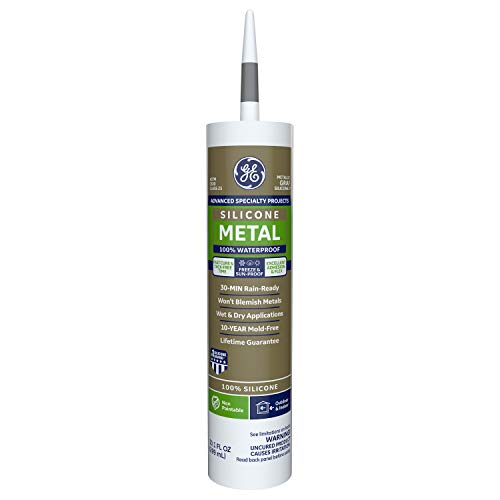
This hybrid silicone formulation from Momentive is specifically engineered for metal substrates, including aluminum, galvanized steel, and tin. The metallic gray color blends seamlessly with unpainted gutter systems and metal roofing, and the advanced silicone chemistry provides mold and mildew resistance that standard acrylic caulks lack. The standout feature here is the 30-minute full cure time — dramatically faster than the 24-hour standard, which means you can seal a repair and test it with a garden hose the same afternoon.
Users have applied this successfully on metal roof seams, tin ceiling tiles, and kitchen sink installations, reporting excellent adhesion even at sub-zero temperatures. The paste consistency is easy to tool with a wet finger, and the bond remains flexible down to -5°F without becoming brittle. The 9.8-ounce tube provides decent coverage for multiple small repairs, though the small format means heavy-duty projects may require multiple tubes.
The primary drawback is that this is a metal-specific formulation. It performs poorly on vinyl or PVC gutters, where it fails to achieve the same chemical bond strength. Stick to using it on actual metal gutters, galvanized downspouts, and aluminum flashings for best results.
Why it’s great
- Full cure in just 30 minutes — fastest option in this guide
- Mold and mildew resistant for damp environments
- Bonds well in sub-zero application temperatures
Good to know
- Only works well on metal surfaces — avoid on vinyl or PVC
- Small tube size limits coverage on large projects
5. DAP GE50G01 10.1 oz Clear Gutter Caulk
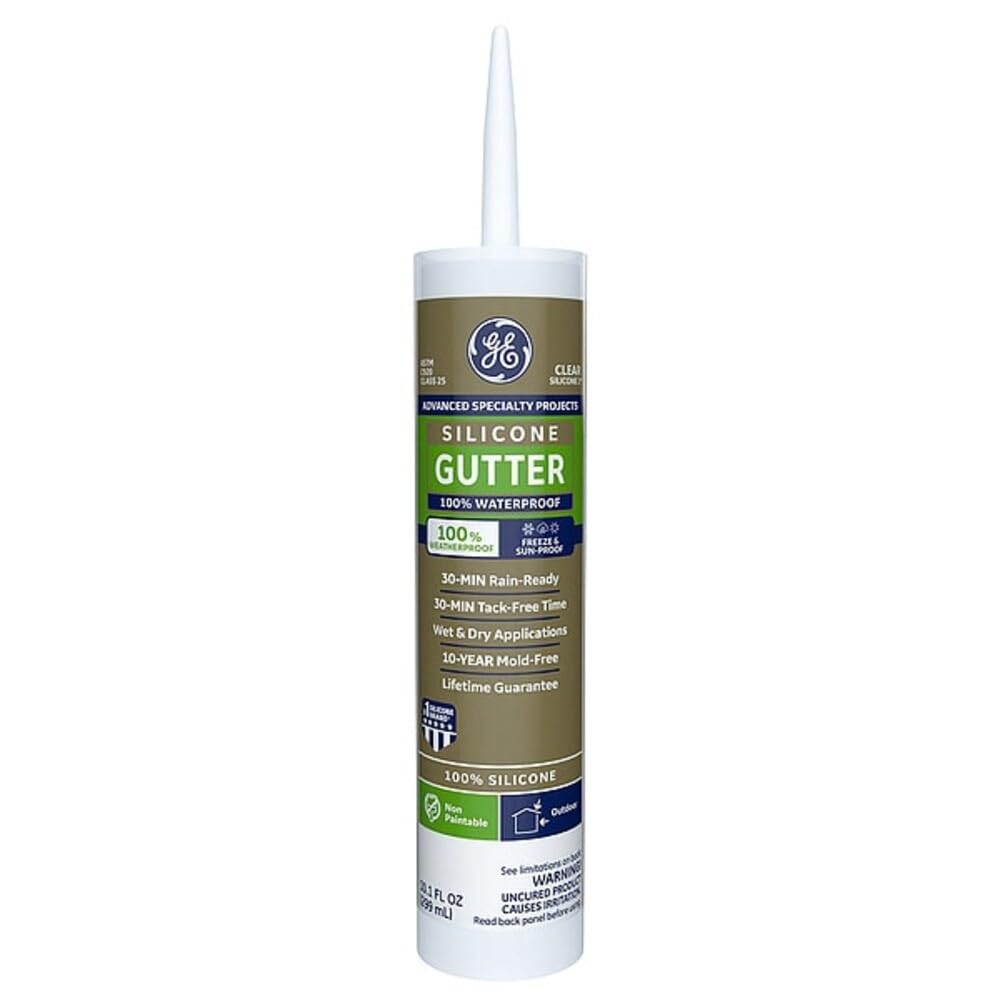
DAP’s GE-branded gutter caulk is the entry-level silicone option that gets the job done on budget-conscious projects. The clear formula dries invisibly, making it suitable for both white and brown gutters where cosmetic appearance matters. The 10.1-ounce tube offers solid coverage at a budget-friendly price point, and the standard 24-hour full cure time aligns with most weekend project schedules. Users have successfully sealed new gutter joints and end caps, reporting zero leaks after heavy rain when applied to clean, dry surfaces.
One notable design detail is the included tip cap — several users mention this allows the tube to be reused weeks later without the silicone drying out inside the nozzle. This is a thoughtful touch for homeowners who only need small repairs spread over time. The silicone base provides excellent water resistance and flexibility, though it requires thorough surface cleaning to achieve maximum adhesion on older, oxidized aluminum gutters.
The clear color is versatile, but the standard silicone chemistry means it struggles on damp surfaces or in cold weather — apply only when temperatures are consistently above 40°F and the gutter is completely dry. It is also worth noting that this tube has a use-by date, so check the stamp before purchasing to ensure you are getting fresh material with full curing properties.
Why it’s great
- Clear finish blends with any gutter color
- Tip cap allows reuse across multiple small projects
- Proven performance on clean, dry gutter joints
Good to know
- Requires fully dry surface for proper adhesion
- Always check the date stamp — old tubes may not cure correctly
FAQ
Can I use standard bathroom silicone caulk on gutters?
How do I prepare a gutter seam before applying new sealant?
Will self-leveling sealant run off my downspout joints?
How long does gutter caulk last before needing reapplication?
Final Thoughts: The Verdict
For most users, the caulk for gutters winner is the Geocel 2320 Tripolymer Sealant because its semi-self-leveling consistency and aggressive adhesion handle both narrow seams and vertical joints with a single tube. If you want a self-leveling formula that saves time on flat gutter bottoms, grab the Dicor Ultra Sealant. And for small repairs on metal gutter systems where fast cure time is critical, nothing beats the Silicone 2 Advanced Metal.

Mo Maruf
I created WellFizz to bridge the gap between vague wellness advice and actionable solutions. My mission is simple: to decode the research and give you practical tools you can actually use.
Beyond the data, I am a passionate traveler. I believe that stepping away from the screen to explore new environments is essential for mental clarity and physical vitality.