Our readers keep the lights on and my smoothie glass nicely filled. As an Amazon Associate, I earn from qualifying purchases.
Specs are compiled from manufacturer listings and verified buyer reviews and can change over time — please confirm the key details on the product page before buying.
Wrapping an acoustic panel is the step that makes or breaks the whole project. Use the wrong fabric and you kill the sound absorption, create an eyesore, or end up with frayed edges that unravel in weeks. The right one is acoustically transparent, stretches tight enough for a drum-skin finish, and holds up to staples without tearing. This guide cuts through the noise to find the fabric that actually works for your panels.
I’m Mohammad Maruf — the founder and writer behind WellFizz. This guide is built by comparing the manufacturers’ published specifications and the patterns across verified customer reviews, so you get each pick’s real strengths and trade-offs instead of marketing spin.
For home studios, theater walls, or speaker refreshes, you need a fabric that lets sound through while looking sharp. After digging through the data, we have narrowed down exactly what works and what does not for the fabric for acoustic panels market.
Our Picks at a Glance


How To Choose The Best Fabric For Acoustic Panels
A thick upholstery cloth blocks the high frequencies your panel is meant to absorb. A material with no stretch leaves you with saggy corners. And a fabric that frays when you cut it makes the whole process miserable. Here are the three things that matter most for acoustic panel fabric.
Acoustic Transparency Is Non-Negotiable
Acoustic transparency means the fabric lets sound waves pass through freely. Without it, the insulation inside your panel cannot absorb echo and reverb. Look for a loose, open weave — polyester mesh and speaker grill cloth are the gold standard. Avoid anything labeled as upholstery or heavy canvas unless it is specifically rated as acoustically transparent.
Stretch and Installation Ease
A fabric with balanced stretch lets you pull it taut over the panel frame and staple it without puckering. Too much stretch and it sags over time. Too little and you cannot get a clean corner wrap.
Fire Rating and Durability
For commercial studios, offices, or public spaces, fire rating is a legal requirement. Class 1 or Class A rated fabrics (per ASTM E84) are tested for flame spread. For home use, fire rating is less critical but still worth considering. Durability matters too — a fray-resistant fabric with a clean cut edge means less mess and a longer-lasting panel.
Quick Comparison
| Model | Best For | Weight | Stretch | Fire Rating | Amazon |
|---|---|---|---|---|---|
| Simply Speakers Jet Black★ Best Overall | DIY Panel & Speaker Projects | Lightweight | High — stretches tight | Not specified | Amazon |
| uxcell Yellow MeshRestoration King | Vintage Speaker Restoration | 7.2 oz | Medium — perfect amount | Not specified | Amazon |
| Flushbay Linen | Vintage Cabinet Panels | Lightweight | Minimal — lays down nicely | Not specified | Amazon |
| M Mute Touch Mesh | Home Theater & Guitar Cabs | 12.6 oz | Slight — sturdy feel | Not specified | Amazon |
| SAVUK 3D Mesh | Stage Monitors & Subwoofers | 0.28 kg | Good — easy to stretch | Not specified | Amazon |
| Guilford of Maine Sona | Professional Acoustic Panels | Right amount — pulls taut | Class 1 / Class A per ASTM E84 | Amazon | |
| SoundAssured Precut | DIY Home Studio Panels | 240 GSM | Stretches easily without tearing | Not specified | Amazon |
In‑Depth Reviews
1. Simply Speakers Jet Black Speaker Grill Cloth
Our pick — over 4.5★ from 700+ verified ratings; the strongest balance of quality and price.
The fan favorite that blends a drum-tight stretch with true acoustic transparency for panels and speakers alike.
This cloth stretches tighter and is easier to work with than standard replacement fabrics, leaving you with a professional finish. The material is “acoustically transparent” — it lets sound waves pass through freely so your panel insulation does the job of absorbing echo and reverb. The pre-cut piece measures 60 inches by 36 inches, enough for a standard 2×4 foot panel or a pair of vintage speakers with room to spare.
Buyers report it works for everything from JBL 4410 grill cloth replacements to custom wall panels and even an AC return air filter. The weave hides speaker cones when the system is off but remains open enough for sound to pass. The glue application needs patience — let it tack for 10 minutes and use a sharp exacto-knife. The end result is a refreshed, professional look.
The recurring gripe is that the glue can be stringy and unforgiving. But the stretchability gets the most praise. Owners note their speakers sound much better after installation. If you want a single fabric that handles panels and restorations, this is the most versatile pick here — especially since the uxcell fabric has less stretch for larger frames.
What Wins People Over
- Thicker, higher-quality weave than standard OEM cloth
- Stretches tight for a professional drum-skin finish
- Acoustically transparent — no sound quality loss
What to Watch For
- Glue is stringy; requires careful application technique
- Ordering 2 units gives separate pieces, not one long sheet
Reach for this if: you want the most trusted fabric for acoustic panels that is easy to stretch, lets sound through cleanly, and comes at a fair price for premium quality.
Think twice if: you need a single smooth piece larger than 60 inches — you will have to contact the seller for custom cuts.
2. uxcell Yellow Speaker Mesh Grill Cloth
A heavy-knit mesh that turns vintage gear into showpieces while staying affordable.
If you need a budget-friendly pick for restoring old speakers, this mesh weighs 7.2 oz and has a heavier knit than original OEM grills, which means better durability. The fabric is “designed for acoustic applications” according to the maker, and buyers confirm it has good sound permeability — the material does not block audio. The 20 x 63 inch piece covers most single-speaker projects or smaller acoustic panels.
Owners mention it works great for head conversion projects on Peavey combos and for replacing 46-year-old Altec 14 speaker grill cloth. One owner used Gorilla clear grip to attach it to plastic frames — it sets quick and holds well. The stretch is described as a “perfect amount,” making installation straightforward even for beginners.
What wins people over is the look: the color and quality give vintage grills an authentic feel. It costs less than many specialized options. Just note that the cut sizes are approximate, so order extra to allow for frame wrap-around. This is the ideal pick for vintage restorations where budget matters more than the larger coverage of the Simply Speakers cloth.
Best use case: This is the ideal pick for restoring vintage gear on a budget — the heavy mesh feels substantial, installs easily, and looks the part for under a fifteen-dollar investment.
3. Flushbay Linen Speaker Grill Cloth

An imitation linen weave that brings old KLH and AR speakers back to life without the premium price tag.
This polyester imitation linen is made for buyers chasing a vintage mid-century look. It is non-shrink, does not ball up, and has a white coating on the back that prevents fraying. The piece measures 50 x 146 cm (about 19.7 by 57.5 inches), sized for most single-panel projects or cabinet restorations.
Customers note it dresses up vintage KLH and AR 4X speakers beautifully. The beige color matches the original fabric well. The minimal stretch is a feature — it lays flat and does not pucker, making it forgiving for beginners. One owner noted it is thick enough to hide the speaker behind it but transparent enough to let music through.
Imitation linen is an alternative to standard polyester mesh. The fabric is soft and lightweight, so it will not harm your equipment. It resists dust and scratches. The trade-off is the color may differ slightly from the listing image, and the minimal stretch means you cannot pull it as tight as the uxcell mesh. For a classic, warm look this delivers.
Who it beats: The imitation linen weave beats standard black mesh for anyone chasing a vintage aesthetic. The trade-off is limited stretchability, so expect a soft, flat lay rather than a drum-tight wrap.
4. M Mute Touch Stereo Mesh Fabric

A thick, opaque mesh that looks factory-new and even keeps the cat away from your speakers.
At 12.6 ounces and measuring 60 by 40 inches, this fabric has a heavy feel that resists sagging over time. The mesh is acoustically transparent, preserving clarity and fidelity. Reviewers point out it offers a professional, factory-new look whether used on tower speakers or a custom-built Leslie cabinet.
One owner simply used a staple gun on a frame and was very happy with the result. The fabric has a slight stretch, which makes it easier to pull tight without tearing. A few owners noted the fabric arrives folded, so visible creases may need to be ironed out. The thickness gets mixed reactions, but most find it a positive for durability.
One owner shared a useful side effect: the fabric stopped their cat from clawing the speakers. The sturdy weave protects against physical damage while sounding great. The two-layer construction cuts cleanly and does not fray easily. This is a balanced option for home theater and guitar cabinet projects, offering a heavier feel than the Simply Speakers cloth but without the fire rating of the Guilford fabric.
Value read: At this price point you get a surprising amount of material with a sturdy, opaque weave that looks great on both home theater panels and guitar cabinets — just plan to iron out the fold creases before starting.
5. SAVUK 3D Mesh Speaker Grill Cloth
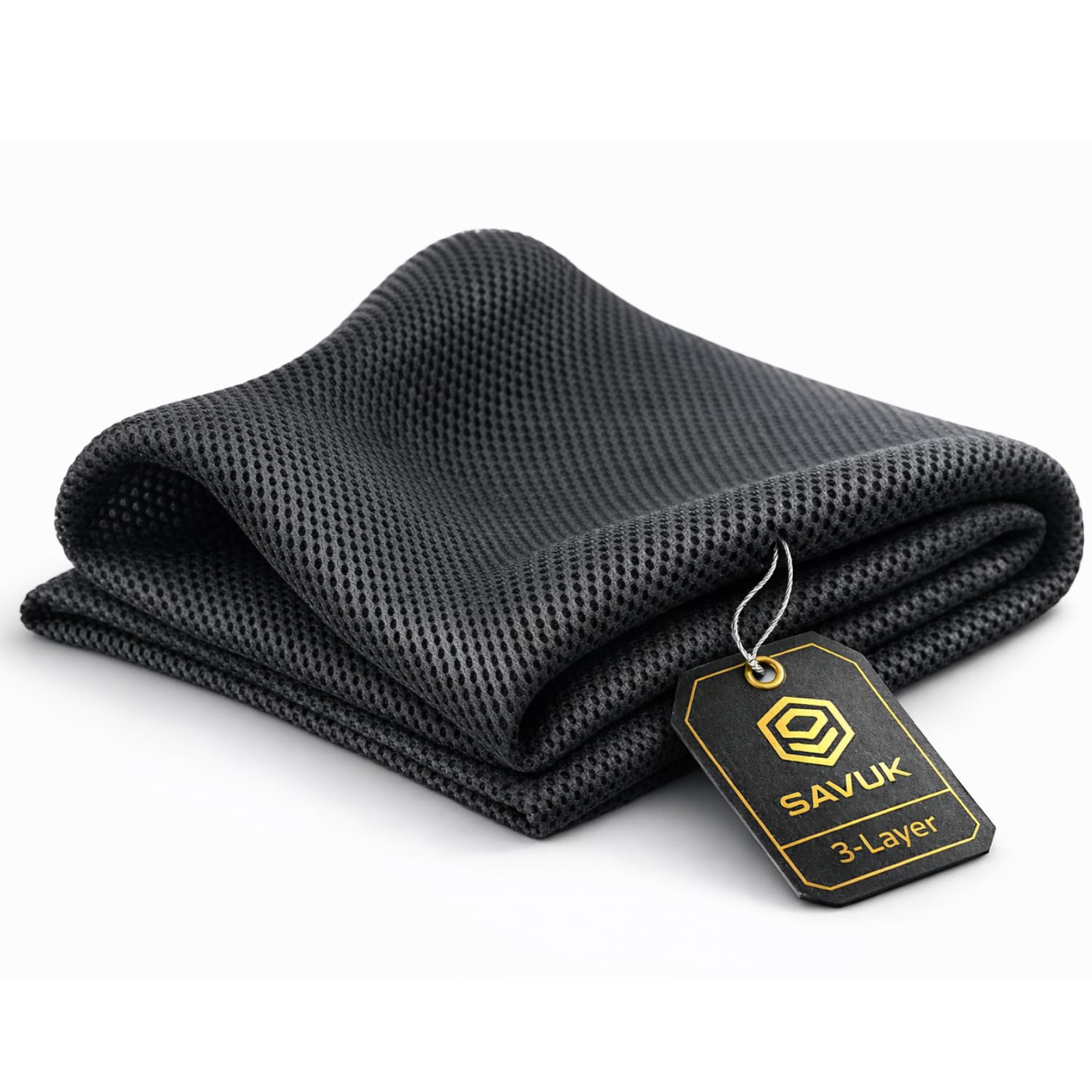
A polyester 3D mesh built for stage use that cuts clean, stretches easy, and does not unravel.
This fabric is made for restoring stage monitors and subwoofers. It is 100% polyester and weighs 0.28 kg, with a layered backing that adds durability for demanding environments. Shoppers say it worked perfectly on built stage speakers and 12-inch monitors without affecting sound quality.
What wins people over is the functionality. The fabric has good stretchability, cuts easily without fraying, and is not too thick or thin. One owner used it to replace the tan cloth on an Orange 1×12 cabinet, pulling it tight and stapling for a professional finish. The width fits most speaker grills, and the 1-year manufacturer warranty adds confidence.
The main note from owners is the fabric comes vacuum-sealed with fold creases, so you will need a low iron to remove them before installation. Once stretched and mounted, it looks great — slightly transparent initially, then opaque enough after wrapping. For stage gear on a budget, this is an excellent pick. It handles a bit more physical abuse than the M Mute Touch fabric thanks to the 3D polyester structure.
Best for: Stage monitors and subwoofers. The polyester 3D mesh is easy to cut, stretches well, and does not fray. Account for the vacuum-sealed creases by ironing before you staple.
6. Guilford of Maine Sona Acoustical Fabric

The professional standard for acoustic panels — Class 1 fire rated, acoustically transparent, and woven from recycled polyester.
This fabric is an industry-grade acoustical fabric sold as an ATS Acoustics exclusive. It gives a substantial feel you will not get from lighter mesh fabrics. It is made from 100% post-consumer recycled polyester. And it carries a Class 1 or Class A fire rating per ASTM E84, meaning it meets the strictest commercial flame-spread standards.
Buyers report covering six very large acoustic panels — four 4×8 ft and two 2×8 ft — in one project, with the fabric going on flawlessly. It has the right amount of stretch to be pulled taut and stapled without issues. Owners note it is very strong, looks great, and for acoustic panels the specs are class-leading: acoustically transparent, fire resistant, and visually clean. No other fabric here combines all three.
The trade-offs are clear. The fabric is tough on cutting edges and will dull scissors and blades quickly. And while it is a more affordable alternative to Guilford FR701 fabric, it costs more than generic polyester options. Some owners find the value mixed, but the consensus is clear: for professional acoustic panels, nothing else works as well.
Why It Stands Out
- Class 1 / Class A fire rated per ASTM E84 — commercial-ready safety
- Designed specifically for acoustic panels, not a repurposed material
The Trade-Offs
- Expensive compared to generic polyester mesh options
- Tough to cut — dulls scissors and blades quickly
Reach for this if: you are building professional or commercial acoustic panels and need fire-rated fabric that is acoustically transparent and visually clean. The weight and weave are class-leading for serious builds.
Look elsewhere if: budget is your top concern or you only need a small piece for a single home speaker — the cost may not be justified.
7. SoundAssured Acoustical Fabric Precut Pieces

A lab-tested, acoustically transparent fabric that is precut to cover standard 2×4 panels with zero waste.
This fabric is sized exactly for DIY acoustic panels. Each yard measures 59 by 36 inches, covering one 2×4 foot panel or two 2×2 panels. The material is 100% polyester with a weight of 240 GSM (grams per square meter), making it lightweight yet strong. According to the maker, the transparency claim is backed by third-party lab testing, so sound waves can pass through to the insulation.
Owners mention the fabric stretches easily without tearing or fraying, making installation smooth. One owner used it to redo a pair of Magnepan SMGc speakers and noted it sounds as good as the factory fabric. Another appreciated that it holds well when stapled and looks nice. The fabric resists fraying, so you get clean edges without extra work.
Two things to keep in mind. The fabric is tough — you will need sharp tools to cut it due to the thickness with backing. And it fades relatively easily in direct sunlight, so it is better suited for indoor use away from windows. The sound quality and appearance get consistent praise. For DIY builders who want a no-math cut size, this is a better option than the Guilford fabric, which requires measuring and trimming your own lengths.
Who this is for: DIY builders who want a precut fabric that matches standard panel sizes perfectly. The 240 GSM weight is strong enough for a tight staple hold, and the fray resistance keeps edges clean. Just keep it out of the sun to avoid fading.
Understanding the Specs
Acoustic Transparency
This is the single most important spec for panel fabric. It describes how freely sound waves can pass through the weave. If a fabric is not acoustically transparent, it will block the high frequencies (treble) that your acoustic insulation is supposed to absorb. Look for open-weave polyester meshes or fabrics the manufacturer explicitly states are “acoustically transparent.” A dense upholstery fabric will kill the performance of your panels before you even mount them.
Fire Rating
The fire rating of a fabric tells you how it behaves in a flame scenario. Class 1 or Class A ratings (tested under ASTM E84 standards) mean the material has low flame spread and smoke development. This is a legal requirement in commercial studios, offices, and public spaces. For home use, it is a safety bonus but not mandatory. If you are building panels for a rental space or a public facility, fire-rated fabric like the Guilford of Maine Sona is non-negotiable.
FAQ
Can I use any fabric for acoustic panels or does it have to be special?
What is the difference between speaker grill cloth and acoustic panel fabric?
How do I install fabric on an acoustic panel frame?
Will a thicker fabric block more sound?
Does the color of the fabric affect sound absorption?
How much fabric do I need for a 2×4 foot acoustic panel?
Can I use acoustic panel fabric for a home theater screen wall?
How do I remove fold lines and creases from acoustic fabric?
Is there a difference in sound between polyester mesh and imitation linen fabric?
Can I wash acoustic panel fabric if it gets dirty?
Final Thoughts: The Verdict
If you want one dependable pick, the fabric for acoustic panels winner is the Simply Speakers Jet Black Cloth because it combines the best stretch, acoustic transparency, and value in a single pre-cut piece. If you need a professional fire-rated fabric for a commercial or home studio build, the Guilford of Maine Sona is the clear choice despite the higher cost. And for a quick, budget-friendly vintage speaker restoration, the uxcell Yellow Mesh delivers great looks and solid performance for very little money.
How We Picked
We do not accept paid placement. Every pick is matched to a real buyer and a real use-case; we do not hands-on test units.
Sources & Methodology
Specifications: manufacturer listings and product documentation. Review insights: verified customer reviews, as of July 2026. Pricing: not shown on this page (it changes often); check the current price via the retailer link.
As an Amazon Associate, WellFizz earns from qualifying purchases. This does not affect which products we feature.
Related Guides

Mo Maruf
I created WellFizz to bridge the gap between vague wellness advice and actionable solutions. My mission is simple: to decode the research and give you practical tools you can actually use.
Beyond the data, I am a passionate traveler. I believe that stepping away from the screen to explore new environments is essential for mental clarity and physical vitality.