Our readers keep the lights on and my smoothie glass nicely filled. As an Amazon Associate, I earn from qualifying purchases.
Deer don’t just wander onto your property for the view. They follow a chemical trail of scent and flavor that tells them this spot has what their bodies are craving. The difference between a mineral site that pulls deer from the next county and a pile that gets rained into the dirt comes down to one thing: the specific mineral matrix, the bioavailability of those minerals, and the attractant technology packed into the formula. A cheap salt block might satisfy a doe’s sodium craving for a few days, but it will not drive antler growth, support fawn development, or keep mature bucks returning through the season.
I’m Mohammad Maruf — the founder and writer behind WellFizz. I’ve spent hundreds of hours analyzing mineral formulas, chelation chemistry, protein ratios, and customer behavior patterns to find the deer mineral supplements that actually deliver measurable results on the ground.
After cross-referencing dozens of bag labels, customer photos, and real field reports, I’ve narrowed the field to the five supplements that deserve a spot on your food plot. This guide is your final answer to finding the best deer mineral for antler growth, herd health, and long-term site activity.
How To Choose The Best Deer Mineral
Not all mineral bags are created equal. A 20-pound bag of cheap pellets might look like a deal, but if the minerals are not chelated or the formula lacks a proper calcium-to-phosphorus ratio, you are just feeding the ground. Serious land managers look at three things before they open a bag.
Chelation and Bioavailability
Raw minerals in a block or loose form often pass through a deer’s digestive system without being absorbed. Chelated minerals are bonded to amino acids, which means the deer’s gut can shuttle them directly into the bloodstream. That is the difference between a deer that visits once and a deer that returns every 48 hours. Look for labels that mention “chelated” or “digestible” minerals.
Protein and Yeast Cultures
A deer mineral with a 10 percent protein boost supports antler growth during the spring and summer months when bucks are building bone at a furious pace. Some premium formulas also include a special yeast culture. Yeast cultures improve the efficiency of the deer’s rumen, meaning they get more nutrition out of every bite of browse they eat on your property. That indirect effect is often more valuable than the minerals themselves.
Physical Form and Site Management
Blocks are easy to drop and forget, but they concentrate activity in one small spot. Loose powder or granular minerals spread over a 2 to 3 foot diameter allow multiple deer to feed at once and reduce fighting. Powders also absorb into the soil, which keeps deer digging and licking the ground long after the surface minerals are gone. If you manage more than 10 acres, a powdered mineral will cover more ground per pound than any block.
Quick Comparison
On smaller screens, swipe sideways to see the full table.
| Model | Category | Best For | Key Spec | Amazon |
|---|---|---|---|---|
| Antler King Trophy Deer Mineral | Granule | Antler building & digestion | 27 minerals + yeast culture | Amazon |
| Antler Power Deer Mineral Powder | Powder | Wide acreage coverage | 13-15% calcium, chelated | Amazon |
| Whitetail Institute 30-06 Mineral | Pellet | Pregnancy & lactation | 10% protein, 20 lb bag | Amazon |
| RIDLEY 41251 Monster Deer Block | Block | Long-lasting single site | 25 lb, self-fed protein | Amazon |
| Himalayan Nature Licking Salt Block | Block | Basic hydration & trace minerals | 10 lb double pack, 84 minerals | Amazon |
In‑Depth Reviews
1. Antler King Trophy Deer Mineral
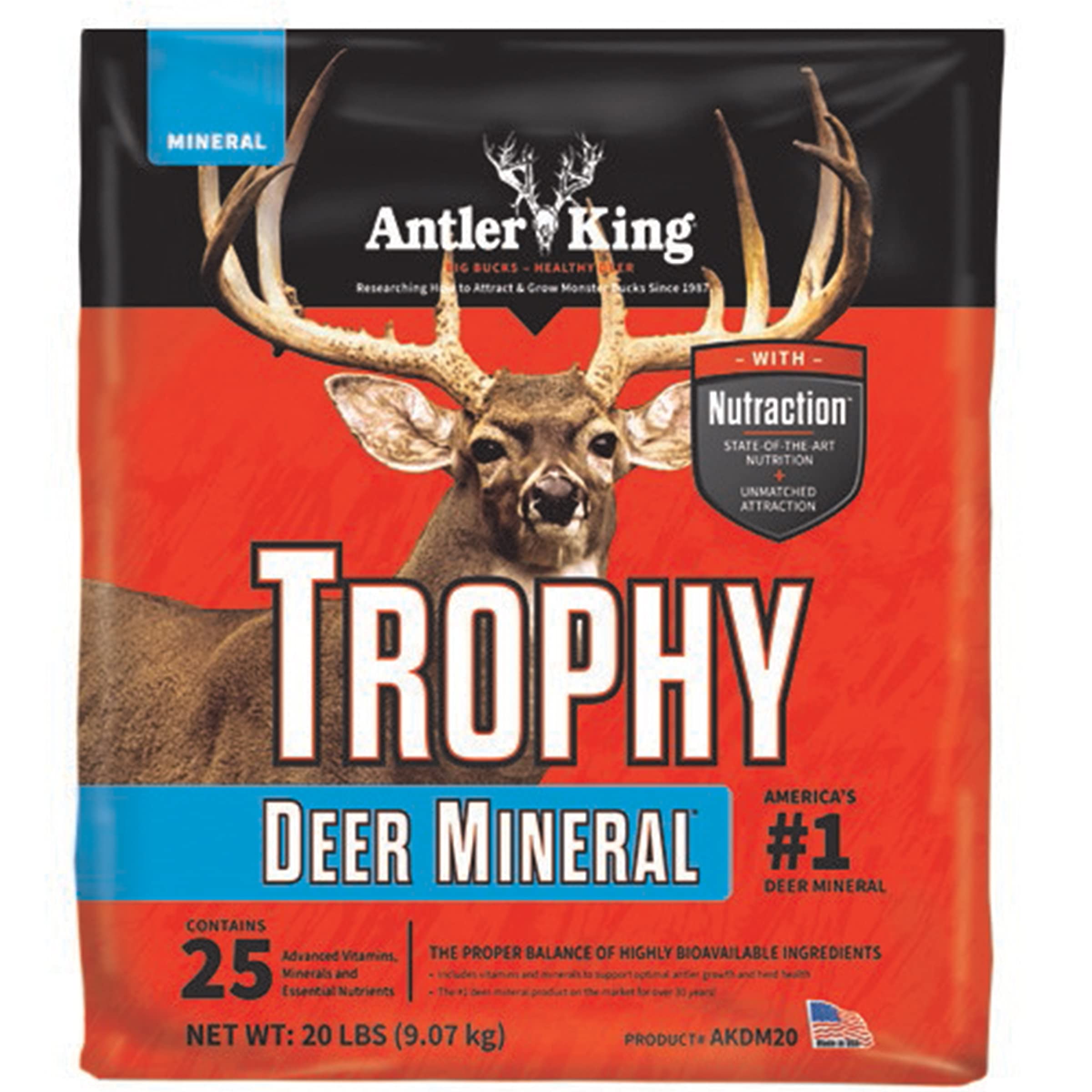
Antler King Trophy Deer Mineral is the most complete all-in-one mineral supplement on the market, and it earns the top spot for a simple reason: it combines 27 antler-building major minerals, trace minerals, vitamins, amino acids, and a special yeast culture in a single bag. The yeast culture is the secret weapon here — it helps deer digest and absorb every bit of browse they eat on your property, not just the minerals themselves. That efficiency drives antler growth, fawn health, and overall herd condition in a way that plain salt blocks cannot touch.
Users consistently report deer arriving within the first 24 hours of placing the granular mix, and the apple scent acts as a natural attractant that pulls deer from a distance. The granules are easy to rake into a 2 to 3 foot circle, and the deer dig the site down to bare dirt. One reviewer noted that even after the mineral is consumed, deer continue to work the ground where the block was placed. That kind of site loyalty is exactly what land managers need for consistent seasonal results.
At 20 pounds per bag, this is a mid-range option that delivers premium results without the premium price tag of a boutique powder. The only real drawback is that heavy deer traffic will devour a bag quickly — some users report needing to reapply every 3 to 4 weeks during peak season. Check your local baiting regulations before placing any mineral site, as some states restrict attractants during certain times of year.
Why it’s great
- 27 minerals plus yeast culture for superior digestion
- Apple scent acts as a powerful long-range attractant
- Deer return and work the soil even after minerals are gone
Good to know
- Can be consumed quickly under heavy deer pressure
- Always verify state regulations on mineral sites before use
2. Antler Power Deer Mineral Powder

Antler Power Deer Mineral Powder is the right choice when you need to cover serious acreage. One 5-pound bag treats 10 to 30 acres when scattered correctly, which makes it the most efficient coverage option in this lineup. The fine powder absorbs into the soil, creating a long-lasting mineral site that deer will dig and lick for weeks. The chelated calcium (13 to 15 percent) and phosphorus (6 percent) are bonded for direct absorption, supporting antler growth, doe lactation, and fawn development all at once.
The proprietary aromatic blend acts as a long-range attractant that pulls whitetail bucks, does, and fawns from a distance. Users report deer appearing within 48 hours and consuming the powder down to bare dirt. One land manager in south Jersey combined it with cracked corn and saw a significant increase in deer traffic in just two days. The resealable pouch makes it easy to carry into the woods and refresh the site every 3 to 4 weeks without hauling heavy blocks.
The premium price per pound is the main trade-off. Because it is a concentrated powder, a single bag will not last as long as a 20-pound block or granular product if you have a large herd. Some users also note that the bag feels lightweight for the price, though the coverage area compensates for that. This is the best choice for managers who want to create multiple mineral sites across a large property without breaking their back carrying blocks.
Why it’s great
- Treats 10-30 acres per 5 lb bag — unmatched coverage
- Chelated minerals absorb directly into the deer’s system
- Resealable pouch for easy field use and site refresh
Good to know
- Higher cost per pound than granular or block options
- Will be consumed quickly if deer density is very high
3. Whitetail Institute 30-06 Mineral and Vitamin Supplement
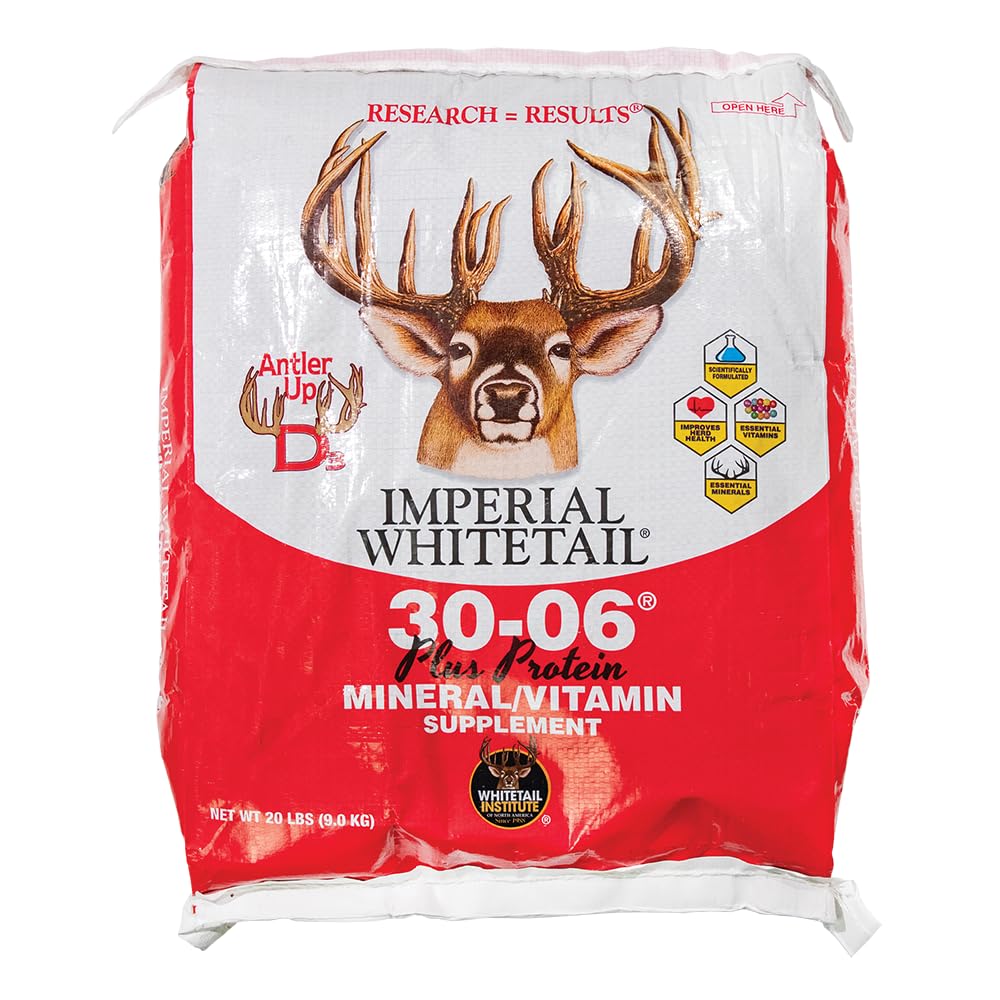
Whitetail Institute 30-06 is the value king of this category because it delivers a 10 percent protein boost plus a full range of vitamins and minerals in a 20-pound bag at a very accessible price point. The protein is the standout feature here — most mineral supplements focus solely on calcium and phosphorus, but the added protein directly supports antler growth during the spring and summer building phase. The formula is professionally tailored for the specific needs of deer during pregnancy, lactation, and antler development.
The pellet form is easy to work with. Just rake or shovel a 2 to 3 foot diameter area, mix the pellets into the soil, and let the deer find it. Users consistently report that deer devour the pellets quickly, often licking the ground clean after the pellets are gone. One reviewer noted seeing a noticeable improvement in deer size after using this product consistently. The scent and flavor attractants built into the formula pull deer from a distance, and the low-salt composition is exactly what deer require without overloading them on sodium.
The only limitation is that this formula is designed specifically for in-ground sites. You cannot simply dump it on the surface and expect it to last — mixing it with soil is necessary to prevent rain washout and to encourage deer to work the site. Some users expected a loose mineral they could pour directly on the ground, so read the instructions before you buy. For the price per pound, this is the most cost-effective way to provide complete nutrition to a herd throughout the growing season.
Why it’s great
- 10% protein boost for antler and fawn development
- 20-pound bag provides excellent value per feeding
- Scent and flavor attractants keep deer returning
Good to know
- Must be mixed into soil to prevent washout
- Lower in salt than some deer prefer for hydration
4. RIDLEY 41251 25LB Monster Deer Block

RIDLEY’s 25-pound Monster Deer Block is the set-it-and-forget-it solution for managers who want a single block that lasts. At 25 pounds, this block is physically larger than any other option in this guide, and the self-fed protein and vitamin supplement format means deer can nibble at their own pace. The block format is rain-resistant and does not require mixing or raking — just drop it near a trail or bedding edge and let the deer find it. Users in Wisconsin report keeping the block out year-round as a backup food source.
The block attracts a wide range of wildlife. While deer are the primary target, several users report that bears will pick up smaller blocks and carry them off, so anchoring the block to a stake or log is a smart move. The deer in most areas consume a block within 1 to 2 weeks under heavy pressure, which is actually impressive for a 25-pound block. The does seem to take to it quickly, though some users noted that mature bucks were less interested compared to loose mineral powders.
The main downside is that because it is a single dense block, only one or two deer can feed at a time. This can lead to fighting and dominance issues, especially if you have a large herd. If you want to minimize conflicts and allow multiple deer to feed simultaneously, a loose mineral or granular product is a better choice. But for a simple, durable, long-lasting mineral source that requires zero maintenance, the Monster Deer Block is hard to beat.
Why it’s great
- Massive 25-pound block lasts weeks under heavy use
- Rain-resistant, no mixing or soil incorporation needed
- Self-fed format means deer control their intake
Good to know
- Only one or two deer can feed at a time
- Bears may carry off smaller blocks
5. Himalayan Nature Licking Salt Block
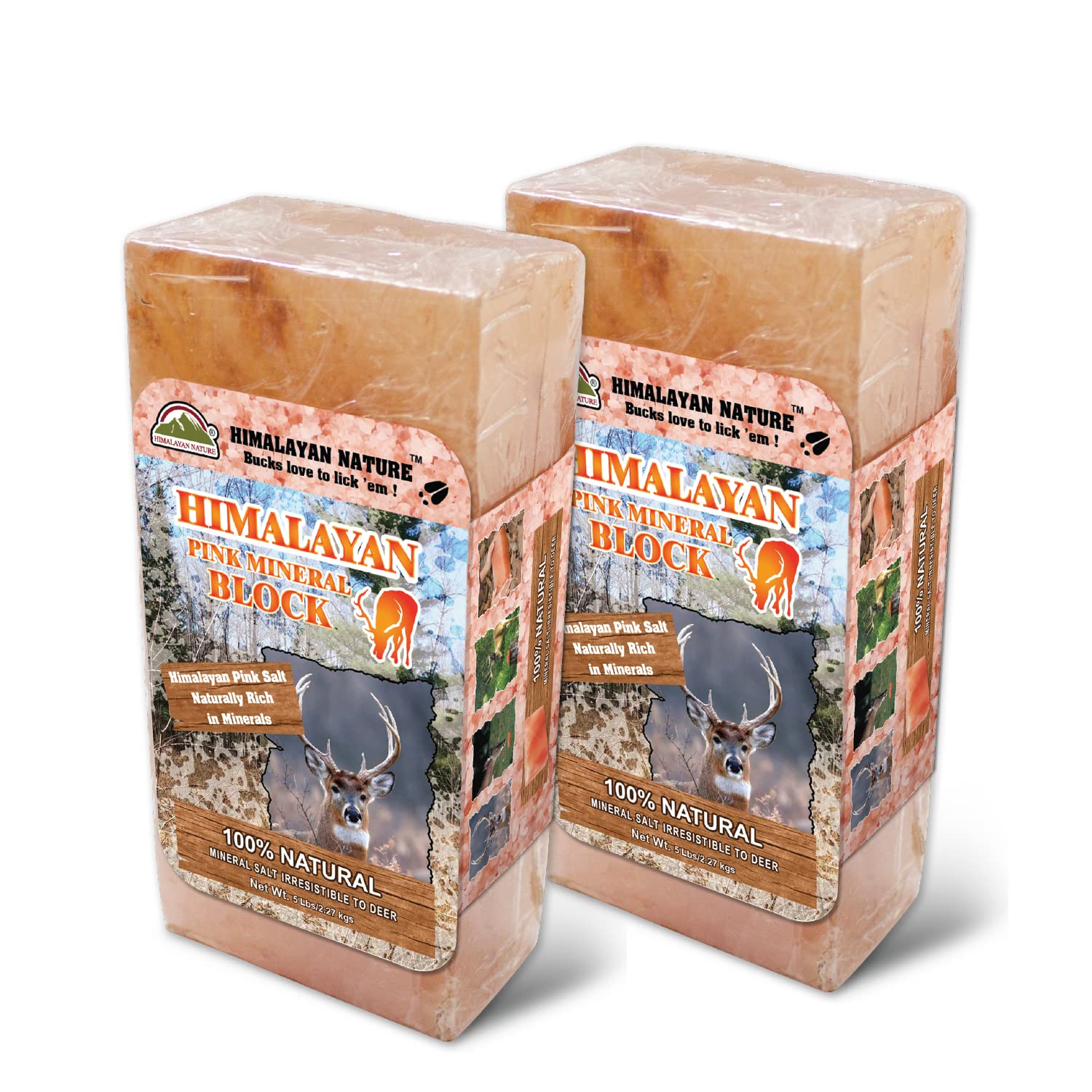
Himalayan Nature Licking Salt Block is the entry-level option that serves a very specific purpose: providing essential trace minerals and encouraging hydration. Mined from ancient Himalayan deposits, this block contains 84 naturally occurring trace minerals and electrolytes. The primary benefit is that the salt makes deer thirsty, which drives them to water sources more frequently — a critical factor during dry spells when natural water is scarce. The double pack gives you two 10-pound blocks, which is generous for the price.
The block is resistant to rain and biting, meaning it will last longer than a cheap pressed salt block. Users report that deer go crazy for it, and one land manager used it to keep deer away from his vegetable garden by offering a more attractive mineral source elsewhere. The rectangular shape is easy to place on a stump, log, or flat rock, and the natural origin makes it appealing to managers who want to avoid synthetic additives. The blocks work equally well for horses, goats, and sheep, making this a multi-species option.
The trade-off is that this block is pure salt with trace minerals — it does not contain the specific calcium, phosphorus, zinc, and copper ratios that drive active antler growth. It will not build bigger racks the way a chelated mineral formula will. If your goal is simply to attract deer and keep them hydrated, this block delivers. But if you are managing for trophy antler development, you will need to pair this with a more comprehensive mineral supplement.
Why it’s great
- Natural Himalayan salt with 84 trace minerals
- Encourages hydration by making deer thirsty
- Rain-resistant and long-lasting compared to standard blocks
Good to know
- Not formulated for targeted antler growth
- Pure salt block lacks protein and chelated minerals
FAQ
How often should I refresh a deer mineral site?
Can I use a deer mineral block in the winter?
Are chelated minerals worth the extra cost for deer?
What is the difference between a mineral block and loose mineral powder?
Will deer mineral attract bears and other wildlife?
Final Thoughts: The Verdict
For most users, the best deer mineral winner is the Antler King Trophy Deer Mineral because it combines 27 antler-building minerals with a digestion-boosting yeast culture and an apple scent attractant in a single 20-pound bag. If you want maximum coverage across a large property, grab the Antler Power Deer Mineral Powder for its 10 to 30 acre per-bag reach. And for a low-maintenance, long-lasting block that simply works, nothing beats the RIDLEY 25LB Monster Deer Block.

Mo Maruf
I created WellFizz to bridge the gap between vague wellness advice and actionable solutions. My mission is simple: to decode the research and give you practical tools you can actually use.
Beyond the data, I am a passionate traveler. I believe that stepping away from the screen to explore new environments is essential for mental clarity and physical vitality.