Our readers keep the lights on and my smoothie glass nicely filled. As an Amazon Associate, I earn from qualifying purchases.
Authentic Japanese cooking starts with a broth that delivers deep, savory umami, but traditional dashi demands dried kelp, bonito flakes, and a watchful eye over a simmering pot. The shortcut to that same foundation of flavor isn’t a compromise; it’s a pantry staple that unlocks miso soup, noodle broths, and simmered dishes in minutes.
I’m Mohammad Maruf — the founder and writer behind WellFizz. For this guide, I analyzed the ingredient profiles, sodium levels, and serving formats of five leading dashi powders to determine which ones deliver the richest umami without relying on MSG-heavy fillers.
Whether you’re building a bowl of ramen from scratch or need a quick boost for weeknight stir-fries, finding the best dashi powder means balancing authentic Japanese ingredients with convenient preparation and real pantry value.
How To Choose The Best Dashi Powder
Dashi powder is the instant solution to a traditional broth that can take over an hour to prepare. The best options replicate the clean, smoky depth of from-scratch dashi without relying on a laundry list of artificial additives. Choosing the right one comes down to what you’re cooking and how often.
Ingredient Purity: Real Fish vs. Flavor Enhancers
The defining characteristic of quality dashi powder is the presence of real skipjack tuna flakes (katsuobushi), kombu (kelp), and dried fish like round herring or flying fish. Lower-tier powders often replace these ingredients with salt, sugar, starch, and chicken extract. Check the ingredient list for whole-food sources of umami rather than a chemical cocktail. A powder that lists bonito flakes or kombu as a primary ingredient will produce a broth with depth, not just saltiness.
Format and Serving Count: Bulk Bags vs. Individual Packets
Dashi powder comes in two main formats: a large bulk canister for daily use and individually wrapped packets for portion control. Bulk options like the 21-ounce Ajinomoto Hondashi offer the lowest cost per serving but require you to measure the right amount each time. Packet formats, often containing 8g to 12g each, are perfect for a consistent single batch of miso soup or udon broth. If you cook Japanese dishes infrequently, packets preserve freshness longer since you only open what you use.
Sodium Content and Nutritional Profile
Many dashi powders pack a significant amount of salt as a base. Premium options like Kayanoya and Higashimaru are noted for their lower sodium profiles, allowing the natural umami of the fish and kelp to carry the flavor. A high-quality powder should taste savory and complex without leaving your mouth feeling parched. If you’re watching your sodium intake, look for products with “lower salt” in their descriptions or compare the nutritional panels per serving.
Quick Comparison
On smaller screens, swipe sideways to see the full table.
| Model | Category | Best For | Key Spec | Amazon |
|---|---|---|---|---|
| Ajinomoto Hondashi | Bonito Stock | All-purpose daily miso soup | 21.1 oz / ~75 servings | Amazon |
| Kayanoya Original | Multi-Fish Blend | Authentic umami with lower sodium | 8g x 12 tea-bag packets | Amazon |
| Higashimaru Udon Soup | Udon Base | Kansai-style noodle broth | 8g x 50 bags | Amazon |
| Garasupu Organic | Chicken Blend | Chinese-style chicken stock | 130g canister | Amazon |
| Kroma 24K Chicken Broth | Protein Broth | Wellness sipping broth | 12g protein per serving | Amazon |
In‑Depth Reviews
1. Ajinomoto Hondashi Bonito Soup Stock

The Ajinomoto Hondashi is the benchmark for all-purpose dashi powder in Japanese kitchens. This 21.1-ounce box contains granular bonito stock that dissolves instantly into a clear, aromatic broth. Reviewers consistently note that a single teaspoon adds substantial umami flavor to miso soup without making it overly salty, and the 75-serving count makes it an economical choice for daily use. The aroma is strong but pleasant, cutting through the richness of tofu and wakame in classic miso preparations.
What sets this apart is its versatility. Beyond miso, users rely on Hondashi to season stir-fries, noodle soups, and even Western stews where a savory backbone is needed. The resealable box keeps the granules fresh when stored in the fridge, and the fine powder dissolves quickly without clumping even in cold water. For someone looking for one dashi powder to cover everything from ramen broth to a quick vegetable soup, this is the most balanced option.
The ingredient list is transparent, focusing on bonito flakes and salt without unnecessary fillers. Customers report that the flavor profile hits that authentic Japanese restaurant quality that homemade stocks often miss. The only real friction for new buyers is portioning, since the bulk format requires a measuring spoon, but the payoff is a reliable, delicious broth every time.
Why it’s great
- Massive serving count offers the lowest cost per serving in this lineup
- Clean bonito flavor that enhances without overpowering other ingredients
- Dissolves instantly with no gritty residue
Good to know
- Bulk format requires measuring; not portion-controlled like packets
- Contains MSG, which some users prefer to avoid
2. Kayanoya Original Dashi Stock Powder
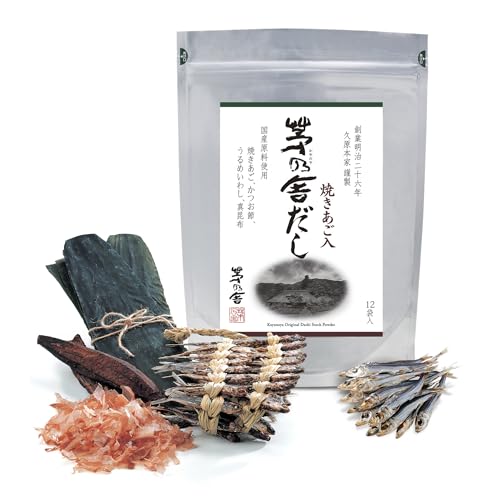
The Kayanoya Original is the most ingredient-focused dashi powder in this roundup, blending skipjack tuna flakes, kombu, round herring, and roasted flying fish into a single packet. This 12-count box delivers individually sealed tea-bag style packets, each designed to steep in 1⅔ cups of water for a fully extracted broth in under two minutes. The resulting liquid has a clean, naturally sweet umami that customers describe as light, balanced, and not at all salty.
Unlike many dashi powders that rely on salt as the primary flavor vehicle, Kayanoya’s depth comes from the actual dried fish and kelp. This makes it an excellent lower-sodium alternative that still delivers restaurant-quality depth. Reviewers praise its use in both Japanese and Western applications, noting that it makes an outstanding foundation for seafood bisques and chowders. The tea-bag format is a major convenience advantage, eliminating the need to measure and ensuring consistent strength every time.
The tradeoff is the price point and the smaller serving count. Each packet makes roughly one batch of broth, so if you cook with dashi daily, you will run through this box quickly. Customers reserve these packets for special recipes where the subtlety of a multi-fish stock makes a measurable difference. For the home cook who values clean ingredients and authentic preparation over raw volume, Kayanoya is the clear premium choice.
Why it’s great
- Low sodium formula that lets natural umami shine
- Tea-bag packets provide mess-free portion control
- Complex blend of four different seafood and kelp ingredients
Good to know
- Higher cost per serving makes it less suitable for everyday bulk cooking
- Limited availability compared to mass-market brands
3. Higashimaru Udon Soup 50 Bags

Higashimaru’s Udon Soup is purpose-built for one thing: making an excellent Kansai-style noodle broth. The box contains 50 individually wrapped 8-gram bags of concentrated liquid seasoning that you dilute with hot water or your own dashi stock. This is not a dashi powder in the traditional sense, but rather a seasoned soup base designed specifically for udon. Customers consistently rave about the authentic flavor it produces, calling it the best noodle soup base they have found outside of Japan.
The Kansai-style profile is lighter and more delicate than the darker, soy-heavy broths of Eastern Japan. Each bag yields a clean, slightly sweet broth that pairs perfectly with thick wheat udon noodles, fishcake, and green onion. Several reviewers noted that the expiration dates on this product were longer than what they typically find at their local Japanese grocery store, making it a reliable pantry staple. The 50-bag count is generous enough for daily use, and the individual packaging keeps each serving fresh.
Because this is a seasoned soup base rather than a pure dashi powder, it contains wheat and soy sauce ingredients. This limits its use strictly to noodle dishes and soups where those flavors are appropriate. However, for anyone who craves authentic udon soup without making broth from scratch, Higashimaru delivers a consistent, delicious result that a standard dashi powder cannot replicate on its own.
Why it’s great
- Authentic Kansai-style udon broth in seconds
- 50 individual bags offer exceptional pantry value for noodle lovers
- Long shelf life compared to store-bought alternatives
Good to know
- Contains wheat and soy, not suitable for gluten-free or soy-free diets
- Specialized for udon; less versatile as a general dashi substitute
4. Garasupu Organic Food Additive-Free 130g

The Garasupu Organic powder is a Japanese-made chicken stock that breaks away from the bonito-based dashi tradition. Its ingredient list includes salt, starch, chicken extract, and sugar, and it is marketed as additive-free. Reviewers describe it as “addictive” and note that a single teaspoon transforms meat sauces, stews, and Chinese-style fried rice with an immediate savory boost. For cooks who want a clean-tasting chicken base without artificial flavors, this fits a specific niche.
Where this powder differs from traditional dashi is in its flavor profile. It delivers a rich, meaty depth rather than the oceanic smokiness of bonito or kombu. Customers use it to elevate home-made soups and ground meat dishes where the chicken flavor complements rather than competes with the main ingredients. The 130-gram canister is compact and easy to store, and the resealable container keeps the powder dry between uses.
The primary drawback is the ingredient offset. While labeled additive-free, the reliance on starch and sugar as bulk ingredients means the umami is less complex than what you get from fish-based dashi powders. Several reviewers noted they wished it were priced lower per ounce, as the flavor, while good, does not quite match the richness of a multi-fish blend. It is best understood as a specialized chicken stock powder rather than a universal dashi replacement.
Why it’s great
- Clean chicken flavor with no artificial additives
- Versatile for Chinese and Western recipes beyond Japanese dishes
- Compact canister fits easily in a pantry drawer
Good to know
- Not a traditional dashi; lacks bonito or kombu umami
- Contains starch and sugar as primary ingredients
5. Kroma’s 24K Chicken Bone Broth Powder
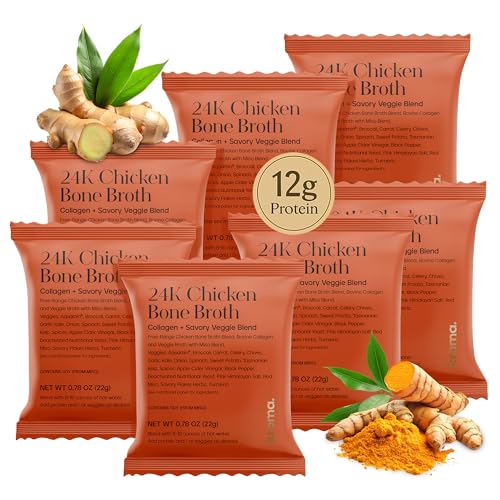
The Kroma 24K Bone Broth Powder represents a different category entirely: a functional wellness broth designed for gut health, joint support, and high protein intake. Each serving delivers 12 grams of protein from organic cage-free chicken bones, plus turmeric and ginger for added anti-inflammatory benefits. Customers describe the flavor as reminiscent of classic chicken noodle soup without the noodles, making it a comforting and convenient sipping broth for travel or daily wellness routines.
This product is not a dashi powder by any traditional definition, but it serves a similar role as a quick savory broth base. The key difference is the nutritional focus: this is a collagen-rich protein powder first and a seasoning second. Reviewers note that it mixes easily into hot water with no clumping and has a remarkably low sodium content for a broth product. For those seeking a clean, nourishing alternative to heavily salted bouillon or dashi, Kroma offers measurable protein and functional ingredients.
The cost per packet is higher than any traditional dashi powder in this lineup, and the 7-serving box is meant for occasional use rather than everyday cooking. Several buyers recommend the subscribe-and-save option to bring the per-ounce cost down if you plan to drink it daily. If your goal is a nutrient-dense broth that supports skin, hair, and gut health rather than a pure flavor base for Japanese dishes, Kroma delivers where typical dashi powders cannot.
Why it’s great
- High protein content with 12g per serving from organic chicken bones
- Lowest sodium option among the broths reviewed
- Adds turmeric and ginger for functional wellness benefits
Good to know
- Higher per-serving cost compared to traditional dashi powders
- 7-packet box is best for sampling or travel rather than daily cooking
FAQ
What is the difference between dashi powder and dashi granules?
Can I use dashi powder in non-Japanese recipes like soups or stews?
Final Thoughts: The Verdict
For most users, the best dashi powder winner is the Ajinomoto Hondashi because its bonito-forward flavor, massive serving count, and universal versatility make it the most practical addition to any kitchen. If you want a cleaner, lower-sodium option with premium multi-fish ingredients, grab the Kayanoya Original. And for dedicated noodle broth that tastes like a Japanese restaurant in under a minute, nothing beats the Higashimaru Udon Soup 50 Bags.

Mo Maruf
I created WellFizz to bridge the gap between vague wellness advice and actionable solutions. My mission is simple: to decode the research and give you practical tools you can actually use.
Beyond the data, I am a passionate traveler. I believe that stepping away from the screen to explore new environments is essential for mental clarity and physical vitality.