Our readers keep the lights on and my smoothie glass nicely filled. As an Amazon Associate, I earn from qualifying purchases.
A die cutting machine that jams on a simple cardstock layer or requires shims for even basic embossing folders turns an enjoyable craft session into a frustrating exercise in guesswork. The real challenge lies not in finding a machine that cuts paper, but in picking one whose roller gap, build stiffness, and material clearance match the specific projects you actually make — from delicate paper filigree to multiple layers of fabric or thick chipboard.
I’m Mohammad Maruf — the founder and writer behind WellFizz. To build this guide, I spent weeks analyzing the mechanical specs, cutting force ratings, platform dimensions, and user-reported reliability of over 30 models to separate the machines that deliver consistent results from those that rely on marketing hype.
Whether you need a manual workhorse for scrapbooking or a digital cutter for vinyl decals, finding the right tool starts with understanding roller width, cutting force, and material compatibility — and this roundup of the best die cutting machine options will help you match each model to your real-world craft room demands.
How To Choose The Best Die Cutting Machine
Every die cutter shares the same basic job — sandwich your material between dies and apply pressure — but the difference between a satisfying first pass and a frustrating multi-shim trial depends on three specific mechanical choices. Understanding these will save you money and wasted material.
Manual vs. Electronic: Force and Workflow
Manual machines use a hand crank to drive a pair of rollers over a material sandwich. The advantage is total control: you feel resistance and can stop and reverse if a die isn’t cutting through. The downside is physical effort — cranking through multiple passes on thick materials tires your arm. Electronic machines use a motor to apply consistent pressure at the push of a button, often cutting faster and accepting thicker material stacks, but they introduce noise, software requirements, and potential motor failure points. For occasional card making, manual is reliable and cheap. For production-volume quilting or vinyl decals, electronic saves serious time.
Roller Width and Platform Clearance
The two most important numbers are the feed slot width and the maximum material thickness the rollers can accommodate. A 6-inch opening restricts you to dies smaller than 6 inches in one dimension, while a 9-inch opening works with most standard embossing folders and die sets. For fabric cutting or chipboard, check the advertised material thickness clearance — 2 mm is typical for paper, 3 mm or more is needed for felt, denim, or multi-layer stacks. Some models let you adjust the roller gap with a knob, which effectively increases the thickness you can feed without damaging the machine.
Cutting Force and Die Compatibility
Measured in kilograms of downward pressure, cutting force determines whether intricate dies with tiny internal details cut cleanly or leave uncrisp edges. Electronic machines typically advertise their force rating (e.g., 5 kg), while manual machines rely on mechanical advantage from the crank gear ratio. If you plan to use thick steel-rule dies or emboss heavy cardstock, prioritize a machine with adjustable pressure or known compatibility with third-party dies. Most manual machines on this list work with leading brands of acid-etched dies, but confirm that the platform and cutting pad dimensions match the dies you already own.
Quick Comparison
On smaller screens, swipe sideways to see the full table.
| Model | Category | Best For | Key Spec | Amazon |
|---|---|---|---|---|
| Bira Craft ADJUSTABLE | Manual | Intricate dies without shims | 6.25-inch slot with adjustable gear pressure | Amazon |
| Sizzix Big Shot Starter Kit | Manual | Papercraft and card making | 6-inch opening with 73 Thinlits dies included | Amazon |
| LOKLiK Cutting Machine 2 | Electronic | Vinyl and matless smart materials | 13-inch width, 5x cutting force, 0.5 mm accuracy | Amazon |
| Silhouette Cameo 4 | Electronic | Sticker making and print-and-cut | 12-inch width, 5 kg cutting force, Bluetooth | Amazon |
| AccuQuilt GO! 55100H | Manual | Quilting fabric cutting | 6-layer capacity, compact portable design | Amazon |
| Crafter’s Companion Gemini II | Electronic | Heavy cardstock and foil with even pressure | 9 x 12.5-inch platform, motorized pause and rewind | Amazon |
| Siser Romeo | Electronic | Large-format vinyl and commercial production | 24-inch cutting width, WiFi, 60% faster motor | Amazon |
| AccuQuilt GO! Big 55500 | Electronic | Large quilting blocks with one-button operation | 6-layer capacity, electric drive, 14×16-inch die support | Amazon |
| Joelver Maker Manual Die Cutter | Manual | Beginners and budget-friendly starter kits | 9-inch opening with 20+ included dies and folders | Amazon |
In‑Depth Reviews
1. Bira Craft ADJUSTABLE Die Cutting & Embossing Machine

The defining feature of this manual machine is its height-adjustment gear system, which lets you dial in roller pressure instead of stacking shims to handle varying die thicknesses. This eliminates the frustrating trial-and-error that plagues fixed-pressure machines when switching between an intricate steel-rule die and a deep-embossing folder. The 6.25-inch feed slot accepts most standard dies, and the adjustment knob compensates for wear over time, maintaining consistent cut depth across hundreds of passes.
Build quality is heavy for its class at nearly 14 pounds, which keeps the machine planted during cranking. The suction-cup feet grip smooth surfaces firmly, and the fold-out side platforms double as storage for the detachable handle and small accessories. Users report that the adjustable mechanism delivers first-pass cuts on complex dies that other machines require shims to achieve, and the alloy steel frame resists flexing under pressure.
One trade-off is that the fold-in platforms feel lighter than the main chassis, but they hold tools securely and do not affect cutting performance. The handle assembly and disassembly is quick, and the compact folded size — roughly 10 x 6 x 9 inches — makes this a good option for crafters who need to store the machine between sessions. Overall, this is the most adaptable manual die cutter for mixed-material projects.
Why it’s great
- Adjustable roller pressure eliminates the need for shims on most dies
- Suction-cup feet keep the machine stable on smooth work surfaces
- Folds into a compact storage box with tool compartment
Good to know
- Side platforms feel less sturdy than the main body
- Maximum slot width of 6.25 inches limits large-format projects
2. Sizzix Big Shot Machine with Starter Kit
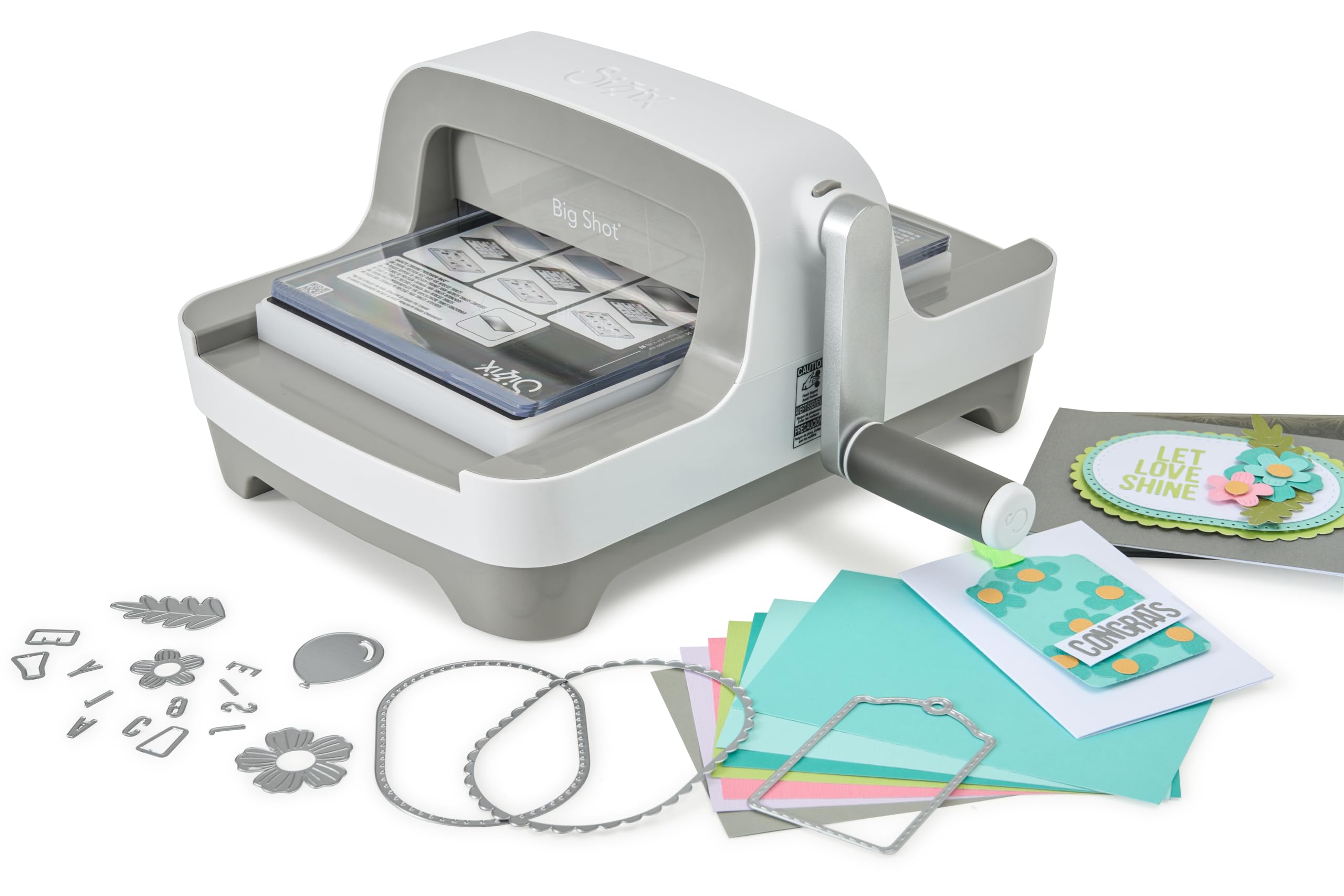
The Sizzix Big Shot has been a standard in card making for over two decades, and this redesigned version keeps the same rock-solid manual crank mechanism while adding a clip-on handle that stores underneath the machine to reduce clutter. The 6-inch opening is the industry norm for standard dies and embossing folders, and the multipurpose platform works with the included pair of cutting pads to create a consistent sandwich that delivers clean cuts on cardstock up to medium weight.
The starter kit includes 73 Thinlits dies and one 3D embossing folder plus a pack of textured cardstock, which gives a new buyer enough variety to start making cards, gift tags, and scrapbook embellishments immediately without additional purchases. The machine weighs about 11 pounds, heavy enough to stay put during cranking, and the grey finish hides dust and ink smudges well in a busy craft room.
A common observation among users is that the included Thinlits dies are functional but not as durable as standalone dies; some reported thin metal pieces bending after repeated use. The machine itself is reliably built, and the lack of an adjustable pressure system means you may need to add a shim (a scrap piece of cardstock) for deeper embossing folders or thicker materials. For a crafter focused on traditional papercraft who values brand compatibility and a ready-to-use kit, this remains a dependable entry point.
Why it’s great
- Generous starter kit with 73 dies and embossing folder included
- Clip-on handle stores under the machine for tidy workspace
- Proven Sizzix build quality with wide die compatibility
Good to know
- Included dies are thinner and less durable than premium stand-alone dies
- Fixed pressure requires shims for thicker embossing folders
3. LOKLiK Cutting Machine 2 by HTVRONT

This electronic cutter competes directly with the Cricut Maker series by offering a 13-inch cutting width, matless support for smart vinyl, and a stated cutting force five times that of typical desktop cutters. The upgraded step-motor system and noise-reduction technology make it noticeably quieter than earlier LOKLiK models and many rival machines, which is a practical advantage if you craft in a shared living space. The 0.5 mm print-then-cut accuracy is competitive for sticker and label projects that demand precise registration.
The companion LOKLiK IdeaStudio software provides over 60,000 built-in designs and an AI painting feature that turns sketches into cut-ready files in seconds. The machine handles more than 100 materials from thin vinyl (0.1 mm) up to 2 mm thick, including faux leather and glitter cardstock. The removable storage cup is a thoughtful detail for organizing blades and pens, and the compact footprint — 20.3 inches wide by 5.5 inches deep — fits neatly on a desk.
One significant limitation is that the machine requires an internet connection for most functions; offline use is severely restricted, which could be a deal breaker for crafters in areas with unreliable WiFi. Additionally, the deep-cut blade for thicker materials is not readily available in the US market, forcing users to source it from Europe at a higher cost. For crafters comfortable with cloud-based software and focused on vinyl or paper, this machine offers advanced features at a mid-range price point.
Why it’s great
- Quieter operation than comparable electronic cutters
- Matless cutting for long vinyl rolls up to 21 feet
- AI-powered design tools reduce learning curve for beginners
Good to know
- Requires constant internet connection for software features
- Deep-cut blade unavailable in US, must buy overseas
4. Silhouette Cameo 4 with Bluetooth

The Silhouette Cameo 4 is a dedicated electronic cutter engineered for high-volume sticker, vinyl, and heat-transfer production. Its 5 kg cutting force and 3 mm material clearance allow it to handle thicker substrates than many desktop cutters, and the built-in roll feeder and crosscutter let you load and trim vinyl directly from a roll without separate tools. The 12-inch cutting width with a mat or 12-inch matless capability on select materials gives you flexibility for both small decals and long banners up to 10 feet.
The Silhouette Studio software is a major differentiator — it works offline, offers a robust free tier with extensive design tools, and supports PixScan for print-and-cut registration. Users switching from Cricut consistently report that the Cameo’s print-and-cut area is significantly larger, resulting in less paper waste and more accurate registration for kiss-cut stickers. Bluetooth connectivity is built in, though some users found the connection required a separate dongle for optimal performance.
The plastic build feels less premium than the previous Cameo 3 model, and there is no touchscreen interface — all settings are managed through the software. Some users experienced reliability issues within the first months of ownership, and Silhouette’s customer support is limited to email and chat, which can be slow during peak periods. For small business owners who need precise, large-format cutting and are willing to invest time in learning the software, the Cameo 4 delivers pro-grade output at a mid-range price.
Why it’s great
- Larger print-and-cut area than Cricut, reducing material waste
- Built-in roll feeder and crosscutter for vinyl rolls
- Silhouette Studio works offline with extensive free features
Good to know
- Plastic chassis feels less durable than previous model
- Customer support limited to email and chat only
5. AccuQuilt GO! 55100H Fabric Cutter Starter Set

Unlike general-purpose die cutters, the AccuQuilt GO! is a specialized fabric cutting system designed to replace rotary cutters and scissors for quilters. Its manual crank mechanism drives a die through up to six layers of cotton fabric at once, cutting a complete quilt block in a single pass with surgical precision. The portable design — the unit has a built-in carry handle and a magnetic latch to keep it closed during transport — makes it practical for guild meetings and retreats where a bulky electric machine would be impractical.
The starter set includes one die (typically a 4-inch square or half-square triangle die), a cutting mat, and a quick-start guide. The die system is the real differentiator: AccuQuilt dies are embedded with steel-rule blades that cut fabric without fraying, and the sandwich-style loading prevents fabric from shifting during cutting. Users report that the GO! cuts an entire quilt top in one to two hours, compared to days with traditional rotary cutting, and the ergonomic hand crank eliminates the hand pain associated with prolonged scissor or rotary use.
The major ongoing cost is dies — individual AccuQuilt dies range widely in price, and each shape requires its own die purchase. The cutting mat also wears over time, though users extend its life by rotating it and using both sides. The machine is heavy at 19 pounds but folds flat for storage. For any quilter who cuts multiple identical shapes per project, the time savings and accuracy justify the premium upfront investment and recurring die costs.
Why it’s great
- Cuts up to six layers of fabric with perfect, fray-free edges
- Portable design with carry handle and magnetic latch
- Eliminates hand fatigue from rotary cutting and scissors
Good to know
- Dies are expensive and sold separately for each shape
- Heavy unit at 19 pounds despite being called portable
6. Crafter’s Companion Gemini II Electric Die Cutting & Embossing Machine

The Gemini II is an electronic die cutter built for crafters who need consistent motorized pressure without the noise and vibration common in desktop cutters. It uses higher even pressure than many manual competitors, which translates to cleaner cuts on intricate dies, heavyweight cardstock, and multiple fabric layers. The 9 x 12.5-inch cutting platform accommodates US letter-size materials edge to edge, and the pause and rewind function lets you stop mid-cycle without damaging your die or material — a feature that manual crank machines cannot replicate.
Speed and quiet operation are the standout improvements over the original Gemini. The motorized drive is noticeably faster than hand cranking through thick stacks, and the lower noise level makes it comfortable to use in a shared workspace. The machine is compatible with most leading metal dies and embossing folders, so existing die collections transfer without issue. The glide-function feet make it easy to reposition the unit on a worktable without lifting the full 24-pound weight.
The main drawbacks are size and platform wear. The Gemini II is large and heavy — roughly 24 pounds — requiring dedicated counter space. Several users noted that the included cutting mats show wear relatively quickly under regular use, and replacement mats add to the long-term cost. The reverse button is functional but slow to change direction, which can be frustrating if you need to back a stuck sandwich out quickly. For card makers and scrapbookers who cut large quantities of heavy materials, the consistent pressure and hands-free operation make this electric cutter a worthwhile upgrade from manual cranking.
Why it’s great
- Higher even pressure than many manual machines for clean intricate cuts
- Faster and quieter than the original Gemini model
- Pause and rewind function prevents material damage during jams
Good to know
- Heavy unit at 24 pounds needs dedicated workspace
- Cutting mats wear quickly and require periodic replacement
7. Siser Romeo High-Definition Cutter
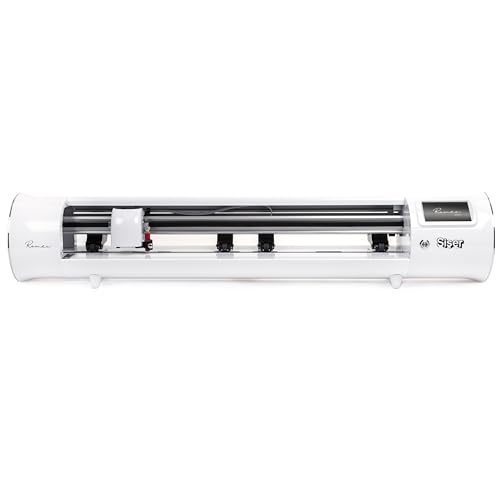
The Siser Romeo is a professional-grade electronic cutter engineered for businesses and serious hobbyists who need to cut large volumes of vinyl, cardstock, and stickers at production speed. Its 24-inch cutting width is double that of typical desktop machines, enabling two-up cutting of standard decals or oversized banners without tiling. The advanced motor drives cuts up to 60 percent faster than traditional desktop cutters, and the noise reduction technology eliminates the grinding sound common in lower-tier machines.
Romeo cuts matlessly for most materials, saving the cost and hassle of replacement mats, and it comes with a 12×12-inch light-tack mat for delicate materials that need extra hold. The intuitive touchscreen interface handles basic operations without a computer, and built-in WiFi allows wireless file transfer from Windows or Mac. Professional features like adjustable pinch rollers, variable grit rollers, and commercial-grade blades give experienced users the control to dial in precise cuts on materials ranging from thin vinyl to heavy cardstock.
The trade-offs are the steep learning curve and ongoing software costs. The Leonardo Design Studio software is powerful but requires dedicated time to master, and some professional features require a subscription. Users report that registration mark alignment for print-and-cut works reliably even on glossy stickers, but the software does not offer scan-and-cut functionality like some competitors. The machine is physically large — 36.5 inches wide — and requires a spacious work area. For any crafter scaling a small business, the Romeo’s speed, precision, and material versatility justify the investment.
Why it’s great
- 24-inch cutting width doubles production capacity for large decals
- Motor cuts 60% faster than typical desktop cutters with less noise
- Matless cutting saves money and reduces setup time
Good to know
- Leonardo software has a steep learning curve for new users
- Large footprint requires dedicated workspace
8. AccuQuilt GO! Big 55500 Electric Fabric Cutting System

The AccuQuilt GO! Big takes the fabric-cutter concept and adds a motorized drive, so quilters can cut up to six layers of cotton at the push of a button without any manual cranking. This is a significant ergonomic advantage for users with arthritis, carpal tunnel, or limited hand strength — the electric drive handles the physical work while you simply load the die and fabric. The machine supports all GO! dies, including the larger 14 x 16-inch dies for oversize quilt blocks, and the integrated die alignment system ensures each pass cuts cleanly without drifting.
The included starter set comes with a Flying Geese die, a cutting mat, and a pattern book, giving a new quilter a project-ready setup out of the box. The electric motor maintains consistent pressure across the entire cutting surface, which is particularly useful for cutting multiple identical pieces for repetitive block patterns. Users report that the GO! Big saves hours of cutting time on quilts that require dozens of identical shapes, and the precise cuts reduce fabric waste and eliminate the need to trim edges after cutting.
The major cost consideration is that the cutting mats are sold separately from the dies — new buyers may not realize they need to purchase additional mats for each new die they acquire. The machine itself weighs approximately 27 pounds, making it a stationary workshop tool rather than a portable option. The electric motor adds noise compared to the manual GO! model, though it is still quieter than a sewing machine. For quilters who cut large volumes of fabric and want to eliminate physical strain, this electric system is a serious productivity upgrade.
Why it’s great
- One-button electric drive eliminates manual cranking fatigue
- Supports large 14×16-inch dies for oversized quilt blocks
- Consistent motorized pressure ensures accurate, repeatable cuts
Good to know
- Cutting mats not included with dies, adding to ongoing costs
- Heavy stationary design not intended for travel or retreats
9. Joelver Maker Manual Die Cutting Machine Starter Kit

The Joelver Maker is a manual die cutter designed for crafters who want a complete starter system at a minimal investment. The 9-inch opening is larger than many entry-level machines, accommodating most standard embossing folders and die sets currently on the market. The included starter kit — 20+ steel dies, embossing folders, and cutting pads — means you can begin cutting and embossing on day one without any additional purchases. The manual hand crank requires no batteries or electricity, making it usable anywhere with a flat surface.
Build quality is notably heavy for its price tier, which gives the machine enough mass to stay stable during cranking without sliding across the table. Users report that it cuts cardstock effectively on the first pass, though intricate dies with very small internal details may require a second pass or a thin shim for complete separation. The foldable design allows the machine to be compacted for storage, and the included components fit inside the unit when not in use, keeping everything organized in one box.
The main limitation is the plastic outer construction, which is not as rigid as all-metal machines. Some users noted that achieving clean embossing required adjusting the shim stack — removing the thick spacer and adding paper layers to increase pressure. The cutting pressure is adequate for standard paper and light cardstock but may struggle with thick chipboard or multiple fabric layers. For a new crafter exploring scrapbooking and card making without making a large financial commitment, this bundled machine provides a generous starting point.
Why it’s great
- Larger 9-inch opening fits most standard dies and folders
- Generous starter kit with 20+ dies, folders, and cutting pads
- Foldable and portable design stores neatly when not in use
Good to know
- Plastic frame less rigid than all-metal machines
- Shims needed for clean embossing and intricate die cuts
FAQ
What is the difference between a manual and an electronic die cutting machine?
Can I use dies from different brands in the same machine?
How do I prevent my dies from dulling or bending over time?
Final Thoughts: The Verdict
For most users, the best die cutting machine winner is the Bira Craft ADJUSTABLE because its adjustable gear pressure eliminates the need for shims on nearly any die, offering consistent clean cuts across mixed materials without guesswork. If you want a fully electric experience for high-volume vinyl or sticker production, grab the Silhouette Cameo 4 for its industry-leading software and large print-and-cut area. And for quilters who need to cut fabric layers with surgical precision, nothing beats the time savings of the AccuQuilt GO! Big 55500 with its one-button electric drive that handles repetitive cuts without hand fatigue.

Mo Maruf
I created WellFizz to bridge the gap between vague wellness advice and actionable solutions. My mission is simple: to decode the research and give you practical tools you can actually use.
Beyond the data, I am a passionate traveler. I believe that stepping away from the screen to explore new environments is essential for mental clarity and physical vitality.