Our readers keep the lights on and my smoothie glass nicely filled. As an Amazon Associate, I earn from qualifying purchases.
That bitter, metallic edge in your morning espresso isn’t the beans—it’s the limescale crusted onto your machine’s heating element. A dedicated descaling solution dissolves mineral deposits that tap water leaves behind, restoring flow rate, brew temperature, and flavor clarity without the corrosive drawbacks of DIY methods.
I’m Mohammad Maruf — the founder and writer behind WellFizz. I’ve spent dozens of hours cross-referencing chemical formulations, concentration levels, and real-world user reports to isolate the descaling solutions that actually remove calcium buildup without damaging plastic reservoirs or leaving chemical aftertaste.
This guide compares five top-tier formulas by active ingredient, dose-per-bottle efficiency, and machine compatibility so you can pick the best descaling solution for your coffee or espresso setup.
How To Choose The Right Descaling Solution
Not all descalers are created equal—the wrong acid concentration can eat through O-rings and void your machine warranty. Focus on three things: active ingredient type, number of doses per bottle, and whether the formula leaves behind any detectable flavor residue.
Active Acid: Lactic vs. Citric vs. Sulfamic
Lactic acid (often plant-based) is the gentlest option—it dissolves calcium carbonate without attacking the rubber seals and plastic parts common in modern espresso machines. Citric acid works faster but can leave a white powdery residue if not thoroughly rinsed. Sulfamic acid is more aggressive and best reserved for heavily scaled commercial units. Most premium home solutions use lactic acid for the best safety-to-effectiveness ratio.
Dose Count Per Bottle
A 8-ounce bottle promising “4 uses” might require 2 ounces per descaling session. Some concentrated formulas need only 1 ounce per cycle, effectively doubling the bottle’s lifespan. Always check the recommended dose volume—a low sticker price means nothing if the bottle yields only two uses.
Scent and Aftertaste
Vinegar’s lingering odor is the number-one complaint from DIY descaling attempts. A quality commercial solution should be unscented or naturally scented, and it should rinse completely clean so your next brew tastes purely of coffee, not citric acid or chemical cleaner.
Quick Comparison
On smaller screens, swipe sideways to see the full table.
| Model | Category | Best For | Key Spec | Amazon |
|---|---|---|---|---|
| De’Longhi EcoDecalk | Premium | High-end espresso machines | Plant-based lactic acid, 5 doses | Amazon |
| Impresa 2-Pack | Mid-Range | Universal single-serve machines | Citric & Sulfamic blend, 4 doses | Amazon |
| Durgol Swiss Espresso | Premium | Stubborn commercial-grade scale | 4-bottle pack, single-use portions | Amazon |
| Caffenu for Breville | Mid-Range | Breville and Baratza machines | Plant-based lactic, 2 bottles x 2 uses | Amazon |
| Bar Keepers Friend | Budget | Budget drip and single-cup | Oxalic acid, 12 oz multi-use | Amazon |
In‑Depth Reviews
1. De’Longhi EcoDecalk Descaler

De’Longhi’s EcoDecalk uses plant-based lactic acid at an ideal concentration—strong enough to dissolve thick limescale buildup inside a Magnifica or Dinamica yet gentle enough to leave plastic tanks and silicone seals intact. Each 16.9-ounce bottle delivers five full doses, which for an average household means roughly 15 months of maintenance before you need a replacement.
Reviewers consistently report that it flushes twice as fast as white vinegar while leaving zero residual odor or aftertaste. The formula works universally across brands—Breville, Ninja, Philips, and Nespresso users all confirm compatibility. Markings on the bottle make measuring simple, and the natural lactic acid is fully biodegradable.
One caveat: the instructions are printed on the back of the label, so you’ll need to peel it off to read them. Once you know the 100-ml dose per cycle, it’s straightforward. For anyone with a semi-auto or super-auto espresso machine, this is the most balanced option between safety and descaling speed.
Why it’s great
- Five doses per bottle extends time between purchases
- Plant-based lactic acid is safe for seals and eco-friendly
- Flushes completely, leaving no chemical aftertaste
Good to know
- Instructions hidden under removable label
- Premium-tier cost per dose compared to budget options
2. Impresa 2-Pack Descaling Solution
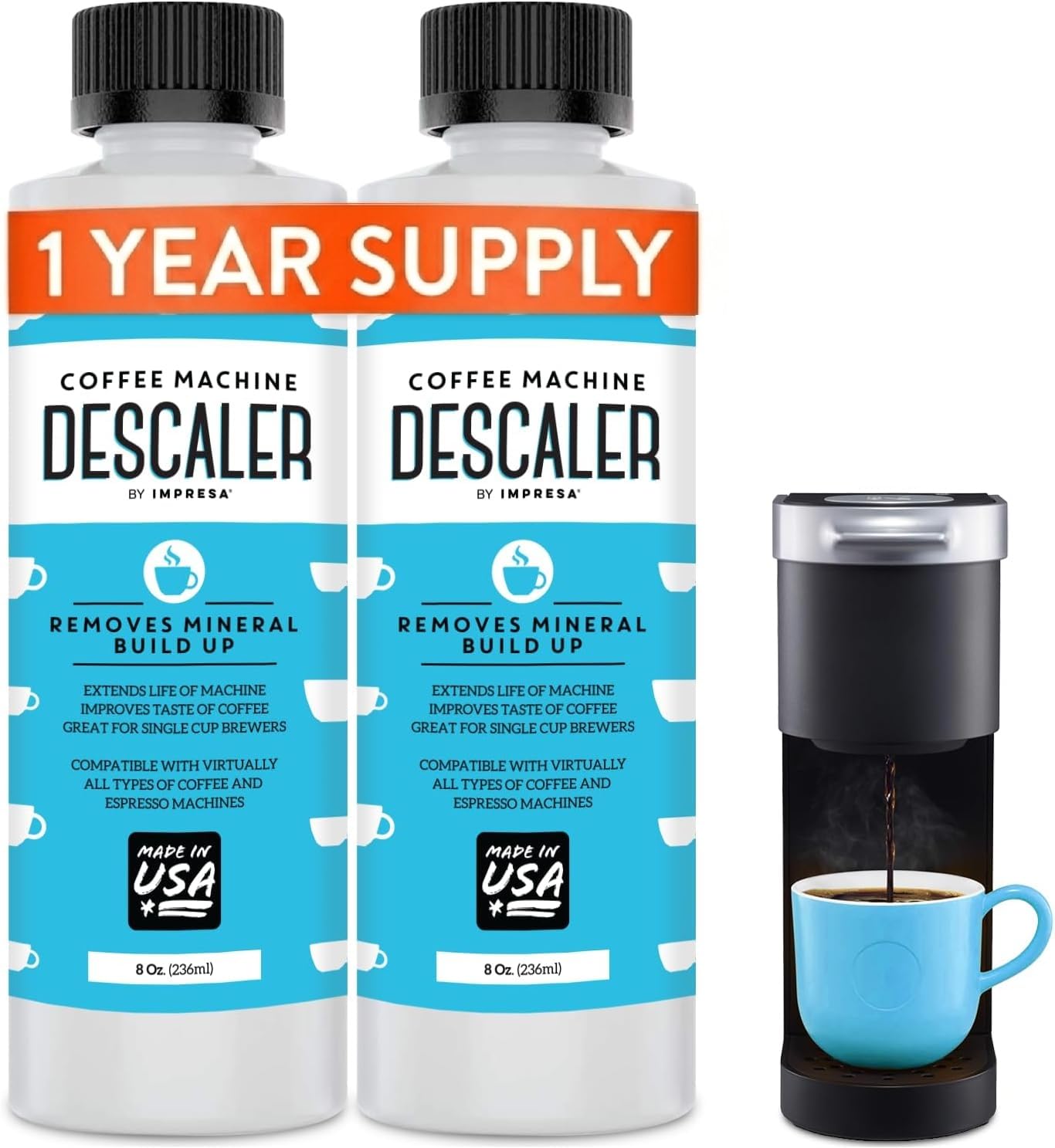
Impresa’s 2-pack bundles two 8-ounce bottles, each good for two descaling sessions at just 4 ounces per cycle. The active formula combines citric acid (7-10%) with sulfamic acid (3-7%), making it more aggressive than pure lactic options. This blend works especially well on older machines with heavy mineral encrustation that gentler descalers struggle to shift.
Users with Keurig, Nespresso, Bunn, and Cuisinart machines report thorough limescale removal and a noticeable improvement in brew speed after treatment. The solution is odorless and leaves no aftertaste—a common complaint with vinegar. One engineer-reviewed customer analysis confirmed the acid percentages are safe for food-contact surfaces when rinsed properly.
The main tradeoff is that the high acid concentration requires more thorough rinsing. Some users noted that the instructions for Keurig machines were vague; following the machine’s own descaling cycle is recommended rather than the included directions. For budget-conscious owners of multiple single-serve machines, this pack delivers the most descaling sessions per dollar.
Why it’s great
- Two bottles yield four descaling sessions
- Citric-sulfamic blend cuts through heavy scale quickly
- Odorless and leaves no chemical aftertaste
Good to know
- Instructions unclear for Keurig models
- Aggressive acid blend may require longer rinse cycle
3. Durgol Swiss Espresso Descaler 4-Pack

Durgol’s Swiss-formulated descaler comes as four individual 4.2-ounce bottles, each pre-measured for a single descaling cycle. The professional-grade formula is designed to dissolve hard calcium carbonate deposits in machines that have gone years without maintenance—Technivorm Moccamaster, Gaggia, and Rancilio owners particularly praise its speed.
Users report that a single cycle clears buildup that vinegar required multiple passes to handle. The solution runs through the machine’s decalcification program without foaming or clogging, and it rinses clean in one water-only cycle. The compact bottle size means no measuring, no leftover solution to store, and no guessing about dose volume.
The catch is cost-per-use: as single-dose bottles, this pack provides exactly four descaling sessions. If your water is soft and you descale only every six months, the pack lasts two years. But for heavy daily use in hard-water areas, you may go through it in four months. It’s best for owners of high-end machines who want a no-measure, no-fuss descaling event every time.
Why it’s great
- Pre-measured single-dose bottles eliminate measurement errors
- Professional-grade formula dissolves thick scale rapidly
- Leaves no flavor residue on seals or brew path
Good to know
- Higher cost-per-descale than multi-use bottles
- Single-use bottles generate more packaging waste
4. Caffenu Breville Descaling Solution 2-Pack

Caffenu targets Breville and Baratza owners with a concentrated lactic-acid formula packed into two 200-ml bottles, each yielding two descaling cycles for a total of four treatments. The plant-based lactic acid is environmentally friendly and specifically calibrated for the tight internal plumbing of Breville’s Barista Express and Bambino models.
Feedback from Breville users is positive—the solution restored full flow rate and brew temperature on machines that had slowed due to scale buildup. The concentrated active ingredients penetrate deeper into the group head and boiler than diluted formulas, making it a strong fit for espresso machines that see daily use. The unscented formula leaves no odor behind.
One reviewer with a Bambino Plus found that clogging returned within a month after descaling, though the issue may have been machine-related rather than product-related—Caffenu offered a refund promptly. The small bottle size is convenient for storage, but high-volume users will need to repurchase more frequently than with larger single-bottle options.
Why it’s great
- Concentrated lactic acid targets Breville-specific scale
- Plant-based and biodegradable formula
- Compact bottles store easily in small kitchens
Good to know
- Only 4 total doses per purchase
- Some users report variable results on Bambino Plus models
5. Bar Keepers Friend Coffee Maker Descaler
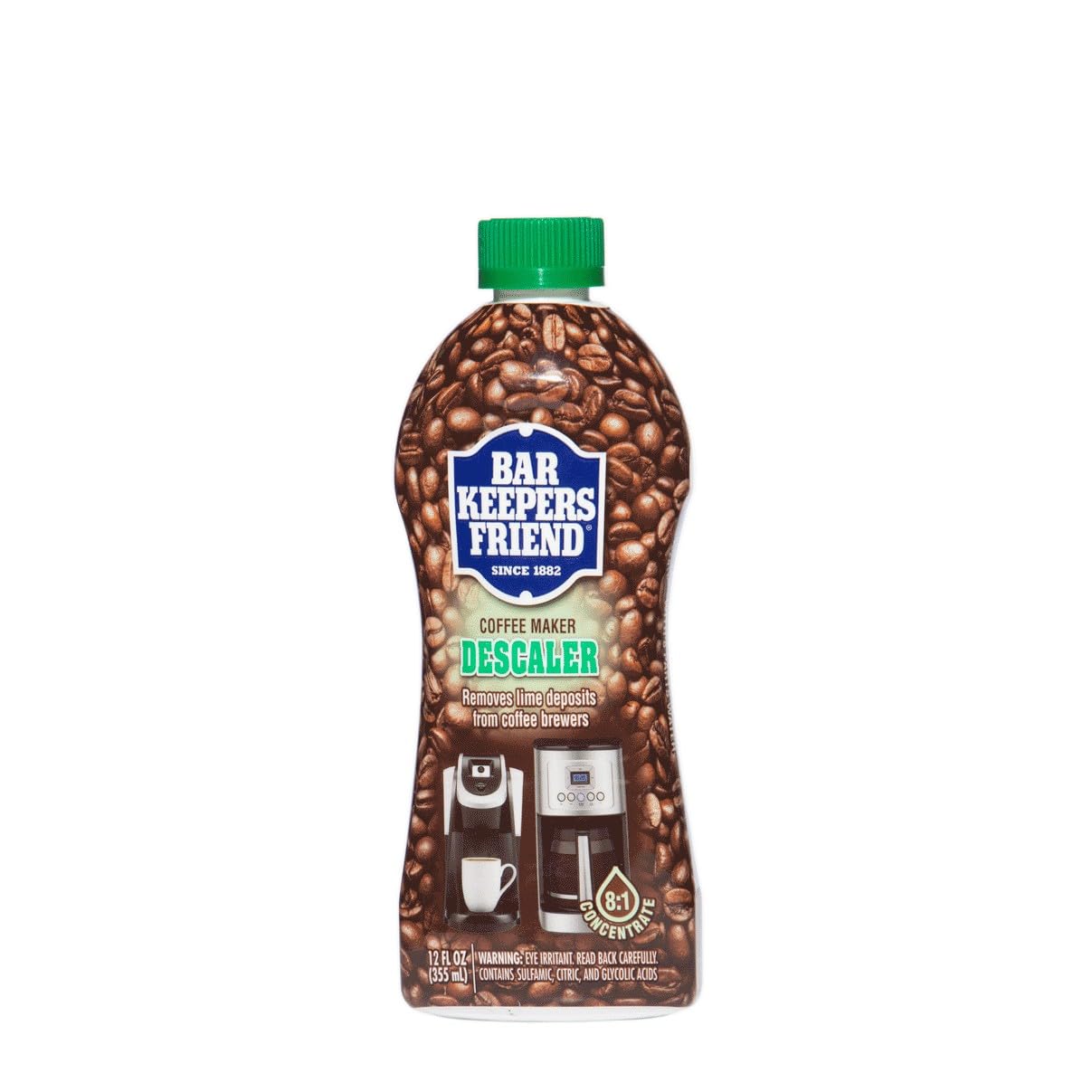
Bar Keepers Friend brings its legendary oxalic-acid formula to coffee machine descaling. The 12-ounce bottle requires mixing 1 ounce of concentrate with 8 ounces of cold water per cycle, making it one of the most cost-effective options for households with multiple drip machines or single-serve brewers. The solution attacks both mineral deposits and coffee oil stains, leaving the water reservoir and carafe visibly cleaner.
Users report that a single treatment restored stainless steel carafes to like-new condition, removing brown staining that vinegar couldn’t touch. The formula works on Breville, Keurig, and standard drip machines alike. Multiple reviewers noted that it outperformed Urnex in stain removal and cost less per ounce.
Because oxalic acid is stronger than lactic or citric acid, you must follow the dilution ratio exactly—using undiluted concentrate can damage plastic components. The manufacturer also warns to keep it away from eyes and skin. For budget-minded owners who don’t mind measuring each dose, this 12-ounce bottle delivers the most descaling volume for the lowest price point.
Why it’s great
- Large 12-ounce bottle provides many descaling cycles
- Oxalic acid removes coffee stains as well as limescale
- Works in drip, single-cup, and espresso machines
Good to know
- Requires precise dilution each use
- Oxalic acid is more caustic—handle with care
FAQ
Can I use white vinegar instead of a branded descaling solution?
How often should I descale my espresso machine?
Is a plant-based lactic acid descaler better than a citric acid descaler?
Can a universal descaler damage my machine if it says “for all brands”?
Final Thoughts: The Verdict
For most users, the best descaling solution winner is the De’Longhi EcoDecalk because it combines plant-based lactic acid with five doses per bottle, universal compatibility, and zero aftertaste. If you want a budget-friendly multi-pack that handles heavy scale on single-serve machines, grab the Impresa 2-Pack. And for espresso enthusiasts with high-end European machines who want single-dose convenience, nothing beats the Durgol Swiss Espresso 4-Pack.

Mo Maruf
I created WellFizz to bridge the gap between vague wellness advice and actionable solutions. My mission is simple: to decode the research and give you practical tools you can actually use.
Beyond the data, I am a passionate traveler. I believe that stepping away from the screen to explore new environments is essential for mental clarity and physical vitality.