Our readers keep the lights on and my smoothie glass nicely filled. As an Amazon Associate, I earn from qualifying purchases.
Scanning a dark field for coyotes, checking a shed for intruders, or navigating a trail after sunset—the entire value of a digital night vision monocular hinges on three things: its sensor sensitivity, its screen resolution, and how well its infrared illuminator matches your actual range. Get that combo wrong and you end up staring at a grainy glow that ruins your natural night vision.
I’m Mohammad Maruf — the founder and writer behind WellFizz. I’ve spent hundreds of hours analyzing sensor datasheets, IR wavelength specs, battery endurance tests, and real-user field reports to separate the useful tools from the digital toys in this specific category.
Whether you need a head-mounted unit for airsoft, a long-range scope for predator hunting, or an entry-level monocular for camping, finding the right digital night vision monocular means matching the sensor, screen, and IR system to your actual environment.
How To Choose The Best Digital Night Vision Monocular
Digital night vision monoculars use a CMOS sensor to capture light—invisible infrared light—and display the image on an internal screen. Unlike traditional analog image-intensifier tubes, digital units record video, adjust color profiles, and cost a fraction of military-grade NVGs. But the specs that matter most are specific to the digital architecture, not the lens glass.
Sensor and Screen Resolution Pairing
A 1080p sensor feeding a 640×480 screen is a common misalignment in budget units. You get crisp capture but a soft viewfinder image. Look for units where the sensor resolution and display resolution are closely matched—or where the screen is the limiting factor so you’re not wasting sensor data on a low-res panel.
IR Wavelength: 850nm vs 940nm
850nm infrared illuminators are bright and reach far—often 200 yards or more—but they produce a visible red glow that gives away your position. 940nm IR is invisible to the naked eye and perfect for covert observation, but it has roughly half the effective range. For hunting or security where stealth matters, 940nm is the right choice. For casual wildlife spotting, 850nm offers better reach.
Battery Life vs Real-World Runtime
Most manufacturers quote runtime without the IR illuminator active. With IR on—which is how you’ll use the unit at night—runtime often drops by 40-50%. A 5000mAh battery running a 1080p sensor with 850nm IR typically delivers 6-10 hours. Anything promising longer with IR on is either underpowering the IR or exaggerating.
Mounting and Ergonomics
Head-mounted and helmet-mounted units free your hands but add weight to your neck. Check the gram weight and whether the unit includes a dovetail mount compatible with Wilcox G24 or standard PVS-14 accessories. Handheld units need a tripod mount thread (1/4-20) for stable long-range observation.
Quick Comparison
On smaller screens, swipe sideways to see the full table.
| Model | Category | Best For | Key Spec | Amazon |
|---|---|---|---|---|
| Sightmark Wraith 4K Mini | Premium Rifle Scope | Night Hunting .308 | 4K CMOS Sensor, 1280×720 Display | Amazon |
| ATN X-Sight LTV 3-9x | Mid-Range Rifle Scope | Predator Hunting | QHD+ Sensor, 3″ Eye Relief | Amazon |
| TOPDON TS004 Thermal | Thermal Monocular | Heat Detection 410m | 256×192 Thermal, 50Hz Refresh | Amazon |
| GOYOJO G210 Thermal | Thermal Monocular | Night Hunting Pigs/Deer | 256×192 Thermal, 10mm Lens | Amazon |
| Bushnell Equinox Z2 | Mid-Range Monocular | Stationary Spotting | 1080p Sensor, WiFi Sharing | Amazon |
| NIGHTFOX Prowl | Mid-Range Head-Mount | Airsoft / Night Walking | 940nm IR, 54° FOV, 1080p Recording | Amazon |
| VisioGear Night Thunder X3 | Budget Binocular | Recreational Camping | AI Color Boost, 5000mAh, 1384ft Range | Amazon |
| HOTPEAK 112MP | Budget Binocular | Wildlife / Bird Watching | 112MP Photo, 4K Video, 5000mAh, 64GB Card | Amazon |
| GOYOJO Head-Mounted 7X | Budget Monocular | Ghost Hunting / Camping | 7X Mag, 1.54in Screen, SONY307 Sensor | Amazon |
In‑Depth Reviews
1. Sightmark Wraith 4K Mini Digital Night Vision Riflescope
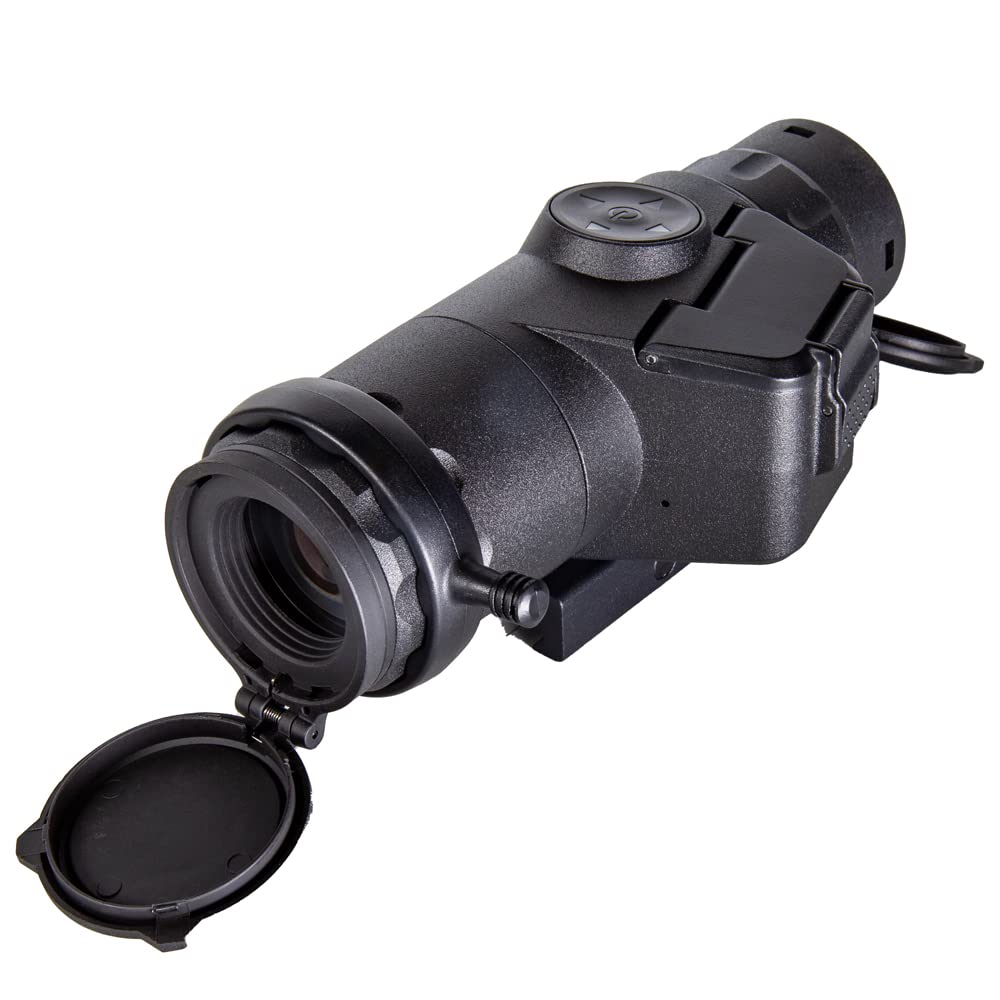
The Sightmark Wraith 4K Mini is built around a true 4K CMOS sensor that feeds a 1280×720 FLCOS micro-display, giving you significantly more detail at distance than typical 1080p-sensor digital scopes. The sensor captures usable identification out to 300 yards with the included IR illuminator, and the 8x digital zoom is first-focal-plane, meaning the reticle scales with magnification—critical for accurate holdovers on moving game.
The aluminum housing is shockproof for 3-foot drops and rated for calibers up to .308, making it a legitimate hunting optic rather than a casual observation tool. It records 4K video with audio internally, and the one-shot zero system gets you on paper quickly. The compact form factor (21.6 ounces) balances well on an AR platform without making the rifle nose-heavy.
Users consistently report superior clarity compared to the ATN 4K Pro when zoomed in, though the Stadiametric rangefinder is limited to preset animal profiles. The battery pack extends runtime significantly, but the illuminator uses CR123 cells only—a minor logistics headache. The built-in micro-USB file transfer is slow; pulling the card is faster.
Why it’s great
- True 4K sensor provides exceptional long-range detail
- First-focal-plane reticle scales with digital zoom
- Rugged aluminum build rated for .308 recoil
Good to know
- File deletion requires a computer; no in-scope delete option
- Illuminator uses CR123 batteries, not rechargeable integrated pack
2. ATN X-Sight LTV 3-9x Night Vision Scope

ATN’s X-Sight LTV 3-9x uses a QHD+ sensor paired with a 3-inch eye relief and an HD display, delivering clean images from twilight into total darkness. The built-in IR illuminator reaches out to about 250 yards reliably, and users report identifying predators like coyotes at that distance without issue. The 3-9x optical zoom is a true variable, so you get optical magnification before the digital crop kicks in—a major advantage over fixed-magnification digital scopes.
The One Shot Zero feature works as advertised: bore-sight, shoot once, and the scope calculates the offset. Users stacking 7.08 at 100 yards confirm the zero holds well. The scope records 720P video, which is lower than the Sightmark’s 4K but adequate for documentation. The classic ergonomic design with a wide field of view makes it easy to mount on any 30mm ring platform.
Several reviewers note that the LTV model lacks a mil-dot reticle, which limits holdover precision for long-range shooters. The included IR illuminator is strong but sucks power quickly—expect 4-6 hours of continuous use with IR active unless you run an external 20000mAh battery pack via USB. The sleep mode wake-up requires pressing the front zoom button, which is not intuitive mid-hunt.
Why it’s great
- Variable 3-9x optical zoom before digital crop
- One Shot Zero is fast and accurate
- Strong IR illuminator usable to 250 yards
Good to know
- No mil-dot reticle option
- Battery runtime drops to ~4-6 hours with IR on
3. TOPDON TS004 Thermal Imaging Monocular
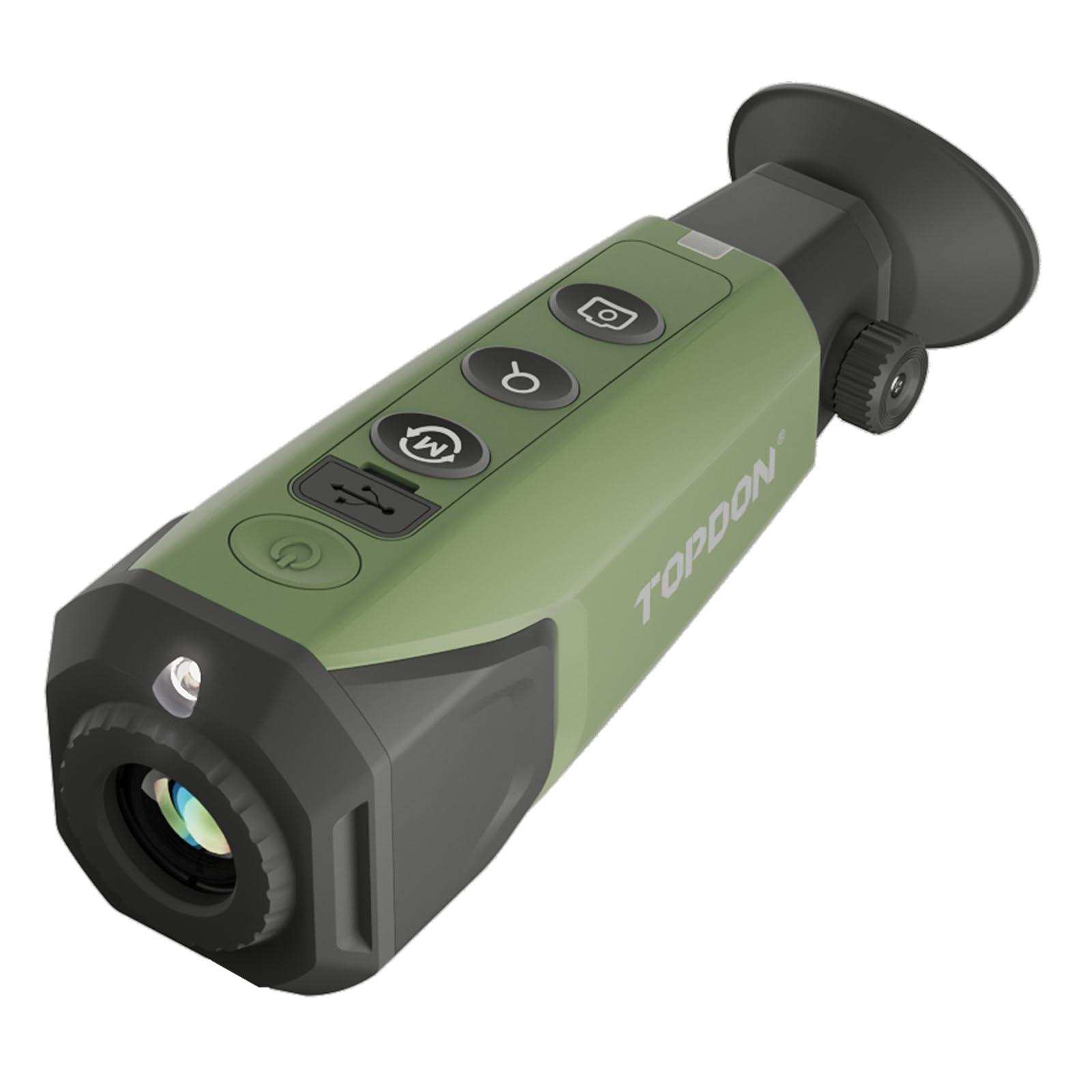
The TOPDON TS004 is a dedicated thermal monocular, not a digital NV unit, but it belongs in this guide because it solves the fundamental limitation of digital night vision: it sees heat signatures through fog, brush, and complete darkness without needing any IR illuminator. The 256×192 thermal sensor with a 50Hz refresh rate tracks moving animals smoothly, and the 13mm lens detects human-sized heat sources up to 410 meters away.
The 5000mAh battery delivers up to 11 hours of continuous operation, which is exceptional for a thermal device. The IP67 rating means it can handle rain, dust, and accidental submersion. Wireless connectivity to the TopInfrared app allows real-time monitoring and recording directly to your phone—handy for sharing a feed during a group hunt or surveillance operation. The silicone outer casing absorbs bumps without adding bulk.
Users report heat detection at 200+ yards for animals and people, and one reviewer spotted a fox’s heat signature that was completely invisible to a digital night vision unit. The digital zoom gets grainy past 2x, and the bright green power LED compromises stealth. The lens cannot see through car glass, and the unit lacks an auto-off sensor for the display when not in use, which drains battery if you let it dangle.
Why it’s great
- 11-hour battery life is best-in-class for thermal
- 50Hz frame rate tracks moving targets smoothly
- IP67 waterproof and drop-resistant
Good to know
- Bright green power LED ruins stealth in dark
- No auto-off when away from eye; display runs continuously
4. GOYOJO G210 Thermal Monocular
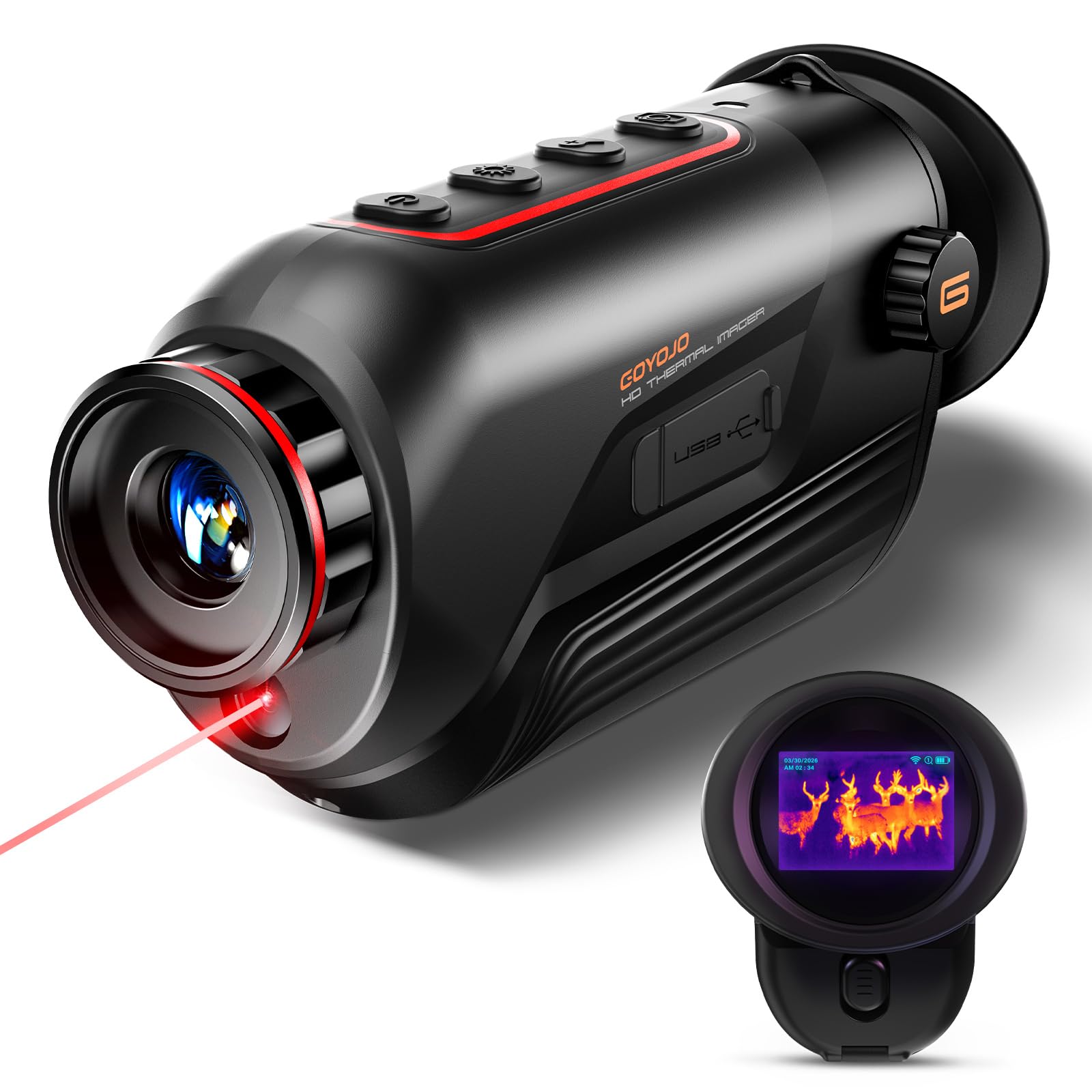
The GOYOJO G210 packs a 256×192 thermal sensor with a 12μm pixel pitch into a compact package weighing just over a pound. The 10mm focal length gives a wider field of view (17.5 degrees) than typical 13mm or 19mm thermal lenses, making it better for scanning open fields rather than long-range pinpointing. The 25Hz refresh rate is adequate for tracking slow-moving game like hogs and deer but will show stutter on fast-moving targets.
Six color palettes—White Hot, Black Hot, Red Hot, Rainbow, Iron-Red, and Glimmer—let you optimize the display for different environments. Black Hot mode is the favorite among hunters for its high contrast on warm targets against cool backgrounds. The replaceable battery (18650 cell) delivers over 6 hours, and the IP65 rating handles rain and dust. WiFi app connectivity lets you stream and capture images remotely.
Users report spotting rabbits at 70+ yards and pigs at 150 yards, with the wide lens making it easier to locate animals in brush than narrow-FOV alternatives. The digital 4x zoom maintains usable resolution, and the unit fits in a jacket pocket. The fixed-focus design means no manual focusing—the lens is set for the broad range—which is convenient but limits close-up detail below 10 yards. No built-in video recording to internal memory; recording requires the app.
Why it’s great
- Wide 17.5° FOV ideal for scanning fields
- Replaceable 18650 battery for extended field use
- Compact size fits in a coat pocket
Good to know
- Fixed-focus lens limits close-up performance
- No onboard recording; requires phone app for capture
5. NIGHTFOX Prowl Night Vision Monocular

The NIGHTFOX Prowl is the standout mid-range digital NV monocular for anyone who needs head-mounted, hands-free operation. Its 54-degree field of view is massive compared to typical 6-13 degree FOVs on zoom-based monoculars, giving you natural peripheral awareness when walking or scanning. The 1x magnification is intentional—you see the scene at real scale, not tunnel-vision zoomed—which is exactly what you want for navigation, airsoft, or night patrol.
Dual infrared LEDs let you switch between 850nm (long-range, visible glow) and 940nm (covert, invisible glow). The 940nm mode is genuinely useful for staying hidden during airsoft or surveillance, with effective identification out to about 75 yards. The unit records 1080p video and includes a 3x digital zoom for closer inspection. It mounts to helmets via a Wilcox G24-style dovetail adapter and includes a head strap.
Users confirm it outperforms cheaper -80 digital NVGs significantly, with sharper image and lower latency. The screen is bright even at the lowest setting—enough to temporarily blind you after use—and the unit can droop slightly on the head strap over time. A bump to the housing can freeze the unit, requiring a hard reset. At roughly half the price of a PVS-14, it’s a capable civilian-grade NOD for training and recreation.
Why it’s great
- 54° FOV provides natural situational awareness
- Switchable 850nm/940nm IR for covert operation
- Compatible with Wilcox G24 helmet mounts
Good to know
- Screen too bright even on lowest setting; causes temporary night blindness
- Unit can freeze from physical shock; requires battery pull to reset
6. Bushnell Equinox Z2 Monocular

The Bushnell Equinox Z2 is a digital NV monocular built around a 1080p CMOS sensor, but the viewfinder display runs at approximately 640×480 resolution. This mismatch means the recorded footage looks sharp when transferred to a computer, but the live view is noticeably grainy compared to newer units. The 40mm objective lens gathers decent light, and the built-in 850nm IR illuminator is genuinely bright, reaching 286 yards according to users.
WiFi streaming to a smartphone is a useful feature for sharing the view with others or recording directly to your phone. The unit functions best as a stationary spotting scope—set it on a tripod, scan a field for deer, and let others watch the feed on their phones. The manual focus ring is smooth, and the build quality feels solid with a rubberized exterior. Two pounds of weight make it less suited for handheld scanning, but stable on a tripod.
The critical weakness is battery life. Standard alkaline AA batteries last only about 20 minutes with the IR on. Rechargeable NiMH or lithium-ion AA cells extend this to several hours, but the battery indicator never shows full with NiMH cells. The battery cap is easy to cross-thread, and there is no external power port except on later firmware versions that support USB power. The diopter adjustment is limited, making it difficult for users with significant presbyopia.
Why it’s great
- Bright 850nm IR reaches 286 yards on slow shutter
- WiFi streaming allows group viewing on phones
- Solid build with rubberized armor
Good to know
- Abysmal battery life with standard alkalines (~20 min with IR)
- Viewfinder resolution (640×480) is low for a 1080p sensor
7. VisioGear Night Thunder X3
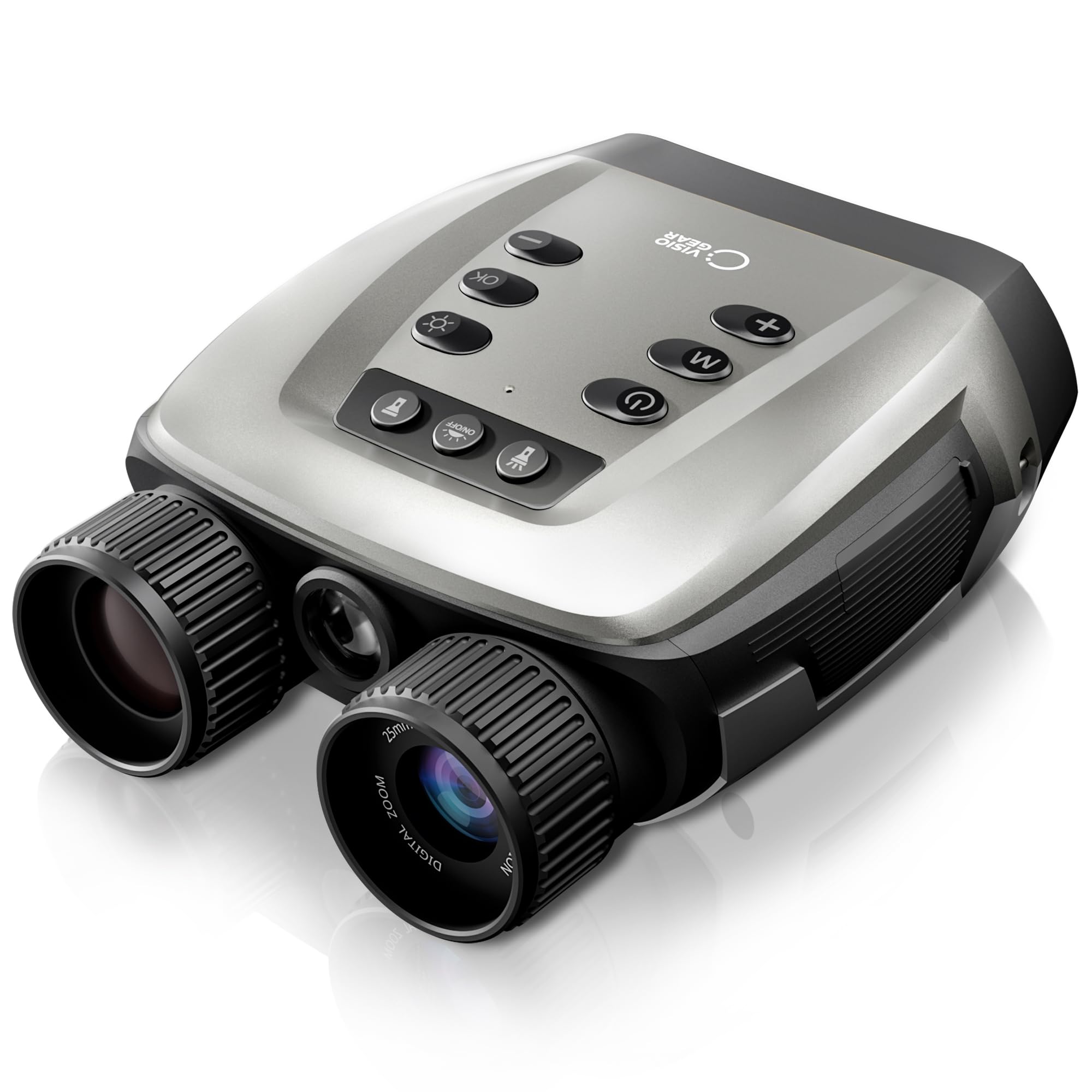
The VisioGear Night Thunder X3 uses an AI Color Boost processor that intelligently enhances color contrast and sharpness in low light, producing more natural-looking images than the standard green-tinted or black-and-white IR displays. The 4K video and 40MP photo capture are standard for this price tier, but the color processing gives it a visual edge for casual wildlife observation where identifying species by color matters.
With a 5x fixed optical zoom paired with 8x digital zoom, the X3 provides 40x total magnification on paper, though digital zoom at the top end gets blocky. The 3-level IR illuminator lets you adjust power based on distance—low for close-range campsite scanning, high for distant tree lines. The 5000mAh rechargeable battery claims 10 hours with IR and 18 hours without, though real-world use with the IR set to high drops that to about 7-8 hours. A 32GB TF card is included for storage.
A few users report the included SD card is a low-end unit that may fail in-camera—replacing it with a quality A2 V30 card solves the issue. The focus ring is sensitive, and the unit works best when mounted on a tripod at distances beyond 50 yards. The StealthGlow backlit buttons are genuinely useful in total darkness, and the military-inspired Lunar Silver finish looks distinct from 90% of black NV units on the market.
Why it’s great
- AI Color Boost produces natural-looking low-light imagery
- 5000mAh battery with 3-level IR for runtime control
- Backlit buttons enable silent operation in darkness
Good to know
- Included 32GB card may be low quality; upgrade recommended
- Best results require tripod for stable long-range viewing
8. HOTPEAK 112MP Night Vision Binoculars
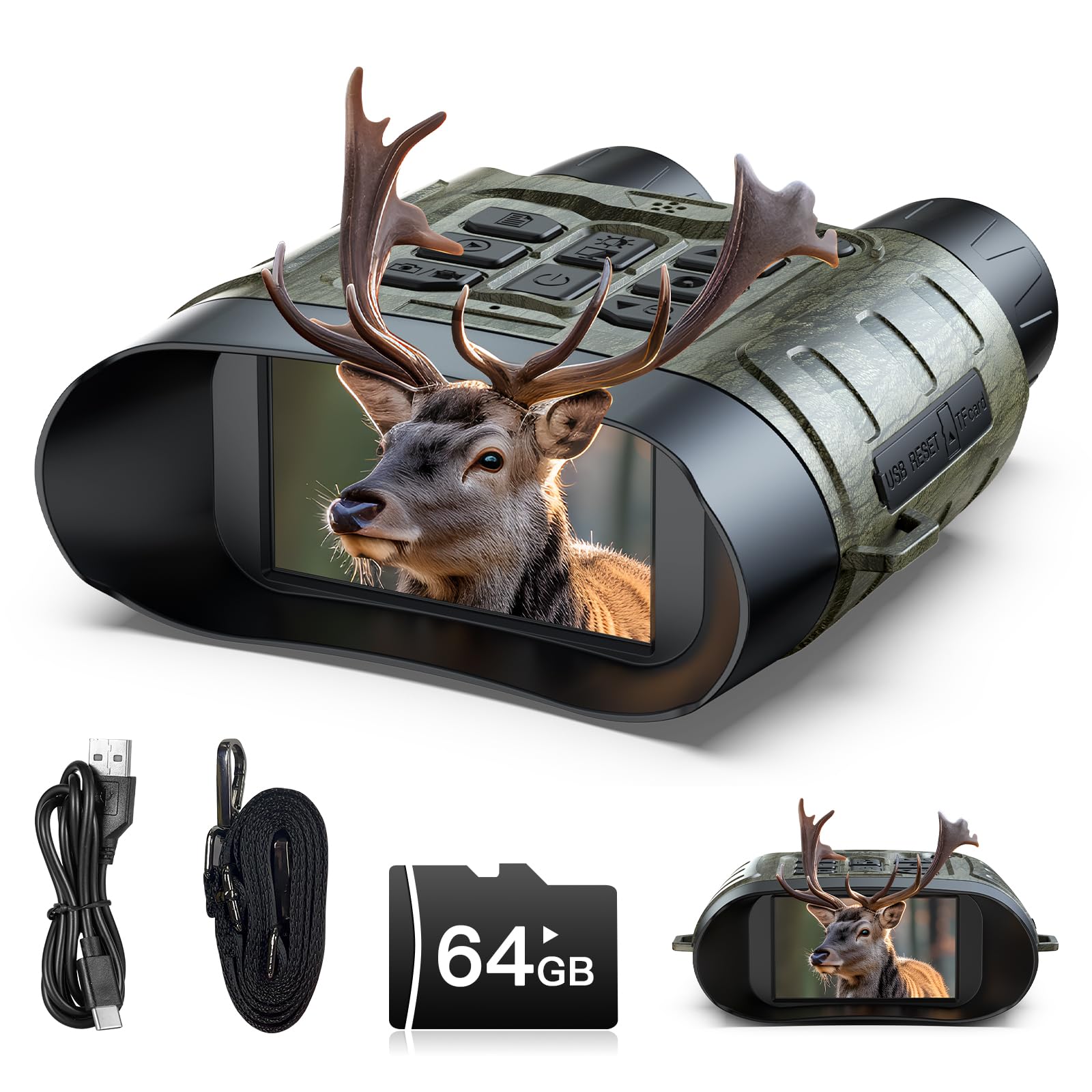
The HOTPEAK 112MP binocular-style digital NV unit delivers a surprising amount of value for an entry-level price. It captures 4K video and 112MP stills—the photo resolution is interpolated, but the video is genuinely sharp enough for identifying animals and documenting night hikes. The 12x digital zoom with Picture-in-Picture mode lets you zoom in on a target while keeping a wide reference view, which is a thoughtful feature for tracking moving wildlife.
The 5000mAh battery is the real star here: users report 10+ hours of night use with IR on, which beats most units at twice the price. The included 64GB TF card means you don’t need to buy extra storage out of the box. The Sport Mode automatically detects motion and starts recording—great for birdwatchers and trail monitors who don’t want to fumble for buttons. The 1500-foot range with IR is optimistic in real conditions; expect clear identification to about 200-300 feet depending on ambient light.
The CAMO finish and metal housing look more premium than the price suggests. The manual focus ring and diopter adjustment (+/-5) accommodate users with glasses. Missing a tripod mount thread—a notable omission for a unit with 12x zoom that benefits from stabilization. The buttons are not backlit, making mode changes difficult in pitch black. For general outdoor use, stargazing, and casual wildlife observation, it outperforms its price bracket consistently.
Why it’s great
- 5000mAh battery delivers 10+ hours night use with IR
- Includes 64GB TF card—no immediate extra purchase needed
- Picture-in-Picture zoom mode aids target tracking
Good to know
- No tripod mount thread on the housing
- Buttons lack backlighting; challenging to operate in total darkness
9. GOYOJO Head-Mounted Night Vision Monocular 7X
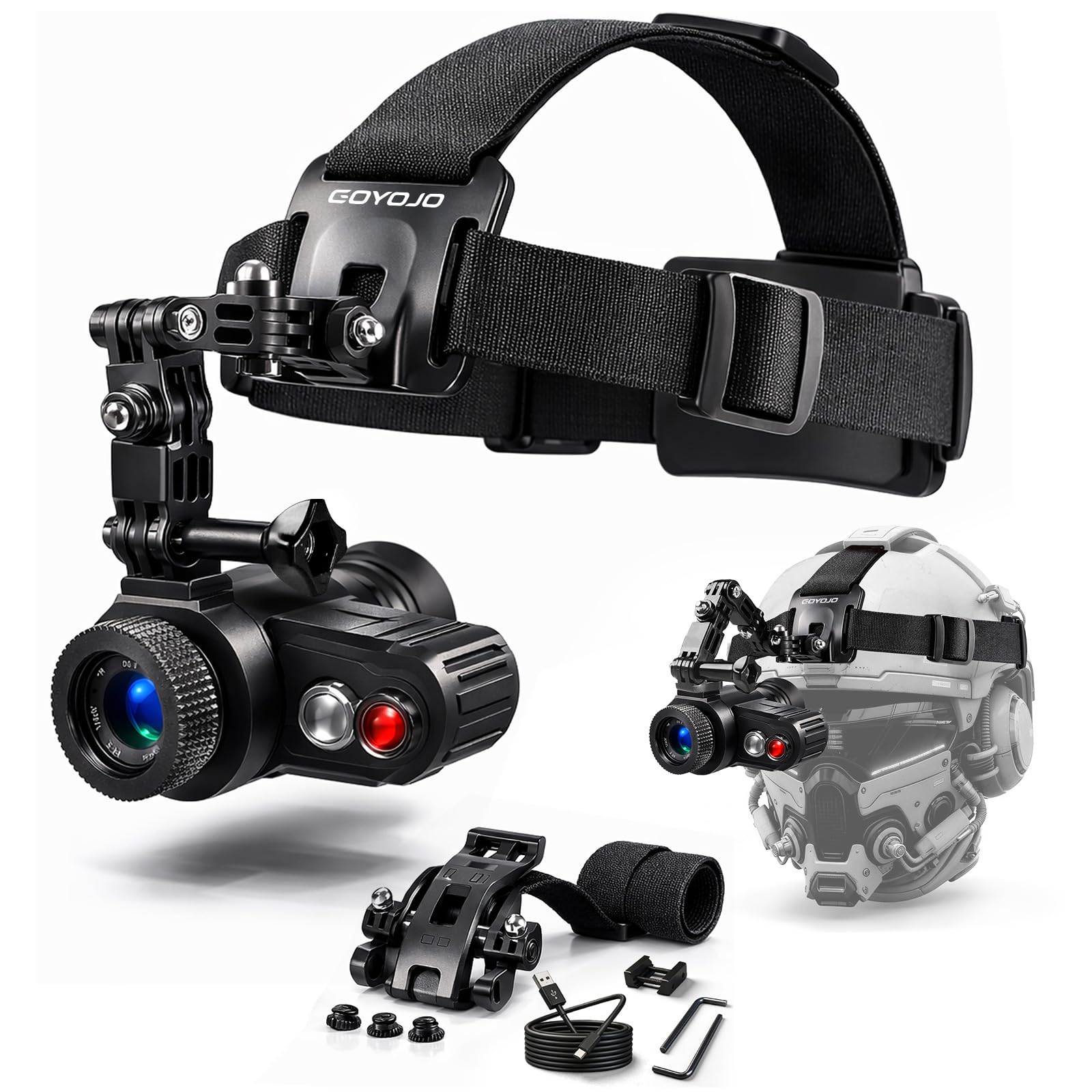
The GOYOJO head-mounted monocular is the cheapest path to true hands-free digital NV in this list. It uses a CMOS SONY307 starlight sensor with 850nm IR illumination, providing black-and-white imaging at a claimed 500-meter visible distance. The 1.54-inch HD screen has a 320×320 resolution—low by modern standards, but adequate for identifying large shapes at 100-200 yards. The 7x magnification is fixed (no manual zoom adjustment), which limits versatility but simplifies operation.
The included adjustable headband lets you mount the unit on your head or helmet, freeing both hands for walking, climbing, or handling gear. The aluminum housing feels more durable than the price suggests, and the ultra-high transmission coated lens reduces glare from artificial light sources. The video synchronous delay is under 0.01 seconds, meaning the real-time view keeps sync with movement without visible lag—important when walking in the dark.
Users report the actual magnification is closer to 3x at the sensor level, with 7x being a digital extension that reduces image quality. The head strap is functional but not comfortable for extended wear—the unit is heavy enough that it tends to sag. There is no brightness adjustment for the screen, and the IR range for clear identification tops out around 100-125 yards despite the 500-meter claim. For ghost hunting, airsoft, or short-range property observation, it works. For serious hunting or long-range use, look at the higher-tier options.
Why it’s great
- Head-mounted design frees hands for movement and gear
- SONY307 starlight sensor with <0.01s video delay
- Aluminum housing is sturdy for the price
Good to know
- Heavy unit causes head strap sag during extended wear
- No screen brightness adjustment; image quality degrades past 3x digital zoom
FAQ
Can a digital night vision monocular see through glass?
What is the real difference between digital night vision and thermal imaging?
Why does my digital night vision monocular have a bright red glow from the front?
How long does the battery really last with the IR on?
Final Thoughts: The Verdict
For most users, the digital night vision monocular winner is the NIGHTFOX Prowl because it offers the best balance of covert capability, wide FOV for situational awareness, and helmet-mount compatibility at a mid-range price. If you need a dedicated hunting rifle scope with 4K-grade clarity and hardened aluminum construction, grab the Sightmark Wraith 4K Mini. And for budget-conscious wildlife observers who want maximum battery life and a huge included memory card, nothing beats the value of the HOTPEAK 112MP.

Mo Maruf
I created WellFizz to bridge the gap between vague wellness advice and actionable solutions. My mission is simple: to decode the research and give you practical tools you can actually use.
Beyond the data, I am a passionate traveler. I believe that stepping away from the screen to explore new environments is essential for mental clarity and physical vitality.