Our readers keep the lights on and my smoothie glass nicely filled. As an Amazon Associate, I earn from qualifying purchases.
Nailing a clean, cinematic video start is nearly impossible when your digital SLR hunts for focus mid-take. Rolling shutter, poor dynamic range, and codec limitations turn a creative project into a technical nightmare — especially when you’re paying for a body that promises professional video output.
I’m Mohammad Maruf — the founder and writer behind WellFizz. I’ve spent countless hours analyzing sensor readout speeds, bit depth, autofocus point density, and recording limits to separate the true video-capable DSLR and mirrorless bodies from the stills-first cameras that simply happen to record video.
This guide breaks down the essential video specs that matter for filmmakers and content creators to help you find the best digital slr camera for video on the market.
How To Choose The Best Digital SLR Camera For Video
Choosing a digital SLR for video is about prioritizing sensor readout, codec depth, autofocus reliability, and stabilization over raw megapixel count. Stills-first cameras often introduce heavy rolling shutter or record 8-bit 4:2:0 footage that falls apart in color grading. Here’s what to look for.
Sensor Readout and Rolling Shutter
A fast sensor readout — typically offered by back-side illuminated (BSI) or stacked BSI sensors — minimizes rolling shutter. When you pan quickly or capture fast motion, a slow readout produces the dreaded Jell-O effect. For video, prioritize bodies with BSI or partially stacked sensors that read the frame in under 15 milliseconds.
Internal Recording and Bit Depth
10-bit 4:2:2 internal recording lets you push shadows and highlights without banding. Many cameras in the mid-range and premium tiers now offer ProRes, Blackmagic RAW, or All-I codecs directly to internal CFexpress or SD cards. If you color grade footage, avoid cameras limited to 8-bit internal recording.
Autofocus System for Video
Phase-detection autofocus with eye or subject tracking is essential for run-and-gun video. The total number of AF points matters less than the coverage percentage across the sensor. Dual Pixel CMOS AF from Canon and the Real-time Eye AF from Sony provide the smoothest transitions without hunting.
Stabilization: IBIS vs. Lens-based OIS
In-body image stabilization (IBIS) compensates for handheld shake on any lens, making gimbal use optional for slow movement. Some bodies pair IBIS with lens optical stabilization for up to 8 stops of correction. For handheld video work, IBIS is a near-essential feature.
Quick Comparison
On smaller screens, swipe sideways to see the full table.
| Model | Category | Best For | Key Spec | Amazon |
|---|---|---|---|---|
| Panasonic LUMIX G85 | Mirrorless Entry | Entry-level 4K with IBIS | 5-axis IBIS + OIS, 4K 30fps | Amazon |
| Canon EOS 2000D / Rebel T7 Kit | DSLR Budget | Beginner learning kit | 24.1MP APS-C, 9 AF points | Amazon |
| Nikon D7500 | DSLR Mid-Range | Hybrid stills and 4K video | 51-point AF, 4K 30fps | Amazon |
| Canon EOS R8 | Mirrorless Compact | Lightweight 4K 60p C-Log3 | 24.2MP FF, 4K 60p oversampled from 6K | Amazon |
| Canon EOS 5D Mark III | DSLR Pro | Reliable workhorse, 1080p | 22.3MP FF, 61 AF points | Amazon |
| Sony a7 III | Mirrorless Hybrid | Full-frame 4K with 15-stop DR | 24.2MP BSI FF, 693 AF points | Amazon |
| Canon EOS 5D Mark IV | DSLR Pro | Dual Pixel AF, 4K Motion JPEG | 30.4MP FF, Dual Pixel AF | Amazon |
| Nikon D850 | DSLR High-Res | 45.7MP stills and 4K timelapse | 45.7MP BSI FF, 153 AF points | Amazon |
| Sony Alpha 7 IV | Mirrorless Hybrid | 10-bit 4:2:2, S-Cinetone | 33MP FF BSI, 4K 60p 10-bit | Amazon |
| Blackmagic Pocket 6K | Cinema Camera | Raw cinema production | Super35, 6K BRAW up to 50fps | Amazon |
| Panasonic LUMIX S1II | Mirrorless Pro | Hybrid raw video and stills | 24.1MP BSI partially stacked, 8-stop IBIS | Amazon |
In‑Depth Reviews
1. Sony a7 III

The Sony a7 III remains a benchmark for hybrid video because it pairs a 24.2MP back-illuminated sensor with a 693-point phase-detection autofocus system that covers 93% of the frame. The readout speed on the BSI sensor keeps rolling shutter manageable, and the 15-stop dynamic range gives you latitude in log or HLG — although you will need an external recorder for 10-bit output. The S-Log3 gamma provides decent grading flexibility, and the full-frame depth of field at 4K is immediately noticeable over APS-C competitors.
In-body stabilization lets you shoot handheld without a gimbal for static or slow-pan scenes. The 28-70mm kit lens is reliable for run-and-gun, though you will want to swap it for a constant aperture zoom or prime to maximise low-light sharpness. The Z-type battery delivers around 710 shots per charge, which is unusually strong for a mirrorless body.
On the downside, the menu system remains dense and the 4K 60fps is absent — the a7 III maxes at 30fps in UHD. The LCD is not fully articulated, which complicates overhead or low-angle vlogging. Still, for the price of entry, the combination of BSI readout, class-leading AF, and IBIS makes this the most balanced video-first body in the mid-range tier.
Why it’s great
- 693 AF points with real-time eye tracking in video
- 15-stop dynamic range with excellent shadow recovery
- Long-lasting NP-FZ100 battery
Good to know
- No internal 10-bit recording
- 4K capped at 30fps, no 60fps option
2. Canon EOS R8

The EOS R8 is the lightest full-frame RF-mount body Canon has produced, weighing just 461 grams. Despite the compact frame, it borrows the same 24.2MP sensor and DIGIC X processor from the R6 II, delivering uncropped 4K 60fps oversampled from a 6K readout. The rolling shutter is significantly improved over the older EOS RP because of the faster sensor readout, and C-Log3 with HDR PQ is available internally for grading workflows.
Dual Pixel CMOS AF II covers the entire frame horizontally and vertically, with subject detection for people, animals, and vehicles. The vari-angle touchscreen is useful for vlogging or low-angle setups, and the UVC/UAC support means you can plug it into a computer for a clean webcam feed without capture software. The 10-bit 4:2:2 output via micro HDMI gives you external recording options too.
The trade-offs are the single UHS-II SD card slot and the small LP-E17 battery that delivers around 500 shots. There is no in-body stabilization, so you must rely on RF lenses with IS for handheld video. For a lightweight hybrid rig that shoots clean 4K with Canon colors and strong AF, the R8 is an excellent compact choice.
Why it’s great
- Uncropped 4K 60fps oversampled from 6K
- C-Log3 and HDR PQ internal for grading
- Extremely light and compact body
Good to know
- No IBIS — relies on lens stabilization
- Single card slot with small battery
3. Sony Alpha 7 IV

The Alpha 7 IV marks a significant step up from the a7 III by offering 10-bit 4:2:2 internal recording at 4K 30fps with full-pixel 7K oversampling. The 33MP Exmor R BSI sensor delivers noticeably better detail and color separation, and the S-Cinetone profile gives you a filmic look straight out of camera without heavy grading. The 4K 60fps mode is available but crops to Super 35, which reduces the field of view of your lenses.
The BIONZ XR processor enables real-time Eye AF for humans, animals, and birds with near-zero hunting during video. The improved menu system from the a7S III and FX3 makes navigating settings much faster than the older a7 series. Dual card slots — one CFexpress Type A and one UHS-II SD — give you flexible backup recording options, especially for 10-bit long-form projects.
The IBIS is rated at 5.5 stops and pairs well with Sony’s stabilized lenses for smooth handheld movement. The body is weather-sealed and the grip is deeper than the a7 III. The main drawback is the crop in 4K 60fps and the rolling shutter in the 4K 60fps mode, which is more pronounced than the 30fps mode. For hybrid shooters who want 10-bit color and S-Cinetone, the a7 IV is a top contender.
Why it’s great
- Internal 10-bit 4:2:2 with S-Cinetone profile
- Real-time Eye AF for animals and birds
- Dual card slots with CFexpress Type A
Good to know
- 4K 60fps has a Super 35 crop
- Rolling shutter more noticeable at 60fps
4. Panasonic LUMIX S1II

The S1II is Panasonic’s most refined hybrid body, built around a 24.1MP partially stacked BSI sensor that reads out fast enough to virtually eliminate rolling shutter during panning. It records internal 6K 30fps 10-bit at open gate (3:2 aspect ratio), giving you room to reframe in post without losing quality. The internal ProRes and All-I codecs mean you can bypass an external recorder for most gimbal work — a huge advantage for run-and-gun filmmakers.
The 8-stop 5-axis IBIS is the best in class. You can walk slowly while filming with a wide-angle lens and the footage remains usable without a gimbal. The LUMIX Lab app and REAL TIME LUT support let you bake in a color grade on set, speeding up delivery workflows. The AI-based phase detection AF with subject recognition locks onto faces and eyes reliably in 4K and 6K modes.
The build quality is professional-grade with a magnesium alloy frame and full weather sealing. Dual card slots (CFexpress Type B + UHS-II SD) handle high-bitrate files. The battery life is decent but not class-leading, and the body is heavier than comparable Sony or Canon mirrorless bodies. For video purists who want internal raw and the best stabilization in a mirrorless, the S1II is the strongest option.
Why it’s great
- Internal 6K 30fps open gate recording
- 8-stop IBIS — best in mirrorless class
- REAL TIME LUT and ProRes support
Good to know
- Heavier than a7 IV and EOS R8
- Battery life average compared to peers
5. Blackmagic Pocket Cinema Camera 6K
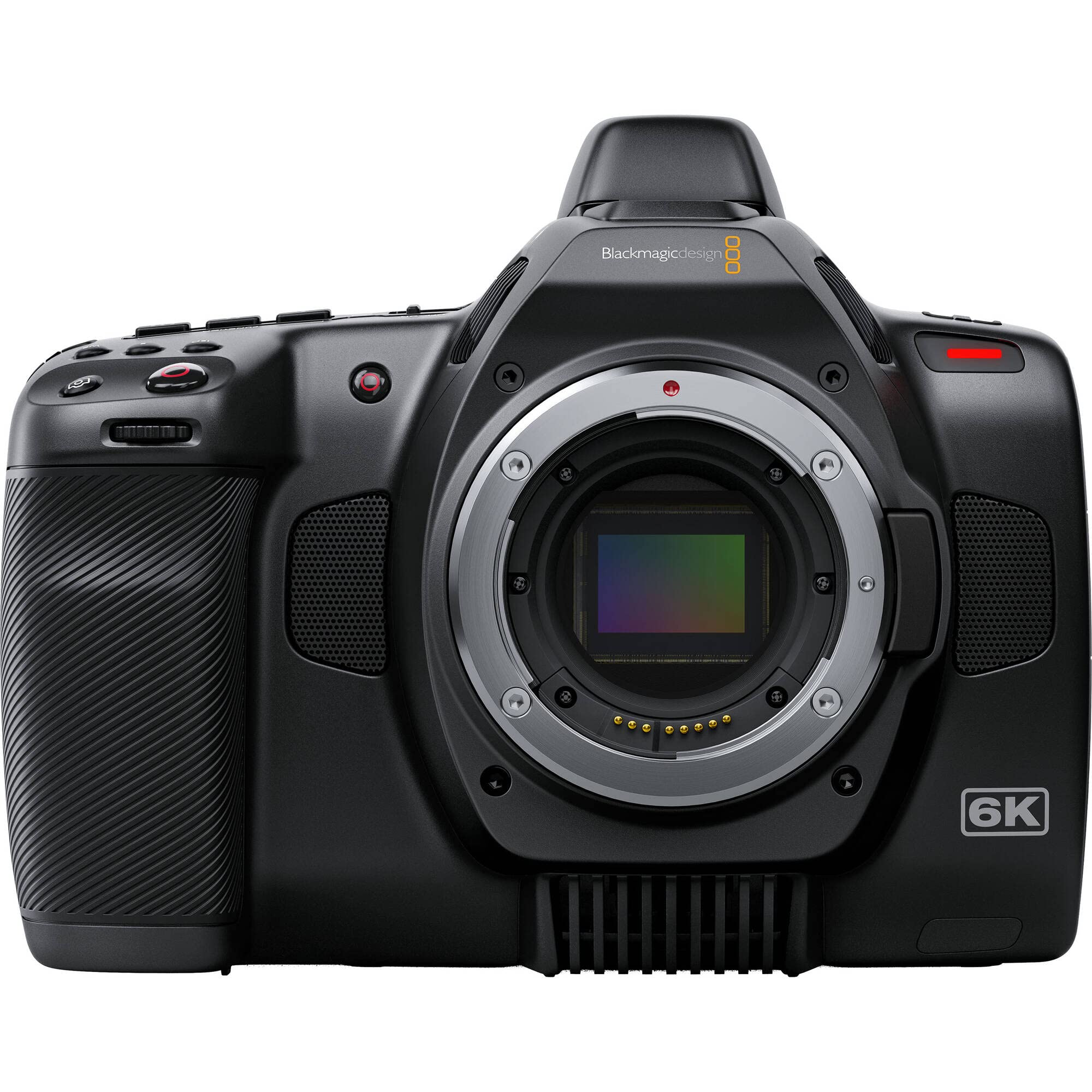
The BMPCC 6K is not a digital SLR in the traditional sense — it uses a Super35 sensor with an EF lens mount — but it is the best dedicated cinema camera in the price bracket if your sole focus is video. It records Blackmagic RAW internally at 6K up to 50fps, 6K 2.4:1 up to 60fps, and 2.8K 120fps for slow motion. The ProRes proxy and DNxHR options make it easy to edit on a lower-power laptop without transcoding.
The dual native ISO (400 and 3200) gives you clean footage in low light with proper grading, and the 13 stops of dynamic range hold up well against ARRI and RED in controlled lighting. The built-in SD card and CFast 2.0 (or USB-C SSD) recording mean you can cost-effectively shoot raw for hours without spending on expensive media.
The autofocus is contrast-detect only and slow — this is a manual-focus cinema camera. The small battery drains in about 40 minutes, and the 5-inch touchscreen can be misleading outdoors; an external monitor is practically required for critical focus. If you are building a cinema rig and want raw color science at this price, the Pocket 6K is unmatched. For casual or run-and-gun video, the lack of AF and short battery are significant roadblocks.
Why it’s great
- Internal 6K Blackmagic RAW up to 50fps
- 13 stops dynamic range with dual native ISO
- SSD recording reduces media cost
Good to know
- No phase-detect autofocus — manual focus only
- Battery life around 40 minutes
6. Canon EOS 5D Mark IV
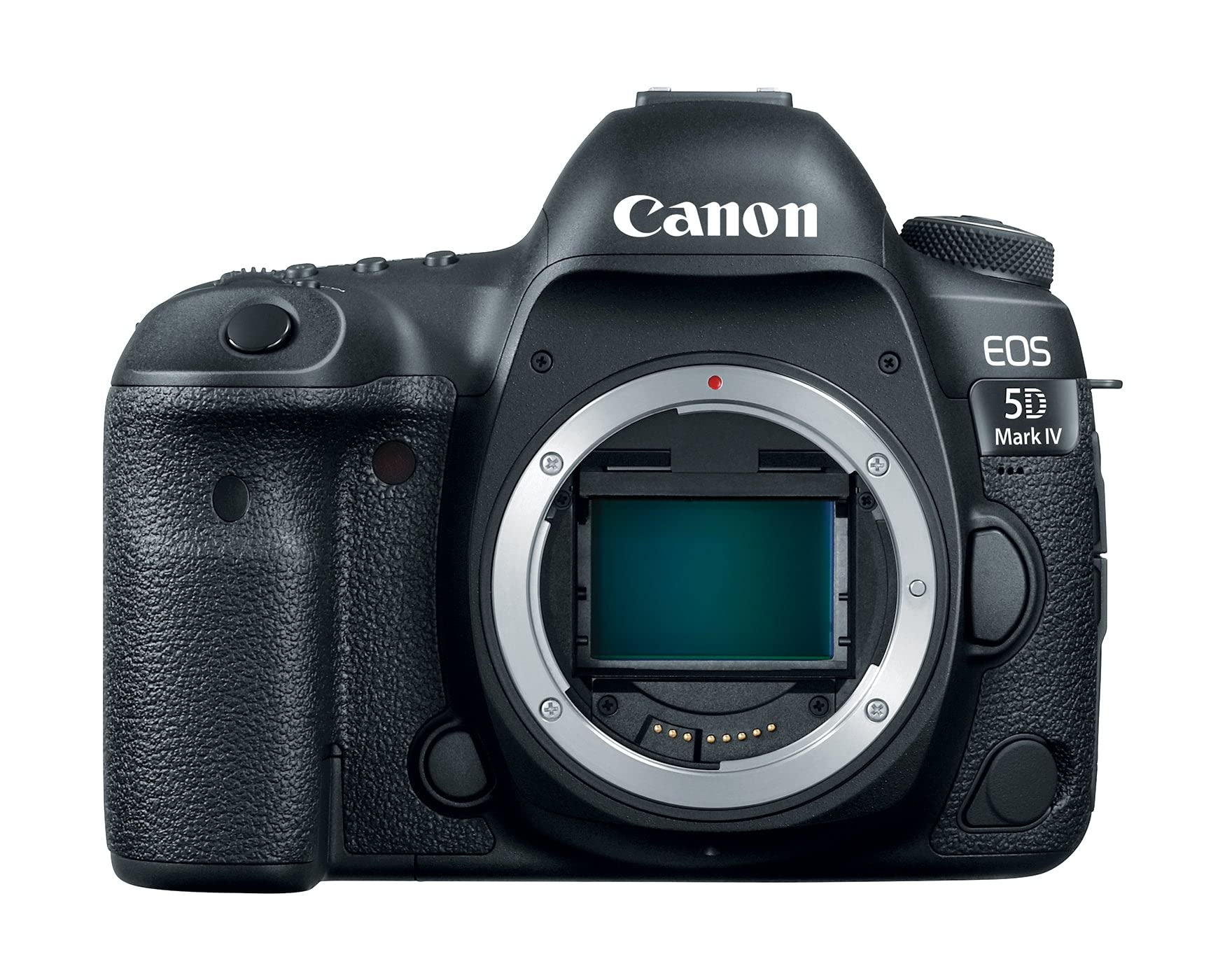
The 5D Mark IV is a professional DSLR that records 4K Motion JPEG at 30fps, but the 4K codec is heavy (approximately 500 MB/min) and the file size makes long-form recording impractical without big CFast cards. The sensor readout in 4K introduces significant rolling shutter, so fast pans result in noticeable Jell-O effect. However, for 1080p 60fps, the Dual Pixel CMOS AF is smooth and reliable, with face detection that tracks subjects naturally during video.
The 30.4MP full-frame sensor delivers excellent dynamic range — better than the 5D Mark III — and the DIGIC 6+ processor handles ISO 3200 with minimal noise. The OVF is bright and the magnesium-alloy body is built for all-day shooting. The Wi-Fi and NFC connectivity via Canon Camera Connect lets you transfer stills quickly from the field.
If you intend to shoot primarily in 4K on a DSLR, the Mark IV’s Motion JPEG workflow is dated compared to the internal 10-bit codecs found in mirrorless rivals. For shooters who need a rugged, reliable full-frame DSLR that shoots clean 1080p with Dual Pixel AF, it remains a solid workhorse. The 4K is usable for short clips if you have the storage and processing power.
Why it’s great
- Dual Pixel CMOS AF with smooth face tracking
- 30.4MP sensor with wide dynamic range
- Magnesium-alloy body with excellent weather sealing
Good to know
- 4K is Motion JPEG — huge file sizes, heavy rolling shutter
- No IBIS, relies on lens stabilization
7. Nikon D850

The D850 is widely considered the best DSLR ever made for stills, but its video capabilities are more specialized. It records 4K Ultra HD from the full sensor width with no crop, and the tilting touchscreen provides some flexibility for low-angle framing. The 153-point phase-detection AF system is exceptional for stills, but video autofocus is contrast-detect and noticeably slower than Sony or Canon mirrorless bodies — you will mostly rely on manual focus for video.
The BSI sensor delivers 45.7MP with an ISO range down to 64 native, producing images that rival medium-format when paired with sharp glass. The 8K timelapse mode and 4K timelapse features give you incredible time-lapse resolution. The build is a tank — full weather sealing, 0.74x viewfinder magnification, and a shutter rated for 200,000 cycles.
For video, the lack of reliable DPAF-level autofocus and the absence of 10-bit internal recording limit its use to controlled environments where manual focus is planned. If you need a high-resolution stills camera that also shoots usable 4K video for B-roll or time-lapses, the D850 is an unbeatable DSLR. For primary video shooting, the autofocus gap makes mirrorless a better fit.
Why it’s great
- 45.7MP BSI sensor with ISO 64 native
- 8K and 4K timelapse capabilities
- Best-in-class OVF and build durability
Good to know
- Video AF is contrast-detect — slow and imprecise
- No 10-bit internal video recording
8. Panasonic LUMIX G85

The G85 is the entry-level mirrorless king of in-body stabilization. The 5-axis IBIS works in tandem with the lens OIS to produce shake-free handheld video that rivals bodies costing three times as much. The 16MP Micro Four Thirds sensor has no low-pass filter, so it resolves fine detail better than expected for a 16MP sensor. 4K QFHD recording at 30fps is clean and the 4K Photo mode lets you grab 8MP stills from video at 30fps — useful for decisive moments.
The magnesium-alloy front plate and weather sealing give it a premium feel for the price. The 3-inch tilt-and-touch LCD is responsive for touch focus during video. The 12-60mm kit lens is sharp and versatile, covering wide to standard zoom with decent clarity. The eye-level OLED viewfinder with 2360K dots is crisp and bright.
The weak points are the sluggish autofocus in low light during 4K video, the lack of a headphone jack for audio monitoring, and the shorter battery life compared to larger DSLR batteries. For videographers on a strict budget who refuse to sacrifice stabilization, the G85 offers incredible value — just plan to carry a spare battery and monitor audio externally.
Why it’s great
- 5-axis IBIS + OIS — video stabilization is superb
- Weather-sealed magnesium alloy build
- 4K 30fps with no recording time limit
Good to know
- Low-light AF hunts during 4K video
- No headphone jack for audio monitoring
9. Nikon D7500

The D7500 is a rugged APS-C DSLR that shoots 4K Ultra HD at 30fps with stereo sound and power aperture control during video. The 51-point AF system with 15 cross-type sensors is fast for stills, but during video the contrast-detect autofocus is more hesitant than phase-detect mirrorless systems. You will get the best results by pre-focusing and using the tilting touchscreen to pull focus manually during recording.
The 20.9MP sensor is the same one found in the D500, delivering class-leading ISO performance up to 12800 with minimal noise. The 3.2-inch tilting LCD is bright and touch-sensitive for setting focus points. The 18-140mm VR kit lens covers a huge zoom range and includes optical stabilization that pairs with the body for smoother handheld video.
The single SD card slot is a downgrade from the D7200’s dual slots. The lack of a headphone jack limits audio monitoring to the built-in mic or an external recorder. For a DSLR that handles well, offers excellent stills performance, and can shoot usable 4K video when paired with a VR lens, the D7500 is a solid mid-range choice. It is best suited for hybrid shooters who prioritize stills but need occasional 4K.
Why it’s great
- D500-derived sensor with exceptional ISO range
- 51-point AF system with group-area AF
- 4K with power aperture and stereo sound
Good to know
- Video autofocus is contrast-detect, not phase-detect
- Single SD card slot, no headphone jack
10. Canon EOS 5D Mark III

The 5D Mark III is a 2012 full-frame DSLR that shoots 1080p at 30fps, 24fps, and 25fps with embedded timecode and manual audio level control via a headphone jack. The 61-point AF system is excellent for stills, but video autofocus is slow and unreliable in live view — you must manually focus for usable video. The All-I and IPB compression options let you choose between quality and file size. The magnesium-alloy body and shutter rated to 150,000 cycles make it a tank for field production.
The 22.3MP sensor delivers usable ISO up to 6400 with solid color science straight out of camera. The 3.2-inch 1040K-dot LCD is decent for framing, but it does not articulate. The 4GB automatic file partitioning during video means clips are split into 29-minute 59-second segments, which is fine for most shoots but requires stitching in post for longer takes.
You are limited to 1080p — this is not a 4K camera. The build quality holds up better than many newer consumer bodies. For videographers who want a reliable B-cam or a budget full-frame body for 1080p work and have a collection of Canon EF glass, the 5D Mark III is still serviceable. Do not expect the video AF or resolution of modern mirrorless cameras.
Why it’s great
- Durable magnesium-alloy build with excellent weather resistance
- Headphone jack and manual audio level controls
- Great Canon colors at high ISO
Good to know
- 1080p only — no 4K video output
- Video AF is slow and unreliable in live view
11. Canon EOS 2000D / Rebel T7 Kit

The EOS 2000D is an entry-level DSLR that records Full HD 1080p at 30fps. The 9-point AF system with AI Servo AF is functional for stills, but video autofocus uses contrast detection, which is prone to hunting in anything but bright, still daylight. The DIGIC 4+ processor and 24.1MP APS-C sensor produce decent stills for beginners, but video sharpness is soft and the dynamic range is limited.
The deluxe bundle includes a wide-angle and telephoto attachment, a 128GB SD card, a tripod, a filter kit, and a flash — excellent for a beginner learning different genres of photography. The 18-55mm kit lens covers basic zoom needs. The 3-inch 920K-dot LCD is fixed and non-touch, making live view video composition less convenient than a vari-angle screen.
This is a camera designed to teach exposure and composition, not to produce professional video. The 9-point AF system and 3fps burst speed are very slow by modern standards. For a teenager or a complete beginner who wants to learn the basics of photography and occasionally record short 1080p clips, the kit offers everything needed to start. Videographers should look at the G85 or a used a7 III instead.
Why it’s great
- Complete beginner kit with multiple lenses and accessories
- 24.1MP APS-C sensor for decent entry-level stills
- Low cost of entry for learning photography basics
Good to know
- Video autofocus is slow contrast-detect, no 4K
- Fixed non-touch LCD, 3fps burst only
FAQ
What is the minimum sensor resolution I should look for in a video DSLR?
Can I rely on DSLR video autofocus for run-and-gun production?
Why do some 4K DSLRs crop the sensor in 4K mode?
Is IBIS necessary for handheld video work?
Final Thoughts: The Verdict
For most users, the best digital slr camera for video winner is the Sony a7 III because it delivers a full-frame BSI sensor, 693-point phase detection AF, and 15-stop dynamic range at a price that undercuts many rivals while offering exceptional battery life. If you want internal 10-bit 4:2:2 with cinematic color, grab the Sony Alpha 7 IV. And for pure cinema raw production with a Super35 sensor, nothing beats the Blackmagic Pocket Cinema Camera 6K.

Mo Maruf
I created WellFizz to bridge the gap between vague wellness advice and actionable solutions. My mission is simple: to decode the research and give you practical tools you can actually use.
Beyond the data, I am a passionate traveler. I believe that stepping away from the screen to explore new environments is essential for mental clarity and physical vitality.