Our readers keep the lights on and my smoothie glass nicely filled. As an Amazon Associate, I earn from qualifying purchases.
A drone that accepts a custom payload mount is no longer a hobbyist’s toy—it’s a tool. Whether you are dropping bait lines for offshore fishing, releasing a sensor package for mapping, or simply experimenting with add-on gear, the ability to attach and detach functional loads transforms a quadcopter into a mission platform. The catch is that most consumer drones seal their mounting points behind proprietary shells, leaving you with no room to attach anything beyond the stock camera.
I’m Mohammad Maruf — the founder and writer behind WellFizz.
This guide breaks down the models that let you mount what you need, from mechanical release systems to open-frame platforms designed for secondary development. Read on to find the best drones with customizable payload mounts for your specific use case.
How To Choose The Best Drone With A Customizable Payload Mount
Not every drone that claims a payload mount can actually lift your gear without destabilizing the flight controller. You need to assess the frame’s unloaded weight, the motor thrust rating, and the mounting geometry before committing to any build or purchase.
Frame Architecture and Mounting Points
The physical connection between your payload and the drone is the weakest link in the system. Look for an open-frame design with multiple threaded inserts or a rail system that allows you to shift the center of gravity fore and aft. A fixed single-point mount severely limits the types of payloads you can balance without inducing oscillations.
Maximum Takeoff Weight and Thrust Margin
Subtract the drone’s empty weight from its maximum takeoff weight. The remainder is your payload budget. A healthy thrust margin—at least 40 percent above the all-up weight—ensures the motors can climb out of ground effect and maintain altitude in a light breeze. Models with payload release systems often list a separate lift capacity, so verify that figure against the static thrust rating of the propellers.
Release Mechanism Type
Manual releases require two hands and a steady hover. Servo-activated releases let you trigger the drop from the remote, which is essential for fishing bait delivery or sensor deployment. Some premium models include a liftable 360° obstacle avoidance module that moves out of the way during release, so check whether the mount blocks any safety sensors.
Regulatory Considerations for Payload Drones
Once you attach a non-integrated payload, the drone’s weight classification can change. A sub-250g model that stays below the registration threshold without a mount may cross that line with a release mechanism installed. Verify your local aviation authority’s rules on dropping objects from an unmanned aircraft before you fly with any active release system engaged.
Quick Comparison
On smaller screens, swipe sideways to see the full table.
| Model | Category | Best For | Key Spec | Amazon |
|---|---|---|---|---|
| SwellPro FD2 Fisherman MAX | Fishing | Heavy bait delivery | 7.0 lbs payload capacity | Amazon |
| DJI Mavic 4 Pro | Prosumer | Cinematic payload missions | 360° Infinity Gimbal | Amazon |
| Bingchat 2026 Tablet Remote Pro | Payload Release | General payload dropping | Built-in liftable 360° OAS | Amazon |
| Bingchat Tablet Remote Drone | Payload Release | Beginner payload flying | 16 oz payload capacity | Amazon |
| Autel Robotics EVO II PRO RTK V3 | Mapping | Sensor payload integration | Centimeter-level RTK | Amazon |
| Antigravity A1-360 | FPV | 360° payload capture | 8K 360 video capture | Amazon |
| Potensic ATOM 3 | Travel | Lightweight payload add-ons | 249g sub-registration | Amazon |
| Holy Stone Sentinel HS600D | Starter Pro | Entry-level payload learning | 3-axis gimbal + EIS | Amazon |
| DJI Neo 2 Motion Fly More | FPV | Immersive payload flying | Omnidirectional obstacle sensing | Amazon |
| HAWK’S WORK F450 Kit | DIY | Custom mount fabrication | 450mm wheelbase frame | Amazon |
| HOVERAir X1 | Self-Flying | Ultralight payload experiments | 125g total weight | Amazon |
In‑Depth Reviews
1. SwellPro FD2 Fisherman MAX
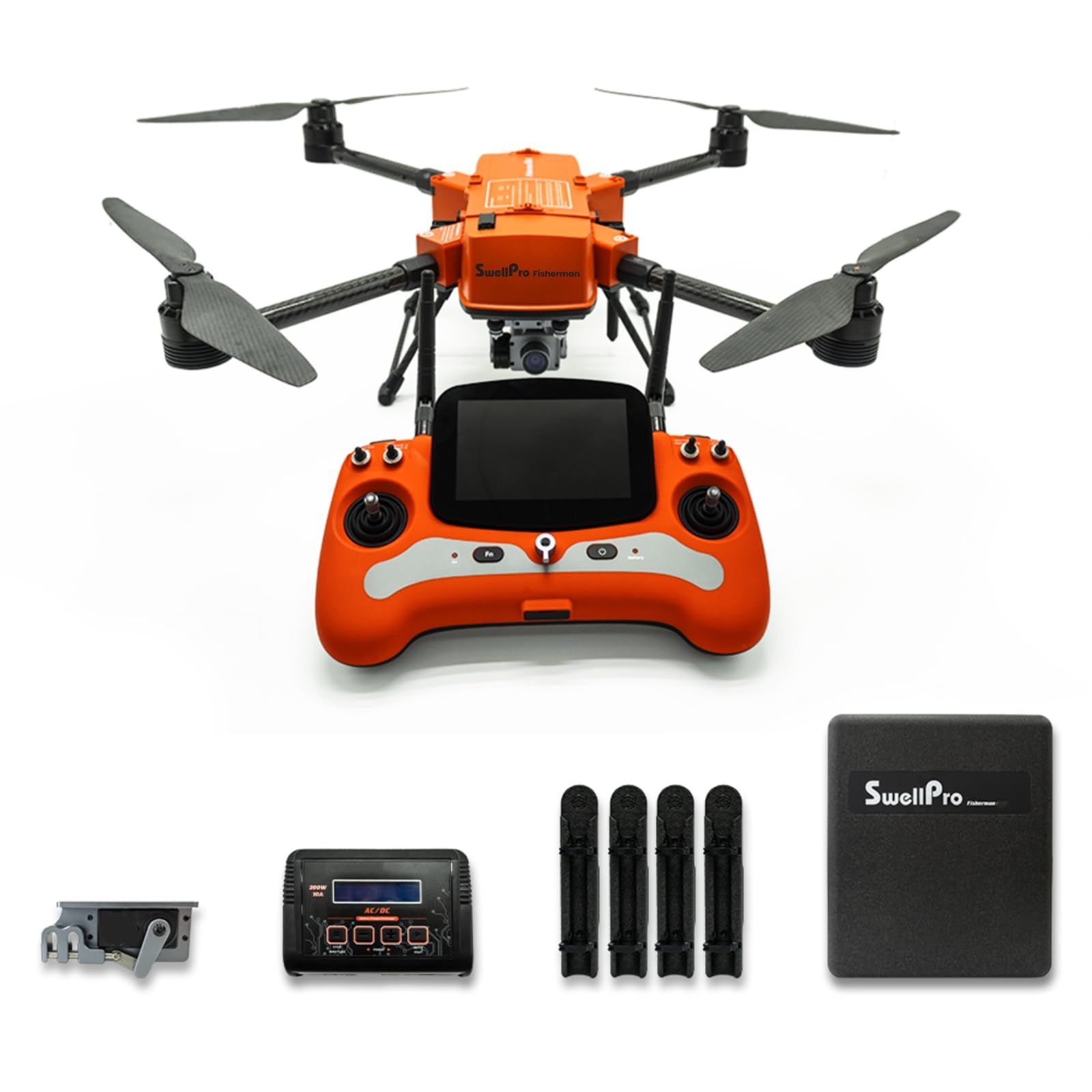
The FD2 Fisherman MAX is engineered for a single purpose: lifting heavy bait loads over open water. Its dual-bait release system can carry up to 7.0 pounds, which is enough muscle for large live bait or a stringer of chunk bait. The 4500 mAh lithium-polymer battery paired with the 450mm wheelbase frame delivers the static thrust needed to climb out with a full payload even in level-6 wind conditions.
The aircraft is 100 percent waterproof to IP67 standards, meaning a dunk in saltwater won’t end the mission. The four‑inch LCD remote shows real‑time telemetry and camera feed from the included 4K GC1-M camera, so you can spot fish before triggering the release. A one‑mile casting range covers most beach or pier fishing scenarios, and the auto‑return function activates when the battery hits the low threshold or signal is lost.
Assembling the release mechanism does require careful line routing to avoid any snag during high‑speed descent. The included floating device adds buoyancy, but the drone’s 7.8-pound empty weight means you want to deploy over areas where retrieval is possible. For anglers who want a proven platform that handles heavy payloads in harsh marine environments, this is the definitive choice.
Why it’s great
- Industry-leading 7.0 lbs bait capacity allows you to drop large baits where no kayak can reach.
- Full IP67 waterproof rating means you can fly over saltwater without worrying about corrosion.
Good to know
- Local regulations may restrict drone-assisted fishing; check your state laws before buying.
- Spare parts ship from overseas, so lead times for repairs can stretch beyond a week.
2. DJI Mavic 4 Pro Fly More Combo

The Mavic 4 Pro raises the bar for payload versatility with its 360° Infinity Gimbal, which lets you mount the camera and release it from any orientation. The 100MP four‑third CMOS Hasselblad main sensor captures 6K HDR video, and the dual tele cameras provide clean digital zooms for scouting drop zones. The 0.1‑Lux Nightscape obstacle sensing means you can operate payload missions after dusk with confidence.
Flight time clocks in at 51 minutes with the standard battery, and the 30‑kilometer O4+ video transmission ensures you maintain a low‑latency feed during extended payload flights. The RC 2 controller folds down to a compact unit, and the included parallel charging hub keeps three batteries ready for back‑to‑back sorties. The shoulder bag fits all Fly More components, making transport straightforward.
Third‑party mounting solutions are emerging for the Mavic 4 series, but the proprietary gimbal bay limits full customization of the load arm. Keep in mind that the drone’s sub‑250g weight class disappears once you attach a release mechanism, so FAA registration becomes mandatory. Professional operators who need the best imaging alongside a reliable payload window will find this the top mid‑range option.
Why it’s great
- The 360° gimbal allows you to frame the subject while managing a downward‑facing release mechanism.
- Omnidirectional obstacle sensing in near‑zero light keeps night payload flights safer than any competitor.
Good to know
- The proprietary gimbal bay limits aftermarket mount options more than open‑frame DIY platforms.
- Adding a release mechanism pushes the total weight above the 249g threshold, requiring registration.
3. Bingchat 2026 Tablet Remote Pro Drone
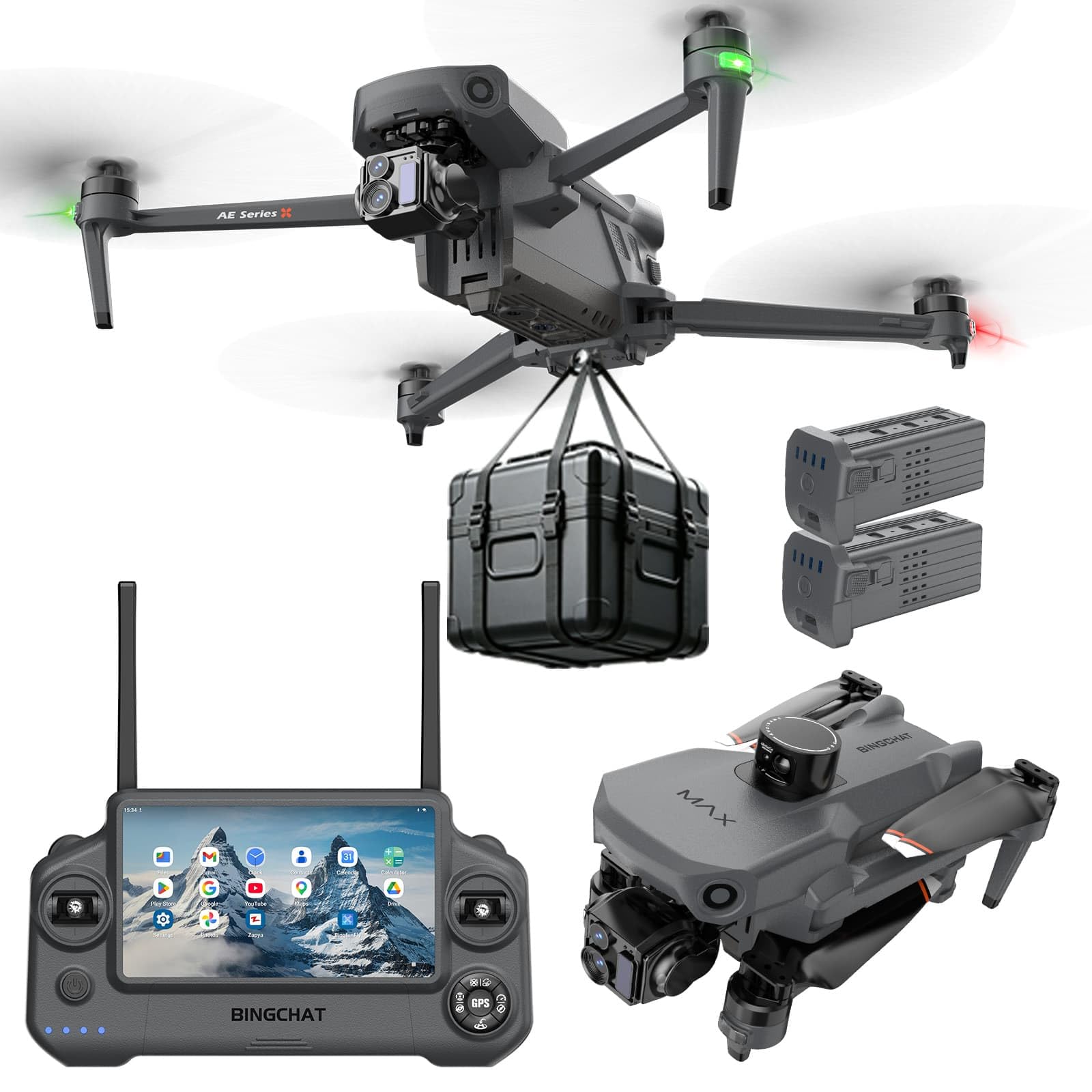
This Bingchat model integrates a built‑in liftable 360° laser obstacle avoidance system that moves out of the way during payload deployment, a design choice that prevents the sensor from blocking the drop zone. The 4K camera sits on a three‑axis gimbal with electronic image stabilization, while the bottom camera provides a secondary perspective for lining up your release. The Android‑based tablet controller runs Google services, so you can stream telemetry data or even use navigation apps while piloting.
The two upgraded 4900 mAh batteries deliver a combined 90 minutes of flight time, with each pack lasting well beyond 40 minutes under normal payload loads. The large 110° FOV lens plus 20x digital zoom covers wide area scans before you commit to a drop. Level‑7 wind resistance means the drone holds position when carrying the maximum payload, and the thermal‑adjust mode helps compensate for dense air at altitude.
At a 1.6‑pound empty weight, this drone does require FAA registration out of the box. The payload release mechanism uses servo‑activated hooks that respond instantly to a button on the tablet interface. Customer reviews consistently praise the responsive support team, but note that the screen brightness can wash out in direct sunlight. Surveyors and recreational users who want a complete tablet‑controlled payload platform will appreciate the integrated design.
Why it’s great
- Liftable obstacle avoidance means you don’t have to choose between safety sensors and a clear release path.
- The Android tablet controller eliminates the need to pair a phone for telemetry or maps.
Good to know
- The controller screen is difficult to see under bright sunlight even at maximum brightness.
- Battery charging is limited to a custom cable; standard fast chargers may not work.
4. Bingchat Tablet Remote Drone
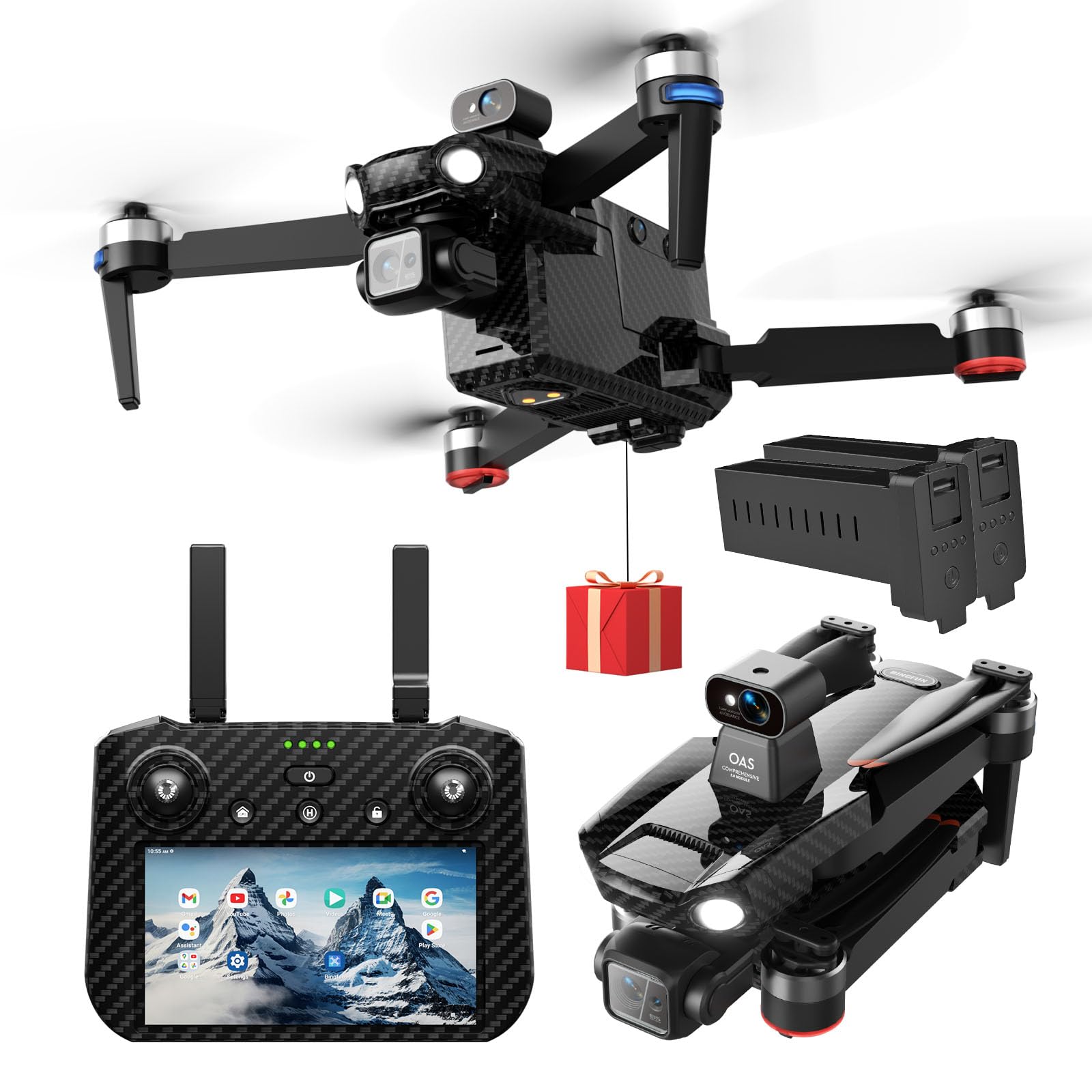
This earlier Bingchat model brings the payload release feature to a lower price tier without stripping the core functionality. The drone can carry up to 16 ounces of bait or cargo, and the 360° laser obstacle avoidance module is removable for those who prefer a lighter setup. The 4K camera with 50x digital zoom and three‑axis gimbal records day and night scenes onto the included 32GB SD card.
Flight time per battery reaches 42 minutes in ideal conditions, and the two‑battery bundle covers extended sessions. The touchscreen controller runs an Android system with Google Play, so downloading third‑party flight planning apps is straightforward. Level‑7 wind resistance lets this drone operate in breezy coastal environments, and the rainproof construction adds a layer of weather tolerance for unexpected showers.
Some users report that the follow‑me mode works best in open shoreline areas and may glitch in cluttered terrain. The transmitter signal holds up to five miles in unobstructed conditions, though urban interference can reduce that range significantly. Pilots on an entry‑level budget who need a functional payload release system without stepping into professional gear will find this a solid mid‑range bridge.
Why it’s great
- Payload release combined with 360° obstacle avoidance at a fraction of the cost of premium alternatives.
- Removable OAS module lets you choose between maximum safety and lighter airframe weight.
Good to know
- Follow‑me tracking can be inconsistent in environments with many visual obstructions.
- Battery charging is slow because the system does not support high‑wattage fast chargers.
5. Autel Robotics EVO II PRO RTK V3
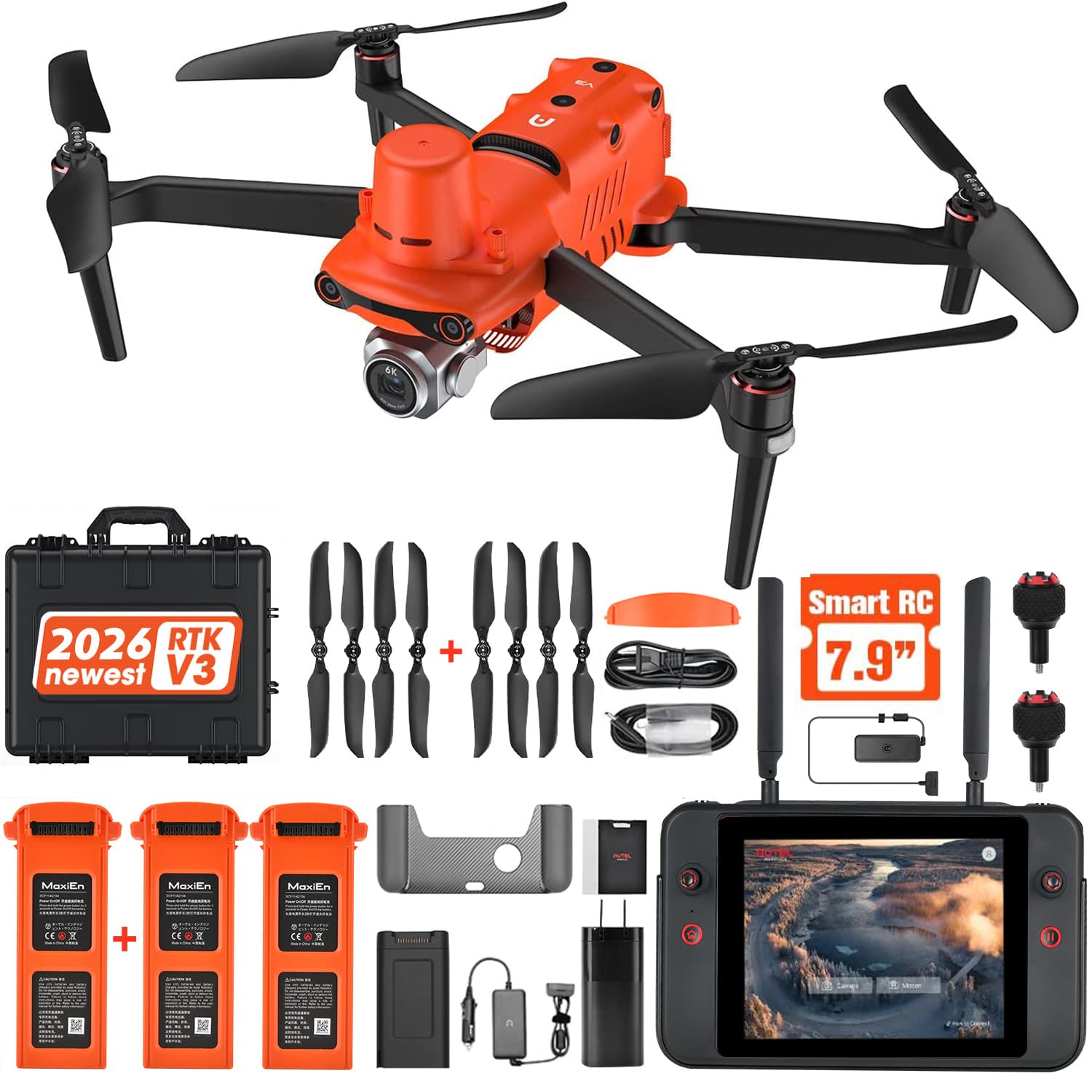
For surveyors and photogrammetry professionals, the EVO II Pro RTK V3 is the only drone in this lineup that delivers real‑time centimeter‑level positioning without ground control points. The integrated RTK module achieves 1 cm + 1 ppm horizontal accuracy, which is essential when your payload is a lidar scanner or a multispectral sensor. The one‑inch Sony CMOS sensor records 6K HDR video at 30 fps, but the real value lies in the mission execution: waypoint, polygon, and oblique photography tasks run autonomously once the route is set.
The PPK support and time synchronization mean you can post‑process for even tighter accuracy after the flight. The included V3 smart controller manages transmission up to 15 kilometers, and the three‑battery bundle keeps you in the field for mapping runs that cover dozens of acres. The folding frame collapses to a manageable 21‑inch dimension for transport in the protective case.
This drone is not a casual payload‑dropping platform. The mounting points are designed for scientific instruments, not fishing bait, and the app interface can feel unintuitive until you learn the workflow for automated missions. Customer reviews note that firmware updates resolved early stability issues, but the support response times can be slow. Teams that need high‑precision mapping with a payload sensor integration will find this the premium choice.
Why it’s great
- Real‑time centimeter‑level RTK positioning eliminates the need for ground control points in most mapping missions.
- Autonomous flight modes for waypoint, polygon, and oblique photography reduce pilot workload during data collection.
Good to know
- The app UI is cluttered and requires a learning curve even for experienced drone operators.
- Technical support can be slow to respond, which can delay critical firmware updates in the field.
6. Antigravity A1-360
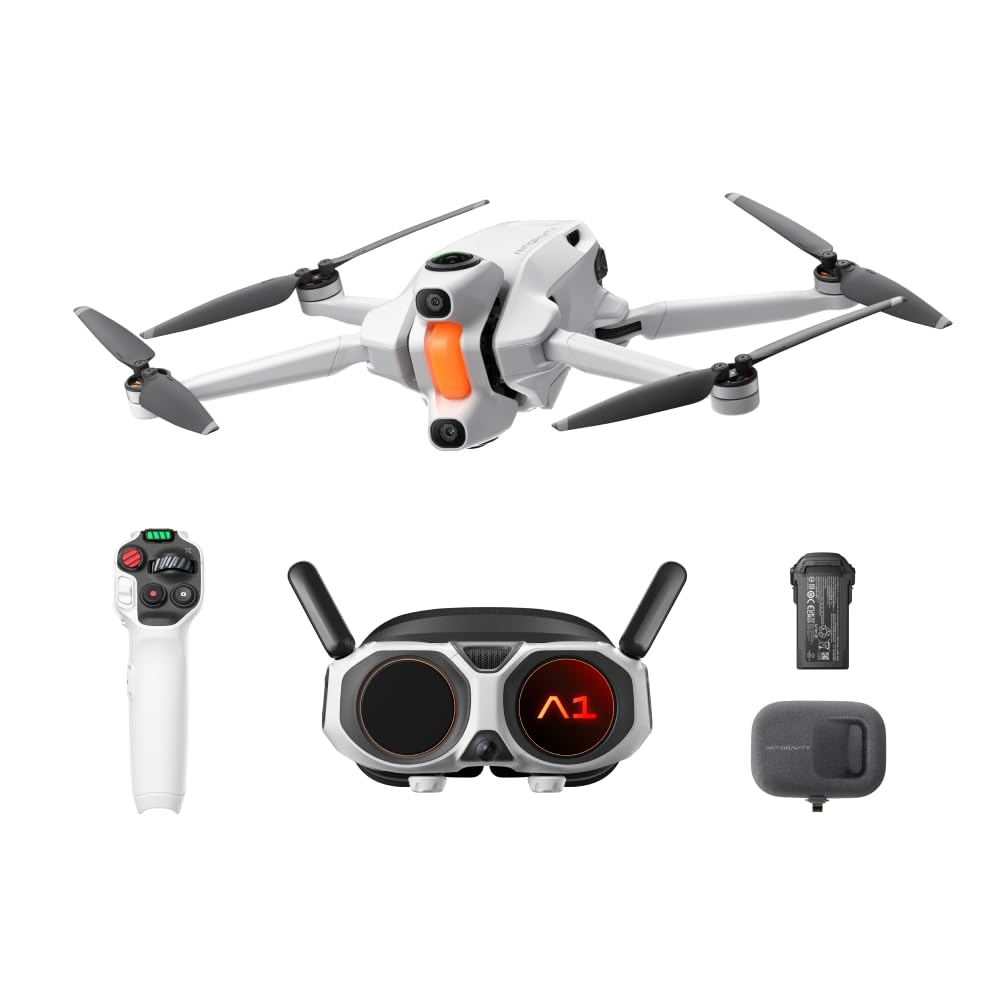
The A1-360 main selling point is its 360‑degree camera that captures everything around the drone, but that same spherical capture area creates a unique payload opportunity: you can mount a small drop mechanism or sensor in any orientation without worrying about the gimbal blind spot. The Vision goggles provide a 90‑degree FOV through dual Micro‑OLED panels, and the pancake optics keep the headset weight at 340 grams with built‑in diopter adjustment.
The standard battery keeps the drone under 249 grams for regulation‑free flights, while the high‑capacity battery extends the flight time to 39 minutes when you need longer sorties. The omnidirectional obstacle avoidance system uses front and downward binocular vision to detect obstacles from any angle, so you can fly low and slow while aligning a payload release. Auto Editing 2.0 reframes the 360 footage automatically, saving hours of post‑processing time.
The 360 video workflow means you can reframe the shot after landing, which is a huge benefit if your payload mission requires precise camera angles. However, the proprietary battery system forces you to stay within the Antigravity ecosystem for spares, and the 249g weight limit disappears as soon as you attach any payload mount. FPV pilots who want to capture immersive video while carrying a functional payload will find this the most flexible premium option.
Why it’s great
- 360 camera lets you capture every angle simultaneously, so you never miss the payload release moment.
- Standard battery keeps total weight under 249g for jurisdictions with sub‑250g registration exemptions.
Good to know
- Any added payload mount instantly pushes the weight over 249g, removing the no‑registration benefit.
- The battery ecosystem is proprietary, meaning you can only buy replacements from Antigravity.
7. Potensic ATOM 3 Fly More Combo
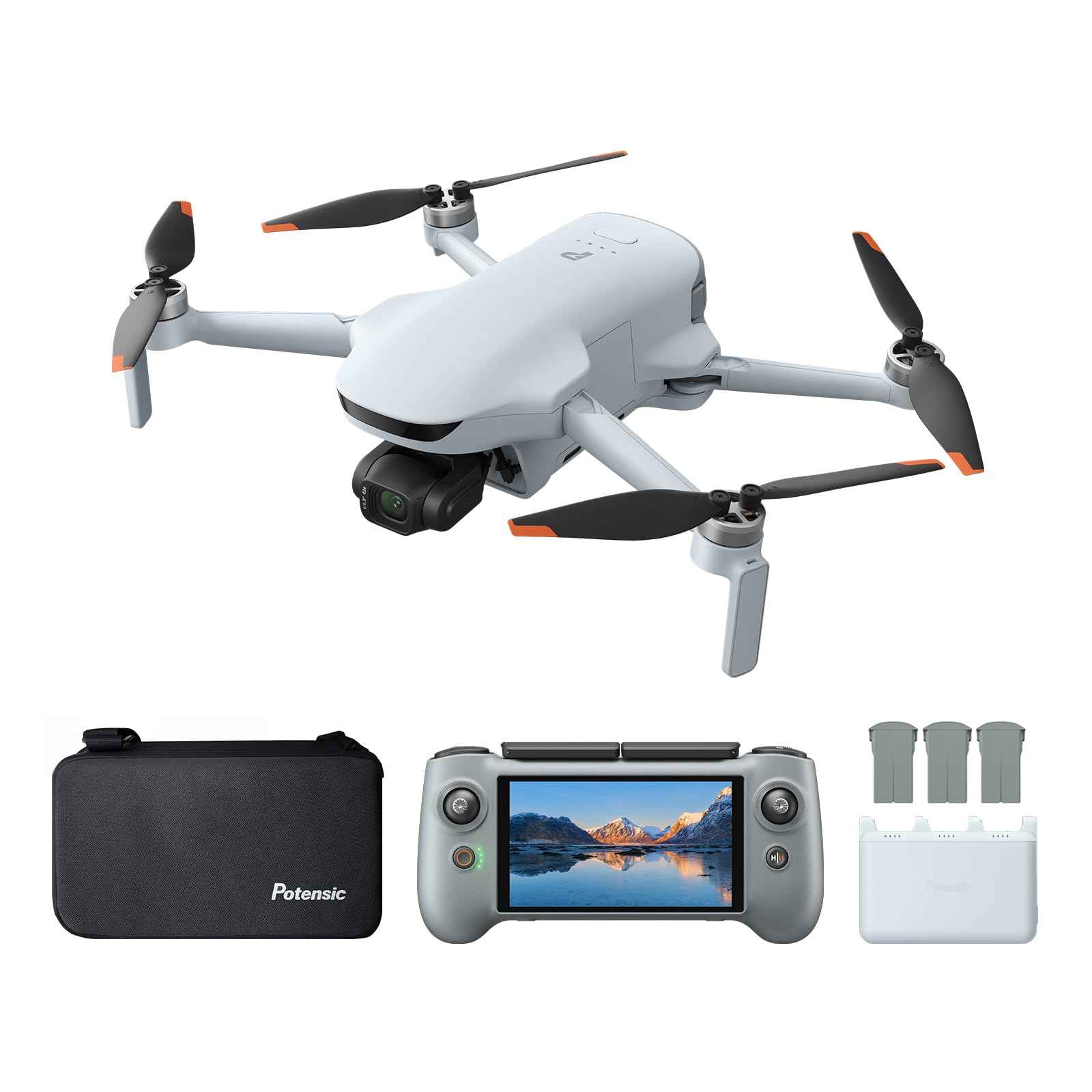
The ATOM 3 keeps its takeoff weight at exactly 249 grams, which means you have a very small margin for a payload mount before crossing the FAA registration threshold. The 1/1.3‑inch CMOS sensor records 4K 60fps HDR video with support for P‑Log color grading, making it a strong choice for lightweight cinematic work. The PixSync 5.0 transmission reaches 16 kilometers while streaming 1080p 60fps live view to the 5.5‑inch FHD controller.
The three‑battery system delivers a total of 120 minutes of flight time, and the 65W parallel charging hub can recharge all three packs in about 90 minutes. AI Tracking 2.0 supports low‑altitude tracking below four meters when the propeller guard is installed, and the QuickShots modes produce cinematic maneuvers like Dolly Zoom and Spin Ascend automatically. The 48mm Med‑Tele mode and 2.7K vertical shooting cater to social media creators.
The payload customization here is limited to very lightweight add‑ons such as a small LED beacon or a tiny sensor pod that does not exceed the 249g ceiling. The frame does not have dedicated mounting points for a release mechanism, so any payload work requires a custom 3D‑printed bracket. Travel photographers and vloggers who want a light aerial platform with room for minor accessories will appreciate the balance of weight and capability.
Why it’s great
- Stays at 249g, so you can fly without FAA registration until you add any third‑party mount.
- The 1/1.3‑inch CMOS sensor with P‑Log mode delivers professional color grading options for aerial footage.
Good to know
- There are no factory payload mounting points, requiring DIY solutions for any added gear.
- Weight margin above 249g is razor‑thin; even a small beacon may push you into registration territory.
8. Holy Stone Sentinel HS600D

The HS600D uses a 603‑gram reinforced frame with a three‑axis gimbal and EIS to stabilize footage even in level‑6 wind conditions. The 1/2‑inch Sony CMOS sensor and f/1.8 aperture capture 4K HDR video and 8K stills with cleaner low‑light performance than typical beginner drones. The 20,000‑foot digital transmission system uses a wired relay to maintain a low‑latency, interference‑free HD feed to the dedicated controller.
Flight time reaches up to 80 minutes with two included batteries, and the beginner mode automatically limits altitude and flight speed so new pilots can learn payload handling without panicking. Multi‑sensor safety includes TOF, GPS, and optical flow positioning for stable low‑altitude hover during payload alignment. The follow‑me and smart tracking modes work reliably in open terrain.
The payload customization on this model is informal. There are no pre‑drilled mounting points, but the 603‑gram empty weight leaves about 1.2 kilograms of payload capacity for a release mechanism or sensor. The plastic frame does not support heavy loads, so stick to items under half a kilogram. Beginners who want to learn payload flying without investing in a DIY kit will find the HS600D a forgiving entry point.
Why it’s great
- The 3‑axis gimbal keeps footage steady even when carrying a payload in gusty conditions.
- Beginner mode reduces altitude and speed, making it safer to practice first payload flights.
Good to know
- No official payload mounting points force you to use adhesive or third‑party brackets.
- Plastic frame limits payload capacity to roughly 500 grams before structural flex becomes noticeable.
9. DJI Neo 2 Motion Fly More Combo
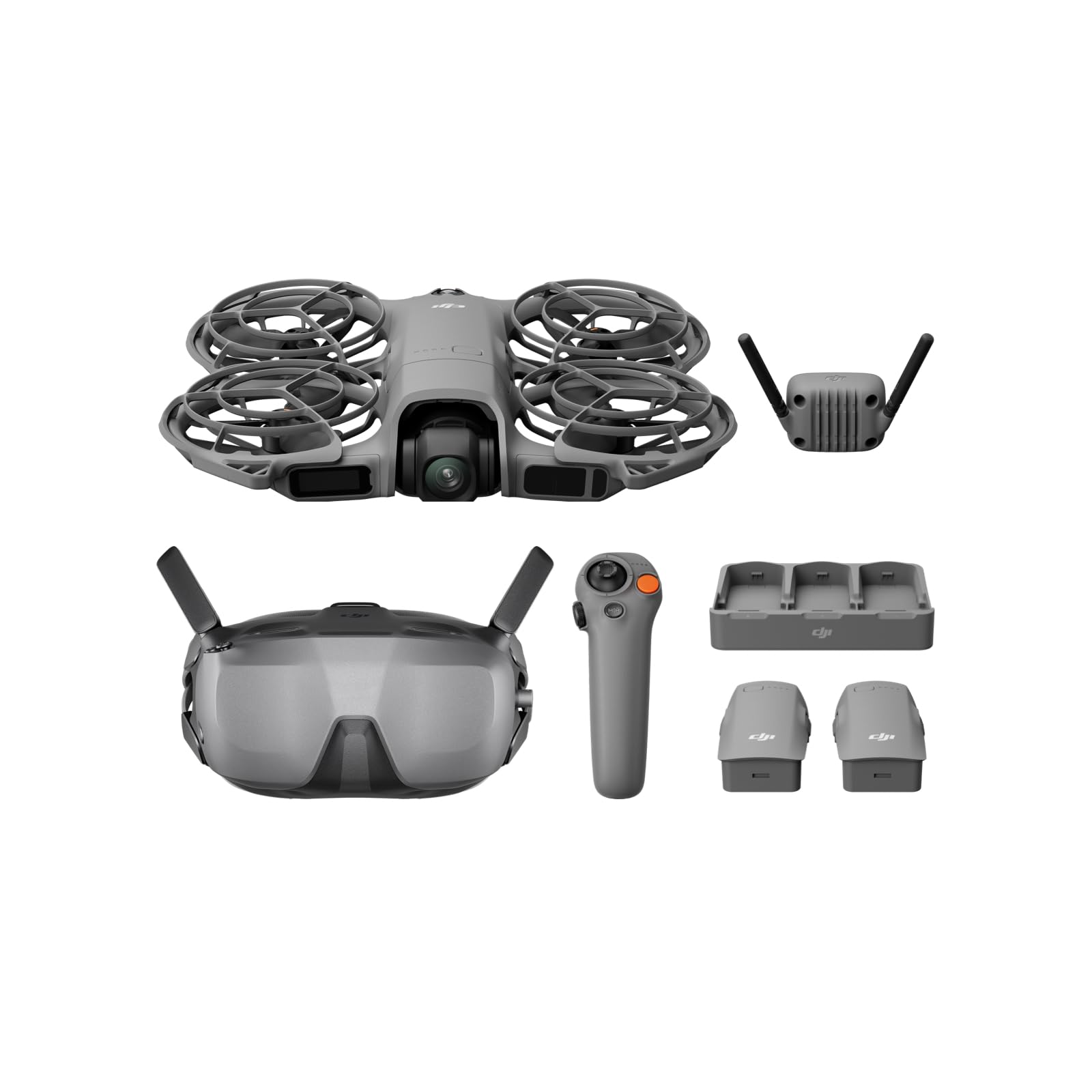
The DJI Neo 2 is built around an ultralight 151‑gram airframe with full‑coverage propeller guards and omnidirectional obstacle sensing. The Motion Fly More Combo includes the RC Motion 3 controller and Goggles N3, creating an immersive FPV experience that feels like steering a video game. The 4K camera records stabilized video, and ActiveTrack keeps the subject centered while you manage the payload release.
The three‑battery system provides enough flight time for multiple sorties, though each battery only lasts about 15 to 20 minutes under moderate use. The palm takeoff and landing system eliminates the need for a launch pad, and gesture controls let you start recording without touching the remote. The 49GB of internal storage handles hours of footage before you need to offload.
Payload mounting on the Neo 2 is the most limited in this lineup due to the compact frame and fully enclosed design. The propeller guards and obstacle sensors leave very little surface area for attaching external gear without blocking the sensors. This drone is best reserved for pilots who want an FPV payload experience with micro‑sized accessories such as a tiny LED strobe or a thin‑film sensor that fits under the belly.
Why it’s great
- The FPV goggles and motion controller provide the most immersive flying experience for payload missions.
- Full‑coverage propeller guards and omnidirectional sensing make this one of the safest drones for indoor or crowded payload practice.
Good to know
- The compact 151g frame leaves almost no room for aftermarket payload mounts without blocking sensors.
- Battery life per pack is short at about 15 minutes, requiring frequent swaps during longer missions.
10. HAWK’S WORK F450 Drone Kit
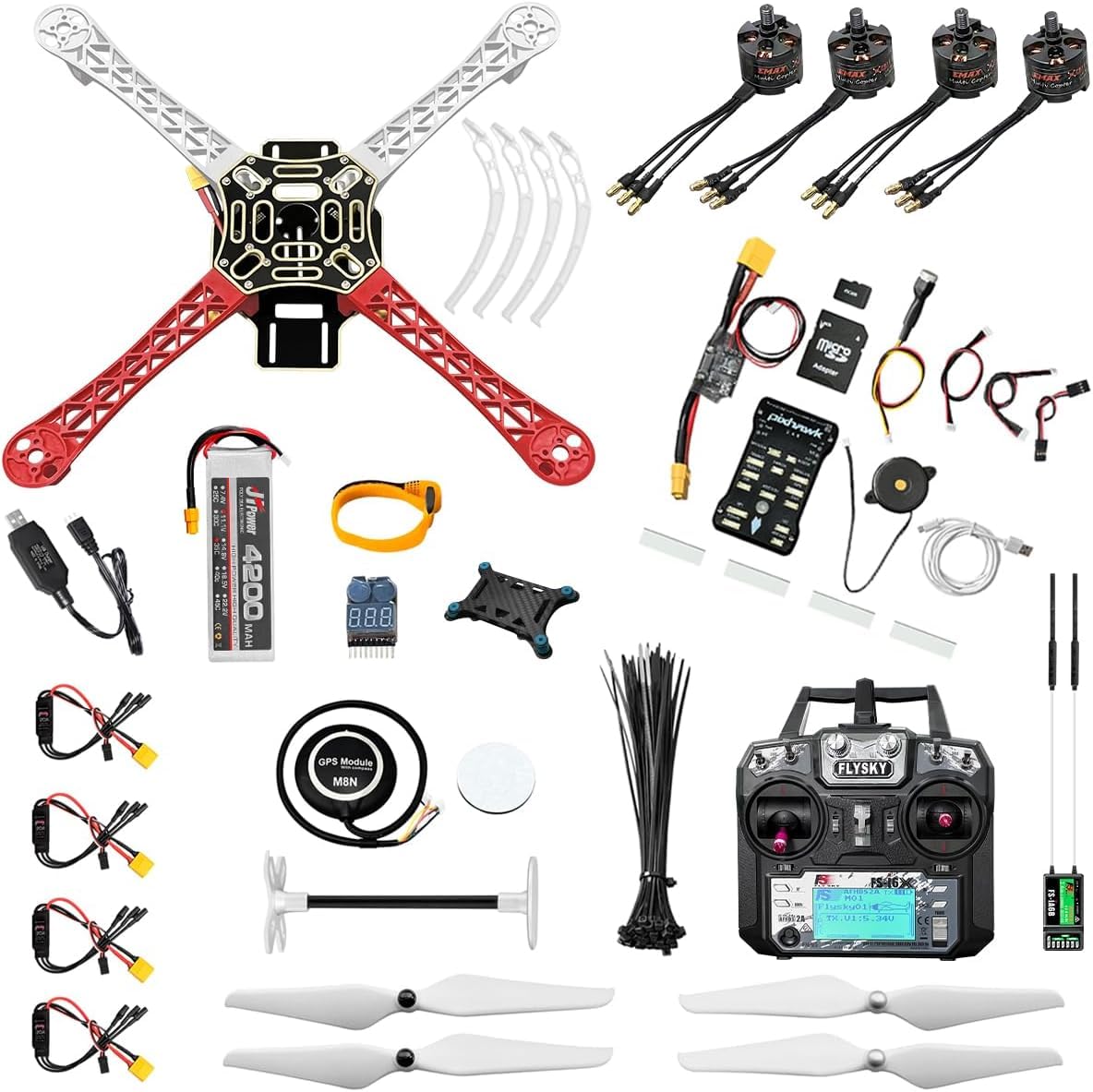
If you want total control over your payload mounting geometry, the F450 kit is the only true DIY option in this list. The 450mm wheelbase frame gives you a large surface area to drill, tap, or 3D‑print brackets for any sensor or release mechanism. The maximum takeoff weight of roughly 1.8 kilograms leaves ample payload capacity after you account for the Pixhawk flight controller, GPS module, and battery.
The kit includes the airframe, motors, propellers, electronic speed controllers, and the Pixhawk with GPS, but you must supply your own flight control firmware and radio transmitter. The nylon and plastic frame is sturdy enough for moderate payloads, and the open layout lets you route cables neatly around the central payload bay. The quick‑start guide walks new builders through assembly and calibration.
The trade‑off is that you are building a drone from scratch, which requires soldering skills and an understanding of PID tuning. The kit does not include a camera, so you will need to buy one separately if you need live FPV. Researchers, engineering students, and hobbyists who want a blank canvas for payload experiments will find the F450 the most flexible budget‑friendly option.
Why it’s great
- Open frame design with a 450mm wheelbase gives you unlimited mounting options for any payload size.
- Learning to build this kit teaches frame repair, PID tuning, and payload balancing from the ground up.
Good to know
- You must supply your own flight controller firmware and radio, which adds time to the assembly process.
- No camera or gimbal is included; you will need to purchase those separately for FPV or recording.
11. HOVERAir X1

The HOVERAir X1 is a fully enclosed self‑flying camera drone that weighs only 125 grams—light enough to exempt from FAA registration. The intelligent follow‑me system tracks subjects at up to 15 miles per hour, and the pre‑programmed flight paths cover Hover, Follow, Zoom Out, Orbit, and Bird’s Eye. The 2.7K video with triple stabilization produces smooth footage for a drone this small.
The enclosed design with safety guards makes it safe for close‑range shooting, but that same enclosure means there are no exposed mounting rails or threaded inserts for a payload. The only way to attach a custom payload is to affix it to the flat top surface using adhesive, which is not ideal for repeated release cycles. Battery life sits at about 11 minutes per charge, limiting flight time for payload experiments.
For ultralight payload experiments, the X1 can carry a very small beacon or a lightweight sensor if you use a 3D‑printed clip that wraps around the center body. The 32GB of internal storage records footage locally, and the app lets you download files wirelessly. This drone is best for users who want a simple flying camera that can also function as a test bed for micro‑payloads under 20 grams.
Why it’s great
- Ultra‑light 125g design means no FAA registration or Remote ID required out of the box.
- Fully enclosed propeller guards let you fly safely near people while testing small payload attachments.
Good to know
- No dedicated mounting points exist; any payload must be attached with adhesive or a custom 3D‑printed bracket.
- Flight time is limited to about 11 minutes per battery, which restricts longer experimental flights.
FAQ
Can I add a payload release mount to any drone?
Will adding a payload mount void my drone warranty?
How does a payload mount affect the drone’s center of gravity?
Final Thoughts: The Verdict
For most users, the best drones with customizable payload mounts winner is the SwellPro FD2 Fisherman MAX because it combines a 7.0‑pound payload capacity with an IP67‑rated waterproof airframe that can survive saltwater exposure. If you want a tablet‑controlled platform with a liftable obstacle avoidance system, grab the Bingchat 2026 Tablet Remote Pro. And for DIY builders who need unlimited mounting geometry, nothing beats the HAWK’S WORK F450 Drone Kit.

Mo Maruf
I created WellFizz to bridge the gap between vague wellness advice and actionable solutions. My mission is simple: to decode the research and give you practical tools you can actually use.
Beyond the data, I am a passionate traveler. I believe that stepping away from the screen to explore new environments is essential for mental clarity and physical vitality.