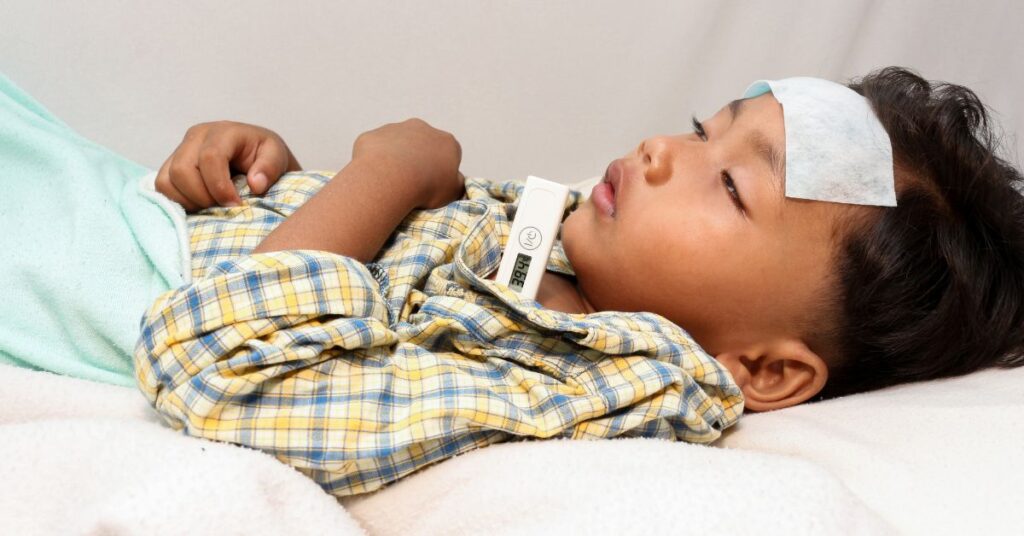
Fevers can trigger seizures when a young child’s brain reacts to fast temperature shifts and illness signals, lowering the seizure threshold briefly.
Seeing a seizure during a fever can freeze you. Your mind jumps to worst-case thoughts, while your child’s body is doing something that often ends on its own in minutes. This page lays out what to do and when to treat it as an emergency.
If you’re here asking, why do fevers cause seizures? you’re not alone. Most of these events are febrile seizures, and they have a narrow age range and a typical pattern. Knowing that pattern helps you act fast and stay steady.
What A Fever Seizure Usually Means
A seizure linked with fever in a child who’s otherwise well is commonly called a febrile seizure. It tends to happen between about 6 months and 5 years old, when the brain is still building stronger “brakes” for electrical activity. Many kids have one episode and never repeat it.
Clinicians often split febrile seizures into two buckets. A simple febrile seizure is generalized (whole body), lasts under 15 minutes, and happens once in a 24-hour stretch. A complex febrile seizure lasts longer, repeats in the same day, or starts in one body area before spreading.
| Situation | What It Can Look Like | First Move |
|---|---|---|
| Simple febrile seizure | Stiffening, rhythmic jerks, eyes roll up, stops within a few minutes | Lay child on their side, time it, clear nearby objects |
| Seizure lasts over 5 minutes | Jerking or stiffening keeps going, child not waking up | Call emergency services and keep the child on their side |
| Breathing looks off | Blue or gray lips, gasping, long pauses | Call emergency services right away |
| First seizure ever | You’ve never seen this before, unsure what started it | Get urgent medical care after it ends, sooner if it lasts |
| Neck stiffness or severe headache | Hard to bend neck, pain, unusual sleepiness | Seek emergency care the same day |
| Fever in a baby under 3 months | Any fever, with or without shaking | Get urgent medical care right away |
| Shaking with chills, still responsive | Child can answer or track you, shaking stops with warming | Warm blankets, fluids, check temperature, watch closely |
| Fever with rash that won’t fade | Purple spots or bruising-like rash | Seek emergency care right away |
Why Fever Triggers Seizures In Young Kids
Fever is a body response to infection. The temperature shift is only one piece. The bigger story is how a young brain handles heat, sleep loss, and the chemical signals released during illness.
The Brain’s Temperature Trigger Point
Every brain has a seizure threshold, like a tripwire. In toddlers, that threshold can be lower because the circuits that calm over-firing neurons are still maturing. Heat and illness can tip that balance for a short window.
Fast Rise Beats The Peak Number
Many parents assume the seizure happens only at a “high” temperature. The speed of the rise can matter more than the peak. A quick climb can jolt the nervous system early.
Illness Signals Can Push Neurons To Fire
During infection, the immune system releases messenger chemicals that help fight germs. Those signals can affect brain cells. In some kids, fever plus immune signaling makes firing easier for a short stretch.
The CDC and NINDS describe febrile seizures as seizures linked with fever in young children and note that they often end fast. See CDC febrile seizures information and NINDS febrile seizures overview for the clinical framing.
Family Tendency And Individual Wiring
Febrile seizures can run in families. That doesn’t mean you did something wrong. It often means a child’s seizure threshold sits a bit lower during fever episodes, shaped by genes and early brain development.
Why Do Fevers Cause Seizures?
Most of the time, the fever doesn’t “cause” a seizure like a switch. The fever and the illness that created it can line up with a child’s lower seizure threshold and trigger a brief electrical storm. That’s why two kids with the same temperature can have totally different outcomes.
Parents also ask, why do fevers cause seizures? because it feels random. Tracking the details helps: the child’s age, how fast the fever rose, whether the seizure was generalized, and how long recovery took.
What To Do During A Fever Seizure
Your job is safety and timing. You can’t “stop” a febrile seizure with cold baths or by forcing something into the mouth. Stick to keeping your child from getting hurt and getting help if the seizure doesn’t stop.
Do This Right Away
- Start a timer. Minutes feel longer than they are, so timing keeps you grounded.
- Place your child on their side on the floor or a bed with no pillows nearby.
- Clear the space. Move furniture edges, toys, and hard objects away.
- Loosen tight clothing around the neck.
- Watch breathing and color. Persistent blue or gray means emergency care.
Don’t Do This
- Don’t put anything in the mouth. Objects can break teeth or block air.
- Don’t hold the child down. That can cause injury.
- Don’t give food, drink, or medicine until the child is fully awake and able to swallow.
- Don’t rush to cool with ice baths. Rapid cooling can cause shivering and raise internal heat load.
When Fever Plus Seizure Needs Urgent Care
Many febrile seizures end in under a few minutes, then the child is sleepy and slowly returns to baseline. Some situations call for fast medical care because the odds of a different cause go up.
Two timing cues can steady your call. If the seizure stops within a couple of minutes and your child starts to wake up within an hour, you may have time to arrange care without rushing. If it runs past five minutes, treat it as a 911 moment. Also watch for a limp body, a weak cry, or a rash you can’t explain. Those details help clinicians triage fast.
If you have a thermometer reading, write it down. Note new medicines, recent vaccines, and when symptoms started. That timeline helps the next clinician.
| Trigger | Why It Calls For Care | Where To Go |
|---|---|---|
| Seizure lasts over 5 minutes | Longer events may need rescue medicine and evaluation | Emergency services / ER |
| Repeated seizures in 24 hours | Raises odds of a complex pattern | Same-day urgent care or ER |
| One-sided jerking or weakness | Focal signs can point to other causes | ER |
| Stiff neck, severe headache, extreme sleepiness | Could fit a serious infection pattern | ER |
| Baby under 3 months with fever | Young infants need prompt testing for infection | ER |
| Breathing trouble or persistent blue/gray color | Airway and oxygen needs come first | Emergency services / ER |
| Recovery feels off after 1 hour | Ongoing confusion can mean the child needs evaluation | Urgent care or ER |
After The Seizure Ends
Once the shaking stops, many kids fall asleep. That post-seizure sleepiness can be normal. Keep them on their side, stay nearby, and check breathing.
When your child wakes, offer small sips of fluid. If vomiting happens, pause fluids and try again later with tiny amounts. If your child can’t keep fluids down or won’t wake fully, seek medical care.
What Clinicians May Check
The follow-up depends on age, exam findings, and the seizure pattern. A simple febrile seizure in a toddler with a clear viral illness often needs no brain scans. A complex pattern or a young infant may lead to more tests to rule out infections or other causes.
Lowering Fever Comfortably
Fever medicine can help a child feel less miserable, drink better, and rest. It doesn’t reliably prevent another febrile seizure, so don’t blame yourself if a seizure happens after dosing.
Use weight-based dosing for acetaminophen or ibuprofen, and stick to the package or clinician directions. Avoid aspirin in children. Aim for fluids, light clothing, and a comfortable room temperature.
Why Some Fevers Trigger Seizures And Others Don’t
Two colds can look the same, yet only one leads to a seizure. A few factors can tilt the odds:
- Age. The peak window is toddler years, then risk drops as the brain matures.
- Past febrile seizure. Once it has happened, the chance of a repeat goes up for a period of time.
- Family history. Genes can shape seizure threshold during fever episodes.
- Fast-rising fever. A quick temperature climb can be a trigger in susceptible kids.
- Sleep loss and dehydration. Both can stress the nervous system during illness.
Risk Of Another Seizure And Later Epilepsy
Most children with febrile seizures do not develop epilepsy. Risk rises with prolonged seizures, repeats in a day, focal signs, or existing neurologic or developmental issues. Ask your clinician what pattern your child had and what follow-up makes sense.
If a rescue medicine is prescribed for long seizures, rehearse the steps ahead of time so you’re not learning during a crisis.
Questions To Bring To The Clinic Visit
Short, clear questions get you better answers. These are common ones that fit most visits after a fever seizure:
- Was this a simple febrile seizure or a complex one?
- What signs would mean we should go to the ER next time?
- Do we need labs, an EEG, or imaging based on this episode?
- Should we keep rescue medicine at home, and when do we use it?
- What fever care plan fits my child’s weight and age?
- When can my child return to daycare or school?
A One-Page Checklist For Caregivers
Save this list on your phone. It’s meant for the moment when your hands are shaking and your brain is racing.
- Start a timer and note the time fever was measured.
- Lay child on their side, clear the area, loosen tight clothing.
- Check breathing and color; call emergency services if breathing looks unsafe.
- If seizure passes, let the child rest on their side and stay close.
- When awake, offer small sips of fluid and treat fever for comfort.
- Write down: duration, body parts involved, fever reading, recent illness signs, any meds given.
- Arrange follow-up care, even if the child seems back to normal.

Mo Maruf
I created WellFizz to bridge the gap between vague wellness advice and actionable solutions. My mission is simple: to decode the research and give you practical tools you can actually use.
Beyond the data, I am a passionate traveler. I believe that stepping away from the screen to explore new environments is essential for mental clarity and physical vitality.