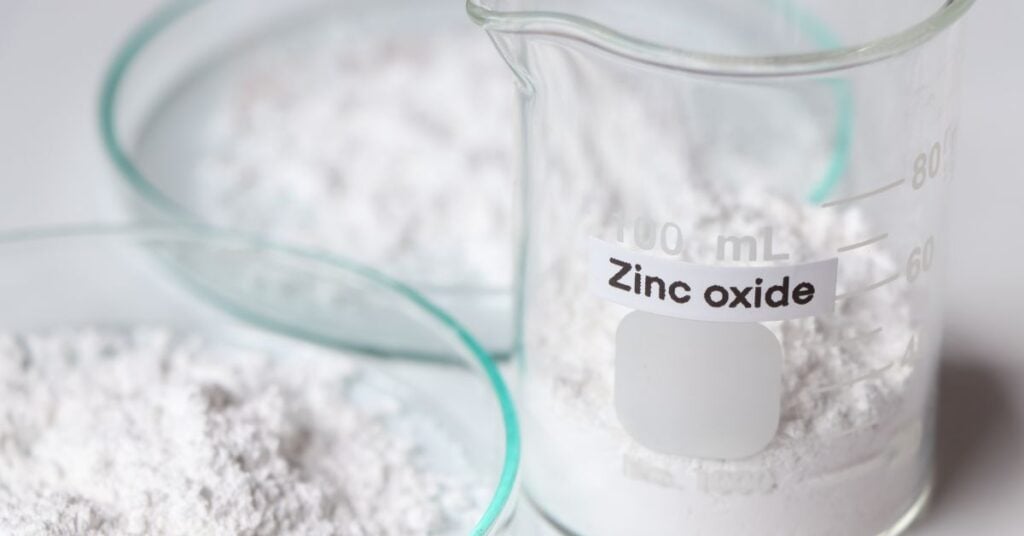
Yes, you can be allergic to zinc oxide, yet true allergy is rare; many rashes come from other ingredients in the same product.
If you’re wondering, can you be allergic to zinc oxide?, you’re trying to solve a real problem: you used a “mineral” product and your skin pushed back. Zinc oxide sits in sunscreens, diaper rash pastes, anti-chafe sticks, and a lot of makeup labeled “sensitive.” When a rash shows up, it’s easy to blame the active on the front of the tube. The trick is sorting what’s reacting: the mineral or the base around it.
This guide gives you a clear way to triage the reaction, narrow the trigger, and keep sun protection and barrier care in your routine. No guesswork. Just a tight set of steps.
What Zinc Oxide Is And Where It Shows Up
Zinc oxide is a mineral used as a UV filter and as a skin protectant. In sunscreens, it forms a layer that helps block UVA and UVB. In diaper creams and barrier balms, it helps shield skin from moisture and friction. Those are different jobs, so formulas differ a lot even when the active is the same.
Most zinc oxide products are blends with oils, waxes, silicones, thickeners, preservatives, and scent additives. Two “zinc oxide” labels can behave nothing alike on your skin.
| What You Notice | What It Often Means | What To Do Next |
|---|---|---|
| Burning or stinging within minutes | Irritation from alcohols, acids, or fragrance on tender skin | Rinse, stop the product, switch to bland moisturizer |
| Red, itchy rash 12–72 hours later | Allergic contact dermatitis to an ingredient in the base | Pause use and list each product used on that area |
| Dry, scaly patch that keeps returning | Repeated exposure to the same allergen | Strip your routine to basics and plan patch testing |
| Rash only on sun-hit areas where product sat | Photocontact reaction to a sunscreen ingredient | Stop it, use clothing, and seek evaluation |
| Pimply bumps after thick paste | Occlusion plus sweat, or follicle irritation | Try a lighter base and avoid pastes on large areas |
| Rash in the exact outline of a bandage | Adhesive or rosin sensitivity, not the pad itself | Remove the tape, wash gently, avoid that brand |
| Only lips peel after SPF balm | Flavoring oils, lanolin, or scent additives | Move to flavor-free petrolatum while you test |
| Hives, wheeze, facial swelling, faintness | Emergency allergic reaction | Get urgent medical care right away |
Allergy To Zinc Oxide In Sunscreen And Creams
Let’s separate two ideas. “Is zinc oxide safe?” is a population question. “Does my skin react to this product?” is a personal question. Most people tolerate zinc oxide well, and true allergy to the mineral is uncommon. More often, the rash is delayed contact allergy to another ingredient, or fast irritation from a strong formula used on already-dry skin.
Repeatability matters. One failed product does not prove the mineral is the cause. Shared ingredients across failed products are the better clue.
Can You Be Allergic to Zinc Oxide?
A true allergy can happen. It’s just not the most common explanation. Start by treating the reaction like a mystery with a short suspect list: the zinc oxide itself, the base ingredients, and sun exposure interacting with a UV filter. The steps below help you sort these paths with less risk.
Timing Clues That Point You The Right Way
Write down the clock. Irritation tends to show up fast: burning, tightness, or redness within minutes to a few hours. Allergy tends to be delayed: itch, bumps, blistering, or a dry rash that appears the next day or later.
Then map the shape. Contact dermatitis often matches the application zone: a stripe from a stick, a circle from a patch, a smear from diaper cream. A rash can still spread past the edges, yet the “center of gravity” is usually where the product sat longest.
Last, check the barrier. Skin that’s chapped, freshly shaved, sunburned, or recently treated with exfoliating acids reacts more to almost anything. In that moment, a formula can sting even on calm days.
Common Triggers People Mistake For Zinc Oxide
These culprits show up again and again in products that also contain zinc oxide. If you see them across your failed items, it’s a strong lead.
Fragrance And Scent Maskers
Fragrance can be listed as “fragrance,” “parfum,” or tucked into aromatic oils. “Unscented” can still use scent maskers. If scented products line up with your rash, test fragrance-free.
Preservatives In Water-Based Lotions
Lotions and many sunscreens need preservatives. If you react to one family, you may flare from wipes and moisturizers too.
Botanical Extracts
Calendula, propolis, and essential oil blends can irritate tender skin. When your skin is upset, the plainest option is often easier to tolerate.
Film-Formers And Long-Wear Polymers
Water-resistant sunscreens use ingredients that grip the skin and can irritate sensitive areas. If a product feels tight as it dries, try a different base.
Patch Testing And Why It Beats Guessing
When flares keep repeating, patch testing is the standard way to identify a delayed skin allergy. A clinician places small amounts of allergens on patches, keeps them on for two days, then reads the skin at set times. The American Academy of Dermatology’s page on patch testing for a rash walks through the basics of what happens in the clinic.
Bring your products. Many clinics will test your own sunscreen, diaper cream, or makeup in a controlled way. That’s helpful when the label has 30 ingredients and your rash is stubborn.
At-Home Trial Steps That Keep Risk Low
You can do a lot before an appointment if you test gently and one product at a time.
Reset Your Skin For A Week
For five to seven days, stick to a gentle cleanser and a bland moisturizer. Skip scented products and actives. Calm skin makes tests easier to read.
Do A Small Repeat-Application Test
Pick a spot like the inner forearm. Apply a pea-sized amount twice daily for three days. Stop early if you get swelling or strong burn. Delayed itch or a new rash on day two or three is a red flag for contact allergy.
Compare With A Short-Label Mineral Option
Choose the shortest-label zinc oxide option you can find, fragrance-free if possible. If it does fine, the trigger is likely elsewhere in the formula.
Keep A Straightforward Log
Write the product name, the exact spot, and what happened each day. Snap a photo in similar lighting. This record helps a dermatologist connect your symptoms to a specific ingredient list.
If you use zinc oxide daily, buy travel sizes while testing so you don’t waste money, and replace expired products promptly too.
What The FDA Says About Zinc Oxide In Sunscreen
The FDA treats zinc oxide as a well-studied sunscreen active. In its OTC sunscreen Q&A, the agency says it reviewed evidence and found enough safety data to propose zinc oxide and titanium dioxide as “generally recognized as safe and effective” actives in sunscreens up to 25%. See the FDA OTC sunscreen Q&A.
That’s about broad public use, not your personal reaction. A person can still react to a formula that most people tolerate. The takeaway is practical: if a zinc oxide sunscreen gives you a rash, the trigger is often in the rest of the ingredient list.
Swap Moves That Often Fix The Problem
When one product fails, try swaps that change the base without changing your goals.
- Change texture: If lotion stings, try a stick, balm, or cream with a different base.
- Cut fragrance: Choose “fragrance-free,” not “unscented.”
- Avoid sprays and loose powders: They can irritate eyes and airways and often include drying solvents.
- Use clothing as backup: Hat, sleeves, and shade cut the amount of product you need.
Label Checklist For Fewer Failed Purchases
Use this as a quick filter when you’re standing in the aisle.
| Product | Good Bet | Red Flag |
|---|---|---|
| Mineral face sunscreen | Short label, fragrance-free, zinc oxide near the top | Perfume blends, essential oils, “cooling” additives |
| Body sunscreen | Simple base, water-resistant only when needed | Sticky long-wear resins that feel tight |
| Diaper rash paste | Plain base, no botanicals, easy wash-off | Plant blends, strong scent, menthol |
| Anti-chafe stick | Silicone glide, minimal extras | Deodorant actives mixed in, heavy fragrance |
| Makeup with zinc oxide | Fragrance-free and fewer extracts | Layered perfumes across primer, base, and powder |
| Bandage or athletic tape | Hypoallergenic adhesive when possible | Rosin-based adhesives that itch fast |
| Lip SPF | Flavor-free balm, simple wax base | Mint, cinnamon, or strong flavor oils |
| After-sun moisturizer | Plain cream with ceramides or petrolatum | Alcohol-heavy gels and fragrance |
When To Get Medical Care
Get urgent care right away for hives with wheeze, facial swelling, faintness, or trouble breathing.
For other cases, set up a visit if the rash lasts longer than a week, keeps returning, or hits the eyes, mouth, or genitals. If you keep circling back to the same question—can you be allergic to zinc oxide?—after two careful product trials, patch testing can save you a lot of repeat flares.
A Simple Plan For The Next Seven Days
- Stop the newest product and wash with a gentle cleanser.
- Use only cleanser and bland moisturizer for a few days.
- When calm, test one product on a small spot for three days.
- If you react, save the label, write down the timing, and bring it to a dermatologist.
- Keep sun protection going with clothing and shade while you sort products out.
Do this patiently and you’ll end up with a short safe list you can rely on.

Mo Maruf
I created WellFizz to bridge the gap between vague wellness advice and actionable solutions. My mission is simple: to decode the research and give you practical tools you can actually use.
Beyond the data, I am a passionate traveler. I believe that stepping away from the screen to explore new environments is essential for mental clarity and physical vitality.