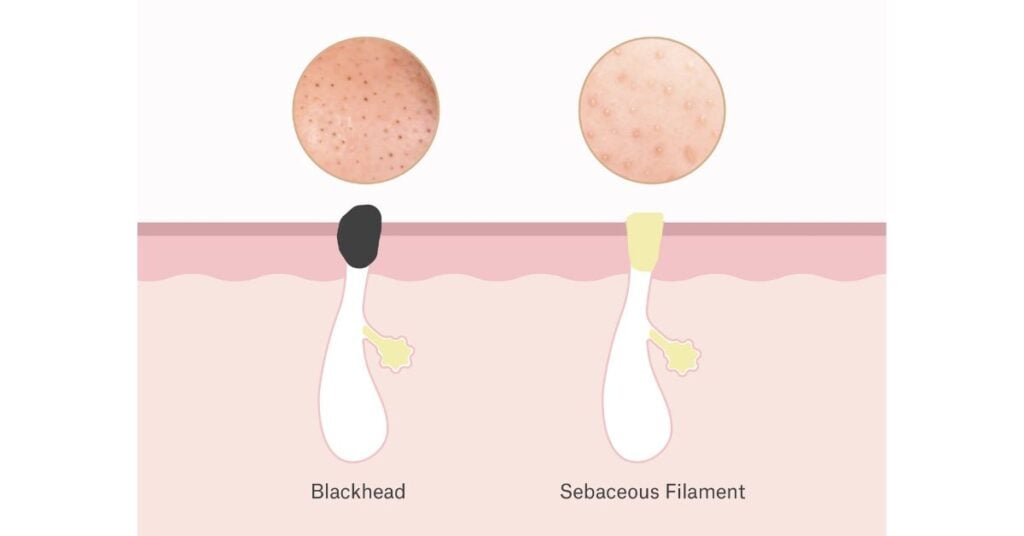
Sebaceous filaments are normal oil-lined pore channels; blackheads are clogged, open plugs that turn dark at the surface.
Those tiny dots on your nose can feel personal. You wash, you moisturize, you glance in the mirror, and the dots still stare back.
Some dots are blackheads. Many are sebaceous filaments. They can sit side by side, so guessing leads to rough scrubs, pore strips, and picking that leaves skin sore. A clearer ID means calmer routines and steadier texture.
Why These Two Look Similar
Both live in the same spot: the pore opening. Both can read as dark specks, especially under strong overhead lighting.
Size is the trap. Pores are small, so your eyes blur details. A pale filament can look like a plug. A shallow blackhead can look like normal texture.
Sebaceous Filaments vs. Blackheads
Sebaceous filaments are part of how pores move oil to the surface. Blackheads are a type of acne lesion, often called an open comedone, formed when a pore fills with a thicker mix of oil and dead skin cells.
What Sebaceous Filaments Are
Think of a filament as a thin column inside the pore. It’s made of sebum and lining cells and it helps oil travel out. Filaments show up most on the nose, between the brows, and on the inner cheeks.
They tend to look gray, tan, or pale yellow. Up close, they’re usually evenly spaced, like a dotted pattern.
What Blackheads Are
A blackhead forms when the pore gets packed and the top stays open. The dark color isn’t dirt. The surface darkens when the plug meets oxygen.
Blackheads can show up alone or with whiteheads and inflamed pimples. If you’re getting tender bumps, you’re dealing with acne, not just texture.
Sebaceous Filaments And Blackheads: Side-By-Side Clues On Skin
These quick checks usually settle it without tools.
Pattern Check
Filaments show up in a tidy pattern across the nose. Blackheads look more random, with a few spots that grab your eye.
Center Point Check
Filaments often have soft edges and a lighter tone. Blackheads tend to have a darker pinpoint center.
Refill Check
If you extract a filament, it can refill fast because the pore keeps producing oil. If you clear a blackhead and prevent new plugs, that same pore may stay clearer longer.
What Makes Dots Stand Out More
Oilier skin makes filaments look fuller. Dry, tight skin can make both look worse, since flaky surface cells can collect near the opening and add to congestion.
Myths That Push People Into Overdoing It
Myth: If You See Dots, You Must Extract Them
Frequent squeezing can inflame the pore wall, leaving redness and lingering marks. It can also turn a small clog into a tender bump.
Myth: Scrubs Fix Blackheads
Gritty scrubs can scratch the surface and trigger irritation. Blackheads respond better to ingredients that loosen the plug inside the pore.
Myth: Strips Solve The Problem
Pore strips can pull out some material, yet they don’t change why plugs form. If you like them, treat them as an occasional reset.
A Simple At-Home Check Before You Treat
If you’re not sure what you’re seeing, do this once, then leave the area alone for a week. The pattern you see beats one squeeze.
- Wash and wait. Cleanse gently, pat dry, then wait 20 minutes so oil can settle.
- Check spacing. Even dots across the nose usually point to filaments.
- Check the center. A sharp dark point often points to a blackhead.
- Check the edges. Filaments blur into the pore rim. Blackheads often look like a tiny plug sitting at the top.
- Check the rest of your face. If you see whiteheads or sore bumps too, treat it like acne.
Skip squeezing during this check. Pressure can swell the pore and make a filament look like a “stuck” clog. If you’ve already picked, let the area rest, moisturize, and restart the check later.
Comparison Chart For Filaments And Blackheads
Use this chart to match what you see to the right type, then choose care that fits.
| Clue | Sebaceous Filaments | Blackheads |
|---|---|---|
| Role in skin | Normal oil route inside pores | Open comedone (acne lesion) |
| Typical color | Gray, tan, pale yellow | Dark brown to black center |
| Pattern | Even spacing across the nose | Scattered, uneven clusters |
| Texture by touch | Mostly smooth, mild bumpiness | Grittier patches |
| After a warm shower | Often looks lighter and less obvious | May look softer, still visible |
| After extraction | Refills quickly | Can stay clear longer with prevention |
| Best focus | Oil flow + gentle exfoliation | Unclogging + preventing new plugs |
| Big risk move | Over-extraction and over-washing | Picking and harsh squeezing |
| When to get checked | Sudden change, pain, bleeding | Persistent acne or scarring |
How To Reduce Sebaceous Filaments Without Roughing Up Skin
You can’t erase filaments forever. You can make them less noticeable by keeping the pore lining clear and the surface calm.
Clean Gently And Stay Consistent
Wash with a mild cleanser once or twice a day. Scrubbing harder often backfires. The American Academy of Dermatology’s acne skin-care tips stress gentle cleansing and avoiding products that irritate skin.
Try A Leave-On BHA A Few Nights Per Week
Salicylic acid is oil-soluble, so it can work inside the pore. Start two nights per week, then build if your skin stays calm. If stinging starts, cut back before adding more steps.
Use Clay Sparingly
A clay mask can cut shine and make filaments look tighter for a short stretch. Use it once weekly, moisturize after, and skip it if you’re peeling.
How To Clear Blackheads And Keep Them From Returning
Blackheads improve when you loosen the plug, keep the opening clear, and stop new material from packing in.
Pick One Core Active
Choose one main treatment, then keep the rest simple. Too many actives at once often leads to irritation and quitting.
- Salicylic acid helps loosen the plug inside the pore.
- Adapalene helps prevent new plugs by normalizing shedding.
- Benzoyl peroxide can help if you also get inflamed pimples.
Retinoids Work Best With Patience
Over-the-counter adapalene is widely used for comedonal acne. The Mayo Clinic’s acne overview describes acne as plugged follicles that lead to lesions like blackheads and whiteheads.
Use a pea-sized amount for the whole face, start two or three nights per week, and add moisturizer. If you’re pregnant or trying to get pregnant, ask a licensed clinician before using a retinoid.
Don’t Skip Sunscreen
Daily sunscreen can keep marks from acne spots from sticking around and makes many treatments easier to tolerate.
Avoid DIY Extraction Tools
Metal loop tools can bruise the pore wall and turn a small clog into a swollen bump. If you want extractions, a dermatologist or licensed esthetician can do them safely.
When A “Black Dot” Is Something Else
Not each dark spot is a blackhead. A few look-alikes show up often.
- Hair in the follicle: A tiny hair can look like a dot, especially on the nose.
- Keratin plug: A firmer plug can sit deeper and resist blackhead care.
- Milia: Small, white bumps that feel firm and don’t have an open top.
- Sun spots or moles: Flat pigment marks that don’t change with cleansing.
If a spot bleeds, crusts, grows, or changes shape, get it checked promptly.
Ingredient Guide For Smoother-Looking Pores
Match ingredients to your main issue, then stick with one lane long enough to judge results.
| Ingredient | Best Fit | Use Notes |
|---|---|---|
| Salicylic acid (BHA) | Blackheads, oiliness, clogged pores | Start 2–3 nights weekly; moisturize after |
| Adapalene | Recurring clogs and blackheads | Pea-sized amount; start slowly; dryness can show early |
| Benzoyl peroxide | Blackheads with inflamed pimples | Lower strength first; can bleach fabric |
| Clay (kaolin or bentonite) | Visible filaments and shine | Once weekly; skip on irritated skin |
| Niacinamide | Oil control and redness from picking | Often layers well with other actives |
| Gentle moisturizer | Any routine using actives | Look for non-comedogenic labeling |
| Sunscreen (broad spectrum) | Marks and texture visibility | Daily use; reapply outdoors |
A Two-Week Routine That Covers Both
This routine is meant for mild congestion. Adjust if you already use prescriptions.
Week 1: Keep Things Calm
- Night: gentle cleanse, then moisturizer.
- Morning: rinse or cleanse, then moisturizer and sunscreen.
- Two nights: use salicylic acid or adapalene, not both.
Week 2: Build A Steady Rhythm
If your skin stays calm, move to three nights per week with your chosen active. If dryness shows up, drop back and add more moisturizer.
Use clay once per week if shine is your main complaint.
Habits That Keep Pores Looking Rough
Over-washing, hot water, and frequent picking can keep pores irritated. Stick to lukewarm water and a steady schedule. Try to keep hands off your face between washes.
Heavy primers and hair products can also sit in pore openings near the hairline. If a zone keeps clogging, shift those products away from that area for a week and see what changes.
When To See A Dermatologist
Home care is fine for mild congestion. A visit makes sense if you have painful acne, scarring, dark marks that linger, or no change after eight to twelve weeks of consistent use.
The MedlinePlus acne overview lists common acne types and treatment categories, which can help you talk through options at an appointment. The NHS acne treatment guide gives a clear view of treatment steps and when medical care is recommended.
Quick Product Checklist Before You Buy Something New
- Pick one main active. Salicylic acid or adapalene are common starting points for blackheads.
- Keep the rest simple. Cleanser, moisturizer, sunscreen.
- Track irritation. If stinging starts, reduce frequency before adding more steps.
- Watch placement. Use thicker products on dry zones, lighter layers on the nose and chin.
- Give it time. Texture shifts usually show after weeks, not days.
Once you can name what you’re seeing, you can treat it with less drama. Filaments can be blurred. Blackheads can be cleared and prevented.
References & Sources
- American Academy of Dermatology (AAD). “Acne: Tips for managing.” Skin-care guidance on gentle cleansing and avoiding irritants for acne-prone skin.
- Mayo Clinic. “Acne – Symptoms and causes.” Explains how plugged follicles lead to blackheads, whiteheads, and other acne lesions.
- MedlinePlus (National Library of Medicine). “Acne.” Overview of acne types and treatment categories used in clinical care.
- NHS. “Acne – Treatment.” Outlines treatment options and signs that point to medical care.

Mo Maruf
I created WellFizz to bridge the gap between vague wellness advice and actionable solutions. My mission is simple: to decode the research and give you practical tools you can actually use.
Beyond the data, I am a passionate traveler. I believe that stepping away from the screen to explore new environments is essential for mental clarity and physical vitality.