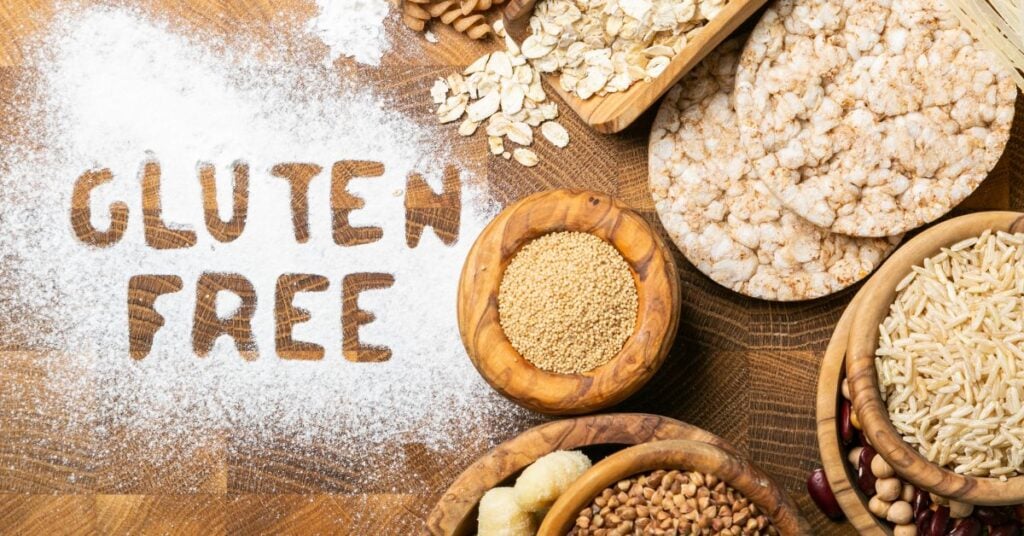
Check for wheat, barley, rye, and malt, then lean on a clear gluten-free claim and clean prep notes when ingredients get vague.
Front-of-pack claims can distract you. “Whole grain,” “natural,” and “plant-based” don’t tell you whether gluten is in the recipe. The answer lives in the ingredient list, the allergen line, and a few label words that show up again and again.
This routine fits real shopping: crowded aisles, tiny print, and a cart that’s already full. You’ll know what to scan first and when to switch products.
What Gluten Is And Why Labels Can Be Confusing
Gluten is a set of proteins tied to wheat, barley, and rye. For people with celiac disease, gluten can trigger immune damage in the small intestine. Labels matter because gluten can show up in places you won’t guess from the front panel.
Labels can feel confusing for a few reasons. Barley and rye can appear without a “Contains” allergen line. Some terms bundle many ingredients. Cross-contact can happen on shared lines.
If you avoid gluten for a medical reason, treat your label routine like a habit. The same steps, every time, cut errors. If you avoid gluten by choice, the same steps still prevent surprises.
How To Know If Something Is Gluten Free
Run this sequence each time you try a product that’s new to you. It keeps you out of marketing language and inside the parts of the label that matter.
Start With The Ingredient List
Read the list from the first word to the last. Stop when you see wheat, barley, rye, malt, brewer’s yeast, or triticale. Also watch for wheat varieties like farro, spelt, durum, semolina, and couscous. These can show up without the word “wheat” spelled out.
Malt often signals gluten in processed foods. Look for malt extract, malt flavoring, malt syrup, and barley malt. If malt is present, treat the item as not gluten free unless the product has a credible gluten-free claim and brand notes that fit your risk level.
Use The “Contains” Line, Then Keep Reading
Many packages list major allergens in a short “Contains” line near the ingredients. On U.S. foods regulated by FDA, wheat must be declared when it’s an ingredient. A “Contains: Wheat” line is a clear no.
A missing “Contains” line is not a clear yes, since barley and rye are not major allergens under U.S. allergen labeling rules. Keep reading the ingredients for barley terms and malt.
Know What A Gluten-Free Claim Means In The U.S.
A gluten-free claim is defined in U.S. labeling rules. The threshold is less than 20 parts per million of gluten, with limits on certain ingredients and processing.
This makes the claim useful when the ingredient list includes vague terms like “seasoning” or “natural flavor.”
Practical takeaway: if a package clearly states “gluten-free,” that statement carries weight. If there’s no gluten-free claim, you’re relying on ingredients and handling clues.
Handle “May Contain” Notes As Risk Signals
Lines like “may contain wheat” or “made on shared equipment with wheat” are voluntary. They hint at shared lines or shared rooms. Some brands use these notes often.
If traces make you sick, pick products with a gluten-free claim and a clean ingredient list. If you only avoid obvious gluten grains, you may accept more uncertainty.
Label Words That Often Point To Gluten
Some terms always mean gluten. Others depend on the source, the recipe, or the plant. For packaged foods, the FDA lays out how allergen labeling works and how wheat must be declared. FDA’s food allergy labeling overview is a handy reference when you’re comparing labels.
Use the table below as a scan list while you shop, then return to the full ingredient list for confirmation.
Before you scan the table, do a quick front-panel reality check. “Wheat-free” doesn’t rule out barley or rye. “No added gluten” isn’t a defined label phrase. If there’s no gluten-free claim, treat vague words like “seasoning” as a reason to slow down and read each line. Front claims are marketing, not a safety check.
| Label Term | Why It’s A Red Flag | What To Do |
|---|---|---|
| Wheat | Direct gluten grain and a declared allergen | Avoid when present |
| Barley / Rye | Gluten grains that may not appear in allergen lines | Avoid when present |
| Malt (any form) | Often derived from barley in U.S. foods | Avoid unless the product is labeled gluten-free and you trust the brand’s handling notes |
| Brewer’s yeast | Can carry traces from brewing inputs | Favor a gluten-free labeled product or skip it |
| Farro / Spelt / Durum / Semolina | Wheat varieties | Avoid when present |
| Soy sauce | Commonly made with wheat unless labeled gluten-free | Pick gluten-free soy sauce or gluten-free tamari |
| Seasoning / Natural flavor | Catch-all terms that can hide barley malt or wheat carriers | Look for a gluten-free claim on processed items |
| Modified food starch | Often corn, yet wheat-derived versions exist | Check for wheat in ingredients or the “Contains” line; favor gluten-free labeled items when you need low risk |
| Oats | Oats are gluten free, yet cross-contact is common | Use oats labeled gluten-free if you avoid traces |
| Malt vinegar / Beer batter | Barley-based items that show up in sauces and fried foods | Skip unless the item is made with gluten-free substitutes |
When a package says “gluten-free,” check FDA’s gluten and food labeling page and 21 CFR 101.91. For celiac disease, NIDDK’s celiac disease facts explains why strict avoidance matters.
Knowing If A Food Is Gluten Free In Restaurants And Cafes
Restaurants add one variable you can’t see: shared tools. A dish can be gluten free on paper, then pick up gluten from a fryer, griddle, or cutting board. Ask direct questions.
Start With Shared Fryers
Fries, chips, and fried chicken often share oil with breaded foods. Ask, “Is the fryer used only for fries?” If the answer is no, order a baked, steamed, or pan-seared option.
Ask About Sauces And Marinades
Sauces are a common source of wheat and malt. Ask, “Is there soy sauce, flour, or malt in the sauce?” If staff can’t check, choose simple dressings like oil and vinegar, plain salsa, or lemon and oil.
Watch For Shared Toasters And Griddles
Breakfast spots can be rough. Bread crumbs on a griddle and shared toasters can leave traces. Ask for eggs cooked in a clean pan, and skip toast unless the kitchen has a separate toaster or uses toaster bags.
Use A Short Order Script
Try: “No wheat, barley, or rye for me. Can the kitchen keep it off shared surfaces?” Confident answers are a good sign. Unclear answers are your cue to order the simplest item or pick another place.
Food Categories Where Gluten Hides
Some categories have repeat offenders. Learn these patterns and you’ll spot gluten faster.
- Soups and gravies: flour thickeners, roux, soy sauce.
- Seasoned meats: marinades, bread crumbs, “flavoring” blends.
- Candy and cereal: barley malt, malt extract, crisped grains with malt syrup.
- Spice blends: wheat-based carriers or shared milling lines.
- Ice cream mix-ins: cookie pieces, cone coatings, malted flavors.
In these categories, a gluten-free claim saves time. Plain single-ingredient foods are usually simpler.
Quick Checks By Food Type
This table is built for decisions: you’re hungry, and you want a yes-or-no path. Use it with the ingredient list, not in place of it.
| Food Type | First Check | Safer Pick |
|---|---|---|
| Soup | Scan for wheat flour, roux, soy sauce | Broth-based soups labeled gluten-free |
| Sauce or dressing | Scan for malt, soy sauce, wheat | Oil-based dressings with a gluten-free claim |
| Frozen meals | Check breading, pasta, gravy thickeners | Meals labeled gluten-free with simple sides |
| Oat products | See if oats are labeled gluten-free | Gluten-free labeled oats and granola |
| Processed meat | Watch for fillers, bread crumbs | Plain deli cuts labeled gluten-free |
| Spice blends | Scan for wheat carriers | Single spices or gluten-free labeled blends |
| Ice cream | Check cookie pieces and malted flavors | Simple flavors with a gluten-free claim |
Home Habits That Cut Cross-Contact
In mixed kitchens, cross-contact trips people up. You can lower risk without buying doubles.
Pick A Few Dedicated Items
Toasters and wooden tools can hold crumbs. Use a dedicated toaster or toaster bags, plus a separate cutting board.
Store Gluten-Free Foods Above Crumbs
Crumbs fall. Put gluten-free bread, snacks, and baking supplies on a higher shelf.
Clean In A Simple Order
Wipe counters, then cook gluten-free food first. Use clean utensils, then cook gluten foods.
When A Label Still Leaves Doubt
Some labels stay vague even after you read them twice. If the product matters to you, use one of these steps.
- Choose a gluten-free labeled product. It reduces guesswork for processed foods.
- Check the brand’s allergen page. Many brands post shared-line notes online.
- Ask the brand one direct question. “Is this made on shared equipment with wheat, barley, or rye?”
If you think you might have celiac disease, ask a clinician about testing before cutting gluten. Tests work best when gluten is still part of your diet.
One-Pass Checklist For Shopping And Ordering
Use this list when you don’t want to overthink it. Run it in order. If you hit a “no,” stop and switch products.
- Read the ingredient list for wheat, barley, rye, malt, brewer’s yeast, and wheat varieties like spelt or durum.
- Check the “Contains” line for wheat.
- Look for a clear gluten-free claim on processed or seasoned foods.
- Scan for high-risk terms like “malt flavoring” and “soy sauce” unless the product is labeled gluten-free.
- Read shared-equipment notes as risk signals, then choose based on your tolerance for traces.
- For restaurants, ask about shared fryers, sauces thickened with flour, and shared toasters.
- When in doubt, pick single-ingredient foods or brands that label gluten-free clearly.
References & Sources
- U.S. Food and Drug Administration (FDA).“Food Allergies.”Explains how major allergens like wheat must be declared on U.S. food labels.
- U.S. Food and Drug Administration (FDA).“Gluten and Food Labeling.”Summarizes the U.S. definition of “gluten-free” and the 20 ppm threshold.
- Electronic Code of Federal Regulations (eCFR).“21 CFR 101.91 — Gluten-Free Labeling of Food.”Provides the regulatory text for gluten-free labeling criteria in the U.S.
- National Institute of Diabetes and Digestive and Kidney Diseases (NIDDK).“Celiac Disease: Definition & Facts.”Defines gluten and explains its link to celiac disease.

Mo Maruf
I created WellFizz to bridge the gap between vague wellness advice and actionable solutions. My mission is simple: to decode the research and give you practical tools you can actually use.
Beyond the data, I am a passionate traveler. I believe that stepping away from the screen to explore new environments is essential for mental clarity and physical vitality.