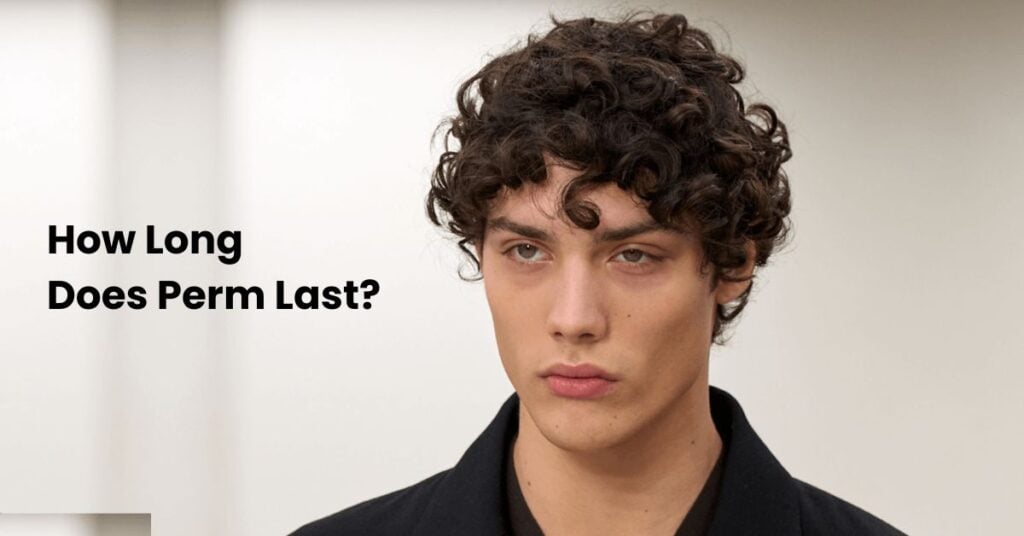
Most salon perms keep their shape for 2–6 months, then relax as hair grows out and daily wear softens the pattern.
If you’re asking, “How Long Does Perm Last?”, you’re usually asking two things at once: how long the curl stays defined, and how long it takes before straight roots start showing. Those timelines overlap, but they aren’t the same.
A perm doesn’t drop overnight. It usually eases little by little. Good news: how you wash, how you dry, and what you do at night can stretch the look.
What A Perm Changes And Why It Loosens
A perm reshapes hair by softening some of the links that hold each strand’s natural form, then setting a new form while your hair is wrapped on rods. The neutralizer step locks that shape in place around the rod size you chose.
The set is real, but it still faces daily stress. Water makes hair swell and relax. Friction roughs up the cuticle. Heat tools can stretch curls. Over time, those forces make the pattern less springy.
Growth is the other big piece. New hair coming in at the scalp isn’t permed, so the root area slowly looks straighter.
How Long Does A Perm Last On Different Hair Types
Most perms land in a 2–6 month window. Your spot in that range depends on strand strength, porosity, length, and the curl size you pick.
Straight, Strong Hair
Healthy, uncolored hair often holds the cleanest curl pattern because the strand tends to be more even from root to end. Tighter rods usually keep definition longer, even when the curl relaxes into a softer shape later.
Fine Or Fragile Hair
Fine hair can take a curl fast, but it can also lose bounce fast if it runs dry or breaks. A lighter solution and a curl size that matches your strand can keep the result neat. Aftercare also matters more here, since heavy products can weigh the pattern down.
Color-Treated Or Bleached Hair
Lightened hair can hold a perm, but results can vary across the head. Higher porosity can make solution action uneven, which can lead to curls that relax in patches. A strand test and careful timing are non-negotiable when bleach is in the mix.
Long Hair Versus Short Hair
Length adds weight. That weight stretches curls, so long hair can drift toward waves sooner. Short cuts keep lift longer because there’s less pull on each curl. If you want visible curl on long hair, smaller rods and layers often do the heavy lifting.
Self-Check Before You Book
A perm holds best on hair that’s even in texture from root to end. You can get a decent read at home with a simple wash-and-wear day. Shampoo, condition, skip styling products, then let your hair air-dry.
When it’s dry, look for clues. If ends puff up, feel rough, or snag when you run fingers through them, those areas may loosen sooner. If your hair dries smooth and you see a stable bend pattern, it often takes a perm more evenly.
New growth is part of every perm’s story. The Cleveland Clinic’s hair growth rate puts head-hair growth at about 1 centimeter per month, which is why many people see a clear root band by weeks four to six.
- Stretch test: A wet strand should stretch a little, then spring back.
- Porosity feel: If water soaks in fast, your hair may be more porous.
- Recent color: Note any bleach, highlights, or relaxers in the last few months.
- End condition: Split ends can turn a curl into frizz fast.
What Makes One Perm Fade Faster Than Another
Two perms that look identical on day one can age differently by week four. These are the biggest drivers:
- Rod size: Smaller rods set a tighter pattern that takes longer to relax.
- Hair history: Past bleach, relaxers, or frequent coloring can weaken sections.
- Wash habits: Hot water, strong detergents, and daily shampoo pull moisture fast.
- Handling: Rough towels, tight ties, and hard brushing tug curls straight.
- Heat: Flat irons and hot brushes stretch the pattern each time.
- Buildup: Waxes and heavy oils can make curls hang and look looser.
If your perm is loosening early, start with the “handling” line.
Perm Longevity Factors You Can Control
This table is a fast troubleshooting pass. Find the rows that match your routine, then start there.
| Factor | What You’ll Notice | What Usually Helps |
|---|---|---|
| Shampooing too soon | Curl looks softer after first wash | Wait 48 hours, then wash gently |
| Hot water | Dry feel, frizz at the ends | Use lukewarm water, rinse cool |
| Heat tools often | Curls stretch and stay stretched | Air-dry more days, diffuse low |
| Rough towel drying | Frizz and uneven clumps | Blot with a soft T-shirt |
| Heavy stylers | Roots go flat, ends look stringy | Use lighter mousse or gel |
| Detangling dry | Poofy shape, less definition | Detangle wet with wide comb |
| Sleeping on cotton | Crushed curls in the morning | Satin pillowcase or loose bun |
| Stacking chemicals | Breakage or curl drop in spots | Space services, strand test |
Aftercare That Keeps Curls Bouncy
Aftercare isn’t fancy. It’s a small set of habits done the same way each wash day.
First Two Days
Keep hair dry and hands off. Skip clips, tight hats, and ponytails. Those bends can leave dents while the pattern settles.
Washing Without Roughing Up The Cuticle
On wash day, massage the scalp with fingertips and let the lather slide through the lengths. Don’t scrub the ends between your palms. That’s where tangles form.
Condition every wash. If your hair is fine, keep conditioner off the roots. If it’s coarse, work it through the ends and let it sit a minute before rinsing.
Drying Without Stretching The Curl
Squeeze water out with your hands, blot with a soft towel, then scrunch upward. If you diffuse, keep heat low and don’t blast one area for long.
Start with a small amount of leave-in or styling gel, then add more only if you need it. Too much product can turn defined curls into heavy bends.
Sleep And Day-After Refresh
Friction at night can turn curls fuzzy. A satin pillowcase helps, or a loose top bun that keeps hair from grinding against the pillow.
For next-day refresh, use a mist of water, scrunch, then let it dry. A brush pass is the fastest way to erase definition.
Safety Checks Before And After A Perm
Perm solutions are chemicals, and skin can react. The California Board of Barbering & Cosmetology permanent waving fact sheet lists exposure routes and the kinds of irritation that can show up around perm work.
If you’ve ever reacted to hair dye, fragrance, or salon chemicals, patch testing is worth your time. The NHS guidance on hair dye reactions lays out patch-test timing and what to do if you feel unwell after a test.
If you’re looking at at-home perm kits, read the warnings and ingredients list closely. In the U.S., these products fall under cosmetics rules; the FDA’s cosmetics regulation overview explains the legal setup for labeling and product safety.
Mild tightness after a perm can pass in a day. Sharp pain, spreading redness, blistering, or eye irritation is a stop sign. Rinse with cool water and get medical care.
Timeline From Day One To Month Six
This timeline is a sanity check. Your hair may shift faster or slower, but the overall arc tends to match.
| Time | What You May See | What To Do |
|---|---|---|
| Day 0 | Tight curls, lingering salon scent | Leave it alone |
| Days 1–2 | Pattern settles, scalp may feel tender | Keep hair dry |
| Week 1 | Clumps form better, less frizz | First gentle wash |
| Weeks 2–4 | Strong definition window | Stick with low heat |
| Month 2 | Straighter roots show more | Try root lift while drying |
| Months 3–4 | Curls soften into waves | Clarify monthly, then condition |
| Months 5–6 | Ends still curl, top looks straight | Pick touch-up, cut, or grow-out |
When To Redo A Perm And When To Wait
Redo timing is about hair condition, not just the calendar. If hair feels gummy when wet, snaps while combing, or sheds short broken bits, pause on more chemistry.
A root touch-up can blend the texture without reprocessing the ends. That can keep the look tidy while protecting older lengths.
If you want a tighter pattern than your last perm, plan for a trim first. Stacking patterns on dry ends is where uneven results show up.
Perm Types And Rod Choices That Shape Longevity
Cold perms and heat-assisted services can age differently. Cold perms often set a firmer curl. Heat-assisted services often give softer waves that blend as they grow.
Rod choice is the bigger lever. Big rods start loose, so the look can drift sooner. Small rods start tight, so you still see curl after it relaxes.
Ask your stylist what the curl will look like after it loosens a couple of levels. That single question saves a lot of regret.
Questions To Ask Before You Sit In The Chair
Use a short checklist before the first rod goes in.
- Can you do a strand test? It shows how your hair reacts before the full service.
- What rod size are you using? Ask to see the rods and a sample curl.
- How will you handle my ends? Ends often need extra protection or trimming.
- What’s my wash and styling plan? Leave with a simple routine you’ll follow.
- How will grow-out look? Get a trim plan and a touch-up option.
Perms last longest when you treat wet hair gently, keep heat low, and avoid heavy buildup. Do that, and you’ll get a steady, predictable run from the curl pattern you paid for.
References & Sources
- Cleveland Clinic.“Terminal Hair: Function & Examples.”Notes head-hair growth speed and outlines the growth cycle.
- California Board of Barbering & Cosmetology.“Permanent Waving (Licensee Fact Sheet 11).”Explains exposure routes and irritation risks tied to perm solutions.
- National Health Service (NHS).“Hair dye reactions.”Gives patch-test timing and what to do after a reaction.
- U.S. Food & Drug Administration (FDA).“FDA Authority Over Cosmetics: How Cosmetics Are Not FDA-Approved, but Are FDA-Regulated.”Summarizes how cosmetics are regulated, with notes on safety and labeling duties.

Mo Maruf
I created WellFizz to bridge the gap between vague wellness advice and actionable solutions. My mission is simple: to decode the research and give you practical tools you can actually use.
Beyond the data, I am a passionate traveler. I believe that stepping away from the screen to explore new environments is essential for mental clarity and physical vitality.