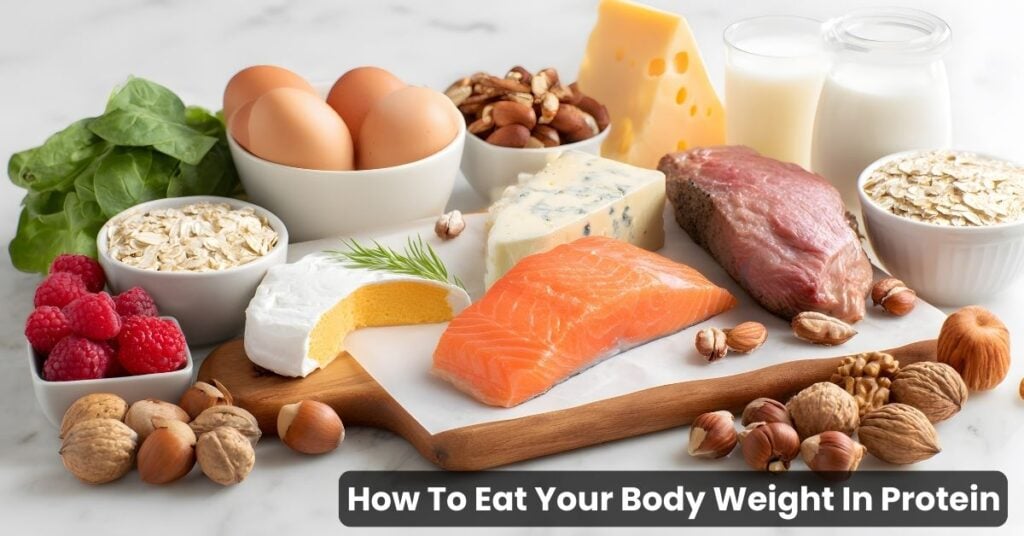
Eating 1 gram of protein per pound gets easier when each meal starts with a protein anchor and you track grams, not portions.
If you’ve ever tried to hit a big protein number, you know the trap: you start strong at breakfast, then the day runs away from you. By dinner, you’re staring at a mountain of meat or a blender bottle the size of a fire extinguisher.
This article shows a calmer way to get there. You’ll learn how to set a target, split it across the day, and build meals that rack up grams without feeling like a chore.
Protein Targets At A Glance
When people say “eat your body weight in protein,” they’re talking about grams per day that match your body weight in pounds. If you track in kilograms, that’s about 2.2 grams per kilogram.
| Body Weight (lb) | Daily Protein Target (g) | Easy Split (4 Meals) |
|---|---|---|
| 120 | 120 | 30 g each |
| 140 | 140 | 35 g each |
| 160 | 160 | 40 g each |
| 180 | 180 | 45 g each |
| 200 | 200 | 50 g each |
| 220 | 220 | 55 g each |
| 240 | 240 | 60 g each |
| 260 | 260 | 65 g each |
That split is the whole trick. When each meal has a clear number, you stop “hoping” you’ll land on your target and start stacking sure things.
When Eating Your Body Weight In Protein Makes Sense
A body-weight-in-grams target can fit people who lift often, run hard blocks of training, or diet while trying to keep lean mass. It’s a common gym rule of thumb, not a one-size rule for everyone.
If you’re new to tracking food, start by learning your current intake for a week. Then raise your daily protein in small jumps, like 15–25 grams at a time, until your meals feel routine.
If you have kidney disease, a history of kidney issues, or a condition that limits protein, get medical guidance before pushing intake. Pregnancy and breastfeeding can change protein needs too.
How To Eat Your Body Weight In Protein With A Simple Math Setup
Here’s the setup I use when helping someone make this goal stick. It’s numbers first, food second. No guesswork.
Pick The Body-Weight Target You’ll Use
Choose one number and commit to it for a month. Most people use:
- Pounds method: body weight in pounds = grams per day.
- Kilograms method: body weight in kilograms × 2.2 = grams per day.
Write that number at the top of your tracker. If the goal is 180 grams, the goal is 180 grams. No silent renegotiations at 9 p.m.
Split The Total Into Meal “Buckets”
Pick how many times you’ll eat protein each day. Three meals works for some. Four is easier. Five can feel lighter on your stomach.
Then divide. A 160-gram day can look like 40/40/40/40. A 200-gram day can look like 50/50/50/50, or 45/45/45/45 plus a 20-gram snack.
Set A Minimum Per Meal
Set a floor that keeps you on track even on messy days. If your plan is four meals, make the floor 30–40 grams each. You can go over at a meal, yet the floor keeps you from drifting.
Build Meals Around Protein Anchors
A protein anchor is the item you can count on. When you place it first, the rest of the plate gets easier. You’re not hunting for grams at the end.
Use anchors from the Protein Foods Group and from dairy, grains, and legumes you already like.
Use The “30–10–5” Plate Rule
This rule keeps meals from turning into a math project:
- 30–60 grams from your anchor (meat, fish, eggs, dairy, tofu, tempeh, seitan, beans).
- 10–25 grams from a second source you enjoy (Greek yogurt, cottage cheese, milk, edamame, lentils).
- 5–15 grams from the rest (bread, oats, rice, veggies, nuts).
Those “rest” grams add up. You don’t need them to carry the whole day, yet they close gaps.
Keep Two “No-Thinking” Meals Ready
Most people miss protein on busy days, not lazy days. Build two default meals you can repeat without drama:
- Default breakfast: eggs plus egg whites, or Greek yogurt with oats and fruit.
- Default lunch: chicken, tuna, tofu, or beans over rice or potatoes with veg.
When those two meals land, the rest of the day feels wide open.
Pick A Protein Range That Matches Your Training
Not everyone needs body-weight-in-grams all year. A steady baseline for adults is the protein RDA of 0.8 g/kg, listed in the National Academies’ Dietary Reference Intakes tables. See the Dietary Reference Intakes reference tables for the RDA and ranges.
From there, training, appetite, and goals can push the target up. If your goal is “how to eat your body weight in protein,” treat it as a block you run on purpose, not a rule you wear year-round.
Make High-Protein Eating Feel Normal
Big protein days fall apart when meals feel dry, repetitive, or heavy. These fixes keep food enjoyable.
Track With A Short Staple List
Tracking can feel fiddly when your fridge is a mystery box. A short staple list keeps your log simple and your meals consistent.
Pick 6–10 items you can buy, cook, and eat on repeat, then mix them in different combos. Here’s a starter list many people can work with:
- Chicken breast or lean ground turkey
- Eggs and egg whites
- Greek yogurt or cottage cheese
- Tofu, tempeh, or edamame
- Canned tuna or salmon
- Beans or lentils
- Rice, oats, potatoes, or pasta
- Frozen veg and fresh fruit
When you shop, buy enough anchors for your planned buckets. If you need four 40-gram meals on workdays, stock anchors that make those numbers painless.
Choose Leaner Options When You Need More Room
When protein climbs, calories can climb too. Leaner anchors let you hit grams without blowing up the rest of your intake. Think chicken breast, turkey, white fish, shrimp, extra-lean beef, low-fat Greek yogurt, cottage cheese, tofu, and beans paired with lower-fat cooking methods.
Use Sauces And Texture To Keep Meals Fun
Dry chicken is a fast track to quitting. Use salsa, soy sauce, hot sauce, mustard, or a yogurt-based dip. Add crunch with pickles, onions, slaw, roasted chickpeas, or toasted breadcrumbs.
Don’t Skip Carbs And Fiber
Protein works better when the rest of the plate is there too. Carbs help training days feel steady. Fiber keeps digestion moving. Build meals with fruits, veg, beans, oats, potatoes, and rice, then let protein sit on top of that base.
Common Sticking Points And How To Fix Them
“I’m Full Before I Hit My Number”
Go smaller, more often. Swap a 60-gram meal for two 30-gram meals. Use a drinkable option once a day, like milk, kefir, or a whey or soy shake, then eat the rest.
“My Stomach Feels Off”
Raise protein in steps, not leaps. Spread it across the day. Drink water. Add fiber slowly. If dairy bothers you, switch to lactose-free options or use non-dairy proteins.
“I’m Tired Of The Same Foods”
Rotate anchors by category:
- Two poultry meals per week
- Two fish meals per week
- Two red-meat meals per week
- Two plant-based anchor meals per week
Keep your seasonings flexible. One batch of chicken can become tacos, stir-fry, or a salad bowl just by changing sauces.
“I Track, Yet I Still Miss”
Check the hidden low-protein meals. A “healthy” breakfast can be 10 grams. A salad with a sprinkle of chicken can be 20. Fix those first. Add a clear anchor and the numbers climb fast.
Eating Out Without Guessing
Restaurants can be a wild card, so order like a builder: pick the anchor first, then choose sides. Ask for double chicken, extra tofu, or add a side of eggs where it fits. If sauces are heavy, ask for them on the side so you can control the pour.
If tracking matters that day, log the closest match, round down your protein, and make up the gap at the next meal. That keeps the day steady without turning dinner into a debate.
Protein Anchors And Their Typical Grams
Use this table to speed up meal planning. Grams can vary by brand and cooking method, so use labels and your tracker as the final call.
| Food (Common Serving) | Protein (g) | Easy Use |
|---|---|---|
| Chicken breast, cooked (6 oz) | 45–55 | Bowl, wrap, salad |
| Lean ground turkey, cooked (6 oz) | 35–45 | Tacos, pasta, chili |
| Salmon, cooked (6 oz) | 34–40 | Rice plate, sandwiches |
| Eggs + egg whites (2 eggs + 1 cup whites) | 40–50 | Scramble, omelet |
| Greek yogurt, plain (2 cups) | 35–45 | Breakfast, snack |
| Cottage cheese (1.5 cups) | 35–45 | Sweet or savory bowl |
| Firm tofu (1 block, ~14 oz) | 35–45 | Stir-fry, bake |
| Lentils, cooked (2 cups) | 30–36 | Soup, curry |
| Whey or soy powder (1–1.5 scoops) | 25–40 | Shake, oats |
Meal Templates That Hit The Numbers
Use these as plug-and-play structures. Swap ingredients, keep the protein math.
Template 1: 40-Gram Breakfast
- 2 eggs + 1 cup egg whites (scramble)
- 1 slice toast or a bowl of fruit
Want it sweeter? Swap eggs for 2 cups Greek yogurt with oats.
Template 2: 50-Gram Lunch Bowl
- 6 oz cooked chicken or turkey
- 1–2 cups rice or potatoes
- Big handful of veg plus sauce
Template 3: 35-Gram Snack That Doesn’t Feel Like A Snack
- 1.5 cups cottage cheese
- Fruit, cinnamon, or a savory mix with tomatoes and herbs
Template 4: 60-Gram Dinner Plate
- 6–8 oz fish, lean beef, tofu, or chicken
- Veg cooked the way you like
- Carb side if you train: rice, pasta, potatoes, bread
One-Page Checklist For Hitting Your Target
Use this list to keep the day clean:
- Write your daily target at the top of your tracker.
- Pick 3–5 protein “buckets” for the day and set a minimum per bucket.
- Choose one protein anchor for each bucket before you pick sides.
- Keep two default meals you can repeat on busy days.
- Keep one drinkable protein option for days when appetite is low.
- Adjust in small jumps if digestion feels off.
If you want a clean way to start, run this for seven days, review what felt easy, then repeat. That’s how “how to eat your body weight in protein” turns from a spreadsheet goal into a normal week of eating.
References & Sources
- USDA MyPlate.“Protein Foods Group – One of the Five Food Groups.”Lists common protein foods and how they fit into a balanced eating pattern.
- National Institutes of Health (NIH), NCBI Bookshelf.“Dietary Reference Intakes Reference Tables.”Shows the adult protein RDA expressed in grams per kilogram of body weight.

Mo Maruf
I created WellFizz to bridge the gap between vague wellness advice and actionable solutions. My mission is simple: to decode the research and give you practical tools you can actually use.
Beyond the data, I am a passionate traveler. I believe that stepping away from the screen to explore new environments is essential for mental clarity and physical vitality.