Our readers keep the lights on and my smoothie glass nicely filled. As an Amazon Associate, I earn from qualifying purchases.
A leash that works on a sidewalk can fail miserably on a rocky trail. When your dog bolts after a squirrel while you’re navigating a narrow ridge, the wrong leash turns a joyful hike into a dangerous yank. The difference comes down to how the leash transfers force, how it attaches to your body, and whether it frees your hands for balance.
I’m Mohammad Maruf — the founder and writer behind WellFizz. After analyzing hundreds of customer reviews, tensile strength ratings, belt ergonomics, and hardware failure points, I’ve narrowed down the options that actually hold up on real trails.
This guide breaks down the top-rated options for traction, control, and durability so you can find the best dog leash for hiking that fits your dog’s size, your terrain, and your budget.
How To Choose The Best Dog Leash For Hiking
Hiking leashes face more abuse than standard walking leashes: rocks, mud, water, sudden direction changes, and the need to tie off to a tree. Three factors separate trail-worthy leashes from the ones that end up in the trash after one season.
Bungee vs. Static Rope
A static rope leash transfers every jolt directly to your shoulder or waist. A bungee section stretches under sudden load, gradually decelerating your dog’s forward momentum. For trail runners and hikers on uneven terrain, a 5- to 7-foot bungee leash reduces the risk of falls. The trade-off: bungee leashes offer less precise feedback during training, so choose a model with a secondary static handle for close-quarters control.
Waist Belt Build and Connection Points
Hands-free hiking requires a waist belt that stays in place without sagging. Look for a belt with lumbar padding (memory foam or closed-cell foam) and a wide surface area to distribute force across your hips rather than your spine. The leash attachment should use a stainless steel carabiner or D-ring with a minimum 200-pound tensile rating. Plastic buckles on budget belts can crack under repeated stress from a 70-pound dog.
Hardware and Weather Resistance
A screw-lock carabiner prevents accidental detachment when your dog wraps around a tree. Nylon and polyester webbing resists rot and mildew better than cotton climbing rope. Reflective stitching sewn directly into the webbing lasts longer than stick-on reflective tape, which peels after a few washes. The leash clip should be thick enough to operate with one hand in cold weather without slipping.
Quick Comparison
On smaller screens, swipe sideways to see the full table.
| Model | Category | Best For | Key Spec | Amazon |
|---|---|---|---|---|
| Tuff Pupper Hands Free | Hands-Free Waist Belt | Strong pulling dogs up to 125 lbs | 500 lb tensile strength, dual bungee | Amazon |
| Kurgo RSG Utility Belt | Modular Adventure Belt | Customizable gear & long-distance hikes | MOLLE-compatible, quick-release strap | Amazon |
| TAKSIN Hands Free System | All-in-One Belt Pack | Convenience with treat & waste storage | 3 D-ring positions, expandable waste pouch | Amazon |
| ZALER Long Lead | Training Check Cord | Recall training & tie-out scenarios | 50 ft length, 2/5 inch diameter, screw lock | Amazon |
| JC HOUSE Hands Free | Budget Hands-Free | Casual trail walks & light jogging | Built-in storage pouch, adjustable 24-48 in belt | Amazon |
In‑Depth Reviews
1. Tuff Pupper Heavy Duty Hands Free Dog Leash

The Tuff Pupper leash is built for owners of strong, large-breed dogs who need to redistribute pulling force from their shoulders to their core. The waist belt uses thick foam lumbar padding that stays in place without riding up, even during trail jogs. Two separate bungee sections work in tandem to absorb sudden lunges, reducing the snap effect that throws you off balance on loose gravel.
Dual padded handles give you precision control for traffic crossings or tight sections of trail — the handle closest to the dog lets you shorten the leash instantly without adjusting the belt. The reflective stitching wraps across the entire width of the leash, which is substantially brighter than the thin reflective threads found on budget alternatives. Stainless steel hardware rated to 500 pounds provides a safety margin that feels necessary when your dog locks onto a deer track.
One detail that stands out after extended use: the bungee does retain some elasticity even after several seasons, though regular users report the elastic weakens gradually around the two-year mark. The belt buckle is sturdy but some users note the waist adjustment can shift slightly during very active runs. For one dog in the 45–125 pound range, this is the most secure hands-free system available.
Why it’s great
- Two independent bungee sections absorb shock without bottoming out
- Wide foam lumbar pad distributes force across hips, not the lower back
- Dual padded handles provide instant close-quarters control
- Full-width 3M reflective stitching maximizes nighttime visibility
Good to know
- Bungee stretch gradually decreases after two years of heavy use
- Waist adjustment buckle can loosen during dynamic movement
2. Kurgo RSG Active Utility Belt
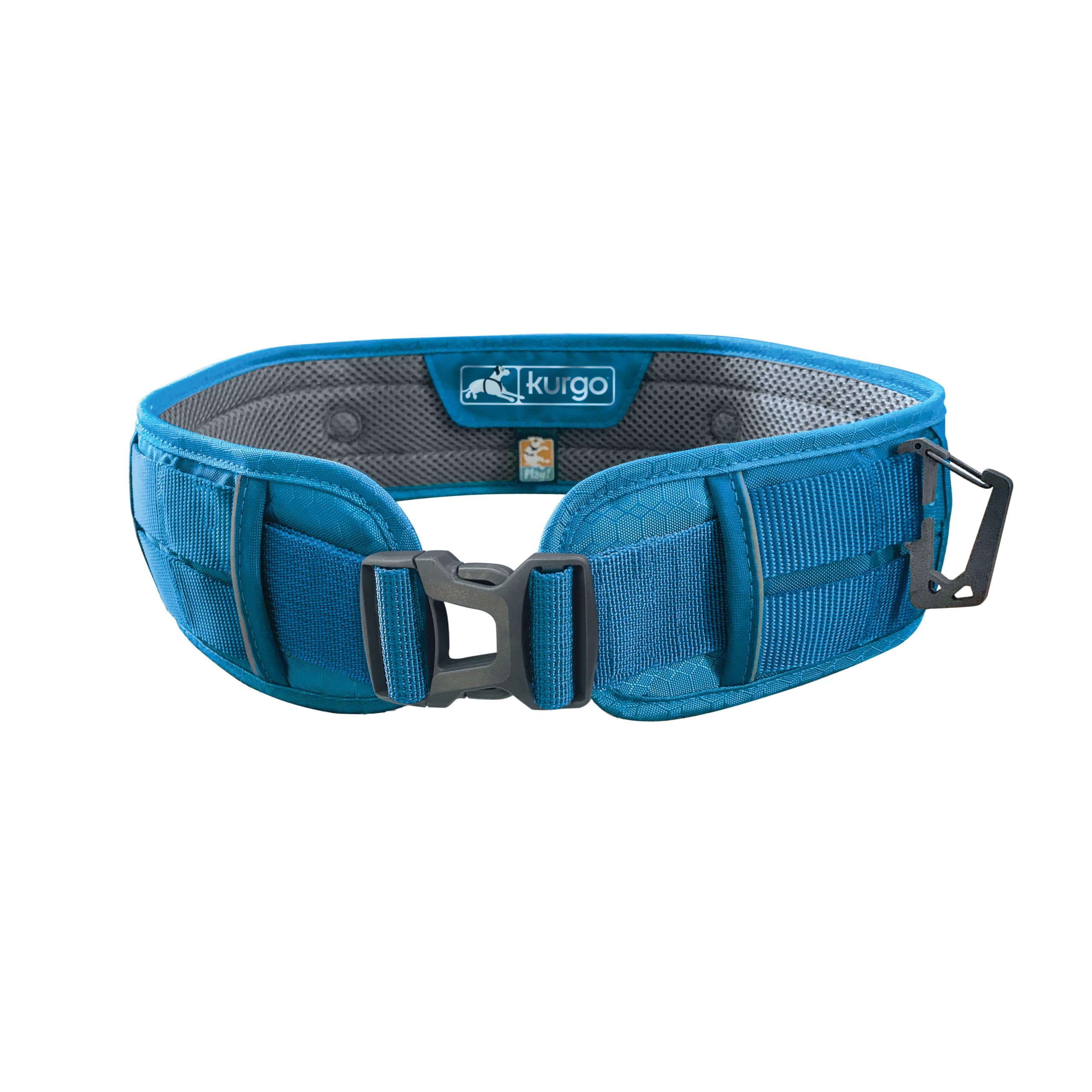
The Kurgo RSG is a different philosophy: it’s a modular waist belt system rather than a fixed leash setup. The belt itself is lightweight with breathable mesh padding that dries quickly after stream crossings or rain. The MOLLE-compatible webbing lets you attach accessory pouches, water bottles, or a flashlight without adding bulk. The quick-release leash strap detaches with one hand, which is useful when you need to let your dog explore a creek bed without removing the belt.
Fit adjustments range from 28 to 45 inches, and the belt stays in place well with smaller, agile dogs. The leash clip is a standard snap carabiner — not a screw-lock — which means it’s faster to attach but less secure for extremely powerful pullers. Owners of dogs over 100 pounds report the clip can deform under sustained tension; swapping it for a climbing-grade carabiner from an outdoor store solves that issue.
For hikers who carry gear and want to integrate their dog leash into a broader load-bearing system, the Kurgo belt works well. The lack of a built-in bungee means you’ll need to pair it with a shock-absorbing leash or keep your dog on a static line for training consistency. The lifetime warranty backs the durability of the nylon webbing and stitching.
Why it’s great
- MOLLE webbing allows custom configuration of pouches and accessories
- Breathable mesh padding reduces sweat buildup during long hikes
- Quick-release strap enables one-handed detachment
- Lifetime warranty from a trusted outdoor brand
Good to know
- Included leash clip may not hold up to very large, strong pullers
- No built-in bungee — requires a separate shock-absorbing leash
3. TAKSIN The Ultimate Hands Free Dog Leash System

The TAKSIN system bundles a waist pack, bungee leash, treat holder, and poop bag dispenser into one unit. The belt pack uses 600-denier polyester and has three D-ring positions (right, center, left) so you can attach the leash to whichever side feels natural on a given trail. The swiveling attachment points prevent the leash from tangling when your dog circles behind you.
The bungee leash is generously reflective and features two handles: a short handle for close control and a longer bungee section that stretches to reduce impact. The built-in waste pouch expands to hold used bags until you find a trash can — a small detail that becomes essential on multi-hour hikes without facilities. The treat pocket is removable for washing.
After a year of daily use, some users report the stitching around the zipper pockets begins to wear and the elastic water bottle holder can be too shallow for taller bottles. The belt is padded all around, which improves comfort compared to unpadded alternatives, but the padding is not as dense as the Tuff Pupper lumbar pad. For medium-sized, moderately trained dogs, this is the most convenient all-in-one solution.
Why it’s great
- Three D-ring attachment positions for customized leash routing
- Expandable waste pouch frees hands on long hikes
- Swiveling leash clips reduce tangling
- Reflective stitching and bungee section for safety and shock absorption
Good to know
- Zipper and stitching durability declines after heavy daily use
- Water bottle pocket is too shallow for standard sports bottles
4. ZALER Long Dog Leash 50ft

Not every hiker needs a waist belt. The ZALER long lead is a climbing-style rope leash available in lengths from 10 to 50 feet. The 2/5-inch diameter nylon rope is lightweight enough to carry in a pack and won’t soak up water and become heavy like cotton webbing. The screw-lock carabiner is a genuine safety upgrade — you twist the collar to lock it, which eliminates accidental gate openings when the leash scrapes against rocks or branches.
For recall training on open trails, the 50-foot version gives a nervous rescue dog space to explore while you maintain control. The reflective threading runs the length of the rope, keeping it visible at dusk. The tubular handle uses nylon webbing rather than bare rope, which prevents the handle from digging into your hand during a hard pull.
This leash is not designed for hands-free hiking — it has no waist belt and no bungee. It excels as a training tool or a tie-out leash for camp setups. A few owners note that the rope can cause friction burns if your dog bolts while the rope slides through your grip. For budget-conscious hikers who want a robust static lead for training, this is the best value.
Why it’s great
- Screw-lock carabiner prevents accidental detachment in the backcountry
- Lightweight climbing rope doesn’t get heavy when wet
- Full-length reflective threading improves nighttime safety
- Available in lengths up to 50 feet for maximum training range
Good to know
- No waist belt or hands-free capability
- Rope material can burn hands during sudden, hard pulls
5. JC HOUSE Hands Free Dog Leash
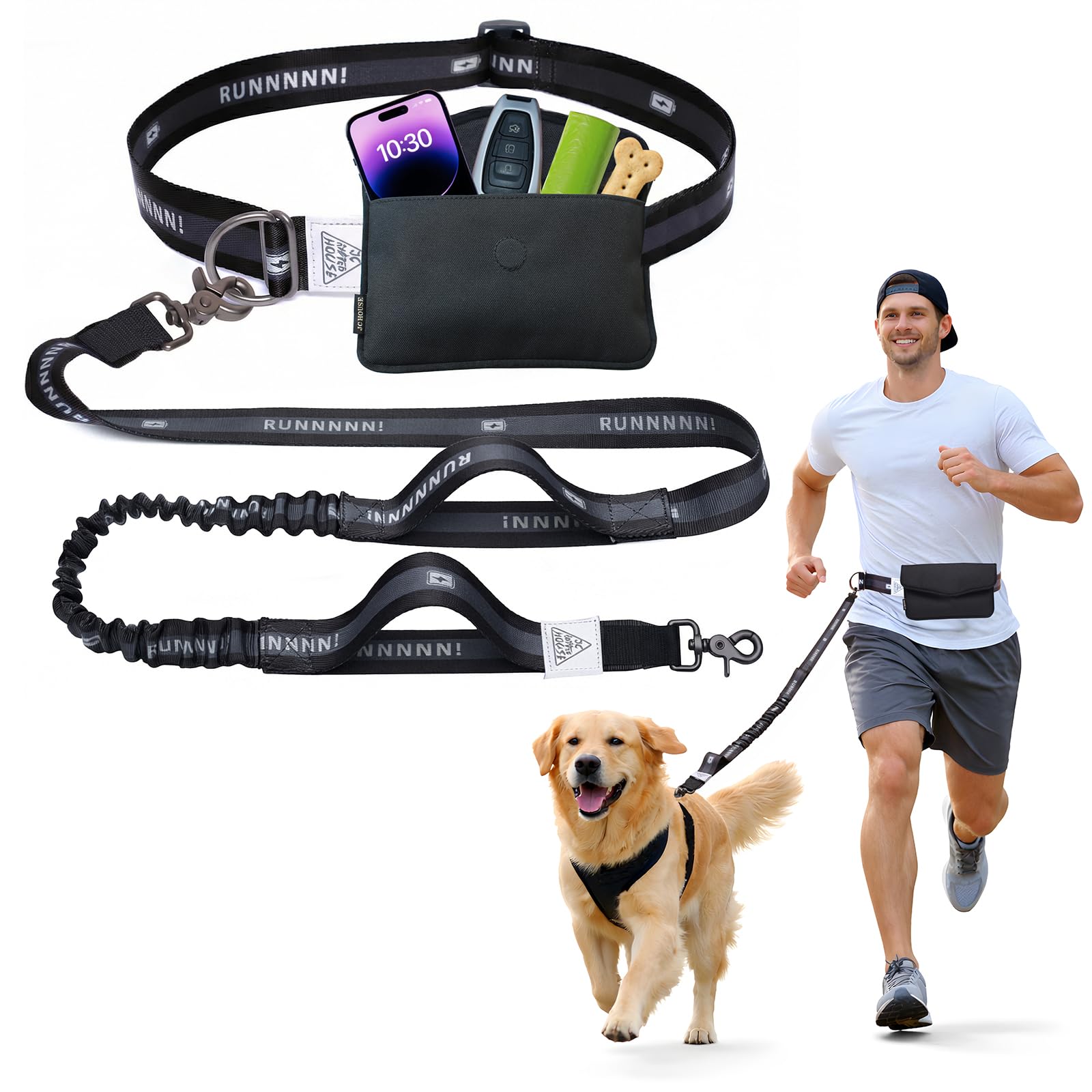
The JC HOUSE leash is a budget-friendly hands-free option that includes a waist belt, storage pouch, and bungee leash in one package. The belt adjusts from 24 to 48 inches and features a small zippered compartment for a phone or treats. The 5-foot bungee stretches enough to absorb minor pulls from a medium-sized dog.
Two handle positions — a short loop near the dog and a longer loop at the end — give you control in different situations. The waist buckle uses a plastic clip, which is adequate for casual trail walks but may loosen over time with a strong puller. The leash attachment hardware is metal and feels solid, but the overall construction weight is lighter than the premium belts.
For a hiker who walks a well-behaved dog on gentle trails and wants hands-free convenience without spending at the premium tier, this leash delivers. It doesn’t have lumbar padding or a screw-lock carabiner, and the belt can slip if you cinch it above your hip bone. After a year of daily running with a moderate puller, owners report the belt still functions but the fabric shows wear around the buckle.
Why it’s great
- Hands-free design with integrated storage pouch for phone and treats
- Bungee section absorbs light to moderate pulling
- Adjustable belt fits waist sizes 24 to 48 inches
- Affordable entry point into hands-free hiking leashes
Good to know
- Plastic waist buckle can loosen under heavy pulling
- No lumbar support padding for high-impact trail use
FAQ
Can I use a retractable leash for hiking?
Should I get a hands-free leash or a standard handle leash for hiking?
What length leash is best for trail hiking?
Final Thoughts: The Verdict
For most users, the best dog leash for hiking winner is the Tuff Pupper Heavy Duty Hands Free Dog Leash because it combines dual bungee shock absorption with a thick lumbar waist belt and dual padded handles — everything a trail runner with a strong dog needs. If you want modular gear integration with a lifetime warranty, grab the Kurgo RSG Utility Belt. And for a complete all-in-one system with treat storage and waste pouch, nothing beats the TAKSIN Hands Free Dog Leash System.

Mo Maruf
I created WellFizz to bridge the gap between vague wellness advice and actionable solutions. My mission is simple: to decode the research and give you practical tools you can actually use.
Beyond the data, I am a passionate traveler. I believe that stepping away from the screen to explore new environments is essential for mental clarity and physical vitality.