Our readers keep the lights on and my smoothie glass nicely filled. As an Amazon Associate, I earn from qualifying purchases.
Truth be told, picking up a random mirrorless or camcorder for a documentary project is a recipe for disaster. You need reliable autofocus that won’t hunt during a crucial interview, a codec that handles long-form recording without overheating, and a body that can run for hours in the field. The wrong choice means missed shots, corrupted files, and a lot of wasted time in post.
I’m Mohammad Maruf — the founder and writer behind WellFizz. My research digs into the mechanical specs that define endurance, from rolling shutter performance to active cooling systems, making sure this guide only highlights hardware built for the rigors of real-world documentary filmmaking.
After analyzing hundreds of user reports and technical specifications across the crucial mid-range to premium landscape, this guide provides the definitive breakdown of the best documentary camera tailored to the unique demands of long-form, run-and-gun, and controlled interview shooting.
How To Choose The Best Documentary Camera
Selecting a documentary camera is less about the latest fancy feature and more about reliability, battery endurance, and audio integration. You need to pinpoint a camera that matches your specific shooting style, whether that’s solo run-and-gun or a full team setup with external monitoring.
Sensor Size: Super 35 vs. Full-Frame
Super 35 sensors, common in cinema cameras like the Sony FX30, offer a deeper depth of field and excellent low-light performance without the same cost or lens requirements of full-frame. Full-frame sensors, found in the Sony FX3, allow for shallower depth of field and superior high-ISO performance, but they can also introduce heavier rolling shutter. For pure documentary work emphasizing deep focus on interview subjects, Super 35 is often the better choice.
Active Cooling and Overheating Protection
The single biggest frustration for documentary shooters is a camera shutting down mid-interview. Cameras like the Sony FX3 and Canon XF605 feature internal cooling fans, allowing for uninterrupted 4K 60p recording. Mirrorless bodies without fans, such as the Sony a6400, are prone to overheating in warm environments or at higher bitrates, making them less reliable for all-day, single-camera shoots.
Audio Inputs and XLR Support
Crystal-clear sound is non-negotiable for documentaries. A camera with dedicated XLR inputs (like the Sony FX3, Canon XF605, Panasonic HC-X20) eliminates the need for a bulky external recorder. For run-and-gun shooters, a built-in XLR handle with phantom power allows for quick connection of a boom mic or lavaliers without a separate rig.
Quick Comparison
On smaller screens, swipe sideways to see the full table.
| Model | Category | Best For | Key Spec | Amazon |
|---|---|---|---|---|
| Sony FX3 (ILME-FX3) | Full-Frame Cinema | Low-light Narrative Docs | 15+ stops dynamic range | Amazon |
| Canon XF605 | Pro Camcorder | All-day Run-and-Gun | 15x 4K L-Series Zoom | Amazon |
| Canon XA60 | Compact Pro Camcorder | ENG & Journalism | 20x Optical Zoom Lens | Amazon |
| Sony FX30 (w/ 18-105mm) | Super 35 Cinema | Studio Interviews | 14+ stops dynamic range | Amazon |
| Blackmagic Pocket 6K | RAW Cinema | Color-Grade Intensive Docs | 6K Blackmagic RAW | Amazon |
| Sony FX30 (Body Only) | Super 35 Cinema | Budget Cinema Rig | 6K Oversampled 4K | Amazon |
| Panasonic HC-X20 | Pro Camcorder | Multi-Camera Events | 1.0-Type 15MP Sensor | Amazon |
| Sony FX3A | Full-Frame Cinema | Commercial & Streaming | 4K 120p 10-bit 4:2:2 | Amazon |
| Sony a6400 Kit | Entry Mirrorless | Compact B-Roll | 0.02 sec Autofocus | Amazon |
In‑Depth Reviews
1. Sony Alpha FX3 ILME-FX3

The Sony FX3 represents the pinnacle of full-frame documentary cinema within its price bracket. Its 15+ stop dynamic range and dual base ISO at 800 and 12800 allow you to shoot in near darkness without introducing significant noise, a lifesaver for verité scenes or candlelit interviews. The built-in cooling fan stands out as the critical differentiator, enabling uninterrupted 4K 60p 10-bit 4:2:2 recording that other mirrorless bodies would thermally throttle after twenty minutes.
The cage-free design with ¼-20 mounting points and the included XLR top handle make rigging for a documentary shoot remarkably straightforward. You can attach a boom mic and a monitor without needing a separate cage, saving weight and setup time in the field. The S-Cinetone picture profile, inspired by Sony’s Venice cinema camera, delivers skin tones that look natural straight out of the box, reducing grading time for tight-turnaround projects.
Netflix approval cements the FX3 as a serious tool for professional productions. The autofocus system, with 627 phase-detection points, tracks subjects reliably even when they move erratically through the frame. Battery life is decent at roughly two hours of continuous recording, but heavy users should budget for an external battery pack via USB-C. The only missing feature for documentary purists is a built-in electronic ND filter, which the Panasonic HC-X20 includes at a lower price.
Why it’s great
- Built-in cooling fan prevents overheating on long shoots
- Excellent low-light performance with dual base ISO
- Netflix approved for professional productions
Good to know
- No built-in ND filter
- Requires CFexpress Type A or high-speed SD cards for high bitrate recording
- Battery life around 2 hours under heavy use
2. Canon XF605 4K UHD Pro Camcorder

The Canon XF605 is a textbook pro camcorder built for the ENG (Electronic News Gathering) world that translates perfectly into documentary work. Its 1.0-inch CMOS sensor paired with a 15x optical L-Series zoom lens gives you massive flexibility in framing without changing glass. The independent 3-density ND filter wheel (Clear, 1/4, 1/16, 1/64) is an essential tool for matching depth of field and shutter speed in changing outdoor light, something that mirrorless camera shooters have to simulate with screw-on filters.
This camera excels on long shooting days. The 5-axis optical image stabilization system is incredibly effective, allowing for stable handheld walking shots without a gimbal. Recording in 4K 59.94p 4:2:2 10-bit directly inside the camera to SD cards means your post-production workflow stays straightforward. The built-in XLR audio inputs with phantom power and a dedicated audio control panel on the side let you manage two wireless lavs or boom mics without a separate mixer.
User feedback highlights the autofocus as blisteringly fast and accurate, which is crucial for documentary subjects that move unpredictably. A few reviewers note the camera has a learning curve due to the sheer number of physical buttons and menu layers. However, once configured, the XF605 is a reliable workhorse that handles the punishing conditions of fieldwork without any of the fragility associated with mirrorless cameras.
Why it’s great
- Integrated 3-density ND filter system
- 15x optical zoom with L-Series optics
- Excellent 5-axis optical image stabilization for handheld use
Good to know
- Complex menu system with a steep learning curve
- Heavier than an equivalent mirrorless rig
- No internal RAW recording option
3. Sony FX30 Cinema Line Camera (w/ 18-105mm)

The Sony FX30 in this bundle comes with the E PZ 18-105mm f/4.0 G OSS lens, giving you a ready-to-shoot cinema package with a 6K sensor that oversamples to deliver stunning 4K imagery. The Super 35 format provides a deeper depth of field compared to full-frame, which is actually preferable for documentary interviews where you want to keep both the subject and a contextual background in focus. Dual base ISO at 640 and 2500 ensures clean images in most interior lighting conditions without needing to blast the subject with light.
S-Cinetone straight out of the camera produces a filmic look that reduces grading time for quick-turn projects. The flexible Cine EI Quick mode allows you to shoot with a conservative EI setting to protect highlights, then adjust exposure in post, giving you the security of a RAW-like workflow without the massive file sizes. The built-in LUT support lets you load your own monitor LUTs onto the LCD and output them via HDMI, so your gaffer or client sees the intended look on set.
User reviews are overwhelmingly positive, with one filmmaker noting the FX30 “changed my life” by helping them land higher-paying clients. The body includes active cooling to prevent overheating, and the 14+ stop dynamic range captures considerable shadow and highlight detail. The F4 constant aperture lens is versatile but a bit slow for very dim environments, so investing in a fast prime for night shooting is a wise future step.
Why it’s great
- 6K oversampled 4K with excellent sharpness
- Built-in active cooling for long recording sessions
- Includes very versatile 18-105mm F4 OSS zoom lens
Good to know
- F4 maximum aperture is slow in very low light
- Some units may ship as European PAL version depending on seller
- Rolling shutter is moderate in fast motion
4. Blackmagic Design Pocket Cinema Camera 6K
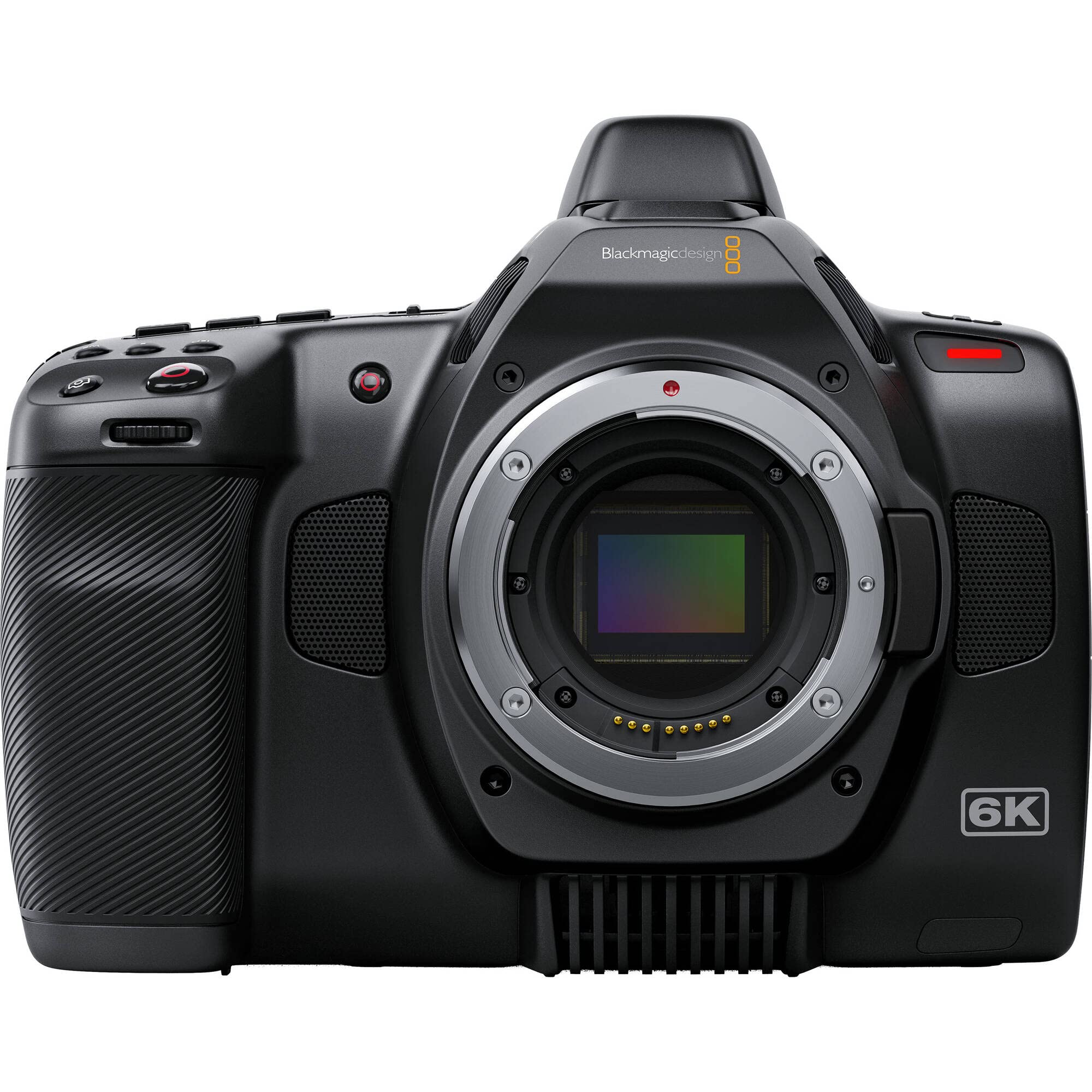
The Blackmagic Pocket Cinema Camera 6K is the ultimate choice for documentary filmmakers who prioritize color grading flexibility above all else. Its Super 35 sensor shoots Blackmagic RAW at up to 6K 50fps, giving you incredible latitude to push and pull exposure in Resolve without introducing banding or noise. The Canon EF lens mount opens up a massive library of affordable and cinema-grade glass, and the included DaVinci Resolve Studio software makes the camera a complete post-production system straight out of the box.
The 5-inch touchscreen LCD is bright but many users find it deceiving for accurate exposure, preferring an external monitor for confidence. The camera also lacks a built-in ND filter and any effective in-body stabilization, so you need to rig it with a gimbal or shoulder mount for smooth walking shots. This adds weight, but the resulting image quality and color science often produce footage that looks like it came from a much more expensive camera system like RED or ARRI.
Users upgrading from the earlier 2.5K model report dramatic improvements in low-light noise, though the camera still benefits from careful lighting. A known caveat involves the camera’s tendency to overheat if left in direct sunlight, though a few defective units have been replaced by Blackmagic Design. For filmmakers who own a set of Canon EF lenses and want the deepest possible raw workflow, the Pocket 6K offers unmatched value.
Why it’s great
- Records full 6K Blackmagic RAW internally
- Includes DaVinci Resolve Studio license
- Superb color science with wide dynamic range
Good to know
- No in-body image stabilization
- No built-in ND filter
- Requires external monitor for reliable exposure
5. SONY Cinema Line FX30 (Body Only)

The FX30 body-only is a pure cinema tool that shares most of the internals of its big brother, the FX3, but at a significantly lower cost. The Super 35 sensor offers 90% of the FX3’s capabilities, including the same S-Cinetone color science, Cine EI log modes, and a 14+ stop range. The key advantage here is the ability to pair the body with exactly the lens you need for your documentary project, whether that’s a fast prime for low-light interviews or a telephoto zoom for wildlife.
Active cooling is present, ensuring consistent performance even when recording 4K 60p internally. The dual card slots can be configured for relay recording, which means you can hot-swap cards without ever stopping your shot. The autofocus is fantastic for a cinema camera, using the same AI-based tracking system found in Sony’s consumer bodies. This makes the FX30 far easier to operate solo than a Blackmagic Pocket 6K, especially for subjects that move around.
Users frequently pair this camera with an Atomos Ninja V for ProRes RAW output, though the internal 4:2:2 10-bit is already very robust for most doc projects. The main trade-off is battery life, which sits around 60-120 minutes of continuous recording, meaning an external battery plate is a smart add-on for long interview days. The compact magnesium alloy body is also weather-resistant, giving you confidence shooting in light rain or dusty environments.
Why it’s great
- Active cooling ensures no overheating
- Dual SD card slots for relay recording
- Weather-resistant magnesium alloy body
Good to know
- Battery life is limited under heavy use
- No in-body stabilization as effective as competitors
- Requires separate lens investment
6. Canon XA60 Professional UHD 4K Camcorder

The Canon XA60 is a dedicated camcorder built for the ENG and journalism world, making it a perfect tool for fast-moving documentary shoots where you cannot afford to miss a moment. The integrated 20x optical zoom lens gives you an amazing range from wide-angle to telephoto without changing lenses or introducing dust into the sensor chamber. The eight-bladed circular iris helps create smooth, natural out-of-focus highlights, which is a welcome touch for a camera in its class.
This camcorder features dual XLR inputs with phantom power, a 3.5-inch tiltable OLED EVF, and a capacitive touchscreen that is responsive and bright. The USB Type-C output with UVC support allows you to plug directly into a computer for live streaming without any capture card. The DIG!C DV 6 processor ensures that 4K 30p recording stays clean and low-noise, and the optical image stabilization system works well for walking shots.
Several user reviews caution about the PAL/NTSC region issue, as some bundles ship European 50Hz versions in the US. Always verify the product SKU before purchase if you need 60Hz native. The bundled kit from various sellers often includes items like wide-angle and telephoto lenses that cannot be swapped on this fixed-lens camcorder, so focus on the base camera model and buy only the essentials you need.
Why it’s great
- Built-in 20x optical zoom lens
- Dual XLR audio inputs with phantom power
- USB-C UVC for direct streaming
Good to know
- Potential PAL/NTSC region mismatch from third-party sellers
- Kit bundle often includes non-functional add-on lenses
- Limited still photo capability
7. Panasonic HC-X20 Pro Camcorder

The Panasonic HC-X20 is a professional camcorder built specifically for events, interviews, and news gathering. The 1.0-inch MOS sensor gives you 15 effective megapixels, producing footage that looks noticeably cleaner and deeper than smaller sensor camcorders. The 24.5mm wide-angle lens coupled with a 20x optical zoom provides a flexible focal range that suits everything from a wide crowd shot in a concert to a tight close-up during a sit-down interview.
One of the standout features is the 5-Axis HYBRID O.I.S., which is incredibly effective at smoothing out hand-shake and walking jitter, reducing the need for a gimbal. The camera supports 4K 60p recording and HEVC codec for better compression efficiency. Built-in Wi-Fi and Ethernet compatibility (via a USB-LAN adapter) allow for reliable live streaming directly to platforms like YouTube or Facebook Live without a separate encoder.
The triple manual ring (focus, zoom, iris) gives you the tactile control that many videographers miss on mirrorless cameras. The autofocus, while not Sony-level fast, is reliable with face detection that keeps interview subjects sharp. The build quality is excellent, with a design that feels balanced even when held for hours. The only real downside is that the auto exposure tends to underexpose in high-contrast scenes, requiring manual intervention for proper skin tone exposure.
Why it’s great
- Effective 5-Axis HYBRID O.I.S. for handheld stability
- Built-in Wi-Fi and Ethernet/streaming support
- 1.0-inch sensor produces excellent image quality
Good to know
- Auto exposure can underexpose in high-contrast lighting
- Limited to 4K 60p (no 120p)
- Zoom rocker is very sensitive and requires gentle control
8. Sony Alpha FX3A ILME-FX3A

The Sony FX3A is a very similar camera to the original FX3, with the same 15+ stop dynamic range and full-frame 4K 120p capability, but it comes with a few subtle tweaks to the autofocus algorithms. The S-Cinetone picture profile remains the standout feature for achieving Venice-level skin tones without significant grading. The built-in cooling fan is a necessity for keeping this sensor running smoothly during long studio sessions or full-day live stream events.
This camera’s compact size and cage-free design make it excellent for gimbal work or tight spaces. The XLR handle offers professional audio input, which is uncommon in such a small form factor. Users switching from Blackmagic or Nikon for video overwhelmingly report being delighted with the ease of use and reliability of the Sony autofocus system, which tracks subjects with impressive precision even when they turn their back to the camera.
A few buyers have reported receiving used units when ordering “new,” so ensure your seller has a solid return policy. The FX3A variant seems to struggle slightly more with Sigma lenses on black surfaces compared to the original FX3, though this is rarely a problem in well-lit interview environments. For Netflix-approved productions or commercial work demanding consistent, high-frame-rate full-frame imaging, the FX3A is a top-tier choice.
Why it’s great
- Excellent full-frame 4K 120p 10-bit 4:2:2
- Active cooling prevents overheating on live streams
- Netflix approved with superb autofocus
Good to know
- Autofocus can struggle with some third-party lenses on black texture
- Newer variant with minor changes from original FX3
- High media cost (CFexpress Type A)
9. Sony a6400 Mirrorless w/ 18-135mm Lens

The Sony a6400 is an entry-level mirrorless camera that is widely used as a B-roll or backup camera in documentary productions. Its 24.2MP APS-C sensor with 425 phase-detection points delivers lightning-fast autofocus (0.02 seconds) with real-time object tracking. The 18-135mm kit lens provides a broad general-purpose range, making this a solid camera for capturing establishing shots, detail shots, and behind-the-scenes footage when your primary cinema camera is rigged for an interview.
The camera records 4K video using full pixel readout with no pixel binning, which means sharp 4K without the moiré artifacts common in cheaper cameras. The tiltable LCD screen is useful for vlogging or low-angle shooting, though the lack of a fully articulating screen is a limitation for self-shooting. Battery life is acceptable for its class, but the camera can overheat when recording 4K for extended periods, limiting its use as a primary documentary camera in hot environments.
Users switching from Canon report a learning curve with the Sony menu system, but the results—especially in color reproduction—are highly praised. The built-in flash and comprehensive lens compatibility (Sony E-mount) make it a versatile tool. For a documentary filmmaker on a tight budget, the a6400 is a fantastic companion camera, but it lacks the professional features (XLR, cooling, dual cards) that make the FX30 a better primary camera for serious documentary work.
Why it’s great
- Class-leading autofocus speed and accuracy
- 4K from full pixel readout with no binning
- Very compact and lightweight for B-roll shooting
Good to know
- No active cooling; can overheat in 4K around 30 minutes
- No XLR audio inputs without external recorder
- Tilt screen only, not fully articulating
FAQ
Should I choose a Super 35 or full-frame sensor for documentary filmmaking?
Is a camera with a built-in fan necessary for long interview shoots?
What is the advantage of dual card slots in a documentary camera?
How important are built-in XLR audio inputs for documentary work?
Final Thoughts: The Verdict
For most users, the best documentary camera winner is the Sony Alpha FX3 because it perfectly balances low-light full-frame performance, active cooling, and XLR audio in a compact body that is Netflix approved. If you want a dedicated camcorder solution with a built-in ND filter and massive zoom range, grab the Canon XF605. And for a budget-conscious cinema rig that still offers 6K oversampled 4K and active cooling, nothing beats the Sony FX30 with 18-105mm lens.

Mo Maruf
I created WellFizz to bridge the gap between vague wellness advice and actionable solutions. My mission is simple: to decode the research and give you practical tools you can actually use.
Beyond the data, I am a passionate traveler. I believe that stepping away from the screen to explore new environments is essential for mental clarity and physical vitality.