Our readers keep the lights on and my smoothie glass nicely filled. As an Amazon Associate, I earn from qualifying purchases.
Cleaning up after a mouse infestation isn’t just about sweeping up the mess — it’s about neutralizing the pathogens left behind in dried urine, droppings, and nesting materials. Hantavirus and salmonella can linger on surfaces long after the mice are gone, making the choice of cleaning agent a matter of health safety, not just surface sanitation.
I’m Mohammad Maruf — the founder and writer behind WellFizz. I’ve spent hundreds of hours analyzing disinfectant chemistry, reading EPA label registrations, and cross-referencing contact times to understand which formulations actually deactivate the viruses and bacteria associated with rodent waste.
This guide focuses on sprays and concentrates that meet professional standards for pathogen kill, helping you select the best disinfectant for mouse droppings without guessing which bottle actually works.
How To Choose The Best Disinfectant For Mouse Droppings
Rodent droppings carry bacteria like Salmonella and viruses like Hantavirus, so the disinfectant you choose must be registered by the EPA for use against these specific pathogens. Not every “antibacterial” spray will do the job — you need a product that lists a kill time for the organisms found in rodent waste.
Contact Time: The Real Measure of Effectiveness
The single most overlooked spec in this category is the “wet contact time” — the minutes the surface must stay visibly wet for the disinfectant to deactivate the listed organisms. Many sprays claim to kill 99.9% of germs, but the fine print might require a 10-minute dwell time. For mouse droppings cleanup, look for a label that lists a contact time of 2–5 minutes for the hardest-to-kill viruses. Shorter contact times reduce the chance of missing a spot, especially on textured surfaces like concrete garage floors or unfinished wood in attics.
Active Ingredient: Quaternary Ammonium vs. Bleach
Quaternary ammonium compounds (often labeled as “quats”) are the dominant chemistry in hospital-grade and home-use disinfectants for this job. They remain active on surfaces longer than sodium hypochlorite (bleach), do not corrode metal fixtures as aggressively, and produce less respiratory irritation. Bleach-based cleaners can deactivate hantavirus, but their strong fumes and surface-bleaching risk make them less practical for large garage or basement cleanups. A quat-based product that is EPA-registered for hard, non-porous surfaces is your safest bet for repeat applications without damaging the underlying material.
Concentrate vs. Ready-to-Use
If you are cleaning a single attic corner, a ready-to-use spray bottle is convenient and requires no measuring. But if you are dealing with widespread contamination in a crawlspace, garage, or barn, a concentrate like Control III or Micro-Scientific Opti-Cide Max gives you more volume per dollar and a longer shelf life — usually up to 5 years. Concentrates also allow you to adjust strength for different surfaces or soak times. Just be sure the concentrate specifies the dilution ratio for the pathogens you are targeting; a general-purpose ratio may not be strong enough for rodent-borne threats.
Surface Compatibility
Mouse droppings are often found on concrete, wood, drywall, plastic bins, or metal shelving. Some disinfectants — especially those with high alcohol content — can cloud plastics or strip paint from sealed wood. Look for a formula that explicitly lists compatibility with stainless steel, glazed tile, acrylic, and sealed granite. For unfinished wood or drywall, a lower-alcohol quat formula will cause less warping or discoloration while still achieving the required contact time.
Quick Comparison
On smaller screens, swipe sideways to see the full table.
| Model | Category | Best For | Key Spec | Amazon |
|---|---|---|---|---|
| Micro-Scientific Opti-Cide Max | Premium | Fast 2-minute kill on hard surfaces | 1 gallon pour bottle, kills in 2 minutes | Amazon |
| Control III Concentrate | Premium | Hospital-grade soak for CPAP & reusable gear | 16 oz concentrate, shelf life 5 years | Amazon |
| Metrex CaviCide | Mid-Range | Hospital-grade RTU spray for countertops & equipment | 24 oz RTU spray, 2–3 minute contact time | Amazon |
| Microban Multi-Purpose Cleaner | Mid-Range | 24-hour residual protection on hard surfaces | 32 oz spray (2 pack), 24-hour residual | Amazon |
| Simple Green d Pro 5 | Budget-Friendly | Large-area food-service & facility cleaning | 1 gallon bottle, one-step cleaner/disinfectant | Amazon |
In‑Depth Reviews
1. Micro-Scientific Opti-Cide Max Disinfectant Cleaner & Sanitizer
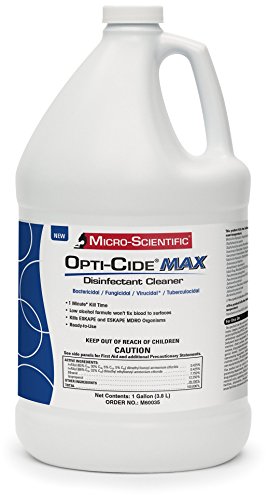
Opti-Cide Max from Micro-Scientific is a broad-spectrum disinfectant formulated to kill viruses, bacteria, fungi, and tubercle bacilli in just 2 minutes of wet contact time. For mouse droppings cleanup, this fast kill window means you can spray attic rafters, garage shelving, or basement concrete and be confident the pathogens are neutralized without waiting 10 minutes between passes. The 1-gallon pour bottle lets you refill spray bottles for multiple rooms or spot-treat large contamination zones without running out mid-job.
Unlike high-alcohol formulas that can cloud plastics, Opti-Cide Max is safe on acrylic, aluminum, brass, copper, stainless steel, and chrome, so you can use it on metal storage bins and plastic totes without surface damage. The strong solvent smell requires ventilating the area during application, but the payoff is a true hospital-grade result that meets the EPA-registered threshold for hard non-porous surfaces.
Reviewers in professional settings — including physical therapy clinics and nail salons — rely on this as their primary cleaning solution. For a homeowner tackling a serious mouse cleanup, the fast dwell time and broad material compatibility make it the strongest all-around choice in this guide.
Why it’s great
- 2-minute contact time is the fastest among reviewed options
- Safe on plastics, metals, and chrome without clouding or corrosion
- 1-gallon size provides significant coverage for large or multiple areas
Good to know
- Strong chemical odor requires ventilation during and after use
- Can degrade some plastics over repeated long-term exposure
2. Control III Concentrate Disinfectant Germicide

Control III Concentrate from Maril Products is an EPA-registered hospital-grade disinfectant that you dilute with water, making it one of the most cost-effective options for large-scale rodent cleanup. The 16-ounce bottle yields multiple gallons of ready-to-use solution, and its 5-year shelf life means you can stock it in the garage or barn without worrying about expiration. Users in the CPAP community have trusted this formula for years because it kills nearly all germs without leaving toxic residue after rinsing.
The active ingredient is a quaternary ammonium compound that works on hard, non-porous surfaces — ideal for metal shelving, plastic bins, sealed concrete floors, and glazed tile. The manufacturer recommends a soak time of 15–30 minutes for equipment, but for surface spraying in mouse areas, you need a wet dwell time of at least 5–10 minutes depending on the pathogen. The non-toxic formulation at the correct dilution reduces respiratory irritation compared to bleach, but gloves are still recommended because the undiluted concentrate can irritate skin.
For homeowners who want to mix fresh batches for each cleanup session and avoid paying for diluted water in every bottle, Control III offers the best long-term value. Just be sure to rinse surfaces that come into contact with food or pet feeding areas after the required contact time.
Why it’s great
- Concentrate yields multiple gallons — extremely economical per use
- 5-year shelf life suits infrequent or seasonal cleanup needs
- Non-toxic at correct dilution, low respiratory irritation
Good to know
- Requires 5–10 minute contact time for hard-surface disinfection
- Undiluted concentrate can irritate skin — always wear gloves
3. Metrex CaviCide Germicidal Surface Disinfectant Spray
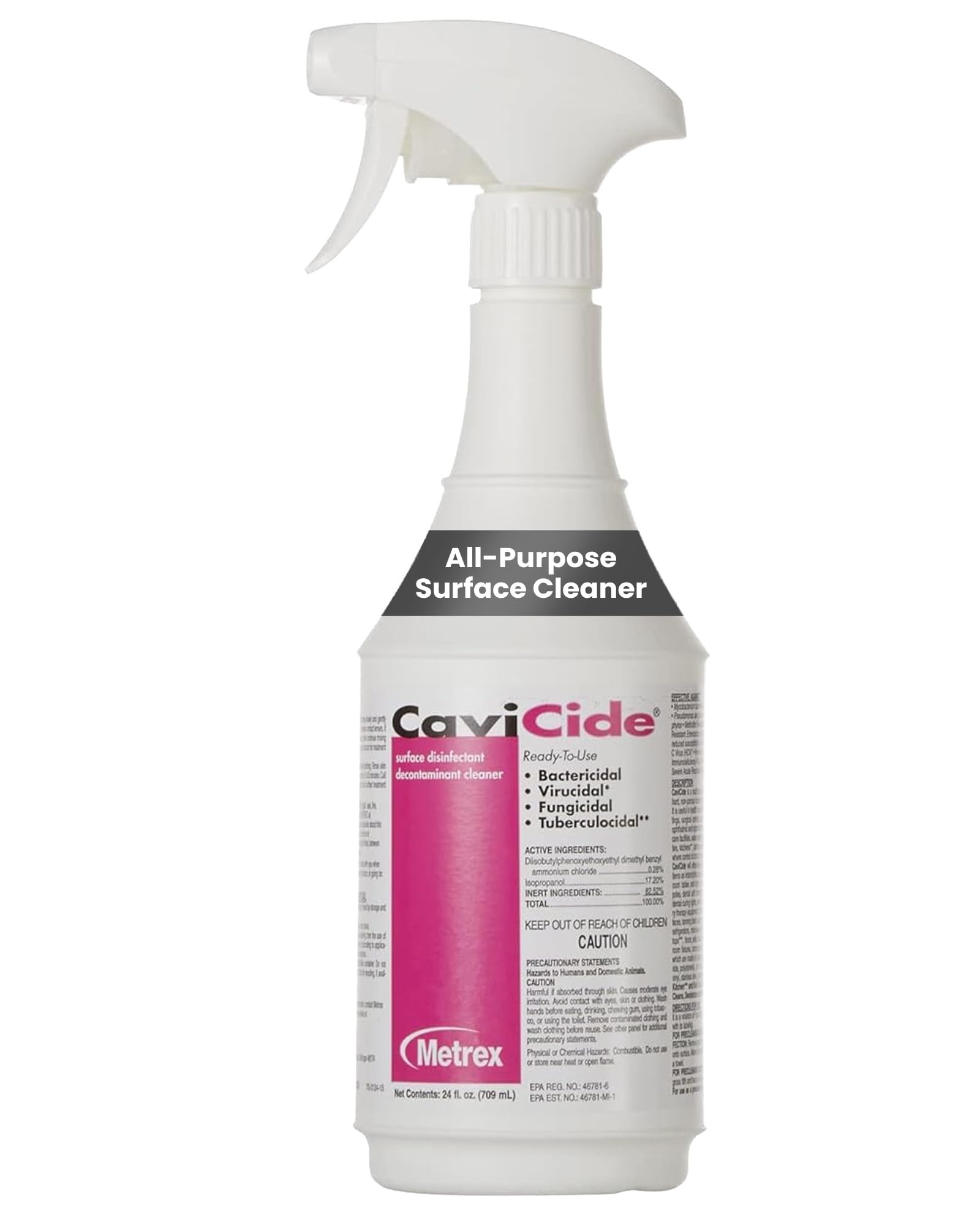
Metrex CaviCide is a ready-to-use quaternary ammonium and alcohol disinfectant widely used in dental offices, veterinary clinics, and hospitals. Its contact times range from 2 to 3 minutes depending on the organism, which aligns well with the fast turnaround needed for mouse droppings cleanup on non-porous surfaces. The pre-mixed trigger spray eliminates dilution guesswork — just spray, let it dwell for the labeled time, and wipe or air dry.
The formula is compatible with medical-grade stainless steel, plastic, glass, Formica, and glazed surfaces, making it safe for kitchen countertops, bathroom fixtures, and pet crates where droppings often accumulate. CaviCide stays effective in the presence of blood and serum, which is relevant because dried rodent waste can contain organic matter that reduces the potency of weaker disinfectants. Users consistently mention a clean, non-burning scent compared to bleach, and many rely on it for daily high-touch surface disinfection beyond just rodent cleanup.
For the homeowner who wants a no-mix, grab-and-spray solution that meets OSHA Bloodborne Pathogen standards, CaviCide is the most convenient professional-grade option. The 24-ounce size is best for spot treatments in kitchens, basements, and garages rather than whole-room fumigation.
Why it’s great
- Ready-to-use trigger spray — no mixing or measuring required
- 2–3 minute contact time fits fast-paced cleanup routines
- Stays effective in the presence of organic soil and blood
Good to know
- Small 24 oz bottle may not cover large garages or attics in one go
- Alcohol content can dry out some plastics with repeated use
4. Microban Multi-Purpose Cleaner 32 oz 2 Pack
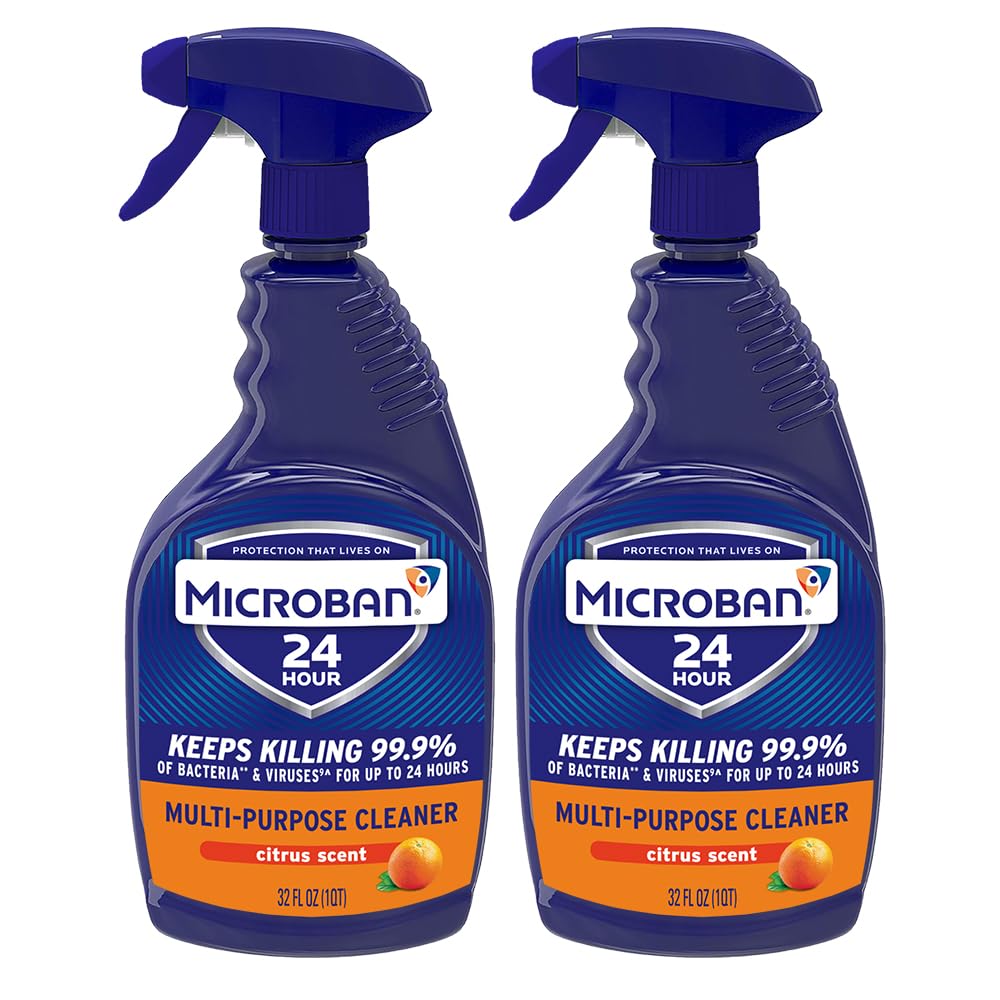
Microban Multi-Purpose Cleaner sets itself apart with a 24-hour residual antimicrobial layer that keeps killing bacteria and viruses on treated surfaces long after the initial wipe. For mouse droppings cleanup in high-traffic areas like kitchen floors, pantry shelves, or garage workbenches, this means one application can provide a full day of protection against recontamination from residual dust or missed particles. The citrus scent is mild and non-overpowering, which is a welcome relief from the harsh chemical smells of other disinfectants.
This cleaner is designed for both hard and fabric surfaces, including sealed granite, glazed tile, Formica, Corian, and stainless steel — but it is not intended for food-contact surfaces and cannot be used on cutting boards or countertops where food is prepared directly. The 2-pack of 32-ounce bottles delivers a generous total of 64 ounces for the price, positioning it as a mid-range option with excellent value for homes with multiple rooms to treat. Users on oxygen therapy or with COPD have noted that the mild scent and low-residue formula are tolerable even in enclosed spaces.
If you prioritize extended protection and a pleasant user experience over the fastest possible kill time, Microban is the best choice for repeat applications in family-occupied areas. Just be aware that the residual effect requires the surface to remain undisturbed to maintain its activity.
Why it’s great
- 24-hour residual protection extends disinfection beyond initial wipe
- Mild citrus scent suitable for sensitive users and enclosed spaces
- 2-pack provides 64 ounces total, excellent coverage for multiple rooms
Good to know
- Not for use on food-contact surfaces like cutting boards
- Residual layer can be wiped away by active cleaning or foot traffic
5. Simple Green d Pro 5 Disinfectant 1 Gal

Simple Green d Pro 5 is a one-step cleaner and disinfectant that combines soil removal with pathogen kill in a single pass — a critical time-saver when you are dealing with dried droppings embedded in garage floor cracks or barn concrete. The 1-gallon bottle is the largest volume in this guide at the most accessible price point, making it the go-to choice for large, unfinished spaces like crawlspaces, attics, and outbuildings where you need to saturate wide areas without rationing product.
The formula is biodegradable and has an extensive efficacy list that includes Hepatitis B and C, Canine Distemper Virus, and Avian Influenza, though the label does not specifically name hantavirus. For general rodent-area disinfection, its broad-spectrum kill covers Salmonella and E. coli, which are the primary bacterial concerns from mouse droppings. Users in Jiu Jitsu facilities and gyms praise its ability to clean mats without leaving residue that causes slipperiness, indicating it works well on textured surfaces without soapy buildup.
The main consideration is that d Pro 5 requires a 10-minute wet contact time for full disinfection, which is longer than the premium options. For budget-conscious homeowners with large contamination zones, the trade-off in dwell time is worth the significant volume savings. Just ensure the surface stays visibly damp for the full duration by reapplying where needed.
Why it’s great
- One-step cleaner + disinfectant saves time on soiled surfaces
- 1-gallon size offers the best value per ounce for large spaces
- Biodegradable formula with light, non-overpowering scent
Good to know
- 10-minute wet contact time is longer than other options
- Not specifically labeled for hantavirus — best for general pathogen control
FAQ
Can I use regular household bleach for mouse droppings cleanup?
How long does the disinfectant need to stay wet on a surface?
Do I need to sweep up droppings before spraying disinfectant?
Are these disinfectants safe to use around pets?
Final Thoughts: The Verdict
For most users, the disinfectant for mouse droppings winner is the Micro-Scientific Opti-Cide Max because of its fast 2-minute contact time and compatibility with plastics and metals — making it ideal for attics, garages, and basements where mixed surfaces are common. If you want a ready-to-use professional spray without any mixing, grab the Metrex CaviCide. And for the most economical coverage across large crawlspaces or barns, nothing beats the volume-to-price ratio of the Simple Green d Pro 5.

Mo Maruf
I created WellFizz to bridge the gap between vague wellness advice and actionable solutions. My mission is simple: to decode the research and give you practical tools you can actually use.
Beyond the data, I am a passionate traveler. I believe that stepping away from the screen to explore new environments is essential for mental clarity and physical vitality.