Our readers keep the lights on and my smoothie glass nicely filled. As an Amazon Associate, I earn from qualifying purchases.
That south-facing window turns your living room into a greenhouse by noon, and the glare makes the TV unwatchable. You want privacy, cooler rooms, and lower energy bills — without spending hundreds on professional installation or replacing your windows. The right film delivers exactly that, but only if you match the spec to your glass and your goal.
I’m Mohammad Maruf — the founder and writer behind WellFizz. I’ve spent hundreds of hours analyzing the technical specifications, real user reviews, and material differences across every major window film on the market to help you navigate this narrow category with confidence.
Whether you need total blackout for shift work or a mirror finish for daytime privacy, this guide cuts through the marketing to find the best diy window tint for home based on measurable performance and real-world installation feedback.
How To Choose The Best DIY Window Tint For Home
Before you buy, understand the three critical factors that determine whether your window film project succeeds or ends in frustration: the installation type, the privacy profile, and the material composition. Each choice directly impacts how the film performs on your specific windows.
Static Cling vs. Peel-and-Stick Adhesive
Static-cling films (like the KESPEN, Volcanics, and rabbitgoo models) use no glue — they rely on water and a squeegee to bond to the glass. Removal is residue-free, making them ideal for renters or anyone who might want to change the film seasonally. Peel-and-stick films (like the BDF BLKT) use a permanent adhesive that creates a stronger bond but is far less forgiving during installation — a single fold can ruin the sheet, and removal may require adhesive solvent. For most DIY home users, static cling offers the best balance of ease, reusability, and clean removal.
Daytime Privacy vs. 24/7 Blackout
One-way mirror films (silver or black-silver) only provide privacy when the exterior is brighter than the interior. At night with indoor lights on, the mirror effect reverses — people outside can see in clearly. If you need privacy around the clock, you need an opaque blackout film like the BDF BLKT that blocks all visible light regardless of time of day. Identify your primary privacy need before choosing.
VLT and Infrared Rejection Ratings
VLT (Visible Light Transmission) tells you how much light passes through. Lower VLT means darker rooms and better heat rejection. A 12% VLT film (like the KESPEN) lets in some light while blocking glare. Infrared rejection percentage (82% to 99% depending on the film) governs how much solar heat passes through the glass. If your priority is cooling, prioritize higher infrared rejection over VLT alone.
Quick Comparison
On smaller screens, swipe sideways to see the full table.
| Model | Category | Best For | Key Spec | Amazon |
|---|---|---|---|---|
| rabbitgoo Window Privacy Film | Static Cling | Daytime privacy with heat reduction | 97% UV block, 91% IR rejection | Amazon |
| Rockrose Window Tint | Peel & Stick | Strong bond for long-term installs | 99% UV block, PET material | Amazon |
| KESPEN Window Privacy Film | Static Cling | Budget-friendly heat & UV block | 90% UV block, 12% VLT | Amazon |
| Volcanics One Way Window Film | Static Cling | Easy, reusable daytime privacy | 99% UV block, 85% IR rejection | Amazon |
| BDF BLKT Window Film | Peel & Stick | Total 24/7 blackout needs | 100% light block, opaque | Amazon |
In‑Depth Reviews
1. rabbitgoo Window Privacy Film
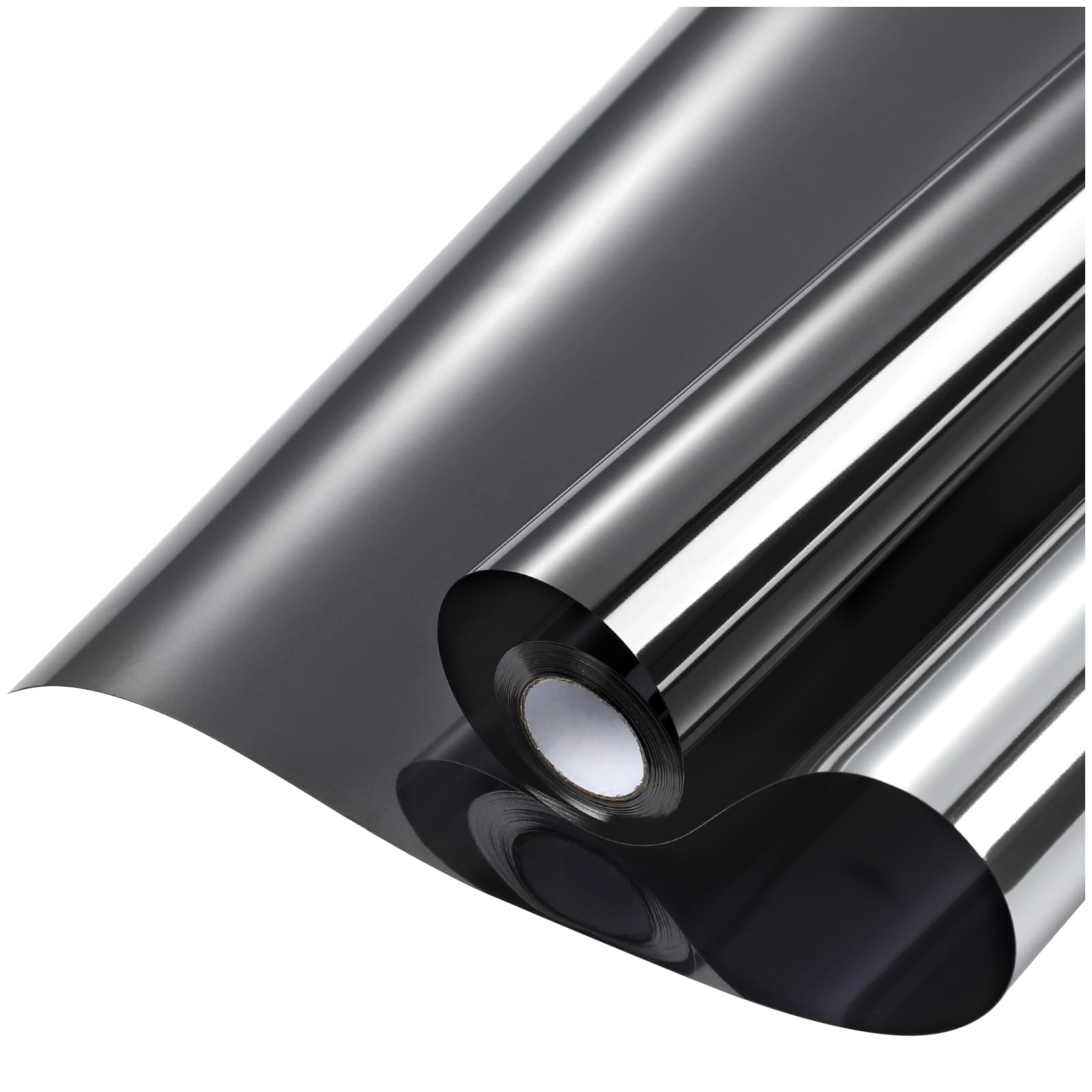
The rabbitgoo film hits the sweet spot for most homeowners. With 97% UV rejection and 91% infrared rejection, it dramatically cuts heat gain on south- and west-facing windows — the hardest to cool. The 11% VLT keeps rooms visibly bright while eliminating harsh glare, and the static-cling application means zero adhesive residue when you remove it. This is the most balanced performer in the group for daytime privacy and energy savings.
Installation is straightforward with soapy water and a squeegee (not included), and the film is forgiving enough for a first-time DIYer. Users consistently report that the film stays in place for years without peeling, and it holds up well on multi-pane windows and shower doors. The aesthetic bonus: it casts a soft rainbow prism effect across the room, which many buyers find appealing.
The one limitation is that it is a daytime-only privacy film. Once indoor lights come on at night, the mirror effect disappears — you will want curtains for evening coverage. Also, rabbitgoo advises against applying it to double-pane windows that receive prolonged direct sunlight, as the heat buildup between panes can stress the seal. For standard single-pane glass, this is the top recommendation.
Why it’s great
- Excellent 91% infrared rejection for heat reduction
- Renter-friendly static cling removes without residue
- Lets in soft natural light while blocking glare
Good to know
- Daytime-only privacy — needs curtains at night
- Not recommended for double-pane windows in direct sun
- Squeegee and spray bottle not included
2. Rockrose Window Tint for Home
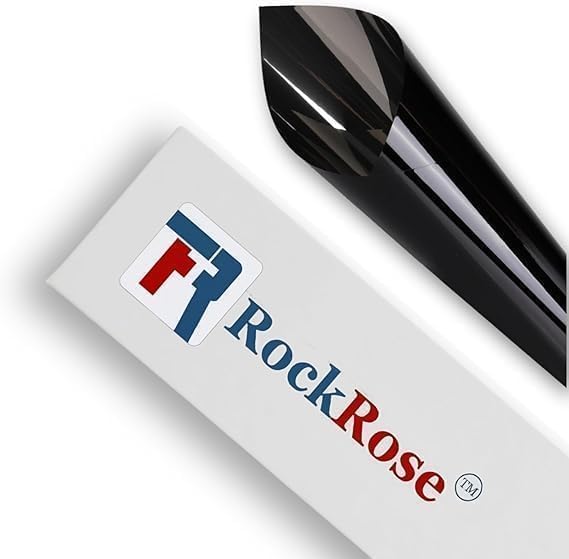
The Rockrose film uses PET material rather than standard vinyl, which gives it superior clarity and strength. It is a peel-and-stick adhesive film designed for longer-term installations where you want a more permanent bond. The 99% UV rejection is among the highest in this group, and users report noticeable indoor temperature drops — some by as much as 7-8°F on extreme heat days.
Installation requires careful prep: clean the glass thoroughly, use a soapy water solution, and work slowly to avoid bubbles. The film is less forgiving than static-cling options, so this is better suited for someone with a bit of DIY patience. The payoff is a strong, lasting bond that withstands window movement and direct sun without peeling. The mirror finish is clean and professional-looking during daylight hours.
The main drawback is the installation difficulty. The roll arrives without a stiff cardboard tube, which can lead to creasing and folding during handling. The adhesive makes repositioning tricky — once it touches the glass, it sticks fast. For renters or those who may want to change their film seasonally, a static-cling option is more practical. But for a permanent install, the Rockrose delivers durability that static-cling films cannot match.
Why it’s great
- PET material is stronger and clearer than vinyl
- 99% UV rejection protects furniture from fading
- Effective heat reduction in summer
Good to know
- Peel-and-stick adhesive is less forgiving during install
- Roll lacks a stiff tube, risking creases in shipping
- No nighttime privacy — needs curtains when lights are on
3. KESPEN Window Privacy Film

At the most accessible price point in this guide, the KESPEN film delivers solid daytime privacy and UV protection for budget-conscious buyers. It blocks 90% of UV rays and 82% of infrared rays, and the 12% VLT cuts glare effectively while still allowing a dim view of the outside. The static-cling design is the simplest application method — spray water on the glass and adhesive side, apply, and squeegee out bubbles.
Real users report measurable results: a buyer in Florida noted a roughly 30% reduction in energy usage after installation on old aluminum windows. The film is thick enough to make a difference in heat transfer, and the included spray bottle and squeegee (though basic) are enough to get the job done. For covering multiple windows on a tight budget, the square footage per dollar is excellent.
The downsides are worth noting. The film is rolled on a small-diameter cardboard tube, which can cause the last few feet of the roll to curl and become unusable — a common complaint. The included tools are flimsy, and serious DIYers will want to supply their own high-quality squeegee and sharp cutting knife. As with all one-way films, nighttime visibility is poor when interior lights are on, so curtains are required after dark.
Why it’s great
- Excellent value per square foot
- Static cling removes cleanly without residue
- Reduces glare and UV damage to furniture
Good to know
- Tight rolling on small tube can make end of roll unusable
- Included tools are basic — upgrade your own squeegee
- Daytime-only privacy; night requires curtains
4. Volcanics One Way Window Privacy Film

The Volcanics film is the most forgiving option for first-time DIYers. It is adhesive-free static cling that can be lifted, repositioned, and even reapplied on a different window if needed — ideal for trial-and-error installs. It blocks 99% of UV rays and 85% of infrared rays, placing it solidly in the mid-range for heat rejection performance. The included tools (scraper, cutting knife, watering can) are genuinely usable, not just throwaway items.
Visually, the film creates a subtle prismatic effect when sunlight hits it, adding a decorative element that many users find attractive. It works well on sliding doors, kitchen windows, balconies, and office partitions. The adhesive-free nature means zero chemical off-gassing, which is a plus for bedrooms and nurseries. Users report that the film holds up to shower steam and window movement without peeling.
The trade-off is that the heat rejection, while good, is not class-leading. For extreme climates or windows that get direct sun for six hours a day, a film with higher infrared rejection (like the rabbitgoo) will make a bigger difference. And as with all one-way films, the mirror effect disappears at night. But for a versatile, low-commitment, and reusable privacy solution, the Volcanics film is hard to beat.
Why it’s great
- Reusable static cling — remove and reapply on different windows
- Comes with usable installation tools included
- 99% UV block with zero adhesive chemicals
Good to know
- 85% IR rejection is good but not top-tier for heat
- Nighttime privacy requires curtains with interior lights
- Prism effect may not suit all decor preferences
5. BDF BLKT Window Film Blackout Day & Night

The BDF BLKT is the only film in this guide that provides true 24/7 darkness. It blocks 100% of visible light, making it essential for shift workers who need daytime sleep, home theaters, or grow rooms. It also rejects 99% of UV rays, so it offers the same furniture-fading protection as the reflective films. This is not a one-way mirror — it is opaque black in both directions at all hours.
Installation is the most challenging of any film here. The peel-and-stick adhesive is strong and permanent once applied, and the film is extremely sensitive — the slightest fold creates a permanent wrinkle. User reports consistently recommend having a second person to help with alignment, using plenty of soapy water, and marking cut lines with a white crayon to avoid creasing. Patience is not optional; it is required.
That said, the performance is unmatched for its specific use case. Rooms become pitch-black even on the brightest afternoons, and users report temperature drops of 7-8°F in rooms with skylights. The film is not recommended for double-pane windows, as the heat buildup between panes can damage the seal. For anyone who needs absolute darkness without installing blackout curtains, this film is the only real solution.
Why it’s great
- 100% light block — true 24/7 blackout performance
- Significant heat reduction for skylights and hot rooms
- 99% UV rejection protects furnishings
Good to know
- Very tricky to install — requires two people and patience
- Adhesive is permanent and unforgiving if misaligned
- Not suitable for double-pane windows
FAQ
Can I apply DIY window tint to double-pane windows?
Why does my one-way window film stop working at night?
How do I remove window tint without damaging my glass?
Final Thoughts: The Verdict
For most users, the best diy window tint for home winner is the rabbitgoo Window Privacy Film because it delivers the strongest heat rejection (91% infrared) in a forgiving static-cling format that renters and homeowners alike can install without stress. If you need a more permanent bond with superior PET-material clarity, grab the Rockrose Window Tint. And for total 24/7 blackout — shift work, nurseries, or home theaters — nothing beats the BDF BLKT Window Film.

Mo Maruf
I created WellFizz to bridge the gap between vague wellness advice and actionable solutions. My mission is simple: to decode the research and give you practical tools you can actually use.
Beyond the data, I am a passionate traveler. I believe that stepping away from the screen to explore new environments is essential for mental clarity and physical vitality.