Our readers keep the lights on and my smoothie glass nicely filled. As an Amazon Associate, I earn from qualifying purchases.
Securing your home doesn’t have to mean locking into a long-term contract or paying for professional installation. Modern wireless systems put you in control, using peel-and-stick sensors, cloud-connected hubs, and app-based controls to cover entry points and interior spaces in under an hour. The challenge is sorting through the flood of kits to find one that actually delivers reliable detection, clear alerts, and expandability without hidden costs.
I’m Mohammad Maruf — the founder and writer behind WellFizz. I’ve spent many hours analyzing sensor types, hub connectivity, battery life specifications, and real customer experiences to build this guide around what actually matters for a DIY home security setup.
Whether you’re protecting a small apartment or a multi-bedroom family home, finding the right balance of sensor count, smart features, and subscription flexibility is the real key. That’s exactly what this guide to the diy home alarm system market aims to clarify.
How To Choose The Best DIY Home Alarm System
A DIY system is only as effective as the sensors you place and the hub that ties them together. Focus on these three factors before buying.
Sensor Coverage vs. Square Footage
Kits range from 8-piece to 23-piece sets. For a 1-2 bedroom home, 4 entry sensors and 1 motion detector may be sufficient. Larger homes need more contact sensors (for windows and doors) and at least two motion sensors to cover hallways and common rooms. Check if the system supports adding extra sensors later — some budget kits cap at 20 total sensors.
Hub Communication and Backup
Most systems rely on your home WiFi. That works fine day-to-day, but if your internet goes down or power cuts, you lose alerts. Mid-range and premium systems offer cellular backup via a SIM card slot or built-in LTE, keeping your alarm active even during outages. For critical coverage, a hub with battery backup and cellular fallback is worth the extra cost.
Subscription or No Monthly Fee
Many kits advertise “no monthly fee,” meaning you self-monitor via the app. That keeps costs near zero but leaves you responsible for responding to alerts. Professional monitoring adds a monthly fee (typically -30) for 24/7 dispatch. Choose self-monitoring for tight budgets and renters; choose professional monitoring for homes with valuables or when you travel frequently.
Quick Comparison
On smaller screens, swipe sideways to see the full table.
| Model | Category | Best For | Key Spec | Amazon |
|---|---|---|---|---|
| SimpliSafe 11 Piece Gen 3 | Premium Kit | Complete home with monitoring | 24-hour battery backup + cellular | Amazon |
| Ring Alarm 8-Piece Kit | Mid-Range | 1-2 bedroom homes | Cellular backup + Z-Wave | Amazon |
| Arlo Home Security SS1501 | Premium Hub | Sensor-only clean installation | 8-in-1 multifunction sensors | Amazon |
| Arlo Pro 6th Gen 4-Cam | Premium Camera | Outdoor camera + alarm combo | 2K HDR, 160° FOV, 12x zoom | Amazon |
| eufy Smart Display E10 | Hub/Display | Touchscreen control center | 8-inch display, 64GB storage | Amazon |
| SimpliSafe Smart Alarm Camera | Mid-Range Camera | Indoor camera + alarm | 1536p HD, 80 dB siren | Amazon |
| Blink Outdoor 4 5-Cam | Mid-Range Camera | Budget outdoor coverage | 2-year battery, 1080p HD | Amazon |
| tolviviov 15-Piece Kit | Budget Kit | No-fee whole-home sensing | 120 dB siren, 20-sensor expand | Amazon |
| D1D9 17pcs 4G Alarm | Budget 4G Kit | Off-grid or cellular backup | 4G + WiFi, 80m range | Amazon |
In‑Depth Reviews
1. SimpliSafe 11 Piece Gen 3 System
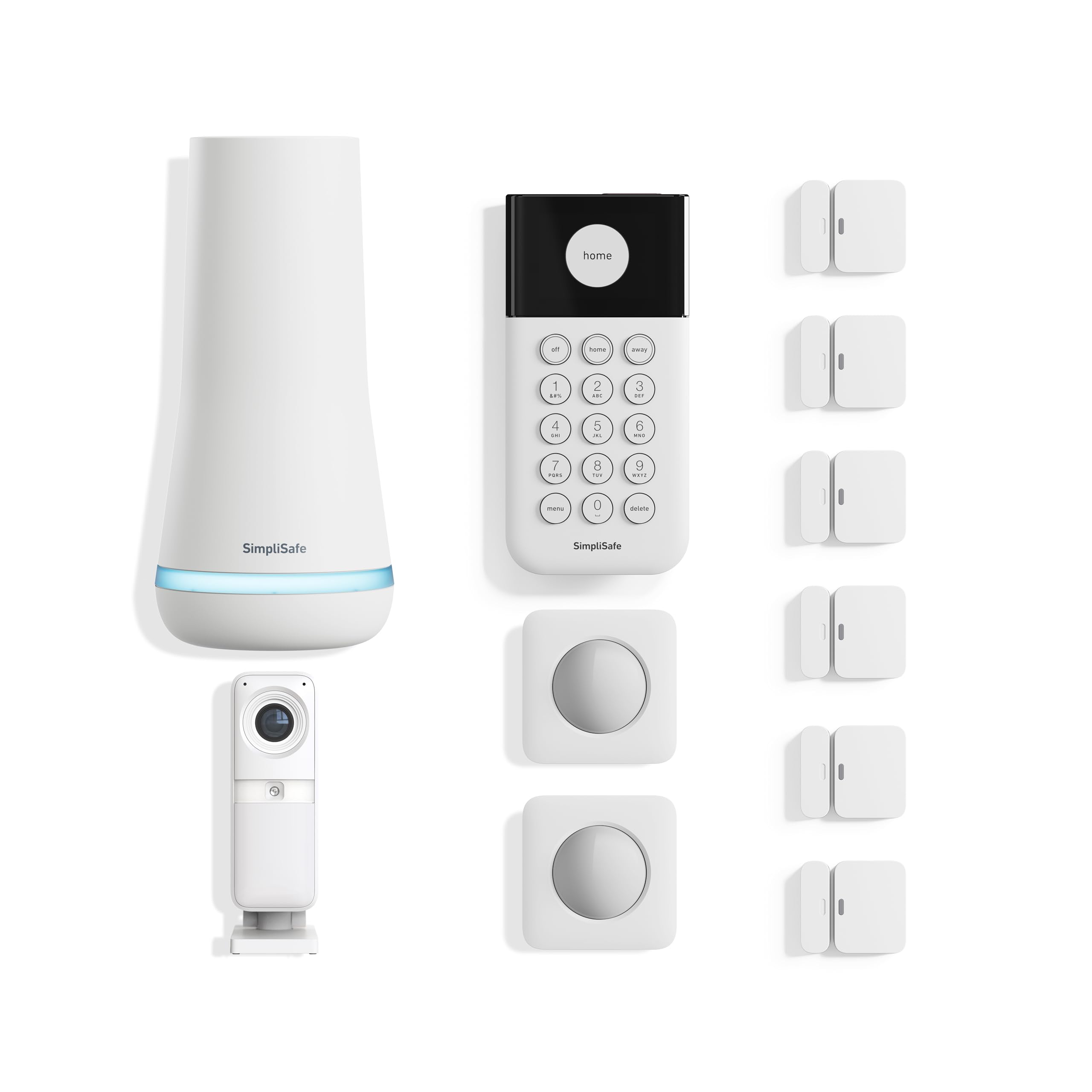
The Gen 3 kit includes six entry sensors, two motion detectors, one keypad, an indoor HD camera, and a base station with 24-hour battery backup. The base station connects via WiFi and optional cellular, keeping your alarm functional during power and internet outages. Professional monitoring starts with Fast Protect for video verification, which can cut police response time significantly.
Placement is simple: peel-and-stick sensors stick to door and window frames, and the motion sensors cover a 90-degree field up to 35 feet. The system supports pet immunity up to 60 pounds, reducing false triggers. The indoor camera captures 1536p HD video with night vision and two-way audio, and the keypad features backlit buttons with a smash-safe design.
Real-world use shows zero false alarms for several months, with intuitive app control and easy expansion. The main limitation is that the camera quality is merely adequate rather than sharp, and the app logs only major events unless you subscribe. Overall, this is the most complete all-in-one kit for users who want both self-monitoring and the option for professional dispatch.
Why it’s great
- Full 11-piece kit covers doors, windows, and rooms
- Cellular backup keeps alarm online during outages
- Fast Protect monitoring offers video verification
Good to know
- Professional monitoring requires a paid plan
- Camera resolution is decent but not premium
- App event log is limited without subscription
2. Ring Alarm 8-Piece Kit (newest model)
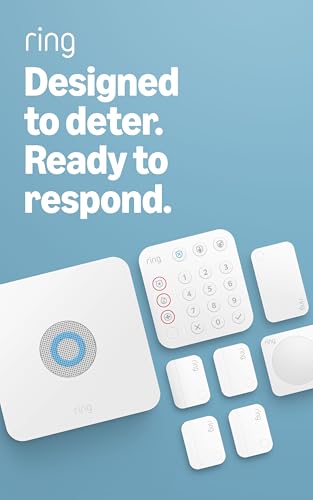
The 8-piece kit includes one base station, one keypad, four contact sensors, one motion detector, and a range extender. It’s designed for 1-2 bedroom homes, though you can add up to dozens of components. The base station supports WiFi, Ethernet, cellular backup (with a Ring Protect plan), and a backup battery that keeps the system running for up to 24 hours after power loss.
Installation is genuinely plug-and-play: each component has a unique 5-digit number that the app pairs automatically. The motion sensor covers a 30-foot range and works with pets up to 50 pounds. The keypad has dedicated emergency buttons for police, fire, and medical, and it can be wired or run on rechargeable batteries for flexible placement.
User reports highlight seamless integration with Ring cameras, Schlage smart locks, and Alexa voice control. The Z-Wave radio inside the base station allows direct pairing with Z-Wave devices without extra hubs. The main downside is that the Ring Protect plan costs extra for professional monitoring and cellular backup, and the base station power cord is shorter than ideal for ceiling-mounted installations.
Why it’s great
- Easy DIY setup with guided app pairing
- Built-in Z-Wave for smart lock integration
- Cellular backup and 24-hour battery reserve
Good to know
- Professional monitoring costs extra monthly
- Short base station power cord
- Best paired with other Ring devices
3. Arlo Home Security System SS1501
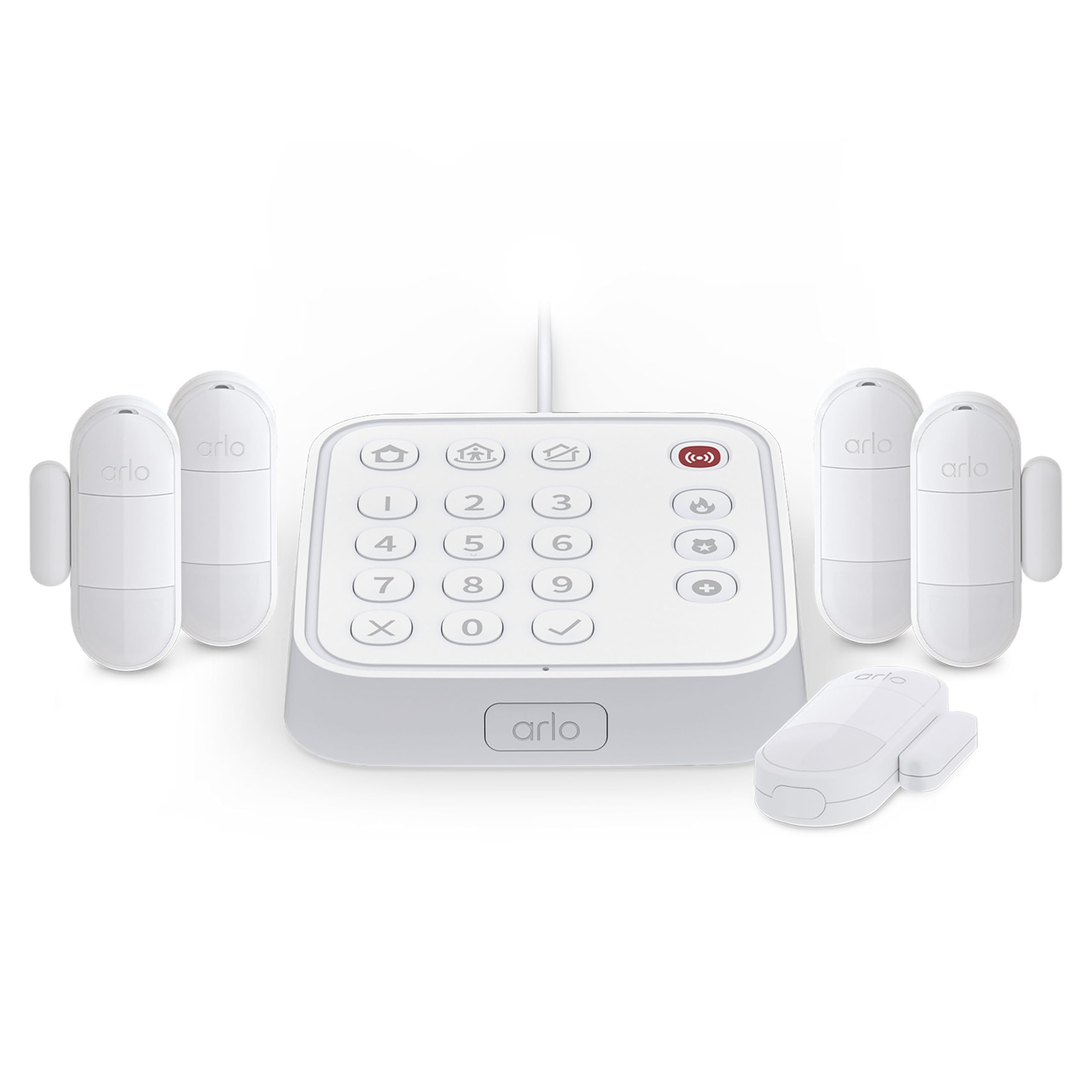
Arlo’s approach is sensor-first: the keypad itself acts as the hub, integrating a siren, motion detector, and smoke/CO alarm listener into a single wall-mounted unit. The five included 8-in-1 sensors can function as door/window contacts, motion detectors, or temperature sensors depending on placement. No separate base station means fewer cables and a cleaner look.
The keypad hub offers three arming modes (Standby, Arm Home, Arm Away) plus rapid One Tap Emergency buttons for fire, police, or medical dispatch. The sensors use SecureLink technology for extended range and encrypted communication with the hub. The Arlo Secure App manages all pairing, scheduling, and alerts, and the system supports professional monitoring via a paid subscription after the trial.
User feedback emphasizes how fast the sensors pair and how long the battery lasts — several months per sensor. The compact size makes them nearly invisible on door frames. The main tradeoff is that the system is sensor-only; there’s no built-in camera integration. If you want video, you’ll need separate Arlo cameras. Also, the setup process requires careful reading because skipping steps can cause pairing failures.
Why it’s great
- Multifunction 8-in-1 sensors replace multiple devices
- No separate hub, reduces clutter
- Extended-range SecureLink radio
Good to know
- No camera included
- Subscription needed for professional monitoring
- Setup requires careful attention to steps
4. Arlo Pro Security Camera 6th Gen (4-Cam)

The Arlo Pro 6th Gen delivers 2K HDR video with a 160-degree field of view, 12x digital zoom, and color night vision. Each camera runs on a rechargeable, removable battery that lasts months between charges. The system includes a hub that connects via dual-band WiFi, and the Arlo Secure App provides motion alerts, live view, and two-way audio.
Custom detection zones let you filter out street traffic and focus on your driveway or side gate. Auto Zoom & Tracking follows a detected person across the frame for better identification. The emergency response feature can be triggered directly from the camera to dispatch police, fire, or medical help, sending pre-filled location and gate codes.
Users consistently praise the sharp daytime and night video clarity, the wide field of view, and the long battery life. False alerts are rare due to the smart detection algorithms. The catch is that cloud storage and advanced features like activity zones and custom detections require a paid Secure Plan after the 1-month trial. No charging dock is included in the box either.
Why it’s great
- 2K HDR with excellent day and night clarity
- Removable rechargeable battery for nonstop coverage
- Auto Zoom & Tracking reduces blind spots
Good to know
- Advanced features require subscription
- No charging dock included
- Hub needed for full functionality
5. eufy Smart Display E10
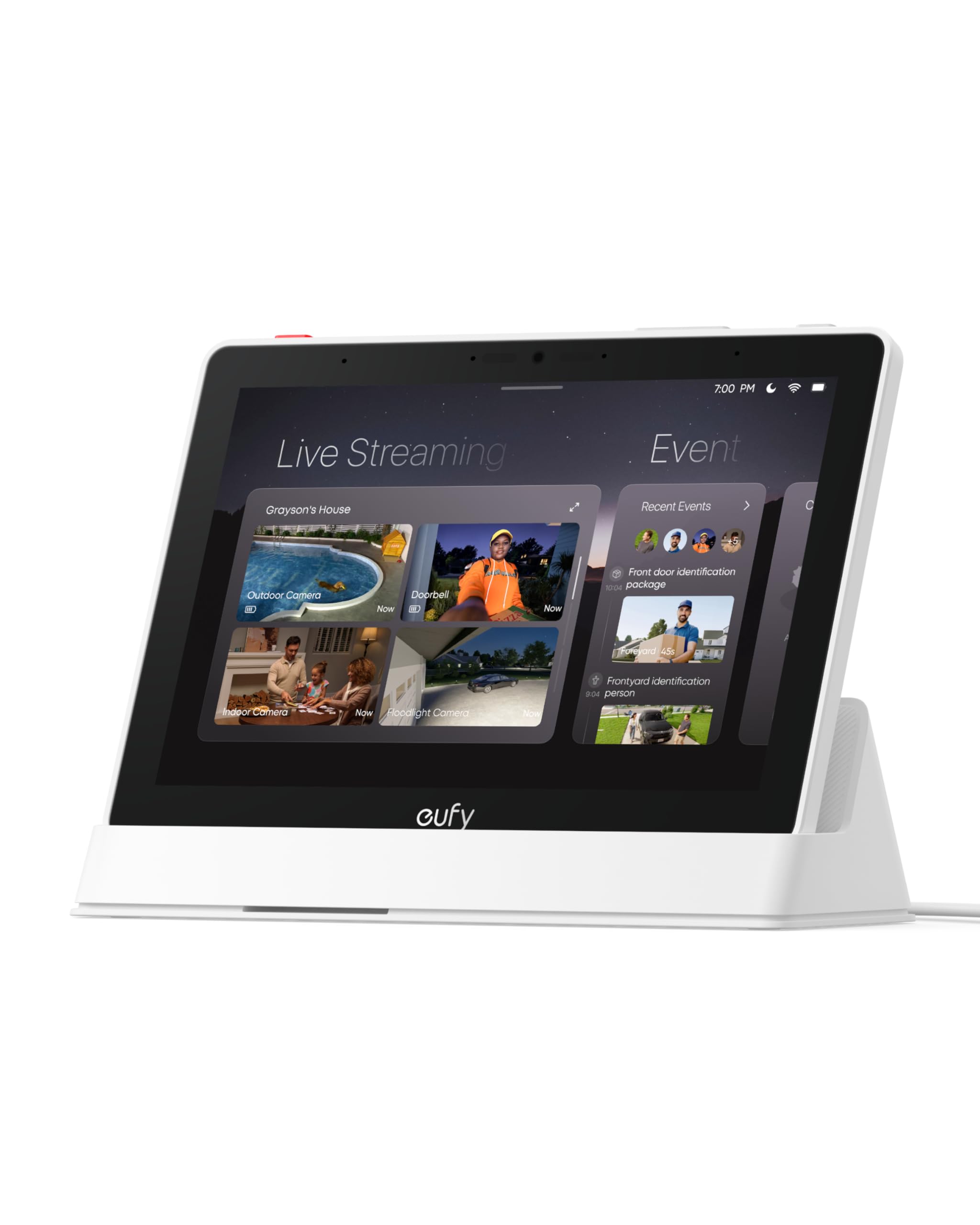
This is not a sensor kit — it’s a touchscreen control hub for eufy security ecosystems. The 8-inch display shows four simultaneous camera feeds, allows one-tap arm/disarm, and automatically lights up when a doorbell rings or motion is detected. It includes 64GB of eMMC storage for local event recording, eliminating the need for cloud subscriptions.
Setup pairs directly with eufy HomeBase 3 and modern eufy cameras, doorbells, and sensors. The daily event report feature uses facial and package recognition (from HomeBase 3) to compile a short video summary of key events. The display can be wall-mounted or placed on a stand and runs on a rechargeable battery for portability around the house.
Users love the instant hands-free door alerts and the ability to see four camera views at once. The interface is simple enough for kids and seniors to operate. However, the E10 does not work with older HomeBase 2 units, and some users report connectivity issues when streaming more than two cameras simultaneously. Battery life could also be better for a fully portable device.
Why it’s great
- Four simultaneous live feeds on one screen
- Local 64GB storage avoids cloud fees
- Hands-free door alerts with live view
Good to know
- Not compatible with HomeBase 2
- Multi-camera streaming can stutter
- Battery life is average
6. SimpliSafe Smart Alarm Wireless Indoor Camera

This indoor camera integrates directly into the SimpliSafe Gen 3 ecosystem as both a camera and an alarm trigger. It captures 1536p HD video with 10x digital zoom and has a 80 dB siren that can be activated remotely or automatically when an intrusion is detected. The camera uses vision AI to distinguish between pets under 50 pounds and potential intruders, reducing false alarms.
With the Fast Protect monitoring plan, SimpliSafe agents can use the camera’s two-way audio to see and speak to an intruder in real time, verifying the threat before dispatching police. This video verification can lead to priority emergency dispatch. The camera can be placed on a shelf or mounted on a wall at 6-7 feet high with a 20-degree downward angle for optimal coverage.
Users report easy Wi-Fi setup and sharp video quality in both day and night modes. The battery-powered design means it can run for months on a single charge, and it keeps working during power outages when plugged in. The main drawbacks are the price — it’s expensive for a single indoor camera — and the privacy shutter takes 8-10 seconds to open when recording starts, which can miss early activity.
Why it’s great
- Built-in siren can be triggered remotely
- Vision AI reduces false alerts
- Video verification speeds police response
Good to know
- Pricey for a single indoor camera
- Privacy shutter delay can miss action
- Requires SimpliSafe Gen 3 base station
7. Blink Outdoor 4 5-Camera System

The Blink Outdoor 4 is the most budget-friendly outdoor wireless camera system on this list. The 5-camera bundle includes a Sync Module Core, five cameras, lithium AA batteries, and mounting kits. Each camera runs on two AA lithium batteries for up to two years of typical use, which is exceptional for a wire-free system. Video is 1080p HD with infrared night vision and crisp two-way audio.
The system uses dual-zone motion detection to reduce false alerts from swaying branches or passing cars. Optional person detection is available through a Blink Subscription Plan, but the system works fine without it — you’ll just get generic motion alerts. Live view and clip review are handled through the Blink app, and the system works with Alexa for voice control and multi-camera live view.
Users love the compact, unobtrusive design and straightforward app setup. Night vision is clear, and the cameras are small enough to hide under eaves. The Sync Module Core does not support local storage, so you’ll need a subscription for cloud storage beyond the 30-day free trial. Some users also report that power blips can crash the Sync Module, requiring a time-consuming re-pairing of the whole system.
Why it’s great
- Two-year battery life from AA lithium cells
- Very compact and easy to hide
- Dual-zone motion detection cuts false alerts
Good to know
- No local storage with Sync Module Core
- Power blips can break Sync Module pairing
- Subscription needed for person detection
8. tolviviov 15-Piece Kit

This 15-piece kit is a no-subscription powerhouse for budget-conscious buyers. It includes a WiFi alarm base station, one keypad, one motion sensor, ten door/window sensors, and two remote controls. The siren hits 120 dB — loud enough to alert both neighbors and occupants from inside the home. The system supports expansion up to 20 sensors and 5 remote controls/keypads.
Setup is DIY-friendly with instructions and setup videos. The base station connects to 2.4GHz WiFi and works with Alexa for voice arming and disarming. The app sends real-time alerts for each triggered sensor, and you can customize the alarm into Home or Away modes. The keypad has an LCD screen for status at a glance, and the remote controls are convenient for keyless entry.
Users consistently highlight the high value: many sensors, easy installation, loud siren, and zero ongoing fees. The contact sensors have some tolerance for non-flush door gaps, which is helpful for older homes with uneven frames. The main limitation is that it only works on 2.4GHz WiFi — if your router broadcasts only 5GHz, you’ll need a WiFi extender. Also, the key fob range is modest, and some users received faulty units that were replaced by the seller.
Why it’s great
- Five door/window sensors for whole-home coverage
- 120 dB siren is very audible
- No monthly fees, fully self-monitored
Good to know
- 2.4GHz WiFi only
- Key fob range is limited
- Some early units had sensor pairing issues
9. D1D9 17pcs 4G WiFi Alarm System
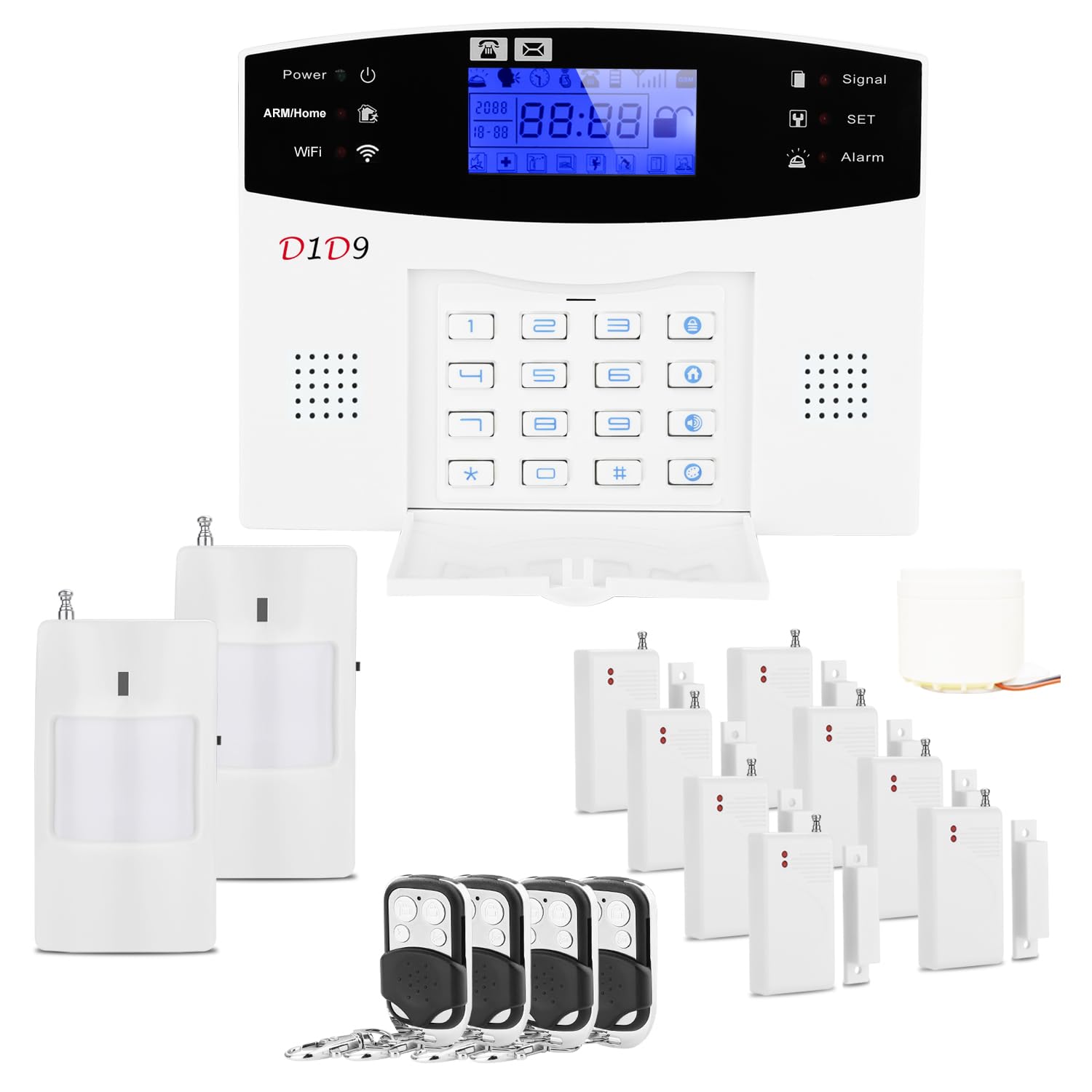
This 17-piece kit offers dual connectivity: it works over both WiFi and 4G (via a SIM card), so you can receive alerts and control the system even if your home internet goes down. The kit includes door/window sensors, motion detectors, a remote control, and a siren — covering the main entry points of a typical home or small office. The batteries are included as a gift, though you may need to replace them eventually.
The DIY installation is truly peel-and-stick, with a warm hint that you can set it up in about 20 minutes. The app allows real-time arming, disarming, and sensor monitoring. The system is expandable so you can add more sensors over time. It’s aimed at homes, rental properties, vacation cabins, and even elderly care settings where cellular connectivity is a lifeline.
User reports are generally positive: the sensors work consistently, and the 4G connectivity provides peace of mind for off-grid or vacation properties. However, the remote siren had intermittent reliability issues in a few units, with the seller suggesting wire checks. Some motion sensor false alarms were attributed to insects crawling across the lens. For the price, the sensor count and cellular backup are unmatched.
Why it’s great
- 4G cellular backup for off-grid use
- 17 pieces cover most entry points
- No monthly subscription required
Good to know
- SIM card not included
- Remote siren reliability is inconsistent
- Motion sensor may trigger on small insects
FAQ
Can I install a DIY alarm system without any wiring skills?
What does “no monthly fee” actually mean for a DIY system?
How many sensors do I need for a standard 3-bedroom house?
Do these systems work with Alexa or Google Assistant?
Final Thoughts: The Verdict
For most users, the diy home alarm system winner is the SimpliSafe 11 Piece Gen 3 because it combines robust sensor coverage, 24-hour battery backup, cellular fallback, and the option for professional monitoring without a long-term contract. If you want a sensor-only system with no hub clutter and versatile 8-in-1 sensors, grab the Arlo SS1501. And for small homes or rentals on a tight budget with zero recurring fees, nothing beats the tolviviov 15-Piece Kit.

Mo Maruf
I created WellFizz to bridge the gap between vague wellness advice and actionable solutions. My mission is simple: to decode the research and give you practical tools you can actually use.
Beyond the data, I am a passionate traveler. I believe that stepping away from the screen to explore new environments is essential for mental clarity and physical vitality.