Our readers keep the lights on and my smoothie glass nicely filled. As an Amazon Associate, I earn from qualifying purchases.
Every frame in a fast-paced shooter or racing title tests a gaming display’s ability to stay clean and responsive. Smearing, ghosting, and tearing are the enemies, and the monitor you choose determines whether you see every enemy pixel or miss the action entirely. The panel technology, refresh rate, and response time work together to define your competitive edge, making the selection process a deliberate one.
I’m Mohammad Maruf — the founder and writer behind WellFizz. My research focuses on dissecting panel specifications, refresh rate behavior, and real-world motion handling to separate marketing claims from actual gaming performance.
Whether you prioritize deep contrast, high resolution, or pure speed, finding the right display for gaming requires balancing resolution targets with refresh rate needs and panel type preferences to match your hardware and game library.
How To Choose The Best Display For Gaming
Selecting a gaming display is about matching your hardware, budget, and preferred genres. A competitive first-person shooter player needs different specs compared to someone who plays open-world RPGs or strategy titles. Understanding the core specifications helps you make a confident purchase without overspending on features you won’t use.
Panel Technology: IPS, VA, and OLED
IPS panels offer wide viewing angles and accurate colors, making them versatile for both gaming and productivity. VA panels produce higher native contrast ratios, resulting in deeper blacks, but often have slower pixel response times that can introduce dark-level smearing. OLED panels deliver per-pixel lighting with infinite contrast and sub-millisecond response times, providing the best motion clarity and HDR performance but requiring care to prevent burn-in over extended use.
Refresh Rate and Response Time
Refresh rate, measured in hertz, indicates how many frames the display can show per second. Higher rates like 144Hz or 240Hz make motion appear smoother and reduce perceived input lag. Response time, measured in milliseconds, determines how fast a pixel changes color. Slower response times cause ghosting behind fast-moving objects. For competitive gaming, a combination of high refresh rate and low response time is essential.
Resolution and GPU Pairing
1080p remains a common baseline for high-refresh-rate gaming on mid-range GPUs. QHD (1440p) is the current sweet spot, offering a noticeable sharpness increase while remaining achievable for modern graphics cards at high frame rates. 4K delivers the most detail but demands a powerful GPU to maintain high frame rates, often making it more suitable for slower-paced games or when paired with a top-tier card.
Adaptive Sync and Connectivity
Adaptive sync technologies like AMD FreeSync and NVIDIA G-Sync eliminate screen tearing by synchronizing the display’s refresh rate with the GPU’s frame output. Most modern displays support one or both standards, often through HDMI 2.1 or DisplayPort connections. HDMI 2.1 is important for 4K 120Hz gaming on current-gen consoles, while DisplayPort 1.4 is standard for high-refresh-rate PC gaming.
Quick Comparison
On smaller screens, swipe sideways to see the full table.
| Model | Category | Best For | Key Spec | Amazon |
|---|---|---|---|---|
| MSI MPG 321URX | Premium OLED | High-end 4K gaming | 32″ 4K 240Hz QD-OLED | Amazon |
| ASUS ROG Strix XG27AQDMG | Premium OLED | Competitive 1440p gaming | 27″ 1440p 240Hz WOLED | Amazon |
| LG 27GS93QE | Premium OLED | Wireless-free competitive play | 27″ 1440p 240Hz WOLED | Amazon |
| AOC Agon PRO AG276QZD2 | Value OLED | Entry-level OLED gaming | 27″ 1440p 240Hz QD-OLED | Amazon |
| Acer Nitro VG270K | Mid-Range IPS | 4K resolution on a budget | 27″ 4K 160Hz IPS | Amazon |
| Dell S2725QS | Mid-Range IPS | 4K productivity and light gaming | 27″ 4K 120Hz IPS | Amazon |
| Alienware AW2725DM | Mid-Range IPS | Balanced 1440p gaming | 27″ 1440p 180Hz IPS | Amazon |
| Samsung Odyssey G5 G53F | Budget IPS | Affordable 1440p high refresh | 27″ 1440p 200Hz IPS | Amazon |
| Samsung Odyssey G5 G51F | Budget VA | Deep contrast on a budget | 27″ 1440p 180Hz VA | Amazon |
In‑Depth Reviews
1. MSI MPG 321URX QD-OLED

The MSI MPG 321URX sets a high bar with its 32-inch 4K QD-OLED panel, combining a 240Hz refresh rate with a 0.03ms GtG response time. This combination delivers fluid motion and per-pixel lighting that makes HDR content look incredibly vibrant, with deep blacks and bright highlights that IPS panels cannot match. The wide DCI-P3 99% color gamut ensures accurate, saturated colors straight out of the box.
Connectivity is comprehensive with HDMI 2.1, DisplayPort 1.4a, and a USB Type-C port that supports 90W power delivery, allowing you to charge a laptop while using the display. The KVM function with Picture-in-Picture and Picture-by-Picture modes adds productivity flexibility for multi-device setups. The 4-way adjustable stand provides ergonomic positioning, and the OLED Care 2.0 suite helps mitigate burn-in risk through pixel shift and panel refresh routines.
The main consideration is the premium investment required to access this level of performance. The large 32-inch size and high pixel density also demand a powerful GPU to drive 4K at high frame rates in demanding titles. For gamers who want the best combination of resolution, speed, and image quality, this display justifies its position at the top of the list.
Why it’s great
- Infinite contrast and vibrant H10 performance
- 240Hz refresh rate with near-instant response
- USB-C with 90W power delivery and KVM support
Good to know
- Requires a high-end GPU for 4K gaming
- Stand base is wide and occupies desk space
2. ASUS ROG Strix XG27AQDMG

The ASUS ROG Strix XG27AQDMG uses a third-generation glossy WOLED panel that delivers exceptional contrast and color vibrancy. The glossy finish enhances perceived sharpness and saturation compared to matte-coated OLEDs, making games look more immersive. The 240Hz refresh rate and 0.03ms response time ensure buttery-smooth motion with no visible ghosting.
ASUS includes a custom heatsink and advanced airflow design to manage thermals and reduce burn-in risk, backed by a three-year warranty with burn-in coverage. The OLED Anti-flicker technology minimizes flicker during refresh rate fluctuations, which can occur in games with variable frame pacing. The uniform brightness setting maintains consistent luminance levels, preventing the auto-dimming behavior that some users find distracting.
The display lacks built-in speakers and a headphone jack, so you will need external audio. The 1440p resolution is a practical fit for mid-range to high-end GPUs, making this monitor a strong choice for competitive gamers who want OLED-level image quality without needing a flagship graphics card to maintain high frame rates.
Why it’s great
- Glossy WOLED panel with stunning contrast
- Three-year warranty with burn-in coverage
- Custom heatsink reduces thermal stress on pixels
Good to know
- No built-in speakers or headphone jack
- VRR flicker reported in some scenarios
3. LG 27GS93QE Ultragear OLED
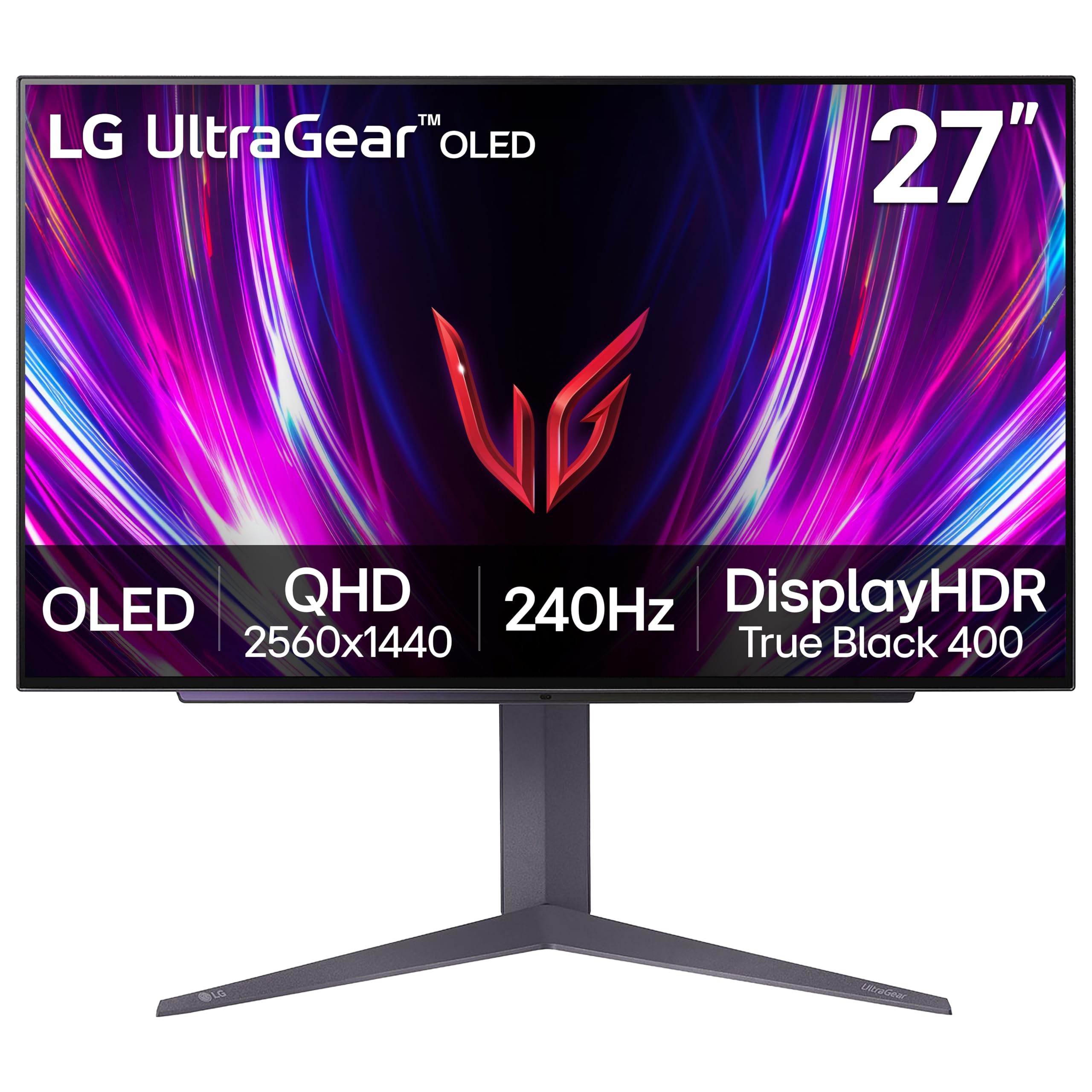
The LG 27GS93QE features a matte WOLED panel that excels in rooms with ambient lighting, reducing reflections without sacrificing the deep black levels OLED is known for. The 240Hz refresh rate and 0.03ms GtG response time deliver the low-latency performance expected from a premium gaming display. NVIDIA G-Sync Compatible and AMD FreeSync Premium Pro certification ensure smooth, tear-free gameplay across a wide range of GPUs.
VESA DisplayHDR True Black 400 certification guarantees excellent shadow detail and brightness uniformity in HDR content. The anti-glare low-reflection coating minimizes distractions during long sessions. The ergonomic stand supports height, tilt, and pivot adjustments, and the two-year warranty covering the OLED panel provides peace of mind for early adopters concerned about longevity.
Brightness is typical for OLED panels, meaning it performs best in controlled lighting environments rather than direct sunlight. The matte coating slightly reduces perceived sharpness compared to glossy OLEDs, but this trade-off makes it more usable in varied room conditions. This display is a fantastic choice for competitive players who want OLED motion clarity in a practical, everyday package.
Why it’s great
- Matte finish handles ambient light well
- Compatible with both G-Sync and FreeSync
- Two-year warranty covers OLED panel
Good to know
- Lower peak brightness than premium QD-OLEDs
- Matte coating reduces perceived sharpness slightly
4. AOC Agon PRO AG276QZD2

The AOC Agon PRO AG276QZD2 brings QD-OLED technology to a more accessible price point, making it a compelling entry point into OLED gaming. The 27-inch QHD panel combines a 240Hz refresh rate with 0.03ms GtG response time, delivering the motion clarity and color saturation expected from quantum dot OLED technology. HDR10 support and a wide color gamut covering 101% DCI-P3 make games look rich and immersive.
The display includes six customizable game modes and AOC Shadow Control for adjusting visibility in dark scenes. Backlight lighting adds aesthetic flair to your setup. The stand offers limited height and tilt adjustment compared to premium competitors, but the panel performance itself is impressive for the price tier. The factory color calibration report included in the box confirms accuracy out of the box.
Text clarity on this QD-OLED is slightly less sharp than on IPS panels due to the subpixel layout, which may be noticeable during productivity work. The built-in speakers are mediocre, so external audio is recommended. For gamers prioritizing pure gaming performance and value, this monitor delivers OLED quality without the premium price tag.
Why it’s great
- QD-OLED quality at a competitive price
- Factory calibrated for accurate colors
- 240Hz with near-instant response time
Good to know
- Text fringing noticeable for productivity
- Stand feels less premium than competitors
5. Acer Nitro VG270K V4

The Acer Nitro VG270K V4 brings 4K UHD resolution to a 27-inch IPS panel with a unique dynamic frequency feature. It runs at 160Hz at 4K resolution and can switch to 320Hz at 1080p, giving you the flexibility to prioritize sharpness in slower games or speed in competitive titles. The 0.5ms GtG response time minimizes ghosting, and AMD FreeSync Premium keeps motion smooth.
The IPS panel delivers wide 178-degree viewing angles and accurate colors with DCI-P3 90% coverage. HDR10 support improves contrast and brightness in compatible content, though the 1000:1 contrast ratio is typical for IPS and cannot match VA or OLED black levels. The zero-frame design makes multi-monitor setups look clean, and the VESA mount compatibility adds mounting flexibility.
The stand offers only tilt adjustment, limiting ergonomic positioning without a third-party arm. Some user reports mention reliability concerns with HDMI ports over extended use, so checking the warranty terms is advisable. For those who want 4K resolution at a moderate price, this monitor offers rare flexibility with its dual refresh rate modes.
Why it’s great
- 4K 160Hz with optional 1080p 320Hz mode
- Wide color gamut and HDR10 support
- Near-bezel-less design for multi-screen setups
Good to know
- Tilt-only stand limits ergonomics
- Some reports of HDMI port failure over time
6. Dell S2725QS

The Dell S2725QS is built for users who split their time between gaming and productivity. The 27-inch 4K IPS panel offers 99% sRGB coverage and a 1500:1 contrast ratio, which is slightly higher than typical IPS panels, resulting in better depth in dark scenes. The 120Hz refresh rate and AMD FreeSync Premium support provide smooth motion for less competitive gaming.
ComfortView Plus reduces blue light emissions to 35% or less without shifting colors to an orange tint, making extended work sessions easier on the eyes. The integrated speakers offer better sound quality than most built-in monitor audio, with deeper frequency response and higher output than the previous generation. The ultra-thin bezel and ash white finish give the display a clean, modern look that fits well in a home office or minimalist setup.
The 120Hz refresh rate is a step below the 144Hz or 240Hz options favored by competitive gamers, and the response time is not optimized for fast-paced FPS titles. Ghosting can be noticeable in high-speed scenes. For gamers who prioritize sharp text and color accuracy for work while still wanting decent gaming performance, this is a balanced choice.
Why it’s great
- High 1500:1 contrast ratio for an IPS panel
- ComfortView Plus reduces blue light without yellow tint
- Good built-in speakers for casual use
Good to know
- 120Hz refresh rate limits competitive use
- Noticeable ghosting in fast-paced games
7. Alienware AW2725DM

The Alienware AW2725DM offers a strong mid-range package with a 27-inch QHD IPS panel running at 180Hz with a 1ms GtG response time. This combination provides smooth motion for most gaming genres without requiring an OLED budget. VESA DisplayHDR 400 certification and DCI-P3 95% color coverage ensure vibrant colors and decent brightness for HDR content.
NVIDIA G-Sync compatibility and AMD FreeSync support give you flexibility regardless of your GPU brand. The ergonomic stand allows tilt, swivel, pivot, and height adjustments, making it easy to find a comfortable viewing position. A hardware-based low blue light solution reduces eye strain while preserving color accuracy, a useful feature for long sessions. The dedicated console mode optimizes the display for use with PlayStation or Xbox.
To achieve the full 180Hz refresh rate, you need to use a DisplayPort connection as HDMI is limited to 144Hz. The monitor does not include USB-C connectivity, which may be a limitation for laptop users. For a balanced gaming display with strong color performance and flexible ergonomics, this is a solid mid-range option.
Why it’s great
- Full ergonomic stand with height adjustment
- DCI-P3 95% color coverage for vibrant visuals
- Compatible with both G-Sync and FreeSync
Good to know
- HDMI limited to 144Hz; DP needed for 180Hz
- No USB-C connectivity for laptops
8. Samsung Odyssey G5 G53F
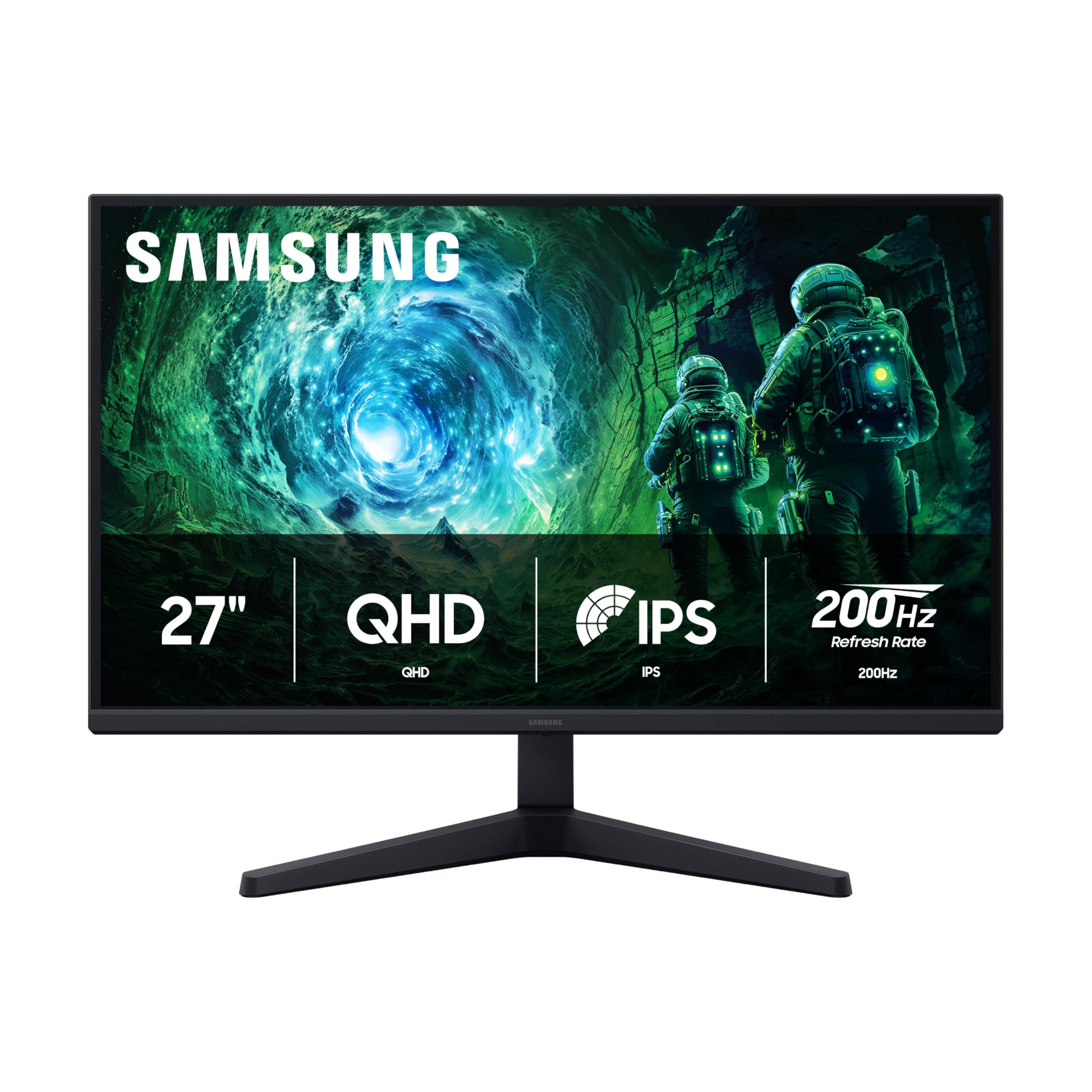
The Samsung Odyssey G5 G53F delivers a 27-inch QHD IPS panel with a 200Hz refresh rate and 1ms MPRT response time at a budget-friendly price. The IPS technology provides wide 178-degree viewing angles and consistent color reproduction, making it suitable for both gaming and daily use. AMD FreeSync Premium helps eliminate screen tearing across a wide VRR range.
HDR10 support adds some depth to compatible content, though the 300 cd/m² brightness is modest for proper HDR impact. The Black Equalizer feature improves visibility in dark game areas without washing out bright sections, and Virtual Aim Point adds a crosshair overlay for games that lack one. Auto Source Switch+ automatically detects and switches between connected devices, a convenient feature for multi-device setups.
The stand offers only tilt adjustment and feels less sturdy than more expensive options. The cable management loop on the stand is fragile. For gamers on a tight budget who want a QHD resolution panel with a high refresh rate, this monitor provides excellent value.
Why it’s great
- 200Hz refresh rate at a budget-friendly price
- IPS panel with wide viewing angles
- Black Equalizer improves dark scene visibility
Good to know
- Tilt-only stand with cheap feel
- Cable management loop is fragile
9. Samsung Odyssey G5 G51F
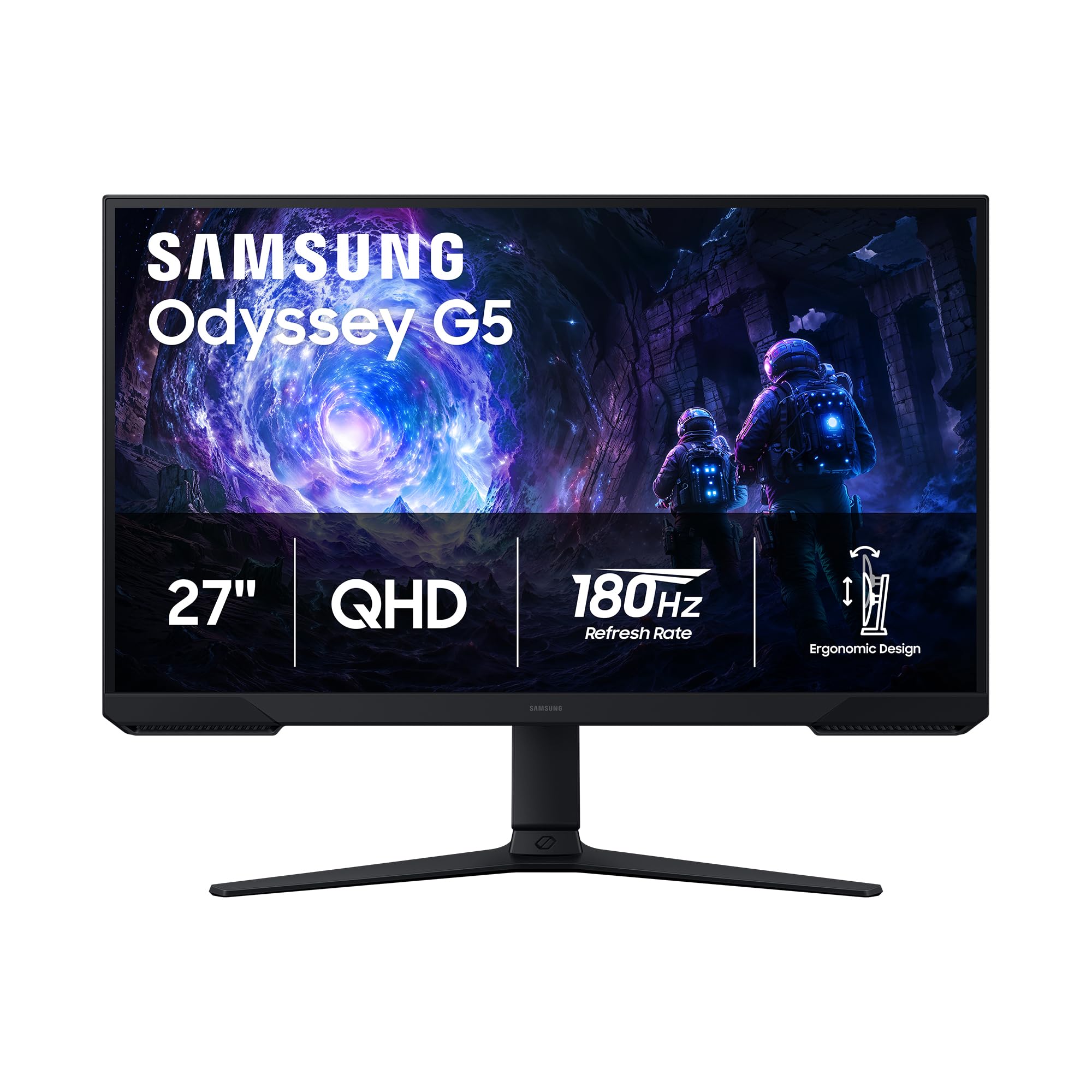
The Samsung Odyssey G5 G51F uses a VA panel to achieve a 3000:1 native contrast ratio, producing deeper blacks and more convincing shadow detail than IPS competitors at a similar price. The 180Hz refresh rate and 1ms response time provide smooth enough motion for most games. QHD resolution keeps the pixel density high for sharp text and detailed game worlds.
HDR10 support takes advantage of the high contrast ratio to deliver more impactful highlights and shadows. The ergonomic stand includes tilt, pivot, and height adjustments, a significant upgrade over the basic stands found on many budget monitors. Black Equalizer helps reveal enemies hiding in dark corners, and AMD FreeSync keeps the gameplay smooth across the refresh rate range.
VA panels can exhibit smearing in very dark transitions, which may be noticeable in scenes with rapid changes between black and dark gray. The monitor lacks built-in speakers, so external audio is required. For gamers who prioritize contrast and shadow detail over the fastest response times, this VA option delivers strong image quality at a reasonable price.
Why it’s great
- 3000:1 contrast ratio for deep blacks
- Full ergonomic stand with height adjustment
- High contrast makes HDR content more impactful
Good to know
- Dark-level smearing possible in fast scenes
- No built-in speakers
FAQ
Is a 240Hz display worth it over 144Hz for competitive gaming?
Does OLED burn-in happen quickly on a gaming monitor?
Should I choose 4K 60Hz or QHD 144Hz for gaming?
Can I use a console with a 1440p gaming monitor?
Final Thoughts: The Verdict
For most users, the display for gaming winner is the MSI MPG 321URX because it combines 4K resolution, a 240Hz refresh rate, and QD-OLED image quality into a single package that excels in both gaming and content consumption. If you want deep contrast with a more practical matte finish, grab the LG 27GS93QE. And for a balanced mid-range option that avoids OLED pricing, nothing beats the Alienware AW2725DM.

Mo Maruf
I created WellFizz to bridge the gap between vague wellness advice and actionable solutions. My mission is simple: to decode the research and give you practical tools you can actually use.
Beyond the data, I am a passionate traveler. I believe that stepping away from the screen to explore new environments is essential for mental clarity and physical vitality.