Our readers keep the lights on and my smoothie glass nicely filled. As an Amazon Associate, I earn from qualifying purchases.
Walking barefoot across your floors should feel safe, not like a gamble with lingering bacteria, tracked-in dirt, or the chemical smell of a harsh cleaner. The right product eliminates that worry without asking you to choose between a thorough kill and a fresh, livable home.
I’m Mohammad Maruf — the founder and writer behind WellFizz. I’ve spent countless hours analyzing the chemistry, surface safety data, and real-world performance of floor disinfectants to separate effective formulas from overpriced marketing.
Choosing the wrong cleaner can leave streaks, damage sealed wood, or fail to neutralize pathogens you cannot see. This guide breaks down the top performers so you can confidently select the best disinfectant for floors based on your surface type, scent preference, and cleaning routine.
How To Choose The Best Disinfectant For Floors
Floor disinfectants vary widely in contact time, surface compatibility, and scent profile. A product that works beautifully on glazed ceramic tile may damage unsealed hardwood or leave a sticky film on luxury vinyl plank. The key is matching the chemistry to your home’s specific flooring and your tolerance for reapplication.
Contact Time and Kill Claims
Many sprays require the surface to remain visibly wet for 30 seconds to 10 minutes to achieve a 99.9% kill rate. If the liquid evaporates before that window closes, you lose efficacy. Concentrates used in a mop bucket offer longer wet-contact time across large floor areas, making them more reliable for whole-room disinfection than trigger sprays.
Surface Compatibility and Residue
Bleach-based and pine-oil formulas can dull floor finishes over time, while alcohol-free, non-corrosive options preserve the integrity of sealed wood and LVP. Check whether the label lists “no rinse required” if you dislike a tacky leftover film, and always verify that the product is safe for the specific floor type listed on your warranty card.
Scent and Chemical Load
Some disinfectants deploy strong floral or citrus profiles to mask chemical odors, while others are lightly scented or fragrance-free for sensitive households. If you have pets, children, or respiratory sensitivities, prioritize water-based formulas with no bleach or ammonia that leave no noxious fumes behind after drying.
Quick Comparison
On smaller screens, swipe sideways to see the full table.
| Model | Category | Best For | Key Spec | Amazon |
|---|---|---|---|---|
| OdoBan Disinfectant Concentrate | Concentrate | Whole-home mopping & odor control | 256 fl oz concentrate (makes up to 32 gallons) | Amazon |
| Clear Gear Disinfectant Spray | Ready-to-Use | Gear, gym bags & high-touch floor zones | Hospital-grade, non-corrosive, 32 oz spray | Amazon |
| Lysol All Purpose Cleaner Spray 4-Pack | Spray | Quick kitchen & bathroom floor spot-cleaning | 32 oz bottles, 0% bleach, kills 99.9% in 30 sec | Amazon |
| Microban Multi-Purpose Cleaner 2-Pack | Spray | Ongoing surface protection for up to 24 hrs | 32 oz bottles, citrus scent, 24-hr residual kill | Amazon |
| CloroxPro Pine-Sol Multi-Surface Cleaner | Concentrate | Budget-friendly mopping for sealed surfaces | 80 fl oz, 2X concentrated, lavender scent | Amazon |
In‑Depth Reviews
1. OdoBan Disinfectant Concentrate

This two-gallon concentrate set is the workhorse of floor disinfection. Dilute roughly one ounce per gallon of water and you have a mop-ready solution that cleans, disinfects, and eliminates odors in a single pass. The original eucalyptus scent is fresh without being cloying, and the formula is bleach-free so it will not damage sealed wood, tile, or vinyl when used as directed.
The versatility extends beyond floors. Users add it to laundry loads, spray it on upholstery, and even use diluted amounts as an air freshener. For households with pets or heavy foot traffic, the ability to treat large areas economically makes this a standout choice. The concentrate format also reduces plastic waste compared to buying multiple spray bottles.
Because it requires mixing, you need a dedicated bucket or spray bottle. The instructions caution against using it on unsealed wood, and the concentrated liquid has a strong pre-dilution smell that fades once mixed. Still, for whole-home disinfection at a reasonable per-use cost, this is the most reliable option on the list.
Why it’s great
- Makes over 32 gallons of cleaning solution from two jugs
- Bleach-free formula safe for most sealed floor types
- Doubles as laundry additive and fabric deodorizer
Good to know
- Requires measuring dilution ratio every time
- Pre-mix scent is strong before dilution
- Not recommended for unsealed wood floors
2. Clear Gear Disinfectant Cleaner

Clear Gear is a hospital-grade disinfectant formulated without bleach, alcohol, or ammonia, making it one of the gentlest options for delicate floor surfaces like sealed hardwood and laminate. The water-based, non-corrosive formula kills 99.9% of germs on contact and leaves no sticky residue — a critical feature when you do not want to rinse after spraying entryway floors or mudroom tiles.
This spray shines in high-touch floor zones: around pet feeding stations, diaper-changing areas, and gym mats that rest on the floor. Users report that it eliminates odors at the source rather than masking them, which is why first responders and physical therapy clinics trust it for equipment deodorizing. The lack of noxious fumes means you can spray and walk away without ventilating the room heavily.
The tradeoff is price per ounce. As a premium ready-to-use spray, it costs more per square foot of coverage compared to concentrates like OdoBan. It also has no long-term residual protection, so high-traffic areas may need reapplication daily. For targeted spot disinfection where chemical sensitivity or residue matter most, this is the best pick.
Why it’s great
- Non-corrosive formula safe for sealed hardwood and LVP
- No noxious fumes — ideal for sensitive households
- Eliminates odors at the source, does not mask them
Good to know
- No 24-hour residual protection requires regular reapplication
- Higher cost per ounce than concentrate alternatives
- Not intended for unsealed, porous floor surfaces
3. Lysol All Purpose Cleaner Spray 4-Pack
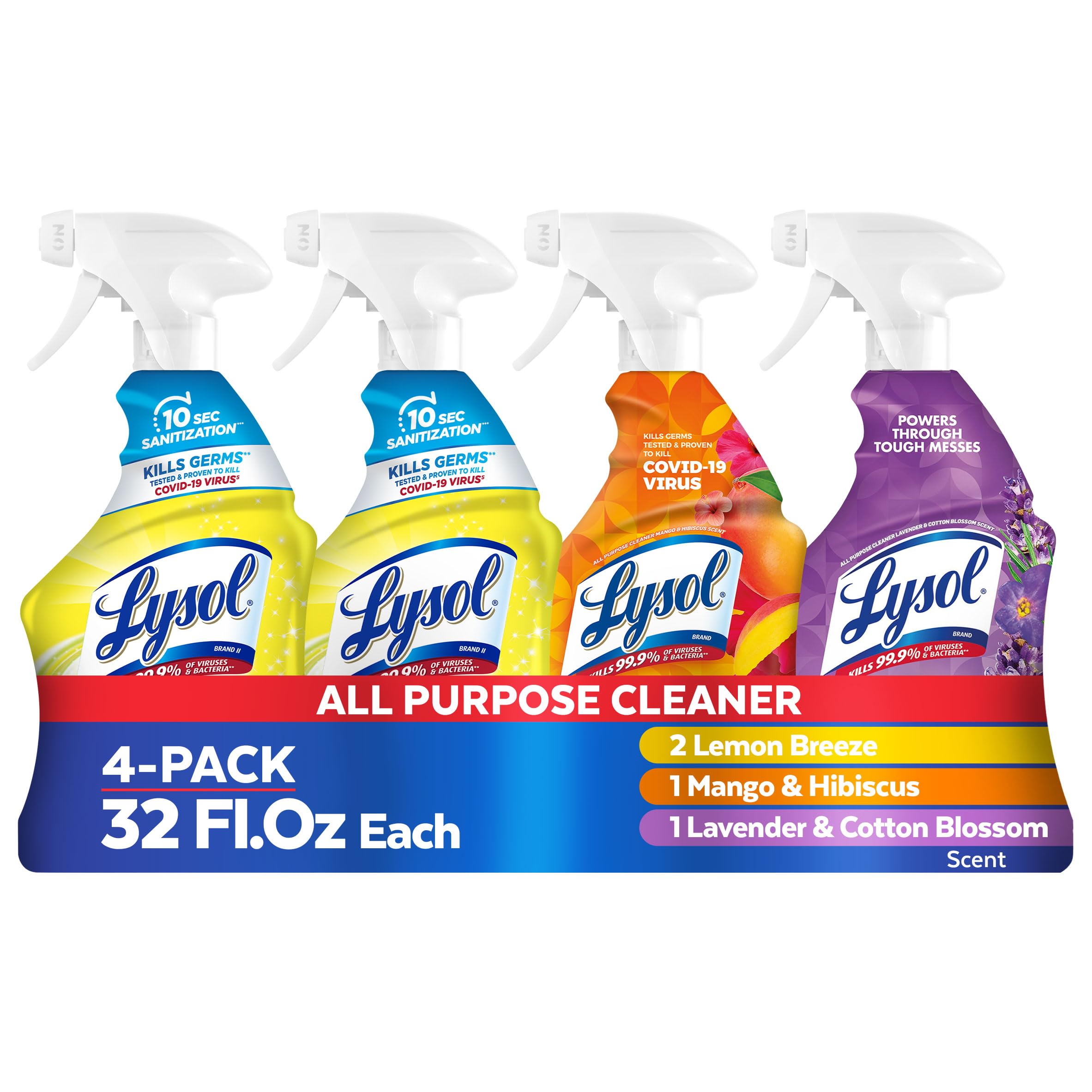
Lysol’s multi-purpose spray delivers fast-acting sanitization in a convenient trigger format — ideal for spot-cleaning kitchen floors, bathroom tiles, and around the base of toilets. The 4-pack bundles three scents (Lemon Breeze, Lavender, Mango) so you can rotate based on mood. The formula contains 0% bleach yet still kills 99.9% of bacteria within 30 seconds, which is fast enough for quick wipe-downs of small floor areas.
The spray nozzle delivers a wide, even mist that covers grout lines and corners without pooling. Users consistently remark that the scents are refreshing without being overpowering, and the formula cuts through greasy residues on stovetops and sinks just as well as it does on floor spills. Because it leaves no sticky film, you can spray and mop without a secondary rinse step on sealed surfaces.
On the downside, this is not designed for whole-room floor disinfection. Spraying an entire kitchen floor with a trigger bottle is tedious and uses more product per square foot than a diluted concentrate. The 32-ounce bottle size means it runs out quickly under heavy use. It excels as a supplementary cleaner for small floor messes but cannot replace a dedicated mop solution for full-room sanitization.
Why it’s great
- Kills 99.9% of bacteria in just 30 seconds
- Three pleasant scents in one bundle
- Bleach-free formula safe for most sealed floors
Good to know
- Not economical for mopping large floor areas
- Bottles run out quickly under daily heavy use
- No continuous residual protection between applications
4. Microban Multi-Purpose Cleaner 2-Pack
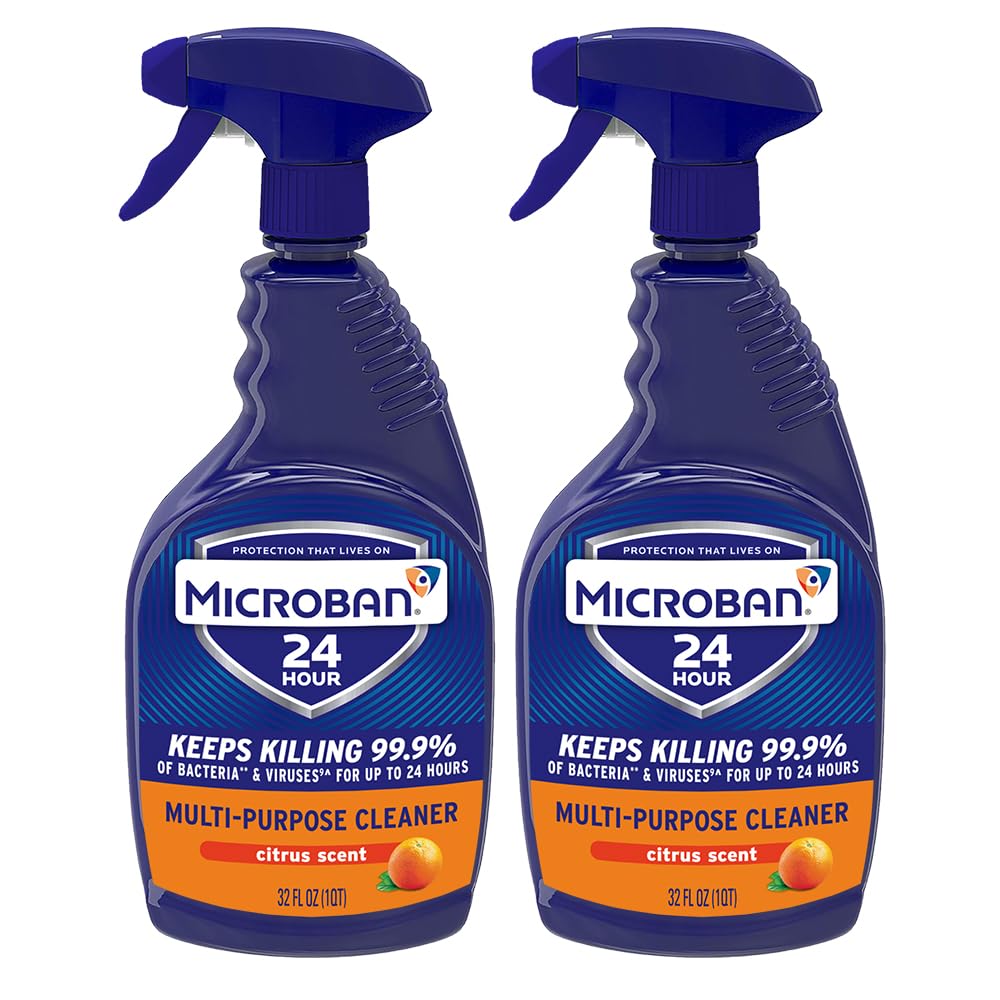
Microban positions itself as the disinfectant that keeps working long after you finish cleaning. Its unique claim is 24 hours of residual protection on treated hard, nonporous surfaces — meaning that if bacteria land on your kitchen floor after mopping, the Microban film on the surface continues killing for a full day. This is a meaningful advantage for households with toddlers crawling on the floor or pets that track in outdoor debris.
The citrus scent is light and does not linger aggressively, making it suitable for users who are sensitive to strong fragrances. Reviewers with COPD and oxygen equipment specifically note they can use this spray without triggering respiratory reactions, which says a lot about the low chemical volatility. It also penetrates soap scum and greasy soils, so it cleans as it disinfects without requiring a separate degreasing step.
The trade-off is that the residual kill claim only applies to hard, nonporous surfaces — porous or unsealed floors do not maintain the protective barrier. Additionally, you must allow the surface to dry completely for the 24-hour protection to activate, which can take longer in humid rooms. For high-traffic zones that are re-contaminated quickly, the residual protection is a genuine upgrade over traditional sprays that stop working the moment they dry.
Why it’s great
- Kills 99.9% of bacteria for up to 24 hours on nonporous surfaces
- Mild citrus scent suitable for sensitive noses
- Penetrates grease and soap scum without extra scrubbing
Good to know
- Residual protection only works on hard, nonporous floors
- Requires surface to dry fully before protection activates
- Not for use on unsealed wood or porous tile
5. CloroxPro Pine-Sol Multi-Surface Cleaner
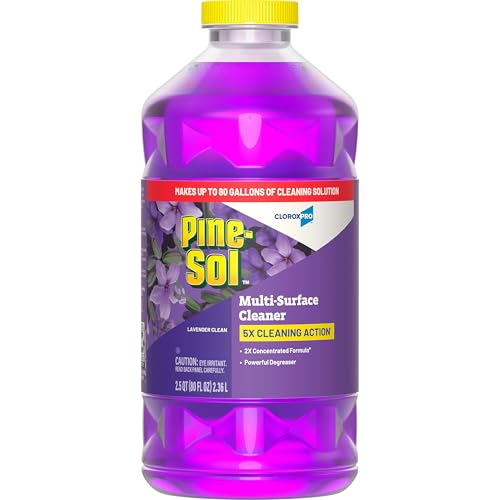
Pine-Sol has been a floor-cleaning staple for generations, and this CloroxPro version retains the brand’s signature degreasing power while adding a modern lavender scent. The 2X concentrated formula means you mix one capful with warm water to fill a mop bucket, yielding up to 80 gallons of usable cleaning solution from a single bottle. It cuts through tracked-in grime, kitchen grease, and muddy paw prints on tile, sealed wood, and linoleum without requiring a secondary rinse.
The lavender scent is noticeably floral but fades quickly after drying, leaving a clean rather than perfumed room. Users appreciate the large 80-ounce bottle for the price, and the bleach-free formulation means it will not discolor grout or dull floor finishes over time. The product also works on walls, countertops, and exterior surfaces, making it a true multi-surface cleaner for deep cleaning days.
The downside is that Pine-Sol is not EPA-registered as a hospital-grade disinfectant against certain tougher pathogens, and its kill claims are more about general sanitation than specific residual protection. For daily grime removal with broad disinfecting capability, it delivers tremendous value. For medical-grade disinfection or 24-hour residual protection, you will want to step up to Microban or OdoBan.
Why it’s great
- 2X concentrated — one bottle makes 80 gallons of cleaning solution
- Bleach-free and safe for most sealed floor types
- Proven grease-cutting formula at an accessible price point
Good to know
- Not a hospital-grade disinfectant for resistant pathogens
- Scent may be too floral for some preferences
- No long-term residual protection between mopping sessions
FAQ
Can I use a disinfectant spray on unsealed hardwood floors?
How often should I disinfect my floors versus just cleaning them?
Do floor disinfectants expire or lose potency over time?
Final Thoughts: The Verdict
For most users, the best disinfectant for floors winner is the OdoBan Disinfectant Concentrate because it delivers powerful kill rates across large floor areas at an economical per-use cost while eliminating odors permanently. If you want 24-hour residual protection on nonporous surfaces, grab the Microban Multi-Purpose Cleaner 2-Pack. And for targeted spot cleaning with a fast kill time and fresh scent, nothing beats the Lysol All Purpose Cleaner Spray 4-Pack.

Mo Maruf
I created WellFizz to bridge the gap between vague wellness advice and actionable solutions. My mission is simple: to decode the research and give you practical tools you can actually use.
Beyond the data, I am a passionate traveler. I believe that stepping away from the screen to explore new environments is essential for mental clarity and physical vitality.