Our readers keep the lights on and my smoothie glass nicely filled. As an Amazon Associate, I earn from qualifying purchases.
Palm trees aren’t like standard houseplants or typical garden ornamentals. Their specialized root systems demand a growing medium that provides instant drainage and consistent aeration, or you’ll face yellowing fronds, stunted growth, and eventually root rot. The wrong dirt traps moisture around sensitive palm roots, while the right mix supports rapid drainage and delivers the specific nutrients palms crave.
I’m Mohammad Maruf — the founder and writer behind WellFizz. I’ve spent countless hours analyzing the chemical composition, particle size distribution, and drainage rates of specialty soil mixes to understand exactly what makes a substrate work for picky tropical plants like palms.
This guide breaks down the specific components that matter for palm health so you can confidently choose the right dirt for palm trees that keeps your plants thriving through every season.
How To Choose The Best Dirt For Palm Trees
Selecting the right growing medium for your palm comes down to understanding three critical factors: drainage speed, particle structure, and nutrient availability. Palms evolved in sandy, fast-draining environments, so replicating those conditions in a container or garden bed is the single most important step you can take.
Drainage and Aeration Are Non-Negotiable
Palm roots are extremely sensitive to waterlogged conditions. A mix that stays soggy for more than a day or two will deprive roots of oxygen, leading to root rot and nutrient deficiencies that show up as yellow fronds and brown tips. Look for blends containing pine bark fines, pumice, lava rock, or calcined clay — these large, angular particles create air pockets that allow excess water to flow through quickly.
Peat-Free and Perlite-Free Advantages
Peat moss breaks down over time, collapsing the open structure that palm roots need. Perlite floats to the surface and degrades into dust. Premium mixes now use alternatives like coconut husk chips, biochar, and Douglas fir bark that maintain their shape for years. These materials also resist compaction better than traditional peat-based soils, so you won’t need to repot as frequently.
Nutrient Content and Longevity
Palms are heavy feeders, especially when it comes to potassium, magnesium, and iron. While the initial planting mix should provide some nutrients via worm castings or slow-release organic matter, most palms will need supplemental feeding within a few months. A great starting mix supports microbial activity and holds nutrients without becoming waterlogged, giving you a solid foundation for ongoing fertilization.
Quick Comparison
On smaller screens, swipe sideways to see the full table.
| Model | Category | Best For | Key Spec | Amazon |
|---|---|---|---|---|
| Sol Soils Bonsai Soil | Gritty Mix | Container palm roots | Pine bark, granite, pumice, calcined clay | Amazon |
| Sol Soils Succulent Mix | Coco Coir Mix | Young palms in pots | Coconut husk, pumice, perlite | Amazon |
| Grow Queen Potting Mix | Bioactive Mix | Indoor palms long-term | Worm castings, biochar, fir bark, lava rock | Amazon |
| Perfect Palm Fertilizer | Nutrient Feed | Mature palm nutrition | Controlled-release potassium & magnesium | Amazon |
In‑Depth Reviews
1. Grow Queen Elite Houseplant Potting Mix
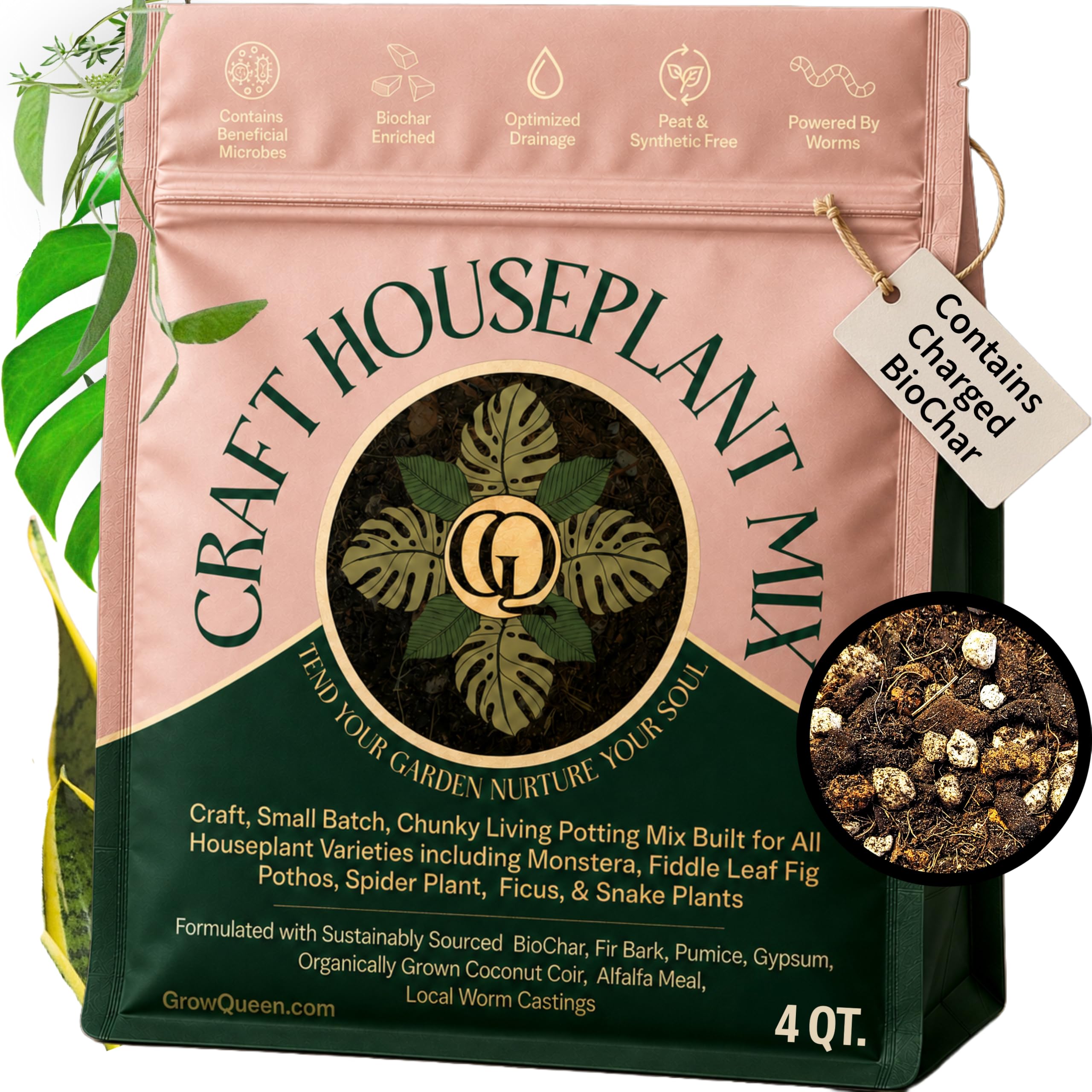
This mix is engineered specifically for the aeration and drainage demands of tropical container plants, making it a superb foundation for indoor palms. The blend of large Douglas fir bark fines, lava rock, and pumice creates permanent air pockets that prevent compaction even after months of watering. The pre-moistened texture means you never deal with dry, hydrophobic soil that repels water during the critical first watering after repotting.
The inclusion of premium organic worm castings provides a slow-release nutrient base that supports steady frond growth without risk of fertilizer burn. Charged biochar technology further enhances nutrient retention while maintaining the open structure that palm roots depend on. Users consistently report that their tropical plants — including monsteras and palms — show noticeable new growth within weeks of transplanting into this medium.
Because the mix is entirely peat-free and perlite-free, it avoids the structural collapse that plagues cheaper soils. The chunky composition also dries evenly between waterings, which dramatically reduces the likelihood of fungus gnats and root rot. For anyone keeping palms in containers indoors, this is the closest you can get to a set-and-forget growing medium.
Why it’s great
- Bioactive formula with worm castings feeds palms for months
- Pre-moistened blend eliminates transplant shock
- Peat-free and perlite-free structure resists compaction
Good to know
- Mid-range investment compared to basic potting soils
- Best suited for container palms, not in-ground planting
2. Sol Soils Bonsai Soil Potting Mix
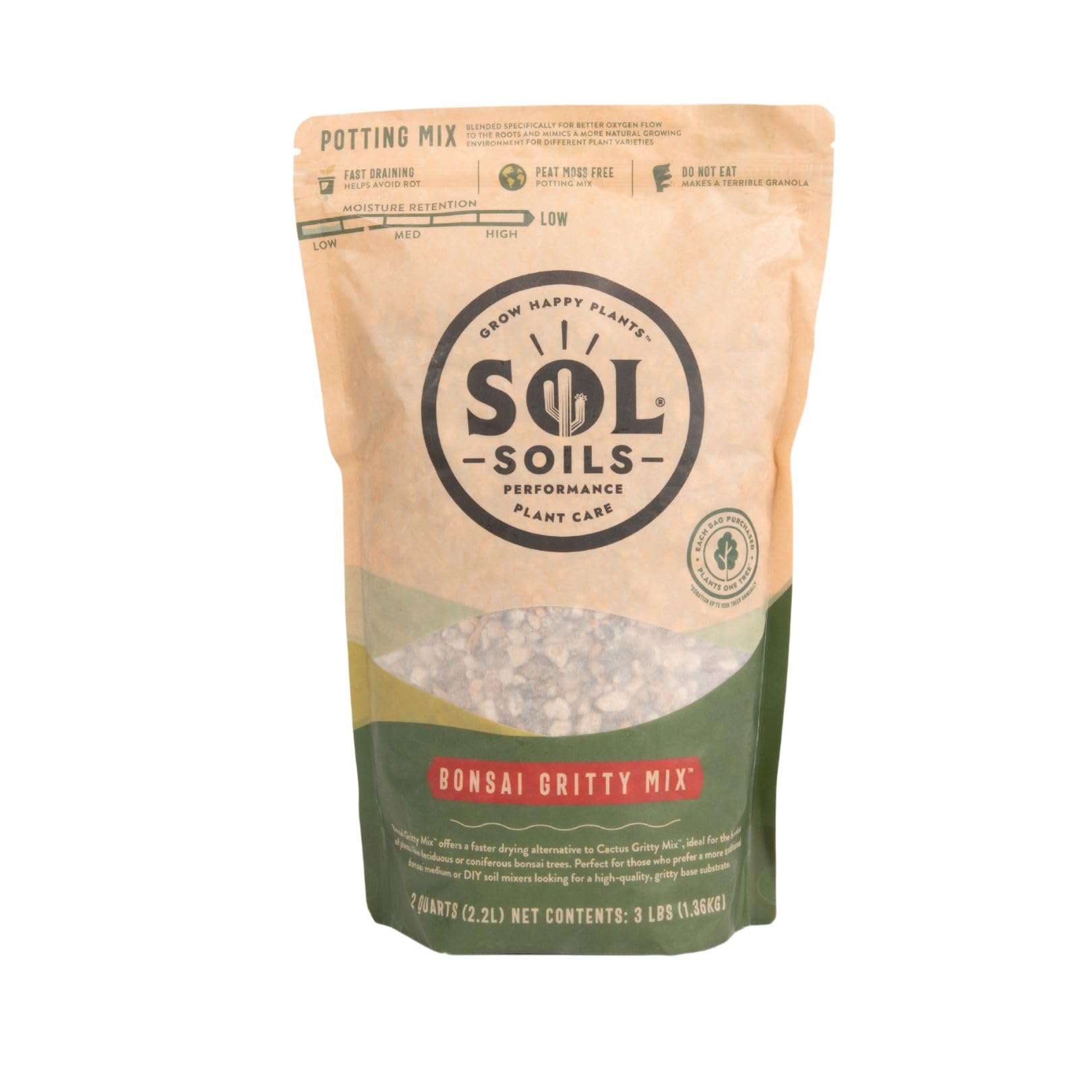
Though marketed as bonsai soil, this gritty mix delivers the fastest drainage of any product on this list — exactly what palm roots need to avoid rot. The combination of pine bark, pumice, granite, and calcined clay creates a coarse structure where water flows through immediately rather than pooling around the root ball. The 2-quart bag is ideal for small to medium palm specimens in containers up to about eight inches in diameter.
Users praise the clean, dust-free consistency that arrives ready to use without rinsing or sifting. The peat-free formula means the particle structure holds up over time rather than degrading into sludge. For a young palm that was recently separated from a mother plant or a small majesty palm in a pot, this mix provides the oxygen-rich environment that encourages vigorous root expansion.
One reviewer noted moderate moisture retention when used with sphagnum moss on top, but the core mix itself drains rapidly. The sustainable sourcing and reforestation support add a layer of ecological value. If your primary concern is root rot prevention and you’re working with smaller containers, this is the tightest drainage option available.
Why it’s great
- Extremely fast drainage prevents waterlogged roots
- Clean, dust-free, and ready to use immediately
- Sustainable peat-free blend with reforestation support
Good to know
- Best for smaller pots under 8 inches
- Some palms may need added organic matter for moisture retention
3. Sol Soils Succulent Gritty Mix

This succulent-focused gritty mix shares many structural qualities with its bonsai sibling but uses coconut husk chips as the primary organic component. The coco coir provides better moisture retention than straight bark or pumice, making this a slightly more forgiving option for palm owners who don’t want to water every day. The perlite and pumice content maintains the fast-draining profile that palms need, while the organic coir chips add a sponge-like ability to hold nutrients between waterings.
Customer feedback highlights its effectiveness for dry-climate plants like aloe and jade, but palm owners will appreciate the same drainage benefits. The 2-quart size again targets smaller containers. Some users mix it 50/50 with another potting medium to fine-tune the moisture balance for their specific environment.
One potential drawback: the mix contains perlite, which can float to the surface over time. For palms that stay in the same pot for extended periods, the perlite migration may require occasional top-dressing. Still, for a budget-friendly entry point into gritty, fast-draining soil, this mix delivers reliable performance without a heavy investment.
Why it’s great
- Coco coir provides balanced moisture retention
- Sustainable coconut husk repurposing
- Excellent drainage for palm root health
Good to know
- Perlite may float to the surface over time
- Best supplemented with nutrient feed for long-term growth
4. Perfect Palm Dual Action Fertilizer

While this is not a planting medium, it’s the perfect companion to any of the soil mixes above. Once your palm is established in a fast-draining substrate, it needs targeted nutrition — and this granular fertilizer was developed by actual palm farmers. The formula delivers higher potassium levels than standard all-purpose fertilizers, which directly strengthens palm resistance to cold stress, drought, and extreme heat. The dual-action approach provides both immediate nutrients and controlled-release granules that feed for months.
Users report dramatic results: yellowed, stressed palms turn dark green and push out new fronds within two weeks of application. The included measuring scoop makes application simple — just scoop, sprinkle around the root zone, and water. The resealable pail keeps granules dry and prevents mess, and the 7-pound container feeds up to 14 palms with trunk widths between two and six inches.
The dual magnesium and iron content addresses the specific micronutrient deficiencies that cause frond yellowing in palms. As a long-term maintenance product, this fertilizer fills the gap that even the richest planting soil leaves open after the first few months. For anyone serious about palm health, pairing a premium gritty mix with this fertilizer creates the ideal growing system.
Why it’s great
- Developed by actual palm farmers for targeted nutrition
- Higher potassium levels strengthen fronds against stress
- Controlled-release technology feeds for months
Good to know
- Premium investment for long-term palm care
- Requires a fast-draining base soil to work effectively
FAQ
Can I use regular potting soil for my palm tree?
How often should I repot my palm into fresh soil?
What causes palm fronds to turn yellow if the soil is correct?
Final Thoughts: The Verdict
For most users, the dirt for palm trees winner is the Grow Queen Elite Houseplant Potting Mix because its bioactive, peat-free structure provides the perfect balance of drainage, aeration, and long-term nutrition for container palms. If you want the fastest possible drainage for a small palm, grab the Sol Soils Bonsai Soil. And for mature palms that need targeted feeding, nothing beats the Perfect Palm Fertilizer as a companion product to your soil base.

Mo Maruf
I created WellFizz to bridge the gap between vague wellness advice and actionable solutions. My mission is simple: to decode the research and give you practical tools you can actually use.
Beyond the data, I am a passionate traveler. I believe that stepping away from the screen to explore new environments is essential for mental clarity and physical vitality.