Our readers keep the lights on and my smoothie glass nicely filled. As an Amazon Associate, I earn from qualifying purchases.
The single most common mistake new Monstera owners make is treating them like any other houseplant and using standard potting soil. That dense, moisture-retaining mix suffocates the thick, adventurous aerial roots, leading directly to yellowing leaves, root rot, and a plant that stubbornly refuses to size up. The difference between a Monstera that merely survives and one that unfurls massive, fenestrated leaves is almost entirely about what’s happening below the surface.
I’m Mohammad Maruf — the founder and writer behind WellFizz. I’ve spent countless hours analyzing the physical structure, drainage rates, and organic amendments of bagged soils to understand exactly what keeps a Monstera’s root zone healthy and oxygenated.
This guide breaks down the key ingredients and structural differences that define the best mixes, so you can confidently choose the best dirt for monstera plants without needing a degree in soil science.
How To Choose The Best Dirt For Monstera
A Monstera is an epiphytic aroid, meaning in the wild it climbs trees with its roots exposed to air. Replicating that airy, well-draining environment in a pot is the entire game. A good mix balances three things: drainage, aeration, and just enough moisture retention to keep the roots from drying out completely.
Chunky Texture vs. Fine Texture
The most critical spec is particle size. A Monstera mix needs visible chunks — pine bark fines, coco chips, pumice, or lava rock. These create air pockets that allow oxygen to reach the roots and excess water to drain rapidly. Fine, dusty soil compacts over time, turning the pot into a swamp. If the bag looks like powder, it is wrong for Monstera.
Organic Amendments vs. Synthetic Fertilizer
Look for worm castings, biochar, and mycorrhizal fungi rather than slow-release chemical pellets. Organic amendments feed the soil microbes, which in turn make nutrients available to the plant in a sustainable way. Biochar specifically helps retain nitrogen and phosphorus without waterlogging the roots, and mycorrhizae extend the root system’s reach.
Peat-Free and Perlite-Free Advantages
Peat moss is acidic, unsustainably harvested, and compacts over time. Many premium mixes now use coco coir, tree fern fiber, or pumice instead. Perlite is lightweight and provides aeration initially, but it floats to the top or breaks down. Pumice or lava rock are heavier, more stable alternatives that keep the mix airy for years.
Quick Comparison
On smaller screens, swipe sideways to see the full table.
| Model | Category | Best For | Key Spec | Amazon |
|---|---|---|---|---|
| Rosy Soil Aroid Mix | Premium | Microbially active, carbon-negative mix | 4 Quarts, Peat-Free with Biochar | Amazon |
| Craft Aroid Mix (4QT) | Premium | Sustainable mix with New Zealand tree fern fiber | 4 Quarts, Peat & Perlite-Free | Amazon |
| DUSPRO 8in1 Aroid Mix | Mid-Range | Eight-ingredient chunky blend for varied aroids | 2 Quarts, Pre-Mixed with LECA | Amazon |
| Craft Aroid Mix (2QT) | Mid-Range | Ready-to-use chunky mix with tree fern fiber | 2 Quarts, Peat & Perlite-Free | Amazon |
| Gardenera Monstera Potting Soil | Budget | Small-quart, sterilized mix for single repots | 1 Quart, Sterilized with Biochar | Amazon |
In‑Depth Reviews
1. Rosy Soil Aroid Soil Mix
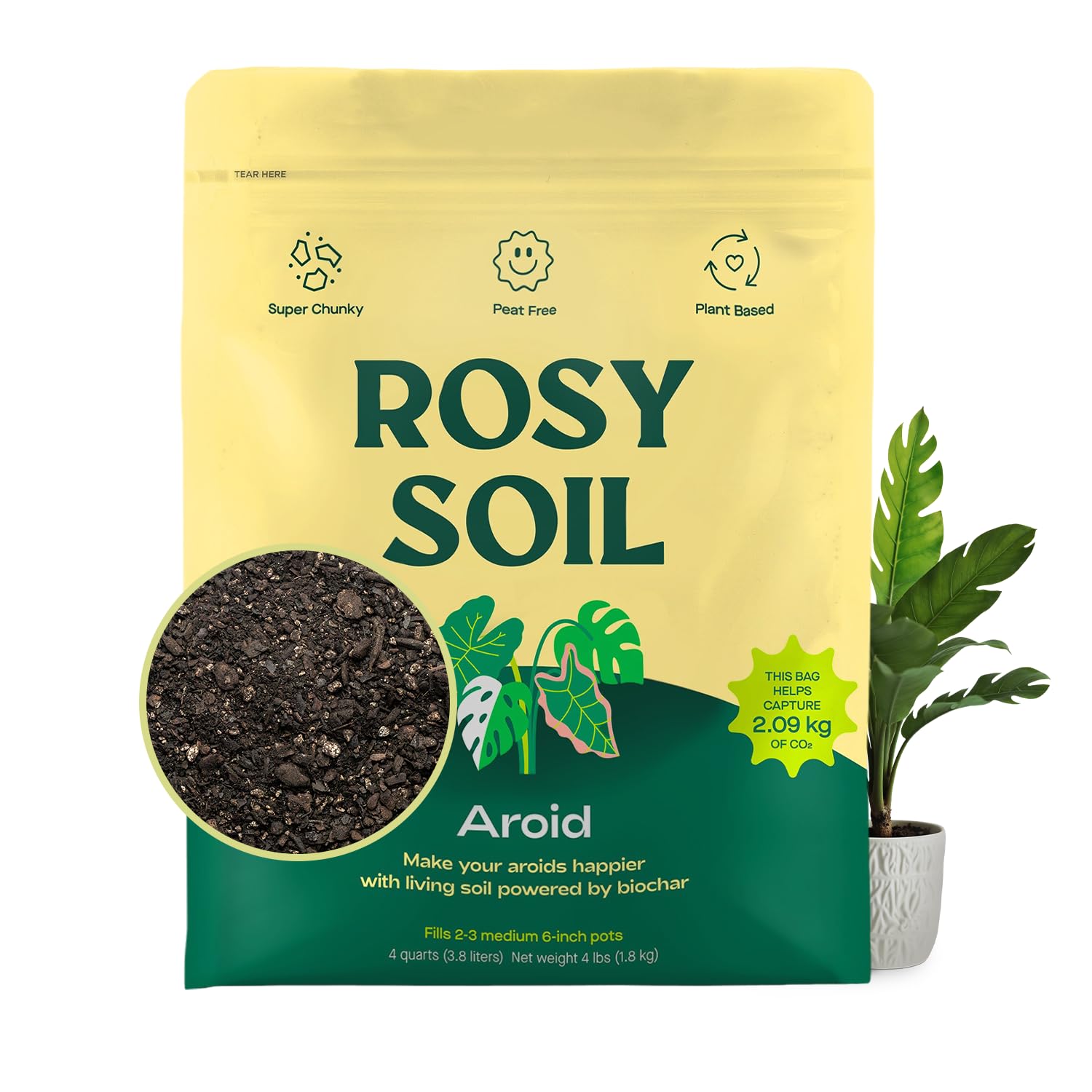
Rosy Soil takes a distinctly modern approach by centering its mix around biochar and beneficial microbes rather than traditional peat. The structure relies on pine bark fines and pumice to create the chunky, fast-draining texture that Monstera roots demand, while worm castings, mycorrhizae, and compost provide a living ecosystem that boosts nutrient uptake over time. The 4-quart bag is generous enough for several medium pots, and the resealable packaging keeps the remaining mix fresh between uses.
What sets this apart is its carbon-negative stance — by using biochar and volcanic pumice instead of peat, it avoids habitat destruction and actually stores carbon. Real-world feedback from growers confirms that plants adapt quickly, showing new growth within weeks, and the mix dries fast enough to virtually eliminate fungus gnat issues. The microbial activity also appears to help sluggish or stubborn tropicals spring back to life.
The only trade-off is the cost per quart, which sits at the higher end of the category. Some users note the texture feels slightly less chunky than other premium blends, meaning it retains a bit more moisture — a plus for drier homes, but something to watch if you tend to overwater. For the grower who wants a science-backed, environmentally responsible mix that delivers results, this is the top pick.
Why it’s great
- Microbially active biochar formula improves long-term nutrient retention and root health
- Peat-free and carbon-negative design is genuinely better for the planet
- Resealable 4-quart bag offers good volume for most collections
Good to know
- Premium price point is higher than many mid-range competitors
- Texture is less chunky than some dedicated aroid blends, so it holds slightly more moisture
2. Craft Aroid Potting Mix (4QT)
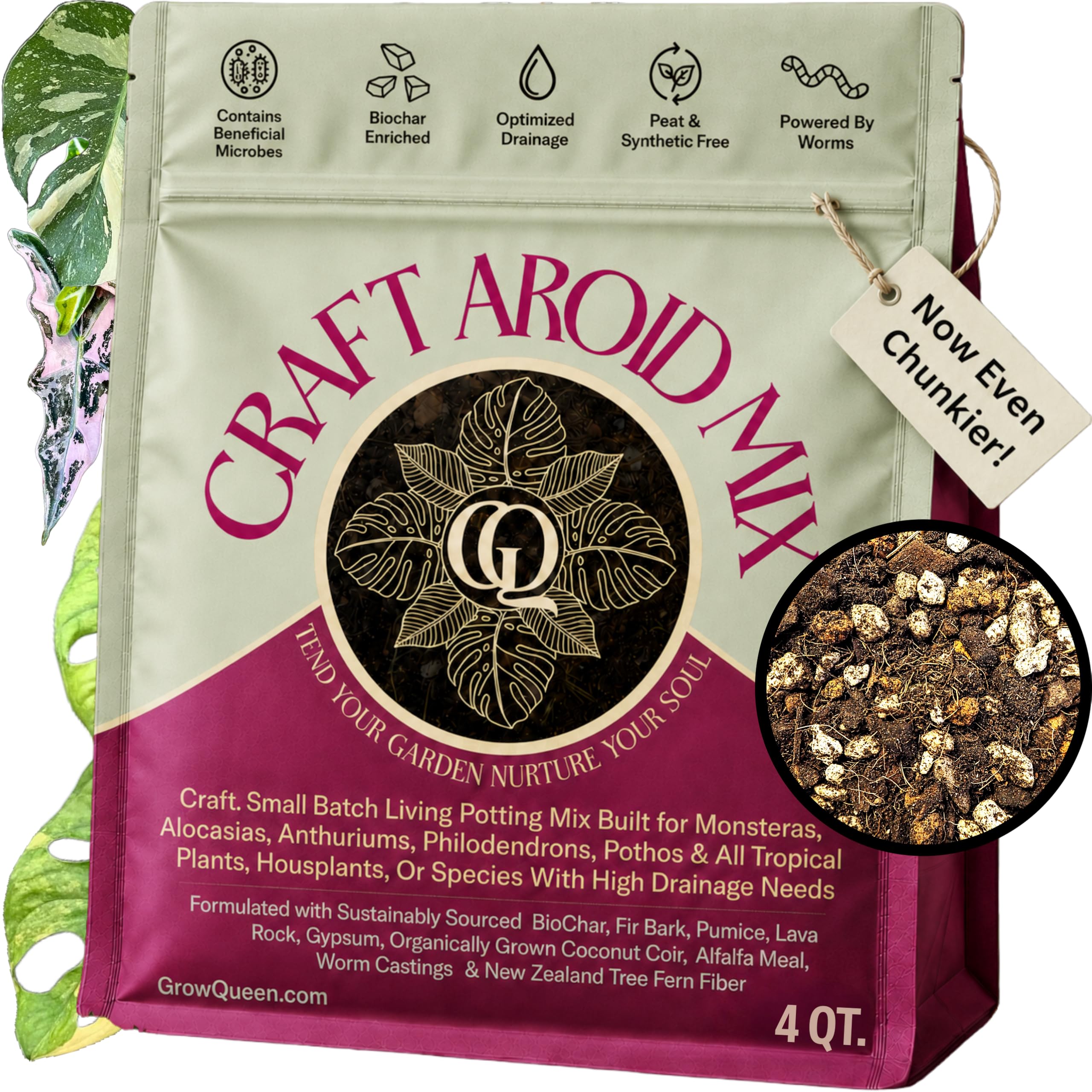
This 4-quart version of the Craft Aroid mix delivers the same premium ingredients found in the smaller bag but at a significantly better value per quart. The formulation relies on large Douglas fir bark fines, lava rock, and pumice for aeration, while New Zealand tree fern fiber acts as a natural pH buffer, bringing the mix down to the slightly acidic 6.0 level that tropical aroids prefer. The coco coir is certified organic and extensively washed to remove excess salts, resulting in a clean, consistent base.
The mix avoids both peat and perlite entirely, using pumice and lava rock as stable, long-lasting alternatives that don’t break down or float to the surface. Growers consistently report no pest introductions, no mold, and a pleasant earthy smell that signals healthy decomposition. Plants adapt quickly after repotting, with many users noting accelerated leaf production within the first month. The blend works across a wide range of tropicals beyond Monstera, including Alocasia and Anthurium.
At the highest price point in this lineup, this bag is an investment. For single-plant owners, the 2-quart version may be a more practical entry point. The moist texture straight out of the bag is convenient but means the mix is ready to use immediately without dry storage. For the serious collector who prioritizes sustainable sourcing, this is the most complete single-bag solution available.
Why it’s great
- New Zealand tree fern fiber naturally buffers pH to the ideal 6.0 for Monstera
- Peat and perlite-free with stable pumice and lava rock for long-term structure
- High-quality organic coco coir with multiple salt-washing cycles ensures a clean start
Good to know
- Highest absolute price in the guide; budget-conscious buyers should consider the 2QT version
- Moist, pre-mixed texture means it cannot be stored as long as dry soils once opened
3. DUSPRO 8in1 Aroid Potting Mix
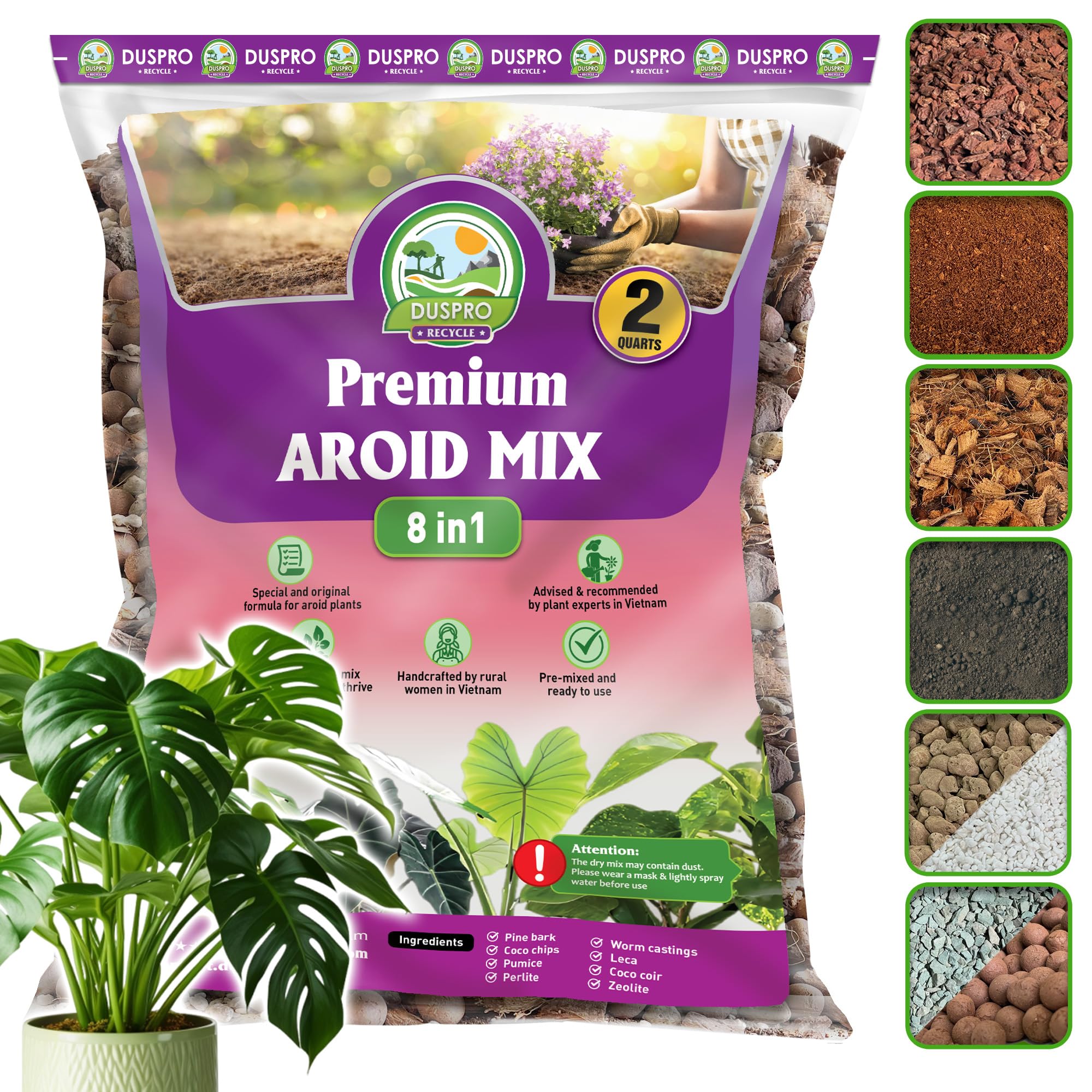
DUSPRO offers one of the most ingredient-dense mixes in this review, combining pine bark, coco chips, pumice, clay pebbles (LECA), fine perlite, coco coir, zeolite, and worm castings into a single pre-mixed bag. The inclusion of LECA is notable — those baked clay balls add permanent aeration channels that other mixes lack, helping even heavy-handed waterers avoid root rot. The texture is genuinely chunky, with visible variation that creates the open air pockets Monstera roots need to breathe.
At 2 quarts, this bag hits a practical middle ground for growers with a few medium-sized pots. The zeolite clay in the mix acts as a moisture buffer, absorbing excess water and releasing it slowly as the soil dries, which helps stabilize the root environment between waterings. Multiple customer reports confirm that plants from citrus trees to money trees respond positively, with noticeable new growth within weeks of repotting.
The fine dust generated when pouring the mix is a minor annoyance — a mask is recommended during handling. The sheer number of ingredients means the ratio varies slightly from batch to batch, though overall consistency remains high. For the grower who wants a comprehensive, plug-and-play aroid mix without paying premium prices, this is the strongest mid-range contender.
Why it’s great
- Eight distinct ingredients including LECA for permanent aeration channels
- Zeolite helps buffer moisture, reducing the risk of both over and underwatering
- Good value for the volume, covering several repots at a mid-range price
Good to know
- Bag produces fine dust during pouring; use a mask or work outdoors
- Ingredient ratios may vary slightly between batches
4. Craft Aroid Potting Mix (2QT)
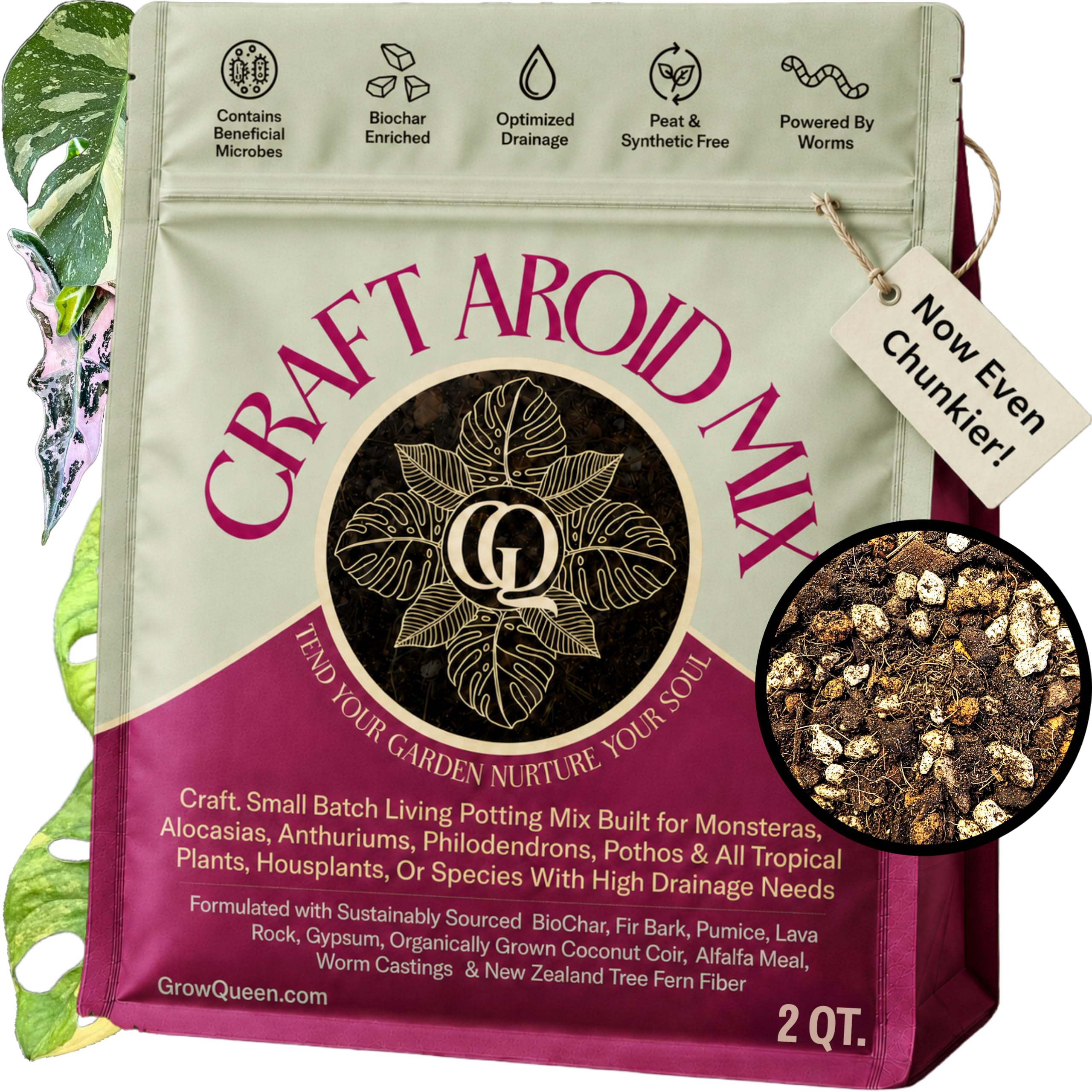
This 2-quart offering from Grow Queen brings the same premium Craft Aroid blend into a smaller, more accessible package. The core formula — Douglas fir bark fines, pumice, lava rock, New Zealand tree fern fiber, and organic coco coir — remains unchanged, delivering the same chunky, well-draining texture that prevents overwatering and promotes strong root development. The tree fern fiber helps maintain a pH around 6.0, closely matching the natural soil environment of tropical aroids.
The peat-free and perlite-free construction is a major advantage for long-term use. Many growers report that after a month or more, the mix shows no signs of compaction, and the organic coco coir is exceptionally clean due to multiple salt-washing steps. The bag is also pet-friendly and non-toxic, making it safe for homes where curious pets might dig. Customer feedback consistently praises the absence of pests, mold, or unpleasant odors.
The 2-quart size is ideal for a single repot or for testing the mix before committing to a larger bag. At a mid-range price point, it provides cost savings over smaller premium bags but less volume per dollar than the 4-quart version. For someone with one or two Monstera plants looking for a premium, ready-to-use mix without waste, this is a smart starting point.
Why it’s great
- Same premium formula as the larger bag in a more practical size for single repots
- Peat and perlite-free with pumice and lava rock for stable, long-term aeration
- Pet-friendly, non-toxic, and free from pests and mold out of the bag
Good to know
- Smaller bag means less value per quart compared to the 4-quart version
- Moist texture is convenient but reduces dry storage lifespan once opened
5. Gardenera Premium Monstera Potting Soil

Gardenera’s offering is the most budget-friendly entry point, formulated specifically for Monstera with a blend of peat moss, perlite, coco coir, biochar, worm castings, and bark. The inclusion of IBI-certified biochar is a standout at this price tier, as it helps retain nitrogen and phosphorus while improving soil structure. The mix is also sterilized to eliminate any pests or pathogens that might be lurking in the bag, providing peace of mind for growers who have dealt with fungus gnats or soil mites.
The 1-quart bag is notably small — enough for a single 5-inch pot or a small repotting project. Customer feedback confirms that plants respond well, with many reporting healthier growth and no signs of root rot. The mix smells earthy and healthy, and the resealable bag allows for convenient storage of any leftover soil. For someone repotting a single small Monstera, this is a tidy, no-fuss solution.
The most common point of criticism is the price-to-volume ratio, which is higher per quart than almost any other option in this guide. Larger plants or multiple repots will require multiple bags, quickly erasing the cost advantage. For the budget-conscious grower with a small collection, the quality is solid, but for anyone with more than one plant, a larger bag from another brand offers better economics.
Why it’s great
- Sterilized to eliminate pests and pathogens, offering a clean start for sensitive plants
- Includes IBI-certified biochar for improved nutrient retention at an entry-level price
- Resealable bag design makes storage of leftovers practical
Good to know
- 1-quart size is very small; larger plants or multiple pots will require multiple bags
- Higher cost per quart than most mid-range and premium competitors
FAQ
Can I use regular potting soil for my Monstera?
Why does my Monstera need a chunkier mix than other houseplants?
What is the difference between perlite and pumice in a Monstera mix?
Final Thoughts: The Verdict
For most users, the best dirt for monstera winner is the Rosy Soil Aroid Mix because it combines a microbially active biochar base with excellent drainage and a genuinely carbon-negative footprint. If you want the most sustainable, peat-free option with New Zealand tree fern fiber, grab the Craft Aroid Mix (4QT). And for the best value in a comprehensive eight-ingredient blend, nothing beats the DUSPRO 8in1 Aroid Potting Mix.

Mo Maruf
I created WellFizz to bridge the gap between vague wellness advice and actionable solutions. My mission is simple: to decode the research and give you practical tools you can actually use.
Beyond the data, I am a passionate traveler. I believe that stepping away from the screen to explore new environments is essential for mental clarity and physical vitality.