Our readers keep the lights on and my smoothie glass nicely filled. As an Amazon Associate, I earn from qualifying purchases.
Finding socks that support circulation without pinching sensitive skin is a daily challenge for women managing diabetes. The wrong pair can leave red marks, restrict blood flow, or cause discomfort that makes you want to kick them off by noon.
I’m Mohammad Maruf — the founder and writer behind WellFizz. I’ve spent countless hours analyzing material blends, compression ratings, and customer feedback across dozens of diabetic sock models to find the pairs that actually deliver relief without adding new problems.
This guide breaks down the best options for staying comfortable and protected, whether you need gentle support for neuropathy or a non-binding fit for all-day wear. Here is my researched look at the best diabetic compression socks for women.
How To Choose The Best Diabetic Compression Socks For Women
Diabetic compression socks are a unique hybrid: they must deliver gentle pressure to combat swelling and poor circulation while also avoiding any constriction or irritation that could harm sensitive feet. The wrong pair can leave you with deep indentations or fail to stay up, forcing constant adjustment throughout the day. Here are the three specs to prioritize when shopping.
Non-Binding vs. Graduated Compression
Non-binding tops are the single most important feature for diabetic socks. Unlike standard athletic compression that tightens around the calf, non-binding socks use a relaxed, stretchy band that holds the sock in place without squeezing. This prevents the red, painful lines that can cut off circulation or go unnoticed on numb feet. Graduated compression, where the pressure is strongest at the ankle and decreases upward, is still valuable—it encourages blood flow back toward the heart—but it must be paired with a loose top band to be safe for diabetics.
Material and Moisture Management
Bamboo viscose is a standout material for diabetic socks because it wicks moisture better than standard cotton, dries quickly, and feels soft against sensitive skin. Cotton can trap sweat and lead to blisters or fungal issues. Copper-infused fabrics are marketed for odor control, but the biggest priority should be a breathable, seam-free toe box that prevents friction points from turning into ulcers.
Compression Level: Mild vs. Moderate
Compression socks are measured in millimeters of mercury (mmHg). For daily diabetic wear, the sweet spot is 8-15 mmHg or 15-20 mmHg. The 8-15 mmHg range offers light support that reduces minor swelling without feeling tight—ideal for neuropathy-affected feet. The 15-20 mmHg range is better for managing significant edema or prolonged standing. Avoid anything above 20 mmHg unless prescribed by a doctor, as higher compression can restrict blood flow in compromised limbs.
Quick Comparison
On smaller screens, swipe sideways to see the full table.
| Model | Category | Best For | Key Spec | Amazon |
|---|---|---|---|---|
| CHAR MKING Compression Socks 8 Pairs | Premium | All-day edema control & chronic condition support | 15-20 mmHg graduated compression | Amazon |
| Sockswift Bamboo Viscose Diabetic 5 Pairs | Premium | Non-binding fit & floral style | Non-binding crew length, bamboo viscose | Amazon |
| Doctor’s Select Bamboo Viscose 3 Pairs | Mid-Range | Gentle light compression & travel | 8-15 mmHg, 54% bamboo viscose | Amazon |
| Debra Weitzner Diabetic Socks 4 Pairs | Mid-Range | Neuropathy & loose non-compressive fit | Over the calf, cotton blend, non-binding | Amazon |
| Bluemaple Copper Compression 6 Pack | Budget-Friendly | Gradient compression on a budget | Gradual gradient compression, 6 pairs | Amazon |
In‑Depth Reviews
1. CHARMKING Compression Socks for Women & Men Circulation (8 Pairs)

This 8-pair set from CHARMKING offers a true 15-20 mmHg graduated compression that tackles moderate swelling without feeling like a medical tourniquet. The compression is consistent from ankle to just below the knee, and the material breathes well enough for 10 to 18 hours of continuous wear — a trait repeatedly praised by users managing chronic conditions like POTS or standing all day. The fabric retains its shape after washing, and the patterns stay vibrant without bleeding into the skin.
Women with wider calves report that the top band stays put without digging in, thanks to a stretch pattern that accommodates different leg shapes. The open toe and heel allow for some wiggle room, reducing pressure on sensitive bunion areas. Reviewers note that the socks do not leave painful indentations behind the knee — a common failure point in cheaper compression hosiery. For daily edema management, this is the most balanced option in terms of quality and quantity.
The main shortfall is that the decorative patterns can create faint lines on very fair skin, though these fade quickly and cause no discomfort. Additionally, the 15-20 mmHg level may feel too firm for those with severe neuropathy seeking only light support. The fit also runs slightly long, which can bunch at the ankle for shorter women.
Why it’s great
- True graduated 15-20 mmHg compression that stays consistent after many washes
- Top band doesn’t pinch or leave deep red marks on larger calves
- 8-pair value is hard to beat for daily rotation
Good to know
- Patterns may leave temporary imprints on very sensitive skin
- Runs slightly long — not ideal for petite legs without bunching
- Compression level might be too high for neuropathy-focused needs
2. Sockswift Bamboo Viscose Diabetic Socks for Women, 5 Pairs
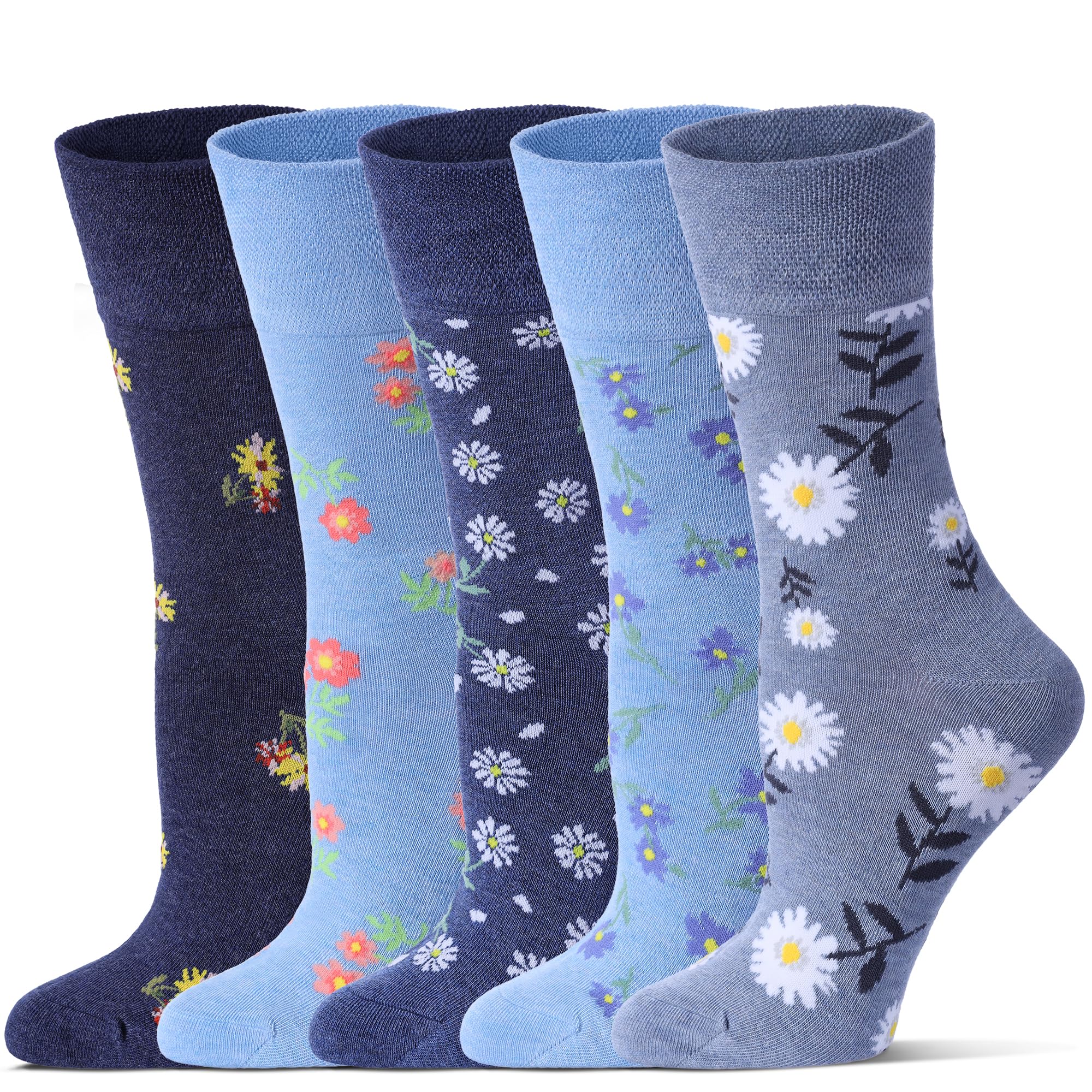
These Sockswift socks are built specifically for diabetic needs — non-binding tops that stay up without cinching, soft bamboo viscose fabric, and a mid-calf crew height that covers swelling-prone areas without bunching. The 5-pair floral set is lightweight and breathable, making them a strong choice for warmer climates or women whose feet run hot. Reviewers consistently mention the absence of red lines after removal, which is the clearest indicator of a proper non-binding design.
The fabric is thin enough to fit into most shoes without feeling bulky, yet dense enough to provide a gentle hug that prevents socks from sliding down into the shoe. The toe box is seamless, reducing friction risk for numb toes. The floral patterns are subtle and do not show through dress slacks or leggings. The socks machine-wash well when placed in a laundry bag and air-dried — users report no shrinkage or loss of softness after several cycles.
The thin material raises a durability question over the long term; several users noted that the socks feel delicate compared to thicker cotton blends. The non-binding top also means there is no real compression — if you need active edema reduction, these will not provide it. The design variety is limited to floral patterns, which may not suit everyone’s style.
Why it’s great
- Non-binding top stays up without leaving marks — ideal for neuropathy
- Bamboo viscose wicks moisture and feels cool against sensitive skin
- Seamless toe construction reduces blister risk
Good to know
- Very thin fabric — may not hold up to heavy daily wear without care
- No graduated compression — not for swelling management
- Limited to floral patterns only
3. Doctor’s Select Bamboo Viscose Light Compression Socks, 3 Pairs
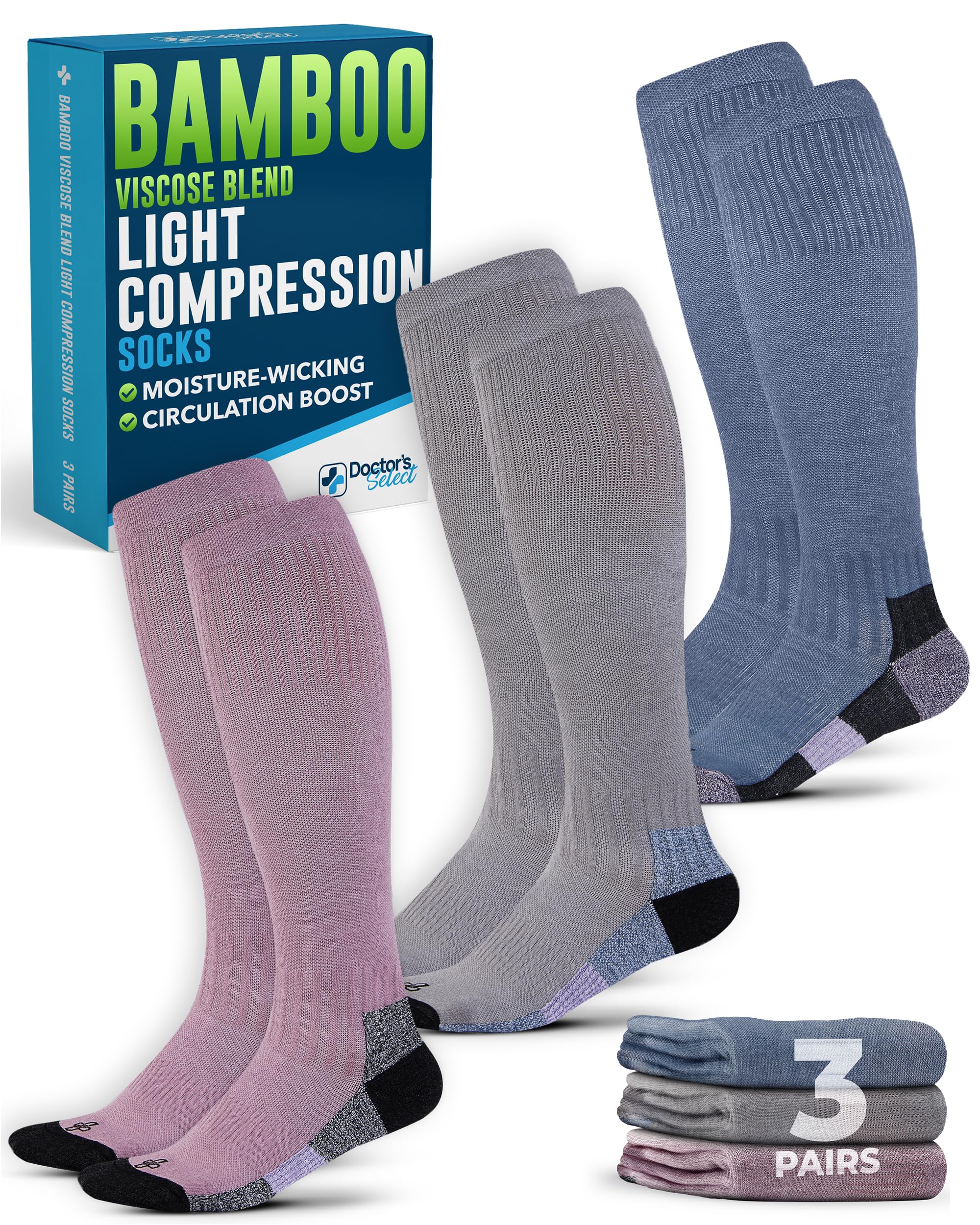
Doctor’s Select hits the sweet spot for women who need light compression (8-15 mmHg) without feeling like their legs are in a vise. The blend of 54% bamboo viscose and spandex creates a soft, stretchy fabric that “holds” the leg gently instead of strangling it — a distinction that comes up repeatedly in user reviews. These are a top choice for long flights, daily walks of seven-plus miles, or standing desk sessions where you want to prevent blood pooling without any restrictive sensation.
The material is lightweight and breathable, avoiding the sweaty, itchy feel that plagues synthetic compression socks. Users with larger calves report that the medium size accommodates them well, and the sock stays in place without rolling down. The fabric washes without shrinking, and the colors remain vibrant. For those who tried aggressive compression and hated it, this pair offers a clear path to consistent daily use without discomfort.
The decorative flower patterns are cute but can leave slight imprints on the leg after removal — a minor cosmetic issue. The 8-15 mmHg range may not be strong enough for significant edema or varicose vein management. Some users in very hot climates found the socks too warm despite the bamboo content.
Why it’s great
- 8-15 mmHg is the ideal mild compression zone for diabetic daily wear
- Bamboo viscose blend feels soft and prevents overheating
- Easy to put on and take off — no wrestling required
Good to know
- Decorative flowers may leave faint temporary marks
- Not enough compression for significant edema management
- Can feel warm in tropical or very humid climates
4. Debra Weitzner Diabetic Socks for Men and Women, 4 Pairs
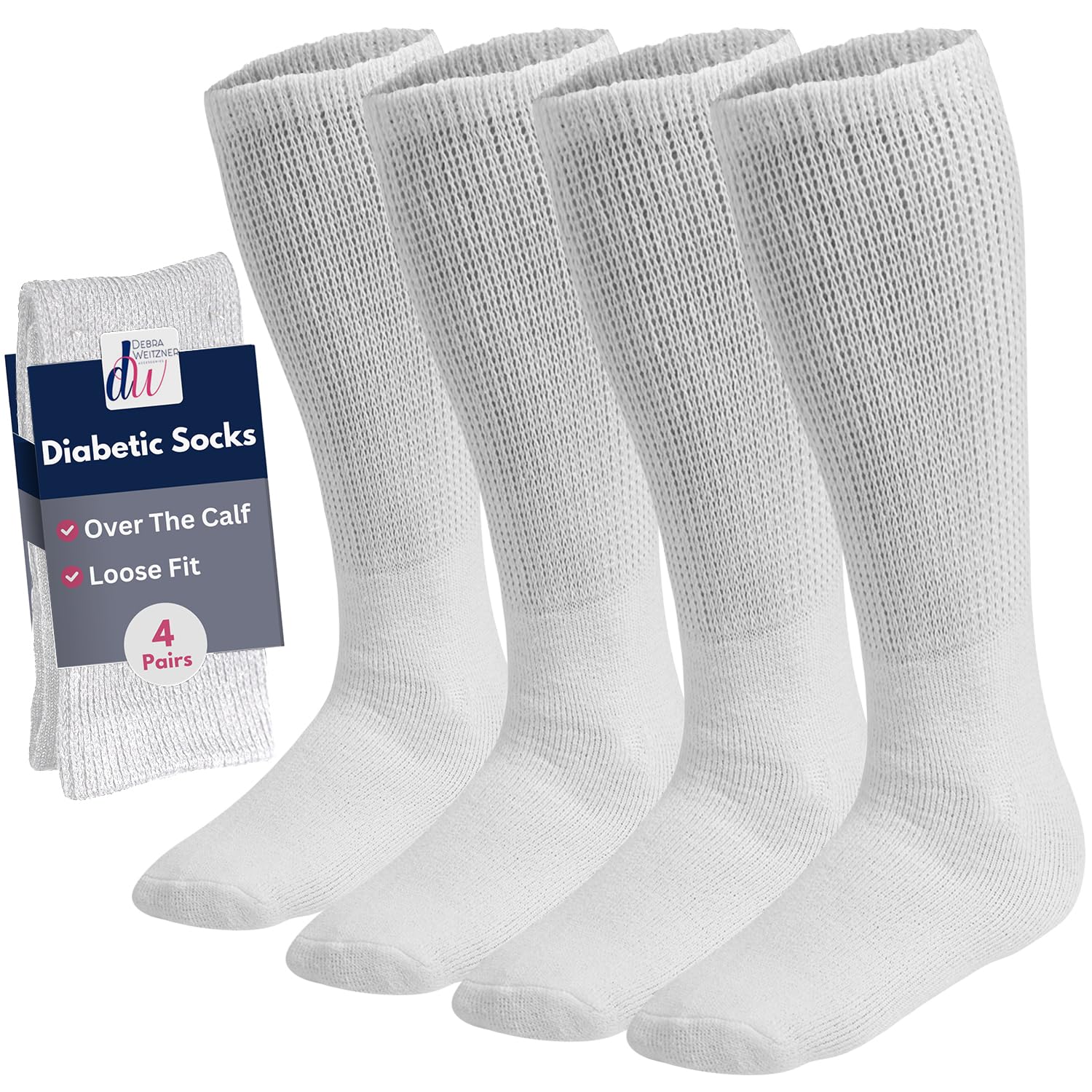
For women whose primary concern is neuropathy rather than edema, these Debra Weitzner socks prioritize a loose, non-compressive fit that reduces the risk of unnoticed blisters. The over-the-calf length stays in place without an elastic grip, and the cotton blend provides a classic sock feel that diabetics with temperature-sensitive feet often prefer over synthetic materials. Users specifically cite the top band’s loose construction as a relief compared to “top flight” brands that left deep marks.
The lack of compression means these socks are safe for anyone who cannot tolerate even mild pressure on the shin or calf. The sizing runs true to the chart, and the four-pair set covers a week’s worth of rotation. Reviewers with neuropathy note that the socks do not squeeze the legs too much, which prevents accidental tissue damage that can turn into non-healing wounds.
These socks are not designed for any swelling management — they offer zero compression. The cotton material is not as moisture-wicking as bamboo viscose, which could be an issue for active women or those prone to fungal infections. The design is plain and functional with no fashion options.
Why it’s great
- Non-compressive loose fit is ideal for neuropathy — avoids blister-causing pressure
- Stays up without elastic grip or rolling down
- Cotton blend is breathable and familiar for sensitive skin
Good to know
- Zero compression — not for edema or circulation support
- Cotton holds moisture more than bamboo options
- Limited style selection — purely functional design
5. Bluemaple 6 Pack Copper Compression Socks for Women and Men

Bluemaple’s 6-pack copper-infused socks deliver a gradual gradient compression that starts tighter at the ankle and eases up the calf — a design that multiple reviewers confirm stays in place through 12-hour flights without rubbing or irritating the skin. The compression is noticeable but not severe, fitting a middle ground between light support and medical-grade pressure. The copper element is marketed for odor control, though the real draw is the quantity and the consistent fit across different leg shapes.
Users with size 6 feet found the sock fit well without excess material at the toe. The material is lightweight and kept legs warm when cabin temperatures dropped. The socks washed and dried without shrinking, and the colors — including summer shades — held up well. For those new to compression, this pack offers an affordable way to test whether gradient pressure works for their circulation issues.
The material is not as soft as bamboo viscose alternatives; several users noted it feels slightly less premium against the skin. An initial chemical smell was reported, though it dissipated after the first wash. The compression level is not precisely graded in mmHg, making it harder to compare against medical-grade options.
Why it’s great
- Gradual gradient compression works for long-haul travel and standing
- 6-pair pack offers excellent rotation at an accessible price point
- Stays in place without slipping or bunching during all-day wear
Good to know
- Fabric is less soft than bamboo-based socks
- Initial chemical smell requires a first wash to remove
- Compression level is not medically specified in precise mmHg
FAQ
Can I wear 20-30 mmHg compression socks if I have diabetes?
What does non-binding mean in diabetic socks?
Final Thoughts: The Verdict
For most users, the best diabetic compression socks for women winner is the CHARMKING 8-Pair Compression Socks because they blend true graduated 15-20 mmHg compression with a comfortable fit that avoids skin damage. If you want a non-binding, no-compression design that protects neuropathy-prone feet, grab the Debra Weitzner Diabetic Socks. And for a lightweight, gentle compression option that’s easy to put on, nothing beats the Doctor’s Select Bamboo Viscose Socks.

Mo Maruf
I created WellFizz to bridge the gap between vague wellness advice and actionable solutions. My mission is simple: to decode the research and give you practical tools you can actually use.
Beyond the data, I am a passionate traveler. I believe that stepping away from the screen to explore new environments is essential for mental clarity and physical vitality.