Our readers keep the lights on and my smoothie glass nicely filled. As an Amazon Associate, I earn from qualifying purchases.
The search for a satisfying breakfast that doesn’t send your blood sugar on a rollercoaster is a daily struggle. Most boxes on the grocery shelf are brimming with added sugars and refined grains that are exactly what you need to avoid. The right choice, however, can deliver lasting energy, solid fiber, and a genuinely enjoyable bowl without the metabolic cost.
I’m Mohammad Maruf — the founder and writer behind WellFizz. I’ve spent countless hours analyzing nutritional labels, fiber-to-carb ratios, and sweetener profiles to build this guide around real-world data for those managing glucose.
Whether you are balancing type 2 diabetes, following a keto protocol, or simply aiming for better morning habits, this analysis of the best diabetic cereal breaks down which boxes actually deliver on their promises without compromising on taste or texture.
How To Choose The Best Diabetic Cereal
Not every cereal labeled “healthy” is suitable for glucose management. The marketing on the front of the box often hides the carbohydrate load inside. You need to look past the buzzwords and focus on measurable nutritional data.
Fiber-to-Total-Carb Ratio
The single most important calculation is net carbs — total carbohydrates minus fiber and sugar alcohols. A cereal that delivers 5 grams of fiber against 15 grams of total carbs is vastly different from one offering only 1 gram of fiber against 30 grams of carbs. Aim for at least 3 grams of fiber per serving, and ideally a net carb count under 15 grams.
Sweetener Quality
Cane sugar, honey, maple syrup, and brown rice syrup are all metabolically similar — they spike glucose. Look for cereals sweetened with allulose, monk fruit extract, stevia, or erythritol. These provide the palatable taste without a corresponding glycemic rise. Avoid products that list “evaporated cane juice” or “fruit juice concentrate” as primary ingredients.
Grain Selection
Whole oats, wheat bran, oat bran, and psyllium are excellent choices because their soluble fiber slows digestion and blunts glucose spikes. Refined white flour or puffed rice offers little resistance to rapid absorption. Sorghum, as used in one of our picks, is an ancient grain with a lower glycemic index than standard corn or rice alternatives.
Quick Comparison
On smaller screens, swipe sideways to see the full table.
| Model | Category | Best For | Key Spec | Amazon |
|---|---|---|---|---|
| MyCerealMix Vanilla Almond Granola | Premium | Keto & low-sugar diets | 0g added sugar, 5g fiber per serving | Amazon |
| Alpen Muesli No Sugar Added | Mid-Range | Whole-grain, no added sugars | No added sugar, whole grain oats | Amazon |
| Grain Berry Multi-Bran Flakes | Mid-Range | Low-glycemic whole grain | ONYX sorghum, multi-bran blend | Amazon |
| Kellogg’s Cracklin’ Oat Bran | Budget | Family-friendly fiber cereal | 8g total fat, high fiber oat bran | Amazon |
| All-Bran Buds | Budget | Maximum fiber for regularity | Wheat bran & psyllium, 100% DV folic acid | Amazon |
In‑Depth Reviews
1. MyCerealMix Vanilla Almond Sugar-Free Granola
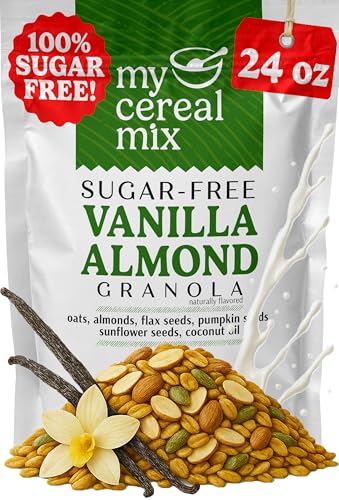
This granola is the gold standard for anyone needing to avoid sugar entirely without sacrificing crunch or flavor. Sweetened exclusively with allulose and monk fruit, it delivers zero grams of added sugar per serving while providing 5 grams of fiber from non-GMO oats and real almonds. The vanilla-almond profile is clean and satisfying — not artificially cloying.
Beyond the macros, the resealable 24-ounce pouch makes daily portioning convenient. It holds up well in yogurt, oat milk, or straight from the bag. Diabetic reviewers consistently note that it satisfies the craving for a crunchy morning bowl without triggering a blood sugar spike. The texture is robust and stays crisp even after being stored.
Compared to traditional sugar-laden granolas, this product closes the gap between health requirement and actual enjoyment. It is also plant-based and gluten-free, widening its appeal for those with additional dietary restrictions. The only real friction is the premium tier cost per ounce.
Why it’s great
- Zero added sugar and 5g fiber per serving
- Sweetened with allulose and monk fruit — no glycemic spike
- Gluten-free, plant-based, and non-GMO ingredients
Good to know
- Premium pricing compared to conventional granolas
- Mild sweetness may not satisfy those accustomed to sugary cereals
2. Alpen Muesli No Sugar Added
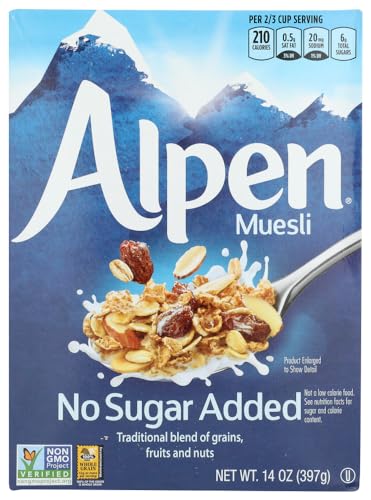
Alpen’s no-sugar-added muesli is a throwback to honest breakfast food — whole grain oats, wheat flakes, nuts, and raisins, with the only sweetness coming from the dried fruit itself. It is a clean, vegetarian-friendly option that scores well on the Yuka app for its lack of preservatives and low sodium content.
Each 14-ounce box is dense and filling. A single serving delivers notable fiber from the oats and wheat, supporting digestive health and sustained energy. The dried fruit does contribute natural sugars, so portion awareness is still important, but the absence of any added cane sugar or syrups makes this a superior choice over standard granolas.
Toasting the muesli or soaking it overnight softens the flakes into a hearty porridge-like texture. Some reviewers describe the flavor as fairly bland, but that neutrality is actually a positive for those sensitive to artificial sweeteners. The 3-pack provides good value for daily use.
Why it’s great
- Zero added sugars — sweetened naturally by raisins and fruit
- High fiber from whole grain oats and wheat flakes
- Low sodium and low fat per serving
Good to know
- Flavor is mild and less sweet than typical cereals
- Dried fruit still contributes natural sugars — watch portion size
3. Grain Berry Multi-Bran Flakes with ONYX Sorghum

Grain Berry stands out by using ONYX sorghum, a variety of the ancient grain that is rich in anthocyanins — the same antioxidants found in black rice and blueberries. This gives the flakes a darker color and a nutritional profile that goes beyond standard bran cereals.
The multi-bran base (wheat, oat, and rice bran) delivers a solid fiber punch per serving. Reviewers who have used this product for years describe it as a healthier alternative to mainstream flaked cereals, noting that it pairs well with fresh berries and unsweetened milk. The texture is sturdy and holds up without turning to mush quickly.
The 2-pack format (24 ounces total) is practical for households. The main drawback is the cost — it runs significantly higher than conventional grocery store cereals. However, for those prioritizing low-glycemic whole grains and clean ingredients, Grain Berry justifies its price with a genuinely differentiated formula.
Why it’s great
- ONYX sorghum provides antioxidants and a lower glycemic index
- Multi-bran blend offers substantial fiber content
- Clean ingredient list with no artificial additives
Good to know
- Premium pricing per ounce compared to mass-market cereals
- Some may find the flavor less sweet than standard flakes
4. Kellogg’s Cracklin’ Oat Bran Breakfast Cereal

This is the nostalgia pick that still earns a place on a diabetic-friendly list because of its oat bran base and high fiber content. The oven-baked clusters with coconut flakes, cinnamon, and nutmeg deliver a noticeably richer taste than typical bran cereals — more like a dessert masquerading as breakfast.
The critical caveat is the 8 grams of total fat per serving, largely from the coconut and added sugars that give Cracklin’ Oat Bran its signature crunch. It is not a zero-sugar option, but the fiber-to-carb ratio is better than most mainstream cereals. For those who can accommodate a moderate carbohydrate load, it offers a palatable way to increase fiber intake.
The 3-box pack (49.5 ounces total) offers strong value, especially given its scarcity in some grocery stores. This cereal is best used as a measured occasional bowl rather than a daily staple if strict glucose control is the priority.
Why it’s great
- High fiber content from oat bran base
- Excellent crunch and taste — kids and adults love it
- Good source of 8 vitamins and minerals
Good to know
- Contains added sugars and 8g fat per serving
- Not suitable for zero-sugar or strict keto diets
5. All-Bran Buds Breakfast Cereal

All-Bran Buds is the undisputed fiber champion of this category. Each serving delivers an excellent source of fiber from wheat bran and psyllium, providing both soluble and insoluble types. Gastroenterologists frequently recommend this cereal for digestive regularity and colon health — a common concern for seniors and those managing diabetes-related gut issues.
The texture is dense, chewy, and substantially less sweet than typical flakes. Many users mix All-Bran Buds into yogurt, smoothies, or other cereals to boost fiber without dramatically altering the flavor profile. It also delivers 100% of the daily value of folic acid and vitamins B6 and B12 per serving.
The 2-pack (35.4 ounces total) offers decent pantry volume. The primary complaint across reviews is the cost, which has risen significantly, making it an expensive way to get your fiber if consumed as a solo cereal. The bland taste is a trade-off for the unmatched nutritional density.
Why it’s great
- Exceptional fiber content with both soluble and insoluble types
- Doctor-recommended for digestive health
- Fortified with folic acid and B vitamins
Good to know
- Bland, chewy texture — best mixed with other foods
- Premium price per box compared to standard bran cereals
FAQ
Can I eat cereal every day if I have diabetes?
What is the difference between total carbs and net carbs in cereal?
Are sugar-free sweeteners like allulose safe for diabetes?
Final Thoughts: The Verdict
For most users, the best diabetic cereal winner is the MyCerealMix Vanilla Almond Sugar-Free Granola because it combines zero added sugar, 5 grams of fiber, and a genuinely enjoyable crunch that satisfies the daily breakfast ritual without compromising blood sugar goals. If you want a classic whole-grain muesli with no added sugars, grab the Alpen Muesli No Sugar Added. And for maximum fiber density that doctors recommend, nothing beats the All-Bran Buds.

Mo Maruf
I created WellFizz to bridge the gap between vague wellness advice and actionable solutions. My mission is simple: to decode the research and give you practical tools you can actually use.
Beyond the data, I am a passionate traveler. I believe that stepping away from the screen to explore new environments is essential for mental clarity and physical vitality.