Our readers keep the lights on and my smoothie glass nicely filled. As an Amazon Associate, I earn from qualifying purchases.
A dedicated battery backup ensures that your therapy continues uninterrupted whether you’re camping off-grid, weathering a storm, or simply dealing with an outlet that’s too far from the bed. The right unit keeps your airway open and your sleep consistent, no matter what happens to the grid.
I’m Mohammad Maruf — the founder and writer behind WellFizz. I’ve spent countless hours analyzing CPAP battery specifications, real-user runtime data, and compatibility charts to help you find a power solution that actually matches your machine and your lifestyle.
Whether you need a travel-friendly unit for flights or a high-capacity pack for multi-night emergencies, this guide to the best device for sleep apnea breaks down the options by capacity, weight, and feature set.
How To Choose The Best Device For Sleep Apnea
Choosing a CPAP battery starts with matching capacity to your machine’s power draw. A ResMed AirSense 10 without humidifier draws roughly 30W per hour, so a 100Wh battery provides about three hours — but the same machine with heated humidity can consume 60W or more, cutting runtime in half. You also need to check the voltage: most ResMed units run on 24V DC, while Philips DreamStation machines often use 12V. Getting the right output voltage and connector cable is as important as capacity.
Capacity and chemistry
Watt-hours (Wh) is the only honest measure of stored energy. Units below 100Wh qualify for air travel under TSA and FAA rules, while anything above 160Wh is restricted to checked baggage or prohibited entirely. For multi-night camping or emergency backup, look for 200Wh or more, ideally with LiFePO4 chemistry for longer cycle life (3,000+ charges) and safer thermal performance compared to standard lithium-ion.
Port compatibility and pass-through charging
A battery that offers pass-through charging lets you power the CPAP while simultaneously recharging the battery from a wall outlet — essential for home backup scenarios where power flickers on and off. Also consider the number and type of DC output ports: some batteries include dedicated cables for AirSense 11, AirMini, and DreamStation, while others require separate adapters. USB-C ports with Power Delivery (PD) at 60W or higher enable faster recharging of the battery itself.
Quick Comparison
On smaller screens, swipe sideways to see the full table.
| Model | Category | Best For | Key Spec | Amazon |
|---|---|---|---|---|
| EASYLONGER ES960 PRO | Premium | Multi-night off-grid power | 297.6Wh LiFePO4, 3000+ cycles | Amazon |
| BLUETTI X30 | Mid-Range | Compact multi-night backup | 297Wh, 3.9 lbs, 5-7 nights | Amazon |
| EASYLONGER ES720 | Mid-Range | Versatile power station backup | 266.4Wh, 180W cigarette socket | Amazon |
| Zopec Explore 5700 | Premium | Universal compatibility, up to 3 nights | FAA/TSA compliant, 110-240V input | Amazon |
| Pilot Flex 98Wh | Premium | TSA travel, dual voltage 12V/24V | 98Wh, 1.2 lbs, flowthrough mode | Amazon |
| Medistrom Pilot 24 Lite (Bundle) | Premium | Travel with 24V machines like AirMini | 95Wh, 1.3 lbs, TSA approved | Amazon |
| Pilot-24 Lite 95Wh | Premium | Durable travel companion, 24V only | 95Wh, aluminum case, 16h runtime | Amazon |
In‑Depth Reviews
1. EASYLONGER ES960 PRO CPAP Battery Backup
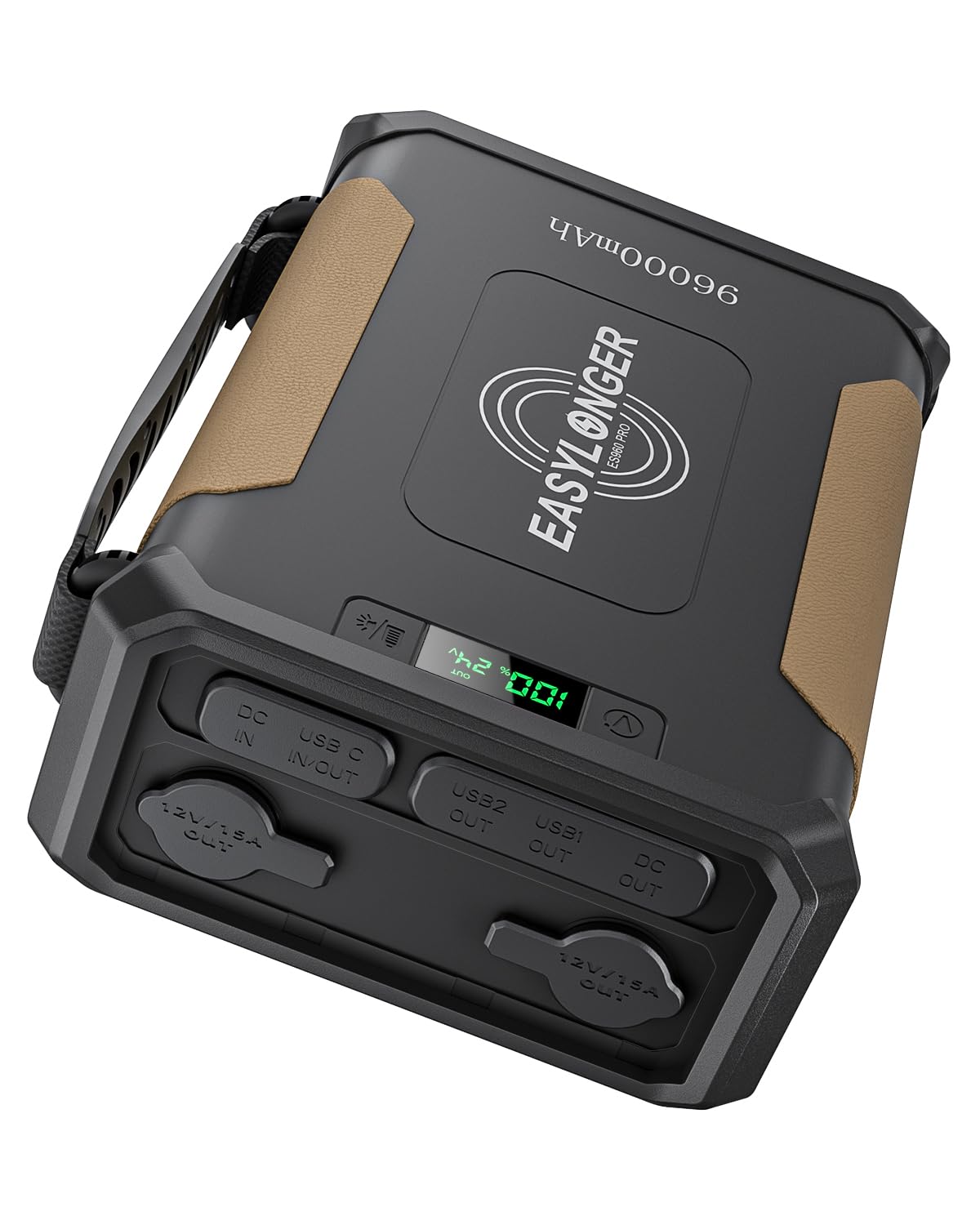
The ES960 PRO stands out for its LiFePO4 chemistry, delivering over 3,000 recharge cycles compared to the 500-1,000 cycles typical of standard lithium-ion packs. With 297.6Wh of usable capacity, it comfortably powers a ResMed AirSense 10 for two full nights without humidification, and the included cables support AirSense 10, 11, AirCurve, AirMini, and DreamStation machines directly. The 100W USB-C input allows fast recharging from a wall adapter, solar panel, or car outlet — making it a true multi-night solution for van life or hurricane season.
Real-world testing from users confirms that the pass-through charging feature keeps therapy running during grid flickers, though the 6.6-pound weight makes it better suited for car camping than backpacking. The memory function remembers your last voltage setting, so you don’t have to reconfigure outputs each time. A built-in LED light with SOS mode adds emergency utility, and the carrying case keeps cables organized.
Some users reported initial unit defects that were resolved through warranty replacement, and the battery exceeds the 160Wh airline limit so it cannot be carried on flights. The accidental light activation button design is a minor annoyance. Overall, this is the most durable and cycle-efficient option for serious off-grid use.
Why it’s great
- 3,000+ recharge cycles with stable LiFePO4 chemistry
- Pass-through charging for seamless power outage transitions
- 100W USB-C input for fast recharging
Good to know
- 6.6 pounds — not suitable for air travel or ultralight backpacking
- No direct 12V car charging cable included
2. BLUETTI CPAP Battery Backup X30

The BLUETTI X30 packs 297Wh into a compact 3.9-pound frame, making it one of the lightest high-capacity options on the market. Users report running a Philips System One for five nights (nine hours each, no humidifier) with only 16% battery drain per night, ending at 20% remaining — translating to an estimated six to seven nights per full charge. The three DC output ports (12V, 15V, 24V) cover most major CPAP brands, and the color-coded cable set makes setup intuitive even in the dark.
Recharging takes about four hours from a wall outlet, and the built-in LCD screen displays remaining percentage with a subtle night mode. The included accessory bag holds all cables neatly. For ResMed AirSense 11 users, the 24V DC port works without any additional adapter, and the unit doubles as a backup phone charger via the USB-A port.
Cable length is a common complaint — the DC cords are shorter than ideal for keeping the battery on the floor while the CPAP sits on a nightstand. Some DreamStation 2 users reported compatibility issues despite the marketing claims, so verify your specific model before purchasing. Overall, the X30 delivers exceptional runtime per pound for budget-conscious buyers who prioritize weight savings.
Why it’s great
- Remarkable runtime efficiency — up to 7 nights with low-pressure settings
- Ultra-lightweight at 3.9 pounds for camping or emergency bags
- Clear color-coded cable labels for fast setup
Good to know
- Short DC cables make placement awkward for some setups
- Compatibility issues reported with Philips DreamStation 2
3. EASYLONGER CPAP Battery Backup Power Supply ES720

The ES720 functions more like a full portable power station than a dedicated CPAP battery, featuring a 180W cigarette lighter socket, adjustable DC output (12V to 24V), and four USB ports. This versatility means you can run a CPAP, charge a laptop, power a car vacuum, and keep a phone topped off from one unit. The 266.4Wh capacity provides roughly one full night with humidification for most machines, or two nights with humidity off.
Four recharging options — wall adapter, USB-C PD at 60W, solar panel, and car outlet — give you flexibility whether you’re at a hotel, in an RV, or during a blackout. The built-in LED light with SOS mode is a thoughtful addition for emergencies. Users praise the included cable kit, which covers ResMed S9, AirSense 10, AirCurve 10, AirMini, AirSense 11, and Philips DreamStation right out of the box.
The battery drains noticeably faster when a heated humidifier and tube are active, and one reviewer reported only five hours of runtime on the first night with a higher-pressure setting. The 3.3-pound weight is manageable for car camping but the larger footprint (9.1 x 5.9 inches) takes up significant bag space. Also, the unit lacks true pass-through charging — you need the cigarette lighter adapter to charge and power simultaneously.
Why it’s great
- Swiss-army-knife output ports — CPAP, laptop, phone, car accessories
- Four recharging methods including solar for off-grid flexibility
- Comprehensive cable kit covers ResMed and Philips machines
Good to know
- No native pass-through charging; requires cigarette lighter adapter trick
- Heated humidity drains the battery rapidly
4. Zopec Explore 5700 Universal Travel CPAP Battery

The Zopec Explore 5700 is designed for the frequent flyer who needs one universal solution for every brand. Its wide 110-240V input voltage range means you can travel internationally without a separate converter, and its FAA-compliant 5,700mAh capacity (roughly 60-70Wh) fits easily in a carry-on. With humidification off, users consistently report 16 to 24 hours of runtime — enough for two to three nights at typical pressure settings below 12 cm H2O.
The slim profile (7.7 x 5.7 x 1 inches) slides into a laptop bag or CPAP carrying case without adding noticeable bulk. A car charger is included, so you can top it up during drives between hotels. The universal compatibility works through an AC inverter output rather than direct DC cables, meaning no special adapters are needed for any CPAP brand — just plug your machine’s standard power brick into the battery.
The AC inverter approach is less efficient than direct DC, wasting some energy as heat, and the battery cannot power a machine with high humidifier settings for more than three to four hours. Some users experienced units that failed to deliver the advertised runtime, with one reporting only 3-4 hours per night without humidity. The lack of a USB-C PD input means recharging takes longer than newer competitors.
Why it’s great
- Universal compatibility with any CPAP brand — no special cables needed
- FAA/TSA compliant for worry-free air travel
- Works with international voltage (110-240V) without a converter
Good to know
- AC inverter method is less efficient than direct DC output
- Runtime drops sharply with heated humidification
5. Pilot Flex 98Wh CPAP Battery Backup
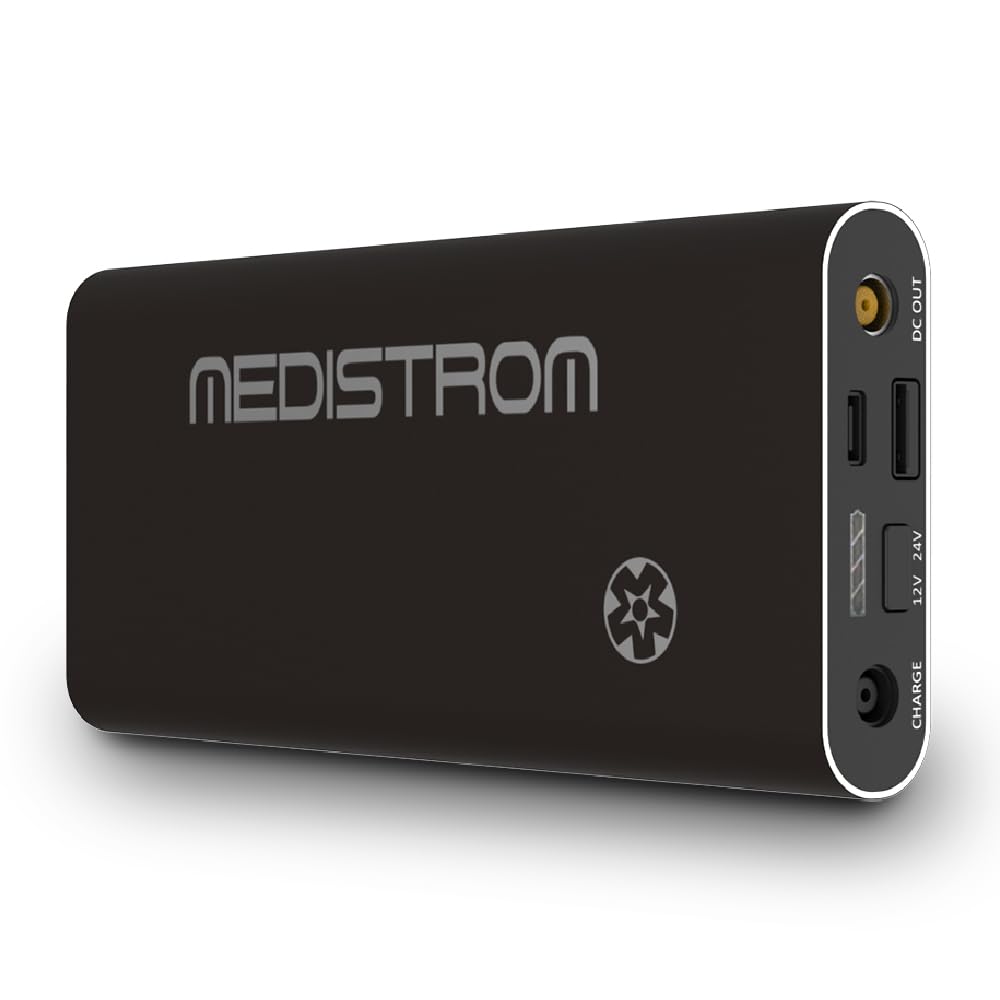
The Pilot Flex is the lightest and most travel-friendly dedicated CPAP battery on this list at just 1.2 pounds and 17 cubic inches. Its dual-voltage support (12V and 24V) covers the widest range of machines — ResMed AirSense 11, DreamStation, System One, Luna G3, iBreeze, and Prisma SMART — with cables sold separately for models beyond AirMini and AirSense 11. The flowthrough capability allows the battery to sit inline between your CPAP and the wall, automatically taking over during a power cut without any manual switching.
The aluminum case and LG industrial-grade cells provide rugged durability for outdoor use, and the 98Wh capacity keeps it under the 100Wh TSA/FAA limit, so it flies legally in carry-on luggage. Recharge time is a fast 2-3 hours via the included charger. Users report about one full night with a ResMed AirSense 11 (8+ hours with humidification off) or roughly 1.5 nights with an AirMini at moderate pressure.
The cables require precise insertion and can disconnect with a bump, which is frustrating in the middle of the night. One reviewer noted that the battery could not power their DreamStation machine at all. The price per watt-hour is high compared to larger units, making it a premium choice for ultralight travelers rather than value seekers.
Why it’s great
- Featherlight at 1.2 pounds — ideal for minimalist travel
- Flowthrough mode provides seamless power backup during outages
- Dual voltage (12V/24V) covers most major CPAP brands
Good to know
- Cables can loosen with movement during sleep
- Not compatible with all DreamStation models
6. Medistrom Pilot 24 Lite with 3 Pack Travel CPAP Wipes

This bundle pairs the Medistrom Pilot-24 Lite with three travel sachets of CPAP wipes, adding immediate practical value for the road warrior. The battery itself is nearly identical to the standalone Pilot-24 Lite — 95Wh, 1.3 pounds, TSA-approved — but comes with both AirMini and AirSense 10 cables included. Users who fly with an AirMini report getting 7-10 hours per charge even with humidification active, and the aluminum case handles the bumps of airline baggage without issue.
The built-in LED flashlight and USB charging port add utility without extra weight. The battery recharges in 2-3 hours and can be topped off via a car adapter during layovers. Long-term owners report the unit holds its charge well over years of intermittent use, with one reviewer noting it powered their CPAP through frequent international flights without degradation.
This suggests the 95Wh capacity is marginal for full-night therapy with any form of humidification. The bundled wipes are a nice starter bonus but not a recurring value.
Why it’s great
- Bundle includes CPAP wipes for immediate travel hygiene
- Compact and durable aluminum case for rough handling
- Works well with AirMini for full-night flights
Good to know
- Battery capacity too low for full-night therapy with humidification
- Some units lose runtime capacity after several months
7. Medistrom Pilot-24 Lite 95Wh CPAP Battery Backup

The standalone Medistrom Pilot-24 Lite is the dedicated 24V travel battery that has earned a loyal following among AirMini and AirSense 10 owners. Its 95Wh capacity is specifically optimized for 24V machines, and the LG industrial-grade lithium-ion cells deliver consistent discharge curves even in cold temperatures. Users consistently report 8-10 hours of runtime on an AirSense 10 when humidification and heated tubing are disabled — enough for a full night’s sleep in a hotel or on a long-haul flight.
The anodized aluminum case is noticeably tougher than plastic competitors, and the compact size (roughly the dimensions of a passport holder) fits into the accessory pocket of most CPAP travel bags. Recharging takes 2-3 hours from the included wall adapter, and the unit can also be charged from a 12V car outlet. The cable set covers AirMini and AirSense 10 out of the box, with additional cables available separately for AirSense 11, S9, and DreamStation Go.
Frustration with the cables is the most common issue — several users reported that the AirMini cable was defective or required a half-inserted connection to function, which caused therapy disruptions during trips. The 24V-only output means it won’t work with 12V machines (such as older Philips units) without a voltage converter. And like all sub-100Wh packs, it lacks the capacity for multi-night outings without a solar panel or car recharging.
Why it’s great
- Rugged aluminum housing protects against travel wear and tear
- Consistent 8-10 hour runtime for 24V CPAP machines
- TSA/FAA compliant at 95Wh for carry-on travel
Good to know
- Included cables have a history of connection issues
- 24V only — incompatible with 12V machines without converter
FAQ
How long does a CPAP battery last on a single charge?
Can I take a CPAP battery on an airplane?
Will a CPAP battery work during a power outage without me waking up?
Does using a heated humidifier really cut battery life that much?
Final Thoughts: The Verdict
For most users, the device for sleep apnea winner is the EASYLONGER ES960 PRO because its LiFePO4 chemistry delivers exceptional cycle life and multi-night capacity for serious off-grid use. If you want a lightweight travel battery that fits in a carry-on, grab the Pilot Flex 98Wh. And for budget-conscious buyers who need a universal power station that charges laptops and phones alongside a CPAP, nothing beats the EASYLONGER ES720.

Mo Maruf
I created WellFizz to bridge the gap between vague wellness advice and actionable solutions. My mission is simple: to decode the research and give you practical tools you can actually use.
Beyond the data, I am a passionate traveler. I believe that stepping away from the screen to explore new environments is essential for mental clarity and physical vitality.