Our readers keep the lights on and my smoothie glass nicely filled. As an Amazon Associate, I earn from qualifying purchases.
A whitetail buck doesn’t care about your camo pattern or your rifle’s MOA. What stops him mid-stride is the sound of another deer in his zone — a grunt that matches the phase of the rut you’re hunting. The difference between a call that sounds like a distressed duck and one that mimics a real dominant buck comes down to reed design, air chamber volume, and the material used to control tone. Get the call wrong and you’re educating deer, not attracting them.
I’m Mohammad Maruf — the founder and writer behind WellFizz. I’ve spent countless hours analyzing field test data, customer reports, and acoustic performance specs across the most popular deer calls on the market to separate the tools that actually work from those that just look the part.
Whether you’re working a field edge during the pre-rut or trying to pull a mature buck from heavy cover in the peak chase phase, your choice of the best deer grunt calls will directly determine how many deer you see this season.
How To Choose The Best Deer Grunt Calls
Buying a grunt call used to be simple — you picked a tube with a reed and you blew into it. Today the market offers open-reed calls, diaphragm calls, adjustable tone chambers, freeze-proof slides, and multi-sound systems. Understanding which features actually affect deer response will save you money and prevent you from spooking the very bucks you’re trying to call in.
Reed Design and Sound Versatility
The reed is the heart of any call. A single latex reed with a fixed air chamber produces a one-note grunt that works for basic contact calling during the pre-rut. But to cover doe bleats, fawn bawls, and the aggressive snort-wheeze of a dominant buck during peak rut, you need calls with adjustable O-rings, slide mechanisms, or flexible throat tubes that change the resonance chamber’s length and volume. The more adjustment points a call offers, the more deer vocalizations you can mimic without carrying three separate calls.
Freeze-Proof Construction and Durability
Late-season hunting means sub-freezing mornings where moisture inside a call turns to ice and locks the reed in place. Calls with a slide mechanism or a flexible corrugated tube allow you to break ice by moving the reed without damaging it. Soft-bodied calls also reduce the metallic clanking noise that alerts deer to your position. A call that performs at 70 degrees but fails at 20 degrees is a liability, not an asset.
Ease of Use Versus Learning Curve
Open-reed calls — the classic tube design — are the most intuitive to use and produce a consistent grunt with minimal practice. Diaphragm calls require tongue placement and breath control that take hours to master. If you’re a new hunter or call only a few times per season, stick with open-reed models that let you focus on deer movement rather than call technique. Experienced callers who can manage multiple mouth calls will benefit from the tonal precision of a diaphragm.
Quick Comparison
On smaller screens, swipe sideways to see the full table.
| Model | Category | Best For | Key Spec | Amazon |
|---|---|---|---|---|
| Flextone Headhunter’s Extractor | Premium | All-season versatility | X-Glide freeze-proof slide | Amazon |
| Primos The Long CAN Doe Bleat | Mid-Range | Doe bleats and fawn bawls | Extended-range air chamber | Amazon |
| Knight & Hale Pack Rack | Mid-Range | Rattling sequences | Collapsible horn design | Amazon |
| BUCK COMMANDER Deer Call | Mid-Range | Beginner-friendly grunts | Adjustable O-ring tuning | Amazon |
| Quaker Boy Weezzy Snort Weeze | Budget | Snort-wheeze aggression | Pocket-sized open reed | Amazon |
In‑Depth Reviews
1. Flextone Headhunter’s Extractor

The Flextone Headhunter’s Extractor gives you the widest vocal range of any call in this lineup — mature buck grunts, young buck grunts, doe bleats, fawn bawls, and an integrated snort-wheeze chamber. The molded throat tube is flexible so you can squeeze the corrugated hose to change the resonance and pitch mid-call, which is the closest you’ll get to the natural inflection of a live deer without dropping fifty more dollars. The X-Glide button lets you slide between settings one-handed, and when the temperature drops, that same sliding motion breaks up ice that would lock a fixed-reed call solid.
At just over two dozen dollars, this isn’t the cheapest call in the field, but the soft body construction eliminates clanking sounds when the call bumps against your bow or treestand, and the nylon rope lanyard keeps it within easy reach. Customer reports consistently mention calling in multiple bucks across a single season with this unit, and the sound quality gets compared favorably to calls that cost three times as much.
The one drawback is the learning curve — the squeeze tube technique takes a few practice sessions to master, and some users reported that the tube can slide off the mouthpiece if not fully seated. Keeping the call assembled and dry during off-season storage prevents this issue entirely.
Why it’s great
- Five distinct deer vocalizations from one call
- Freeze-proof X-Glide slide mechanism
- Soft body eliminates gear clanking noise
Good to know
- Squeeze tube technique requires practice
- Tube may slide off if not fully seated
2. Primos The Long CAN Doe Bleat

Primos designed The Long CAN specifically for the hunter who wants a dedicated doe bleat without the complexity of a multi-sound call. The extended air chamber produces a lower, more realistic tone than most single-reed bleat calls on the market, and the sound carries well across open fields without losing its natural crack. The can design fits comfortably in one hand and requires no adjustment to produce a consistent doe bleat from pre-rut through post-rut.
Customer feedback consistently highlights the solid build quality and the realistic sound that deer respond to immediately. The call weighs virtually nothing at 0.01 ounces and measures compact enough to drop into any jacket pocket or backpack pouch. Several users reported successful calling sequences within minutes of arriving at their spot, which suggests the tonal accuracy triggers a quick response from does and curious bucks alike.
The main concern in cold weather is the diaphragm reed sticking when the call freezes. A few users noted that the call produces a start-stop bleat when cold, but warming it in a chest pocket and giving it a quick shake resolves the issue. This is a single-sound call, so if you need buck grunts or snort-wheezes, you’ll need a second device.
Why it’s great
- Realistic doe bleat with extended range
- Ultra-light and pocket-friendly design
- Effective from pre-rut through post-rut
Good to know
- Diaphragm can freeze and stick in cold
- Single-sound call only (no buck grunts)
3. Knight & Hale Pack Rack
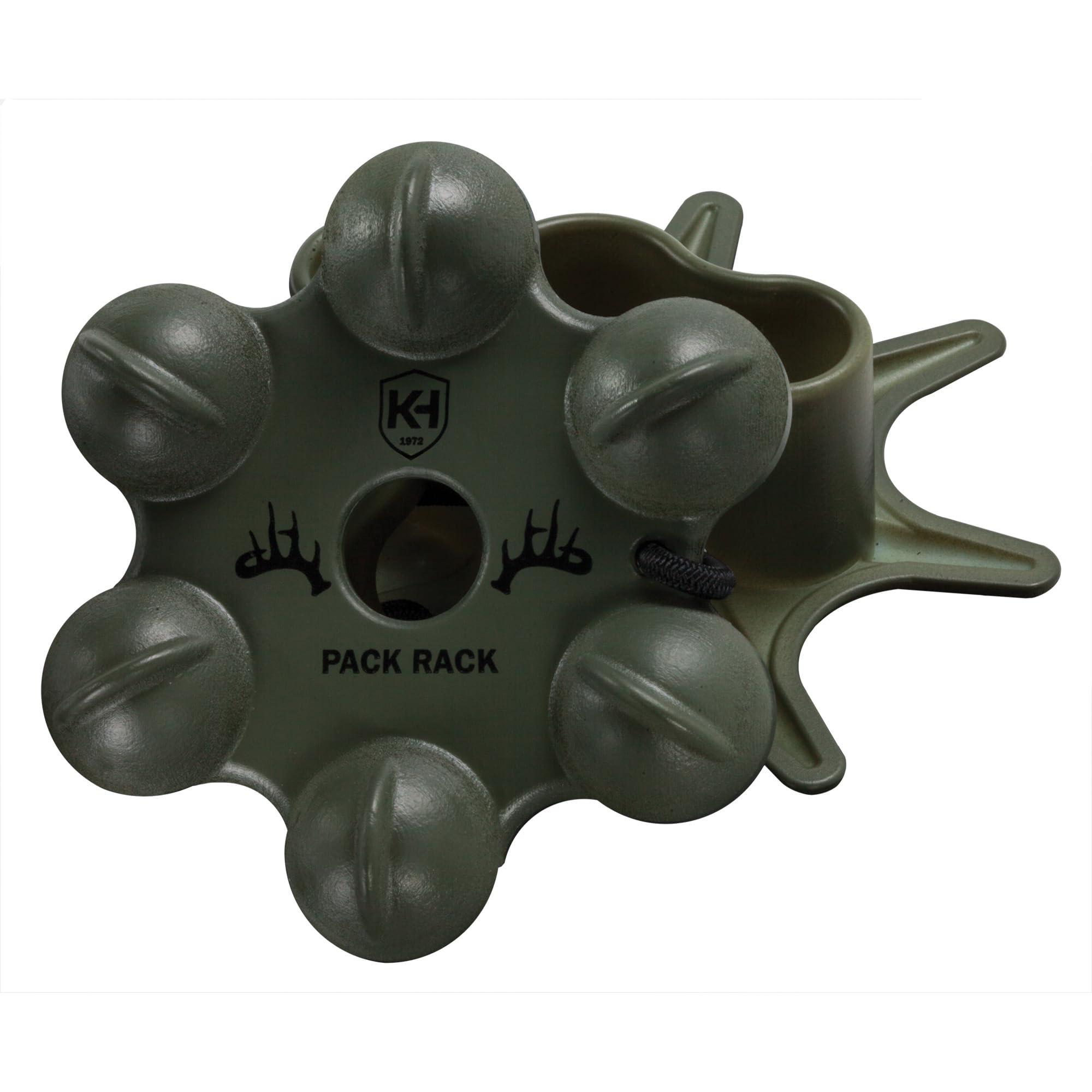
If your rut strategy relies on aggressive fighting sequences rather than soft grunts, the Knight & Hale Pack Rack is the rattling tool that replaces full antler sets or bulky rattle bags. The patented design uses two molded plastic halves that twist against each other to produce authentic fighting sounds at extreme volume. The sound replicates the crack and grind of real antlers without the risk of smashing your fingers, and the unit weighs only 6.4 ounces — light enough to hang from a treestand hook with the included strap.
Hunters who switched from real antlers to the Pack Rack reported better volume control and the ability to sequence fights more consistently because both hands stay free during the rattle. The collapsible design clicks together for compact storage when not in use, and the twist motion is glove-friendly even in sub-freezing temperatures. Several reviews noted that the sound attracted dominant, territorial bucks within minutes of starting a sequence.
The unit is compact for a rattling system but too bulky for a pants pocket — you’ll want a pouch or a backpack compartment. It also lacks a neck lanyard, which would improve access during quick setup. The sound is very loud by design, so use it sparingly in pressured areas where bucks may associate extreme rattling with hunter pressure.
Why it’s great
- Loud, authentic fighting sounds without real antlers
- Compact and collapsible for pack storage
- Glove-friendly twist motion
Good to know
- Too bulky for a pants pocket
- No neck lanyard included
4. BUCK COMMANDER Deer Call

The BUCK COMMANDER Deer Call brings simplicity and field-proven results together in a package that any hunter — from opening-day beginner to seasoned veteran — can pick up and use effectively. The adjustable O-ring lets you tune the call from soft tending grunts to more aggressive buck sequences, covering rutting buck grunts, breeding buck grunts, doe bleats, estrus bleats, and fawn bleats. The orange plastic construction makes the call easy to spot if dropped in leaves or snow, which matters more than you think during low-light morning sits.
Customer reviews consistently highlight how quickly the call produces results. Multiple users reported calling in bucks within minutes of their first use, including a 10-point that approached within 5 minutes of a two-grunt sequence at sunset. The classic open-reed design requires no complex diaphragm placement or tongue control — just blow and adjust the O-ring until the tone matches what you hear in the field.
The O-ring tuning system requires you to remove the barrel and roll the ring along the reed, which is less convenient than the slide mechanisms found on higher-end calls. Over time, the rubber O-ring may dry out and lose its grip, though replacement rings are available. The call is also bright orange, which some hunters feel is too visible during close-quarters encounters.
Why it’s great
- User-friendly open-reed design for all skill levels
- O-ring tuning covers multiple deer vocalizations
- Bright orange color prevents losing the call
Good to know
- O-ring adjustment requires disassembly
- Rubber O-ring may degrade over time
5. Quaker Boy Weezzy Snort Weeze
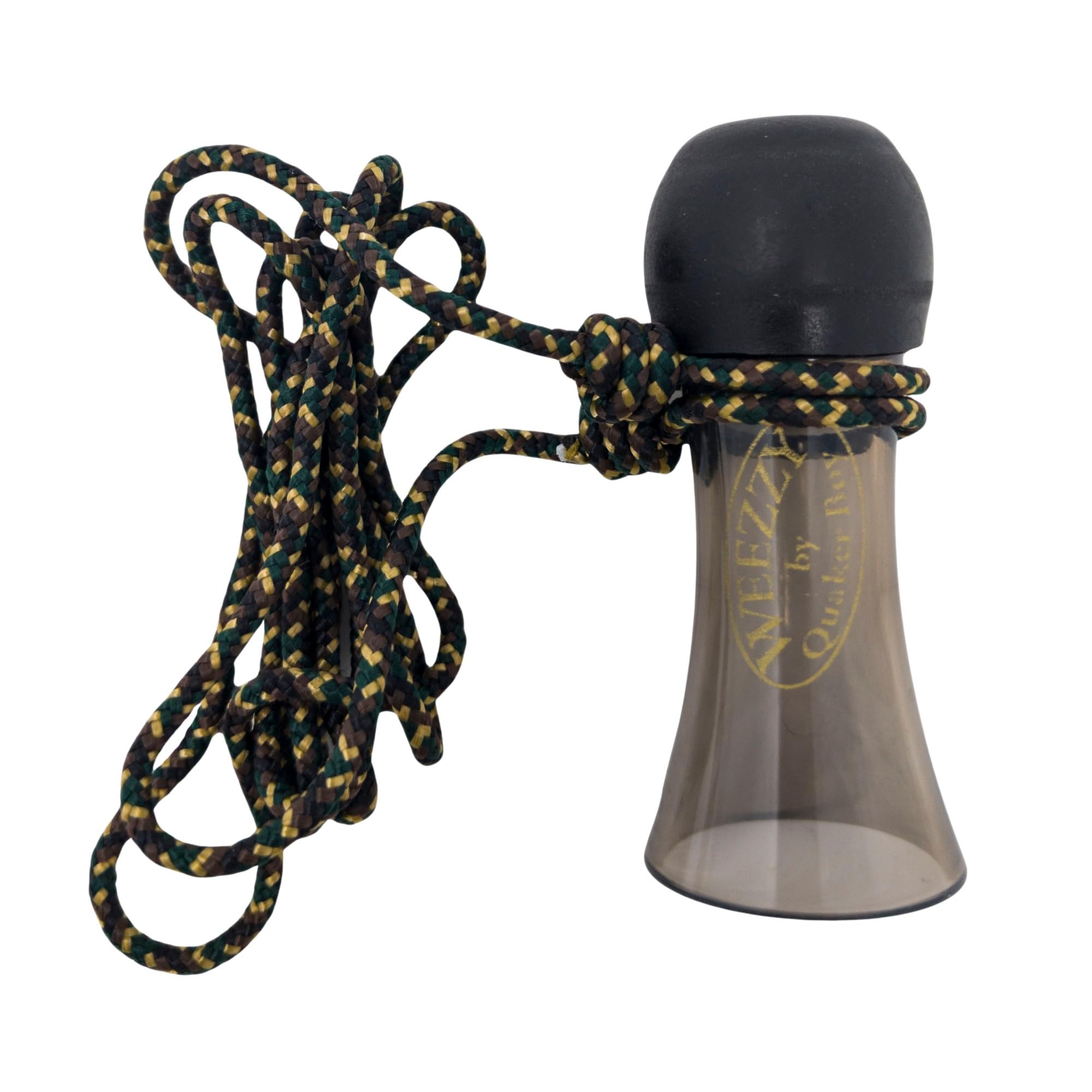
The Quaker Boy Weezzy Snort Weeze is a purpose-built call for one very specific rut situation: the moment you need to mimic an aggressive buck’s challenge wheeze to pull a dominant deer out of his bedding area. The call is tiny — measuring 6.25 inches long and just over an inch thick — and it produces a sound that’s difficult to replicate with general-purpose grunt calls. The smoke-colored plastic body is ambidextrous and fits easily inside a jacket pocket or small pouch without adding noticeable weight.
Users who have deployed this call during peak rut report that it brings bucks in consistently if they can hear it, but warn that the snort-wheeze should only be used once per stand session — over-calling with an aggressive sound pattern educates mature bucks quickly. The call has a slight learning curve because the snort-wheeze requires a specific exhale technique, but the call is forgiving enough that imprecise blowing still produces a usable sound that deer recognize.
This is not a general-purpose call. It produces one sound and it does that one sound well, but you cannot use it for doe bleats, fawn bawls, or standard contact grunts. If you want a call that covers multiple phases of the rut, you’ll need to pair this with a separate grunt call or go with a more versatile option. The plastic construction is durable but feels lighter than some competitors.
Why it’s great
- Authentic snort-wheeze sound for peak rut
- Extremely compact and easy to carry
- Forgiving design for imperfect technique
Good to know
- Single-sound call only
- Slight learning curve for proper snort-wheeze
FAQ
What is the difference between a grunt call and a snort-wheeze call?
Can I use a doe bleat call during the early season?
How do I prevent my deer call from freezing in cold weather?
Final Thoughts: The Verdict
For most users, the best deer grunt calls winner is the Flextone Headhunter’s Extractor because it combines the widest vocal range with a freeze-proof slide mechanism that works in the coldest conditions. If you want a simple, effective doe bleat that requires zero fumbling in the dark, grab the Primos The Long CAN Doe Bleat. And for rattling sequences that sound like real horn fights without packing antlers into the woods, nothing beats the Knight & Hale Pack Rack.

Mo Maruf
I created WellFizz to bridge the gap between vague wellness advice and actionable solutions. My mission is simple: to decode the research and give you practical tools you can actually use.
Beyond the data, I am a passionate traveler. I believe that stepping away from the screen to explore new environments is essential for mental clarity and physical vitality.