Our readers keep the lights on and my smoothie glass nicely filled. As an Amazon Associate, I earn from qualifying purchases.
A deer fly buzzing your head isn’t just annoying — it’s a relentless pursuit that turns a sunny afternoon into a swatting contest you always lose. These biting flies home in on movement, dark colors, and carbon dioxide, leaving painful welts that can itch for days, and they are notoriously hard to kill with sprays or swatters.
I’m Mohammad Maruf — the founder and writer behind WellFizz. I’ve spent many hours analyzing bait chemistry, trap geometry, and real-world user results across dozens of fly control products to find the setups that actually pull deer flies away from your skin and into a container where they drown.
The strategy is simple: use a powerful, species-specific attractant to lure them out of your space. That is exactly what you get with a properly deployed best deer fly trap system that balances bait potency with smart placement away from living areas.
How To Choose The Best Deer Fly Trap
Deer flies are visual hunters that also respond to chemical lures. A trap that works for house flies may fail entirely with deer flies because the bait composition and trap design differ. Focus on three factors: the attractant’s fermentation profile, the trap’s visual silhouette, and whether reusability matters for your setup.
Attractant Formula and Fermentation Speed
Deer flies are drawn to the smell of protein breakdown — specifically compounds released by fish, eggs, and bran when they ferment in warm water. A bait pack that activates in 24–48 hours is ideal for hot summer conditions; cooler weather can push that to 4–6 days. The stronger the fermenting odor, the farther the trap pulls flies, but that also means placing the trap at least 20 feet from any seating or dining area.
Disposable vs Reusable Construction
Disposable bags are the most common design: you add water, hang them, and toss the whole unit when full. They are mess-free but generate plastic waste. Reusable jugs let you dump the dead flies and replace only the bait packet each season, which reduces long-term cost and landfill impact. The trade-off is handling the contents — a genuinely unpleasant chore with either design.
Placement Height and Wind Exposure
Deer flies hunt in open, sunny areas near woods or water, and they stay within a few feet of the ground. Hang traps 5–10 feet high in direct sunlight to maximize bait fermentation and visibility. Avoid hanging near vents, gates, or high-traffic paths — the trap will attract flies toward those areas instead of pulling them away.
Quick Comparison
On smaller screens, swipe sideways to see the full table.
| Model | Category | Best For | Key Spec | Amazon |
|---|---|---|---|---|
| RESCUE! Reusable Fly Trap | Reusable | Season-long control in barns | 4 reusable traps + refill packets | Amazon |
| RESCUE! Disposable Fly Trap | Disposable | Quick knockdown near patios | 5-pack with food-grade attractant | Amazon |
| Glovv 10-Pack Fly Trap | Disposable | Large properties and farms | 10 bags with 30g bait each | Amazon |
| TRURID Reusable Hanging Fly Trap | Reusable | Small gardens and patios | 3-pack reusable bottles | Amazon |
| Glovv 8-Pack Fly Trap Bags | Disposable | Budget-friendly barn cover | 8 bags with pre-bait refill | Amazon |
In‑Depth Reviews
1. RESCUE! Outdoor Fly Trap – Reusable – 4 Traps

The RESCUE! reusable trap stands apart because the bait formula is specifically designed to attract stable flies, bottle flies, and horse flies — species in the same visual-feeding group as deer flies. The food-based attractant creates a fermentation stink that carries across open fields, pulling flies from a wide radius into the water-filled jug where they drown. Users report the trap fills completely within three weeks in active barns, dramatically reducing fly pressure on livestock.
Construction is heavy-duty green plastic with a wide mouth for easy emptying and rinsing. Each trap ships with one bait packet; you buy additional refills for subsequent seasons. The key advantage over disposable bags is durability: the jug withstands sun, rain, and wind for years, making this the most cost-effective option for anyone who battles deer flies annually.
The odor is strong — expect a smell like rotting protein within hours of adding water. Place these traps at least 20 feet downwind of any seating, dining, or animal feed area. A few users note the bait can attract wildlife like coyotes in rural settings, so secure the trap to a sturdy hook or fence post.
Why it’s great
- Reusable design eliminates plastic waste season after season
- Catches hundreds of flies including horse and deer species
- Refill packets are available and cost less than buying new traps
Good to know
- Must monitor water levels in direct sun to prevent evaporation
- Strong fermenting odor requires placement far from living areas
2. RESCUE! Outdoor Disposable Fly Trap – 5 Traps

The disposable version from RESCUE! uses the same food-grade attractant as the reusable jug but packages it in a lighter, one-season bag. The bait activates fast — within 6 hours the scent peaks — and users in humid climates like Hawaii report visible fly accumulation inside the bag by the next morning. The 5-pack provides enough coverage for a standard suburban yard if you space traps around the perimeter.
Each bag is 7.8 x 10.9 inches and holds roughly a gallon of water after bait activation. The plastic is sturdier than bargain-bin alternatives; none of the reviewers reported leaks or tears during use. Setup is simple: cut the top, add water, and hang. The built-in hanger loop works well on tree branches, fence posts, or shepherd hooks.
The odor is described as nauseating by nearly every user — the smell of the attractant itself plus the decomposing flies creates a potent combination. Place these bags at least 20 feet from your house and well away from outdoor dining areas. They work best in full sun where the bait ferments fastest.
Why it’s great
- Non-toxic and safe around pets, kids, and food gardens
- Visible results within hours — bags fill noticeably in days
- EPA-registered and made in the USA
Good to know
- Strong odor attracts wildlife like raccoons and coyotes
- Must discard entire bag when full — no refill option
3. Glovv 10-Pack Disposable Fly Traps
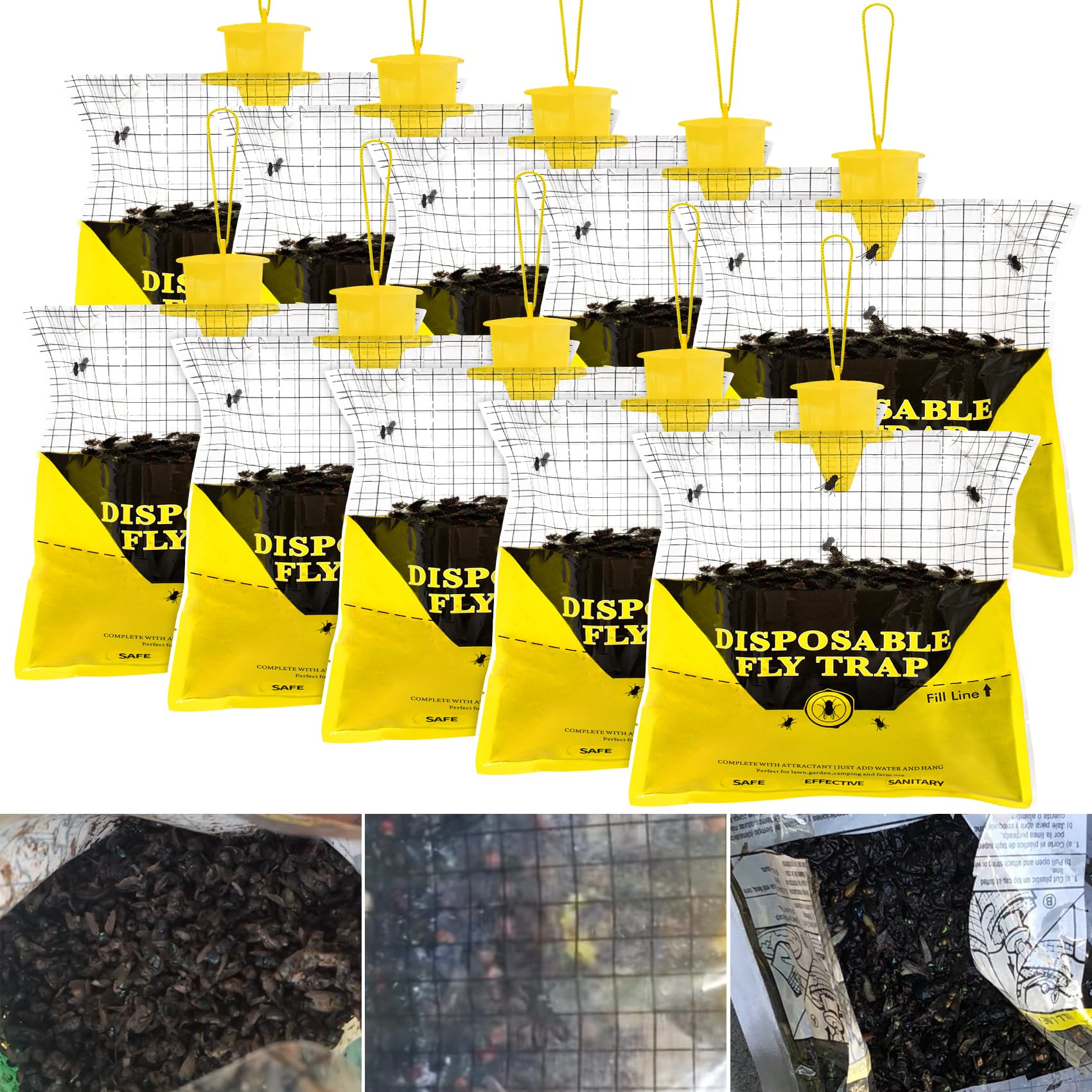
Glovv’s 10-pack is built for volume. Each bag contains 30 grams of bait made from fish, eggs, and bran — a fermentation recipe that deer flies find irresistible. The yellow bag color adds a visual component: flies are naturally drawn to yellow and blue wavelengths, so the trap works on both sight and smell. Users report it catching thousands of flies per bag over a two-week period in active farm settings.
The bags measure 8.5 x 9.6 inches and come with small hanging cords. Setup involves cutting along a dotted line, pulling up the lid, and adding warm water to a marked fill line. The bait dissolves fully and begins fermenting within 2–3 days in hot weather. The package recommends hanging at least 5 feet high and 20 feet from any occupied area.
The odor is strong — multiple reviewers call it “very stinky” — but the trade-off is effective control. One user in Virginia used these from first frost to last frost and noted the vegetable garden stayed fly-free. The 10-bag count makes this ideal for large properties, horse stables, or chicken coops where multiple trap stations are needed.
Why it’s great
- Yellow color adds visual attraction for deer flies
- High bag count covers large acreage or multiple buildings
- Cost per trap is very low compared to branded alternatives
Good to know
- Bags are short — you need your own hook or cord
- Bait must be hung in direct sun for fastest fermentation
4. TRURID Reusable Hanging Fly Trap – 3-Pack

TRURID’s 3-pack uses a clear plastic bottle with a pre-baited 30-gram lure that activates when you add warm water. The bottle is designed to be reusable — you can empty and refill with fresh bait — but in practice most users treat it as a single-season disposable because cleaning is unpleasant. The 3-bottle count makes it a good fit for small gardens, patios, or campsites where you need a few discrete stations.
The lure is non-toxic and free of harsh pesticides, so it is safe around pets, chickens, and vegetable gardens. Users report the trap attracts a dozen flies per day starting by day two, and the fly count remains steady for several weeks. The bottle measures 5 x 4 inches, which is compact enough to hang from low tree branches or shepherd hooks without being obtrusive.
The biggest complaint is the sticker — a branded label covering the bottle is extremely difficult to remove, requiring up to 15 minutes of peeling. A blow dryer helps but risks warping the plastic. The lid also tends to slide shut after hanging, so you may need to prop it open with a stick or piece of tape for consistent airflow.
Why it’s great
- Non-toxic formula safe for use around animals and plants
- Compact bottle fits in tight spaces like porch corners
- Pre-baited — no mixing or measuring required
Good to know
- Branding sticker is extremely difficult to remove before use
- Lid may slide shut — needs a prop to stay open
5. Glovv 8-Pack Disposable Fly Trap Bags
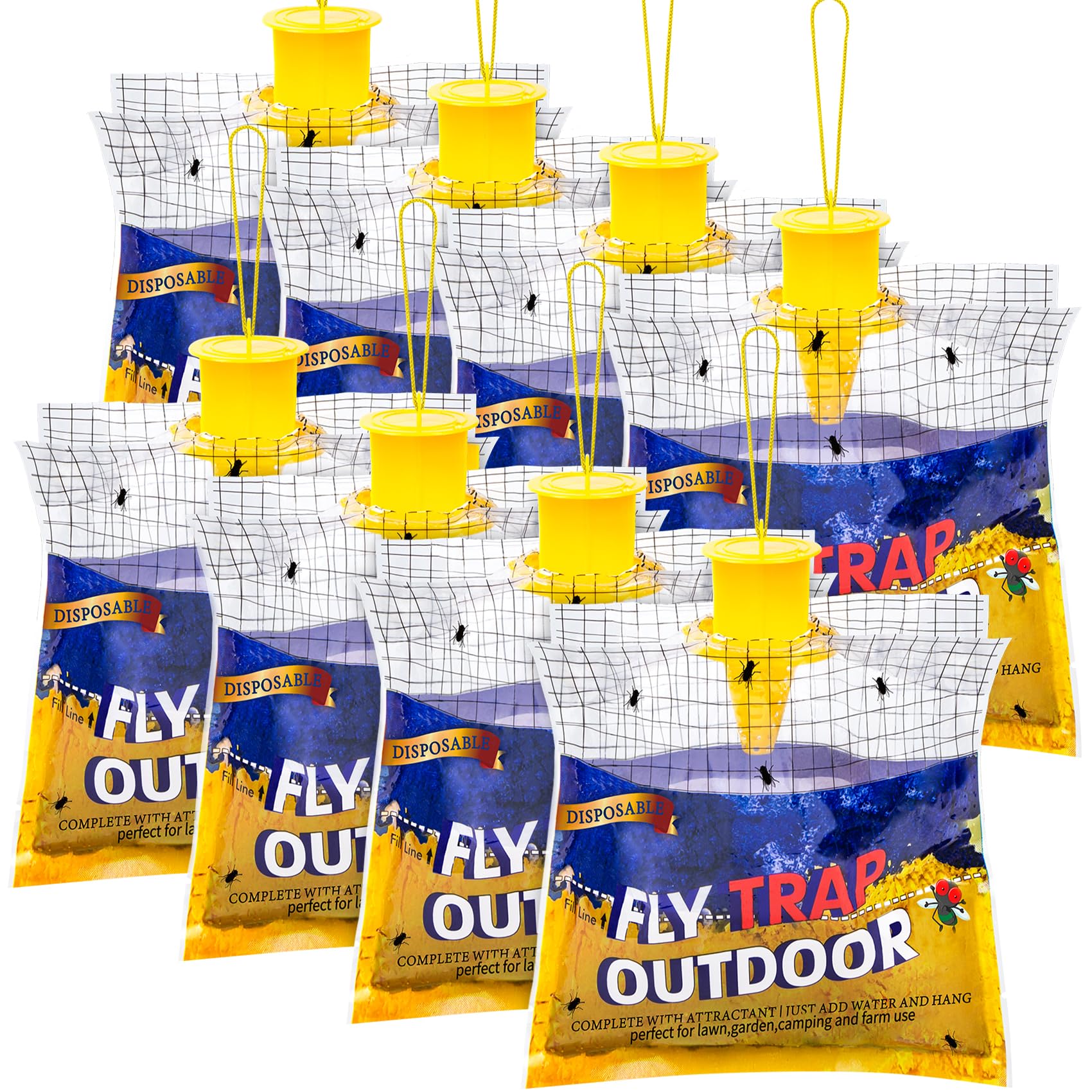
Glovv’s 8-pack is the most affordable per-bag option in this lineup. The bait uses grain-based ingredients rather than fish and eggs, which creates a different fermentation profile — less overwhelmingly meaty but still effective for green flies and fruit flies common around chicken coops and trash areas. The blue bag color adds visual attraction for deer flies that respond to short wavelengths.
Each bag holds roughly half a gallon of water and the bait dissolves fully within minutes. Users at horse rescues report catching hundreds of flies per day after a 1-day activation period. The package includes small hanging cords, though some users found the bags needed a sturdier hook for support when fully loaded with water and dead insects.
The odor is distinctly less offensive than the fish-based baits — one reviewer noted the bait pack itself had almost no smell until mixed with water. However, as the bag fills, the decomposition odor becomes noticeable. The manufacturer recommends hanging these at least 20 feet from living areas. Some buyers reported the traps did not attract flies in their specific location, suggesting the grain formula may be less universal than protein-based lures.
Why it’s great
- Lowest price per bag in this review
- Grain-based bait is less offensive to human nose during setup
- Blue color adds visual attraction for deer flies
Good to know
- Effectiveness varies — some users report zero attraction
- Bags need a sturdy hook; built-in cords are thin
FAQ
How far should I place a deer fly trap from my patio?
Can I reuse a disposable deer fly bag after emptying it?
Final Thoughts: The Verdict
For most users, the best deer fly trap winner is the RESCUE! Reusable Fly Trap because it combines a species-specific bait formula with a durable jug that lasts multiple seasons, saving money and landfill waste. If you want quick, mess-free deployment and don’t mind disposing of the bag, grab the RESCUE! Disposable Fly Trap. And for large properties or barns where you need a high volume of traps, nothing beats the Glovv 10-Pack for sheer coverage and cost efficiency.

Mo Maruf
I created WellFizz to bridge the gap between vague wellness advice and actionable solutions. My mission is simple: to decode the research and give you practical tools you can actually use.
Beyond the data, I am a passionate traveler. I believe that stepping away from the screen to explore new environments is essential for mental clarity and physical vitality.