Our readers keep the lights on and my smoothie glass nicely filled. As an Amazon Associate, I earn from qualifying purchases.
Watching a deer browse through your vegetable beds or strip your fruit trees overnight is a singular frustration for any gardener. The challenge isn’t just keeping them out—it’s finding a barrier that’s tall enough, durable enough, and easy enough to install without turning your yard into a construction zone. The difference between a fence that fails and one that works comes down to specific material choices and mesh geometry that most guides overlook.
I’m Mohammad Maruf — the founder and writer behind WellFizz. I’ve spent hundreds of hours analyzing product specifications, cross-referencing customer field reports, and comparing tensile strengths, mesh dimensions, and UV resistance ratings to separate agricultural-grade solutions from temporary deterrents that deer will simply push through.
This guide evaluates seven distinct options for installing a permanent or seasonal barrier, breaking down which materials, heights, and mesh sizes deliver real protection without excessive labor or cost. These are the best deer fence for garden solutions available today for homeowners who want results, not guesswork.
How To Choose The Best Deer Fence For Garden
Deer fencing is a straightforward product category, but small specification differences determine whether a fence lasts one season or five. Three factors dominate the decision: the material’s tensile resistance to pushing and rubbing, the mesh opening size relative to the animals in your area, and the installation method’s practicality for your garden layout. Ignoring any one of these leads to breaches, tangled netting, or an eyesore that defeats the purpose.
Height and Deer Jumping Behavior
A fence shorter than 6 feet is an invitation, not a barrier. Adult white-tailed deer routinely clear 6-foot obstacles without effort, and 7-foot fencing is the industry standard for reliable exclusion. In areas with heavy deer pressure or larger species like mule deer, 8 feet may be necessary. Measure from the final ground level—if the fence is installed above existing mulch or uneven terrain, effective height decreases. Always account for a few inches of ground clearance if you plan to stake the bottom edge firmly.
Mesh Size and Material Density
The mesh opening must be small enough to prevent deer from reaching through to graze but large enough to avoid trapping birds or small mammals. A 2-inch by 4-inch welded wire grid stops deer hooves and noses while allowing visibility. Woven polypropylene netting with 3/4-inch to 1-inch diamond mesh works well for seasonal draping over fruit trees but lacks the rigidity to stand alone. Material density, measured in ounces per square meter, dictates how many seasons the fence survives sun exposure and wind fatigue. Lightweight netting under 10 g/m² often tears within a single growing season.
Quick Comparison
On smaller screens, swipe sideways to see the full table.
| Model | Category | Best For | Key Spec | Amazon |
|---|---|---|---|---|
| Jobe’s Deer Barrier Fencing | UV-Treated Woven | Permanent perimeter protection | 1.125″ x 0.875″ mesh, 7 ft x 100 ft | Amazon |
| Kicari Green Welded Wire | PVC-Coated Metal | Long-term rigid fencing | 12.5 GA, 2″ x 4″ mesh, 6 ft x 50 ft | Amazon |
| HITTITE Black Welded Wire | Double-Coated Metal | Invisible perimeter barrier | 14 GA, 2″ x 4″ mesh, 6 ft x 50 ft | Amazon |
| Tenax Deer Netting | Heavy-Duty Woven | Seasonal crop protection | 0.63″ x 0.75″ mesh, 7 ft x 100 ft | Amazon |
| Fencer Wire Garden Netting | Polypropylene Woven | Lightweight tree and shrub cover | 0.75″ mesh, 7 ft x 100 ft, 8 lb weight | Amazon |
| HORTIFAN Temporary Mesh Fencing | Reinforced Plastic | Budget raised-bed barriers | 4 ft x 100 ft, includes 50 zip ties | Amazon |
| Vocray Deer Netting | HDPE Woven | Lightweight critter exclusion | 0.5″ mesh, 7.5 ft x 100 ft, 100-lb load | Amazon |
In‑Depth Reviews
1. Jobe’s Deer Barrier Fencing

Jobe’s Deer Barrier is the most frequently recommended woven fence among experienced gardeners for one reason: it survives full sun exposure for multiple seasons without becoming brittle. The UV-treated polypropylene construction is noticeably denser than standard bird netting—customer reports confirm it withstands Arizona desert conditions for over two years without significant degradation. The 1.125-inch by 0.875-inch rectangular mesh is small enough to block deer noses and hooves but large enough to avoid trapping birds or bats.
The 7-foot height meets the minimum threshold for adult white-tailed deer exclusion, and the material’s stiffness makes it easier to tension along a straight fence line compared to flimsier alternatives. Users report successful installation on 8-foot T-posts with UV-resistant zip ties, leaving 6 inches of clearance at the bottom for adding chicken wire or landscape staples to prevent ground-level entry. The folded roll measures 43.5 inches by 6 inches, making it manageable for one person to transport and unroll.
Customer feedback notes that bucks may occasionally test the barrier, but the woven structure holds under moderate impact without tearing. A few users mention that ground squirrels cannot chew through the polypropylene, adding protection against smaller burrowing pests. The fence is not designed to be draped directly over plants—it works best as a standalone tensioned barrier on posts spaced 8 to 10 feet apart.
Why it’s great
- UV-treated polypropylene holds up to harsh sunlight for years
- Stiff material allows clean tensioning with minimal sagging
- 7-foot height is sufficient for most residential deer populations
Good to know
- Not pliable enough for draping over shrubs or fruit trees
- Requires sturdy posts and moderate tension during installation
2. Kicari Green Welded Wire Fence
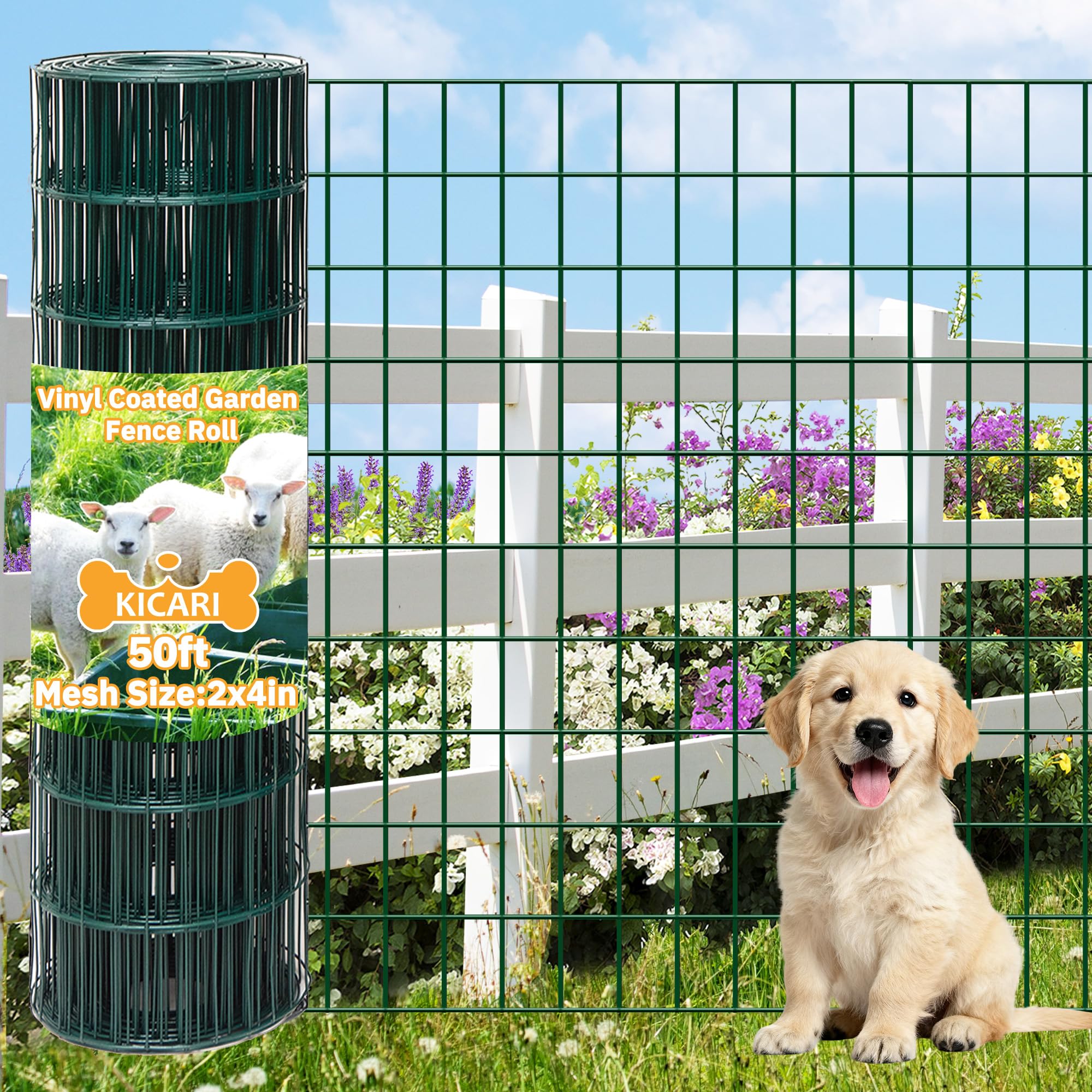
The Kicari welded wire fence represents the transition from netting to permanent rigid fencing. The 12.5-gauge wire (14-gauge before PVC coating) provides structural integrity that woven netting cannot match—deer cannot push through or stretch the grid, and the 2-inch by 4-inch mesh openings prevent hooves from finding purchase. The green vinyl coating adds corrosion resistance and helps the fence blend into garden surroundings better than bare galvanized wire.
At 6 feet tall by 50 feet long, this roll covers a smaller linear distance than 100-foot netting options, but the rigidity eliminates the need for tensioning. Users report cutting the mesh with standard wire cutters and attaching it to wooden or metal posts with staples or zip ties. The coated wire leaves no sharp edges after cutting, reducing injury risk to both the installer and animals that may brush against the fence.
Reviews highlight the fence’s effectiveness against deer when installed as a standalone perimeter—multiple customers describe creating 10-foot by 20-foot enclosures that completely stopped deer browsing. The coating quality exceeded expectations in side-by-side comparisons with cheaper welded wire options. The trade-off is weight and storage: the roll is heavier and less compact than woven netting, and the 6-foot height may need an additional layer for areas with very determined deer populations.
Why it’s great
- Rigid welded construction prevents pushing and stretching
- PVC coating adds rust resistance and blends into landscape
- Easy to cut and reshape for custom garden layouts
Good to know
- 6-foot height may be marginal for larger deer species
- Heavier than netting and harder to store compactly
3. HITTITE Black Welded Wire Fencing
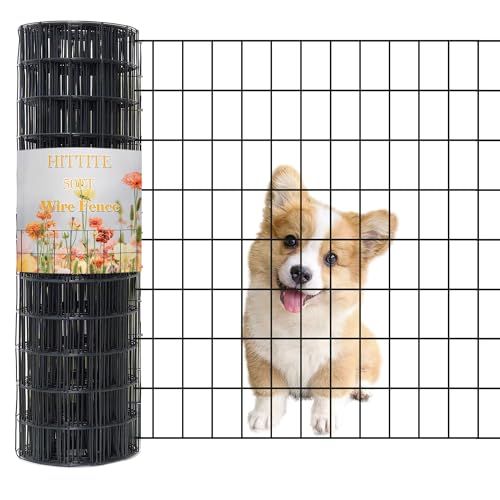
The HITTITE welded wire fence prioritizes visual discretion without sacrificing structural strength. The black PVC coating over galvanized inner wire creates a double-layer corrosion barrier that outperforms standard dipped coatings, and the dark color virtually disappears against tree lines and fence rows from a distance of 20 to 30 feet. The 14-gauge wire diameter (before coating) provides enough rigidity to maintain shape under moderate pressure while remaining workable with standard cutting tools.
At 6 feet tall by 50 feet long with a 2-inch by 4-inch mesh pattern, this fence mirrors the dimensions of the Kicari option but arrives in a black finish that many gardeners find more visually appealing against dark soil and green foliage. The double coating—galvanization followed by PVC—adds meaningful longevity in wet climates where standard galvanized wire can develop rust at cut ends within two seasons.
Customer reviews consistently mention successful deer exclusion after installation, with one user layering the 5-foot version on top of 6-foot posts to create an 8-foot barrier that stopped all deer entry. A few reports note that the fence arrives tightly rolled and can be damaged during shipping if the packaging is compromised—inspecting the roll upon delivery is recommended. The black coating also reduces glare, making it suitable for front-yard gardens where aesthetics matter more.
Why it’s great
- Black PVC coating nearly invisible against natural backgrounds
- Double corrosion protection extends service life in wet climates
- 14-gauge core holds shape under moderate animal pressure
Good to know
- Roll can arrive damaged if packaging is insufficient
- Cut ends require gloves due to sharp exposed wire
4. Tenax Deer Netting
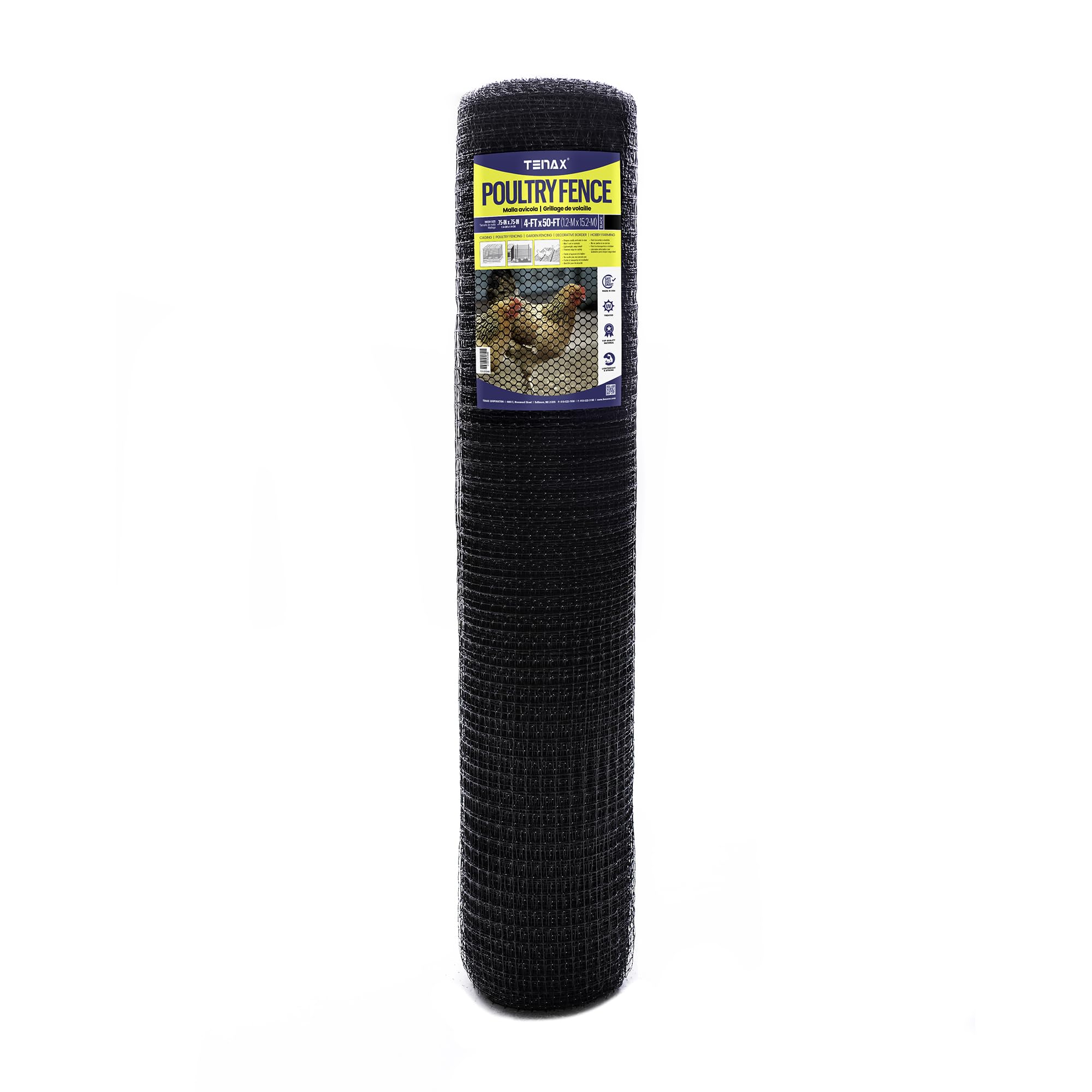
Tenax has been a reference brand in deer netting for years, and their 7-foot by 100-foot roll remains a go-to for seasonal garden protection. The 0.63-inch by 0.75-inch mesh is tighter than the 1-inch openings found on general bird netting, creating a barrier that deer cannot easily nose through while still allowing ample sunlight and rainfall to reach crops. The polypropylene material is thicker and more rigid than discount-store netting, which translates to easier handling during installation and less tangling during storage.
The 7-foot height is the minimum effective measure for deer exclusion, and users report successful multi-year use in both flower beds and blueberry rows. The netting is designed to be attached to posts or existing fencing with zip ties or staples—it does not stand alone without support. Customer feedback highlights that the material is noticeably heavier than the 0.2–0.4 oz/ft² netting found at big-box retailers, which contributes to its reusability across multiple seasons without significant UV degradation.
One detail that emerges repeatedly in reviews: the cut ends of the netting can be sharp and require care during handling. Users recommend wearing gloves and using a lighter to briefly melt the cut edges to prevent unraveling. The netting folds for compact storage when removed at the end of the growing season, making it a practical choice for gardeners who prefer removable barriers over permanent fence installations.
Why it’s great
- Heavier material than budget netting, lasts multiple seasons
- Tight 0.63″ x 0.75″ mesh stops deer noses and small critters
- 7-foot height matches standard deer exclusion requirements
Good to know
- Cut ends are sharp and can fray without heat sealing
- Requires support posts—not a standalone fence
5. Fencer Wire Garden Netting

The Fencer Wire netting strikes a balance between weight and durability that makes it particularly useful for draping over fruit trees and blueberry bushes. The 0.75-inch mesh opening is small enough to deter deer from reaching through to browse foliage while remaining large enough to minimize wind resistance. At 8 pounds for the full 7-foot by 100-foot roll, it is lightweight enough to handle overhead without a second person but dense enough (relative to ultra-light bird netting) to resist tearing from branches and stakes.
The polypropylene material is treated to resist UV degradation, and customer reports show successful use spanning five years in the Ozarks region where temperature swings from below freezing to above 90 degrees Fahrenheit are common. The netting can be cut to size without fraying, which reduces installation frustration compared to materials that unravel at the cut line. Users report attaching it to T-posts with zip ties and anchoring the bottom edge with landscape staples to prevent deer from lifting the material.
One recurring observation in reviews is that the netting is nearly invisible from a distance of 70 feet once installed, which is a meaningful advantage for gardeners who want protection without obstructing views. However, the lightweight construction means it is best suited for temporary or seasonal use rather than permanent perimeter fencing—strong winds can shift loosely installed sections, and sustained animal pressure can eventually deform the mesh.
Why it’s great
- Light enough to drape over trees and bushes without damage
- Nearly invisible when installed against natural backgrounds
- Cuts cleanly without fraying for custom sizing
Good to know
- Not rigid enough for standalone fencing without frequent tensioning
- Mesh can deform under sustained deer rubbing pressure
6. HORTIFAN Temporary Mesh Fencing
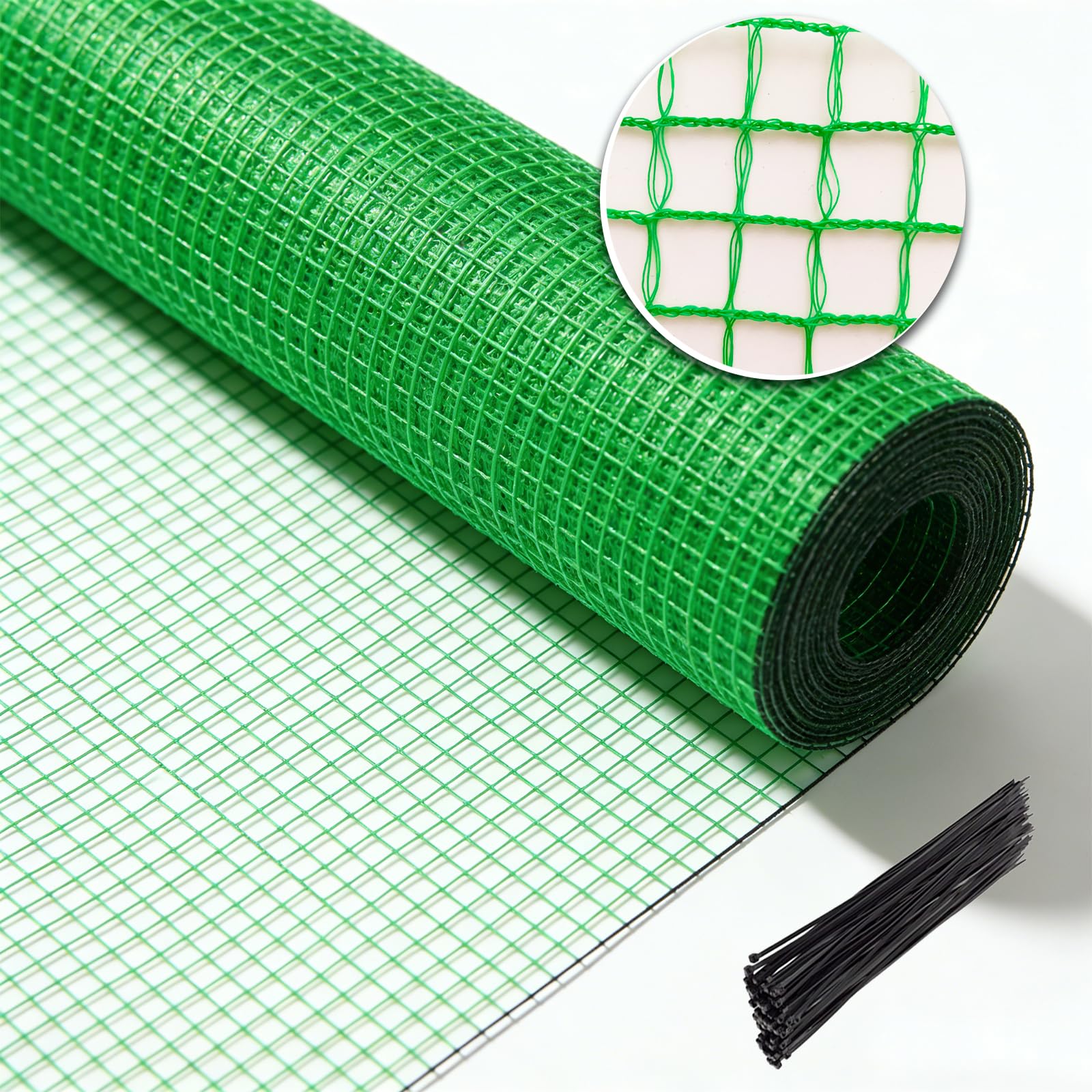
The HORTIFAN temporary fencing uses a warp-knit construction that sets it apart from standard woven netting. The plastic mesh is reinforced with edge wires that simplify attachment to posts, and the material’s flexibility allows it to conform to uneven ground surfaces without losing structural integrity. At 4 feet tall, this fencing is notably shorter than the 7-foot options in this guide, which limits its effectiveness as a standalone deer barrier—deer will easily step or jump over a 4-foot fence.
Where this fence excels is as a secondary barrier or as a raised-bed enclosure when paired with taller posts or existing fencing. Customer reviews confirm it works well for keeping rabbits out of vegetable beds and for containing dogs or poultry in defined areas. The included 50 zip ties reduce the need for additional hardware, and the material’s resistance to animal bites makes it suitable for chicken runs and small-animal pens where deer pressure is not the primary concern.
Users consistently praise the ease of installation: the fence can be unrolled, cut with scissors, and attached to wooden stakes or metal posts in under an hour for a standard raised-bed layout. The UV-resistant plastic withstands direct sun exposure without becoming brittle, and the material does not rust like metal alternatives. However, buyers should be clear that this is a temporary and low-height solution—for deer exclusion on its own, the height is insufficient.
Why it’s great
- Warp-knit construction resists tearing and animal bites
- Edge reinforcement wires simplify post attachment
- Easy to cut and shape for irregular garden layouts
Good to know
- 4-foot height is far too short for primary deer exclusion
- Best used as a rabbit barrier or secondary fence layer
7. Vocray Deer Netting

The Vocray deer netting distinguishes itself through a very tight 0.5-inch mesh size that excludes not only deer but also birds, squirrels, rabbits, and even the smallest hummingbirds. The high-density polyethylene (HDPE) material weighs 0.9 oz/m², which is roughly three to four times denser than ultra-light bird netting, giving it meaningful tear resistance for a woven product. The manufacturer rates the load-bearing capacity at over 100 pounds, indicating that the weave structure is robust enough to withstand moderate animal impact.
At 7.5 feet tall by 100 feet long, this netting provides extra height beyond the standard 7-foot barrier, which is beneficial for areas with larger deer species or for sloped installations where effective height decreases as the fence follows the ground contour. The mesh’s small openings also make it suitable for protecting strawberry beds and low-lying vegetables where birds are as much of a problem as deer. Users report successful use as chicken coop covers and pond netting, highlighting the versatility of the fine grid pattern.
Customer reviews note that the netting is lightweight and easy to unfold, though the diamond-shaped mesh can distort if overstretched in one direction during installation. Several users mention that the material held up well in desert sun conditions over multiple months without visible degradation. The trade-off for the ultra-fine mesh is reduced airflow and visibility compared to larger-opening netting—plants with dense foliage may require periodic inspection to ensure adequate ventilation and light penetration.
Why it’s great
- 0.5-inch mesh excludes birds, deer, rabbits, and squirrels
- 7.5-foot height exceeds standard deer jump clearance
- HDPE material has high tear resistance for a woven net
Good to know
- Ultra-fine mesh reduces airflow compared to larger openings
- Diamond pattern can distort if tensioned unevenly
FAQ
What is the minimum fence height to stop deer from jumping over?
Does deer netting need to be buried in the ground?
Can I use bird netting instead of dedicated deer netting?
Final Thoughts: The Verdict
For most users, the deer fence for garden winner is the Jobe’s Deer Barrier Fencing because it combines the right 7-foot height, UV-resistant polypropylene construction, and manageable installation weight for permanent perimeter protection. If you want a rigid barrier that will never stretch or sag, grab the Kicari Green Welded Wire Fence. And for seasonal protection where you need to cover fruit trees or blueberry rows without permanent posts, nothing beats the Fencer Wire Garden Netting for its balance of lightweight handling and multi-season durability.

Mo Maruf
I created WellFizz to bridge the gap between vague wellness advice and actionable solutions. My mission is simple: to decode the research and give you practical tools you can actually use.
Beyond the data, I am a passionate traveler. I believe that stepping away from the screen to explore new environments is essential for mental clarity and physical vitality.