Our readers keep the lights on and my smoothie glass nicely filled. As an Amazon Associate, I earn from qualifying purchases.
When a herniated disc or pinched nerve sends shooting pain through your neck or lower back, the wrong decompression table can leave you stuck with a hospital bill instead of real relief. The difference between a table that works and one that gathers dust lies in the traction mechanism—whether a crank-driven cervical system delivering up to 50 pounds of force or a pneumatic lumbar unit with precise pressure control determines how much actual disc separation you achieve. I’m Mohammad Maruf — the founder and writer behind WellFizz. Over many hours of research, I’ve analyzed the traction systems, weight capacities, adjustability ranges, and build quality across dozens of models to find which tables deliver consistent, measurable relief for specific conditions. This guide covers nine leading options across cervical, lumbar, inversion, and full-body tables, comparing the metrics that matter most to real buyers.
From affordable home-use cervical tractions to heavy-duty chiropractic tables, understanding the best decompression table for your condition requires matching the traction type, force range, and adjustability to your specific diagnosis.
How To Choose The Best Decompression Table
Choosing a decompression table starts with understanding where your pain originates—cervical (neck), lumbar (lower back), or both. Each condition demands a specific traction mechanism and force range. A device designed for cervical relief using a crank cable system won’t help a herniated lumbar disc, and a full inversion table may aggravate existing knee or ankle issues. Pay close attention to traction type, adjustability, and build quality.
Match the Traction Mechanism to Your Diagnosis
Cervical decompression devices use either a cable-crank system (like the iSTIM WeTrac at up to 50 lbs) or a pneumatic hand pump (like the Brace Direct at up to 40 lbs). The crank system offers more consistent, repeatable force while the pump allows finer control over pressure. For lumbar conditions, the ComforTrac uses a pneumatic belt system that wraps around the hips to apply traction directly to the lower spine. Inversion tables like the TEETER FitSpine LX9 use body weight to decompress the entire spine, which is effective for broad back pain but cannot target a single disc level. Chiropractic drop tables like the Royal Massage Sheffield use mechanical drops to mobilize specific spinal segments, which is a fundamentally different mechanism requiring professional training.
Check Force Capacity and Range of Motion
The traction force you need depends on whether you are treating the cervical spine (typically 20-50 lbs) or the lumbar spine (often requiring 80-120 lbs of pull). The iSTIM WeTrac offers up to 50 lbs of cervical traction, while the ComforTrac lumbar unit delivers pneumatic pressure (around 40-60 psi) that translates to significant lumbar force. Inversion tables like the HARISON and TEETER models use your full body weight, which can exceed 200 lbs of decompressive force on the spine—too much for some acute conditions but excellent for chronic tension. The TEETER DEX II takes a different approach with a 90/90 hip-supported inversion that avoids any ankle or knee load.
Evaluate Adjustability and Safety Features
Angle adjustability is critical: cervical devices with three or four incline settings (like the Brace Direct with 15°, 20°, and 25°) allow you to target different spinal segments. Inversion tables need multiple angle positions (HARISON offers 20°, 90°, 130°, 180°) to let you start gradually. Safety features like secondary gravity-activated locks (TEETER LX9), safety belts (HARISON), and emergency release valves (ComforTrac) are non-negotiable. For professional tables, the weight capacity matters—the Sierra Comfort electric table supports 500 lbs while the Spa Luxe supports 450 lbs, both suitable for bariatric clients.
Quick Comparison
On smaller screens, swipe sideways to see the full table.
| Model | Category | Best For | Key Spec | Amazon |
|---|---|---|---|---|
| iSTIM WeTrac | Cervical Traction | Cervical pain from herniated discs | Cable crank up to 50 lbs | Amazon |
| Brace Direct Cervical | Cervical Traction | Tech neck & spondylosis relief | Pneumatic up to 40 lbs | Amazon |
| HARISON Inversion | Inversion Table | Tall/heavy users up to 350 lbs | 350 lbs capacity, 180° inversion | Amazon |
| Royal Massage Sheffield | Chiropractic Drop | Chiro students & mobile practice | 450 lbs drop table, 48.5 lbs | Amazon |
| TEETER FitSpine LX9 | Inversion Table | Sciatica & spinal stenosis | FDA registered, 300 lbs | Amazon |
| Teeter DEX II | Inversion & Core | Ankle/knee-sensitive users | 90/90 hip inversion, 350 lbs | Amazon |
| ComforTrac Lumbar | Lumbar Traction | Herniated lumbar discs at home | Pneumatic belt, 30-min sessions | Amazon |
| Sierra Comfort Electric | Electric Massage | Professional spa & PT use | 500 lbs, electric height, 73″ | Amazon |
| Spa Luxe Electric | Electric Treatment | Quietest professional table | 450 lbs, 17″-39″ height, German motor | Amazon |
In‑Depth Reviews
1. iSTIM WeTrac Cervical Traction Device

The iSTIM WeTrac uses a knob-turning cable mechanism that delivers traction force up to 50 pounds, a significant advantage over air-pump designs that lose pressure over time. Users with C8 nerve root compression and cervical disc herniations report relief within minutes of use, and the four traction angles (10° to 18°) allow you to target different vertebral levels by adjusting the wedge position. The device comes pre-assembled in a carrying case, making it genuinely portable for daily home or office use without any setup hassle.
Real users consistently note that the crank system provides more consistent, repeatable force compared to pneumatic alternatives, and several reviewers mention that this device helped them avoid subdural steroid injections entirely. The recommended session protocol of 10 minutes once or twice daily aligns with physical therapy guidelines for cervical decompression. The unit is FSA/HSA eligible, which lowers the effective cost for many buyers with health savings accounts.
The main limitation is the learning curve with the red button release mechanism—you must press and hold it while rotating the knob backwards to release tension, which some users find awkward. Also, the tension indicator can be hard to read, so counting rotations is a practical workaround. The 9.26-pound weight makes it easy to move but may not withstand heavy daily use in a clinic setting over several years.
Why it’s great
- Cable crank delivers reliable, repeatable traction up to 50 lbs
- Four adjustable angles for precise disc targeting
- FSA/HSA eligible and includes travel case
Good to know
- Tension release requires two-handed operation
- Some users find the tension indicator difficult to read
2. Brace Direct Cervical Traction Device
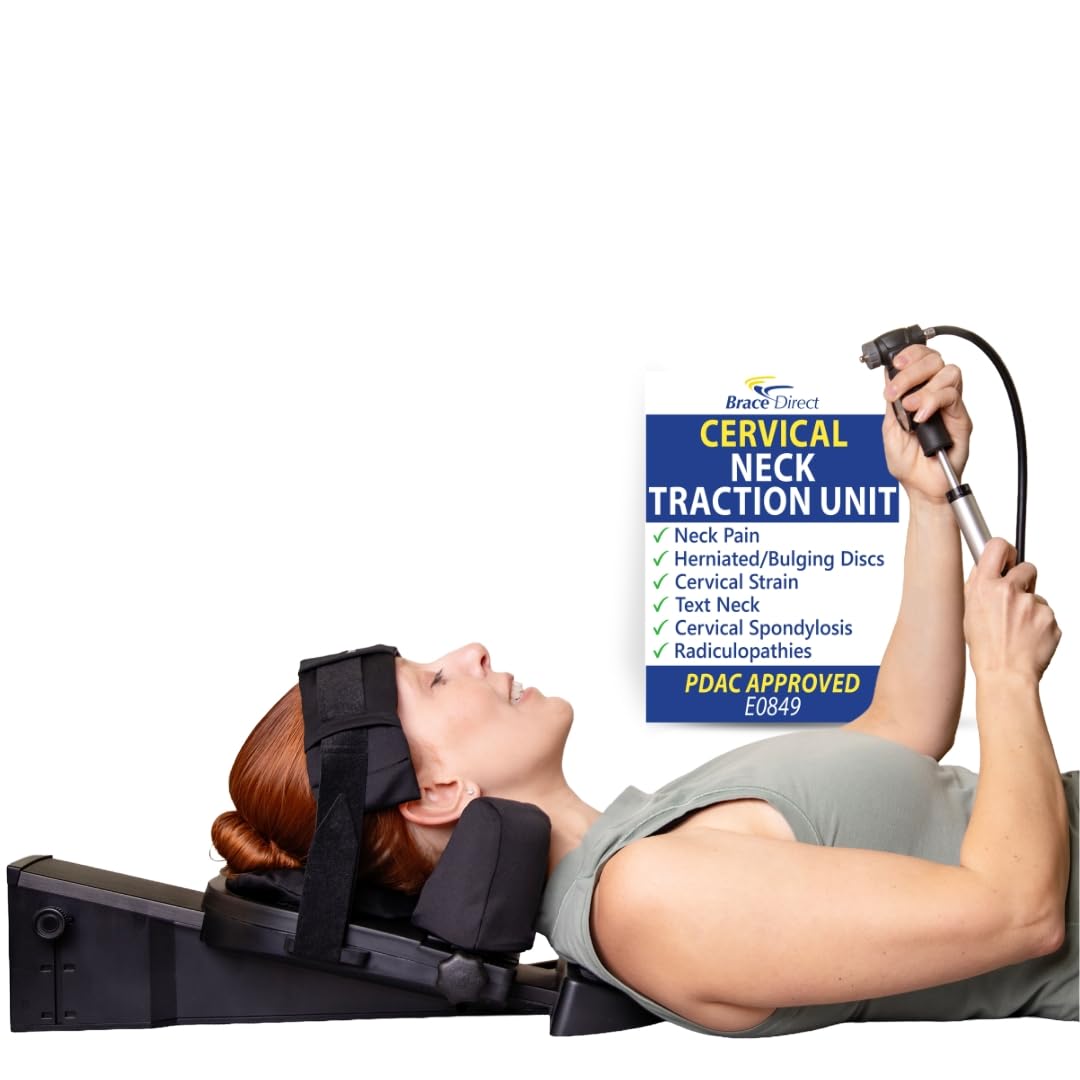
The Brace Direct Cervical Traction Device combines pneumatic hand-pump traction with hot/cold therapy gel cushions, giving it a dual-action edge for treating inflammation and nerve compression simultaneously. Its three incline settings (15° flat, 20°, and 25°) provide more adjustability than most cervical devices in its class, and the ability to fine-tune traction force up to 40 pounds using the pump gives you real-time control. The unit is designed for quick 5-minute setup and weighs 9.5 pounds, making it a strong competitor for home use.
User reports highlight that the device resolved chronic pinched nerve pain after years of failed treatments, with one reviewer noting increased grip strength after just 10 minutes of use. The inclusion of hot/cold gel packs is a genuine differentiator—applying cold before traction reduces inflammation, while heat after traction improves blood flow and muscle relaxation. The company offers free video fitting sessions with a professional, which is unusual at this level.
However, the pneumatic pump has reliability concerns. Several users report that the pump malfunctions (pumps air but the head lever doesn’t move), and some units arrived missing the forehead strap and neck padding. The angle adjustment mechanism can be tricky, and the head strap design is thin and awkward for users with long hair. The device also requires a large, flat surface like a massage table to function properly, limiting where you can use it.
Why it’s great
- Pneumatic pump allows fine-tuned pressure control
- Three incline settings for targeted decompression
- Hot/cold gel cushions reduce inflammation simultaneously
Good to know
- Pump reliability issues reported by some users
- Requires large flat surface for proper function
3. HARISON Inversion Table
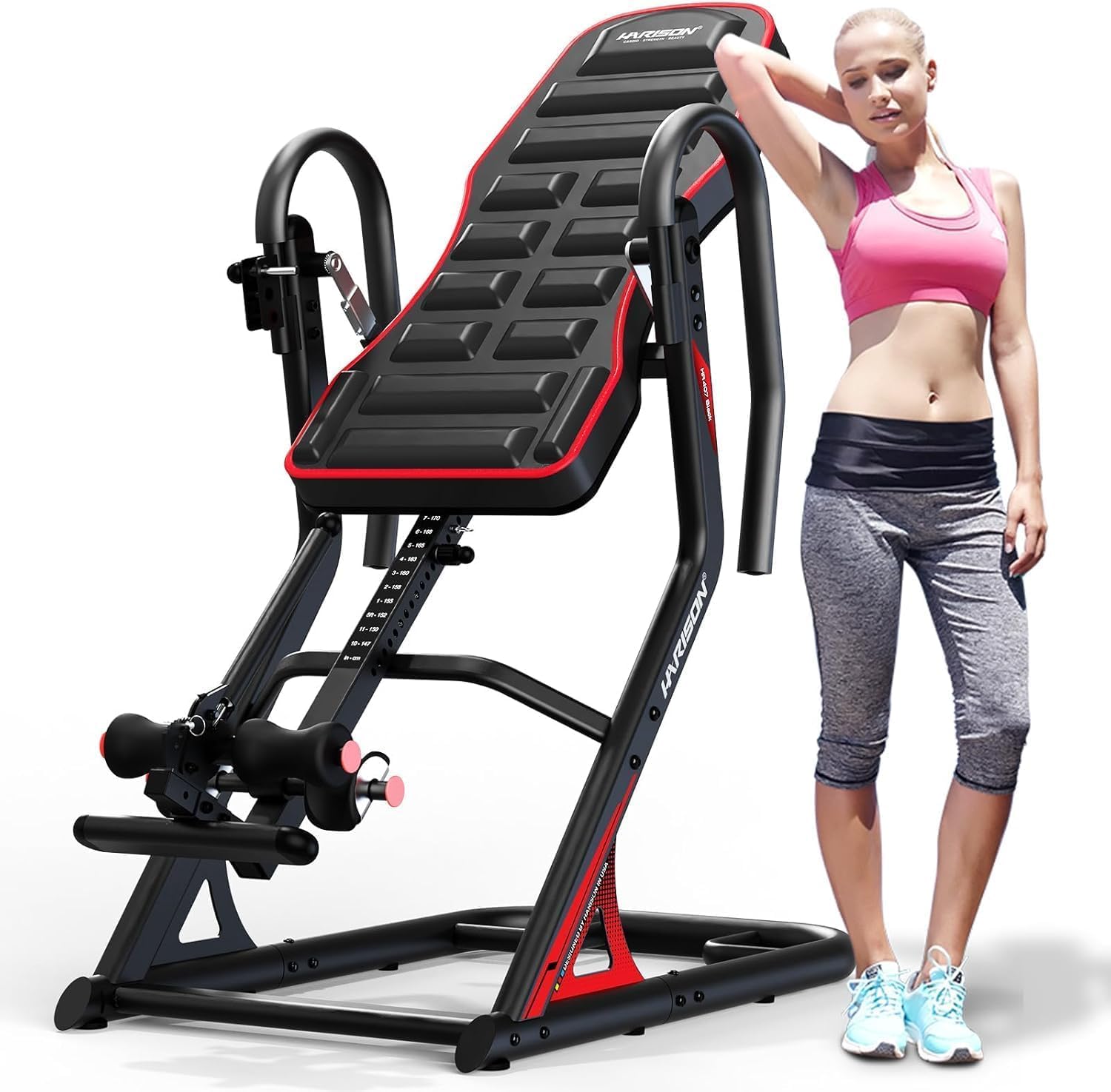
The HARISON Inversion Table stands out for its 350-pound weight capacity and 3D memory foam backrest that conforms to the spine, making it one of the most accommodating options for larger and taller users (up to 6’5″). The 4-position side inversion pin lets you select 20°, 90°, 130°, or full 180° inversion, which is a clinical-level range that allows progressive decompression over several sessions. The heavy-duty integrated steel frame weighs over 70 pounds, providing the stability needed for full inversion without wobble.
Users praise the quadruple safety system: a safety belt, U-shaped ankle holders with foam padding, non-slip foot mats, and secure handles. Many big-and-tall reviewers report that this is the first inversion table that actually felt stable at their weight, and several mention significant relief from lower back pain after just a few sessions. Assembly takes about 45-60 minutes, but the manual is clear and the parts come pre-sorted for each step.
The main downsides are the large footprint (75″ x 28″ assembled) and the heavy weight, which makes moving it between rooms a two-person job. Some users find that ankle pressure during full inversion can be uncomfortable, and the manual’s belt strap instructions are unclear (though an online video clarifies it). The 30-day trial and 1-year warranty are standard but adequate for this price tier.
Why it’s great
- Highest weight capacity at 350 lbs for large users
- 3D memory foam backrest contours to the spine
- 4-position pin system enables gradual inversion
Good to know
- Large footprint requires dedicated floor space
- Heavy frame makes repositioning difficult alone
4. Royal Massage Sheffield 120 Chiropractic Adjusting Table

The Royal Massage Sheffield 120 is a portable chiropractic drop table with toggle thoracic and pelvic drop mechanisms, designed for professionals who need a mobile adjustment platform. At 48.5 pounds with a carrying case, it’s lighter than most full-size chiropractic tables while still supporting 450 pounds. The two-piece divided head cushion allows prone face positioning, and the manually adjustable headpiece gives you 72 inches of total length. The full-length piano hinge adds structural rigidity that prevents racking during adjustments.
Chiropractic students and mobile practitioners are the primary audience here, and user feedback confirms it holds up well in academic settings. The drops require some tuning initially—they can feel rough or stiff before they break in—but once adjusted, they provide clean, audible adjustments. The table folds relatively quickly (under two minutes once you learn the sequence) and the included bag makes storage manageable.
The fixed 19.7-inch height is a significant limitation: users over 6 feet tall find it too low for comfortable manual adjusting, and the legs are not height-adjustable. The padding is firm enough for adjustments but thinner than massage-specific tables, which some clients find uncomfortable for longer sessions. Also, the drops on some units don’t function reliably out of the box, and the tension dials are located under the table, making adjustment awkward during a session.
Why it’s great
- Lightweight portable design with carrying case for mobile practice
- Thoracic and pelvic drops for professional adjustments
- 450 lb working capacity in a sub-50 lb package
Good to know
- Fixed height is too low for practitioners over 6 feet
- Drop mechanisms may require break-in period to function smoothly
5. TEETER FitSpine LX9 Inversion Table

The TEETER FitSpine LX9 is the only inversion table on this list registered with the FDA as a 510(k) medical device, which means it has undergone formal review for treating back pain, muscle tension, herniated discs, sciatica, degenerative disc disease, and spinal stenosis. Its patented FlexTechnology uses an 8-point floating suspension system that allows the backrest to slide with your body during inversion, reducing pressure points and enabling a greater range of motion than rigid-frame tables. The Grip-and-Stretch Handholds and integrated acupressure nodes (8 varied-height nodes) add trigger-point release capabilities during the decompression session.
The EZ-Reach Ankle System with a long stainless-steel handle reduces the bending required to lock in your ankles, and the secondary gravity-activated lock provides a safety net that automatically engages once you invert. The Boarding Platform with its arched frame makes entry and exit significantly easier than earlier TEETER models, which is crucial for users with mobility limitations. The EZ-Angle Tether has preset markings at 20°, 40°, and 60° so you can gradually increase your inversion angle without guesswork.
Assembly takes about 25 minutes and the included BILT app provides 3D instructions. The 300-pound capacity is lower than the HARISON, but the heat-treated steel frame is UL Safety Certified and tested to last 10 times longer than competing brands. The main complaint is that the acupressure nodes are optional—some users never use them—and the ankle cups, while comfortable, can still feel tight during prolonged sessions. The table weighs 74 pounds, so it’s not easily moved once assembled.
Why it’s great
- FDA registered as a medical device for specific spinal conditions
- 8-point floating suspension system reduces pressure points
- EZ-Angle Tether with preset graduations for safe progression
Good to know
- 300 lb capacity may not suit heavier users
- Acupressure nodes are optional and not used by all users
6. Teeter DEX II Inversion & Core Training
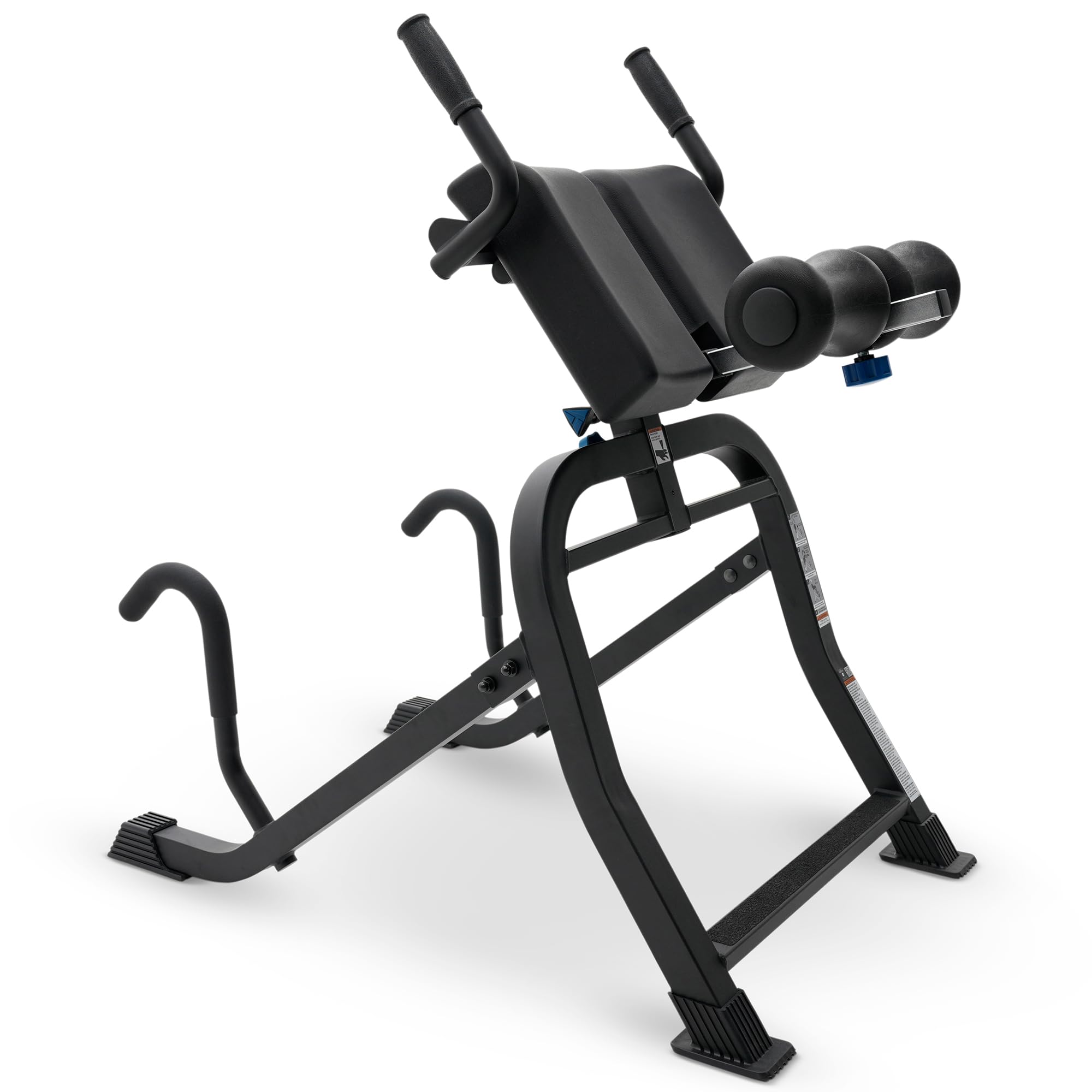
The Teeter DEX II is not a traditional inversion table but a hybrid that combines a Roman chair hyperextension bench with a 90/90 hip-supported inversion system. Instead of hanging from your ankles, you rotate forward into an inverted position supported by your hips, which completely eliminates ankle and knee load—a critical advantage for users with injured or arthritic lower extremities. The commercial-grade steel frame is rated for 350 pounds and supports users from 4’8″ to 6’6″, making it one of the most inclusive decompression devices available.
Users who cannot tolerate traditional inversion tables due to ankle or knee pain report that the DEX II provides comparable spinal decompression without the joint strain. The spring-loaded foam lap cushion adjusts to different waist sizes, and the design also enables back extensions, ab crunches, pushups, pullups, leg raises, and resistance band anchoring, effectively functioning as a multi-station gym. The Teeter Move app provides guided recovery programs for free, which is a value-add for users new to inversion therapy.
The primary drawback is that the 90/90 position can pinch the belly during the return to upright, particularly for users with a larger midsection. The lap cushion design also means that repositioning between exercises can be cumbersome. Assembly is quick (around 5-10 minutes for the base) but aligning the tension mechanism requires care. At 60 pounds, it’s lighter than full inversion tables but still substantial enough to stay planted during use.
Why it’s great
- Hip-supported inversion eliminates all ankle and knee load
- Versatile design functions as Roman chair and multi-gym
- 350 lb capacity with broad height range
Good to know
- Belly pinch during return to upright may be uncomfortable
- Not a substitute for traditional ankle-based inversion for some users
7. ComforTrac Lumbar Traction Kit

The ComforTrac is a dedicated lumbar traction system that uses a pneumatic belt assembly to apply controlled traction to the lower spine, making it the most condition-specific device on this list for herniated discs, spondylosis, and degenerative disc disease in the lumbar region. Unlike inversion tables that decompress the entire spine indiscriminately, the ComforTrac isolates the lumbar segments via a custom-fit belt system with adjustable upper and lower straps. The target protocol involves 10-minute sessions at 20-40 psi, gradually increasing to 30 minutes over several weeks—a titration method that aligns with clinical guidelines for lumbar disc rehydration and annular healing.
Long-term users report using the ComforTrac for over four years without mechanical failure, and several note that consistent use (5 times per week) eliminated their need for medication after failed attempts with chiropractic adjustments and inversion tables. The device stores under a bed and comes with a durable carrying case, making it convenient for home use without permanent installation.
The unit has significant quality control issues. Multiple users report defective units with air leaks from the release valve or missing rivets on the side rail track. The pressure gauge is small and difficult to read, and the company’s return policy requires mailing back the defective unit before a replacement ships—a frustrating process for a device costing this much. Some units lack the self-release feature that older models had, which compromises safety if you need to quickly relieve pressure. At 23.5 pounds, it’s portable but not as light as the cervical devices.
Why it’s great
- Targeted lumbar traction isolates specific disc levels
- Clinically proven protocol with gradual pressure increase
- Stores under bed and includes carrying case
Good to know
- Quality control issues with air leaks and missing hardware
- Pressure gauge is small and hard to read accurately
8. Sierra Comfort Standard 2-Section Electric Lift Massage Table

The Sierra Comfort electric lift massage table is a professional-grade platform designed for clinics offering decompression therapy, massage, and physical therapy. Its 3-inch high-density foam deck provides the firm support needed for spinal adjustments and traction setups, while the water- and oil-resistant PU leather upholstery withstands daily cleaning with clinical disinfectants. The electric pedal assist adjusts the table height from 16 to 31 inches, allowing therapists of different heights to maintain ergonomic positioning during treatments. The tabletop dimensions (73″ x 30″) accommodate most patients comfortably.
Massage therapists with 17+ years of experience report that this table has extended their careers by reducing the physical strain of manual adjustments. The steel frame supports 500 pounds, which covers bariatric clients, and the motor operates quietly enough that patients cannot tell when the height is adjusting. The inclusion of the elongated face cradle and face pillow (both SC-series parts) adds value, and the 2-year limited warranty provides reasonable coverage for professional use.
At 120 pounds, this table is not portable—it’s a stationary clinic piece. Some users note that the motor requires a 30-minute charge before first use (not documented in the manual), and the foot pedal can fail after a month of heavy use, though customer service provides replacements. The face cradle is functional but not as plush as some standalone models, and the lack of a backrest tilt mechanism (manual only) limits versatility for certain decompression positions.
Why it’s great
- 500 lb capacity with electric height adjustment for ergonomic access
- 3-inch high-density foam provides firm, supportive deck
- Quiet motor operation does not disturb treatment sessions
Good to know
- 120 lb weight makes it a stationary, non-portable unit
- Motor needs initial charge not mentioned in manual
9. Spa Luxe Electric Massage and Treatment Table
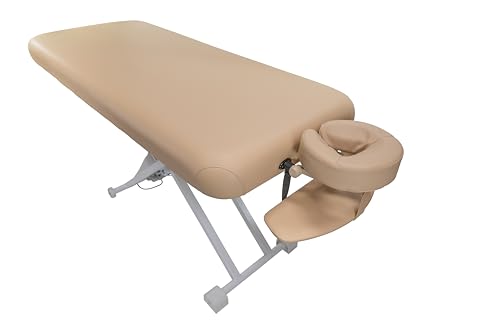
The Spa Luxe electric treatment table is built around whisper-quiet German motors that allow height adjustments during a client session without disturbing relaxation. With a height range of 17 to 39 inches, it offers the widest adjustment span on this list, accommodating therapists from very short to very tall (6’4″+) with room to spare. The 73″ x 30″ treatment surface accepts most body types, and the 3-inch plush cushioning provides a balance of comfort and stability suitable for both massage and decompression work. The unit arrives fully assembled, which saves hours of setup time.
Spas and clinics using this table report over 18 months of daily use without motor or frame issues, and the built-in wheels make repositioning within a treatment room manageable despite the 128-pound weight. The arm shelf accessory is a popular feature for client comfort during prone treatments, and the soft-touch upholstery resists staining from oils and lotions. The 450-pound capacity is adequate for most clinic populations.
The table is relatively narrow compared to some competitors (30 inches), and taller clients may find their feet hanging off the end, especially during full-body traction setups. Some users note that the motor is noisier than expected when raising or lowering under load, though it’s still quieter than most hydraulic or manual tables at this price. The lack of a backrest tilt mechanism (face cradle only) limits its versatility for certain chiropractic or PT applications that require a fully articulating back section.
Why it’s great
- German motor is the quietest option for undisturbed sessions
- 17″-39″ height range fits therapists of all statures
- Arrives fully assembled with built-in wheels for repositioning
Good to know
- 30-inch width may be narrow for taller clients
- Motor can be audible under load despite quiet reputation
FAQ
Can I use a cervical traction device if I have had neck fusion surgery?
How many pounds of traction force do I need for a herniated lumbar disc?
What is the difference between a pneumatic pump and a cable crank for cervical traction?
Is an inversion table safe for people with hiatal hernia or GERD?
Final Thoughts: The Verdict
For most users, the best decompression table winner is the iSTIM WeTrac because its cable-crank mechanism delivers reliable, repeatable cervical traction up to 50 pounds across four adjustable angles, and its FSA/HSA eligibility and portable case make it the most practical home-use device for treating pinched nerves and herniated cervical discs. If you need lumbar-specific decompression, grab the ComforTrac Lumbar Traction Kit because its pneumatic belt system isolates the lower spine with a clinically validated protocol that can eliminate the need for medication. And for full-body decompression without ankle or knee load, nothing beats the Teeter DEX II with its 90/90 hip-supported inversion and 350-pound capacity, making it the safest inversion option for users with joint limitations.

Mo Maruf
I created WellFizz to bridge the gap between vague wellness advice and actionable solutions. My mission is simple: to decode the research and give you practical tools you can actually use.
Beyond the data, I am a passionate traveler. I believe that stepping away from the screen to explore new environments is essential for mental clarity and physical vitality.