Our readers keep the lights on and my smoothie glass nicely filled. As an Amazon Associate, I earn from qualifying purchases.
A winter bike ride is a quiet victory against the elements — until your toes go numb. The cold creeps in through your cleats, and the last twenty minutes of your ride become a battle of will against frost. The right socks don’t just add warmth; they preserve sensation, control moisture inside your shoe, and can extend your riding season by weeks on either end.
I’m Mohammad Maruf — the founder and writer behind WellFizz. I’ve spent dozens of hours analyzing the thermal, moisture, and fit specifications behind every pair in this guide to make sure you can ride into January with full confidence in your kit.
Whether you ride through drizzle at 45°F or suffer single-digit winds on early mornings, the best cycling socks for winter manage heat retention, wicking, and bulk across the specific demands of a clipped-in shoe.
How To Choose The Best Cycling Socks For Winter
Winter cycling socks must solve three contradicting demands: holding body heat inside a thin shoe envelope, wicking sweat before it freezes against your skin, and fitting tightly enough that the fabric doesn’t bunch under the cleat plate. The wrong pair fails at one of these and ruins the ride.
Merino Wool Percentage
Merino is the gold standard because it insulates when wet and resists odor buildup over multi-day rides. Higher percentages (50% or more) give better thermal regulation, but pure merino lacks durability — most premium blends sit between 40% and 70% wool with nylon or polyester added for structure. Pure synthetic liners work well if you sweat heavily, but they lose the temperature-smoothing effect that wool provides at freezing.
Windproof vs. Breathable Construction
Some socks add a windproof membrane (such as a polyurethane laminate) between the outer knit and inner liner. This dramatically reduces wind chill through the shoe upper, which is the primary source of heat loss above 30°F. Below that, you need both a membrane and a thicker wool pile. The trade-off is reduced breathability — your feet may feel clammy during high-output efforts if the membrane can’t vent moisture fast enough.
Sock Height and Cuff Pressure
Winter socks should reach at least 6 inches above the ankle to overlap with tights or a thermal leg warmer. The cuff must stay up without elastic bands that constrict circulation — cold feet often result from reduced blood flow, not lack of insulation. A loose, tall sock with a gentle upper fold works better than a tight compressive band at the calf.
Bulk and Shoe Compatibility
Cycling shoes are a tight volume envelope. A thick insulated sock can compress your foot against the upper, reducing circulation and causing cold spots. Look for socks described as “medium-weight” or that spec an outer fabric that doesn’t exceed 3mm of loft. If your winter shoes are already a half-size larger to accommodate thicker socks, volume is less of a concern.
Quick Comparison
On smaller screens, swipe sideways to see the full table.
| Model | Category | Best For | Key Spec | Amazon |
|---|---|---|---|---|
| GripGrab Windproof Thermal | Windproof | Cold dry rides below 40°F with wind | Windproof membrane + pre-shaped cuff | Amazon |
| DANISH ENDURANCE Merino 2-Pack | Merino Blend | Daily commuting and moderate cold | Merino wool blend with L/R fit | Amazon |
| 35° BELOW Thermal Insulated 3-Pack | Budget Multi | Casual riding and extreme cold layers | Aluminized loops for reflective warmth | Amazon |
| DEFEET Woolie Boolie 6″ | Premium Wool | Endurance cycling in 18°F-40°F | Washable merino, 6-inch height | Amazon |
| DexShell Waterproof Merino Lined | Waterproof | Wet snow and rain below 40°F | Three-layer waterproof membrane + merino liner | Amazon |
In-Depth Reviews
1. GripGrab Windproof Thermal Spring Autumn Cycling Socks
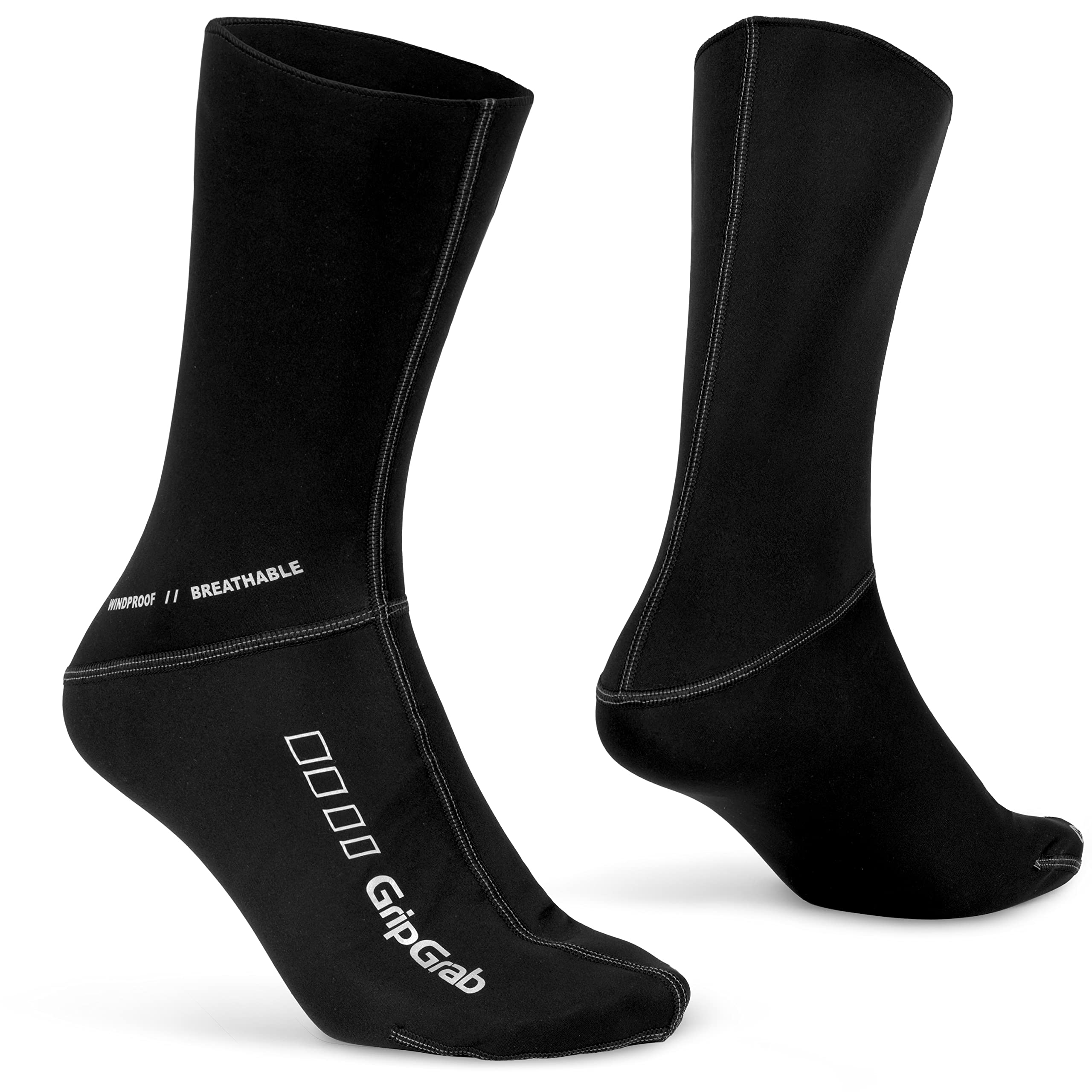
The GripGrab socks use an integrated windproof membrane that cuts the windchill entering through the mesh of your cycling shoe. One rider reported warm feet down to 26°F when combined with overshoes, and a separate test at 45°F with light rain kept feet dry for 90 minutes. The pre-shaped cuff curves with your ankle, which prevents bunching inside the shoe — a detail that matters on long distances where sock shift becomes a friction source.
The fit runs notably large: size 12-13 testers described the fabric as “extremely baggy” above the ankle, leaving empty space that can trap cold air instead of insulating. For narrow feet this looseness becomes a problem, and GripGrab suggests ordering down a full size if you’re between sizes. The material has no elastic cuff, relying instead on the pre-shaped structure to stay in place, which works better on wider calves and less well on slim legs.
At an effective temperature range of 26°F to 45°F, these occupy the middle band where most winter riders spend their coldest miles. They aren’t designed for deep-freeze static conditions, and at least one reviewer found them insufficient as a direct replacement for thick wool socks on very cold days. Pair with overshoes for sub-30°F riding and they pull their weight effectively.
Why it’s great
- Windproof membrane blocks cold penetrating shoe mesh
- Pre-shaped cuff prevents bunching during pedal rotation
- Effective warmth down to 26°F with overshoes
Good to know
- Runs large — narrow feet struggle with loose upper fabric
- Not as warm as thick wool blends for sub-freezing static use
2. DEFEET Woolie Boolie 6″ Cycling Socks
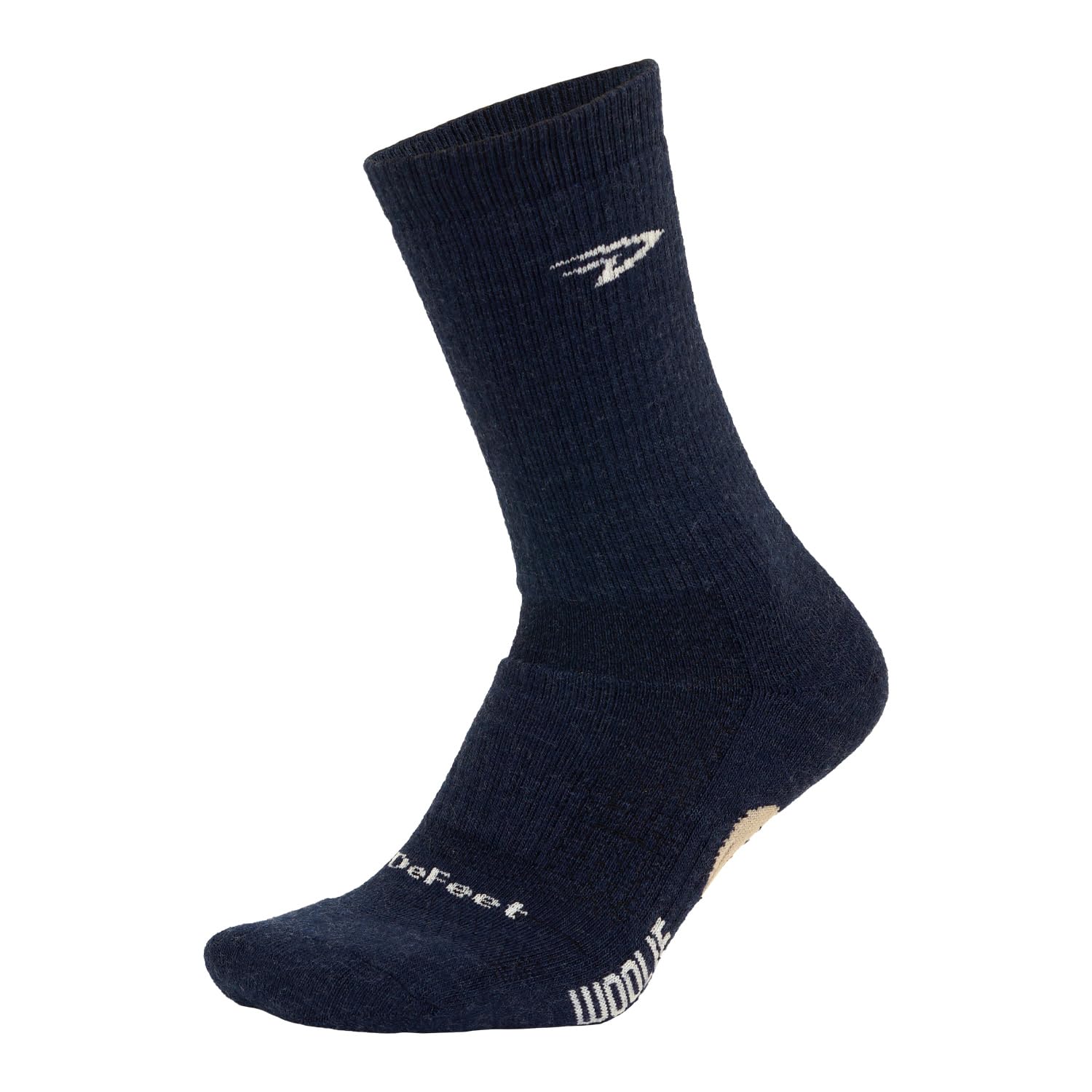
The Woolie Boolie has been a cycling staple since 2009 for good reason: the merino wool blend holds warmth even when damp from sweat, and multiple long-term owners report 3-4 seasons of regular use before thinning. Several riders tested them in the 18°F to 40°F band — the exact range that defines winter cycling for most of the northern hemisphere — and described them as “warm and wonderful” even during a polar vortex. The 6-inch height reaches past the ankle bone while leaving enough space for leg warmers to overlap cleanly.
Fit is consistent across sizes: a size 9.5-10 shoe matches Large, and a Medium fits size 10 dress shoes snugly without compression. The fabric is thick but not bulky — it slides easily into road shoes without crowding your toes against the upper. The wool resists odor buildup over consecutive days, a practical advantage for winter commuters who do multiple short rides without wanting to hand-wash each night.
The primary downside is the premium price point for a single pair. Riders on a tight budget may find the per-pair cost steep compared to multi-packs, though the durability partially offsets this over time. A few testers noted that the wool can pill slightly after machine washing, so air drying is recommended to extend the fabric structure.
Why it’s great
- Merino wicks sweat and dries fast during high-output efforts
- Snug, non-itchy fit with no restrictive bands
- Durable construction lasts multiple seasons with care
Good to know
- Single pair — premium cost per unit
- May pill if machine dried; air drying preserves loft
3. DANISH ENDURANCE Warm Cycling Socks Merino 2-Pack
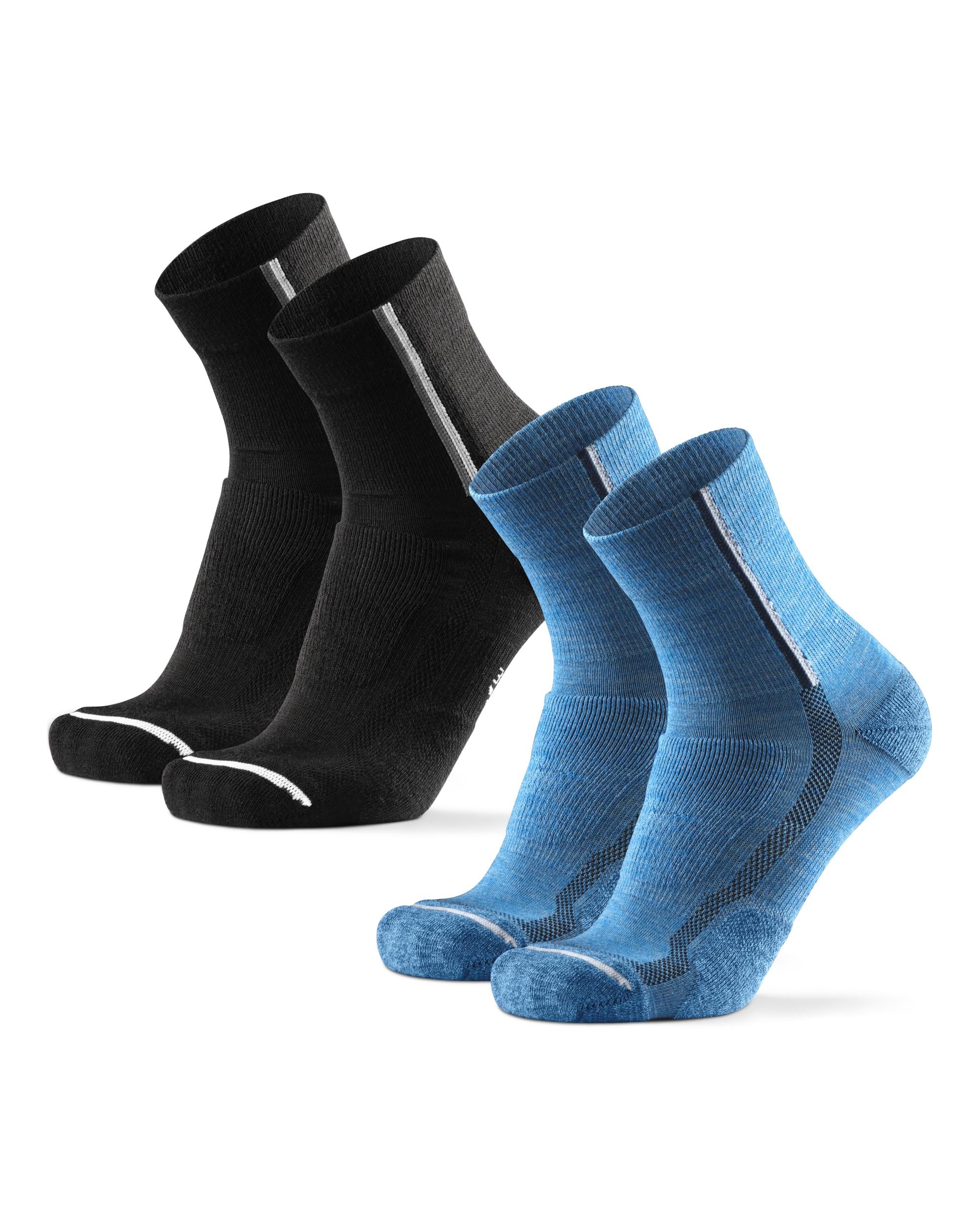
Danish Endurance delivers a two-pack with left/right shaping — a detail usually reserved for higher-end running socks — that prevents heel slip and fabric bunching under the cleat. The merino blend (around 40% wool based on weave analysis by reviewers) knits into a medium-weight fabric that breathes well in the 35°F to 50°F range while still providing odor resistance. One tester wore them as an inner layer in Antarctica and kept feet warm, which speaks to their thermal ceiling when layered properly.
The fit runs close to true size, with the “L” and “R” labels stitched inside the toe box — visible in good light but hard to read in the dim of an early winter morning. The height sits above the ankle but below mid-calf, which works with low-cut cycling shoes but leaves a gap if you wear tall tights. Several review mention they look sharp with the red-backed cuff and white contrast lines, an aesthetic bonus for sock-and-bib peeks during group rides.
The main concern is long-term durability: several buyers noted the weave feels less dense than expected, and the lower merino percentage means less natural insulation per gram than the Woolie Boolie. They are best suited as a moderate-cold sock for commuting or 1-2 hour rides rather than deep-winter brevet distances.
Why it’s great
- Two-pack provides rotation for daily winter commuters
- L/R shaping reduces heel slip inside the shoe
- Merino wool prevents odor buildup between rides
Good to know
- Lower wool percentage than dedicated premium socks
- Weave may feel less durable under high-mileage loads
4. DexShell Waterproof Socks Merino Wool Lined

DexShell uses a three-layer construction: an outer knit, a middle waterproof-breathable membrane, and a merino wool inner liner. This architecture means your foot stays dry even when you step into a puddle or ride through 40°F water — multiple reviewers tested full submersion above the ankle and reported zero moisture penetration. For riders who commute in wet snow or unrelenting rain, this is the only sock on the list that guarantees a dry foot regardless of what happens outside the shoe.
The merino liner handles moisture wicking on the inside, though the membrane inevitably reduces total breathability. Several riders noted that during high-output efforts the internal humidity rises, but the wool still keeps feet warm even when damp with sweat. The windproof effect is equally strong: one reviewer rode at 20 mph with no shoe covers and reported warm feet, crediting the membrane for stopping the windchill that normally penetrates through mesh uppers.
The bulk is real — these are noticeably thicker than any other sock on this list. You will need a half-size larger cycling shoe or a relaxed-volume winter shoe. The drying time is also extended: hand-washed socks can take two days to air dry fully, so plan for an extra rotation if you ride daily. Handle the membrane carefully when pulling them on; the liner can tear if snagged on a rough toenail.
Why it’s great
- 100% waterproof in fully submerged conditions
- Merino liner keeps feet warm even when damp with sweat
- Windproof membrane eliminates need for shoe covers in many conditions
Good to know
- Requires larger volume shoes due to thickness
- Long drying time — two days for air dry
5. 35° BELOW Thermal Insulated 3-Pack Socks
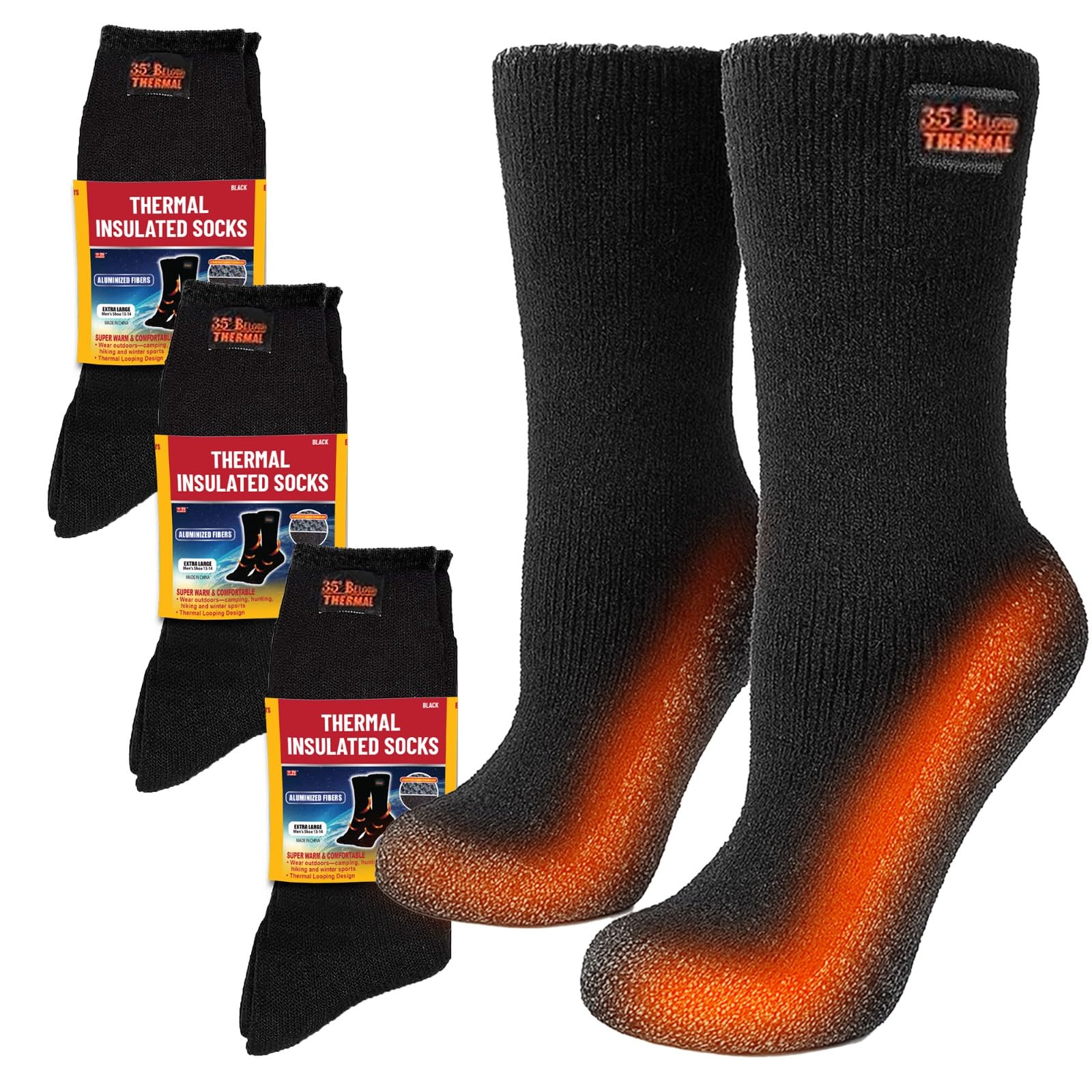
The 35° BELOW socks use a soft aluminized loop structure inside the fabric that reflects body heat back toward your foot — the same principle used in emergency blankets. For casual winter riding, especially when layered over a thin dress sock for commuting, this provides noticeable warmth at a budget-friendly per-pair cost. One reviewer reported keeping their husband’s feet toasty in single-digit temperatures when worn over thin socks, and another with poor circulation found them transformative for everyday foot warmth.
The thickness is significant — roughly equivalent to a mid-weight hiking sock — which means they occupy more volume inside your shoe than any other option here. If your cycling shoes have a narrow toe box or minimal volume, you will feel pressure against the top of your foot. Several riders found them best suited for flat-pedal riding or winter walking rather than clipped-in road cycling. The breathability is decent for an insulated sock, but the aluminized layer reduces moisture transport compared to pure merino.
The multi-pack format makes them a strong entry-level buy for riders who want to try thermal cycling socks without investing in single premium pairs. The warmth is real but unsophisticated — they work through reflection rather than wicking, so foot sweat accumulates faster during high-effort climbs. For cold commutes under 45 minutes or casual winter rides, they deliver solid value; for all-day epics, you will want a breathable merino alternative.
Why it’s great
- Three-pack provides excellent rotation value
- Aluminized loops reflect substantial body heat
- Soft and comfortable for casual winter wear
Good to know
- Thick build crowds narrow cycling shoes
- Aluminized layer reduces breathability during high output
FAQ
Can I wear normal wool socks for winter cycling?
Do I still need shoe covers with winter cycling socks?
How often should I wash winter cycling socks?
Final Thoughts: The Verdict
For most riders, the best cycling socks for winter winner is the GripGrab Windproof Thermal because its membrane blocks the dominant source of foot cold — wind through the shoe mesh — without demanding overshoes for the 35°F-45°F band where most winter commuting happens. If you prioritize all-day breathability and moisture management over wind block, the DEFEET Woolie Boolie 6″ offers the best merino experience for endurance rides down to 18°F. And for guaranteed dry feet in wet snow or rain, nothing beats the DexShell Waterproof Merino Lined.

Mo Maruf
I created WellFizz to bridge the gap between vague wellness advice and actionable solutions. My mission is simple: to decode the research and give you practical tools you can actually use.
Beyond the data, I am a passionate traveler. I believe that stepping away from the screen to explore new environments is essential for mental clarity and physical vitality.