Our readers keep the lights on and my smoothie glass nicely filled. As an Amazon Associate, I earn from qualifying purchases.
Standing on unforgiving concrete, asphalt, or packed dirt for ten hours straight turns your work boots into a source of lingering pain rather than safety equipment. The friction, the jarring impact, the slow collapse of your foot’s natural arch — these are the daily realities that turn a shift into a survival test. The difference between dragging yourself to the truck after work and walking out with energy to spare often comes down to what you put inside your boots.
I’m Mohammad Maruf — the founder and writer behind WellFizz. I’ve spent countless hours analyzing biomechanical support systems, foam densities, and moisture-wicking fabrics to identify which insoles actually survive a full work week without flattening into uselessness.
You need an insert that absorbs shock without sacrificing stability, supports your arch without causing new pressure points, and breathes through grimy conditions. That’s exactly what this guide to the best cushioned insoles for work boots pinpoints.
How To Choose The Best Cushioned Insoles For Work Boots
The work boot insole market is crowded with soft foams that feel great in the store but pack out within a few weeks. The real test is whether the structure under your foot holds up for hundreds of standing hours. Here are the key factors that separate a short-term comfort pad from a long-term support system.
Arch Support Height and Firmness
Your foot’s arch is a natural shock absorber, but when the terrain is flat and hard all day, that arch collapses under repetitive load. A mid-to-high arch support prevents overpronation and reduces stress on the plantar fascia. Look for insoles that mention “high arch” or “dynamic arch support” — the structure should feel supportive, not invasive, after a short break-in period.
Material Construction: EVA vs. PU vs. Gel
Compression-molded EVA offers consistent cushioning and bounce-back, making it a strong choice for energy return. Polyurethane (PU) is denser and more durable, absorbing higher impact forces without bottoming out. Gel inserts provide superior immediate softness but lack the structural rebound for all-day standing. Many premium insoles combine a firm PU or EVA base with a gel top layer for the best of both worlds.
Moisture Management and Odor Control
Work boots trap heat and sweat, creating a breeding ground for bacteria and odor. Insoles with COOLMAX or Polygiene technology actively wick moisture away and resist microbial growth. A breathable top fabric prevents the clammy feeling that leads to blisters and keeps your feet cool when the temperature rises.
Trim-to-Fit Design and Boot Volume
Most work boots have limited internal space, especially steel-toe models. An insole that adds too much vertical bulk can cause your foot to press against the boot’s roof, creating pressure points. Look for insoles with a low-profile design that still delivers high-level cushioning, and always trim around the heel and toe box rather than hacking off the arch edge.
Quick Comparison
On smaller screens, swipe sideways to see the full table.
| Model | Category | Best For | Key Spec | Amazon |
|---|---|---|---|---|
| BestHalo Heavy Duty Plantar Fasciitis | Orthotic | High arch & heavy weight support | Gel + EVA dual-layer with deep heel cup | Amazon |
| Timberland PRO Anti-Fatigue ESD | Anti-Fatigue | ESD-safe work environments | Inverted cone energy return design | Amazon |
| ROCKROOSTER RC930 Memory Foam | Memory Foam | All-day standing on hard surfaces | Poron XRD shock absorption heel | Amazon |
| Dr. Scholl’s Work All-Day Insoles | Massaging Gel | Concrete/asphalt work surfaces | Massaging Gel with Polygiene odor control | Amazon |
| Ariat Men’s Energy Max Work Insole | Rebound Foam | Replacement for original boot insoles | Open-cell foam with Agion antimicrobial | Amazon |
In-Depth Reviews
1. BestHalo Heavy Duty Plantar Fasciitis Insoles
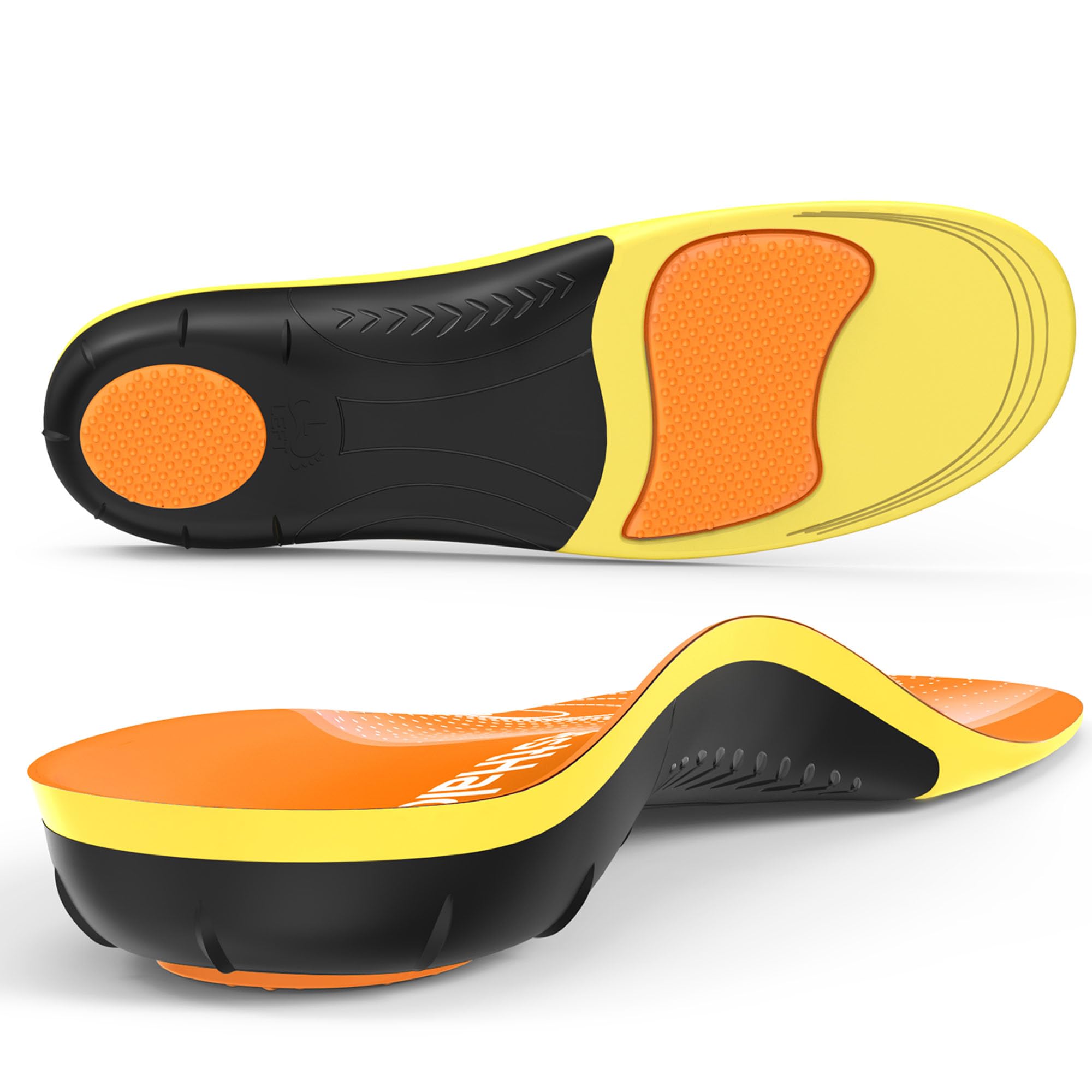
These insoles are built around a biomechanically designed high arch support that targets plantar fasciitis directly. The combination of premium EVA foam and gel cushioning delivers firm support under the arch while still providing substantial shock absorption at the heel and ball of the foot. The deep heel cup locks the foot in place, reducing overpronation and stabilizing the gait throughout long shifts.
Users weighing over 220 pounds report that these insoles maintain their structure without collapsing, a critical factor for work boot applications where heavy boots and hard floors amplify impact forces. The trim-to-fit design accommodates most work boot sizes, including steel-toe models, without adding excessive bulk that causes tightness across the toe box.
There is a 3-7 day adjustment period where the high arch may feel pronounced — this is normal and indicates proper structural support rather than a soft pad that will flatten quickly. Multiple long-term users confirm relief from heel pain, arch strain, and lower leg fatigue after the break-in window.
Why it’s great
- Firm high arch support that doesn’t collapse under heavy loads
- Deep heel cup provides excellent stability for overpronation control
- Gel cushioning at impact zones reduces joint stress
Good to know
- May cause temporary discomfort during the break-in period for those unaccustomed to high arches
- Not ideal for low-profile boots with minimal internal volume
2. Timberland PRO Anti-Fatigue Technology ESD Insole

Timberland PRO brings its proprietary anti-fatigue technology to the insole format with a unique inverted cone design that absorbs and returns energy with every step. This construction is particularly effective on hard industrial floors where repetitive impact accumulates over hours. The foam material provides high resilience and bounce-back that reduces the heavy feeling in the legs by the end of a shift.
What sets this insole apart is its static-dissipative (ESD) rating, making it suitable for electronics manufacturing, chemical plants, and other environments where electrostatic discharge must be controlled. The moisture-wicking top layer keeps feet dry, while the dynamic arch support targets the low arch profile that is common in many work boot wearers.
Users with wide feet and larger sizes (up to 16) report good fit after trimming, and those suffering from plantar fasciitis note significant pain relief from the thick heel cushioning. The trade-off is that the arch support is minimal compared to dedicated orthotic insoles, so those needing aggressive arch correction may want a higher-profile option.
Why it’s great
- ESD-safe construction for specialized work environments
- High energy return reduces leg fatigue over long shifts
- Moisture-wicking fabric keeps feet dry in sweaty conditions
Good to know
- Arch support is relatively low, not ideal for high-arch needs
- Thick heel cushioning may require loosening boot laces
3. ROCKROOSTER Memory Foam Anti-Fatigue Insoles RC930
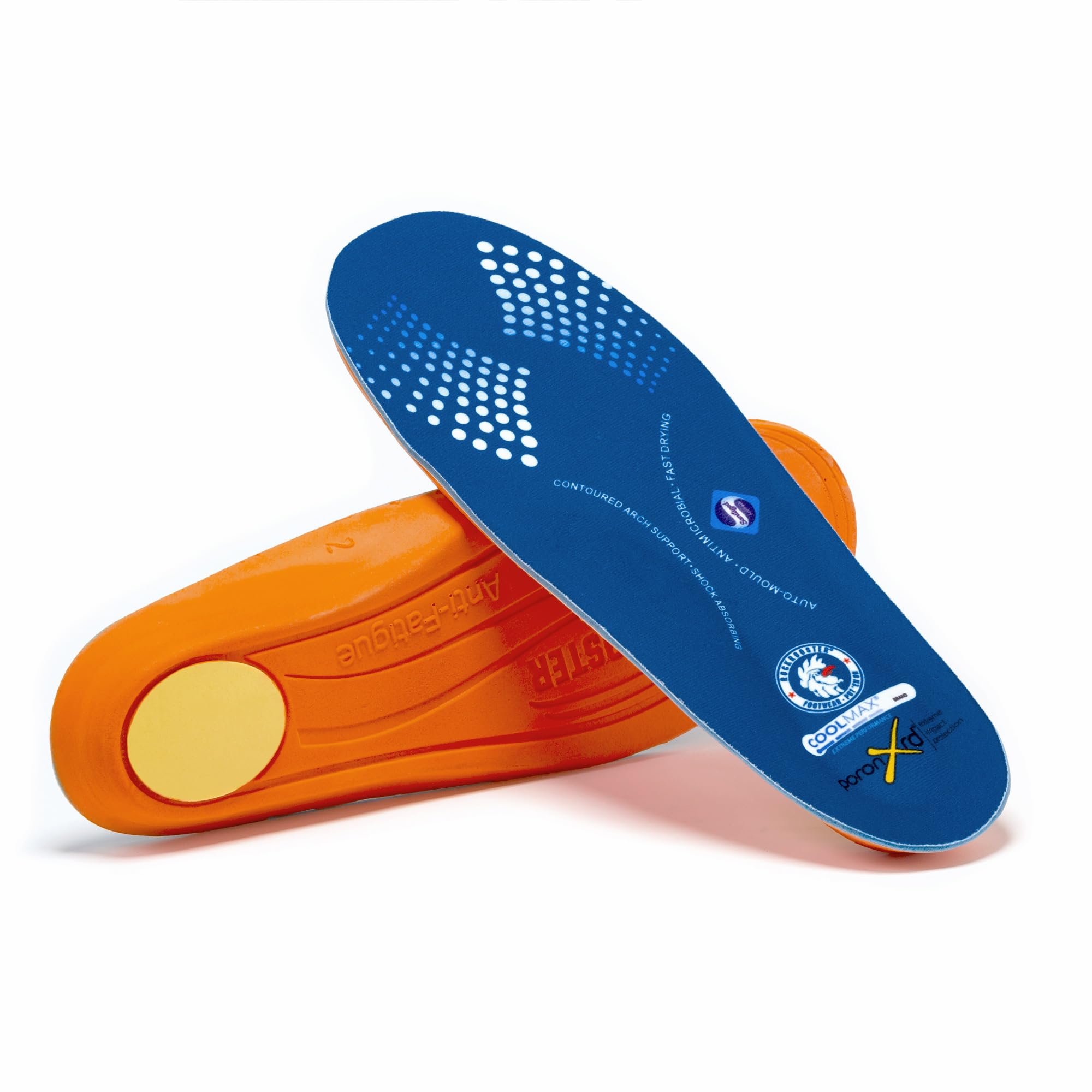
The RC930 insoles combine a slow-rebound memory foam layer with a high-density PU base, creating a dual-phase cushioning system that first conforms to your foot’s unique shape and then resists further compression under load. The addition of Poron XRD composite material in the heel and sole provides exceptional shock absorption that dissipates the high-impact forces typical of concrete and asphalt work surfaces.
Construction workers and tradespeople report all-day comfort without the bottoming-out sensation that plagues cheaper foam insoles. The COOLMAX surface fabric is a standout feature — it actively wicks moisture away and helps regulate temperature, preventing the swampy interior that leads to blisters and fungal issues in hot weather. The arch support wraps the heel securely without feeling intrusive, and the trim-to-fit design accommodates most work boot brands.
Users who replaced the OEM insoles in Timberland, Rock Rooster, and similar boots consistently mention that these provide noticeably better cushioning and support. The slow-rebound memory effect means the insole adapts to your foot geometry over the first few wears, delivering a personalized fit that generic foam pads cannot match.
Why it’s great
- Memory foam conforms to foot shape for custom fit over time
- Poron XRD heel absorbs high-impact forces effectively
- COOLMAX fabric keeps feet dry and odor-free
Good to know
- Memory foam may feel warmer than open-cell foam alternatives
- Some users find the cushioning too plush for very high arch needs
4. Dr. Scholl’s Work All-Day Insoles

Dr. Scholl’s Work insoles feature Massaging Gel technology that runs the full length of the insole, providing extended cushioning specifically designed to absorb shock from walking on hard surfaces like concrete, asphalt, and wood floors. The adaptive cushioning responds to movement by returning energy into each step, which reduces the cumulative fatigue of a 10-hour shift.
The reinforced arch support is more substantial than standard Dr. Scholl’s products, though it remains moderate compared to orthotic-specific competitors. This makes the Work insoles a strong fit for people who need general foot fatigue relief without aggressive arch correction. The Polygiene StayFresh Technology is a practical addition for odor control in boots that stay damp all day — it actively reduces moisture buildup and microbial growth.
Users report that these insoles fit well after trimming in steel-toe boots, though the additional bulk may require loosening laces. The gel cushioning provides immediate comfort with no break-in period, which is an advantage for workers who want relief on day one. Some long-term users note that the arch support is less pronounced than premium orthotic options.
Why it’s great
- Zero break-in period — comfortable from the first wear
- Massaging Gel technology provides consistent shock absorption
- Odor control system keeps boots fresh during long shifts
Good to know
- Arch support is moderate and may not satisfy high-arch needs
- Gel can feel less stable for those needing firm structural support
5. Ariat Men’s Energy Max Work Insole
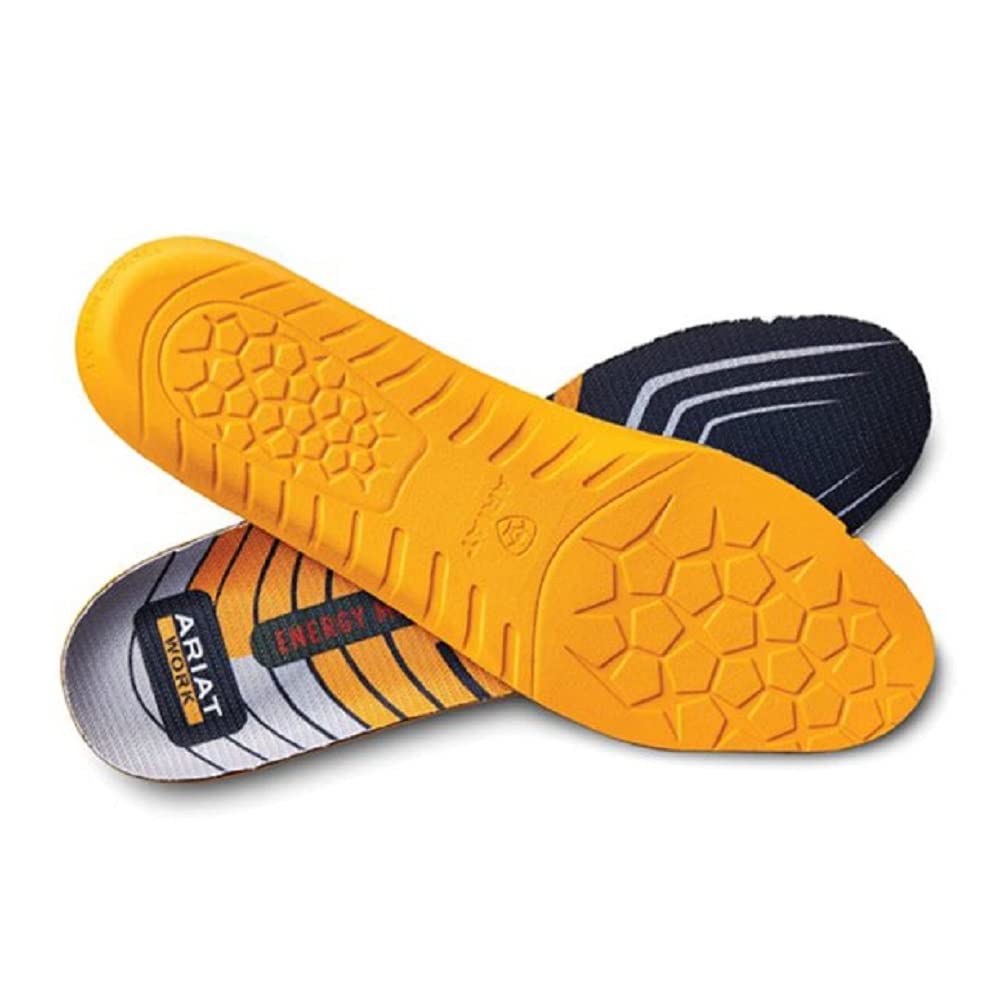
The Ariat Energy Max insole uses a rebound foam layer that cradles the foot and dissipates pressure evenly across the sole, making it an excellent direct replacement for the original footbed in Ariat boots and other work boot brands. The open-cell foam construction promotes air circulation, which helps regulate temperature and reduces the hot-foot feeling that develops during long standing periods.
Agion antimicrobial technology is integrated into the liner to provide intense odor defense — a practical feature for boots worn in warm conditions or for consecutive days. The anatomically engineered design follows the natural contours of the foot, providing long-lasting support without the invasive arch pressure that some orthotic insoles create. Users wear these for nine-hour shifts and report a significant improvement in comfort compared to stock insoles.
One of the standout features is that these insoles require no trimming for most wearers — they match shoe size directly, which eliminates the guesswork and potential for fit errors. This makes them an efficient choice for workers who want a drop-in upgrade without measuring and cutting. Durability is strong, with many users replacing them as the second pair in their rotation.
Why it’s great
- No trimming needed — fits true to shoe size out of the box
- Rebound foam provides excellent pressure distribution
- Agion antimicrobial liner keeps odors at bay
Good to know
- Arch support is moderate; not ideal for severe overpronation
- Open-cell foam compresses faster than denser PU alternatives
FAQ
How do I know if I need high arch or low arch insoles for my work boots?
Can I wear cushioned insoles in steel-toe or composite-toe boots without them feeling too tight?
How often should I replace insoles used in work boots daily?
Final Thoughts: The Verdict
For most users, the best cushioned insoles for work boots winner is the BestHalo Heavy Duty Plantar Fasciitis Insoles because it delivers firm arch support, excellent shock absorption, and a deep heel cup that survives daily use on concrete. If you need ESD protection with high energy return for a walking-dominant job, grab the Timberland PRO Anti-Fatigue ESD Insole. And for a drop-in replacement with no trimming required that still provides great all-day comfort, nothing beats the Ariat Men’s Energy Max Work Insole.

Mo Maruf
I created WellFizz to bridge the gap between vague wellness advice and actionable solutions. My mission is simple: to decode the research and give you practical tools you can actually use.
Beyond the data, I am a passionate traveler. I believe that stepping away from the screen to explore new environments is essential for mental clarity and physical vitality.