Our readers keep the lights on and my smoothie glass nicely filled. As an Amazon Associate, I earn from qualifying purchases.
Choosing the wrong tip for your crossbow bolt means the difference between a clean pass-through that drops a buck on the spot and a glancing hit that leaves a wounded deer disappearing into thick cover. Crossbow broadheads must handle velocities exceeding 400 feet per second, where blade deployment timing, ferrule strength, and cutting diameter determine whether your shot delivers lethal energy or deflects off bone.
I’m Mohammad Maruf — the founder and writer behind WellFizz. This guide comes from cross-referencing thousands of verified buyer experiences with build specs like blade thickness, grain weight compatibility, and deployment mechanisms specific to high-speed crossbow platforms.
After filtering through field-tested data on blade retention, cutting diameter consistency, and impact integrity across dozens of models, these picks represent the most reliable best crossbow broadheads for serious hunters this season.
How To Choose The Best Crossbow Broadheads
Crossbow broadheads face extreme forces that compound bows and recurves never produce. The mechanical complexity of a deploying blade system, the thickness of the steel ferrule, and the grain weight all interact with your specific arrow spine and bow poundage. A broadhead that groups well from a 350 fps crossbow may flutter unpredictably from a 420 fps rail gun. Understanding these dynamics starts with three critical decisions.
Fixed Blade vs Mechanical vs Hybrid
Fixed blade broadheads like the Excalibur Boltcutter or Slick Trick Magnum use non-moving blades ground directly into or pinned to a solid ferrule. These offer absolute reliability — nothing can fail to open because nothing opens. The trade-off is a larger in-flight profile that can plan in crosswinds and requires precise bow tuning to match field point impact. Mechanical broadheads like the Rage Chisel Tip deploy on contact, giving you a compact dart-like flight profile and a massive wound channel on impact. The risk: blade deployment failure at extreme crossbow velocities if the retention system is weak, or premature opening in the quiver if the o-ring or shock collar fatigues. Hybrid heads like the Muzzy Trocar HB split the difference with fixed blades that provide stability and mechanical blades that expand the cut diameter, offering a middle path for hunters who want accuracy guarantees with large wound channels.
Grain Weight and Cutting Diameter
Most crossbow bolts are manufactured for 100-grain broadheads, and swapping to 125-grain or 150-grain changes your point of impact by shifting the center of gravity rearward. Fixed-blade designs typically average 1 to 1.5 inches of cutting diameter but can be sharpened and reused repeatedly. Mechanical heads push cutting diameters to 1.75 or even 2 inches — a massive advantage for blood trailing — but the larger sweep requires more kinetic energy for a clean pass-through. Crossbows below 300 fps struggle to fully expand a 2-inch mechanical blade, so match the cutting diameter to your specific power output.
Blade Thickness and Ferrule Material
The .035-inch stainless steel blades on the Muzzy Trocar HB and Grim Reaper Razor Tip represent the industry standard for mechanical heads that survive shoulder impacts without folding. Thinner .027-inch blades open easier but deform on bone contact, creating a partial deployment that reduces cutting efficiency. Aluminum ferrules keep weight down but can bend on high-speed impacts with dense bone, while steel ferrules like the Slick Trick Super Steel add durability at a slight weight penalty. Crossbow hunters pushing 400+ fps should prioritize all-steel or reinforced aluminum ferrule construction over weight savings.
Quick Comparison
On smaller screens, swipe sideways to see the full table.
| Model | Category | Best For | Key Spec | Amazon |
|---|---|---|---|---|
| Excalibur Boltcutter | Fixed Blade | High-speed crossbow precision | 1-1/16″ cut, 150 grain | Amazon |
| Grim Reaper Razor Tip | Mechanical | Massive 2″ wound channels | .035″ 440 stainless blades | Amazon |
| Slick Trick Magnum | Fixed Blade | Bone-splitting penetration | 2-1/4″ total cut, 125 gr | Amazon |
| Muzzy Trocar HB | Hybrid | Combined accuracy and cut | 2-5/8″ total cut diameter | Amazon |
| NAP Spitfire | Mechanical | No-o-ring blade retention | 1.5″ cut, spring clip tech | Amazon |
| Rage Chisel Tip SC | Mechanical | Hard-impact bone punching | 1.6″ cut, shock collar | Amazon |
| Swhacker 2-Blade | Mechanical | Budget 1.75″ expansion | 1.75″ cut, 2-slice tech | Amazon |
In‑Depth Reviews
1. Excalibur Boltcutter

The Excalibur Boltcutter is the most accurate fixed-blade crossbow broadhead on this list, built specifically for the extreme velocities modern crossbows produce. The all-stainless steel construction uses a 1-1/16-inch cutting diameter that strikes a deliberate balance between wound channel size and in-flight stability — testers report sub-4-inch groups at 40 yards when paired with appropriately spined arrows. The 150-grain weight adds front-of-center mass that helps overcome the planing issues that plague lighter fixed-blade heads at crossbow speeds.
Long-term users running Matrix 380 and similar high-end crossbows report consistent pass-throughs on whitetail, with deer typically expiring within 30 yards of the shot. The blades lock into the ferrule with zero play, eliminating the rattle that can shift point of impact during a stalk. Hunters who have used these for consecutive seasons note that the cutting edges show measurable wear only after dozens of practice shots into foam targets, confirming the durability of the stainless steel grind.
Where this head truly separates itself is in the forgiveness department. Crossbow shooters who struggle with bow tuning will appreciate that the Boltcutter groups tightly even when the rest of the setup is slightly out of spec. The fixed-blade design removes the variable of mechanical deployment failure entirely — what you see at the target face is exactly what the deer will experience. The six-pack configuration also provides a practical edge over three-pack competitors, reducing per-head cost without sacrificing build quality.
Why it’s great
- All-stainless construction eliminates ferrule bending at high FPS
- Sub-4-inch groups at 40 yards even with imperfect bow tuning
- Six-pack delivers better per-head value than most competitors
Good to know
- 150-grain weight changes POI if your bolt is tuned for 100-grain heads
- Fixed-blade profile drifts more than mechanicals in crosswinds beyond 40 yards
2. Grim Reaper Razor Tip Whitetail Special
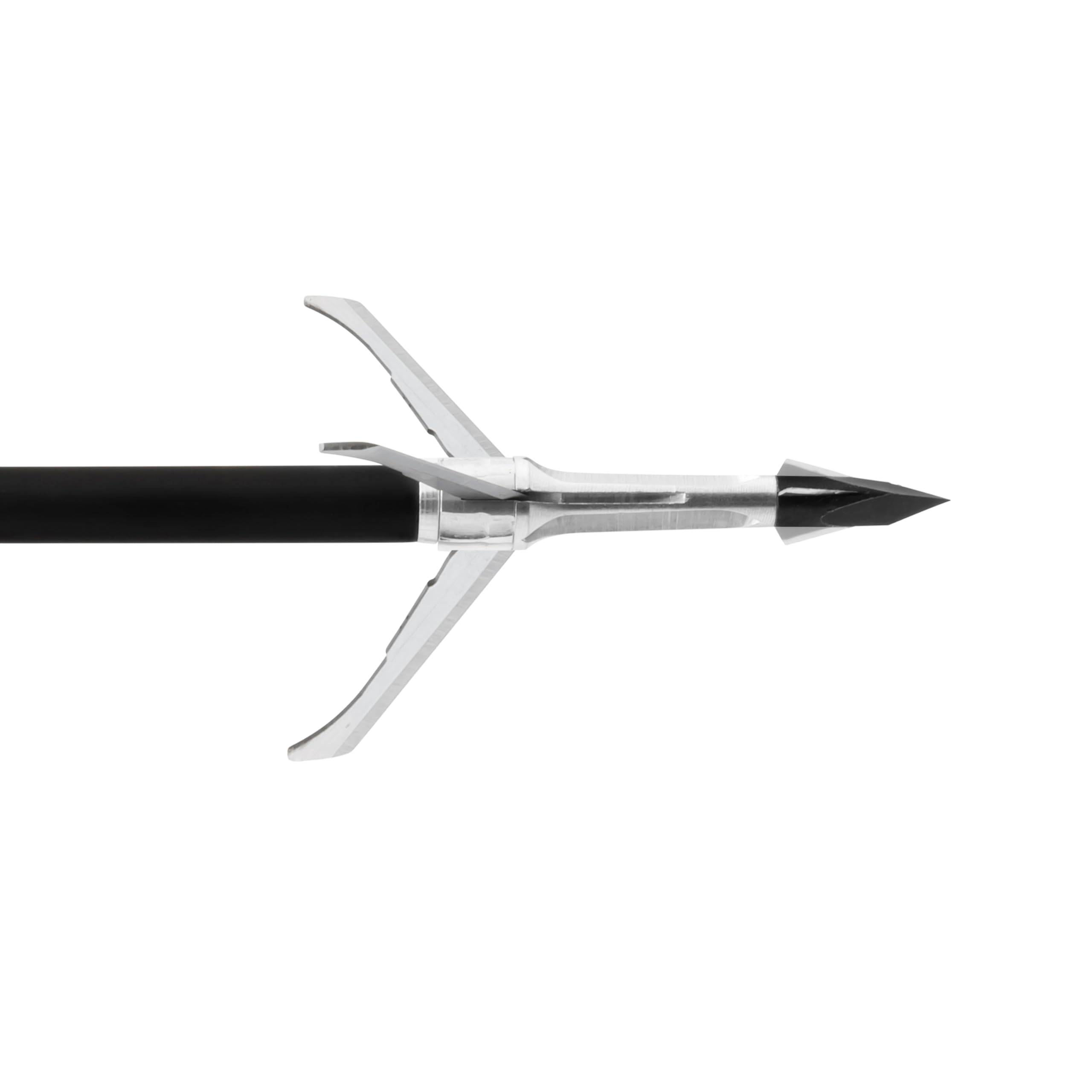
The Grim Reaper Razor Tip delivers the largest cutting diameter among the mechanical heads tested here — a full 2 inches of three-blade devastation that produces blood trails even a novice can follow through thick brush. The .035-inch thick 440 stainless steel blades represent the thickest mechanical blade stock on this list, giving the head enough structural integrity to survive shoulder blade impacts that would fold thinner .027-inch blades. The innovative mini-tip blade design at the leading edge initiates penetration before the main blades sweep through, reducing the deployment resistance that can cause pass-through failures in lower-energy crossbows.
Crossbow shooters pushing 420 fps will find the head opens aggressively on contact, creating exit wounds that typically produce complete pass-throughs on broadside shots. The included practice head allows you to dial in your 20-, 30-, and 40-yard pins without burning a field head, though users report the flight characteristics match field points closely enough that minimal adjustment is needed with a properly tuned bow.
The replaceable blade system extends the usable life of each ferrule across multiple hunts, though the aluminum ferrule shows wear faster than all-steel alternatives after hard bone impacts. Grim Reaper specifically designed this head for high-kinetic-energy bows, so owners of crossbows producing under 300 fps should consider the 1-3/4-inch model instead for reliable deployment. For shooters with sufficient power, the 2-inch cut creates hemorrhage that ends tracking quickly — multiple verified reviews describe deer expiring within 50 yards of impact.
Why it’s great
- 2-inch cutting diameter produces unmatched blood trails
- .035-inch thick blades survive shoulder impacts without folding
- Replaceable ferrule extends service life across multiple hunts
Good to know
- Requires 65+ ft-lbs KE for reliable mechanical deployment
- Aluminum ferrule shows dents after hard bone contact
3. Slick Trick Magnum

The Slick Trick Magnum is a premium fixed-blade broadhead that delivers 2-1/4 inches of total cut through a four-blade configuration, with a Super Steel ferrule that survives impacts that would shear aluminum ferrules in half. The .035-inch stainless steel blades are ground to a four-edge tip that splits bone on contact rather than deflecting — verified by a 30-year veteran hunter who reported a full pass-through on a shoulder blade hit that stopped other heads cold. The 125-grain weight shifts the balance point just enough to stabilize broadhead-heavy arrows without the drop-off that 150-grain heads cause in crossbows tuned for 100-grain loads.
Crossbow users consistently report that the Magnum flies to the same point of aim as field points, a rare claim for a fixed-blade head with this much cutting surface. The Alcatraz Bladelock system keeps blades rigidly seated in the ferrule during flight, eliminating the vibration that causes accuracy drift in cheaper fixed-blade designs. Bear hunters have used these at 27 yards with quartering shots, reporting complete pass-throughs with entry and exit wounds large enough to produce tracking blood even in low-light recovery situations.
The four-pack configuration is a practical choice for hunters who want zero margin for mechanical failure — no rubber bands, no o-rings, no shock collars to fail at 400 fps. The trade-off is that the 1-1/8-inch individual blade width creates more drag than a mechanical head in flight, so shooters hunting in high wind conditions will need to account for additional drift beyond 40 yards. Users who prefer three-blade designs for easier sharpening should note that the four-blade geometry creates more vessel damage but requires more care when honing edges in the field.
Why it’s great
- Super Steel ferrule survives shoulder blade impacts without bending
- Flies to same POI as field points with proper bow tuning
- Four-blade 2-1/4-inch total cut creates devastating wound channels
Good to know
- Four-blade design is harder to resharpen in the field than three-blade heads
- Fixed-blade profile drifts more than mechanicals in gusting winds
4. Muzzy Trocar HB

The Muzzy Trocar HB is the only true hybrid broadhead in this lineup, pairing two fixed blades with two mechanical blades to create a total cutting diameter of 2-5/8 inches — the largest of any head reviewed here. The two fixed blades produce a 1-inch permanent cut on contact, ensuring that even if the mechanical blades fail to deploy, the animal still receives a lethal wound channel. The offset fixed blades induce spin stabilization during flight, which solves the accuracy problems that plague full-mechanical heads at high crossbow velocities.
The chisel tip construction crushes through bone and cartilage without deflection, verified by users who report complete pass-throughs on double-lung shots at 45 yards from tuned crossbows. The 0.035-inch surgical steel blades are thick enough to survive repeated impacts — users report successfully reusing these heads after cleaning, a claim few mechanical heads can make. The mechanical blades remain locked against the steel ferrule during flight through a retention system that does not rely on rubber bands or o-rings, eliminating the most common failure point for mechanical heads at extreme speeds.
Where the hybrid design truly shines is in the margin of error it provides. A partial mechanical deployment still leaves the two fixed blades cutting, and the fixed blades alone produce a wound channel large enough for ethical kills on deer-sized game. The chisel tip also prevents the head from glancing off angled bone surfaces, a common failure mode for pointed mechanical tips. The trade-off is that the two fixed blades create slightly more in-flight drag than a full-mechanical head, but most crossbow shooters report the accuracy improvement offsets this theoretical disadvantage.
Why it’s great
- Hybrid design provides lethal wound channel even if mechanicals fail
- Offset fixed blades create spin stabilization for field-point accuracy
- Chisel tip drives through bone without glancing or deflection
Good to know
- Fixed blades add drag vs full-mechanical designs at long range
- Initial blood trail may start 20 yards post-impact before heavy flow begins
5. NAP Spitfire 3-Blade

The NAP Spitfire eliminates the rubber band and o-ring problem entirely through its patented spring clip retention system, which holds blades closed during flight and releases them on impact without additional components that can degrade over time. This is a meaningful advantage for crossbow hunters who leave arrows nocked for extended periods in cold weather, where rubber bands become brittle and fail. The front-deploying design opens the blades before the head penetrates, creating a 1.5-inch cutting diameter that starts cutting from the entry point rather than expanding deeper in the wound channel.
The Micro Grooved Slimline Ferrule reduces surface contact with the arrow rest, improving flight consistency across different crossbow rail designs. The Diamize sharpening process produces blades that users describe as the sharpest out-of-box edges they have encountered, requiring extreme caution during handling. Hunters who have used the Spitfire for consecutive seasons on whitetail report zero instances of blade kickout on angled impacts, a problem that plagued earlier mechanical designs. The heads clean easily with warm water and a wire brush, and users report reusing them with full confidence after straightening any bent blade tips.
The 1.5-inch cutting diameter is smaller than the Grim Reaper or Swhacker offerings, but the front-deploying mechanism means the full cutting diameter is engaged immediately upon entry rather than after the head has penetrated several inches. This creates a wound channel that bleeds profusely from the skin inward, producing blood trails that start at the impact site. The Legendary Trophy Tip point is designed for maximum bone-splitting power, and users report it penetrates cartilage and thin bone without deflecting the deployment timing of the mechanical blades.
Why it’s great
- Spring clip retention eliminates rubber band failures at high FPS
- Front-deploying blades cut from entry point for immediate blood flow
- Diamize sharpening produces sharpest out-of-box edges tested
Good to know
- 1.5-inch cut is smaller than competing mechanicals at similar price
- May not provide adequate penetration on elk or larger game without tuned setup
6. Rage Chisel Tip SC
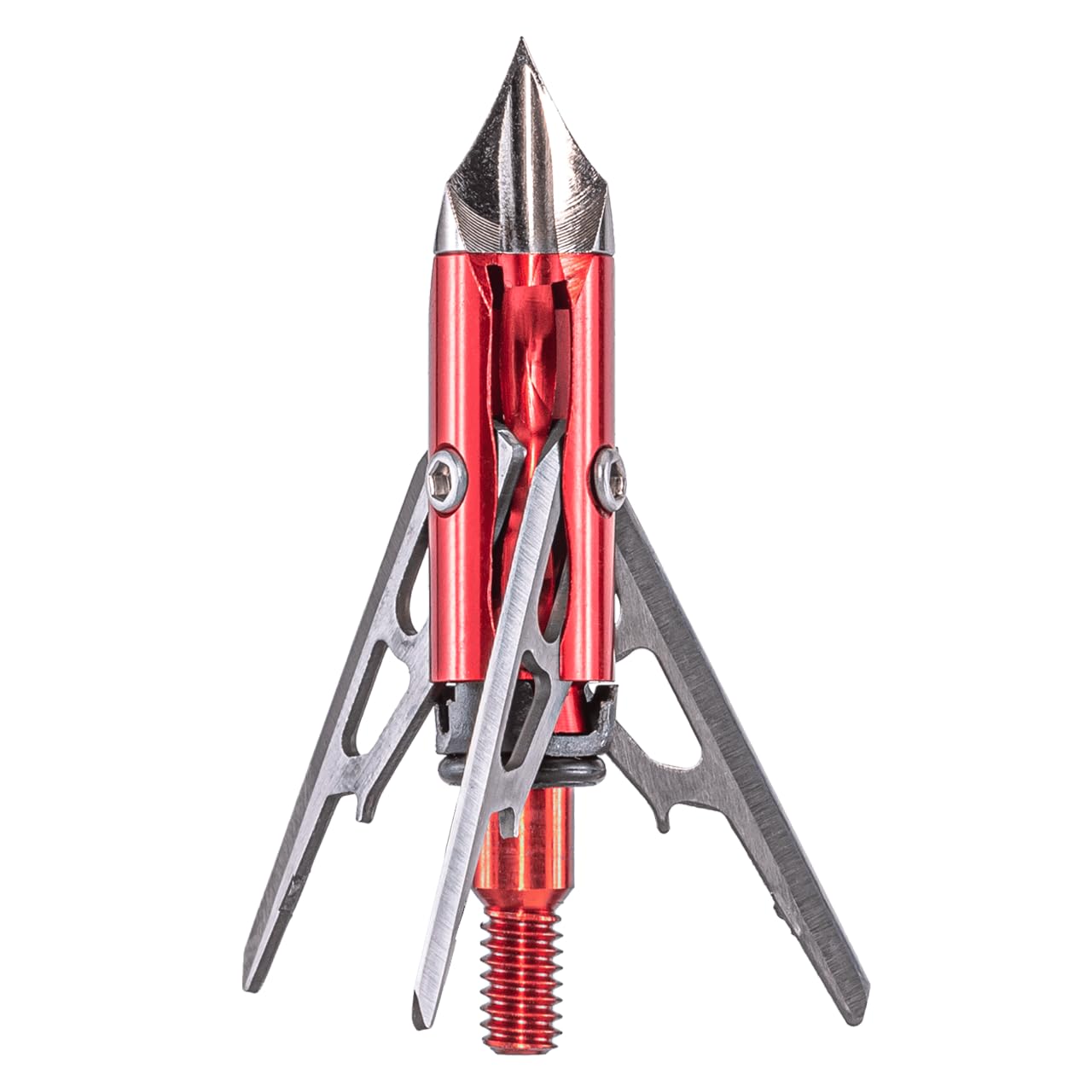
The Rage Chisel Tip SC uses the Shock Collar retention system to keep blades secured during flight, with the Slip Cam deployment mechanism releasing three 0.035-inch alloy steel blades on impact. The chisel tip is reinforced specifically to punch through bone and dense gristle that stops traditional pointed mechanical tips — users report successful impacts through shoulder blades without blade deformation or failure. The 1.6-inch swept-back blade design reduces deployment resistance compared to straight-blade mechanicals, allowing the head to reach full cutting diameter faster on lower-energy crossbow setups.
Crossbow shooters using tuned bows report that the Chisel Tip flies identically to field points out to 60 yards, a level of accuracy that matches the best fixed-blade heads in this lineup. The reinforced aluminum ferrule transfers impact energy into blade cutting rather than ferrule deformation, and users report the heads survive 50-plus target impacts without blade damage or nicking. Hunters with verified kills on six deer report that the broadhead opens reliably every time, producing massive blood loss from the 1.6-inch cutting diameter that typically results in complete pass-throughs on broadside shots.
Where the Rage design requires attention is in proper assembly — users emphasize that the Shock Collar must be fully seated or the blades can deploy prematurely in the quiver. The heads are designed for single-use ethical hunting, and most experienced hunters replace the entire broadhead assembly after each kill rather than attempting to resharpen the swept-back alloy blades. For shooters who want consistent, no-surprise mechanical performance at velocities where rubber bands harden and fail, the Shock Collar system provides a mechanical lock that does not depend on elastic materials.
Why it’s great
- Chisel tip punches through bone that stops traditional pointed tips
- Flies identical to field points at distances out to 60 yards
- Shock Collar eliminates o-ring failures at high crossbow velocities
Good to know
- Requires careful assembly to prevent blade deployment in quiver
- Alloy steel blades cannot be effectively resharpened after impact
7. Swhacker 2-Blade #219
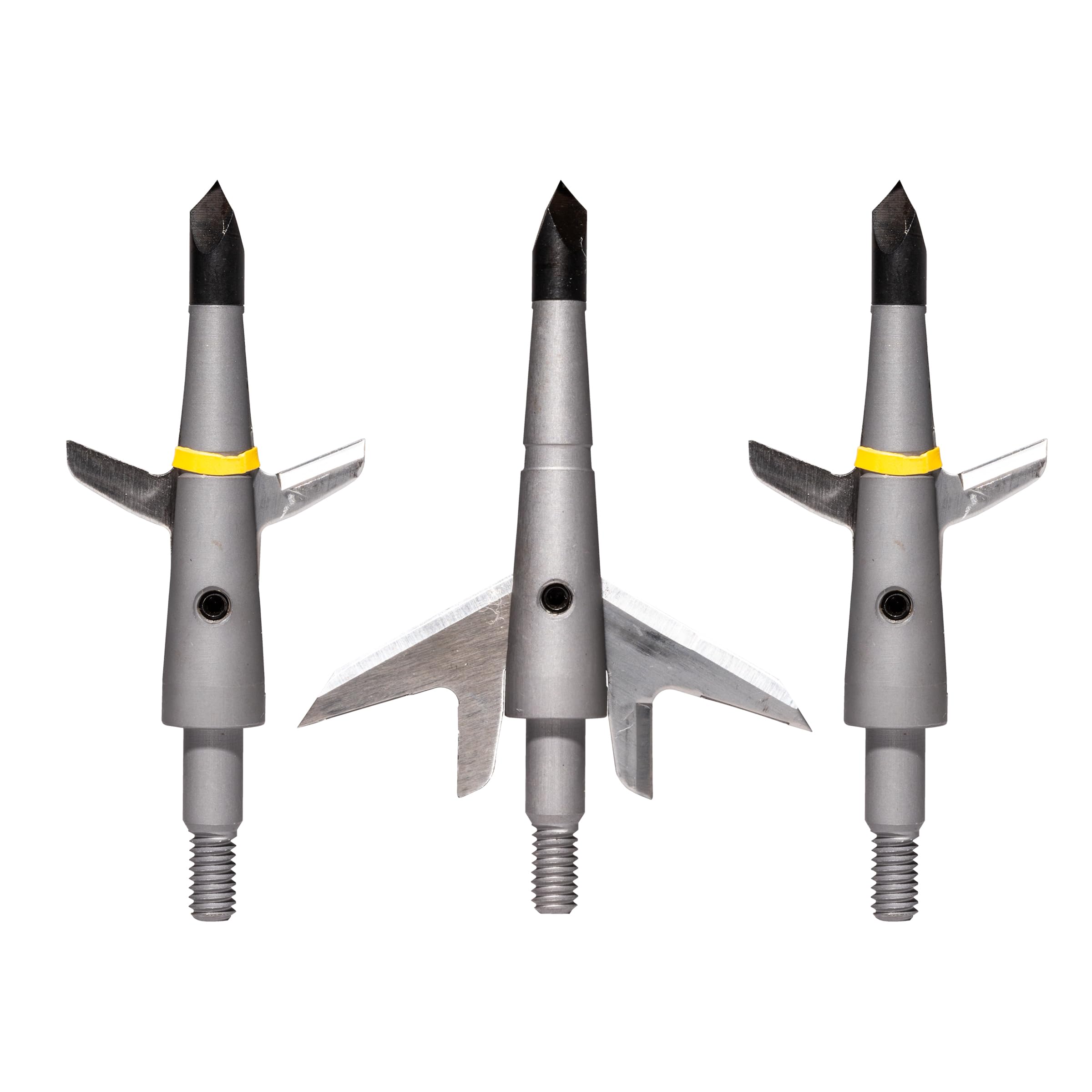
The Swhacker #219 delivers a 1.75-inch cutting diameter from a two-blade mechanical design that uses the patented Two-Slice deployment sequence — wing blades engage first while the primary blades remain closed, then both sets deploy on impact for controlled energy transfer. This sequential deployment reduces the shock load on the arrow shaft compared to simultaneous three-blade deployments, which helps preserve bolt integrity at extreme crossbow velocities. The aircraft-grade aluminum ferrule keeps the head light enough for accurate flight while the stainless steel blades provide adequate cutting edge retention for deer-sized game.
Crossbow users report that these heads fly accurately from Ravin R-10 and similar high-speed platforms, with verified kills out to 30 yards resulting in deer expiring within sight of the impact. The practice tip included in the pack allows for sight-in without burning a broadhead, though users note that the practice tip does not fly identically to the live head — expect a 2-inch shift at 30 yards and adjust accordingly. The 100-grain weight matches most crossbow bolt specifications without requiring sight adjustment from field points at typical hunting distances under 40 yards.
The critical maintenance issue with the Swhacker design is the pre-installed rubber bands — multiple experienced hunters report that the factory bands fail prematurely, causing blades to open in flight and miss at extended ranges. The solution is simple: replace the bands with fresh ones before each hunt, and use two bands on crossbows exceeding 400 fps. Hunters who follow this protocol report five-plus successful outings per pack with no blade deployment failures. For the budget-conscious shooter who understands the band-replacement requirement, the Swhacker provides 1.75-inch cutting diameter at a per-head cost significantly below competitive mechanicals.
Why it’s great
- Two-Slice deployment reduces shaft shock compared to three-blade designs
- 1.75-inch cutting diameter at competitive per-head cost
- Includes practice tip for sight-in without burning a broadhead
Good to know
- Factory rubber bands fail prematurely — replace before each hunt
- Practice tip does not fly to same POI as live head
FAQ
Should I use fixed blade or mechanical broadheads with my crossbow?
Will a 125-grain or 150-grain broadhead work in my crossbow tuned for 100-grain heads?
How often should I replace the rubber bands on my mechanical broadhead?
Final Thoughts: The Verdict
For most users, the best crossbow broadheads winner is the Excalibur Boltcutter because its all-stainless construction and fixed-blade reliability eliminate the mechanical deployment risk while delivering sub-4-inch groups at 40 yards. If you want the most devastating wound channel possible, grab the Grim Reaper Razor Tip with its 2-inch cutting diameter and .035-inch blades. And for hybrid performance that guarantees a lethal hit even if mechanicals fail, nothing beats the Muzzy Trocar HB with its 2-5/8-inch total cutting diameter and chisel tip construction.

Mo Maruf
I created WellFizz to bridge the gap between vague wellness advice and actionable solutions. My mission is simple: to decode the research and give you practical tools you can actually use.
Beyond the data, I am a passionate traveler. I believe that stepping away from the screen to explore new environments is essential for mental clarity and physical vitality.