Our readers keep the lights on and my smoothie glass nicely filled. As an Amazon Associate, I earn from qualifying purchases.
The right pair of cross country running socks separates a personal record from a race ruined by blisters. You need fabric that wicks moisture instantly, a cut that stays put over uneven terrain, and cushioning that balances protection with ground feel on grass, mud, and gravel.
I’m Mohammad Maruf — the founder and writer behind WellFizz. I’ve spent hundreds of hours analyzing runner feedback, fiber blends, and durability data to identify the socks that actually perform mile after mile on cross country courses.
Whether you’re chasing a varsity spot or training through the off-season, this guide breaks down the five pairs that earn a spot in your race-day rotation. Find the perfect fit with our expert review of the best cross country running socks for every foot and budget.
How To Choose The Best Cross Country Running Socks
Cross country demands a specific sock: one that withstands repeated abrasion from dirt and gravel, manages sweat during high-effort repeats, and stays put through sharp turns. Focus on material, height, and targeted padding to match your course conditions.
Fabric Blend and Moisture Management
Look for a high percentage of polyester, nylon, or merino wool — these fibers pull sweat away from the skin, reducing friction and blister risk. Cotton traps moisture and softens when wet, leading to hot spots that can ruin a race. Most performance cross country socks use a synthetic or wool blend that dries quickly even in wet grass.
Sock Height and Heel Security
No-show socks risk slipping into your shoe mid-stride, causing bunching that creates blisters. Mini-crew or crew height provides a secure anchor point, especially when paired with a silicone or elastic heel tab. This is critical on cross country courses where mud and uneven footing make slip-avoidance a priority.
Cushion Placement
A thin, uniform cushion is ideal for race day because it preserves ground feel and allows faster turnover. For training runs on rocky or hard-packed trails, a light cushion in the heel and forefoot absorbs impact without adding bulk. Avoid thick cushion if you wear low-profile spikes — the added volume can cause instability inside the shoe.
Quick Comparison
On smaller screens, swipe sideways to see the full table.
| Model | Category | Best For | Key Spec | Amazon |
|---|---|---|---|---|
| Feetures Elite Light Cushion Mini Crew | Premium | Race-day blister prevention | Targeted Compression Zones | Amazon |
| Balega Ultralight No Show | Premium | Ultra-lightweight speed work | Hand-linked seamless toe | Amazon |
| Saucony RunDry Performance Heel Tab | Mid-Range | Everyday training with secure fit | Heel tab + RunDry fabric | Amazon |
| PAPLUS Compression Ankle | Mid-Range | Arch support and reduced fatigue | Graduated compression knit | Amazon |
| Rondo Ultra Thin Ankle Socks | Entry-Level | Budget bulk pack for casual runs | Ultra-thin mesh structure | Amazon |
In‑Depth Reviews
1. Feetures Elite Light Cushion Mini Crew Sock
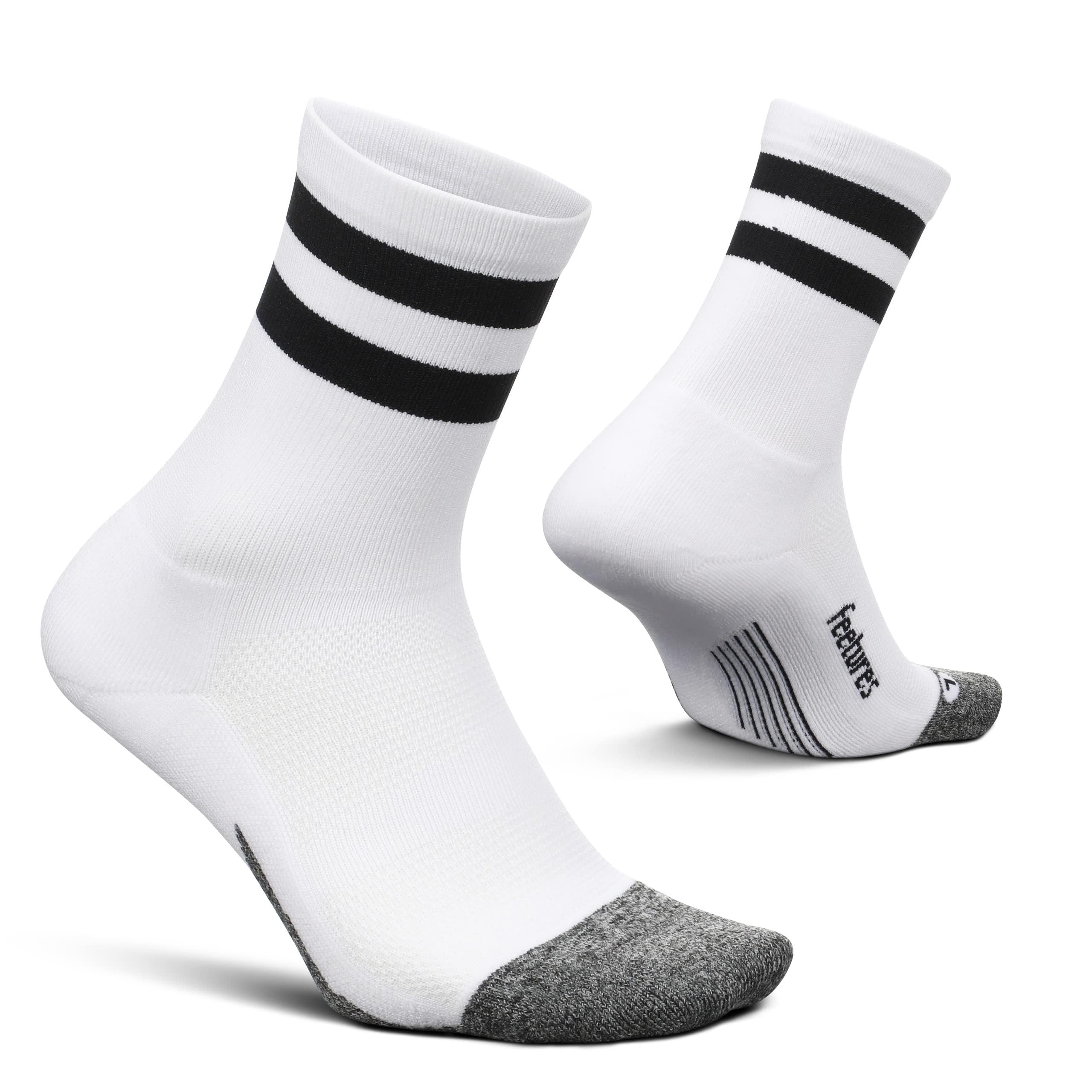
Feetures builds its Elite line with a 200-needle knit that creates precision compression zones across the arch and ankle without restricting blood flow. The light cushion sits in the heel and forefoot only, leaving the instep thin for better ground feel — a critical advantage when driving off a muddy cross country course. The mini-crew height stays above the ankle collar of most spikes, preventing dirt and debris from working into the shoe.
Runners consistently report zero blister formation even during 10-mile trail efforts, and the compression panel eliminates the mid-run sock slippage that shortens stride efficiency. The fabric uses moisture-wicking nylon and spandex that retains its shape after dozens of washes, so the targeted fit doesn’t loosen over a single season.
These socks feel expensive at first glance, but the blister prevention and longevity deliver real performance gains during back-to-back race weeks. For a cross country runner who values reliability over bulk, this is the pair to beat.
Why it’s great
- Prevents blisters and hot spots even on long training runs
- Targeted compression supports arches and stops sock sliding
- Breathable, lightweight material for warm-weather racing
Good to know
- Premium price point may exceed budget-oriented shoppers
- Not a compression sock for recovery; it’s performance-focused
2. Balega Ultralight Lightweight Performance No Show

Balega’s Ultralight sock uses a hand-linked seamless toe and a fine-gauge knit that creates near-zero bulk inside the shoe — ideal for runners who demand maximum ground feel on grass and dirt loops. The no-show cut works best with low-profile cross country spikes, and the silicone heel gripper prevents the sock from disappearing into the heel cup during 800-meter repeats.
Reviewers describe the fabric as “soft as heck” against the skin with enough stretch to accommodate narrow to medium feet without slipping. After repeated wear the sock retains its shape and doesn’t stretch out, a common failure point in budget socks. The entire construction uses moisture-wicking synthetic fibers that dry quickly during wet-trail sessions.
Heel and toe areas feature a barely-there cushioned panel that absorbs shock without adding weight. If your priority is featherlight feel for speed work or short races, this is the lightest option available that still offers durability.
Why it’s great
- Extremely soft fabric with no seam irritation at the toe
- Stays in place without slipping over long runs
- Lightweight enough for racing flats and spikes
Good to know
- No compression features; it’s a standard performance sock
- Priced higher per pair than most entry-level options
3. Saucony RunDry Performance Heel Tab Athletic Socks

Saucony’s RunDry knit uses a moisture-moving polyester blend that keeps feet dry even during humid distance efforts. The standout feature is the built-in heel tab that locks the sock above the shoe collar, preventing the heel from sliding down when you push off on steep hill climbs. This design makes the sock feel anchored from your first stride to your last.
Reviewers with size 9 to 10 feet report a medium thickness that balances cushion with flexibility — enough to absorb hard landings on packed trails without making the shoe feel snug. The band around the midfoot provides light support without constriction, and the colors stay vibrant after repeated machine washing.
For a mid-range price, these socks deliver durable performance across training seasons. The heel tab and moisture management alone justify the upgrade over generic cotton socks for any cross country runner who prioritizes fit over extreme weight savings.
Why it’s great
- Heel tab eliminates mid-run slippage
- RunDry fabric wicks sweat quickly during high-effort intervals
- Good value for the quality and durability per pair
Good to know
- Medium size may fit snug around the ankle for larger feet
- Not as thin as ultralight race socks
4. PAPLUS Compression Ankle Running Socks
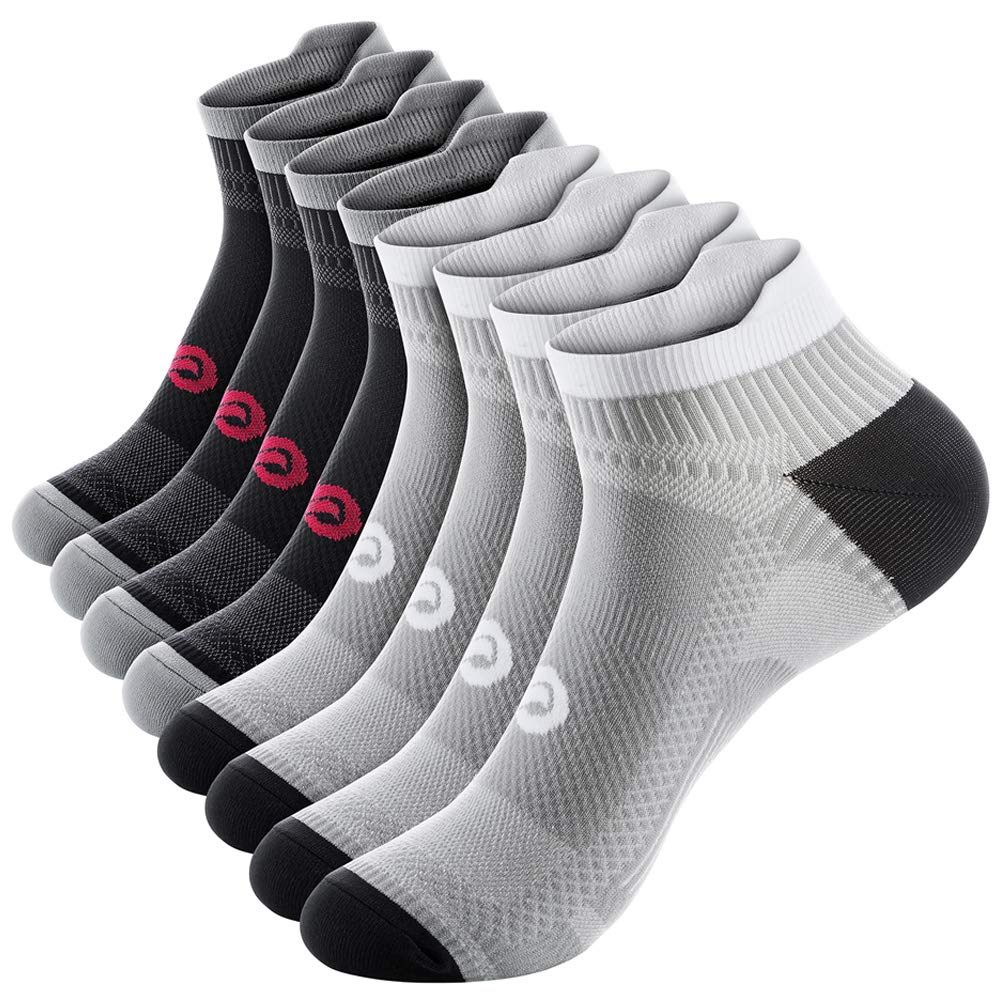
PAPLUS brings graduated compression and targeted arch support to an ankle-length running sock, making it a strong choice for athletes who battle foot fatigue or mild plantar fasciitis during training. The compression weave applies gentle pressure around the midfoot and reduces vibration in the arch area, which helps maintain circulation during long runs on cross country terrain.
Users with short, wide feet report the sock accommodates their shape without excessive tightness, and the fabric holds up for more than 50 washing cycles without losing elasticity. The ankle height works well with standard cross country shoes and stays in place without bunching, but the lack of left/right markings means you need to center the arch band manually for each wear.
For the price of a multi-pack, you get compression benefits that usually cost double. This is a practical pick for runners who want support without stepping up to a crew-height sock.
Why it’s great
- Graduated compression reduces leg fatigue over distance
- Arch support targeted for plantar fasciitis relief
- Affordable multi-pack offers excellent value
Good to know
- No left/right markings for precise fit alignment
- Compression level is light, not medical-grade
5. Rondo Ultra Thin Ankle Socks (Multi-Pack)

The Rondo Ultra Thin socks prioritize breathability and minimal bulk with a mesh knit that allows maximum airflow during warm-weather runs. These are the lightest and thinnest socks in this guide, making them suitable for runners who feel constrained by any level of cushion and want direct contact with the shoe bed.
Multiple reviewers confirm the socks are “very comfortable” right out of the package and dry quickly after a wet run. However, the thinness comes at a cost: durability is limited, with some users reporting toe wear-through after roughly two months of daily walking and running. For cross country athletes who rotate training shoes and keep mileage moderate, this may still offer several months of use per pair.
The bulk-pack pricing makes this an easy entry point for runners on a strict budget or for teams needing a large volume of simple socks. Just know that the trade-off is reduced long-term durability and no targeted support features.
Why it’s great
- Ultra-thin construction fits snug in tight spike shoes
- Ventilated mesh keeps feet cool on hot days
- Bulk pack offers very low cost per pair
Good to know
- Thin fabric may wear through at the big toe over time
- No arch support or heel tab features
FAQ
Can I wear no-show socks for cross country racing?
How often should I replace cross country running socks?
Do compression socks help with cross country performance?
Are merino wool socks too hot for warm-weather cross country races?
Should I size up my cross country shoes when wearing thick socks?
Final Thoughts: The Verdict
For most runners, the best cross country running socks winner is the Feetures Elite Light Cushion Mini Crew because its targeted compression and blister-free construction tackle the two biggest pain points of off-road racing. If you want an ultralight feel for speed work, grab the Balega Ultralight No Show. And for a secure-fit training sock at a mid-range price, nothing beats the Saucony RunDry Heel Tab.

Mo Maruf
I created WellFizz to bridge the gap between vague wellness advice and actionable solutions. My mission is simple: to decode the research and give you practical tools you can actually use.
Beyond the data, I am a passionate traveler. I believe that stepping away from the screen to explore new environments is essential for mental clarity and physical vitality.