Our readers keep the lights on and my smoothie glass nicely filled. As an Amazon Associate, I earn from qualifying purchases.
Choosing the wrong set of knobs for your local singletrack can turn a fast lap into a frustrating fight with the handlebars. Cross country tires live in a constant tension between rolling speed on the flats and digging in when the trail tilts up or gets loose. Get the center tread right and you’ll carry momentum through sections that used to sap it. Miss the mark and you’ll spin out on the very climbs you used to clean.
I’m Mohammad Maruf — the founder and writer behind WellFizz. I’ve spent hundreds of hours analyzing casing ply counts, rubber compound formulations, and tread pattern geometries to separate the tires that truly deliver low rolling resistance from those that merely claim it.
This guide focuses on the models that earn their place in your garage by balancing weight, puncture protection, and real-world cornering confidence — the very qualities that define the best cross country mountain bike tires for riders who refuse to compromise on either speed or reliability.
How To Choose The Best Cross Country Mountain Bike Tires
Cross country tires are not all-purpose treads. They sacrifice outright mud digging for a lower weight and faster rolling speed on the hardpack and loose-over-hard terrain that defines most XC loops. Understanding the trade-offs in tread height, casing construction, and rubber compound will keep you from buying a tire that feels slow on the fireroad or washes out on the first rocky descent.
Tread Pattern and Center Knob Profile
The center tread determines your rolling resistance. Tires with a tightly packed, low-profile center row — often called semi-slick designs — roll noticeably faster on pavement and packed dirt but offer less braking bite in loose corners. Aggressive XC tires use taller, more widely spaced center knobs that self-clean in mud but create a buzzing sensation on hard surfaces. Match the tread aggressiveness to your local trail surface: hardpack favors semi-slick, while mixed or loose-over-hard terrain rewards a more open pattern.
Casing and Puncture Protection
XC casings typically use a 60 or 120 TPI (threads per inch) nylon layer. Higher TPI casings are lighter and more supple, conforming to terrain for better traction, but they are less resistant to sharp impacts. Many XC tires add a protective layer like Maxxis EXO or Schwalbe’s SnakeSkin beneath the tread and along the sidewall to resist cuts without dramatically increasing rolling resistance. For riders who often hit sharp rock gardens, a reinforced casing is worth the small weight penalty.
Rubber Compound and Tubeless Readiness
Harder compounds last longer but slide earlier under hard braking. Softer compounds grip tenaciously but wear faster — this is the central trade-off in XC tire selection. Dual-compound tires place a harder base layer under a softer outer tread, balancing wear and cornering bite. Premium tri-compound designs like Maxxis 3C MaxxSpeed use a dedicated center compound for low rolling resistance and softer shoulder knobs for cornering grip. Tubeless-ready beads are now standard on serious XC tires, allowing lower pressures (18-22 PSI typical) that dramatically improve traction without pinch flats.
Quick Comparison
On smaller screens, swipe sideways to see the full table.
| Model | Category | Best For | Key Spec | Amazon |
|---|---|---|---|---|
| Maxxis Ikon | Premium | All-condition XC versatility | 3C MaxxSpeed compound, 2.6″ WT | Amazon |
| Schwalbe Nobby Nic | Premium | Trail-to-XC all-rounder | Addix compound, 50 PSI max | Amazon |
| Maxxis Rekon Race | Premium | Dry-condition race speed | Semi-slick design, 805g weight | Amazon |
| Vittoria Barzo | Mid-Range | Technical XC racing | Moto-style knobs, TNT bead | Amazon |
| Maxxis Assegai | Mid-Range | Maximum cornering grip | Dual Compound, 2.5″ width | Amazon |
| Michelin Force XC2 | Mid-Range | Hardpack race traction | Triple-layer 55 TPI casing | Amazon |
| Schwalbe Rocket Ron | Budget | Lightweight XC race value | Open tread, e-bike ready E-25 | Amazon |
In‑Depth Reviews
1. Maxxis Ikon

The Maxxis Ikon has earned its reputation as the go-to XC tire for riders who face a mix of hardpack, loose gravel, and even wet roots during a single loop. The 3C MaxxSpeed compound uses a harder center layer to keep rolling resistance low while softer shoulder knobs bite when you lean the bike over. Available in widths from 2.0 to 2.6 inches, the Ikon fits everything from lightweight race hardtails to modern XC full-suspension frames.
Riders report excellent grip on rocky climbs and fast, predictable cornering once they commit weight to the outside knob. The EXO sidewall reinforcement adds meaningful cut protection without making the casing feel stiff or dead. Tubeless setup goes smoothly on most modern rims, and after a brief initial pressure drop the sealant stabilizes quickly with no weeping.
Versatility is the Ikon’s strongest card. It rolls fast enough for marathon-style races yet provides enough traction for technical singletrack that would punish a true semi-slick. The trade-off is that the central tread blocks wear faster than harder-compound tires on pavement-heavy routes, and the EXO layer is not enduro-grade — sharp rock gardens can still cut it if you run very low pressures.
Why it’s great
- Optimized triple-compound balances speed and cornering grip
- EXO sidewall reinforcement for rock and root protection
- Wide Trail casing matches modern rim widths from 25-35mm internal
Good to know
- Central tread wears faster on paved approaches
- Not designed for deep mud or heavy enduro impacts
2. Schwalbe Nobby Nic Evo

The Nobby Nic sits in a unique spot between an XC race tire and a true trail tread. Its stable shoulder blocks and moderately spaced center knobs provide climbing bite that rivals more aggressive tires while maintaining a lower rolling resistance than full enduro knobbies. The Addix compound is Schwalbe’s highest performance rubber formulation, delivering predictable grip on wet roots and loose granite without wearing down after a handful of rides.
Riders running the Nobby Nic on wide rims report excellent cornering stability even at low pressures — one user reported running 17 PSI rear on a 42mm internal rim without burping. The carcass feels supple enough to conform to rocks yet sturdy enough to resist sidewall cuts during rock garden traversals. It fits the bike as an all-around front tire paired with a faster rear, but many use it front and rear on shorter travel trail bikes.
The primary downside for pure XC racers is weight. At roughly 50g heavier than a pure XC semi-slick, the Nobby Nic does not spin up as quickly on pavement transitions. Additionally, the beefier shoulder knobs can be noisy on asphalt connectors between trail sections. This is a tire for riders who value confidence over absolute speed.
Why it’s great
- Aggressive shoulder knobs provide excellent lean-angle grip
- Addix compound holds up well in wet or mixed conditions
- E-50 certified for high-speed e-MTB use
Good to know
- Heavier than dedicated XC race casings
- Audible hum on pavement due to tall center tread blocks
3. Maxxis Rekon Race

The Rekon Race is Maxxis’s answer to the pure XC speed question. Featuring the lowest tread height in the entire Maxxis XC lineup, this semi-slick design minimizes friction on hardpack and pavement, making it a favorite for marathon racers and riders who spend long days pedaling on fire roads. The Dual Compound construction uses a harder base layer to extend tread life while retaining reasonable cornering bite through the shoulder knobs.
Riders transitioning from more aggressive tires like the Specialized Purgatory report a noticeable reduction in fatigue on long rides. The Rekon Race rolls with a smooth, quiet feeling that lets you hold higher speeds on descents without fighting the tire’s resistance. It pairs especially well on the rear with a more aggressive front tire, giving you low drag out back while keeping steering bite up front.
The compromise comes in loose conditions. On sand, loose gravel, or muddy climbs the semi-slick pattern spins out easily, requiring careful weight distribution to keep forward momentum. Braking traction on steep descents is also reduced compared to tires with taller center knobs. This is a tire for dry, well-packed trails, not for wet or deeply loose terrain.
Why it’s great
- Extremely low rolling resistance on hardpack and pavement
- Lightweight 805g casing at 29×2.35 reduces rotating mass
- EXO sidewall punch protection for a race tire
Good to know
- Limited grip in sand, loose gravel, or wet mud
- Braking bite is compromised in steep, loose sections
4. Vittoria Barzo XC
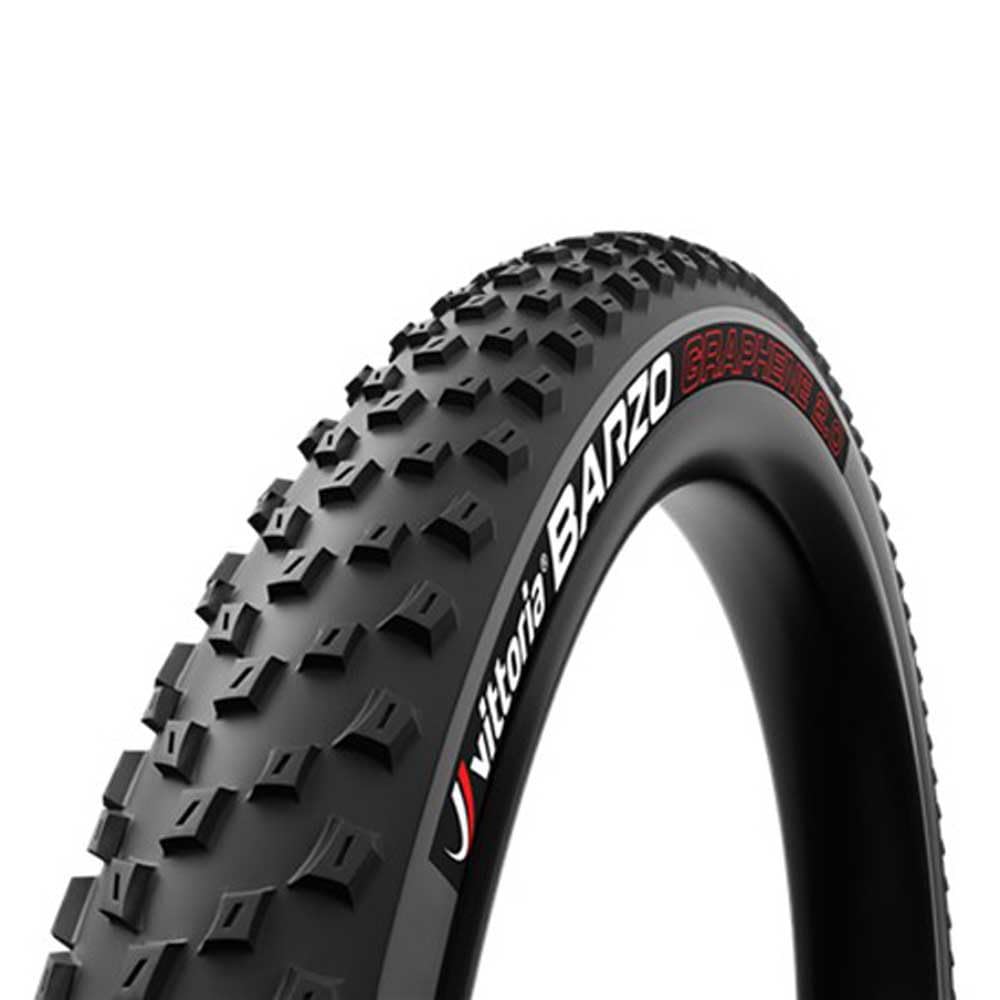
The Vittoria Barzo carries the XCO World Champion pedigree, and the tread design reflects that competitive focus. The center uses alternating ridges with progressive sipe angles to maintain forward speed while the moto-style V-formation shoulder knobs provide aggressive cornering bite. It is one of the few XC tires that feels equally confident on loose-over-hard terrain as it does on packed singletrack.
Riders have run the Barzo for extended seasons — over two years in one case — across rocky Arizona trails without sidewall cuts or tread delamination. The TNT bead construction makes tubeless setup straightforward and holds air reliably with standard sealant. The tire feels light on the bike and accelerates well out of corners without the sluggishness that heavier casings introduce.
Some users experienced initial air loss after mounting, with sealant taking a few days to fully settle. The tire’s open center tread design also means it will buzz louder on pavement runs than a semi-slick. For riders who regularly race or ride technical XC trails where cornering confidence is the priority, the Barzo delivers a distinctive combination of speed and bite.
Why it’s great
- Moto-style side knobs provide excellent cornering traction
- Lightweight design reduces rider fatigue on long climbs
- TNT bead simplifies tubeless installation
Good to know
- Some units require a few days for sealant to stop initial weeping
- Audible on pavement due to open center tread spacing
5. Maxxis Assegai

Greg Minnaar’s signature tire is a study in how far you can push cornering traction before rolling resistance becomes a dealbreaker. The Assegai uses a dense, multi-row knob pattern that delivers predictable grip at every lean angle — no sudden breakaway point when you lean past the shoulder knobs. The Dual Compound construction balances center wear with shoulder softness, making it a strong choice for aggressive XC riders who prioritize descending confidence.
Riders coming from less aggressive treads report that the Assegai feels like it is on rails in rock gardens and loose corners, throwing rocks cleanly as the knobs dig in. The EXO sidewall protection is adequate for light trail duty but not intended for heavy enduro hits. Mounting is straightforward on modern rims; a drop of dish soap on the bead helps it snap into place evenly.
The obvious penalty is rolling speed. The Assegai’s dense tread pattern generates more drag than any other tire in this guide, making it best suited for the front wheel where cornering bite matters most. Using it on the rear will noticeably slow acceleration on fireroads and climbs. It is a specialized tool for riders who want cornering that feels nearly enduro-grade on an XC bike.
Why it’s great
- Unmatched cornering predictability at any lean angle
- Dual compound center extends tread life on hardpack
- Wide Trail optimized for 25-35mm internal rims
Good to know
- Higher rolling resistance than any other tire on this list
- Best used on the front only for XC applications
6. Michelin Force XC2

The Michelin Force XC2 is engineered specifically for hardpack and mixed trail conditions where a fast-rolling, predictable tread matters more than mud clearance. Its directional center knobs are ramped to reduce drag while the widely spaced shoulder blocks engage only when the bike leans, preserving speed on straight sections. The triple-layered 55 TPI casing includes a high-density fiber reinforcement layer under the tread for enhanced puncture resistance against sharp flint and granite.
Riders note the tire feels solid and quiet on firm trails, with no wandering or squirm at speed. The Gum-X rubber compound provides a tacky feel that inspires confidence on off-camber roots and steep, dry switchbacks. Tubeless mounting is achievable with standard floor pumps on most rims, though the tight bead can require more effort than some competitors.
The Force XC2’s primary limitation is its narrow focus: it does not clear mud effectively and feels loose when the trail gets deep or wet. The 2.1-inch width is also narrower than many modern XC tires, which some riders find lacking in trail absorption compared to 2.35 or 2.4 options. It works best as a rear tire paired with a wider, more aggressive front.
Why it’s great
- Triple-layer puncture protection under tread area
- Gum-X compound offers tacky grip on hardpack and roots
- Directional ramped knobs minimize rolling drag
Good to know
- Narrower 2.1 inch profile reduces cushion and float in loose terrain
- Clogs quickly in wet mud or deep loam
7. Schwalbe Rocket Ron Performance
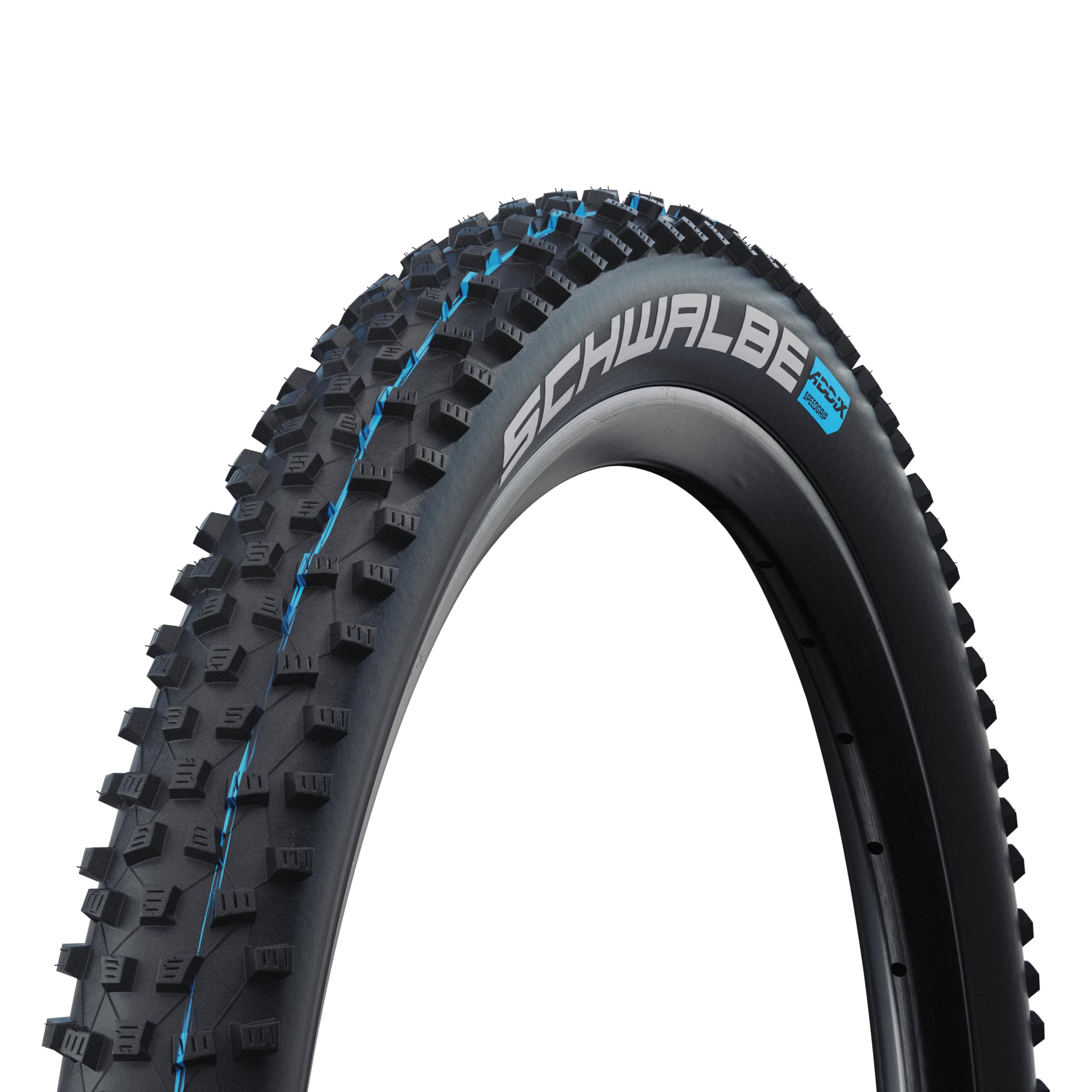
The Rocket Ron has been a staple in XC racing for years because it delivers a compelling mix of low weight and aggressive tread at a price point that allows riders to experiment with tire setups without overspending. Its open, widely spaced center tread pattern self-cleans effectively in loose conditions while keeping rolling resistance lower than a full trail tire. The Addix compound provides consistent grip across dry and slightly damp surfaces.
Riders praise the Rocket Ron for its predictable cornering and light weight, noting that it spins up quickly and holds speed well on rolling terrain. The folding bead construction reduces overall weight and makes packing spares easy. It is also E-25 certified, meaning it can handle light e-MTB assistance without overheating the casing, extending its utility to electric XC bikes.
Sidewall durability is the primary concern. Several users have reported pinhole punctures on the sidewall after the first ride, suggesting the thin casing trades protection for weight savings. Additionally, the bead can be extremely tight on some rims, requiring dedicated tire levers for mounting. It is best suited for lightweight racers willing to accept a shorter casing lifespan in exchange for race-day speed.
Why it’s great
- Lightweight design reduces rotating mass for faster acceleration
- Open self-cleaning tread works well in loose-over-hard conditions
- E-25 rated for e-MTB compatibility
Good to know
- Sidewall may be prone to small punctures on rocky trails
- Bead can be extremely tight, making installation difficult
FAQ
Can I use a trail tire like the Maxxis Assegai for cross country racing?
What is the ideal tire pressure for tubeless XC tires?
How often should I replace XC tires?
Final Thoughts: The Verdict
For most users, the best cross country mountain bike tires winner is the Maxxis Ikon because it combines a versatile tread pattern, premium 3C compound, and reliable puncture protection into a package that performs across the widest range of XC conditions. If you want a tire that prioritizes raw descending confidence over flat-out speed, grab the Maxxis Assegai. And for a race-ready option that minimizes drag on hardpack, nothing beats the Maxxis Rekon Race.

Mo Maruf
I created WellFizz to bridge the gap between vague wellness advice and actionable solutions. My mission is simple: to decode the research and give you practical tools you can actually use.
Beyond the data, I am a passionate traveler. I believe that stepping away from the screen to explore new environments is essential for mental clarity and physical vitality.