Our readers keep the lights on and my smoothie glass nicely filled. As an Amazon Associate, I earn from qualifying purchases.
A scar from stitches is a permanent record of your body’s repair work, but how that record looks depends entirely on how you care for it in the weeks after the sutures come out. The wrong cream can leave you with a raised, red, or darkened line that reminds you of the injury long after the wound has healed.
I’m Mohammad Maruf — the founder and writer behind WellFizz. My research process involves cross-referencing clinical ingredient data, customer experience patterns, and manufacturer transparency to find the silicone-based and bio-oil formulas that actually flatten and fade scar tissue without irritation.
Whether you’re recovering from surgery, an accident, or a C-section, this guide breaks down the five most effective creams available. My goal is to help you find the absolute best cream for scars after stitches that matches your scar type, age, and skin sensitivity.
How To Choose The Best Cream For Scars After Stitches
Selecting the right cream is not about brand loyalty—it is about matching the formula to the biology of your scar. Stitch scars are unique because they follow a linear closure line where tension and inflammation concentrate. Here is what matters most.
Silicone Content and Occlusion
Silicone creates a semi-occlusive barrier that hydrates the stratum corneum, reduces collagen production, and flattens raised scars. Look for products that list medical-grade silicone as the first or second ingredient. Gel-based silicones dry faster and work better on mobile areas like knees and elbows, while cream-based silicones spread easier over larger flat surfaces.
Ingredient Synergy Beyond Silicone
Onion extract, allantoin, emu oil, and vitamin E can complement silicone by softening scar tissue and reducing discoloration. Bio-oil formulas that rely on calendula, lavender, and vitamin A work best on older, flat scars with pigment changes. Avoid fragrance-heavy products on fresh stitch lines—irritation can worsen hyperpigmentation.
Scar Age and Application Cadence
New scars (under 8 weeks old) respond best to silicone-based products applied twice daily. Older scars (3 months or older) benefit from formulations that include exfoliating ingredients or heavier occlusives like emu oil. Consistency over months matters more than the potency of any single ingredient.
Quick Comparison
On smaller screens, swipe sideways to see the full table.
| Model | Category | Best For | Key Spec | Amazon |
|---|---|---|---|---|
| RejuvaSil Silicone Scar Gel | Premium | Itchy, raised surgical scars | Liquid Silicone + Vitamin C | Amazon |
| Rejuvaskin Scar Esthetique Cream | Mid-Range | Flat, discolored or older scars | Silicone + Botanicals | Amazon |
| NOPUNZEL Silicone Scar Gel | Mid-Range | Fresh stitch lines and keloids | Medical-Grade Silicone 20g | Amazon |
| Ebanel Silicone Scar Gel | Value | Acne spots and C-section scars | Onion Extract + Allantoin | Amazon |
| Bio-Oil Skincare Oil | Budget | Old, flat scars with discoloration | Vitamin E + Calendula Oil | Amazon |
In‑Depth Reviews
1. RejuvaSil Silicone Scar Gel by Rejuvaskin
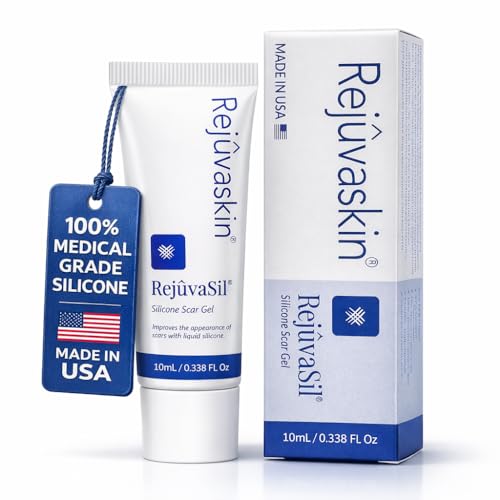
The RejuvaSil formula uses liquid silicone as its primary active, paired with emu oil, vitamin C, and squalene to address both the texture and discoloration of fresh stitch scars. Real customer data shows that users with open-heart surgery scars observed enough flattening to shave over the line within weeks. The gel is non-comedogenic and gentle enough for pediatric use, which matters when treating scars on children.
What separates this from cheaper silicones is the inclusion of vitamin C—an antioxidant that helps fade the red or purple discoloration that often lingers on stitch lines. The emu oil also provides deep moisturization that reduces the itchiness common during the active remodeling phase of scar healing. The tube is small (0.33 oz), but a little goes a long way on linear stitch scars.
One caveat: the tiny tube size means frequent reordering if you’re covering a large area like a full C-section scar. But for a single stitch line on the knee, chest, or face, this is the most targeted, clinically-backed option available.
Why it’s great
- Flattens raised scars and reduces itchiness simultaneously
- Vitamin C helps fade discoloration on both new and old stitch lines
- Non-comedogenic and safe for sensitive or pediatric skin
Good to know
- Very small tube (0.33 oz) requires frequent reordering for large scars
- Premium price point per ounce compared to larger silicone gels
2. Rejuvaskin Scar Esthetique Scar Cream
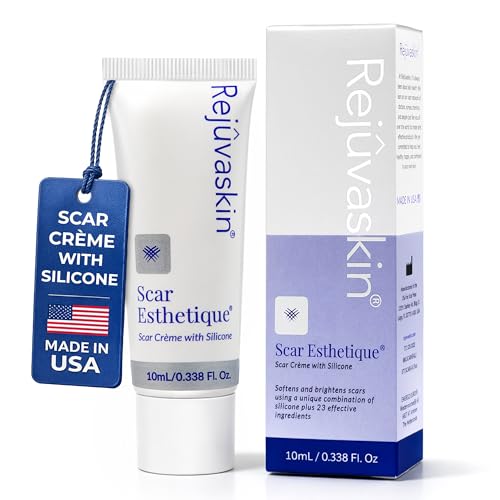
Scar Esthetique blends silicone with botanical extracts to create a cream that targets uneven skin tone and texture on stitch scars without the tugging that silicone sheets cause. Customers who used it on 5-week-old knee surgery scars reported visible smoothing and softening, with others commenting on how flat the scar appeared. The formula also targets stretch marks and keloids, making it a versatile option if you have multiple scar types.
The cream consistency is thicker than a gel, which makes it ideal for drier skin types or scars located on areas with less natural oil production, like the shins or forearms. The semi-occlusive barrier supports the body’s natural collagen remodeling without trapping excessive moisture. It is also formulated for all skin types, including sensitive, oily, and combination.
Some users with 3-year-old scars noted that while the scar softened and flattened, residual redness still required laser treatment for complete resolution. For very old, pigment-heavy scars, a stronger depigmenting agent may be needed.
Why it’s great
- Botanical blend addresses texture and discoloration without irritation
- No tugging compared to silicone sheets on mobile joints
- Safe for sensitive, dry, and combination skin types
Good to know
- Thicker cream takes longer to absorb than gel alternatives
- Less effective on very old scars with deep pigment staining
3. NOPUNZEL Silicone Scar Gel
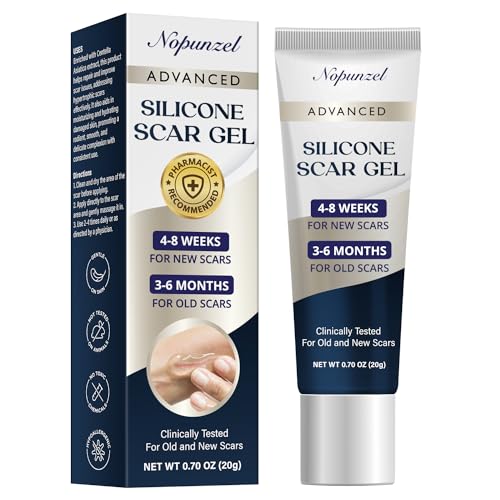
NOPUNZEL offers a no-frills medical-grade silicone gel that dermatologist-tested and designed to work on C-sections, hypertrophic scars, keloids, and accident-related stitch scars. The gel is lightweight, absorbs quickly, and leaves no sticky residue—a feature that real users consistently praised when applying it on both face and body. One customer applied it to a one-year-old dog attack scar and observed significant fading and texture improvement within weeks.
The slanted tip on the tube allows precise application along a stitch line without wasting product. The formula is gentle enough for all skin types and ages, and the clear gel means you can wear it under makeup or sunscreen without a visible layer. At 20g, it offers a larger volume than the RejuvaSil tube at a mid-range price, making it a better value for covering longer or multiple stitch scars.
The main trade-off is the lack of complementary ingredients like vitamin C or emu oil. This is a pure silicone play—effective for flattening and softening, but you may need a separate product for depigmentation if discoloration is your primary concern. Results are gradual, with visible change typically appearing after 3 weeks of consistent twice-daily use.
Why it’s great
- Quick-absorbing, non-sticky gel works well under makeup or sunscreen
- Precise slanted applicator reduces waste on linear stitch scars
- Dermatologist-tested and suitable for all ages and skin types
Good to know
- Contains only silicone—no added depigmenting or moisturizing ingredients
- Full results require 8 to 12 weeks of consistent application
4. Ebanel Silicone Scar Gel with Allantoin and Onion Extract
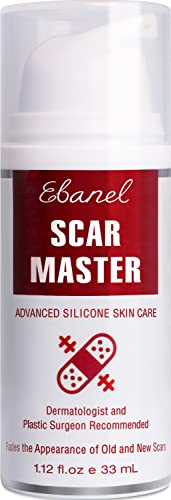
Ebanel combines medical-grade silicone with onion extract, allantoin, emu oil, and plankton extract to create a multi-angle approach to scar reduction. Onion extract is one of the few natural ingredients with clinical data supporting its ability to reduce fibroblast proliferation, which is the biological driver of raised scars. Real users reported success on ingrown hair spots and C-section scars, noting visible fading after consistent twice-daily application.
The gel is fragrance-free, hypoallergenic, and fast-drying—attributes that make it suitable for use on the face as well as the body. The 1 oz tube offers more product than the premium Rejuvaskin alternatives at a mid-range price point, making it a strong option if you need to cover a larger area or multiple scars. It is manufactured in an FDA-registered facility in the USA, which adds a layer of quality assurance.
Some customers found the gel thicker than expected, making it harder to spread over large areas like a C-section scar. It also requires a 1-2 minute massage after application for full absorption, which adds time to your routine. The scent-free formula is a plus for sensitive noses but offers no masking of any residual medicinal smell.
Why it’s great
- Onion extract and allantoin target both collagen production and skin softening
- Fragrance-free, hypoallergenic, and safe for facial use
- Larger 1 oz tube offers better value for covering extensive stitch lines
Good to know
- Thicker consistency can be difficult to spread evenly over large areas
- Requires 1-2 minute massage for full absorption into the scar tissue
5. Bio-Oil Skincare Body Oil Serum

Bio-Oil is a non-silicone alternative that relies on a blend of vitamin E, calendula oil, lavender oil, rosemary oil, and chamomile extract to improve the appearance of scars and stretch marks. It is dermatologist-recommended and clinically proven for scars, but its mechanism is different from silicone-based products—it works by hydrating the skin and supporting the skin barrier rather than creating an occlusive film. Real customers with cat bite wounds and claw marks found it effective at reducing scar visibility when applied consistently.
The oil is lightweight, absorbs within a minute, and leaves no greasy residue when used in moderation. The 4.2 oz bottle is significantly larger than any silicone gel in this guide, making it the most budget-friendly option per application. It is also non-comedogenic, paraben-free, and cruelty-free, which appeals to environmentally conscious buyers looking for a multipurpose body oil that also works on dry skin and uneven tone.
The primary limitation is that Bio-Oil is not designed for raised or hypertrophic scars. It excels at fading discoloration on flat, older scar lines but will not flatten a keloid or a raised stitch line on its own. For fresh stitch scars where the primary concern is texture, a silicone-based product remains the better first-line treatment. Use Bio-Oil as a maintenance product for older discolored scars or as a daily moisturizer for the entire body.
Why it’s great
- Lightweight, fast-absorbing oil that hydrates without clogging pores
- Large 4.2 oz bottle offers exceptional value for full-body use
- Vegan, cruelty-free, and suitable for all skin types including sensitive
Good to know
- Cannot flatten raised or keloid scars—texture improvement is minimal
- Best suited for older, flat scars with pigment changes, not fresh stitch lines
FAQ
When can I start applying cream to a fresh stitch scar?
Can I use a silicone gel on a keloid scar from stitches?
How long does it take for a scar cream to show results on stitch scars?
Is Bio-Oil effective for raised stitch scars?
Final Thoughts: The Verdict
For most users, the cream for scars after stitches winner is the RejuvaSil Silicone Scar Gel because it combines medical-grade silicone with vitamin C and emu oil to flatten, soften, and fade discoloration in a single product. If you want a larger value without sacrificing silicone potency, grab the NOPUNZEL Silicone Scar Gel. And for old, flat scars where discoloration is the main concern, nothing beats the Bio-Oil Skincare Oil for its hydrating and pigment-fading properties.

Mo Maruf
I created WellFizz to bridge the gap between vague wellness advice and actionable solutions. My mission is simple: to decode the research and give you practical tools you can actually use.
Beyond the data, I am a passionate traveler. I believe that stepping away from the screen to explore new environments is essential for mental clarity and physical vitality.