Our readers keep the lights on and my smoothie glass nicely filled. As an Amazon Associate, I earn from qualifying purchases.
Buying a CPU with integrated graphics means you are building a machine that can handle display output, media playback, and even light gaming without a dedicated video card. The right chip saves you money, reduces system complexity, and keeps power draw low, but choosing between a quad-core budget part and an eight-core powerhouse with RDNA graphics requires understanding exactly where the integrated GPU’s performance ceiling sits for your workload.
I’m Mohammad Maruf — the founder and writer behind WellFizz. I spend countless hours dissecting hardware specifications, analyzing real-world benchmark data, and cross-referencing customer experiences to identify which processors genuinely deliver usable integrated graphics versus those that simply have a display output as an afterthought.
Whether you are assembling a lean office PC, a compact home theater unit, or an entry-level gaming rig that skips a discrete card, this guide isolates the nine most relevant processors and breaks down the iGPU performance, core counts, and platform considerations that define the best cpu with integrated graphics for your specific build.
How To Choose The Best CPU With Integrated Graphics
The integrated graphics inside a consumer processor vary wildly in capability. Some iGPUs handle 4K video playback and office productivity without breaking a sweat, while others can push playable frame rates in modern esports titles. Understanding the three most important factors — iGPU generation, memory configuration, and platform longevity — will prevent you from overspending on core counts you do not need or underspending on graphics muscle you will miss.
iGPU architecture defines the graphics ceiling
AMD’s Vega iGPUs (found in the Ryzen 3 2200G and Ryzen 5 3600) are older but still capable of 1080p light gaming when paired with fast dual-channel RAM. The newer Ryzen 7 8700G uses RDNA 2 architecture, which roughly triples the shader performance of Vega and can run titles like Fortnite at 90-120 frames per second at 1080p low settings. Intel’s UHD Graphics 730 (found in the i3-12100 and i3-14100) is sufficient for video playback and basic multitasking but struggles with 3D gaming even at low resolutions. The i5-11600K’s UHD 750 offers a modest step up but remains well behind AMD’s best integrated solutions.
Memory bandwidth is the iGPU bottleneck
Integrated graphics have no dedicated VRAM — they borrow system RAM. Single-channel memory halves the available bandwidth and can cut iGPU gaming performance by 40 percent or more. A dual-channel DDR4-3200 or DDR5-6000 kit is non-negotiable if you plan to rely on the integrated GPU for anything beyond desktop rendering. The Ryzen 7 8700G benefits most from fast DDR5 because its RDNA 2 compute units are bandwidth-hungry, while older Vega chips see diminishing returns past DDR4-3600.
Platform socket determines your upgrade path
AM4 chips like the Ryzen 3 2200G and Ryzen 5 3600 give you access to a huge ecosystem of affordable motherboards and a clear upgrade path to Ryzen 5000-series processors. AM5 chips like the Ryzen 7 7700X and Ryzen 7 8700G require pricier DDR5 memory and boards, but they support PCIe 5.0 and future CPU generations. Intel’s LGA 1700 platform (i3-12100, i3-14100) supports both DDR4 and DDR5, but LGA 1700 is a dead-end socket — no new chips are coming. Choose your platform based on whether you plan to add a discrete GPU later or rely on the iGPU for the life of the build.
Quick Comparison
On smaller screens, swipe sideways to see the full table.
| Model | Category | Best For | Key Spec | Amazon |
|---|---|---|---|---|
| AMD Ryzen 7 8700G | Premium APU | 1080p gaming without a GPU | RDNA 2 iGPU, 8 cores, DDR5 | Amazon |
| AMD Ryzen 7 7700X | High-performance | Productivity plus light gaming | Zen 4, 8 cores, 5.4 GHz boost | Amazon |
| Intel Core i5-11600K | Mid-range | General computing & media | UHD 750, 6 cores, 12 MB cache | Amazon |
| Intel Core i3-14100 | Budget mainstream | Office & home server | UHD 730, 4 P-cores, 60W TDP | Amazon |
| Intel Core i3-12100 | Budget mainstream | Office & basic multimedia | UHD 730, 4 cores, 12 MB cache | Amazon |
| AMD Ryzen 5 3600 | Mid-range | Streaming & content creation | 6 cores, 12 threads, 32 MB cache | Amazon |
| AMD Ryzen 3 2200G | Entry-level | Budget 4K HTPC build | Vega 8, 4 cores, unlocked | Amazon |
| Dell Slim Desktop ECS1250 | Pre-built slim | Home office productivity | Ultra 5, 16 GB RAM, 512 GB SSD | Amazon |
| Dell Tower Desktop ECT1250 | Pre-built tower | Multi-tasking & stock trading | Ultra 7, 32 GB RAM, 1 TB SSD | Amazon |
In‑Depth Reviews
1. AMD Ryzen 7 8700G

The Ryzen 7 8700G is the only consumer processor whose integrated graphics can genuinely replace a low-end discrete GPU. Built on the RDNA 2 architecture with eight compute units, its iGPU pushes roughly 4.5 TFLOPS — about 20 percent of an RTX 4060 Ti — which translates to 90-120 FPS in Fortnite at 1080p low settings and 44-63 FPS in Apex Legends at the same resolution. That performance is unheard of from an integrated solution and makes this chip the undisputed champion for GPU-less gaming rigs under 3 liters.
With eight Zen 4 cores and 16 threads capable of boosting to 5.1 GHz, the 8700G also handles productivity workloads like video encoding and 3D rendering without breaking a sweat. The included Wraith Stealth cooler (a 65-watt unit despite earlier Wraith Spire marketing) keeps thermals manageable in compact cases, though the chip does run warm under sustained multi-threaded loads. The AM5 platform gives you support for DDR5 memory and PCIe 5.0, both of which become critical if you later add a discrete GPU.
The iGPU’s 65-watt total package power draw is remarkable for the performance delivered. Gamers building a sub-3-liter mini ITX system no longer need to compromise on frame rates, and office users get a CPU that will not choke on heavy spreadsheet work or 4K video playback. The only real trade-off is platform cost — AM5 motherboards and DDR5 RAM command a premium over older DDR4 setups.
Why it’s great
- Best integrated graphics ever in a desktop CPU; plays esports titles at 1080p 60+ FPS
- Eight fast Zen 4 cores handle demanding productivity tasks with ease
- AM5 platform provides PCIe 5.0 and a clear future upgrade path
Good to know
- Requires DDR5 memory and AM5 motherboard, raising total build cost
- Included Wraith Stealth cooler is adequate but not ideal for sustained all-core loads
2. AMD Ryzen 7 7700X

The Ryzen 7 7700X delivers 5.4 GHz boost clocks and eight Zen 4 cores that tear through CPU-bound workloads like compiling code, rendering 3D scenes, and multi-stream encoding. Its integrated RDNA 2 graphics are a secondary feature — the iGPU is notably weaker than the 8700G’s unit — but it still runs Apex Legends at 44-63 FPS and Fortnite at 90-120 FPS at 1080p low, making it viable for light gaming while you save for a discrete card.
Real-world testing confirms the 7700X runs hot under heavy load, with customers reporting temperatures exceeding 80°C on the stock configuration. A quality aftermarket cooler is strongly recommended, especially if you plan to overclock. The 32 MB of L3 cache and DDR5-5200 support help the iGPU achieve respectable bandwidth, but running single-channel memory will kneecap performance — dual-channel DDR5-6000 is the sweet spot for this chip.
For users who need raw CPU horsepower today and plan to add a dedicated GPU in the near future, the 7700X offers the best balance of compute performance and integrated video utility. The AM5 socket also supports PCIe 5.0, ensuring your future graphics card will run at full bandwidth. Just budget for a robust cooler and fast RAM from the start.
Why it’s great
- Exceptional 5.4 GHz boost clock for single and multi-threaded tasks
- Integrated RDNA 2 iGPU handles light 1080p gaming while awaiting a discrete card
- AM5 platform supports DDR5, PCIe 5.0, and future CPU upgrades
Good to know
- Runs hot — requires a premium aftermarket cooler for sustained loads
- No cooler included in the box; adds to the total build cost
3. Intel Core i5-11600K

The Core i5-11600K brings six physical cores and twelve threads to the table with a 3.9 GHz base clock and turbo boost capability that keeps everyday multitasking snappy. Its integrated Intel UHD Graphics 750 is a meaningful step above the UHD 730 found in lower-tier i3 chips, offering better media decode support and enough pixel-pushing power for dual 4K monitors in productivity setups. This is a solid choice for a workstation that does not need discrete graphics but benefits from hyper-threading for spreadsheet macros and light virtualization.
Customer feedback consistently flags heat output as a concern — the 14 nm design runs hot even with the stock cooler, and users report that an aftermarket tower cooler drops temperatures by 10-15°C under load. The LGA 1200 socket is a dead-end platform with no future CPU upgrades, so this processor makes sense only if you plan to keep the motherboard for the life of the build. The 12 MB of L3 cache helps the iGPU access data quickly, but the UHD 750 is still not meant for 3D gaming beyond very old or extremely lightweight titles.
For a home office PC running Office Suite, web apps, and media consumption, the 11600K delivers more core count than you technically need while providing a graphics output that supports modern display interfaces. The platform’s obsolescence is the main reason to look elsewhere, but if you find a discounted LGA 1200 motherboard, this combination offers strong value for a non-gaming build.
Why it’s great
- Six cores with hyper-threading handle productivity and multi-tasking efficiently
- UHD 750 iGPU supports dual 4K monitors and hardware media decode
- Strong value when paired with a discounted LGA 1200 motherboard
Good to know
- LGA 1200 is a dead-end platform with no future upgrade path
- Runs hot under load; aftermarket cooling is highly recommended
4. Intel Core i3-14100

The Core i3-14100 packs four Performance cores that boost up to 4.7 GHz, plus hyper-threading for eight total threads, in a chip that sips just 60 watts under load. The integrated Intel UHD Graphics 730 is no gaming powerhouse, but it handles 4K video playback, multiple 1080p monitor outputs, and office productivity without any perceptible lag. For a small business workstation or a home server running TrueNAS or Plex, this CPU delivers more than enough throughput at a fraction of the power draw of higher-core parts.
Users report consistent temperatures between 40-60°C in a well-ventilated case, and the included RM1 thermal solution keeps noise levels negligible — some reviewers noted the stock cooler mounting was slightly loose, but adding a dab of thermal paste resolved the issue entirely. The LGA 1700 platform supports both DDR4 and DDR5 memory, giving you flexibility to reuse older RAM and save money. COD MW3 testing showed 80-120 FPS at 1080p low when paired with a discrete GPU, proving the CPU itself has enough grunt for modern gaming even if the iGPU does not.
The 14100’s 12 MB of L3 cache and support for PCIe 5.0 on 700-series motherboards make it a future-aware budget pick. It is the ideal processor for anyone building a low-power, silent system that will be upgraded with a graphics card later. The iGPU is a placeholder, but it is a very capable one for basic display output and media.
Why it’s great
- Extremely power-efficient at 60W TDP with strong single-core performance
- UHD 730 iGPU supports 4K video and multi-monitor setups
- LGA 1700 platform supports both DDR4 and DDR5 memory
Good to know
- Integrated graphics are not suitable for 3D gaming
- LGA 1700 is a terminal socket with no future CPU generations planned
5. Intel Core i3-12100

The Core i3-12100 is the definition of a value-focused processor that punches well above its sticker price for office and home use. Its four Golden Cove cores with hyper-threading clock up to 4.3 GHz, delivering snappy performance in Microsoft Office, web browsing, and even light photo editing in GIMP. The integrated Intel UHD Graphics 730 is the same iGPU found in the newer 14100, supporting up to four monitors via DisplayPort and providing smooth video playback at 4K resolution.
Customer feedback highlights this chip as the perfect companion for a basic TrueNAS server, where its quad-core efficiency keeps power draw low while handling file retrieval for multiple users. The stock cooler is sufficient for standard workloads, but the iGPU lacks Iris Xe branding — meaning the graphics pipeline is limited to UHD capabilities, which is fine for streaming but inadequate for 3D gaming beyond very lightweight titles like Roblox or Civilization VI at low settings.
The 12 MB of L3 cache and support for both DDR4-3200 and DDR5-4800 give builders flexibility in memory selection. This is a processor you buy when the budget is tight and the use case is productivity or media consumption, with no plans for gaming beyond casual browser titles. Its 4.1 GHz all-core frequency holds it back in CPU-bound games, but for a work-from-home rig, it is nearly unbeatable.
Why it’s great
- Excellent performance per dollar for office tasks and home servers
- UHD 730 supports multi-monitor setups and 4K video
- Compatible with affordable DDR4 motherboards and RAM
Good to know
- Does not have Iris Xe graphics; UHD 730 is limited for 3D workloads
- 4.1 GHz all-core frequency shows its age in modern gaming
6. AMD Ryzen 5 3600

The integrated Vega graphics are basic — not designed for gaming — but they provide a functional display output that lets you edit photos and video without a discrete GPU. The included Wraith Stealth cooler is quiet and adequate for stock operation, though the chip can hit 95°C under sustained load.
Users upgrading from older quad-core systems report a noticeable improvement in streaming and multitasking, and the AM4 platform offers an affordable upgrade path to Ryzen 5000 series chips down the line. The 3600 supports DDR4-3200 memory and PCIe 4.0 on X570 boards, giving you a modern feature set on a mature, well-tested platform. The integrated graphics lack the grunt for 1080p gaming, but they drive 4K desktop resolution at 60 Hz without stutter.
For a creator on a budget who needs CPU horsepower for rendering and editing but can tolerate a weak iGPU as a placeholder, the 3600 is a smart pick. Its strong resale value on the used market and broad motherboard compatibility make it a low-risk investment, and you can always add a dedicated GPU later to unlock the CPU’s full gaming potential.
Why it’s great
- Excellent price-to-performance for threaded content creation workloads
- AM4 platform offers broad compatibility and cheap DDR4 memory
- Wraith Stealth cooler included and runs quietly at stock speeds
Good to know
- Integrated Vega graphics are too weak for 3D gaming
- Runs hot under sustained load; aftermarket cooling improves performance
7. AMD Ryzen 3 2200G

The Ryzen 3 2200G proves that an entry-level APU can still deliver a satisfying experience for a media center or a low-cost desktop. Radeon Vega 8 graphics provide enough horsepower for smooth 4K video playback after installing the proper chipset and GPU drivers, and the four Zen cores are unlocked for overclocking — adventurous users have pushed the integrated GPU to 1500-1600 MHz, yielding a 20-35 percent frame rate boost in lightweight games like Minecraft and Team Fortress 2.
Customer reports confirm that the chip runs cool with the included Wraith Stealth cooler, though the lack of multithreading limits multitasking compared to modern hyper-threaded parts. Overclocking the GPU pushes temperatures past 80°C on the stock cooler, so an aftermarket solution is recommended if you plan to squeeze every drop of Vega 8 performance. The AM4 socket means you can later drop in a Ryzen 5 3600 or Ryzen 7 5700X without changing the motherboard, provided you update the BIOS.
This processor is ideal for a home theater PC or a budget Linux build for photo editing in GIMP and Handbrake encoding — Linux Mint users reported solid Vega 8 support after kernel and driver updates, though Ubuntu Studio had issues. The 2200G is not a chip for modern AAA gaming, but for a build that can stream 4K and play retro titles, it remains a surprisingly capable choice in 2025.
Why it’s great
- Vega 8 iGPU runs 4K video and lightweight games smoothly
- Unlocked multiplier allows overclocking the CPU and iGPU
- AM4 platform provides a low-cost upgrade path to newer Ryzen chips
Good to know
- No multithreading; four cores show their age in heavy multitasking
- Linux graphics support can be tricky; requires kernel and driver tweaks
8. Dell Slim Desktop ECS1250
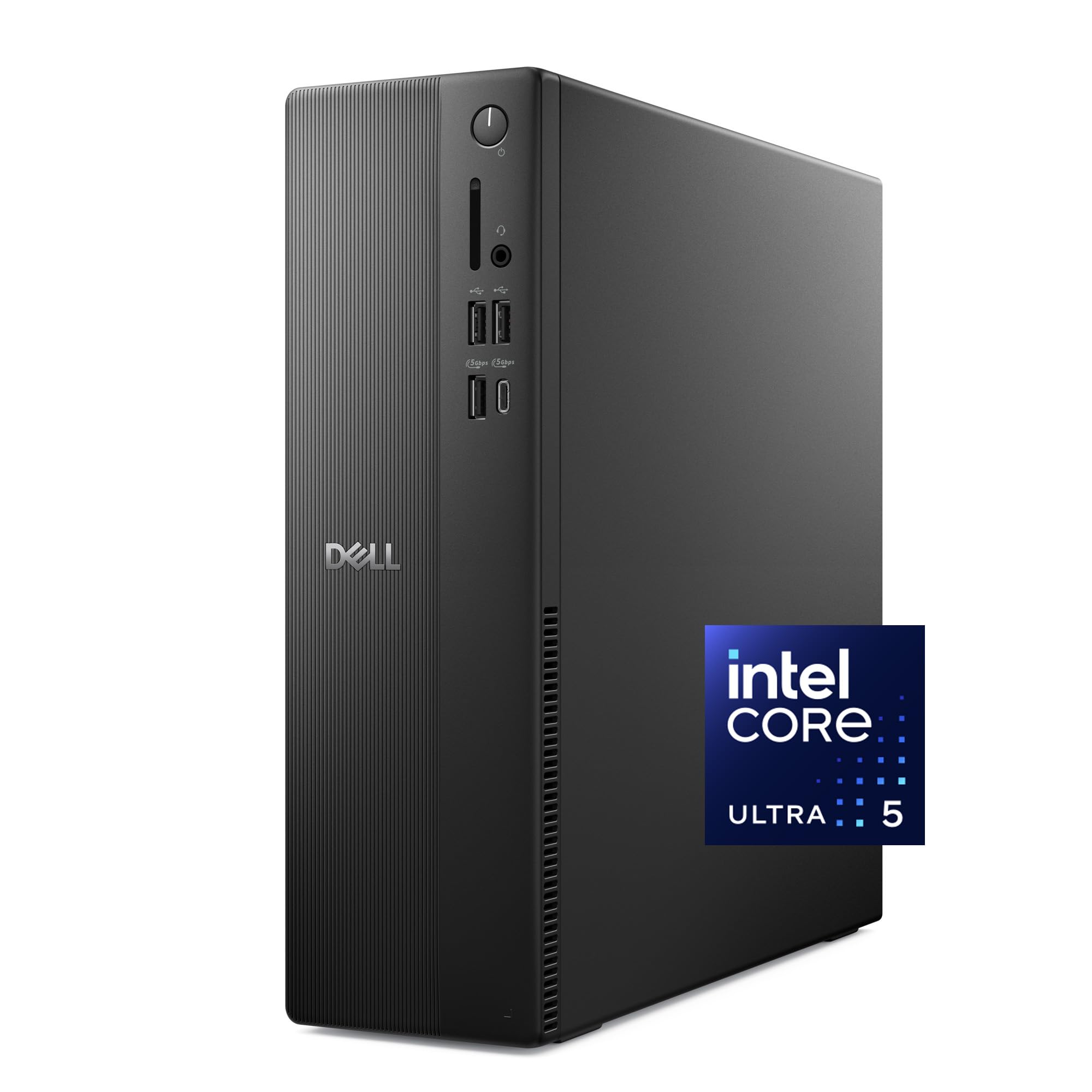
Dell’s Slim Desktop ECS1250 brings the Intel Core Ultra 5-225 processor with integrated UHD Graphics 730 into a compact, tool-less chassis that fits neatly into a small home office corner. The 16 GB of DDR5 memory and 512 GB M.2 SSD ensure snappy boot times and smooth multitasking for document editing, web browsing, and video calls. The slim form factor supports up to four FHD monitors via DisplayPort daisy chaining, and it can drive two 4K displays through HDMI 2.1 and DisplayPort 1.4a.
Customer reviews consistently praise the whisper-quiet operation — users report being unable to hear the fan even during extended work sessions. The built-in hardware TPM security chip and 1-year onsite service add peace of mind for business users who need reliable support. The system is not designed for gaming or heavy 3D rendering; its integrated graphics are strictly for productivity and media consumption.
For anyone who wants a turnkey machine for spreadsheets, email, and internet browsing without assembling components, this Dell pre-built delivers a polished experience. The tool-less side panel makes RAM and storage upgrades trivial, and the recycled-material chassis is a nice touch for eco-conscious buyers. Just be aware that the iGPU will not run modern games, and the slim chassis limits future GPU upgrades to low-profile cards only.
Why it’s great
- Pre-built with 16 GB DDR5 and 512 GB SSD for immediate use
- Supports up to four monitors via DisplayPort and HDMI
- Tool-less chassis and 1-year onsite service reduce long-term hassle
Good to know
- Integrated graphics are limited to office and media use only
- Slim chassis restricts discrete GPU upgrades to low-profile models
9. Dell Tower Desktop ECT1250

The Dell Tower Desktop ECT1250 steps up to an Intel Core Ultra 7-265 processor with 20 cores (Performance + Efficient hybrid architecture) and integrated UHD Graphics for serious multi-tasking. The 32 GB of DDR5 memory and 1 TB NVMe SSD handle stock trading platforms with multiple charts, virtual machines for software testing, and massive Excel workbooks without hesitation. The system boots in under 30 seconds and runs three monitors off the integrated graphics without any stutter.
Customer feedback highlights the 180-watt power supply as a limiting factor — the system is not designed for a high-end discrete GPU upgrade without also replacing the PSU. The tower chassis offers better airflow than the slim model, and the tool-less design makes adding a sound card or external SSD straightforward. Front audio jack lacks recording support, which may be a dealbreaker for streamers or podcasters who need mic input through the front panel.
For a power user who needs fast multi-tasking and a large memory buffer but does not play games, this Dell pre-built is a compelling value. The Ultra 7 processor’s AI acceleration capabilities in supported software give it a future-proof edge, and the 1-year onsite service removes the risk of DIY troubleshooting. Just plan for a PSU upgrade if you ever want to drop in a discrete GPU.
Why it’s great
- 32 GB DDR5 RAM and 1 TB SSD provide immediate high-end performance
- Core Ultra 7 handles heavy multi-tasking and AI-accelerated workloads
- Quiet operation and fast boot make it ideal for professional use
Good to know
- 180W PSU severely limits any future discrete GPU upgrade
- Front audio jack does not support recording; requires rear-panel or external solution
FAQ
Can a CPU with integrated graphics replace a dedicated GPU for gaming?
Does a discrete GPU disable the integrated graphics automatically?
How much RAM should I allocate for integrated graphics in BIOS?
Is the Ryzen 7 8700G worth it over the Ryzen 7 7700X for non-gamers?
Final Thoughts: The Verdict
For most users, the cpu with integrated graphics winner is the AMD Ryzen 7 8700G because it delivers genuinely usable 1080p gaming performance without a discrete card, backed by eight fast Zen 4 cores and a modern AM5 platform. If you want raw CPU horsepower for productivity and plan to add a dedicated GPU later, grab the AMD Ryzen 7 7700X for its blistering 5.4 GHz boost clock. And for a budget-friendly office build where the iGPU is just a display driver, nothing beats the value of the Intel Core i3-14100 with its 60W TDP and solid single-core performance.

Mo Maruf
I created WellFizz to bridge the gap between vague wellness advice and actionable solutions. My mission is simple: to decode the research and give you practical tools you can actually use.
Beyond the data, I am a passionate traveler. I believe that stepping away from the screen to explore new environments is essential for mental clarity and physical vitality.