Building a new gaming rig means making a critical choice about your next enclosure: do you prioritize the panoramic view of your components, or the unrestricted airflow needed to keep a modern GPU and CPU cool under load? The wrong decision leads to thermal throttling or a build that feels cramped from the start.
I’m Mohammad Maruf — the founder and writer behind WellFizz. My deep research into PC case design, airflow dynamics, and component clearance specs has focused on identifying the enclosures that balance thermal performance with build quality.
These seven cases represent the best options for securing a best cpu gaming case that delivers both the visual aesthetic you want and the cooling capacity your hardware demands.
How To Choose The Best CPU Gaming Case
Selecting the right gaming case goes beyond just picking a look you like. You need to match the case’s internal dimensions with your chosen hardware, understand its airflow architecture, and decide how much you value included fans versus upgrading later. These are the deciding factors.
GPU Clearance and Radiator Support
Modern graphics cards are large, and many air coolers or AIOs require 280mm or 360mm radiators. Always check the maximum VGA length and top/front radiator support before buying. A case that looks great but forces you to cram a GPU against a drive cage is not the right fit.
Airflow Design and Fan Configuration
The balance between mesh and glass directly impacts temperatures. A case with a solid glass front panel will look cleaner but typically runs hotter than one with a high-perforation mesh front. Pay attention to how many fans are included, their size (120mm vs 140mm), and whether they are PWM controllable for quiet operation.
Build Quality and Cable Management Depth
Steel thickness, glass panel mounting, and the space behind the motherboard tray determine how easy the build will be. Cases with dedicated routing channels, Velcro straps, and at least 20mm of cable space save hours of frustration. Tool-less panel removal is a welcome bonus for frequent upgrades.
Quick Comparison
On smaller screens, swipe sideways to see the full table.
| Model | Category | Best For | Key Spec | Amazon |
|---|---|---|---|---|
| Lian Li Lancool 216 | Premium | Max Airflow Builds | 2x160mm + 1x140mm fans | Amazon |
| Corsair 4000D RS Frame | Premium | Modular Customization | InfiniRail fan mounting | Amazon |
| Lian Li Lancool 207 | Mid-Range | Compact ATX with GPU cooling | 2x140mm + 2x120mm PWM fans | Amazon |
| Corsair 3500X RS ARGB | Mid-Range | Panoramic glass builds | Supports up to 10 fans | Amazon |
| Montech AIR 903 MAX | Mid-Range | High airflow value | 51% ventilation mesh panel | Amazon |
| Montech XR-B | Budget | Style with dual glass | Reverse-blade side ARGB fans | Amazon |
| Thermaltake View 270 Plus | Budget | Pillarless glass fishtank | 420mm max GPU length | Amazon |
In‑Depth Reviews
1. LIAN LI LANCOOL 216 E-ATX PC Case

The LANCOOL 216 sets a high bar for airflow-focused PC cases. Its two 160mm front ARGB fans move a massive volume of air with low noise, backed by a 140mm rear PWM fan. The all-around mesh panels on the front, top, and PSU shroud create a path of least resistance for heat to escape, which is critical for high-end 4000-series GPUs and unlocked processors.
This case is engineered for builder convenience. The modular I/O bracket lets you shift the motherboard up for water-cooling or down for air-cooling clearance. The innovative rear PCIe fan bracket can house an extra 120mm fan to exhaust GPU heat directly. Builders will appreciate the Velcro straps, cable grommet bar, and removable top radiator bracket that make assembly straightforward even with E-ATX boards.
The LANCOOL 216 handles up to 392mm GPU lengths and 180mm CPU cooler heights. Its steel and 4.0mm tempered glass construction feels substantial. The only compromises are minor: the flat black power button is easy to miss, and the PSU area can be tight with non-modular units, but these do not detract from its position as a top-tier enclosure.
Why it’s great
- Outstanding pre-installed fan configuration moves enormous air
- Rear PCIe fan bracket is unique and effective for GPU exhaust
- Tool-less side panel and excellent cable management routing
Good to know
- Power button blends into the chassis front
- SSD access could be more convenient behind the motherboard tray
2. CORSAIR 4000D RS Frame Modular Mid-Tower Case
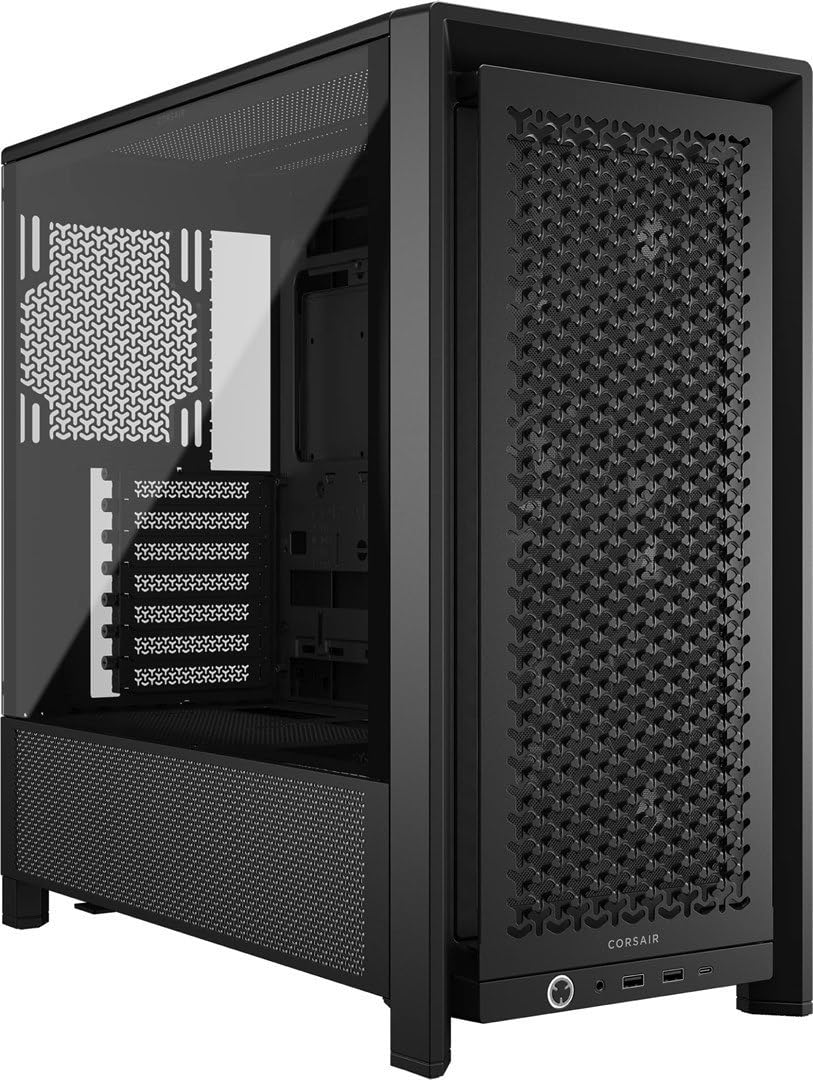
The CORSAIR 4000D RS Frame is more than just a case — it is a platform. The FRAME modular system allows you to swap the motherboard tray for billet aluminum or exchange the front I/O panel for additional USB ports down the road. This is a forward-thinking design for enthusiasts who want their case to evolve alongside new hardware standards, including reverse connection motherboards from ASUS and MSI.
The standout feature is the InfiniRail fan mounting system, which uses steel rails instead of fixed holes. You can slide fans up to 200mm in the front or 140mm in the roof to any position, targeting airflow directly at the CPU socket or GPU. The 3D Y-pattern front panel is perforated in three dimensions, delivering low-resistance airflow behind a clean aesthetic.
Build quality is robust with sturdy tempered glass and magnetic dust filters. The internal side panel can serve as a cable cover or be removed to mount fans. Three pre-installed RS PWM fans support Zero RPM mode for near-silent low-load operation. The 4000D RS fits multiple 360mm radiators and includes ample routing channels, though the front USB-C cable can arrive pinched in rare cases.
Why it’s great
- FRAME modular system future-proofs the case for upgrades
- InfiniRail mounting gives total control over fan placement
- Excellent airflow with the 3D Y-pattern perforated front panel
Good to know
- Side panel removal requires screws
- Motherboard tray feels thin; check USB-C cable routing before final assembly
3. LIAN LI LANCOOL 207 Compact ATX Case

The LANCOOL 207 reimagines the compact ATX layout by placing two 120mm PWM fans directly under the GPU for dedicated graphics card cooling. This bottom-fan approach is rare in this price segment and directly addresses the thermal needs of modern high-power GPUs. The front houses two 140x30mm ARGB fans with infinity-mirror centers, reaching 1900 RPM for substantial intake pressure.
Despite its M-ATX footprint, the case supports ATX motherboards with a recessed tray to improve cooler compatibility. It accommodates up to a 360mm radiator on top and graphics cards up to 410mm. The front-mounted PSU design with an adapter cable saves internal space and improves airflow paths. The pre-installed GPU anti-sag bracket is fully adjustable and saves you an aftermarket purchase.
Build experience is mostly positive, with easy filter access and a clean overall look. The stock front fans can produce a humming noise at higher RPMs, which some users mitigate with rubber gaskets. Cable management is competent but tight for complex builds with many fan hubs. Overall, this is a smartly engineered case that punches above its size.
Why it’s great
- Unique bottom fans directly cool the GPU
- Compact footprint fits ATX hardware without waste
- Built-in GPU anti-sag bracket saves extra cost
Good to know
- Front fans can exhibit resonance at certain speeds
- Cable management space is limited behind the tray
4. CORSAIR 3500X RS ARGB Panoramic Mid-Tower Case
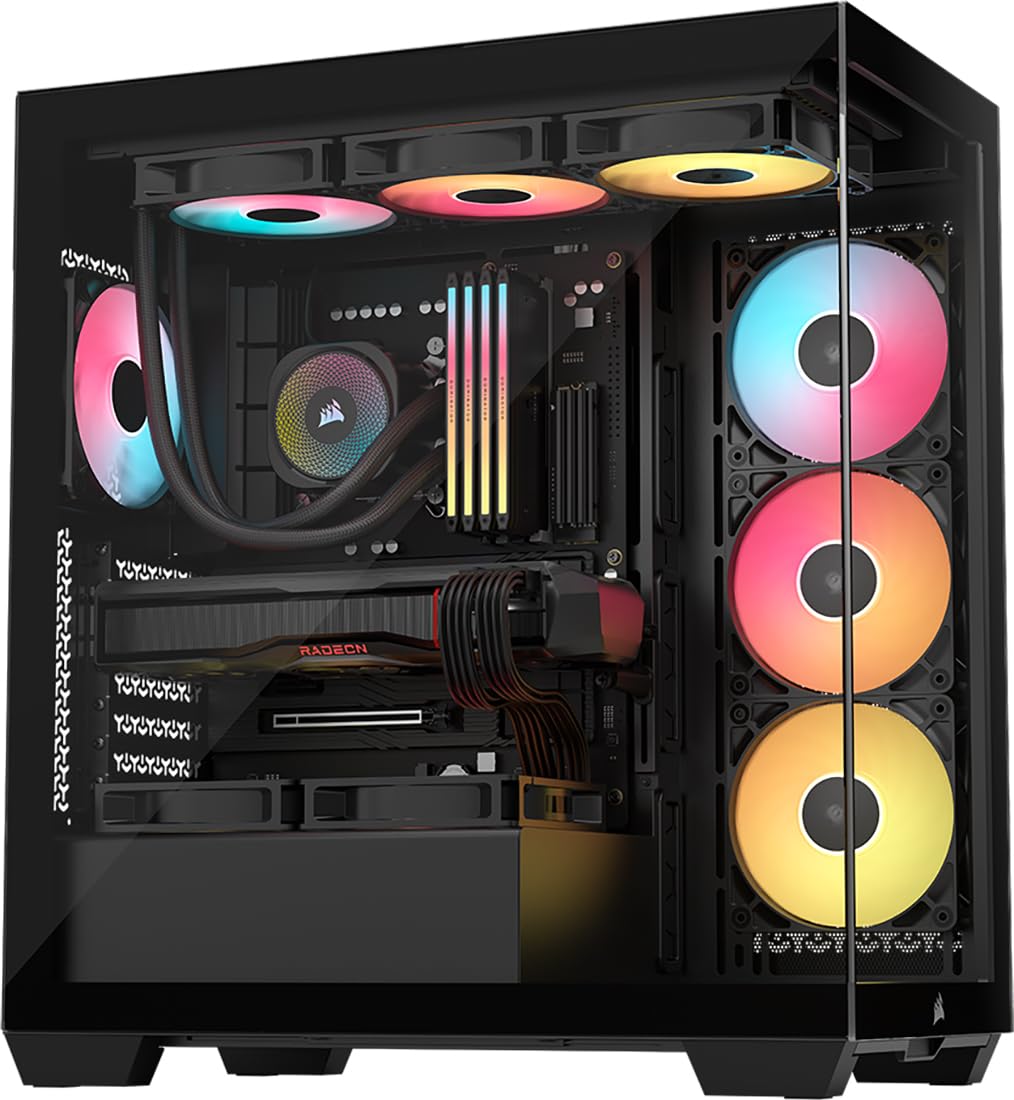
The Corsair 3500X RS is built for builders who want a panoramic view of their components without sacrificing cooling. The wraparound tempered glass aesthetic lets you see your GPU, cooler, and RGB fans from two angles, while the side, roof, and PSU fan mounting points support up to ten 120mm fans. This thermal capacity makes it viable for high-performance builds that still crave a showpiece interior.
Three RS120-R ARGB fans are included and daisy-chain for simple motherboard control. The case is validated for reverse connection motherboards (ASUS BTF, MSI Project Zero, Gigabyte Project Stealth), meaning you can hide nearly all cables behind the board for an ultra-clean look. Removable front and side glass panels simplify building and future access.
Temperatures in this glass-front case are competitive thanks to the side intake ventilation and multiple fan mounting zones. The metal frame feels premium and sturdy, and the hidden PSU area helps with cable concealment. Some users note that the glass panels are heavy and require careful handling during removal, but the visual payoff is significant for display-oriented builds.
Why it’s great
- Panoramic glass design is stunning for component display
- Compatible with reverse connection motherboards for cable-free look
- Supports up to 10 fans and multiple radiator configurations
Good to know
- Glass panels must be handled carefully to avoid breakage
- Front airflow relies on side intakes, not direct mesh
5. Montech AIR 903 MAX E-ATX Mid Tower

The Montech AIR 903 MAX is a high-airflow specialist that arrives with four 140mm PWM fans — three HP140 ARGB intake fans and one HP140 exhaust — plus an LED and PWM controller for 21 lighting effects. The metal front panel achieves a 51% ventilation rate, which translates to excellent thermal performance right out of the box. For builders who prioritize cool operation above all else, this case delivers.
Interior space is generous, supporting E-ATX motherboards, CPU coolers up to 180mm tall, and GPUs up to 400mm long. The design includes a PSU shroud, tool-less panels, and removable top radiator brackets that simplify installation. The mesh front also acts as a dust filter and is easy to remove for cleaning.
Builders should note that the four 140mm fans can produce noticeable noise at full speed, and some units have reported coil whine from the exhaust fan. Cable management is adequate but not as refined as premium options — more zip-tie cutouts near the EPS cable path would help. For pure cooling per dollar, the AIR 903 MAX is hard to beat.
Why it’s great
- Four 140mm fans included with PWM and ARGB controller
- 51% open mesh front panel provides exceptional airflow
- Supports tall CPU coolers and 400mm GPUs
Good to know
- Stock fans can be loud at maximum RPM
- Occasional coil whine reported from the exhaust fan
6. MONTECH XR-B ATX Mid-Tower Case

The Montech XR-B brings dual tempered glass panels and a distinctive wood-grain I/O interface to the budget tier. The full-view design lets you see both the front and side of your build, while three pre-installed 120mm ARGB PWM fans include two reverse-blade fans on the side for intake and one regular-blade fan at the rear for exhaust. This arrangement creates good airflow through the dual-glass layout.
Compatibility is strong for a budget enclosure: it supports 360mm radiators at the top and fits 40-series GPUs comfortably. The compact mid-tower dimensions (17.1 x 9 x 17.7 inches) keep desk space usage low. Filters cover the top, bottom, and side panels to minimize dust buildup. The unified front panel connector speeds up the initial setup.
Some users have noted that the glass panels can arrive with minor scratches or smudges. The side panel uses push-in clips that are convenient but can feel tight. Cable management is good for the price, with rubber gaskets and ample routing space. The XR-B is an excellent entry point for builders wanting a dual-glass aesthetic without a premium outlay.
Why it’s great
- Dual tempered glass provides a full-view aesthetic
- Reverse-blade fans in side intake keep airflow clean
- Wood-grain I/O adds a unique design touch
Good to know
- Glass panels may have minor cosmetic imperfections on arrival
- Side panel clips require firm pressure to secure
7. Thermaltake View 270 Plus TG ARGB Black Mid Tower
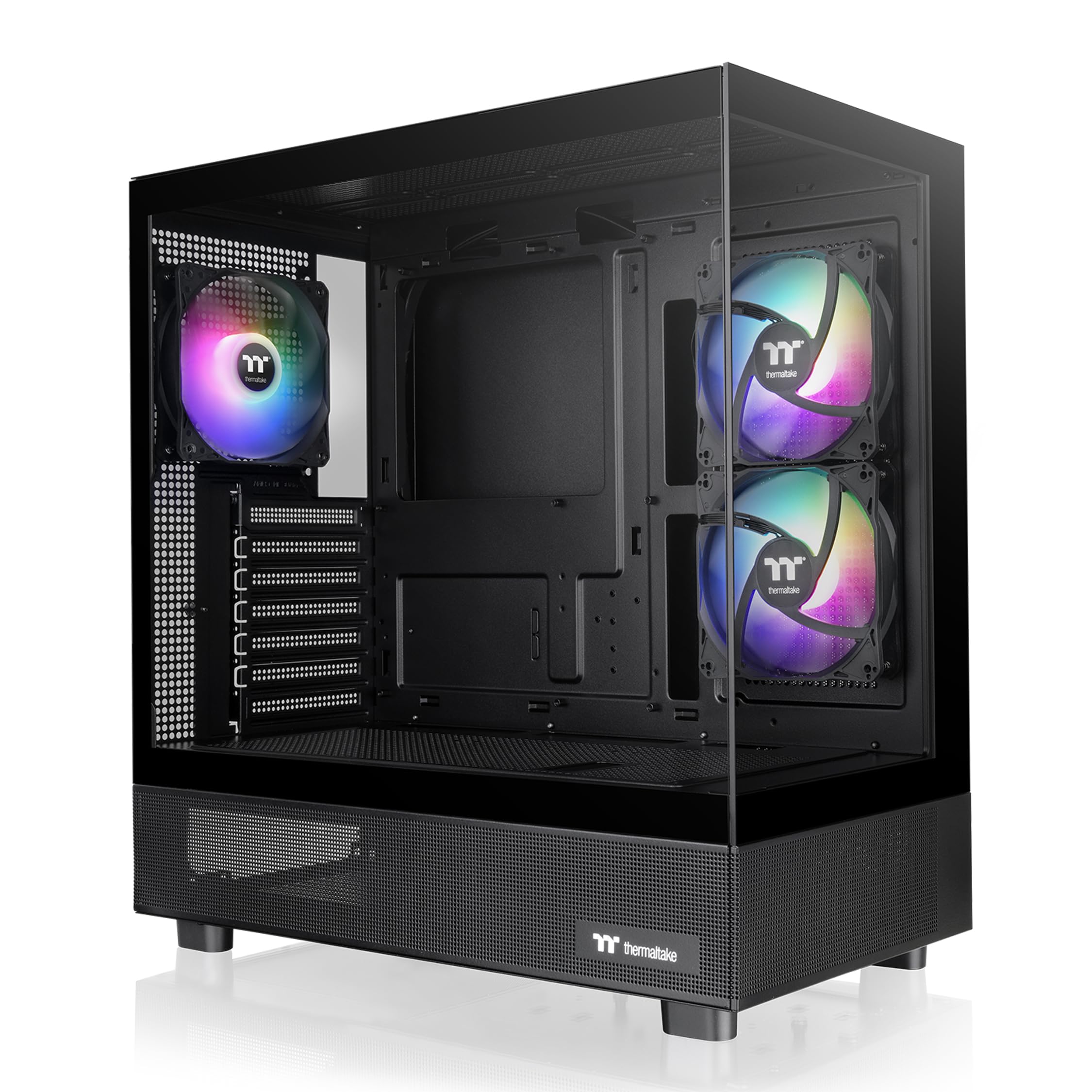
The Thermaltake View 270 Plus is a budget-friendly fishtank-style case that delivers the full-view pillarless look made popular in premium enclosures. Both the front and side panels are tempered glass, giving an unobstructed view of your entire build. Three 120mm ARGB fans are included and sync with motherboard software for coordinated lighting.
GPU clearance is exceptional at 420mm, meaning even the largest modern graphics cards fit without issue. Top radiator support goes up to 360mm. The I/O includes a USB 3.2 Type-C port, which is a welcome feature at this level. The upflow airflow design routes air from the bottom mesh through the chassis, and the hidden PSU chamber isolates heat from the motherboard area.
Cable management is decent, though some users wish for more tie-down points. The knockout back plates feel slightly cheap during installation but are not a functional concern. Build quality is solid for the price, with sturdy tempered glass and a metal frame. The View 270 Plus is perfect for budget-conscious builders who want the glass-heavy fishtank look without spending twice as much.
Why it’s great
- Pillarless dual glass design for unobstructed component view
- Massive 420mm GPU clearance fits any current card
- Includes USB-C port and three pre-installed ARGB fans
Good to know
- Limited HDD mounting space available
- Knockout back plates feel less refined than the rest of the case
FAQ
What size fans should I prioritize for my gaming case?
Is a mesh front panel always better for thermals than glass?
Do I need E-ATX support for a standard gaming build?
Final Thoughts: The Verdict
For most users, the best cpu gaming case winner is the Lian Li Lancool 216 because its pre-installed 160mm and 140mm fans deliver class-leading airflow with minimal added noise, and the rear exhaust fan bracket solves GPU heat extraction in a way few other cases attempt. If you want modular expandability for future upgrades, grab the Corsair 4000D RS Frame. And for a compact layout that targets GPU cooling directly, nothing beats the Lian Li Lancool 207.

Mo Maruf
I created WellFizz to bridge the gap between vague wellness advice and actionable solutions. My mission is simple: to decode the research and give you practical tools you can actually use.
Beyond the data, I am a passionate traveler. I believe that stepping away from the screen to explore new environments is essential for mental clarity and physical vitality.