Our readers keep the lights on and my smoothie glass nicely filled. As an Amazon Associate, I earn from qualifying purchases.
Pairing a GeForce RTX 3060 Ti with the wrong processor leaves performance on the table. You can spend hundreds on a GPU only to watch frame rates stall because the CPU can’t feed the graphics pipeline fast enough. The right match unlocks the full potential of that Ampere architecture, delivering smooth 1440p gaming and snappy desktop response without unnecessary heat or power draw.
I’m Mohammad Maruf — the founder and writer behind WellFizz. I’ve spent countless hours analyzing benchmark data, thermal profiles, core architectures, and platform compatibility to identify which processors extract the most from an RTX 3060 Ti across different budgets and use cases.
This guide breaks down the stack of compatible LGA1700 and AM5 options, from budget-friendly six-core chips to flagship multi-threaded beasts, so you can confidently select the best cpu for 3060 ti for your specific build priorities.
How To Choose The Best CPU For 3060 Ti
Selecting a processor for a 3060 Ti requires balancing single-core gaming performance with enough multi-threaded headroom for background tasks and streaming. You also need to consider future upgrade paths and platform costs like motherboard and RAM.
Single-Thread Performance & IPC
The 3060 Ti is a high-refresh 1080p and capable 1440p card. In many esports and older titles, the CPU becomes the bottleneck at these resolutions. Look for processors with strong instructions per clock (IPC) and high boost clocks — typically modern Zen 4/5 from AMD or Raptor Lake/Arrow Lake from Intel. A CPU with a 4.5 GHz+ boost clock and at least Zen 3 or 12th-gen Intel architecture is the baseline for avoiding frame dips in CPU-bound scenes.
Core Count & Threading Needs
A six-core, twelve-thread processor is the sweet spot for pure gaming with the 3060 Ti. Eight cores provide extra headroom for simultaneous Discord streaming, OBS recording, or background downloads without stutter. Chips with fewer than six cores (like older quad-cores) will consistently bottleneck the 3060 Ti in modern open-world titles. For content creation workloads like video editing or compiling, eight to sixteen cores offer measurable productivity gains without overspending on features the GPU can’t exploit.
Cache Size and Architecture
Large L3 caches reduce the frequency the CPU needs to access main memory, directly improving frame pacing in simulation and strategy games. AMD’s 3D V-Cache technology on X3D chips provides up to 96 MB of L3 cache, which translates to significant FPS gains in titles like *Counter-Strike 2*, *Factorio*, and *Microsoft Flight Simulator*. Intel’s Raptor Lake architecture counters with a hybrid P-core/E-core design that excels at multitasking throughput, though it relies more on memory bandwidth than cache size for gaming gains.
Platform Compatibility & Future-Proofing
AM5 (Socket LGA1718) supports DDR5 and PCIe 5.0, with AMD promising multi-generational support through at least 2027+, making it a future-proof investment. Intel’s LGA1700 platform supports both DDR4 and DDR5 across 600- and 700-series chipsets, giving budget builders flexibility, but the socket is end-of-life after 14th-gen. The newer LGA1851 socket (Core Ultra 200 series) requires an 800-series motherboard and offers the latest I/O but lacks backward compatibility with older coolers and boards.
Quick Comparison
On smaller screens, swipe sideways to see the full table.
| Model | Category | Best For | Key Spec | Amazon |
|---|---|---|---|---|
| AMD Ryzen 7 7800X3D | Mid-Range | Ultimate gaming FPS | 8C/16T, 104MB cache | Amazon |
| AMD Ryzen 7 9800X3D | Premium | Maximum gaming + productivity | 8C/16T, Zen 5, 5.2GHz | Amazon |
| Intel Core i9-14900KF | Premium | Heavy multitasking | 24C/32T, up to 6.0GHz | Amazon |
| Intel Core i9-14900K | Premium | Creator + gaming hybrid | 24C/32T, integrated GPU | Amazon |
| Intel Core Ultra 9 285K | Premium | Efficient workstation | 24C/24T, LGA1851 | Amazon |
| Intel Core Ultra 7 265KF | Mid-Range | Solid all-rounder | 20C/20T, LGA1851 | Amazon |
| Intel Core i5-14600KF | Mid-Range | Value gaming | 14C/20T, DDR4/5 support | Amazon |
| AMD Ryzen 5 5600X | Budget | Entry-level AM4 build | 6C/12T, 65W TDP | Amazon |
| Micro Center AMD Ryzen 9 9900X Bundle | Premium | Motherboard + CPU bundle | 12C/24T, AM5 bundle | Amazon |
In‑Depth Reviews
1. AMD Ryzen 7 7800X3D

The 7800X3D is the current king of gaming efficiency. With 8 Zen 4 cores and an additional 64 MB of 3D V-Cache stacked on top of the standard 32 MB L3, it delivers a total of 96 MB of game-savvy cache that dramatically reduces memory latency. In titles like *CS2*, *Warzone*, and *Starfield*, this CPU pushes the 3060 Ti to its absolute limit, often delivering 10-20% higher 1% lows than non-X3D alternatives at 1080p and 1440p.
Thermal behavior is exceptional — the chip idles around 35°C and stays in the low 70°C range under gaming load with a mid-range air cooler. Power draw maxes out around 75W during gaming, making it far more efficient than Intel’s high-core-count offerings. It supports PCIe 5.0 on compatible AM5 boards, though the 3060 Ti only needs PCIe 4.0 x16 bandwidth, so there is no bottleneck concern.
Pairing it with a B650 motherboard and affordable DDR5-6000 CL30 RAM creates a balanced mid-range platform that leaves headroom for a future GPU upgrade. Just note there is no bundled cooler, so factor in a tower cooler or 240mm AIO when budgeting.
Why it’s great
- Massive 96 MB L3 cache boosts 1% lows in CPU-bound games
- Extremely power efficient — gaming draw under 80W
- Runs cool with inexpensive air coolers
- Future-proof AM5 platform with PCIe 5.0 support
Good to know
- No integrated graphics — requires a discrete GPU to post
- DDR5-only platform increases build cost vs. DDR4 options
- Gaming-focused; not the fastest for heavy multi-core rendering
2. AMD Ryzen 7 9800X3D
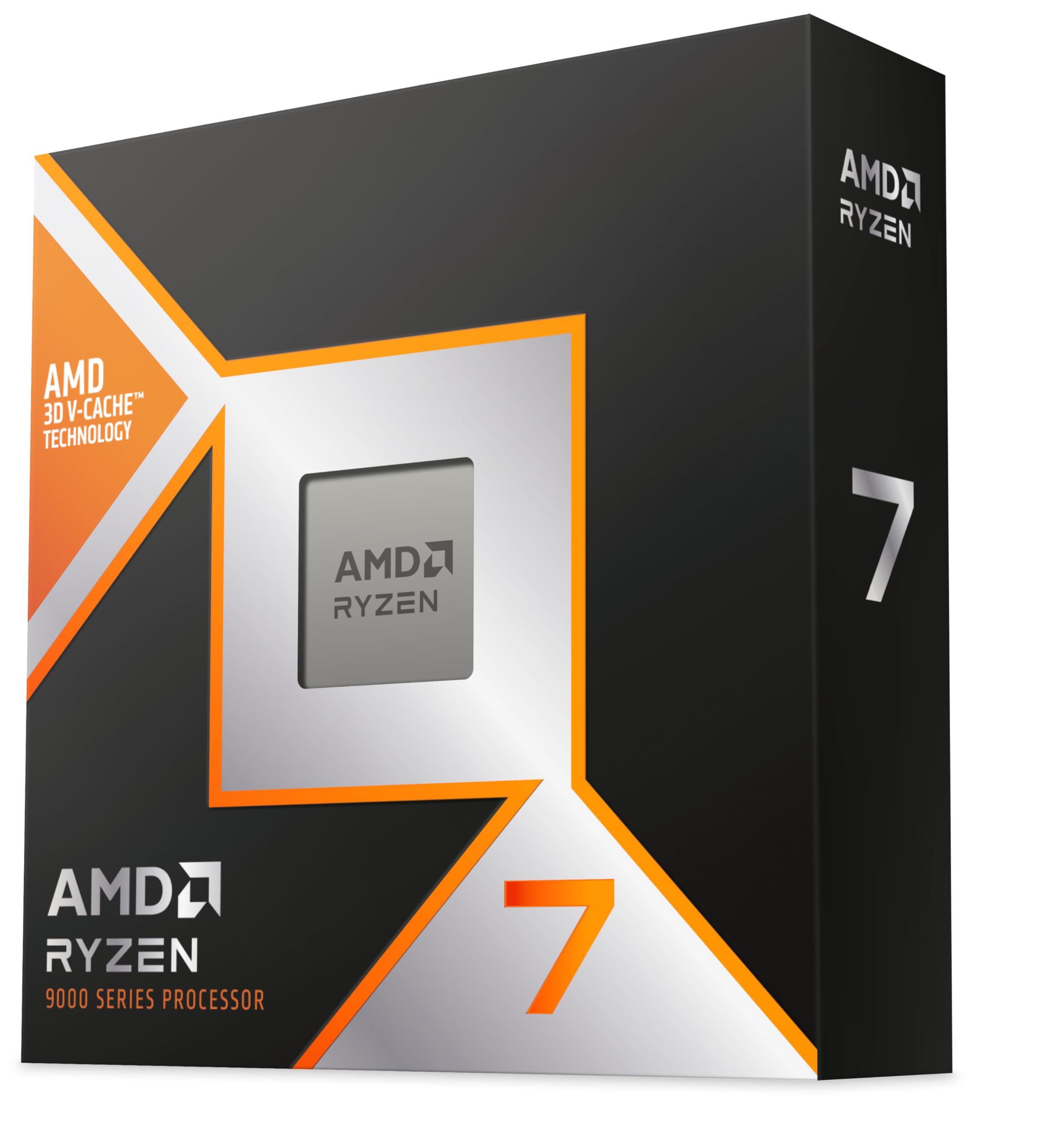
The 9800X3D brings Zen 5’s IPC uplift to the 3D V-Cache formula. With an extra ~16% IPC improvement over its predecessor and a 5.2 GHz max boost clock, it represents the fastest gaming processor money can buy in early 2025. When paired with an RTX 3060 Ti, you get perfectly smooth frame times even in notoriously CPU-heavy simulations like *Factorio* and *Kerbal Space Program* where cache size dominates performance.
Despite the performance gain, thermals remain manageable thanks to AMD’s redesigned cache stacking that sits under the CCD, improving heat dissipation. During extended gaming sessions with a 240mm AIO, expect temperatures around 65-70°C. The chip also handles light productivity workloads like video editing and 3D rendering with ease, though a higher-core-count chip like the 9950X would be faster for pure rendering.
The primary drawback is cost — this processor approaches flagship pricing. For a 3060 Ti build, the 7800X3D offers 90% of the gaming performance at a significantly lower price. However, if you want the absolute highest 1% lows and plan to upgrade your GPU within two years, the 9800X3D future-proofs your system better than any other AM5 chip.
Why it’s great
- Highest gaming IPC of any consumer CPU available
- Improved thermal design over previous X3D generation
- Excellent 1% low frame rates in CPU-bound titles
- Drop-in upgrade on existing AM5 motherboards
Good to know
- Premium pricing may be overkill for a 3060 Ti at 1440p
- No cooler included — requires aftermarket solution
- Zen 5 platform may have early BIOS teething issues
3. Intel Core i9-14900KF

The 14900KF is Intel’s 24-core flagship featuring 8 Performance-cores and 16 Efficient-cores. This hybrid architecture gives it unmatched multitasking capability — you can game on the P-cores while OBS, Discord, and a browser run on the E-cores without a single stutter. With a 6.0 GHz max turbo, it also delivers class-leading single-threaded performance in older games that favor clock speed over cache.
When paired with an RTX 3060 Ti, the 14900KF seldom bottlenecks, even in esports titles at 1080p low settings where the CPU typically becomes the limiter. However, thermal management is demanding — the chip pulls over 250W under sustained all-core load, requiring a high-end 360mm AIO or custom loop to avoid thermal throttling. It also requires an LGA1700 board with a robust VRM design.
Platform flexibility is a bright spot: you can pair it with affordable DDR4-3200 memory if building on a budget, or DDR5-6000+ for maximum bandwidth. The lack of integrated graphics (KF suffix) reduces power draw slightly, but means you cannot troubleshoot display issues without a discrete GPU installed.
Why it’s great
- 24 cores handle heavy multitasking with ease
- 6.0 GHz boost delivers top single-threaded scores
- DDR4 and DDR5 memory support provides budget flexibility
- Excellent for streaming + gaming simultaneously
Good to know
- High power draw requires premium cooling
- LGA1700 socket is end-of-life with no future upgrades
- 14th-gen stability issues reported on some motherboard BIOS versions
4. Intel Core i9-14900K
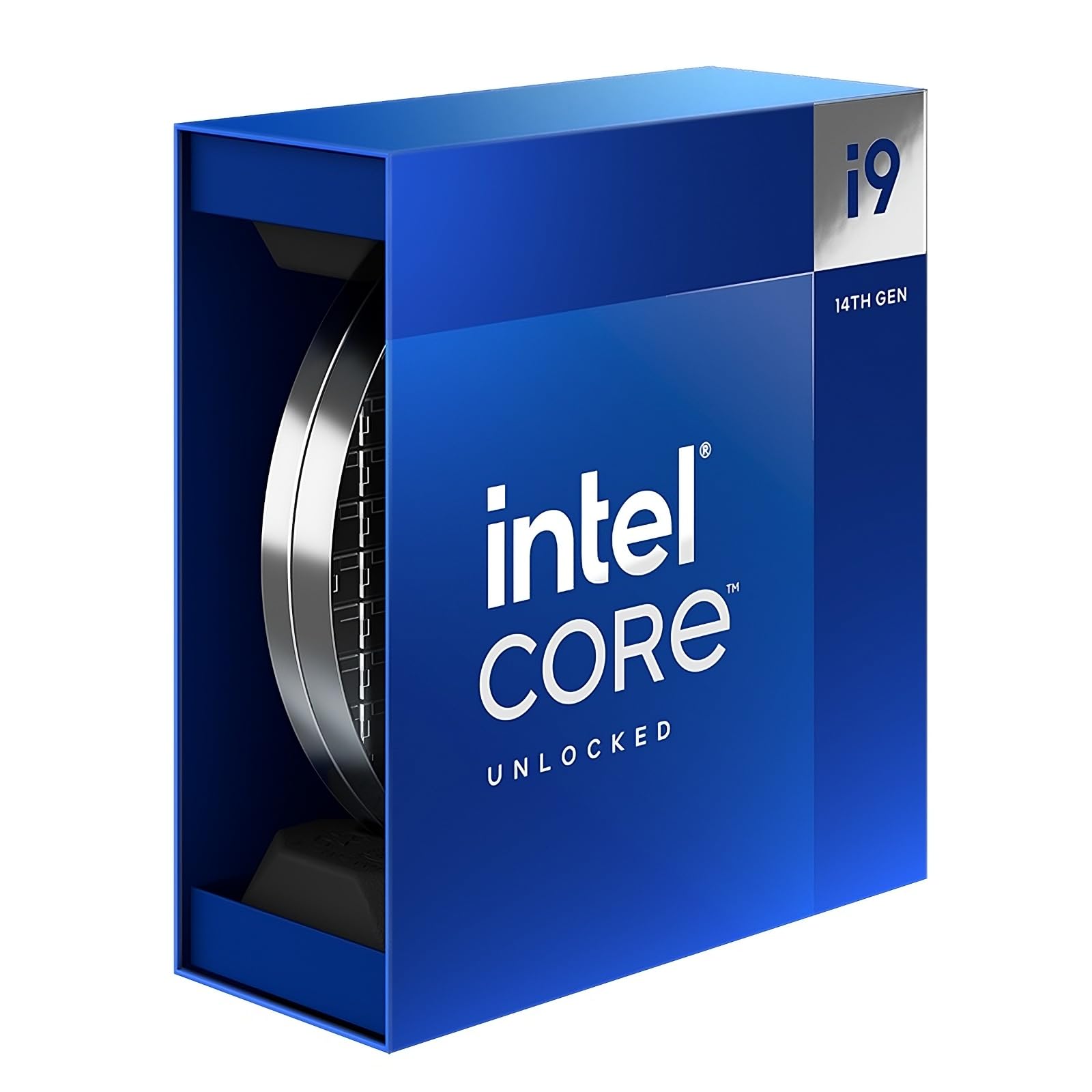
The 14900K shares the same 24-core Raptor Lake Refresh architecture as the KF variant but includes Intel UHD 770 integrated graphics. This makes it the superior choice if you edit video or stream with Intel Quick Sync — a feature that offloads encoding tasks from the GPU, freeing the 3060 Ti to focus entirely on rendering game frames. Quick Sync support in OBS and Premiere Pro can reduce encoding latency by 15–20%.
Gaming performance mirrors the 14900KF almost identically — you lose nothing by having the iGPU active. Under load with an RTX 3060 Ti at 1440p ultra settings, the CPU hovers around 60-70°C on a 280mm AIO while maintaining 120+ FPS in AAA titles. The 125W base power climbs to over 250W during all-core multi-threaded workloads, so a robust power supply and cooling solution remain mandatory.
The trade-off is price; the 14900K commands a small premium over the KF for the iGPU, and both require a high-end Z790 motherboard to unlock overclocking. For builders who prioritize a fully-featured backup display output and media encoding acceleration, the extra cost is justifiable. For pure gamers who never use Quick Sync, the KF is the better value.
Why it’s great
- Intel UHD 770 enables Quick Sync encoding for streamers
- 6.0 GHz clock speed matches the KF’s gaming prowess
- DDR4/5 flexibility reduces build cost
- iGPU provides troubleshooting display output
Good to know
- Slightly more expensive than KF for identical core performance
- Power hungry — expects a high-wattage PSU and liquid cooler
- LGA1700 socket is a dead platform for future upgrades
5. Intel Core Ultra 9 285K

The Core Ultra 9 285K represents Intel’s Arrow Lake architecture, moving to a new LGA1851 socket and an 800-series chipset. With 8 P-cores and 16 E-cores (24 threads total) and a 5.7 GHz turbo, it delivers strong multi-threaded performance for content creation while running cooler and quieter than the 14th-gen Raptor Lake chips. Early reviews show a 125W base power and peak turbo around 250W, with the new architecture reducing idle power draw significantly.
For an RTX 3060 Ti build, the 285K provides PCIe 5.0 lanes directly from the CPU, though the 3060 Ti benefits fully from PCIe 4.0 x16 bandwidth, so this is more future-proofing than an immediate advantage. Cinebench multi-core scores are competitive with the 14900K, while gaming performance per watt is noticeably better — expect 5-8°C lower temperatures under gaming loads with equivalent coolers.
Compatibility is the biggest catch: the 285K requires a new Z890 motherboard and does not support LGA1700 coolers without an adapter bracket. It also requires CUDIMM DDR5 memory to reach its rated speeds of 6400+ MT/s. If building fresh, this platform offers longevity similar to AM5 with enhanced efficiency, but upgrading from an existing LGA1700 setup will be costly.
Why it’s great
- Improved efficiency over 14th-gen — runs cooler under load
- PCIe 5.0 lanes provide future GPU bandwidth headroom
- New Arrow Lake architecture with stable memory controller
- Quiet operation for professional workstation builds
Good to know
- Requires new LGA1851 motherboard and CUDIMM DDR5
- No backward compatibility with LGA1700 coolers
- Premium pricing comparable to 14900K
6. Intel Core Ultra 7 265KF

The Core Ultra 7 265KF sits in a sweet spot for 3060 Ti builds — 20 cores (8 P-cores + 12 E-cores) with up to 5.5 GHz turbo provide enough firepower for both gaming and moderate productivity. The Arrow Lake architecture’s power efficiency means you can run this chip on a capable air cooler like the Thermalright Peerless Assassin and stay under 80°C during gaming, something the 14900K/KF cannot achieve without liquid cooling.
In CPU-bound games at 1080p with an RTX 3060 Ti, the 265KF often matches the 14900K within 3-5% because single-thread IPC improvements and clock speeds are comparable. The E-cores handle background tasks efficiently, so game performance remains clean even with multiple apps running in the background. For productivity tasks like Blender rendering or Visual Studio compilation, the 20-core count provides solid multi-threaded throughput.
The “KF” suffix means no integrated graphics, identical to the 14900KF. You also need an LGA1851 motherboard and DDR5-6400+ CUDIMM kit to get full memory bandwidth. The 265KF is an excellent choice if you want Arrow Lake’s efficiency and platform longevity without paying flagship prices, though non-gamers who need a backup GPU may prefer the non-F version with integrated graphics.
Why it’s great
- Strong efficiency — works well with mid-range air coolers
- 20 cores handle multitasking without game stutter
- Competitive gaming performance with 14900K at lower cost
- Future-looking LGA1851 platform
Good to know
- No integrated graphics for troubleshooting
- Requires new motherboard — not backward compatible
- Gaming not significantly faster than cheaper 14600KF
7. Intel Core i5-14600KF

The i5-14600KF is the value champion for RTX 3060 Ti builds. Its 6 P-cores and 8 E-cores (20 threads) deliver gaming performance that often matches the 14900K in titles that cannot utilize more than six fast cores. In games like *Fortnite*, *Valorant*, and *Apex Legends* at 1440p, the 3060 Ti becomes the bottleneck, so spending more on a CPU yields negligible returns — making the 14600KF the rational economic choice.
A major advantage is platform flexibility. You can pair it with an inexpensive B660 or B760 motherboard and DDR4-3200 RAM to keep the total build cost low, or opt for a Z790 board with DDR5-6000 for higher memory bandwidth. The 125W base power and ~180W turbo are manageable with a good tower cooler, keeping the system cheap to build and quiet under load.
One caveat is the 14th-gen’s reported stability issues on certain motherboards — updating to the latest BIOS is essential. The LGA1700 socket is also end-of-life, so there is no CPU upgrade path without replacing the motherboard. However, for a 3060 Ti build intended to last 3-4 years without upgrades, the 14600KF offers the best performance-per-dollar in this list.
Why it’s great
- Excellent value — matches high-end CPUs in many games
- DDR4 compatibility cuts platform cost significantly
- Easy to cool with affordable air coolers
- 14 cores handle streaming and Discord without issue
Good to know
- LGA1700 is a dead socket for future upgrades
- No integrated graphics (KF version)
- May require BIOS update for stability on some boards
8. AMD Ryzen 5 5600X

The Ryzen 5 5600X remains a viable budget option for the 3060 Ti, especially if you already own an AM4 motherboard. Six Zen 3 cores at 3.7-4.6 GHz provide solid single-threaded performance that keeps up in most modern games at 1440p. In AAA titles like *Cyberpunk 2077* at 1440p ultra, the 3060 Ti is the primary bottleneck, so the 5600X does not hold you back significantly.
Power efficiency is a standout feature — the 65W TDP means the included Wraith Stealth cooler is adequate for stock operation, and an aftermarket tower cooler keeps it nearly silent. The 32 MB L3 cache is sufficient for most gaming workloads, though simulation-heavy titles like *City Skylines* will not benefit from the extra cache that X3D chips provide. Cinebench R23 multi-core scores around 11,000 are decent for light rendering.
The biggest weakness is the DDR4-only platform (AM4) and PCIe 3.0/4.0 support depending on the motherboard chipset. The 3060 Ti uses PCIe 4.0 x16, so pairing with an older B450 board that only supports PCIe 3.0 incurs a small performance penalty (usually 2-5% at worst). For a strict budget build with used parts, the 5600X still makes sense, but the 14600KF offers better long-term value for a new build.
Why it’s great
- Very affordable — excellent price-to-performance ratio
- 65W TDP runs cool with the included stock cooler
- AM4 platform offers cheap used motherboards and DDR3/DDR4
- Strong single-core performance for its price tier
Good to know
- DDR4-only — cannot use faster DDR5 memory
- PCIe 3.0 on older boards may slightly limit GPU bandwidth
- 6 cores may bottleneck in heavy multitasking scenarios
9. Micro Center AMD Ryzen 9 9900X Bundle

This bundle pairs the 12-core Ryzen 9 9900X with the ASUS ROG Strix B650-A Gaming WiFi motherboard, offering a complete AM5 foundation for a 3060 Ti build. The 9900X itself is a Zen 5 chip with a 5.6 GHz boost clock and 76 MB total cache, providing excellent multi-core performance for video editing, 3D rendering, and software compilation.
For pure gaming with the 3060 Ti, the 9900X is overkill — you will rarely use more than 8 cores in games, and the 7800X3D outperforms it in CPU-limited scenarios due to the larger cache. Where this bundle shines is productivity: the 12 cores chew through Blender renders and Premiere exports faster than any 8-core chip, and the included B650 motherboard has PCIe 5.0 M.2 slots, Wi-Fi 6E, and USB 3.2 Gen 2×2 Type-C, future-proofing your storage and connectivity.
Consider this bundle if your workload is 50% or more multi-threaded. The combined cost of CPU and motherboard is competitive compared to buying them separately, though you lose the ability to choose a different board form factor or color scheme. Note that no CPU cooler is included — factor in a quality air cooler or 240mm AIO for the 120W TDP chip.
Why it’s great
- 12 Zen 5 cores excel at multi-threaded productivity
- Includes a premium B650 motherboard with Wi-Fi 6E
- 5.6 GHz boost provides strong single-core performance
- AM5 platform supports future CPU upgrades
Good to know
- No cooler included — extra purchase required
- Gaming performance is worse than cheaper 7800X3D
- Bundled motherboard restricts choice of board features/size
FAQ
Will the AMD Ryzen 5 5600X bottleneck an RTX 3060 Ti?
Should I choose DDR4 or DDR5 memory for a 3060 Ti build?
Does the Intel Core i9-14900K need liquid cooling for a 3060 Ti build?
Is PCIe 5.0 important for an RTX 3060 Ti?
Final Thoughts: The Verdict
For most users, the best cpu for 3060 ti winner is the AMD Ryzen 7 7800X3D because it delivers class-leading gaming frame pacing with a massive 96 MB cache, exceptional efficiency, and a future-proof AM5 platform without requiring expensive cooling. If you want maximum productivity and heavy multitasking, grab the Intel Core i9-14900KF with its 24 cores and 6.0 GHz boost. And for a budget-conscious build that still provides excellent gaming performance, nothing beats the value of the Intel Core i5-14600KF with its DDR4 compatibility and solid 14-core architecture.

Mo Maruf
I created WellFizz to bridge the gap between vague wellness advice and actionable solutions. My mission is simple: to decode the research and give you practical tools you can actually use.
Beyond the data, I am a passionate traveler. I believe that stepping away from the screen to explore new environments is essential for mental clarity and physical vitality.