Our readers keep the lights on and my smoothie glass nicely filled. As an Amazon Associate, I earn from qualifying purchases.
Raised beds left bare over winter aren’t just wasted space — they’re a slow bleed of nutrients as rain and wind strip your carefully built soil. The right cover crop flips that equation, turning a dormant bed into a living system that feeds your spring garden before you even plant a single tomato. But grab the wrong seed, and you’ll be fighting a weedy mess or a crop that grows too tall to tuck under.
I’m Mohammad Maruf — the founder and writer behind WellFizz. I’ve spent hours dissecting germination rates, growth habits, root depth, and cut-down timing for every cover crop blend that makes sense for raised beds, so you get the right match for your growing season and your patience level.
After analyzing dozens of field tests and real gardener experiences, I’ve compiled the definitive list of the best cover crop for raised beds — a short, honest guide that sorts the nitrogen-fixing champs from the hard-to-handle bulk bags.
How To Choose The Best Cover Crop For Raised Beds
The right cover crop for your raised bed depends on your planting window, your soil goals, and how much time you’re willing to spend managing the growth before the next season. Raised beds are small and contained, so you need a crop that establishes quickly, doesn’t get invasive, and breaks down easily when you’re ready to plant your main crops.
Winter Hardiness vs. Summer Scorch
If you’re planting in fall for overwintering, winter rye and crimson clover are your best bets because they survive frost and keep a root system active under the soil. For a fast summer fill-in between spring harvests and fall planting, buckwheat is unmatched — it germinates in days and smothers weeds without needing heavy irrigation.
Nitrogen Fixation and Root Depth
Legume cover crops like crimson clover and red clover host bacteria that pull nitrogen from the air and store it in root nodules, releasing it into the soil when the plants are cut down. This natural fertilization matters most in raised beds that get heavy feeding from vegetables. Non-legumes like winter rye build organic matter and break up compaction with deeper roots but don’t add free nitrogen the way clovers do.
Seed Size and Ease of Cut-Down
Small seeds like clover and buckwheat are easier to scatter and cover with a light dusting of soil, while larger grains like rye need to be raked in a bit deeper. The ease with which you can cut the crop down in spring matters a lot in a raised bed — thick-stemmed rye requires more effort to chop than tender clover or buckwheat that crushes easily by hand or under a light mulch layer.
Pollinator Value vs. Maintenance
Crimson clover and buckwheat produce flowers that attract bees and butterflies, which can help your vegetable pollination later. But flowering also means the crop is setting seed, so you need to cut it down before it goes to full seed if you don’t want volunteers popping up in your spring beds. Some blends use a mix of species to balance quick ground cover with long-term soil feeding.
Quick Comparison
On smaller screens, swipe sideways to see the full table.
| Model | Category | Best For | Key Spec | Amazon |
|---|---|---|---|---|
| Groundio Annual Crimson Clover | Premium Legume | Winter cover & nitrogen fix | Nitrocoated & inoculated 2 lb | Amazon |
| BuildASoil No-Till 60% Clover Mix | Premium Blend | No-till living mulch | 12 species, 16 oz | Amazon |
| Thunder Acres Organic Winter Rye | Mid-Range Grain | Overwinter weed smother | 1 lb, 90-110 day maturity | Amazon |
| Todd’s Seeds Red Clover | Mid-Range Legume | Dual sprouting & cover crop | 90%+ germination 1 lb | Amazon |
| Outsidepride Buckwheat | Budget Summer | Fast summer green manure | 1 lb, 3 ft height | Amazon |
In‑Depth Reviews
1. Groundio Annual Crimson Clover Seeds
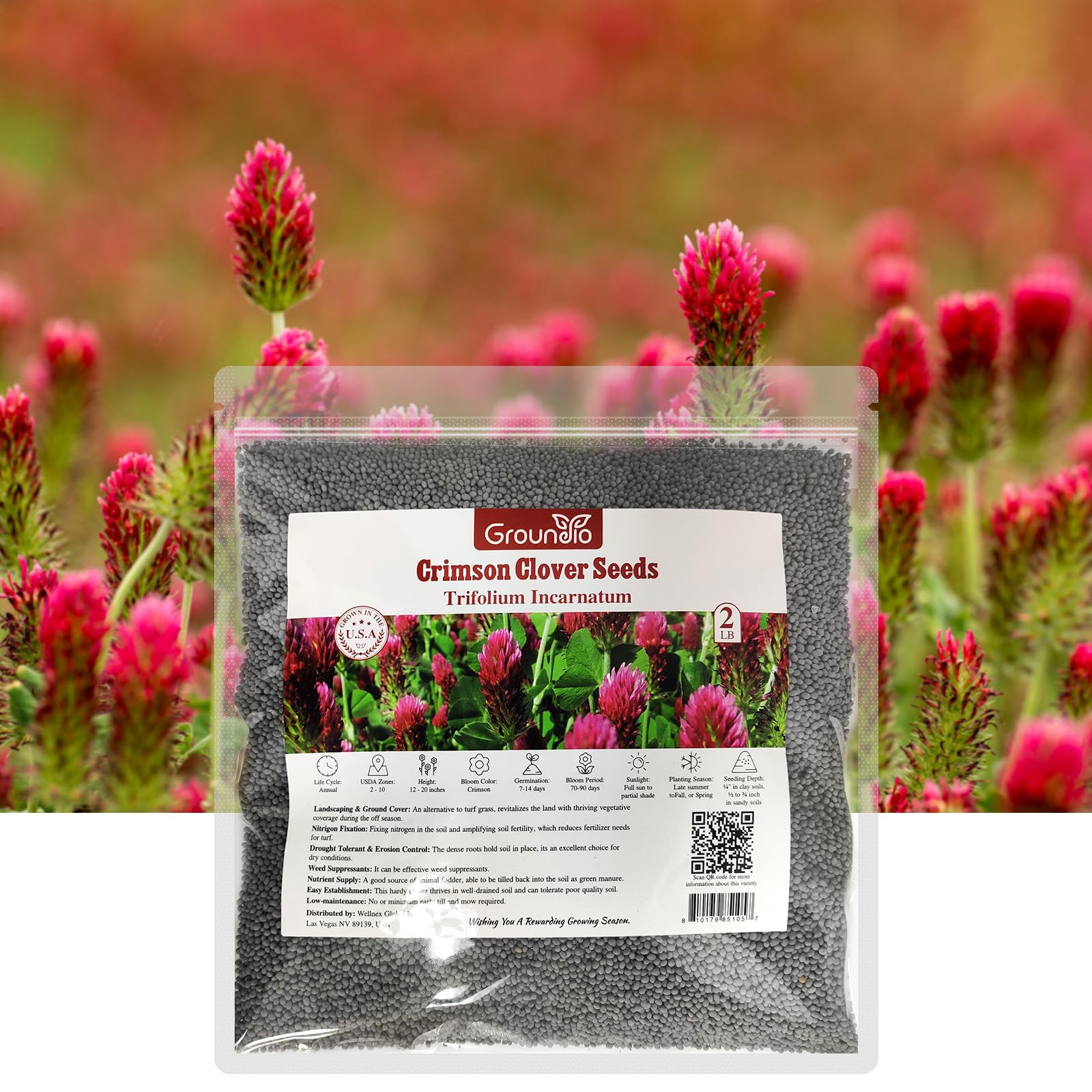
This is the one that does almost everything right for a raised bed. The seeds come pre-coated with inoculant and nitrogen, which means you don’t have to buy a separate powder or worry about poor nodulation — the bacteria that fix nitrogen are already on the seed coat. In 2 pounds, it covers up to 1,000 square feet, so a single bag handles several standard-sized raised beds with coverage to spare.
Germination happens in 7 to 14 days, and the plants reach 12 to 20 inches tall — short enough that you can cut them down with a hand scythe or even a sharp hoe without wrestling a thick stalk. The crimson flowers are a magnet for pollinators in early spring, which also means you’re feeding the bees before your vegetable flowers even open. It overwinters well in zones 2 through 10 and tolerates partial shade, making it flexible for beds that don’t get full sun all day.
The only catch is that you need to cut it down before it fully seeds if you don’t want clover volunteers in your spring beds. Most gardeners find that cutting at the first sign of flower color is the sweet spot — you get the nitrogen release and avoid the re-seeding headache. For a combination of winter hardiness, nitrogen fixing, and low maintenance, this is the most balanced pick for raised beds.
Why it’s great
- Pre-inoculated seeds ensure strong nitrogen fixation without extra work.
- Short mature height makes cut-down easy in tight raised bed rows.
- Attracts bees and butterflies before vegetable flowers appear.
Good to know
- Must be cut before full seed set to prevent unexpected volunteers.
- 2 lb bag may be more than needed for small single beds.
2. BuildASoil No-Till 60% Clover Seed Mix
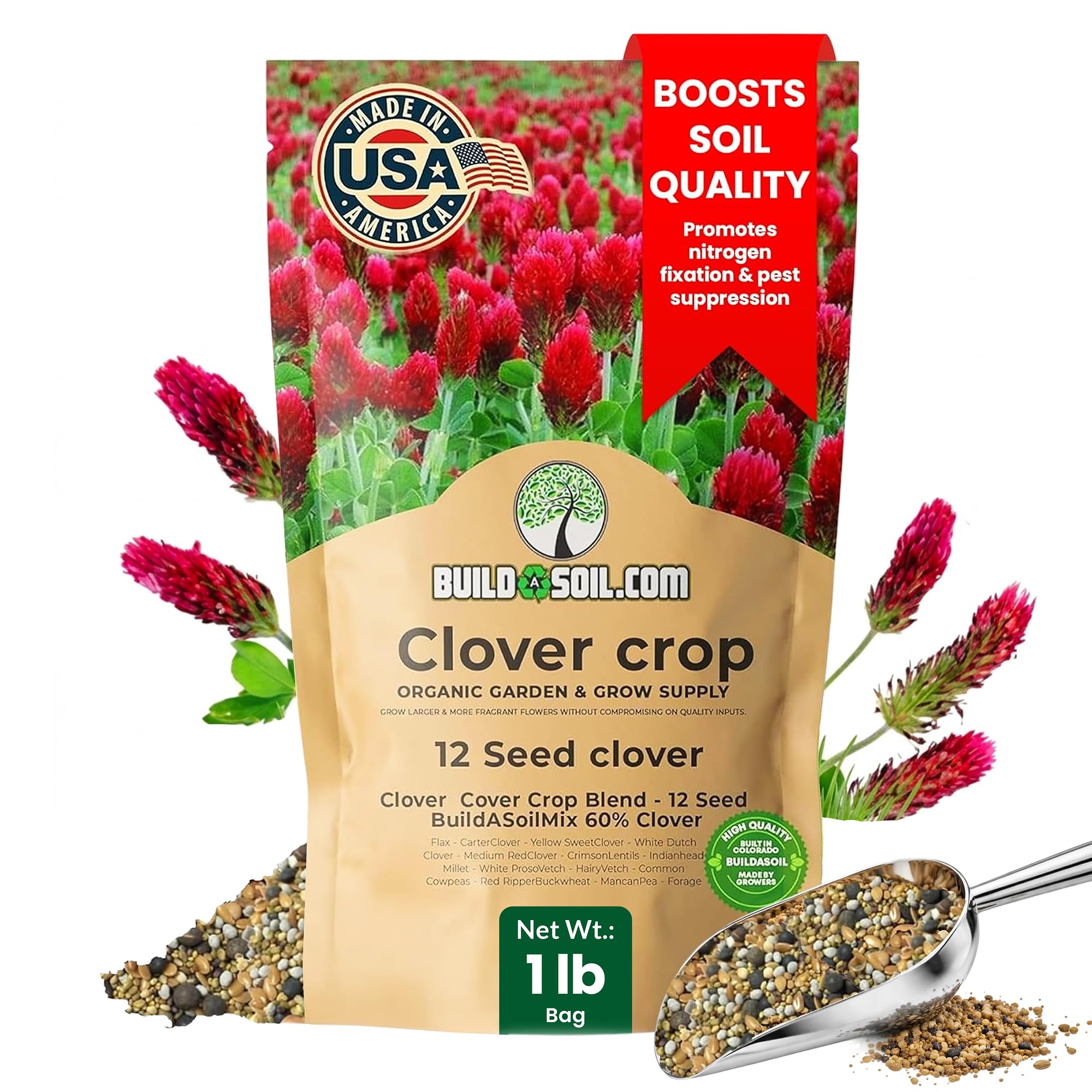
This is not a single crop — it is a living ecosystem in a bag. The blend is 60 percent premium clover from multiple varieties (white, red, and crimson clover) plus 11 other supporting species that create a standing, self-regulating ground cover. Designed specifically for no-till systems, it suppresses weeds through dense competition rather than needing to be chopped and turned under.
What makes this special for raised beds is that it stays low enough to function as a living mulch around taller vegetables. You can plant transplants directly into the clover mat, and the nitrogen fixed by the clover roots feeds your tomatoes and peppers as they grow. The 1-pound bag covers about 900 square feet, so even a small bag goes a long way in a couple of beds. Germination is fast — reviewers reported sprouts within days using simple throw-and-step methods.
There is a learning curve with no-till living mulches: if the clover gets too thick, it can compete with your vegetable starts for water early in the season. You may need to pull back a patch around each transplant to give it a head start. But for gardeners committed to a no-dig approach, this mix reduces the annual work of replanting cover crops and builds soil structure year after year.
Why it’s great
- 12-species diversity promotes resilient soil biology and long-term health.
- Low-growing clover eliminates the need for spring cut-down in some systems.
- Works as a living mulch that feeds vegetables while they grow.
Good to know
- May require thinning around transplants to prevent early competition.
- Best suited for gardeners already practicing no-till methods.
3. Thunder Acres Organic Winter Rye Seeds

Winter rye is the classic overwintering cover crop, and Thunder Acres delivers a clean batch with high germination and minimal broken grains. Grown in the USA and certified organic, these seeds are for the gardener whose primary goal is fall weed suppression followed by spring organic matter. Rye’s aggressive root system captures nutrients that would otherwise leach out of the raised bed during winter rains.
The 90 to 110-day maturity window means you can plant in late fall and still get good growth before the cold sets in. Reviewers noted that it filled in empty beds with dense cover that prevented winter weeds entirely. When spring comes, you cut the rye down and leave it as a mulch layer — the decomposing stalks add organic matter that improves soil texture for vegetables.
The trade-off is that winter rye is a grass, not a legume, so it doesn’t fix atmospheric nitrogen. It also grows taller and thicker than clover, making cut-down more physically demanding in a small raised bed. You will want a sharp string trimmer or a heavy-duty sickle to get through mature rye stalks. If you mainly want organic matter and weed control over winter, this is a solid choice, but it asks more of your spring muscles.
Why it’s great
- Excellent winter weed suppression in raised beds left bare.
- Adds significant organic matter when cut and left as mulch.
- USDA certified organic and grown domestically.
Good to know
- Does not fix nitrogen; you need a separate fertility plan.
- Thick stalks require more effort to cut down in spring.
4. Todd’s Seeds Red Clover Seeds

Red clover is a dependable nitrogen fixer, and Todd’s Seeds adds a bonus: the same bag works as a sprouting seed for the kitchen. With a guaranteed germination rate above 90 percent and triple-cleaned seed, you can sprout a tablespoonful in a mason jar for fresh microgreens while sowing the rest outdoors as a cover crop. That dual-use flexibility is rare in this category and gives you value beyond just the garden.
When planted outdoors, red clover establishes quickly with moderate watering and tolerates sandy soils well. It fixes nitrogen at rates similar to crimson clover, and it reaches a mature height that stays manageable for raised bed cut-down. Reviewers reported fast growth that integrated well into existing lawns and bed margins, plus strong pollinator attraction once the red flowers appeared.
The main difference from the Groundio crimson clover is that Todd’s does not come pre-inoculated. You will need to buy a separate clover inoculant if your soil hasn’t hosted clover recently, otherwise the nitrogen fixation may be weak. For gardeners who want the kitchen sprouting option and don’t mind adding the inoculant, this 1-pound bag is an excellent value that pulls double duty.
Why it’s great
- Same seed works for indoor sprouting and outdoor cover cropping.
- High germination rate from triple-cleaned, non-GMO seed.
- Attracts pollinators in spring with red flowers.
Good to know
- Not pre-inoculated; may need separate clover inoculant.
- 1 lb bag is smaller than some competitors for large beds.
5. Outsidepride Buckwheat Seeds
Buckwheat is the speed champion of the cover crop world, and Outsidepride’s 1-pound bag delivers exactly what you need for a quick summer fill. If you have a raised bed that will sit empty for 30 to 40 days between a spring pea harvest and fall brassica planting, buckwheat will cover that gap, smother weeds, and bloom with white flowers that bring in every bee in the neighborhood. It grows to about 3 feet tall, but the stems are tender and easy to cut down with a string trimmer.
Reviewers were unanimous on germination speed — days, not weeks — and the density of the ground cover. The plants are so vigorous that they suppress nearly all weed germination underneath, which is a huge help if you have a bed that tends to get overtaken by crabgrass or pigweed during the summer gap. When you cut it down just as the flowers open, the green material breaks down fast and releases phosphorus and potassium back into the soil.
The downside is that buckwheat is not winter-hardy at all, so this is strictly a warm-season option. It also doesn’t fix nitrogen the way clovers do. For its specific slot — quick warm-season weed smother and pollinator support — nothing beats how fast this establishes. But if you need overwintering cover or nitrogen fixation, go with one of the clovers instead.
Why it’s great
- Extremely fast germination for tight summer fill windows.
- White flowers attract high numbers of bees and beneficial insects.
- Tender stems are easy to cut and decompose quickly.
Good to know
- Killed by frost; not suitable for winter or fall planting.
- Does not fix nitrogen; primarily adds organic matter.
FAQ
Can I plant a cover crop in a raised bed that already has vegetables growing?
How do I cut down a cover crop in a raised bed without damaging the soil?
Will crimson clover survive a hard freeze in zone 5?
Final Thoughts: The Verdict
For most users, the best cover crop for raised beds winner is the Groundio Annual Crimson Clover because it balances winter hardiness, nitrogen fixation, and easy cut-down height in one pre-inoculated bag. If you want a no-till living mulch that stays put year-round, grab the BuildASoil No-Till Clover Seed Mix. And for a fast summer fill that smothers weeds and feeds pollinators, nothing beats the Outsidepride Buckwheat.

Mo Maruf
I created WellFizz to bridge the gap between vague wellness advice and actionable solutions. My mission is simple: to decode the research and give you practical tools you can actually use.
Beyond the data, I am a passionate traveler. I believe that stepping away from the screen to explore new environments is essential for mental clarity and physical vitality.