Our readers keep the lights on and my smoothie glass nicely filled. As an Amazon Associate, I earn from qualifying purchases.
Specs are compiled from manufacturer listings and verified buyer reviews and can change over time — please confirm the key details on the product page before buying.
Most cordless breast pumps promise “pump anywhere” but still leak, die mid-session, or cause soreness. The real question is which pump stays put, empties both sides fully, and stays quiet enough for a work call or feeding a baby simultaneously. This guide cuts through marketing to compare five cordless pumps on suction strength (mmHg), battery runtime, flange options, and real-world discretion.
I’m Mohammad Maruf — the founder and writer behind WellFizz. This guide is built by comparing the manufacturers’ published specifications and the patterns across verified customer reviews, so you get each pick’s real strengths and trade-offs instead of marketing spin.
Whether you pump in a shared office or chase a toddler at home, these picks cover every need. Here is your honest, detailed buyer’s guide to the best cordless breast pump for every budget and lifestyle.
Quick Picks
- Medela Pump in Style Pro+ Hands-Free Electric Breast Pump — Best Overall
- MomMed Wearable Breast Pump (Model S21) — Premium Kit
- Noyoconn Hands Free Wearable Breast Pump — Smart Pick
- NCVI Wearable Breast Pump Hands Free — Ultra-Quiet
- Paruu Hands Free Breast Pump P16 — Budget Champion
How To Choose The Best Cordless Breast Pump
Every pump here is battery-powered and wearable, so you are never tethered to a wall outlet. But how they balance suction, quietness, and fit changes your daily experience. Here is what separates a great pump from one that collects dust.
Suction strength and control
You want a pump that switches between a gentle stimulation phase and a stronger expression phase. Look for adjustable levels (typically 9 to 16) and a maximum vacuum measured in mmHg (millimeters of mercury, the standard unit of suction pressure) — anything in the 250-309 mmHg range is strong enough for most moms without being painful. A pump with too few levels may feel harsh on tender nipples.
Battery life and charging
Most cordless pumps claim 90 to 180 minutes of use per charge. That translates to roughly 3 to 6 full pumping sessions. If you work a full shift away from an outlet, aim for 150 minutes or more. Make sure it charges via USB-C, which is faster and more universal than older round-tip chargers.
Flange sizing and fit
An ill-fitting flange (the funnel that goes against your breast) is the #1 cause of pain and poor output. Look for a pump that includes at least three insert sizes (19mm, 21mm, 24mm are common) plus a nipple ruler. A pump that offers 17mm or smaller is better for moms with smaller nipples. If the flange does not seal properly, you will lose suction and leak milk.
Noise level
You do not want a pump that sounds like a tiny vacuum cleaner during a conference call or while your baby naps. Quiet operation is under 45 decibels (dB — a measure of sound loudness). A pump rated at 40 dB or lower is virtually unnoticeable in a quiet room.
Closed system vs open
A closed-system pump has a barrier (usually a membrane) that prevents milk from flowing up into the motor tubing. This keeps the pump hygienic, prevents mold growth, and stops backflow from wasting milk. Every pump on this list uses a backflow prevention design.
Quick Comparison
| Model | Best For | Suction Levels | Battery Runtime | Noise Level | Amazon |
|---|---|---|---|---|---|
| Medela Pump in Style Pro+ | Hospital-grade performance in a wearable | 16 levels | Rechargeable (built-in) | — | Amazon |
| MomMed Wearable (Model S21) | Leak-proof all-in-one kit with extras | 3 modes / 12 levels | — | <45 dB | Amazon |
| Noyoconn App-Controlled | App-driven customization and fit | 4 modes / 15 levels | Long battery (USB-C) | — | Amazon |
| NCVI Wearable | Ultra-quiet all-day sessions | 4 modes / 9 levels | 180 min (6 sessions) | <40 dB | Amazon |
| Paruu Hands Free P16 | Budget-friendly value with solid features | 4 modes / 12 levels | 120 min (4-5 sessions) | ≤60 dB | Amazon |
In‑Depth Reviews
1. Medela Pump in Style Pro+ Hands-Free Electric Breast Pump
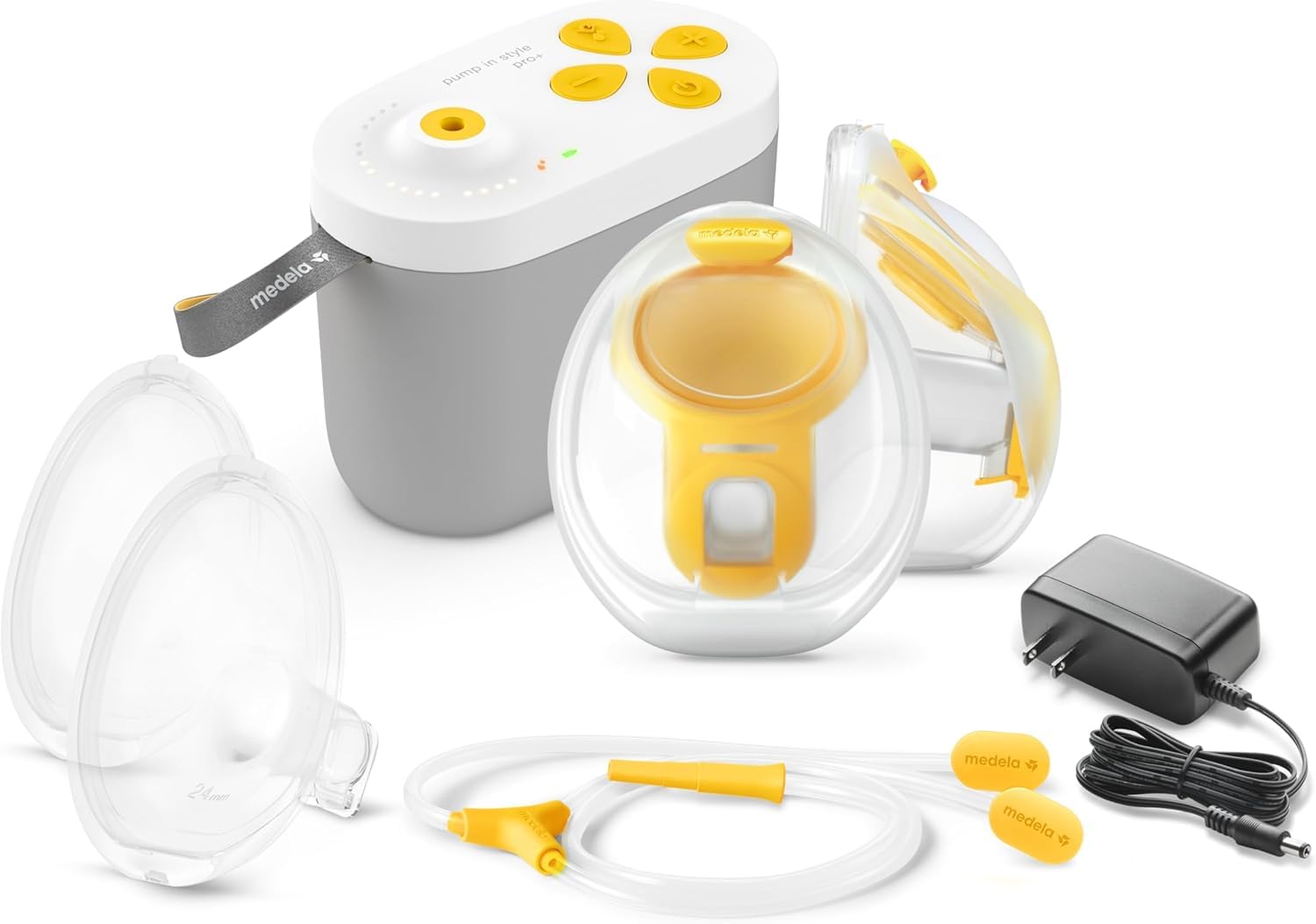
You get hospital-grade suction in a wearable package — the same trusted technology from the pump you used at the hospital, now cordless.
If you have been using a rental-grade pump at the hospital and want the same pull at home without being tied to a cord, this is the one. The Medela Pump in Style Pro+ uses specially designed shields that extract 11.8% more milk compared to standard flanges, according to the brand’s testing, and its clinically proven rhythm automatically switches from stimulation to expression. You get 16 suction levels to find your exact comfort spot, and the whole unit weighs under 2 pounds so it goes from the nursery to your desk bag without a fuss.
Unlike many cordless pumps that feel weak out of the gate, this one is built on Medela’s Symphony technology — the #1 breast pump brand used in hospitals. It is a closed system with a backflow membrane (a silicone barrier that stops milk from entering the motor), so nothing creeps into the motor, and cleanup involves only three dishwasher-safe parts. The anatomic in-bra cups trace your body’s natural contours, which makes a real difference in comfort over a 20-minute session. One downside: the rechargeable battery is built-in (non-removable), so if you are a heavy-duty pumper who needs back-to-back sessions, you will want to charge it overnight.
The Real Draw
- 16 adjust suction levels give fine-grained control over comfort and output
- Shields designed to extract 11.8% more milk per session
- Only 3 parts to clean, all dishwasher safe — saves time daily
- Clinically proven rhythm mimics baby’s natural suckling pattern
Trade-Off
- Built-in battery means you cannot swap in a fresh pack on the go
- Premium price puts it out of reach for budget-constrained shoppers
Reach for this if: you want hospital-grade performance in a wearable, you value output and comfort over saving a few dollars, and you appreciate a trusted brand with decades of lactation research. Look elsewhere if: you absolutely need a removable battery for multi-day trips without access to an outlet.
2. MomMed Wearable Breast Pump (Model S21)
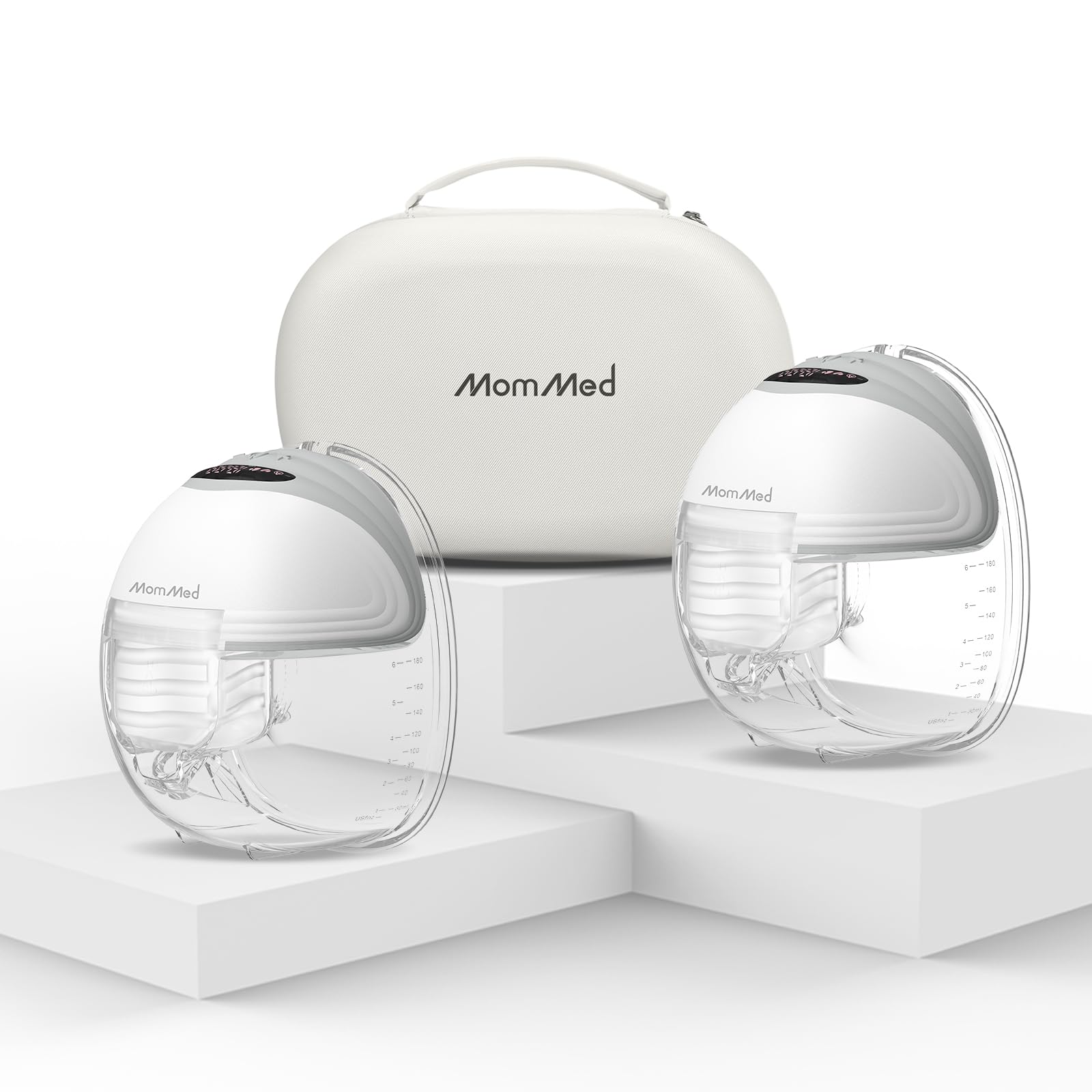
Everything you need to start pumping immediately is in the box — including 6 flange inserts and spare parts that most brands sell separately.
Right from the start you get two wearable pumps plus 6 flange inserts (17mm, 19mm, 21mm in pairs), 6 duckbill valves (small one-way valves that control milk flow), 4 silicone diaphragms (flexible membranes that create suction), 10 milk storage bags, cleaning brushes, a nipple ruler (so you measure yourself correctly), and a carrying case. That level of inclusion means you can start pumping immediately with the right fit instead of hunting for add-on parts. The pump itself uses 3 modes — Stimulation, Expression, and Auto — with 12 vacuum levels, and a backflow prevention membrane that physically separates milk from the vacuum system to stop leaks and wasted milk.
The <45 dB noise output means you can pump in a quiet nursery or during a Zoom call without drawing stares. Weighing under a pound per pump, the semi-circular shape sits flush inside a bra. Note that this pump is quieter than the Paruu (≤60 dB) and offers a 12% noise advantage compared to louder options, so discretion is a strong point here. The only real catch is that the exact battery runtime in minutes is not published in the specs, so heavy pumpers should charge after every session to stay safe.
Kit depth: Comes with 10 storage bags, 2 cleaning brushes, and bra adjustment buckles — extras that add real value for a new mom.
Fit range: The 17mm inserts are smaller than many competitors offer, making this a better choice for moms with petite nipples.
Grab this for: the all-in-one convenience, the leak-proof anti-backflow membrane, and the confidence that you have every accessory from day one. skip it if: you need a published battery minute-count to plan your work day around.
3. Noyoconn Hands Free Wearable Breast Pump
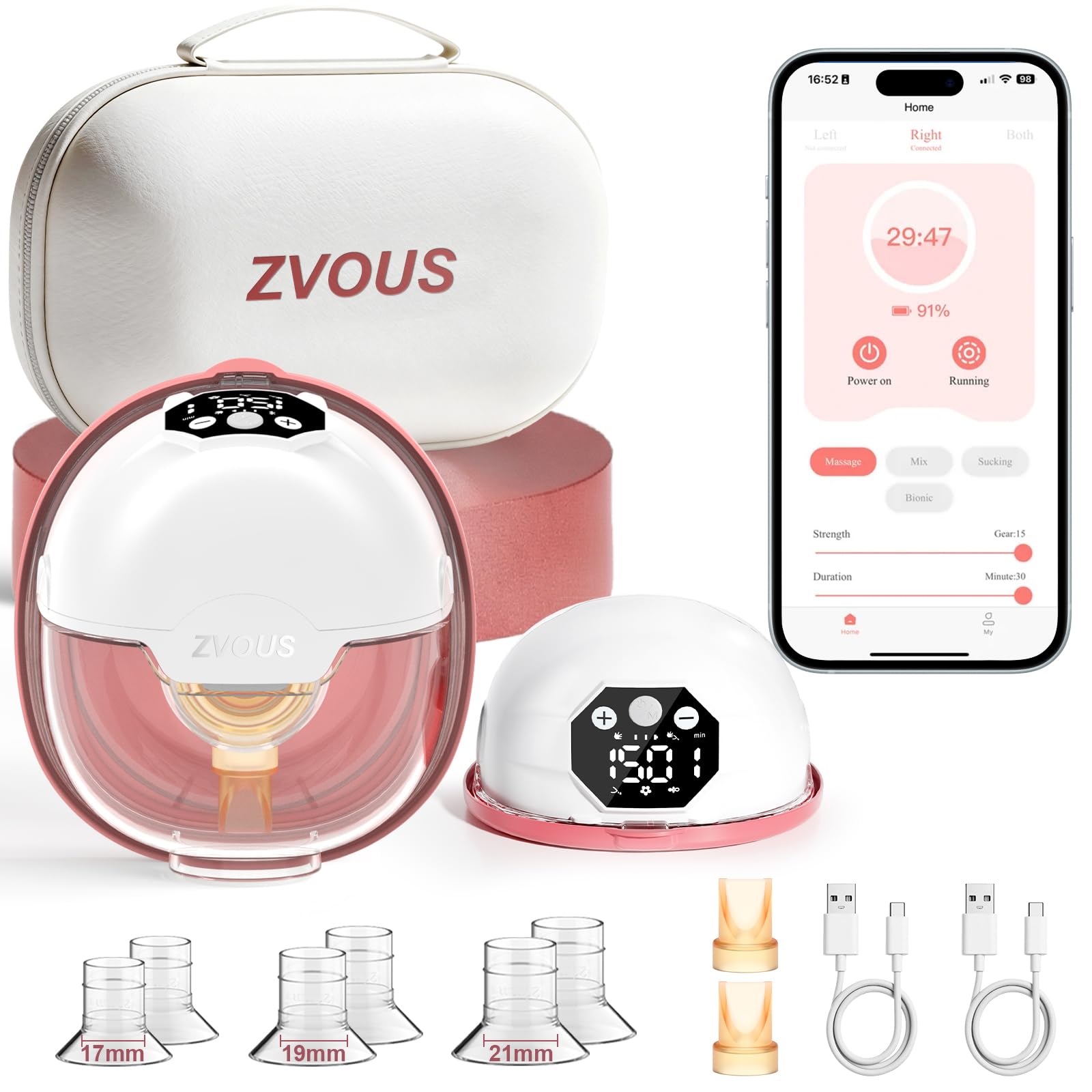
You can change the suction level silently from your phone while each pump weighs just 8 ounces — lighter than the Paruu P16 at 240g (about 8.5 oz).
This is the one for moms who want maximum control and a trim silhouette. Each pump weighs just 8 ounces — noticeably lighter than the 240g Paruu — so it feels less bulky in a nursing bra. The real standout is the dual control: you can use the clear LED display on the pump itself, or pair it with the Noyoconn app to change levels discreetly during a meeting or while driving. With 4 modes and 15 suction levels, you get three more levels than the Paruu or MomMed, which matters if you are sensitive to the jump between settings.
It comes with four flange inserts (17mm, 19mm, 21mm, 24mm) — wider than the MomMed’s 17-21mm range — and a hard-shell travel case that makes it easy to toss into a diaper bag. The brand recommends starting in massage mode first, then switching to expression, and the pump includes a 30-minute auto shutoff. One thing to note: the product page does not specify the maximum suction in mmHg or the exact battery runtime, so you are relying on the app settings to gauge remaining charge. A premium mid-range price means it sits above the NCVI and Paruu in cost but below the Medela, giving you app control without the hospital-grade sticker shock.
What Stands Out
- Dual app and LED control lets you change settings silently from across the room
- 15 suction levels offer the finest granularity of any pump on this list
- Lightest per-pump weight at 8 oz, comfortable for all-day wear
What Is Missing
- No published mmHg max suction, so you cannot compare raw strength to the Paruu’s 309mmHg
- Battery life in minutes is not listed, requiring trial-and-error for session planning
Best for: tech-savvy moms who want app-based control and a featherlight fit. Not for: those who need a published, guaranteed battery minute-count before committing.
4. NCVI Wearable Breast Pump Hands Free
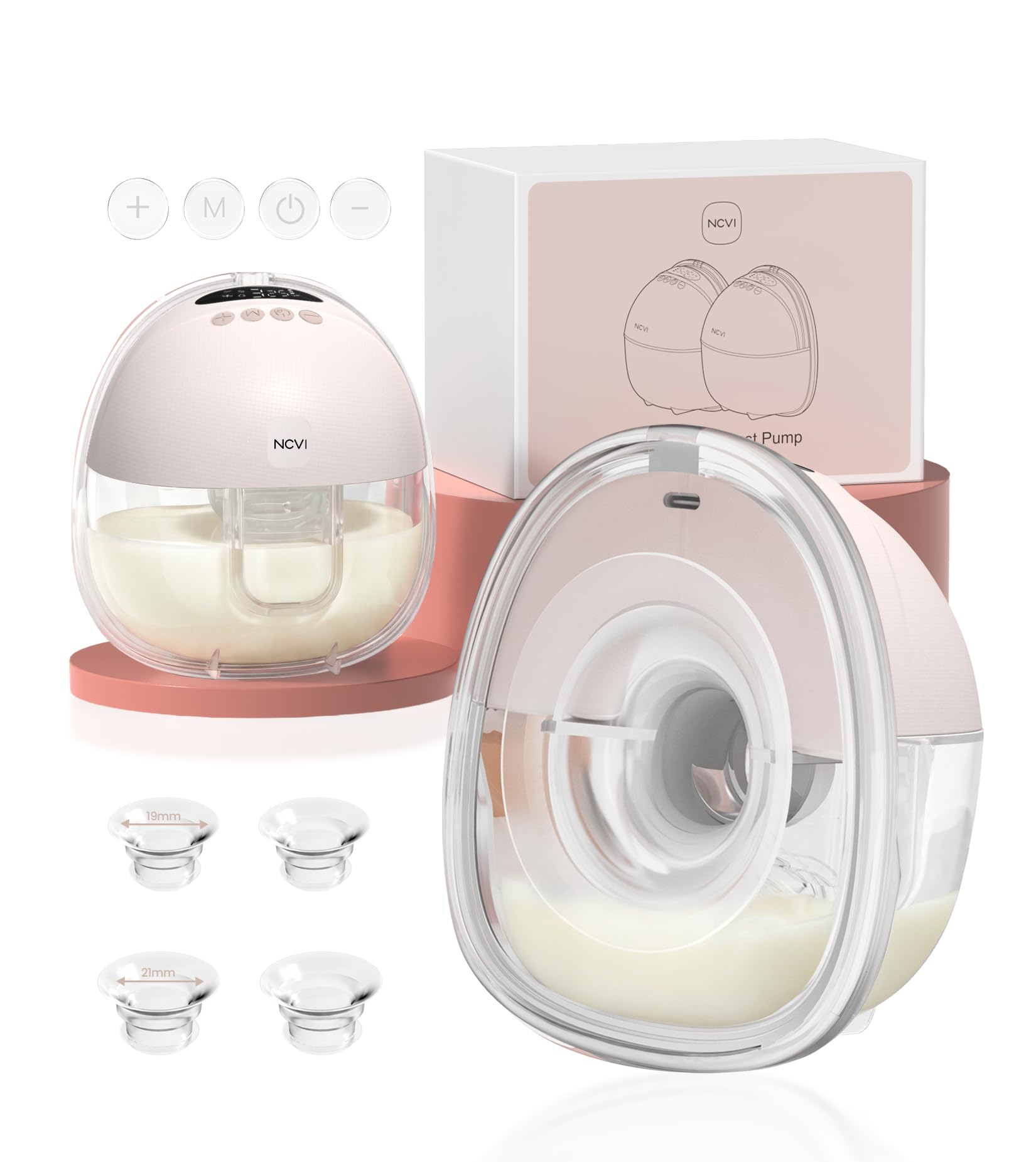
You get the lowest noise level on this list — under 40 decibels — and the only pump rated for 180 minutes (6 sessions) per charge.
Noise is one of the top reasons moms return a wearable pump — a loud motor defeats the whole “discreet” purpose. The NCVI solves that with a sound level under 40 decibels (dB), versus the MomMed at less than 45 dB and the Paruu at ≤60 dB. You can pump in a shared office cubicle or next to a sleeping baby without anyone noticing. It also delivers the longest stated battery life: 180 minutes, which the brand says covers up to 6 pumping sessions on a single charge.
The suction max in mmHg is not published, but the 4 modes and 9 levels cover the essential range from stimulation to expression. A soft silicone double-fit flange (a funnel with an extra inner layer for a tighter seal) helps create a leak-free seal, and the self-standing cups let you set them down without spilling — a small but real convenience when you need both hands to wrangle a baby. The closed-system anti-backflow valve prevents milk from flowing into the tubing. One hiccup: the specs say “1 A batteries required (included)” which is almost certainly a listing error (the unit is rechargeable), so trust the USB-C charging cable that comes in the box. It undercuts the MomMed and Noyoconn in price while offering the best battery spec on the list.
Why It Wins
- Quietest pump on the list at less than 40 decibels — ideal for offices and nurseries
- 180-minute battery covers a full workday with no midday charging
- Self-standing cups reduce mess and make storage easier
- Mid-range price with premium quiet operation
The Catch
- Only 9 suction levels, which gives less fine-tuning than the 12- or 15-level competitors
- Max suction in mmHg is not listed, so raw power is a question mark
Choose this for: all-day office use where silence matters and you cannot recharge midday. Pass on it if: you need a very wide range of suction levels to dial in precisely.
5. Paruu Hands Free Breast Pump P16
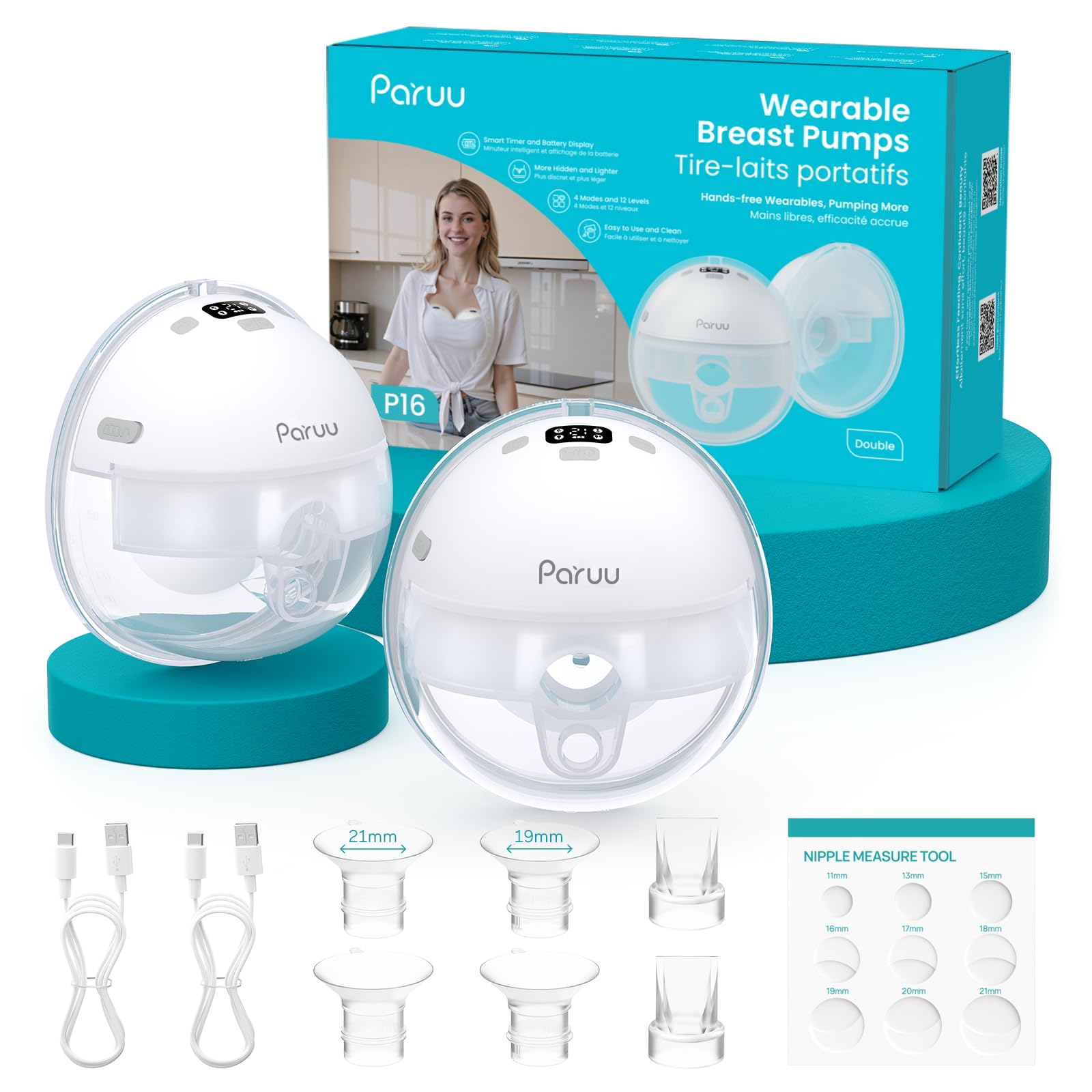
The lowest-cost pump here still delivers the highest max suction at 309mmHg — stronger than the Medela — so you have room to dial down to your perfect pull.
For a pump that sits at roughly half the price of the NCVI, the Paruu P16 delivers specs that often cost double. Its maximum suction of 309mmHg (millimeters of mercury) is the strongest vacuum on this entire list — you can actually dial down from that ceiling, but having headroom means you are never left wishing for more pull. It offers 4 modes and 12 levels, a 120-minute battery (rated for 4 to 5 sessions per charge), and a weight of just 240g (about 8.5 oz) per pump. The kit includes 19mm, 21mm, and 24mm flange inserts plus a nipple measurement card, so you can size yourself correctly from day one.
Buyers report it works well for a short trip out of the house where you need to pump, and one owner who uses a Spectra as her primary pump picked the Paruu over the Momcozy Mobile Flow, saying it drains fully and performs better. The trade-off is noise — at ≤60 decibels (dB), it is audibly louder than the NCVI and MomMed. Some users also mention the motor gets hot during extended sessions, and the 5-ounce (150 mL) max capacity per cup means you may need to empty and restart for high-supply sessions. It is also the newest model on the list (October 2024), so long-term durability data is still emerging.
Raw power: At 309mmHg max suction, it beats every other pump here in raw vacuum — you have more room to find your balance.
Noise trade-off: The louder motor is the main downgrade; expect to hear it in a quiet room.
Go for the Paruu if: budget is your top concern but you still want strong, adjustable suction and 5 hours of runtime. Move on if: you pump in very quiet environments or need more than 5 ounces per session without stopping to empty the cup.
Understanding the Specs
Maximum Suction (mmHg)
This number (mmHg stands for millimeters of mercury, the standard unit of vacuum pressure) tells you the strongest vacuum the pump can create. A higher maximum (like the Paruu’s 309mmHg) gives you more room to find the level that drains you best without pain. Most moms find the balance between 200 and 280 mmHg. If a pump only lists “levels” without mmHg, you cannot compare raw power directly between brands.
Noise Level (dB)
Measured in decibels (dB, a unit of sound loudness), this tells you how loud the motor is. A pump under 45 dB is generally quiet enough for an office or a sleeping baby nearby. At 40 dB or less (like the NCVI), it is barely audible in a quiet room. At 60 dB (like the Paruu), it sounds like a normal conversation and may disturb a light sleeper.
FAQ
How do I measure my nipple to find the right flange size?
Can I use a cordless breast pump while driving?
What does a closed system mean and why does it matter?
How often do I need to replace parts like valves and diaphragms?
Is a pump with more suction levels always better?
Will a cordless pump empty me as well as my hospital rental?
Can I sterilize the pump parts in a bottle sterilizer?
How long does it take to fully charge a cordless breast pump?
Final Thoughts: The Verdict
If you want one dependable pick, the best cordless breast pump winner is the Medela Pump in Style Pro+ because it delivers hospital-grade suction in a wearable form backed by decades of lactation research. If you want the quietest pump with the longest battery life for all-day wear, grab the NCVI Wearable. And for the best value that still brings strong 309mmHg suction and good reviews, the standout is the Paruu P16.
How We Picked
We do not accept paid placement. Every pick is matched to a real buyer and a real use-case; we do not hands-on test units.
Sources & Methodology
Specifications: manufacturer listings and product documentation. Review insights: verified customer reviews, as of July 2026. Pricing: not shown on this page (it changes often); check the current price via the retailer link.
As an Amazon Associate, WellFizz earns from qualifying purchases. This does not affect which products we feature.

Mo Maruf
I created WellFizz to bridge the gap between vague wellness advice and actionable solutions. My mission is simple: to decode the research and give you practical tools you can actually use.
Beyond the data, I am a passionate traveler. I believe that stepping away from the screen to explore new environments is essential for mental clarity and physical vitality.